
A field of Sacred Apples
B”H
Introduction: The Orchard, the Road, and the Compass
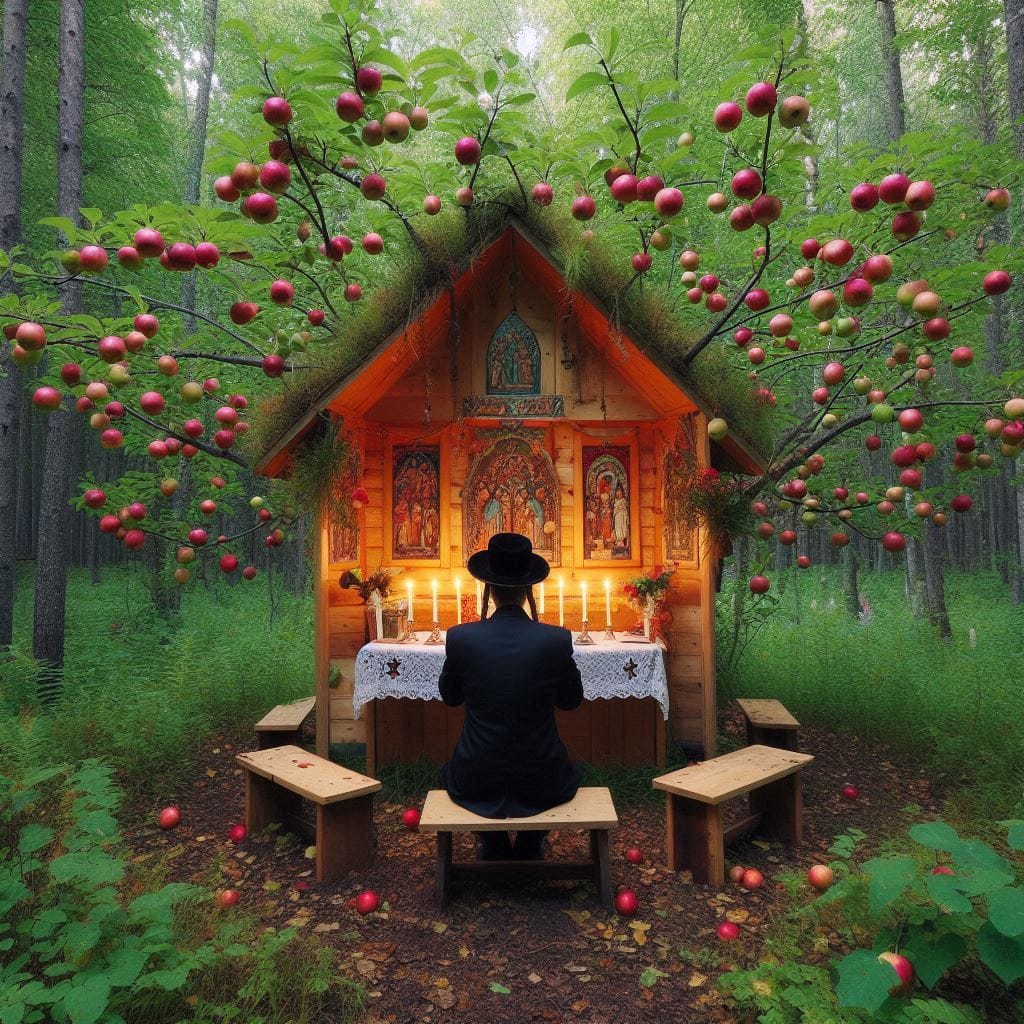
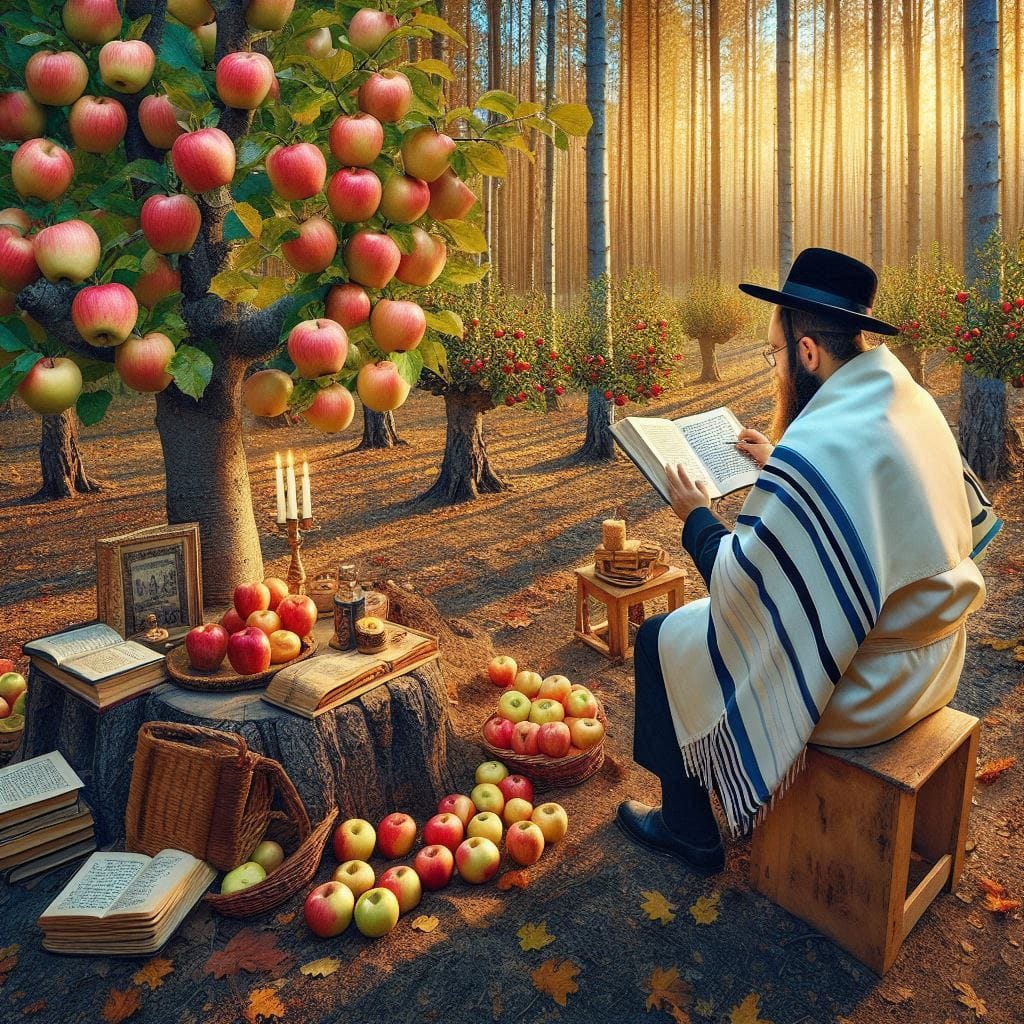
At Shaarei Tzafon, the Field of Sacred Apples is not only an image of the orchard, the seasons, and the cycle of teshuvah. It is also an image of Torah learning itself.
A Torah library is an orchard. Each sefer is a tree. Each tradition is a root. Each commentary is a branch. Each mitzvah is fruit. Some fruit is sweet immediately. Some fruit must ripen slowly. Some texts are simple enough for the table, the child, the family, and the beginner. Others are winter apples: deep, slow, demanding, and only properly tasted after years of growth.
But an orchard also needs a path.
A person cannot simply wander through every tree, picking whatever looks interesting, and call that a system. Torah is not private imagination. Torah is not a spiritual buffet. Torah is not a collection of symbols cut loose from obligation. Torah has a road.
For Shaarei Tzafon, halakhah is the road.
The road tells us how to walk. It determines practice. It governs Shabbat, kashrut, prayer, family purity, blessings, business ethics, mourning, festivals, conversion, Jewish identity, and communal life. The road is not optional. Without halakhah, the orchard becomes wild growth. Without halakhah, even holy books can become tools of confusion.
But a road is not the same thing as a compass.
A road tells you where to place your feet. A compass helps you understand direction, balance, and orientation. The Shaarei Tzafon Compass does not pasken halakhah. It does not replace the Mishneh Torah, the Shulchan Aruch, the Mishnah, the Gemara, or the responsa of the poskim. It does not create a new religion or a new Torah.
The compass orients the soul.
It tells us which voices shape the atmosphere of Shaarei Tzafon: rational clarity, halakhic discipline, Sephardic warmth, Yemenite precision, Ashkenazic mussar, Hasidic fire, Breslov hope, and the quiet strength needed for Torah in the North.
This teaching therefore has two parts that must never be confused.
First, there is the halakhic study system, the road.
Second, there is the Boreal Compass, the orientation.
The road governs practice.
The compass gives direction.
The road binds.
The compass guides.
The road tells us what we must do.
The compass helps us understand what kind of people we are trying to become.
This distinction protects the entire system. Shaarei Tzafon is not inventing halakhah from mood, landscape, or private inspiration.
We are building a Torah framework in the North, under halakhah, with a clear orientation of soul.
I. The Halakhic Study System: The Road
The road begins with Torah.
The first foundation is the Chumash, the Five Books of Moses, learned with the classic commentaries: Rashi, Ramban, Ibn Ezra, Sforno, and others. Chumash is not merely the beginning of Jewish education. It is the root of covenantal consciousness. A Jew must know creation, Avraham, Yitzchak, Yaakov, Yosef, the Exodus, Sinai, the Mishkan, holiness, wilderness, mitzvot, blessing, curse, and the movement toward the Land.
Alongside Chumash stands the complete Tanakh. Torah cannot be severed from Nevi’im and Ketuvim. Yehoshua, Shoftim, Shmuel, Melakhim, Yeshayahu, Yirmeyahu, Yechezkel, Trei Asar, Tehillim, Mishlei, Iyov, the Megillot, Daniel, Ezra, Nechemiah, and Divrei HaYamim all form the memory of Israel. Without Tanakh, a Jewish mind becomes narrow. It loses exile, kingship, prophecy, consolation, rebuke, and national memory.
The third root is Targum Onkelos. Onkelos is not a decorative translation. It is part of the received Jewish reading of Torah. It disciplines the mind and protects the learner from private interpretation. In a rural setting, where isolation can easily create strange readings, Onkelos is especially important. It reminds us that Torah was received by Israel, not invented by the individual.
After the Written Torah comes the Oral Torah.
The Mishnah and Halachic Drashot is essential because it teaches the categories of Torah life. It trains the mind in berakhot, Shabbat, festivals, marriage, damages, courts, korbanot, purity, agriculture, and communal order. A person who learns Mishnah learns how Torah becomes structured reality.
The Talmud Bavli is the great sea of Jewish reasoning. It teaches not only conclusions but process: questions, objections, distinctions, narratives, principles, and halakhic development. A full set is ideal for a community library, but a home can begin with practical tractates: Berakhot, Shabbat, Pesachim, Megillah, Rosh Hashanah, Yoma, Sukkah, Bava Metzia, Avot, and others.
The Midrashim, especially Midrash Rabbah and Midrash Tanchuma, teach the soul how Chazal hear Torah beneath the surface. Midrash is not childish story. It is Torah in the language of image, moral force, parable, and hidden connection.
From there, the road enters explicit halakhah.
For Shaarei Tzafon, the central halakhic code is the Mishneh Torah of the Rambam.
It is systematic, clear, comprehensive, and powerful. It gives the whole structure of Torah law: foundations, prayer, Shabbat, festivals, kashrut, marriage, damages, courts, repentance, kingship, and more. It is the backbone of disciplined halakhic study.
Alongside it stands the Shulchan Aruch with Rema. The Shulchan Aruch and Rema represent the standard practical code of Sephardic and Ashkenazic Jewish life. They are necessary for understanding how halakhah has been lived and applied across communities.
The Sefer HaMitzvot of the Rambam teaches the architecture of the 613 mitzvot. The Sefer HaChinuch organizes mitzvot according to the Torah portions and gives moral, educational, and practical explanations. Together, they help the learner understand mitzvot not only as details, but as a complete covenantal structure.
For practical life, the library must also include guides such as Kitzur Shulchan Aruch, Sephardic practical halakhic works, Ben Ish Ḥai, Yalkut Yosef, Mishnah Berurah, Aruch HaShulchan, and major responsa such as Igrot Moshe and Yabia Omer. These works do not replace the road; they show how the road is walked in real conditions.
This is the first rule of Shaarei Tzafon learning:
Halakhah is the road.
No compass point can override it. No mystical idea can cancel it. No rural adaptation can dismiss it. No aesthetic, no emotional need, no personal symbol, and no outside ideology can replace the halakhic road.
II. The Shaarei Tzafon Compass: Orientation, Not P’sak
After the road comes the compass.
The Shaarei Tzafon Compass is not a halakhic code. It is not a replacement for the Mishneh Torah or Shulchan Aruch. It is not a private Sanhedrin. It does not decide law.
It orients the soul of the project.
It answers a different question: what are the major spiritual directions that shape the Shaarei Tzafon way of learning, teaching, and building?
A compass does not create the road. It helps the traveler understand direction.
This distinction must be repeated because it prevents confusion. When we say that a certain teacher stands at a compass point, we are not saying that every opinion from that teacher becomes automatic practice. We are saying that this voice gives orientation, tone, depth, and balance.
The compass map is as follows.
North: Rambam, Sefer HaMitzvot, Sefer HaChinuch
The North is clarity, structure, obligation, and halakhic architecture.
Here stand the Rambam, the Sefer HaMitzvot, and the Sefer HaChinuch.
This is the direction of system. The Rambam teaches that Torah is not chaos. It has foundations, categories, laws, and a complete structure. The Sefer HaMitzvot teaches the architecture of commandment. The Sefer HaChinuch teaches how mitzvot educate the soul.
North is not coldness. It is discipline.
For Shaarei Tzafon, North means that Torah life must be built on mitzvot, not moods. The road must be clear. The family must know what to do. The community must know what binds it.
Northeast: Saadia, Rashi, Yehuda HaLevi, Ibn Ezra
The Northeast is textual faith, commentary, grammar, reason, and defense of the Masorah.
Here stand Rav Saadia Gaon, Rashi, Rabbi Yehuda HaLevi, and Ibn Ezra.
Rav Saadia defends Torah through reason and tradition. Rashi trains the Jew to hear Chazal inside the words of Scripture. Yehuda HaLevi teaches the uniqueness of Israel, revelation, and the living people of the covenant. Ibn Ezra sharpens grammar, peshat, and linguistic awareness.
This compass point protects Shaarei Tzafon from anti-traditional reading. It teaches that Torah must be read as Israel received it, not as isolated individuals reinvent it.
East: Mori Yiḥya Qafiḥ
The East is Yemenite precision, anti-confusion, textual seriousness, and disciplined return to sources.
Here stands Mori Yiḥya Qafiḥ.
This direction gives Shaarei Tzafon a warning against superstition, spiritual disorder, and careless mysticism. It teaches that reverence for Torah includes intellectual honesty. It also reminds us that Jewish tradition contains strong internal voices calling for clarity, purification of thought, and fidelity to earlier sources.
East is not a rejection of depth. It is a demand that depth not become confusion.
Southeast: Ramban, Ben Ish Ḥai, Ari, Satmar
The Southeast is guarded mysticism, Sephardic warmth, covenantal depth, and resistance to false redemption.
Here stand the Ramban, the Ben Ish Ḥai, the Ari, and Satmar.
Ramban brings Torah into covenantal mystery, holiness, Eretz Yisrael, and the hidden depth of mitzvot. Ben Ish Ḥai brings Sephardic halakhah, aggadah, and Kabbalistic warmth into daily life. The Ari represents the vast inner architecture of Kabbalah and tikkun. Satmar represents a serious warning against forcing redemption through political or ideological projects.
This point must be handled carefully. It is powerful fruit, but not beginner fruit. The Southeast does not replace halakhah. It deepens awe. It teaches that history, exile, redemption, and holiness are not shallow matters.
South: Rebbe Nachman and Shulchan Aruch
The South is hope, simplicity, brokenheartedness, joy, and practical halakhic anchoring.
Here stand Rebbe Nachman of Breslov and the Shulchan Aruch.
This pairing matters. Rebbe Nachman without Shulchan Aruch can be misunderstood as emotion without structure. Shulchan Aruch without the medicine of hope can become heavy for the wounded soul. Together, they teach that the Jew must never despair, but must also walk in halakhah.
South is the fire of return. It is hitbodedut, prayer, song, longing, holy stubbornness, and the refusal to abandon the nekudah tovah, the good point.
But again: the compass does not pasken. The Shulchan Aruch remains halakhic road. Rebbe Nachman gives orientation of hope.
Southwest: Baal Shem Tov, Levi Yitzḥak, Elimelech, Biala, Kitzur
The Southwest is Hasidic warmth, joy, simple faith, avodah, and practical daily conduct.
Here stand the Baal Shem Tov, Rabbi Levi Yitzḥak of Berditchev, Noam Elimelech, Biala, and the Kitzur Shulchan Aruch.
The Baal Shem Tov teaches that Hashem can be served with sincerity, joy, and awareness in ordinary life. Rabbi Levi Yitzḥak teaches love for Israel and advocacy before Heaven. Noam Elimelech teaches the role of the tzaddik, humility, and inner avodah. Biala gives a warmer Hasidic line of devotion. The Kitzur Shulchan Aruch keeps this warmth connected to daily law.
This point is important for rural Jewish life. A small community needs warmth. It needs song. It needs the ability to serve Hashem in the home, at the table, in work clothes, in winter, in loneliness, and in ordinary life.
But warmth is not lawlessness. The Kitzur stands there to remind us that avodah must enter practice.
West: Avraham ben HaRambam
The West is spiritual discipline, piety, simplicity, and a bridge between halakhic clarity and inner avodah.
Here stands Rabbi Avraham ben HaRambam.
He represents a path of Jewish piety that is disciplined, inward, serious, and rooted in halakhah. He shows that the house of Rambam is not only law and philosophy, but also devotion, prayer, humility, and spiritual training.
For Shaarei Tzafon, this is crucial. We do not want dry rationalism. We also do not want unguarded mysticism. Avraham ben HaRambam shows a path where discipline and inward devotion can meet.
Northwest: Rabbeinu Yonah, Baḥya, Sefer Chassidim, R. Meir of Rothenburg
The Northwest is mussar, repentance, duties of the heart, Ashkenazic piety, and ethical seriousness.
Here stand Rabbeinu Yonah, Rabbeinu Baḥya, Sefer Chassidim, and Rabbi Meir of Rothenburg.
Rabbeinu Yonah teaches the seriousness of teshuvah. Rabbeinu Baḥya teaches the duties of the heart: trust, sincerity, humility, intention, and inward service. Sefer Chassidim preserves the intensity of medieval Ashkenazic piety. Rabbi Meir of Rothenburg represents halakhic greatness, suffering, captivity, and loyalty to Torah under hardship.
This point gives Shaarei Tzafon moral gravity. It reminds us that Torah life is not merely correct practice. It is character, repentance, humility, fear of Heaven, and loyalty under pressure.
III. Responses to Critiques
A system like this can be misunderstood, so the critiques must be answered plainly.
Critique 1: “Are you inventing a new Judaism?”
No.
Shaarei Tzafon is not inventing a new Judaism. It is a framework for living Orthodox Torah in a rural Northern setting. The sources are classical Jewish sources. The halakhic road remains halakhic. The compass is orientation, not legislation.
The land gives imagery.
Torah gives obligation.
The orchard gives mashal.
Halakhah gives the road.
Critique 2: “Are you mixing incompatible traditions?”
No, not if the distinction is kept.
A Jew may learn from Rambam, Rashi, Ramban, Rabbeinu Yonah, Ben Ish Ḥai, Rebbe Nachman, and the Baal Shem Tov without pretending they all ruled identically in halakhah or thought identically in philosophy.
The compass is not saying every voice is identical. It is saying each voice contributes a direction.
When halakhic practice must be decided, we return to the road.
Critique 3: “Does the compass pasken?”
No.
The compass does not pasken.
The compass does not decide whether something is mutar or assur. The compass does not override poskim. The compass does not replace the Mishneh Torah, Shulchan Aruch, or responsa.
The compass orients the soul.
Halakhah governs action.
Critique 4: “Is this just picking and choosing?”
No.
Picking and choosing means taking what one likes and ignoring obligation. That is not the Shaarei Tzafon method.
The method is structured. The road comes first. The compass is declared openly. Each direction is named. The roles are clear. Nothing is hidden. Nothing is smuggled in as law when it is only orientation.
A person who picks and chooses avoids accountability.
Shaarei Tzafon is trying to increase accountability.
Critique 5: “Does the Northern setting change Torah?”
No.
The North does not change Torah. The North changes the questions, pressures, needs, and imagery of Jewish life.
Shabbat remains Shabbat in the North. Kashrut remains kashrut. Prayer remains prayer. Modesty remains modesty. Halakhah remains halakhah.
But the experience of Shabbat in a snowy rural place may feel different from Shabbat in Jerusalem or Brooklyn. The sukkah in the North teaches exposure differently. A small Torah table in a remote place carries a different kind of responsibility.
The place does not rule Torah.
Torah teaches us how to live in the place.
Critique 6: “Is mysticism being made too central?”
No.
The foundation is halakhah. Kabbalah and Hasidut are part of the compass, not the road. They deepen the soul when handled carefully, but they are not the starting point for practice.
Shaarei Tzafon does not begin with the Zohar. It begins with Chumash, Mishnah, Rambam, Shulchan Aruch, siddur, mitzvot, and daily Jewish life.
Hidden fruit must ripen in its season.

IV. Philosophical Integration: Why the System Holds Together
The system holds together because it distinguishes law, orientation, and imagery.
Law is halakhah.
Orientation is the compass.
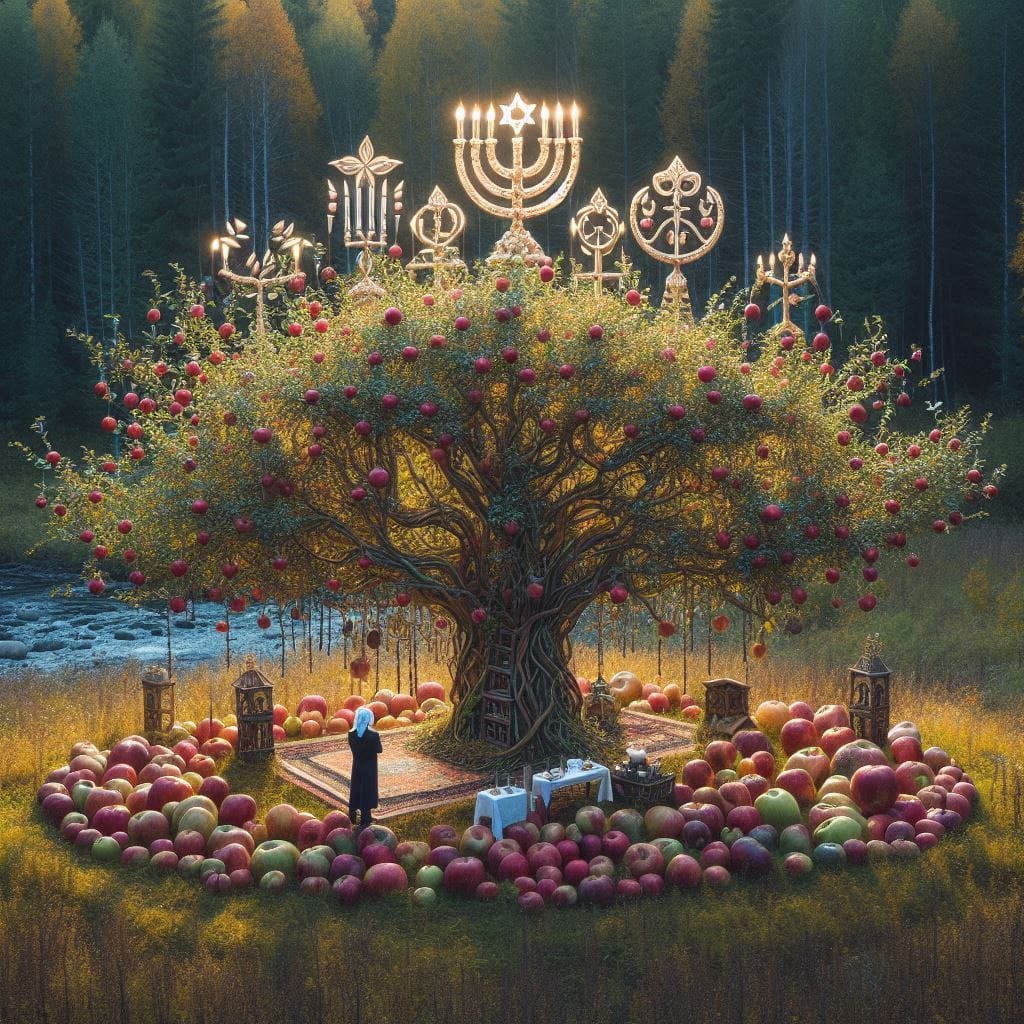
Imagery is the Field of Sacred Apples.
If these are confused, the system collapses. If imagery becomes law, we fall into fantasy. If compass becomes p’sak, we fall into contradiction. If halakhah is stripped of orientation, we risk dryness and discouragement. But when each part stays in its place, the system becomes strong.
The orchard image teaches patience. Trees do not bear fruit the day they are planted. A child does not absorb Torah in one lesson. A family does not become rooted overnight. A rural Torah community does not appear fully formed. It must be planted, watered, guarded, pruned, and allowed to ripen.
The halakhic road teaches discipline. Apples need fences. Vines need pruning. Human beings need mitzvot. Without commanded practice, spirituality becomes mood.
The compass teaches balance. If we only had North, we might become too dry. If we only had South, we might become too emotional. If we only had Southeast, we might become too mystical. If we only had East, we might become too suspicious of mystery. If we only had Southwest, we might become too warm without enough structure. If we only had Northwest, we might become too severe. The compass helps us remember the breadth of Torah.
Shaarei Tzafon therefore seeks a whole Torah personality:
clear like Rambam,
faithful like Rashi,
rooted like Yehuda HaLevi,
precise like Mori Qafiḥ,
deep like Ramban,
warm like Ben Ish Ḥai,
hopeful like Rebbe Nachman,
joyful like the Baal Shem Tov,
disciplined like Avraham ben HaRambam,
repentant like Rabbeinu Yonah,
inward like Baḥya,
and faithful under pressure like Rabbi Meir of Rothenburg.
But none of this floats freely. It stands on mitzvot.
The road remains the road.
Conclusion: Planting a Torah Orchard in the North
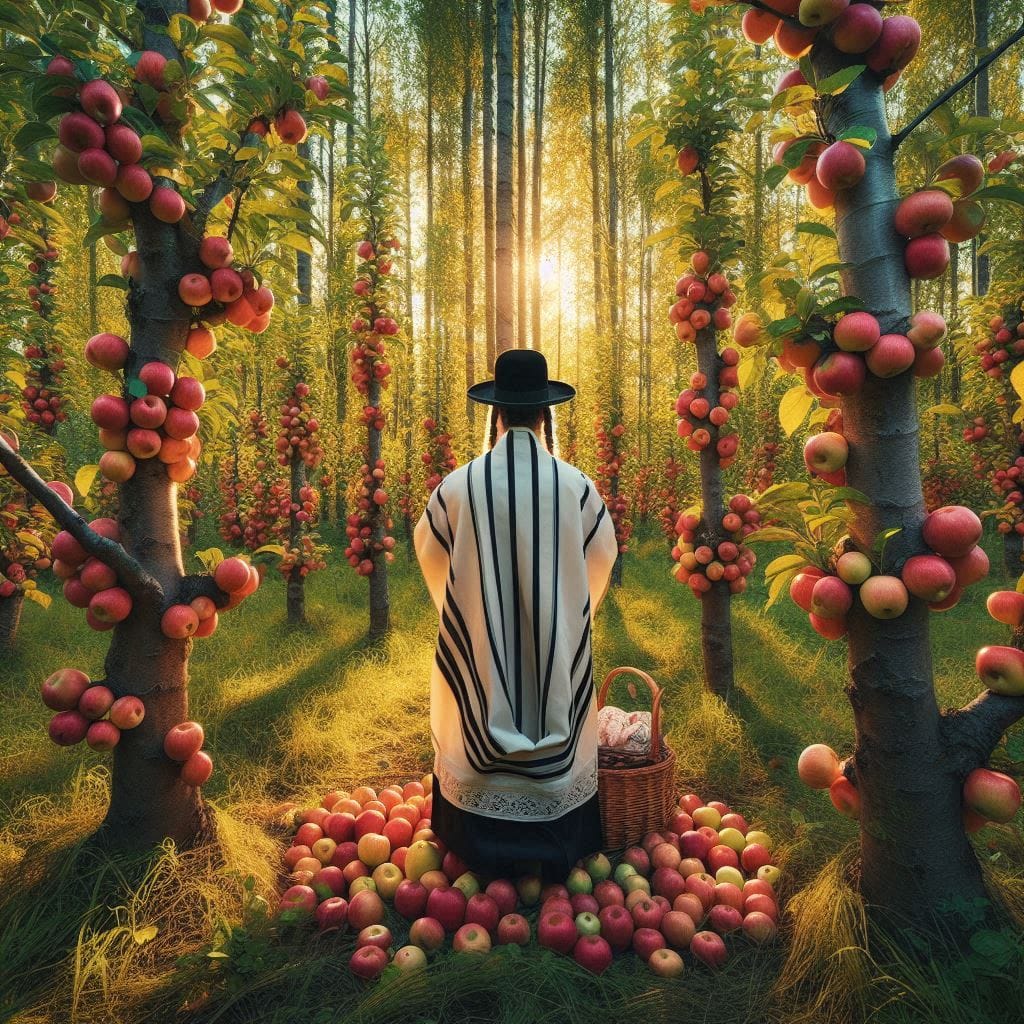
The Field of Sacred Apples is the image of a Torah life planted carefully in the North.
It is a library.
It is a study system.
It is a map of orientation.
It is a reminder that sweetness requires roots, fences, seasons, and patience.
For Shaarei Tzafon, the first rule is clear: halakhah is the road. We walk by Torah, Mishnah, Gemara, Mishneh Torah, Shulchan Aruch, responsa, and the received Masorah of Israel.
The second rule is also clear: the compass is orientation. It helps us understand the spiritual atmosphere of the project, but it does not pasken.
The third rule is just as important: the orchard is a mashal. It teaches patience, ripening, sweetness, shared boundaries, and seasonal return, but it does not create law.
Road.
Compass.
Orchard.
Halakhah.
Orientation.
Imagery.
When these are kept in order, Shaarei Tzafon can grow without confusion. It can be Northern without becoming invented. It can be warm without becoming lawless. It can be mystical without becoming unstable. It can be rational without becoming dry. It can be rural without becoming isolated from Klal Yisrael.
May this Field of Sacred Apples become a living Torah orchard: rooted in halakhah, guided by the compass of our sages, watered by prayer, fenced by mitzvot, warmed by joy, sharpened by mussar, and sweetened by teshuvah.
May the homes of Shaarei Tzafon grow in Torah.
May the children grow with strong roots.
May the books become living teachers.
May the road remain clear.
May the compass remain faithful.
And may every apple of Torah ripen in its proper season, for the sake of Heaven and the honor of Hashem’s Name.

A Field of Sacred Apples — Torah Study, Halakhah, and the Boreal Compass
A Field of Sacred Apples explores the foundations of traditional Orthodox Jewish learning through three interconnected images: the Orchard, the Road, and the Compass.
The Orchard represents the richness of Torah study, from Chumash, Mishnah, Gemara, and Midrash to the writings of Rambam, the Geonim, and later Jewish sages. Each generation contributes to the preservation and transmission of the Jewish inheritance.
The Road represents Halakhah, the binding framework governing Jewish life, religious observance, and the fulfillment of mitzvot. Rooted in the Mishneh Torah, Shulchan Aruch, and classical rabbinic literature, it provides the discipline necessary for authentic Jewish practice.
The Boreal Compass represents spiritual and intellectual orientation, drawing upon Jewish rationalism, Sephardic and Yemenite traditions, Ashkenazic mussar, Hasidic teachings, and the devotional writings of the sages. It guides personal growth without replacing established Halakhah.
Presented by Rabbi Ariel Manning of Shaarei Tzafon (The North Gate), this teaching reflects the development of Orthodox Jewish education and Torah study in Alpena, Hillman, Rogers City, and throughout Northeastern Michigan.
Rooted in the Jewish communities of the North, Shaarei Tzafon seeks to preserve traditional Jewish learning, encourage independent batei midrash and shtieblach, and strengthen Jewish family and communal life from the 45th parallel toward the Arctic.
The central teaching is simple: Halakhah is the Road, the Boreal Compass provides orientation, and the Orchard represents the living inheritance of Torah.
Shaarei Tzafon — The North Gate
Orthodox Jewish Life and Torah Study in Northeastern Michigan
Shaarei Tzafon — The North Gate, led by Rabbi Ariel Manning, is an independent, family-led Orthodox Jewish educational and publishing initiative based in Northeastern Michigan. We support traditional Jewish life, Torah study, Halakhah, and Jewish education throughout Alpena, Hillman, Rogers City, and surrounding communities. Those interested in traditional Judaism are welcome to contact us for educational resources, Torah learning, and opportunities for discussion by prior arrangement.
Rooted locally, our greater mission extends northward from the 45th parallel — The North Gate — through Michigan, Canada, and Alaska toward the Arctic. We seek to encourage independent Jewish communities, family-centered Torah education, and the renewal of small batei midrash and shtieblach, preserving the rich traditions of Orthodox Judaism for future generations.
Our work begins in Northeastern Michigan, but our vision extends from the 45th parallel toward the Arctic.
Guided by Rambam and Mori Qafiḥ, uplifted by Rebbe Nachman, and grounded by Avraham ben HaRambam’s balance of halakha and inward avodah.
The Orchard’s Path
publishes our books and curricula.
Our mission: a bright, authentic Jewish presence in every northern town.
Created with ©systeme.io


