
A Hanukkah Teaching: Light After Battle, Song After Silence
B”H
Part I — The Night Before the Light
Hanukkah is born from darkness.
Before we speak of miracles, candles, or Hallel, we must begin with the conditions that made such light necessary. Hanukkah emerges from one of the most spiritually suffocating eras in Jewish history—an era in which Judaism itself was nearly outlawed, and the Temple, the beating heart of Jewish life, was defiled.
For Jews today—especially for small, rural communities like Shaarei Tzafon living above the 45th parallel—Hanukkah resonates deeply. The physical darkness of long winter nights mirrors the historical darkness out of which the holiday arose. The question becomes: How does a people remain faithful when surrounded by forces that seek to extinguish their covenant?
To answer, we must listen to four ancient voices, each giving a part of the truth:
Sefer HaMaccabim (The Books of the Maccabees according to Christian tradition) the historical revolt and rededication.
Shabbat 21b — “Mai Chanukah?” and the miracle of the oil.
Rambam, Hilchot Chanukah 3–4 — the halachic distillation that defines practice.
Megillat Antiochus — the early Jewish narrative blending war, miracle, and identity.
Together, they teach one message: even in the deepest winter, Jewish light is never extinguished—only waiting to be rekindled.
Part II — Sefer HaMaccabim (The Books of the Maccabees):
Crisis, Revolt, and Winter Sukkot
Even though its not our tradition but apart of Orthodox Christian and Catholic traditon.
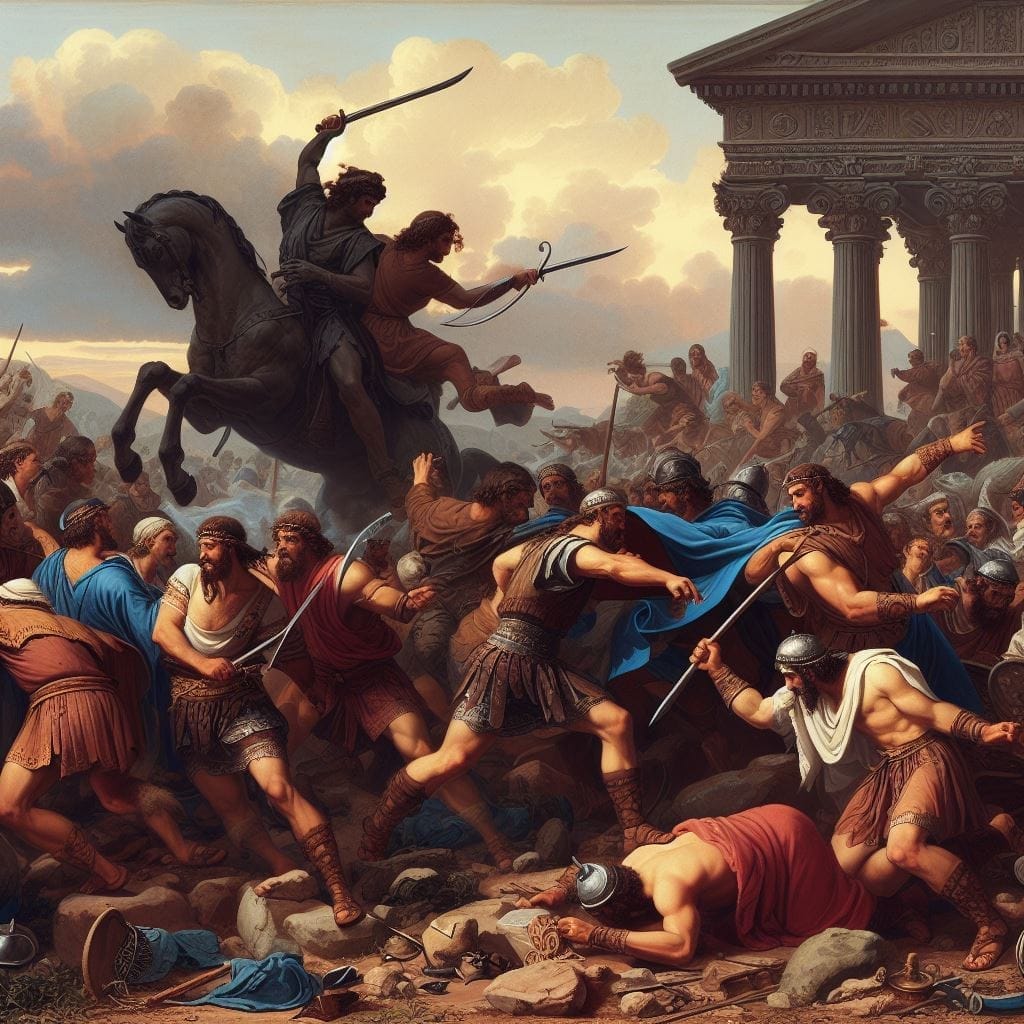
Sefer HaMaccabim (The Books of the Maccabees) begins not with miracles but with oppression. Antiochus IV issued decrees forbidding circumcision, Shabbat observance, Torah study, and even possessing a sefer Torah. The Temple was seized, its vessels stolen, its altar desecrated, and pagan altars erected to humiliate the Jewish people in their own sanctuary.
But the true horror was internal: many Jews willingly adopted Hellenistic customs, choosing assimilation over covenant.
Against this backdrop rises Matityahu the Kohen and his sons—the Hasmoneans—who fled to the hills and began a guerilla revolt. They fought outnumbered, impoverished, and hunted. Their war was not for territory but for the survival of Torah itself.
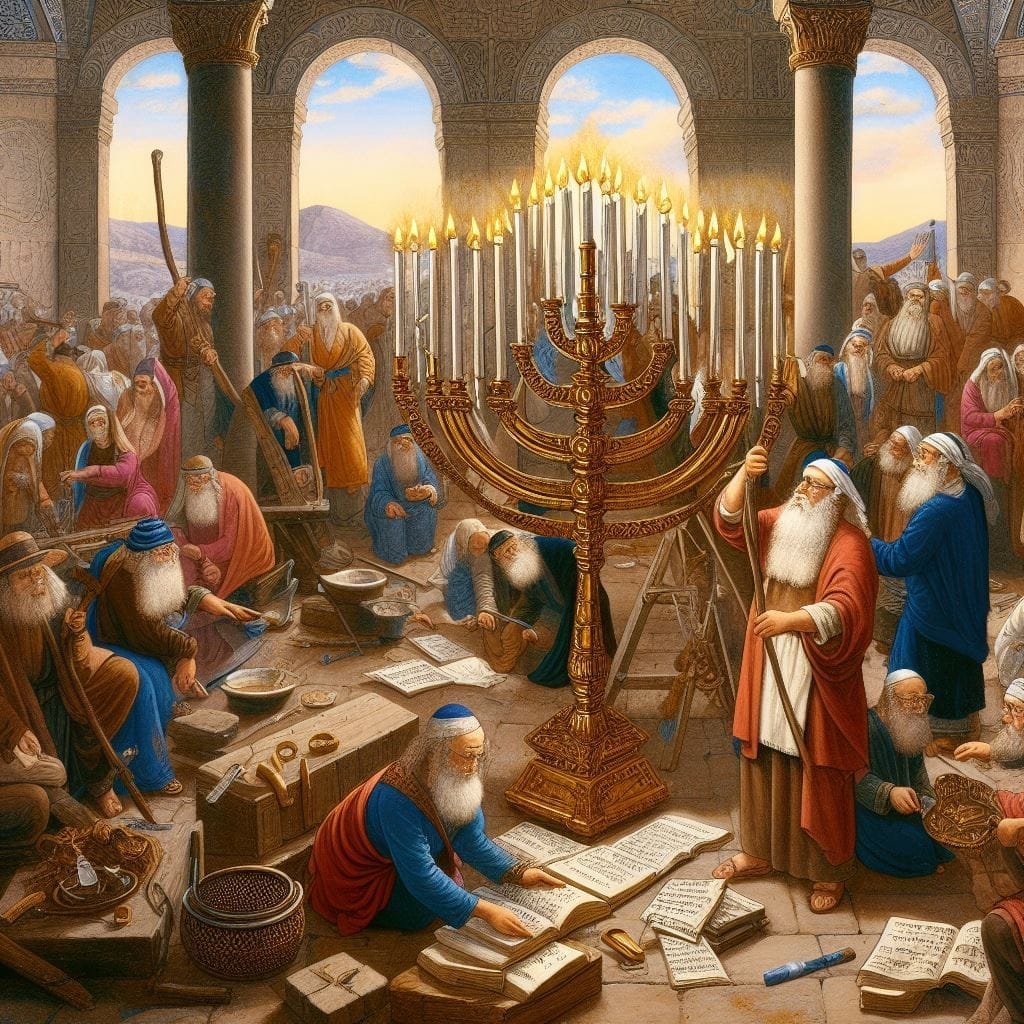
Sefer HaMaccabim climaxes with the recapture of Yerushalayim. The Maccabees enter the desecrated sanctuary, tear down the profaned altar, rebuild it, purify the Temple, and reignite the Menorah.
But here we encounter a stunning detail:
The first Hanukkah was a delayed Sukkot, what scholars call “Winter Sukkot.”
Why Sukkot?
Because the war prevented pilgrimage; Sukkot—the festival of light, joy, and unity—was missed. So the Hasmoneans instituted an eight-day celebration “like Sukkot,” carrying branches and singing Hallel (2 Maccabees 10:6–7).
Thus, historically:
Eight days comes from Sukkot.
Hallel comes from Sukkot.
Joy and dedication echo Sukkot.
The Maccabees bequeath to us not only a victory, but a reborn festival that transforms loss into celebration.
Part III — Shabbat 21b: “Mai Chanukah?” and the Miracle of Oil
Our second voice, the Talmud in Shabbat 21b, asks:
"מאי חנוכה?"
“What is Hanukkah?”
Instead of recounting the war, the Gemara highlights a different miracle:
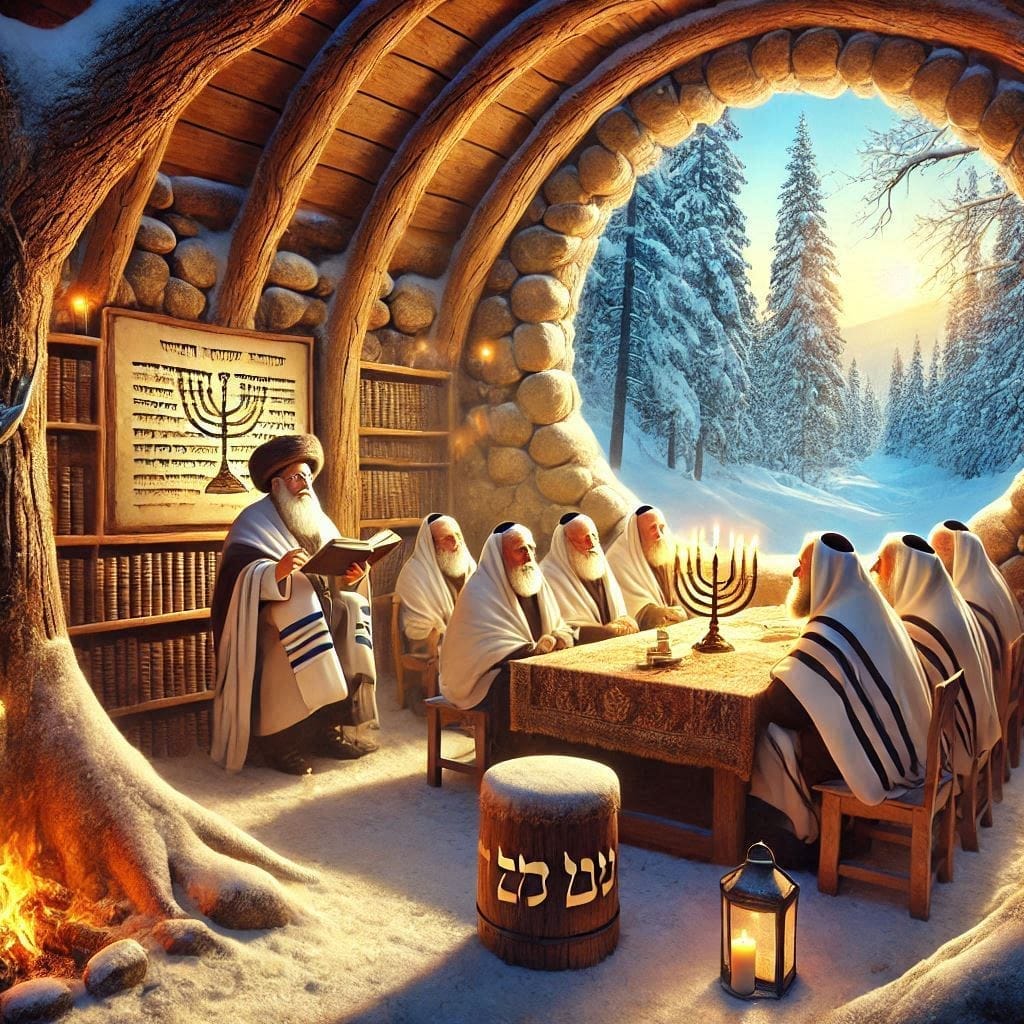
When the Maccabees entered the Temple, they found only one pure cruse of oil, sealed with the mark of the Kohen Gadol. It contained enough oil for one day—but miraculously burned for eight days, until new pure oil could be produced.
Why does the Talmud focus on this miracle rather than the military victory?
Because military victories can be rationalized; light that defies nature cannot.
The Sages teach:
Human courage alone did not save Israel.
Divine partnership completed the redemption.
The Menorah’s flame testified that Hashem (God) still dwelled with His people.
Thus the oil miracle becomes the spiritual center of the rabbinic Hanukkah.
But this does not erase the Maccabean narrative—it completes it.
Maccabees tells us what Israel did.
Shabbat 21b tells us what Hashem (God) did.
Hanukkah lives in the space where these two revelations meet.
Part IV — Megillat Antiochus: A Medieval Echo of an Ancient Story
Our third voice—rarely taught today but vital—is Megillat Antiochus, an early Jewish retelling of the Hanukkah narrative read for centuries by many Eastern communities.
It blends:
The military heroics of Sefer HaMaccabim
The religious persecutions
Miracles
The rededication of the altar
And the oil that burned eight days
Megillat Antiochus preserves ancient traditions not explicit in Maccabees, including:
The exact nature of Antiochus’s decrees—a spiritual war on Jewish identity.
Descriptions of martyrdom—Jews who chose death over idolatry.
The intertwining of miracle and halacha—the miracle of oil leading directly to establishing eight days of celebration.
The authority of the Sages to establish festivals—linking the Hasmonean victory to halachic creation.
While not canonical, Megillat Antiochus serves as a bridge between the Second Temple narrative and the halachic tradition that follows. It confirms that early Jewish communities understood Hanukkah as both military and miraculous, both historical and spiritual, both national and divine.
It is a Jewish people’s megillah—not Scripture, but memory.
Part V — Rambam’s Hilchot Chanukah : History Becomes Halacha
Our fourth voice—Rambam—is the synthesizer.
In Hilchot Chanukah, he does what only Rambam does: he distills centuries of history, midrash, and halacha into one clean, ordered legal vision.
He begins not with candles but with history:
“In the days of the Greek Empire… they issued decrees against Israel, sought to abolish their religion, and defiled the Sanctuary.”
(Hilchot Chanukah)
Rambam then outlines:
The oppression
The Hasmonean revolt
The purification of the Temple
The discovery of the single remaining jar of oil
The miracle of eight days
Then he states the halachic response:
“Because of this, the Sages established that these eight days should be days of joy and Hallel, and that lamps be lit every evening.”
(Hilchot Chanukah)
Rambam is doing something revolutionary:
He is turning Jewish memory into Jewish law.
He roots Chanukah in:
The human story (Maccabees)
The divine intervention (Shabbat 21b)
The preserved narrative (Megillat Antiochus)
The halachic institution (Mishneh Torah)
For Rambam, Chanukah is not folklore; it is a binding halachic expression of gratitude of Thanksgiving.
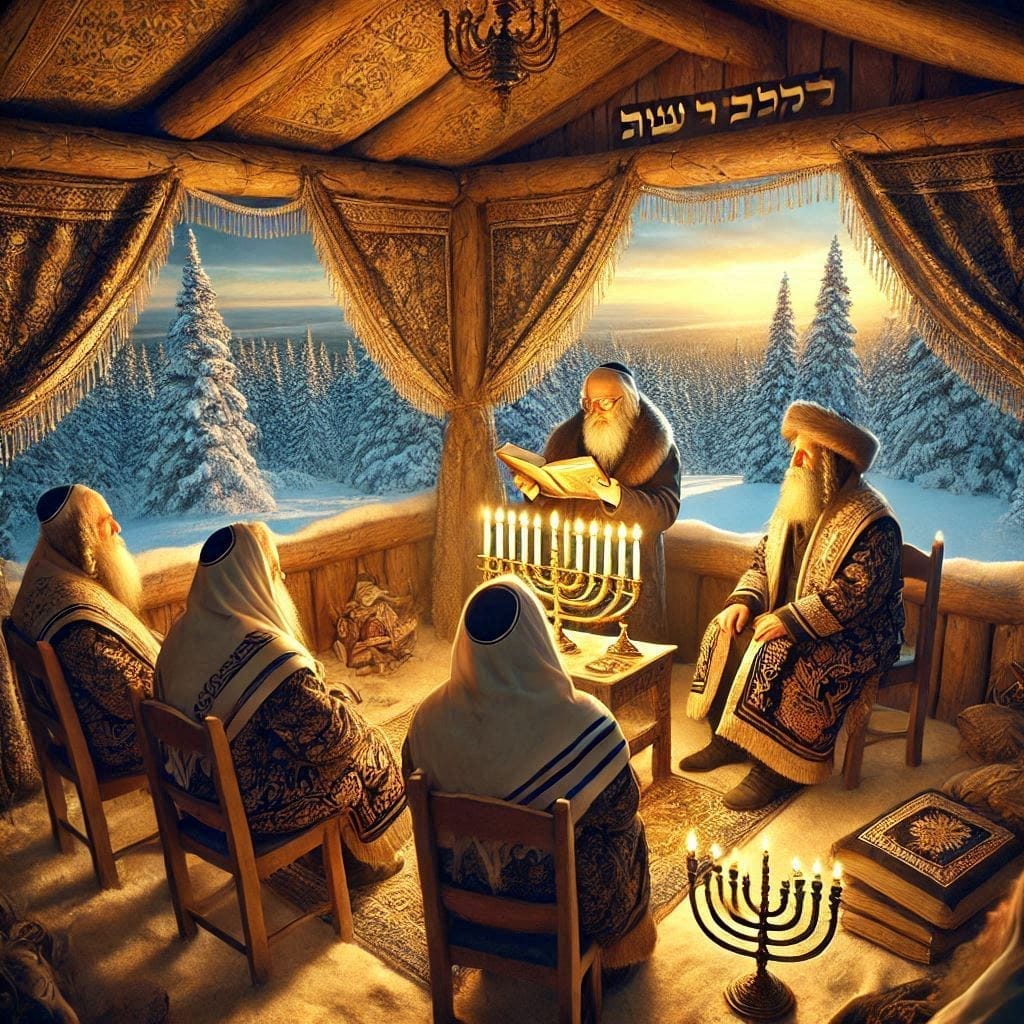
Part VI — Rambam’s Hilchot Chanukah: The Architecture of Light
Having established the history, Rambam turns to the mitzvah itself in chapter 4, giving us the precise halachic structure of the candles.
Here is the distilled halacha:
1. Who must light?
“The mitzvah of Chanukah is: a candle for each household.”
Even one candle fulfills the mitzvah.
2. Levels of observance
Mehadrin: each person lights their own candle.
Mehadrin min hamehadrin (Beit Hillel): add one candle each night.
3. Where to place the menorah
Doorway facing the public domain or a window.
Lower than ten tefachim but above the ground.
4. When to light
At nightfall.
Must burn long enough to be visible to passersby.
5. Using the light
Forbidden to use Chanukah candles for mundane purposes—hence the shamash.
6. Priorities
If one must choose between Shabbat candles and Chanukah candles, Shabbat candles take precedence for shalom bayit, but tzedakah ultimately outweighs beautification.
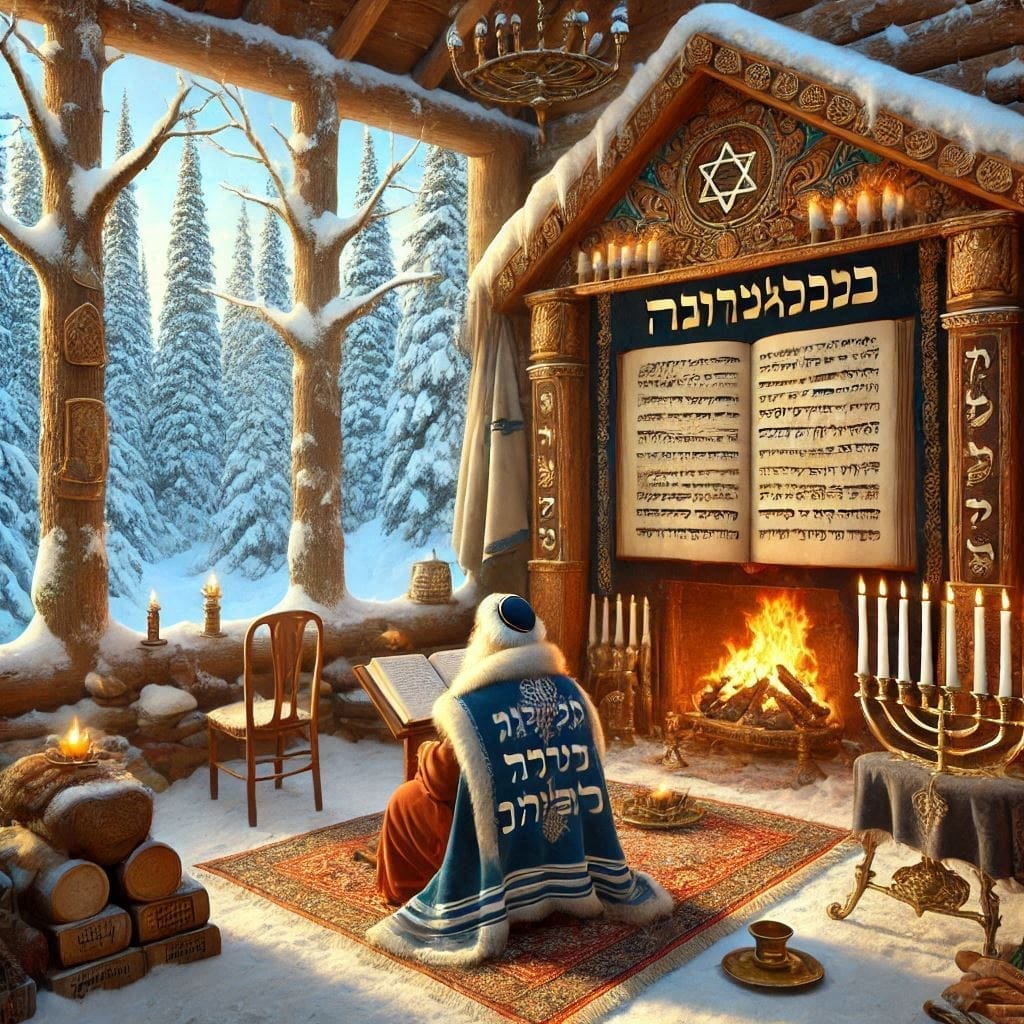
Rambam’s brilliance is not in novelty but in clarity. He gives us a living blueprint for transforming our homes into sanctuaries, replicating the Menorah of the Mikdash—even in places far from Yerushalayim, even in deep northern winters.
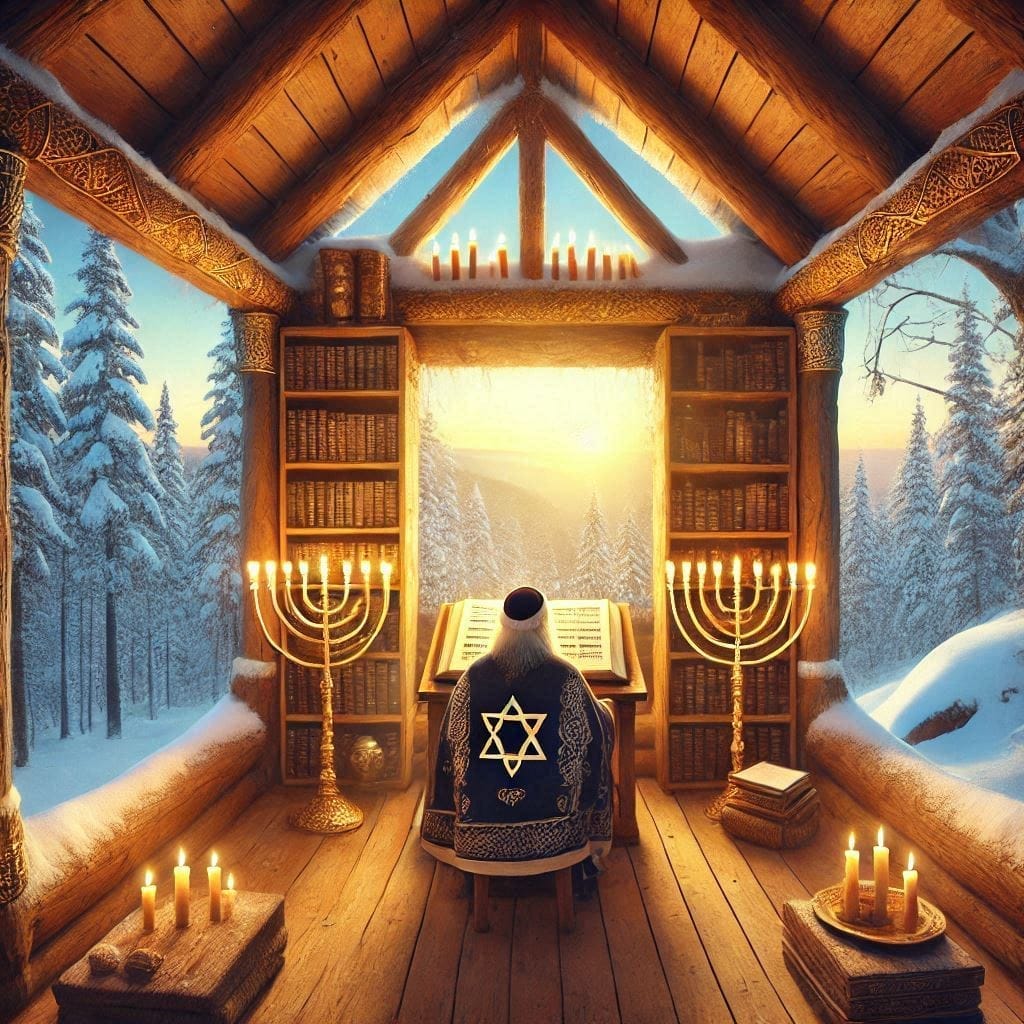
Part VII — The Menorah as Testimony: Symbolism Across the Four Voices
When we weave together Maccabees, Shabbat 21b, Rambam, and Megillat Antiochus, a unified portrait emerges:
The Menorah is testimony.
In the Temple, it testified that the Shechinah rested on Israel.
After the defilement, the rekindled Menorah testified that Israel had returned.
The eight-day miracle testified that Hashem (God) blessed Israel’s efforts.
Today, our menorahs testify that Torah and Jewish identity endure.
Each source highlights a different aspect:
Sefer HaMaccabim: victory restores the Temple flame.
Shabbat 21b: the flame burns beyond its nature.
Rambam: the flame becomes a mitzvah of every home.
Megillat Antiochus: the flame becomes a symbol of Jewish survival against tyranny.
Thus, our menorahs are not decorations—they are declarations.
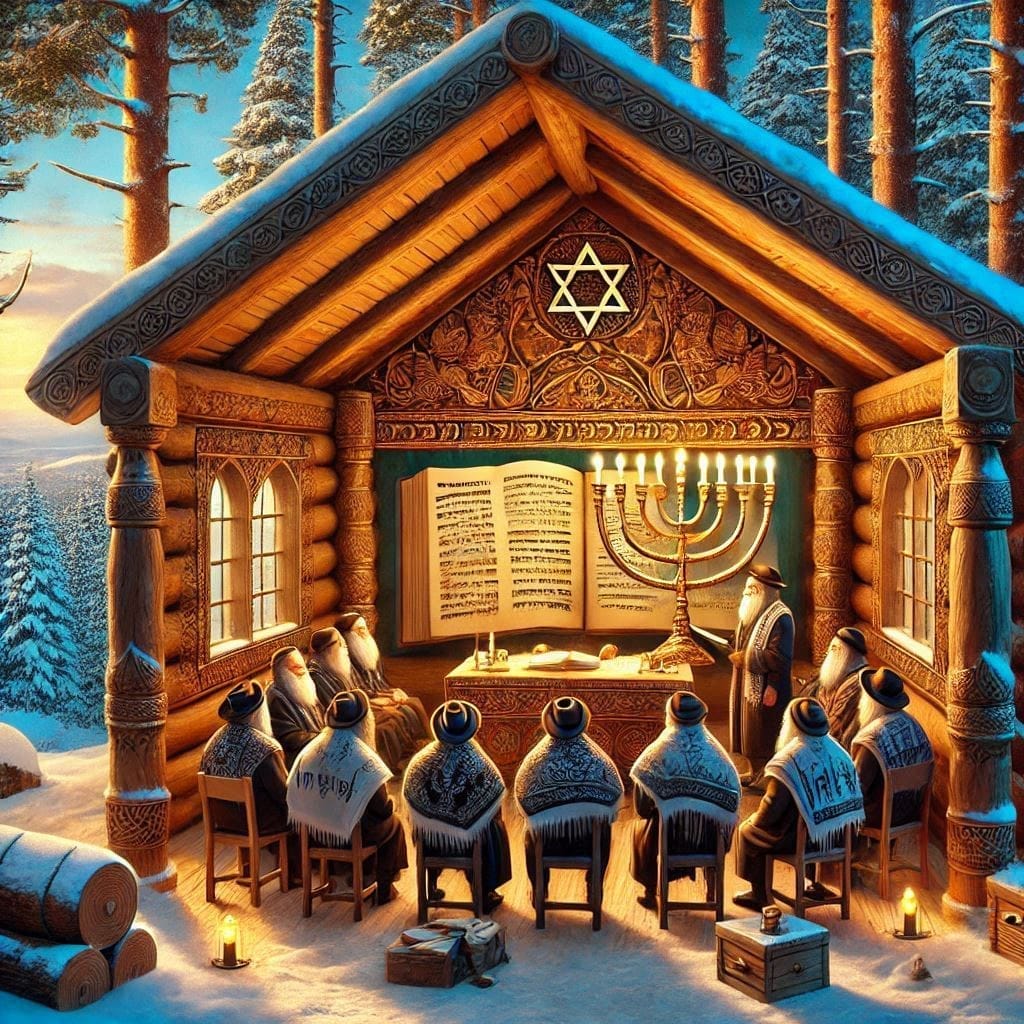
Part VIII — Hallel, Thanksgiving, and the Voice of Song
Rambam states that the Sages established Hallel and thanksgiving as the core of Chanukah observance. This mirrors both:
Sukkot – the original inspiration for eight days
The Temple rededication – the return of joyful service
Hallel contains the emotional heart of Hanukkah:
“They surrounded me, but in the name of Hashem (God) I cut them off.”
“This is the day Hashem (God) has made; let us rejoice.”
“You turned my mourning into dancing.
”
Hanukkah is the recovery of song after a long silence.
The world tried to erase Jewish worship, but through Chanukah the Jewish people become singers again. Every recitation of Hallel is a reclaiming of our voice, a spiritual defiance equal to the military defiance of the Maccabees.
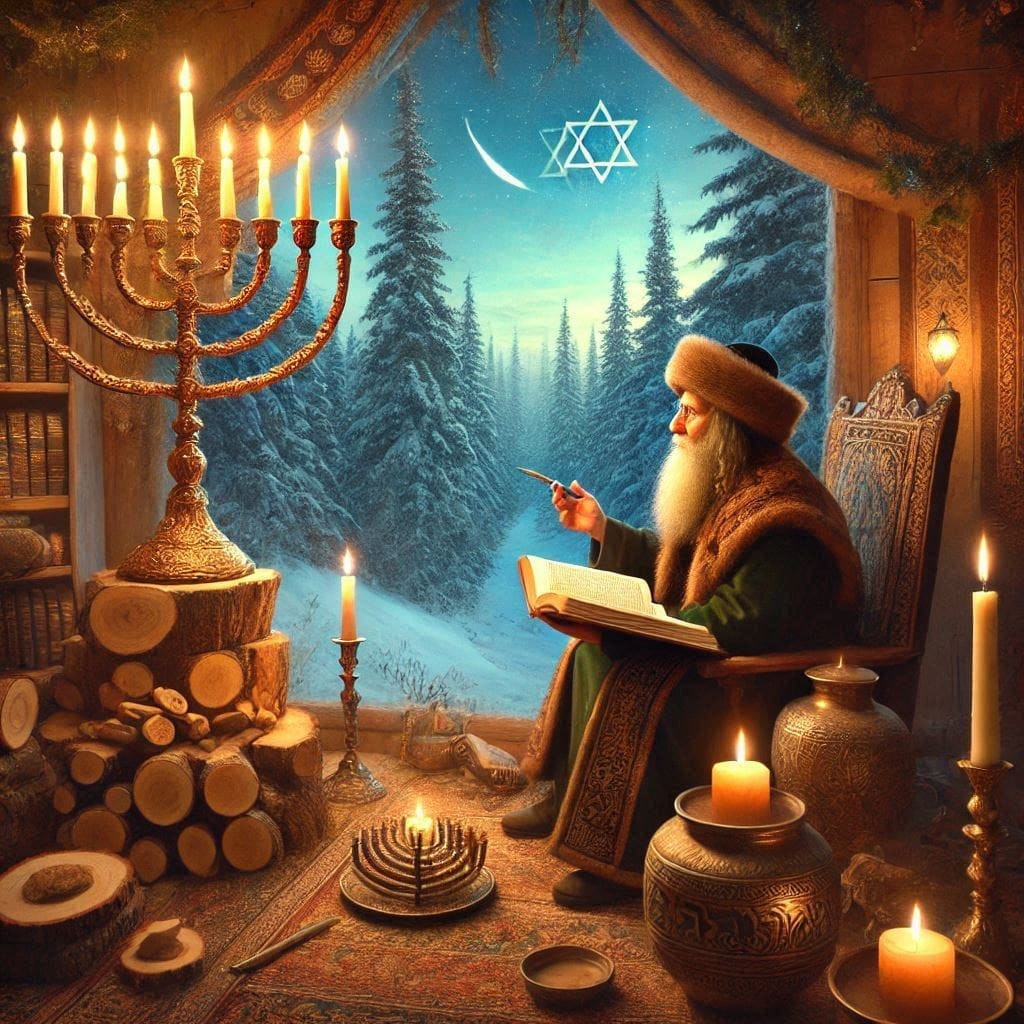
Part IX — The Boreal Night and the Universal Message of the Four Voices
For Jews living in the North, Hanukkah is not metaphorical—it is literal.
The long nights, early sunsets, and intense winter enviornment make the act of lighting candles feel like a reenactment of the historical miracle.
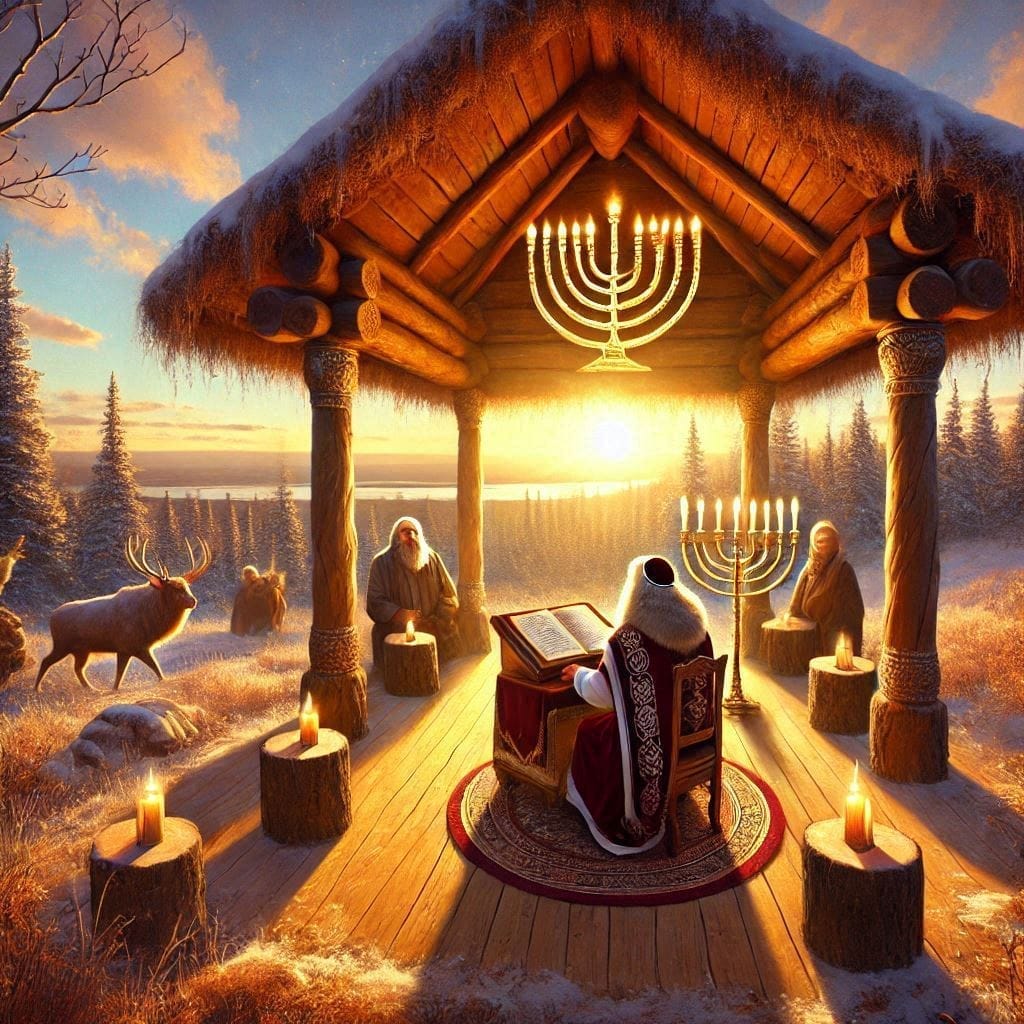
Your menorah burns in a window or doorway against a backdrop of snow, ice, and deep night. That image embodies the message of all four sources:
Maccabees: we fight for the covenant, even when isolated.
Shabbat 21b: Hashem (God) adds His light to our limited oil.
Rambam: the mitzvah belongs to every home, even far from Jewish centers.
Megillat Antiochus: every generation retells and relives the victory.
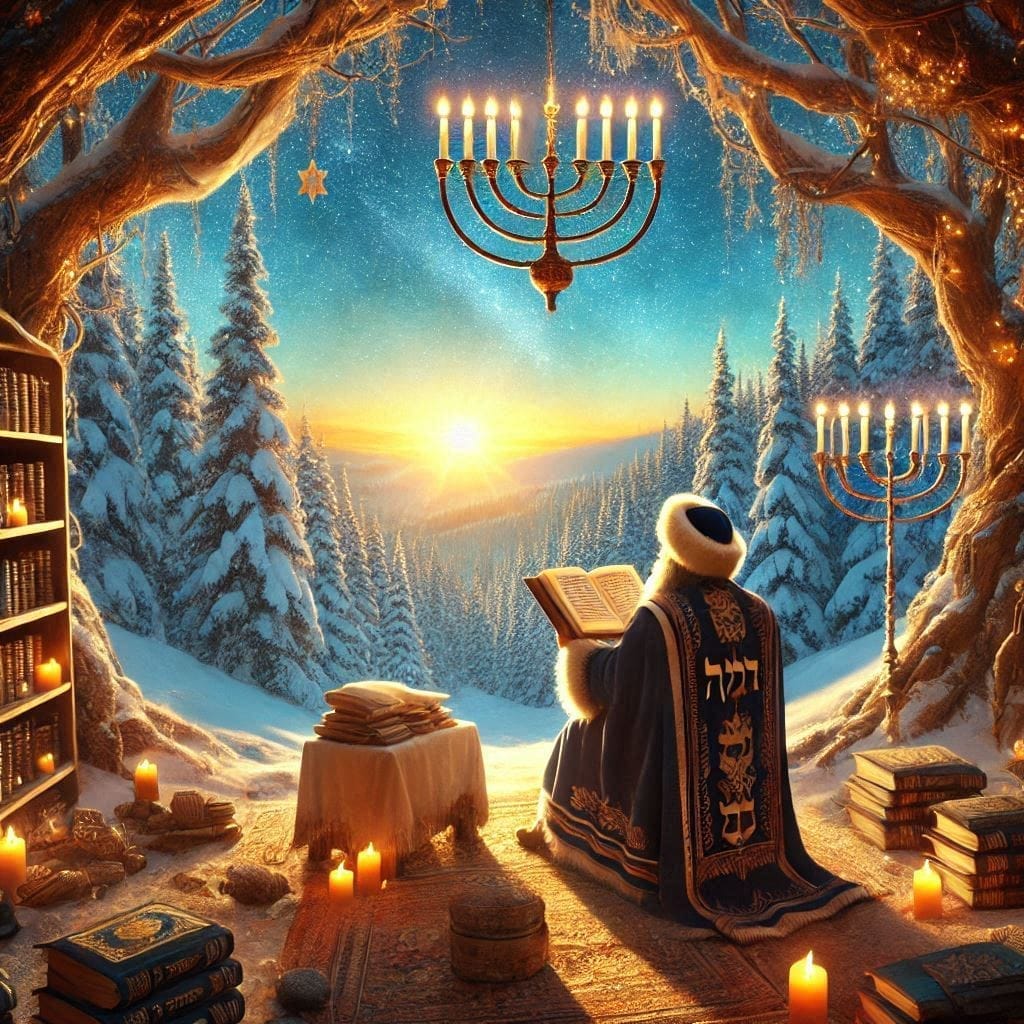
In the Borealish world, the menorah is an act of spiritual survival—like a tiny Beit HaMikdash standing in the forest.
Part X — Conclusion: Light After Battle, Song After Silence
Now all four voices converge:
Sefer HaMaccabim teaches courage, revolt, rededication, and Winter Sukkot.
Shabbat 21b teaches divine partnership through the oil miracle.
Rambam teaches halacha—how to live Hanukkah in action.
Megillat Antiochus teaches the Jewish memory of miracle and resistance.
Together they proclaim:
Darkness does not defeat light.
Silence does not crush song.
Exile does not erase identity.
A small flame can overcome a vast night.
So Hanukkah calls out across centuries and continents:
Light your flame.
Sing your song.
Stand your ground.
Rededicate yourself.
Even in the coldest places, even in the harshest winters—whether in the hills of ancient Judea or the boreal forests of northern Michigan—the menorah declares:
May your lights burn bright.
May your song be loud.
May your winter be filled with the warmth of Torah and the courage of our ancestors.
Shaarei Tzafon — The North Gate
Orthodox Jewish Life and Torah Study in Northeastern Michigan
Shaarei Tzafon — The North Gate, led by Rabbi Ariel Manning, is an independent, family-led Orthodox Jewish educational and publishing initiative based in Northeastern Michigan. We support traditional Jewish life, Torah study, Halakhah, and Jewish education throughout Alpena, Hillman, Rogers City, and surrounding communities. Those interested in traditional Judaism are welcome to contact us for educational resources, Torah learning, and opportunities for discussion by prior arrangement.
Rooted locally, our greater mission extends northward from the 45th parallel — The North Gate — through Michigan, Canada, and Alaska toward the Arctic. We seek to encourage independent Jewish communities, family-centered Torah education, and the renewal of small batei midrash and shtieblach, preserving the rich traditions of Orthodox Judaism for future generations.
Our work begins in Northeastern Michigan, but our vision extends from the 45th parallel toward the Arctic.
Guided by Rambam and Mori Qafiḥ, uplifted by Rebbe Nachman, and grounded by Avraham ben HaRambam’s balance of halakha and inward avodah.
The Orchard’s Path
publishes our books and curricula.
Our mission: a bright, authentic Jewish presence in every northern town.
Created with ©systeme.io


