
A Summer of Books Torah, Translation, and Preparing the Heart for the Days of Awe
BS”D
Part One — Summer Has Its Own Rhythm
Shalom, everybody.
As we begin to come toward the end of the summer, and as Elul moves us closer and closer toward the Yamim Noraim, the Days of Awe, I wanted to do something a little different. I wanted to talk about what I have actually been doing for the last few months.
Some of you may have noticed that during the summer I do not normally write as many lectures as I do during the rest of the year.
That is intentional.
Summer has its own rhythm. There is more going on. The days are longer. There is work outside. There is family life. There are projects that need to be done while the weather is good. Especially where we live in the North, you understand that summer is precious. You have a limited amount of time before the cold returns.
So usually, during the summer, I take somewhat of a break from writing regular lectures.
That does not mean that Torah stops.
Torah never stops.
But the form changes.
There are certain subjects that we will always touch upon during the summer because the Jewish calendar demands that we touch upon them. We talk about the Seventeenth of Tammuz. We talk about the Three Weeks. We talk about Tisha B'Av. And eventually we begin talking about Elul and Selichot as the year begins turning toward Rosh Hashanah.
But between those things, I have generally tried to give myself a little room.
And yet, apparently, when I stop writing lectures, I start writing books.
Oh my gosh.
Books.
Lots of books.
What I thought was going to be something of a quiet summer turned into one of the busiest periods of writing, translating, editing, assembling, researching, and publishing that I have had in quite a while.
And I think there is something appropriate about that.
Sometimes Torah comes through speaking.
Sometimes Torah comes through teaching.
Sometimes Torah comes through sitting quietly with an old sefer and trying to understand what a rabbi who lived generations before us was trying to say.
And this summer, that has been much of my avodah.

Part Two — Why Work on Old Books?
Before I talk about the individual books, I think it is important to explain why I keep doing this.
There are already thousands upon thousands of Jewish books.
There are siddurim everywhere. There are translations everywhere. There are websites. There are apps. There are enormous libraries available to us in ways that our grandparents could never have imagined.
So why translate another old book?
Why spend hours fighting with difficult Hebrew, rabbinic Hebrew, Rashi script, obscure references, old editions, and passages that sometimes take several readings before you even begin to understand them?
Because there are still entire sections of the Jewish conversation that English-speaking Jews simply cannot hear.
That is something I have become increasingly aware of.
We sometimes think that because we have a large number of Jewish books available in English, we have access to Judaism as a whole.
We do not.
We have access to the parts that somebody chose to translate.
And those are not necessarily the same thing.
There are entire schools of Jewish thought that are barely represented in English. There are arguments within Judaism where one side has twenty books in English and the other side has almost nothing. There are rabbis whose names everybody knows but whose actual writings very few English-speaking people have ever read.
And I do not think that is healthy.
You do not have to agree with every book in order to believe that the book deserves to be read.
In fact, sometimes the books with which we disagree are among the most important books to read.
Judaism has always been a civilization of argument.
The Mishnah preserves arguments.
The Gemara preserves arguments.
The Rishonim argue.
The Acharonim argue.
One posek says one thing, another posek says another, and later generations preserve both opinions because the argument itself becomes Torah.
So one of the themes of my work this summer has been very simple:
Let people read the sources.
Let people hear the argument.
Let people see what these rabbis actually said instead of merely being told what they supposedly believed.
That principle connects all three of the major book projects I worked on this summer.
Part Three — Milḥamot Hashem
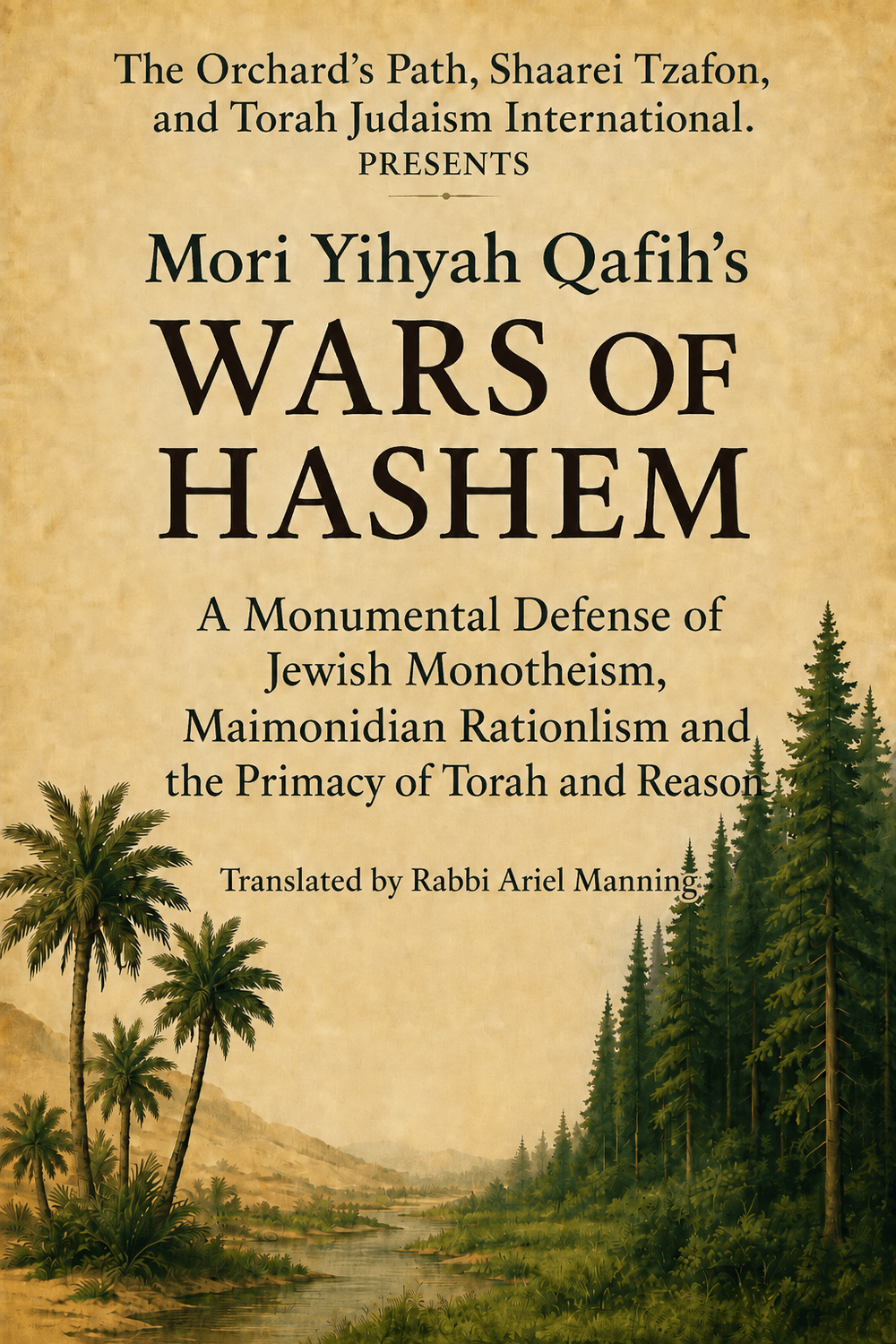
The first major project that we finally got out was Milḥamot Hashem—The Wars of Hashem—associated with Mori Yiḥya Qafih.
This was an interesting project for me because it is certainly not a book with which I agree at every point.
Everybody who has listened to me for any length of time knows that I have a deep appreciation for Jewish mysticism. I study Kabbalah. I study the Zohar. I appreciate many of the teachings that developed through the Kabbalistic tradition.
Mori Yiḥya Qafih came from a very different perspective.
He represented a fiercely rationalist stream of Yemenite Jewish thought and was deeply critical of the Zohar and of later Kabbalistic developments.
So why translate and publish something with which I disagree?
Because it is important.
And because Jewish intellectual honesty requires us to know that this perspective existed.
It is very easy to create a Judaism in which everybody in the past conveniently agrees with whatever we believe today.
But history does not work like that.
Torah history certainly does not work like that.
There were great rabbis who were mystics, and there were great rabbis who were rationalists. There were rabbis who interpreted certain passages literally and rabbis who interpreted them philosophically. There were rabbis who embraced ideas that other rabbis vigorously opposed.
And I think we become stronger, not weaker, when we allow ourselves to encounter that diversity.
For me, working through Milḥamot Hashem was therefore not about trying to turn everybody into a follower of Mori Yiḥya Qafih.
It was about opening a door.
Here is another Jewish voice.
Here is another argument.
Here is another way that serious, observant Jews attempted to understand Torah, tradition, revelation, philosophy, and the nature of authentic Judaism.
Read it.
Think about it.
Agree with some of it.
Disagree with some of it.
But at least hear the argument from the person who actually made it.
That was the first major project.
And when that was finally finished, I thought perhaps things would slow down.
They did not.
Part Four — Sefer Yetzirah and Saadia Gaon
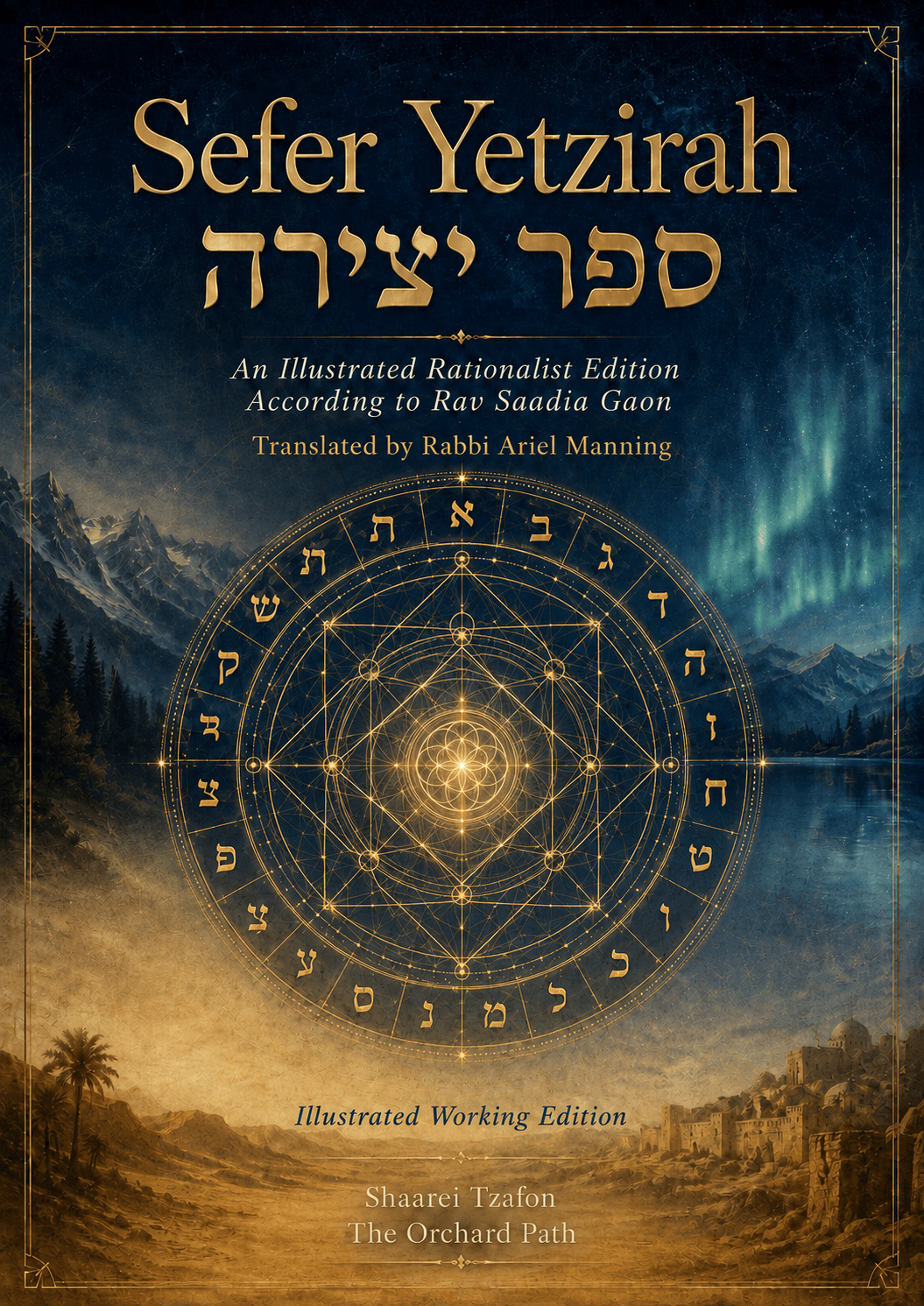
The next project became Sefer Yetzirah.
And this one took us in almost the opposite direction.
Sefer Yetzirah is one of the oldest and most mysterious works in the Jewish tradition. It speaks about creation through letters, numbers, the elements of existence, the structure of language, the cosmos, the human being, and the relationship between all these things.
Later Kabbalists would read Sefer Yetzirah through increasingly mystical systems.
But I wanted to approach it particularly through Rav Saadia Gaon.
That matters.
Saadia is living centuries before the Arizal. He is not reading Sefer Yetzirah through Lurianic Kabbalah. He is trying to understand the text through the philosophical, linguistic, and theological world of the Geonim.
And that gives us an extraordinarily interesting window.
It allows us to ask:
What did an early medieval Jewish rationalist think this strange book meant?
How did he understand the letters?
How did he understand creation?
How did he understand the heavens?
How did he understand the structure of the human person?
And can we study this ancient mystical or proto-mystical text without immediately forcing it into systems that developed much later?
That became the heart of the project.
I also wanted the book to be something that could actually be studied.
Not merely an academic object sitting on a shelf.
There is a longstanding Jewish instinct to study deeper things on Shabbat, especially on Friday night. Many Jews with a mystical orientation study Zohar.
I began wondering whether there could also be a kind of rationalist counterpart to that.
Could somebody sit down on Shabbat evening with Saadia Gaon's Sefer Yetzirah and enter the mystery of creation through an entirely different doorway?
I think the answer is yes.
And one of the things I enjoyed most was allowing the illustrations and explanations to help make a very difficult text more approachable without pretending that it is simple.
Because it is not simple.
Some Torah should remain difficult enough that we have to wrestle with it.

Part Five — Recovering More Than One Jewish Language
Working on Milḥamot Hashem and Sefer Yetzirah also reminded me of something else.
Judaism does not speak in only one intellectual language.
Sometimes we act as though there must be one system into which everything has to fit perfectly.
Rambam must sound like the Ari.
The Ari must sound like Saadia.
Saadia must sound like the Baal Shem Tov.
The Baal Shem Tov must sound like the Vilna Gaon.
And everybody must somehow be saying exactly the same thing.
But they were not.
There are areas of profound agreement, certainly. Torah is Torah. Hashem is One. Revelation is real. Mitzvot matter. Israel has a covenant. Human beings are responsible before God.
But beyond those foundations, Jewish thinkers sometimes explain reality very differently.
And perhaps we should allow them to.
One of the things I have tried to do in my own study is not flatten the Jewish tradition.
I can appreciate Rambam without pretending he was a Lurianic Kabbalist.
I can appreciate the Ari without pretending he was simply restating the Guide for the Perplexed.
I can learn from Saadia.
I can learn from Mori Qafih.
I can learn from Hasidic masters.
And I can let each one speak in his own voice.
That has really become important to me.
Because once you stop being afraid of the differences, something beautiful happens.
You begin to see the enormous breadth of Torah.
Torah has survived in Yemen and Poland and Spain and Lithuania and Iraq and Morocco and Hungary and Babylonia and the Land of Israel.
It has produced philosophers, mystics, legalists, poets, pietists, rationalists, Hasidim, Mekubalim, and tremendous masters of halachah.
They do not always agree.
But they are sitting around the same enormous table.
And what I have wanted to do with these projects is pull out some chairs at that table that English-speaking Jews do not often get to sit in.
That idea eventually led directly into the largest project of the summer.
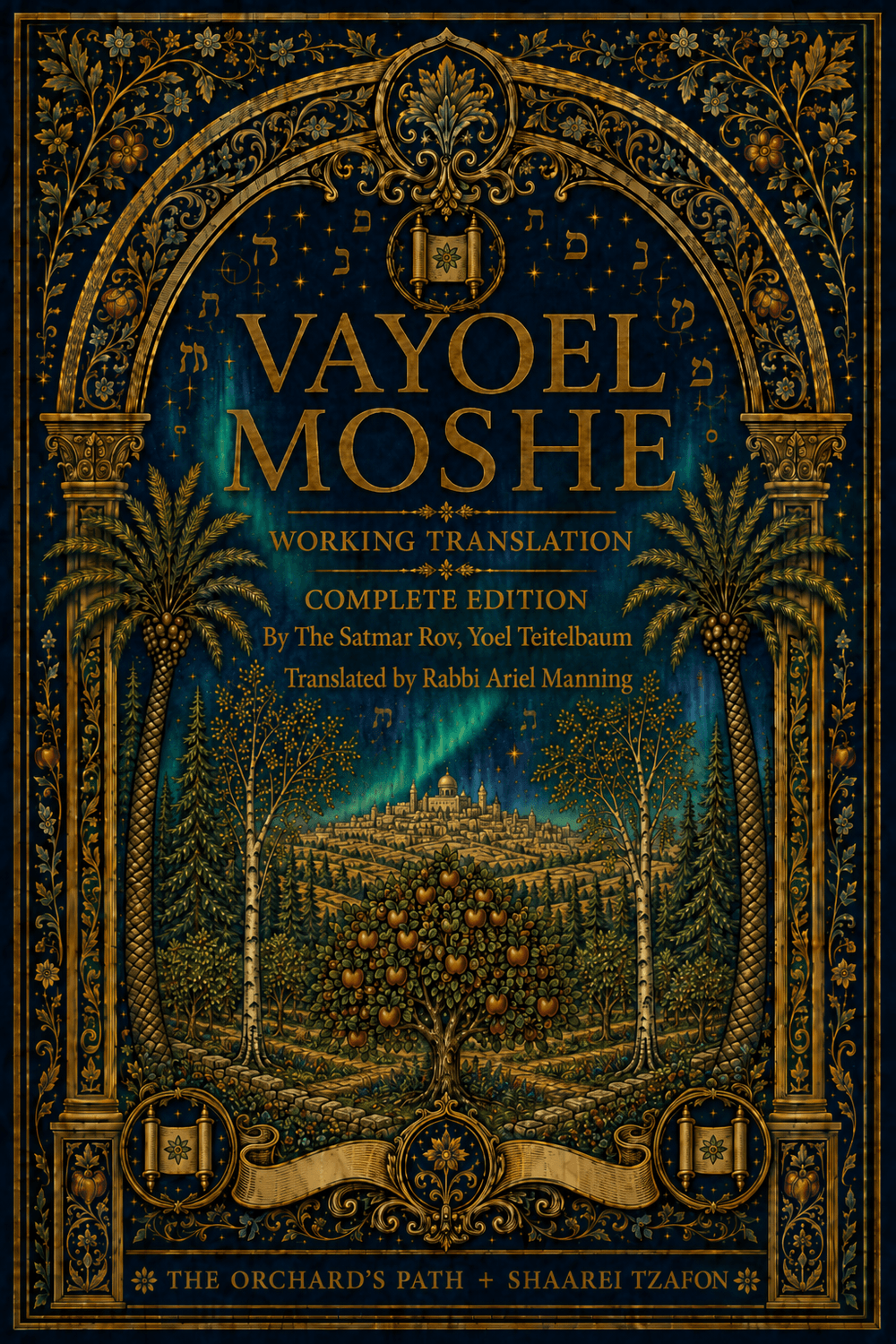
And that project was VaYoel Moshe.
Part Six — The Mountain Called VaYoel Moshe
Then came VaYoel Moshe.
And this one was a mountain.
For years, I had wanted to see a complete English translation of VaYoel Moshe.
Parts have been translated. Selections have been discussed. People quote it. People argue about it. People summarize it.
But finding the complete work available to the English-speaking reader has been another matter.
And VaYoel Moshe is not a minor work.
It is probably the single most important philosophical and theological work for understanding the Satmar approach to Zionism and the modern State of Israel.
Whether you agree with the Satmar Rov or disagree with him, if you are going to talk seriously about Satmar theology, you should know what he actually argued.
The work contains the great discussion of the Three Oaths—Shalosh Shevuot.
It discusses settlement in Eretz Yisrael.
It discusses Lashon HaKodesh.
It examines Gemara, Midrash, Rishonim, Acharonim, halachic sources, aggadic sources, exile, redemption, Jewish sovereignty, mitzvot connected to the Land, and the question of whether human political action can attempt to force the redemption.
This is not something you summarize adequately in three paragraphs on a website.
And yet for many English-speaking Jews, that is essentially how they encounter Satmar's position.
Somebody tells them:
"Satmar believes this."
Or:
"Satmar believes that."
And sometimes the person explaining Satmar has never actually read VaYoel Moshe.
I wanted to change that.
Not by producing a critical scholarly edition.
That is not what this is.
This is a working translation.
There will be mistakes.
There will be sentences that can be improved.
There will undoubtedly be places where someone with greater expertise can correct something.
But now the text can be read.
And, importantly, the Hebrew is there so that people can check the English against the source.
That, to me, matters tremendously.
Part Seven — Why Translate a Book This Controversial?
Of course, VaYoel Moshe is controversial.
That is part of why I wanted to work on it.
Zionism is one of those subjects where people very quickly stop listening to one another.
One side says the creation of the State of Israel is among the great miracles of modern Jewish history.
Another side raises serious theological objections.
And then everyone starts speaking past everyone else.
I think we need more primary sources and fewer caricatures.
You do not need to become Satmar in order to read the Satmar Rov.
You do not need to agree with every conclusion in VaYoel Moshe.
But you should understand the argument before dismissing it.
What does he actually do with the Three Oaths?
What does he actually say about the mitzvah of dwelling in Eretz Yisrael?
How does he understand exile?
What distinction does he draw between love for the Land and political sovereignty?
What does he mean when he argues that redemption cannot be seized by force?
These are serious questions.
And for me personally, the project has also been fascinating because I myself is close to Satmar on a number of philosophical and theological questions than many people might expect.
Not necessarily every custom.
Not every minhag.
Not every social practice.
But philosophically, the insistence that Jewish destiny must ultimately be measured through Torah rather than nationalism alone is an argument that deserves to be heard.
At the same time, I should make an important distinction.
Although I find myself agreeing with the Satmar Rov's on just about every theological conclusion, that does not mean that I regard the modern State of Israel as simply evil or without merit.
In my view, Israel has developed one of the strongest democratic systems in the Middle East and provides political, civil, and religious freedoms that are absent in many of the surrounding countries.
My objection is primarily theological.
The question for me is whether a modern political state founded upon Zionist nationalism should simply be identified with Judaism itself and called a "Jewish State" in a religious sense.
Those are not necessarily the same thing.
A state can be overwhelmingly Jewish in population, history, language, culture, and national identity without necessarily being a state governed according to Torah.
That is why I personally think the term Zionist State can sometimes be more precise.
It identifies the political ideology upon which the modern state was established without confusing that political system with Judaism itself.
And strangely enough, I think making that distinction could allow for greater religious freedom, not less.
If Israel were understood straightforwardly as a Zionist democratic state rather than attempting to define one official version of Judaism through the machinery of government, then Judaism itself could exist more freely within it.
Orthodox Jews could practice Orthodoxy.
Hasidim could live according to their communities and their rabbanim.
Sephardim could follow their traditions.
Religious Zionists could follow theirs.
Secular Jews could remain secular.
And different Jewish communities would not necessarily need a centralized state religious authority deciding every question of Jewish identity and religious practice.
That is where I have concerns about an institution such as the Chief Rabbinate.
My concern is not that Judaism should disappear from Israeli public life. Quite the opposite.
I want Torah to flourish.
But Torah and state power are not always the same thing.
There is a difference between a community accepting the authority of a rav because it believes in Torah and a government bureaucracy determining religious questions because the state has granted it legal authority.
And I think that distinction deserves serious consideration.
None of this diminishes the holiness of Eretz Yisrael.
Eretz Yisrael is holy.
It is extraordinarily important.
It stands at the center of Jewish history, Jewish prayer, and Jewish longing.
But the Land itself exists within covenant.
The Torah repeatedly connects dwelling securely in the Land with faithfulness to Hashem.
That is ultimately the point that I find so powerful in the Satmar Rov's argument.
Jewish destiny cannot finally be measured only by political independence, military strength, economic prosperity, or national sovereignty.
Those things may have value.
But they are not the ultimate measure of Jewish success.
Torah is.
Covenant is.
Our relationship with Hashem is.
So even where one ultimately disagrees with Satmar's conclusions, the questions being asked are not foolish questions.
They are Torah questions.
And they deserve Torah answers.
That is why I wanted the entire argument available.
Not merely quotations selected by opponents.
Not merely quotations selected by supporters.
Not a caricature of Satmar from people who dislike Satmar.
And not an idealized version from people who already agree.
Read the book.
Read what the Satmar Rov actually says.
Study his sources.
Consider the objections.
Consider the other side.
Then decide.
Part Eight — What Translation Teaches You
There is something else I learned this summer.
Translation is a form of Torah study.
When you are simply reading, you can sometimes move past a sentence that you only understand seventy percent.
Your mind fills in the rest.
You say, "I basically understand what he means," and you move forward.
You cannot do that when you are translating.
Every word starts demanding an answer.
What does this connective mean?
Why did he repeat that phrase?
Why did he quote that Gemara here?
What is the antecedent of this pronoun?
Is this sentence referring back to something three paragraphs earlier?
Is he agreeing with this source or bringing it only to reject it?
And rabbinic literature can be especially difficult because sometimes one sentence seems determined to travel through half of Jewish history before it finally reaches a period.
That process forces you to slow down.
And slowing down is good.
We live in a world built around speed.
Fast information.
Fast opinions.
Fast reactions.
Fast outrage.
People read a headline and believe they understand a subject.
Torah operates at another speed.
Sometimes you need to sit with five lines for an hour.
Sometimes you need to compare editions.
Sometimes you need to admit:
"I do not understand this yet."
That is humility.
And humility is part of learning.
I think these projects have helped remind me that the purpose of Torah study is not merely accumulating information.
It is allowing your mind to be trained.
You become more careful.
You become slower to speak.
You begin noticing distinctions.
You begin recognizing how much you do not know.
And perhaps that is one reason this work fits so naturally with Elul.
Because Elul is also about slowing down long enough to see ourselves clearly.
Part Nine — Elul: After All the Books, What Is the Point?
And that brings us to where we are now.
Elul.
We are moving toward Rosh Hashanah.
Toward the Yamim Noraim.
Toward those days when we proclaim Hashem as King and ask that another year of life be given to us.
After months of books, translations, arguments, footnotes, sources, Hebrew, English, philosophy, Kabbalah, rationalism, Zionism, anti-Zionism, and everything else, there is a question that eventually has to be asked:
What is all of this for?
What is Torah supposed to do to us?
Because you can know many books and still have an angry heart.
You can know halachah and still treat people terribly.
You can argue about theology all day and never once examine yourself.
You can defend Judaism while neglecting your own Judaism.
Elul calls us back to the center.
Hashem.
Our relationship with Hashem.
Our families.
Our neighbors.
The people we have hurt.
The commitments we have neglected.
The prayers we have rushed.
The mitzvot we have treated casually.
The anger we have held onto.
The anxieties that have consumed us.
The pride that keeps us from admitting when we are wrong.
And as we move toward the Days of Awe, one of the things I am asking Hashem for is very simple:
Peace of mind.
Peace of heart.
Not escape from responsibility.
Not a life without problems.
But enough inner quiet that we can hear what Hashem is asking of us.
There is so much noise now.
Political noise.
Religious noise.
Internet noise.
Personal noise.
And sometimes we desperately need that stillness in which a Jew can say:
"Ribono Shel Olam, where am I? Where am I going? What needs to change?"
That question is greater than any book I published this summer.
Because the ultimate sefer we are writing is our life.
Part Ten — Returning to Teaching
So now, as the weather begins to change and the summer starts giving way to autumn, I will begin moving back into writing more regular lectures.
The books have taken much of my attention these past several months.
And I am grateful for that.
Milḥamot Hashem gave us an opportunity to encounter a powerful Jewish rationalist critique.
Sefer Yetzirah gave us an opportunity to enter one of Judaism's oldest mysteries through the eyes of Saadia Gaon.
And VaYoel Moshe gave us an opportunity to open one of the most important and controversial works of modern Orthodox Jewish thought to English-speaking readers.
Three very different books.
Three very different worlds.
And somehow, I think all three belong together.
They remind us that Torah is enormous.
Much larger than any one group.
Much larger than any single ideology.
And certainly much larger than me.
Now we turn again toward the cycle of the year.
Rosh Hashanah.
Yom Kippur.
And then, God willing, I am thinking that one of our next major lessons should be about Sukkot.
Sukkot is such a beautiful transition after the intensity of the Yamim Noraim.
We leave our permanent houses.
We enter something fragile.
And we discover that security does not ultimately come from walls.
It comes from Hashem.
Then the year continues moving.
The days become shorter.
Here in the North, the darkness comes earlier and earlier.
The cold settles in.
And eventually we will come to Hanukkah.
And obviously, God willing, we will have a Hanukkah lesson this winter as well.
There is something especially beautiful about Hanukkah in the North.
The darker the season becomes, the more meaningful those little flames begin to look.
But before we get there, we have Elul.
We have Selichot.
We have Rosh Hashanah.
We have Yom Kippur.
So as we close this unusual summer—this summer that somehow became a summer of books—I want us to take the same seriousness that we bring to studying a difficult sefer and bring it to examining ourselves.
Read yourself carefully.
Do not skip difficult passages.
Do not cover over mistakes.
Do not pretend something says what you wish it said.
Look honestly.
But also remember that teshuvah means we are editable.
The story is not finished.
Hashem gives us the possibility of beginning again.
And perhaps that is the greatest lesson of all these old books.
Generations come and generations go.
Empires rise and disappear.
Languages change.
Communities move from country to country.
Arguments continue for hundreds of years.
And yet somewhere there is still a Jew opening a sefer.
Still saying Shema.
Still lighting Shabbat candles.
Still asking a question.
Still trying to understand a line of Torah.
Still turning toward Jerusalem.
Still asking Hashem for forgiveness.
Still beginning again.
That chain has not broken.
And now it is our turn to carry it.
So I want to thank everybody who has followed these projects, everybody who has read the books, everybody who has offered corrections, everybody who has encouraged the work, and everybody who continues learning with us.
God willing, there will be more.
More lectures.
More books.
More Torah.
But for the moment, as Elul begins drawing us toward the throne of judgment, my prayer for all of us is that Hashem should give us clarity of mind, peace of heart, strength to repair what needs repairing, courage to admit what needs admitting, and wisdom to know what truly matters.
May we enter the Yamim Noraim with humility.
May we enter them with hope.
May we enter them ready to listen.
May Hashem forgive us for where we have fallen short.
May He strengthen our families and our communities.
May He grant peace to Am Yisrael and to all those who desperately need peace.
And may the coming year be a year of Torah, mitzvot, health, parnassah, wisdom, compassion, and genuine closeness to Hashem.
And then, God willing, once the Yamim Noraim have passed and we enter the sukkah together, we will begin another season of learning.
Another season of teaching.
Another season of trying, however imperfectly, to understand the Torah that has been handed down to us.
From one generation to the next.
From teacher to student.
From parent to child.
From one Jewish heart to another.
May we be worthy of carrying it forward.
Shanah tovah.
May we all be written and sealed for a good year.
And I will see you, God willing, in the next lesson.
Books are available at www.amazon.com
Shaarei Tzafon — The North Gate
Orthodox Jewish Life and Torah Study in Northeastern Michigan
Shaarei Tzafon — The North Gate, led by Rabbi Ariel Manning, is an independent, family-led Orthodox Jewish educational and publishing initiative based in Northeastern Michigan. We support traditional Jewish life, Torah study, Halakhah, and Jewish education throughout Alpena, Hillman, Rogers City, and surrounding communities. Those interested in traditional Judaism are welcome to contact us for educational resources, Torah learning, and opportunities for discussion by prior arrangement.
Rooted locally, our greater mission extends northward from the 45th parallel — The North Gate — through Michigan, Canada, and Alaska toward the Arctic. We seek to encourage independent Jewish communities, family-centered Torah education, and the renewal of small batei midrash and shtieblach, preserving the rich traditions of Orthodox Judaism for future generations.
Our work begins in Northeastern Michigan, but our vision extends from the 45th parallel toward the Arctic.
Guided by Rambam and Mori Qafiḥ, uplifted by Rebbe Nachman, and grounded by Avraham ben HaRambam’s balance of halakha and inward avodah.
The Orchard’s Path
publishes our books and curricula.
Our mission: a bright, authentic Jewish presence in every northern town.
Created with ©systeme.io


