
By the Power of Grayskull
1. The Jewish History Behind He-Man
Before we get into Kabbalah, sefirot, Castle Grayskull, the sword, or the transformation scene, we first have to begin with the historical point: He-Man is not a Jewish religious work, but it does have real Jewish fingerprints.
The franchise began as Masters of the Universe, a Mattel toy line that became famous through the 1980s animated series. The series was produced by Filmation, and two of the men who helped give early He-Man its mythic structure was Michael Halperin, who wrote the 1982 Masters of the Universe series bible and Lou Schiemer the executive producer (whom are both Jewish). Later reporting has discussed Halperin’s own explanation that he drew from Hebrew Bible themes and especially from the Maccabee story when shaping the conflict between the righteous warrior and the tyrant who wants to seize the source of power. In that reading, He-Man carries something of Judah Maccabee, while Skeletor carries something of Antiochus.
Now, we have to be careful. He-Man is not Torah. Castle Grayskull is not the Beit HaMikdash. Skeletor is not literally Antiochus. We are not saying the cartoon is a secret midrash. But the heroic pattern is there: a righteous warrior, a threatened kingdom, a guarded center, an evil power trying to seize the holy source, and the question of whether strength will be used for protection or domination.
That is why this story gives us a useful teaching. It is not because fantasy replaces Torah. It is because fantasy sometimes gives people a picture they can understand. And once the picture is clear, we can use it to explain a real Jewish idea.
The real Jewish idea is this:
Hashem is the Source.
Torah is the light.
Halacha is the filter.
The Jew is the vessel.
The world is where the light must become action.
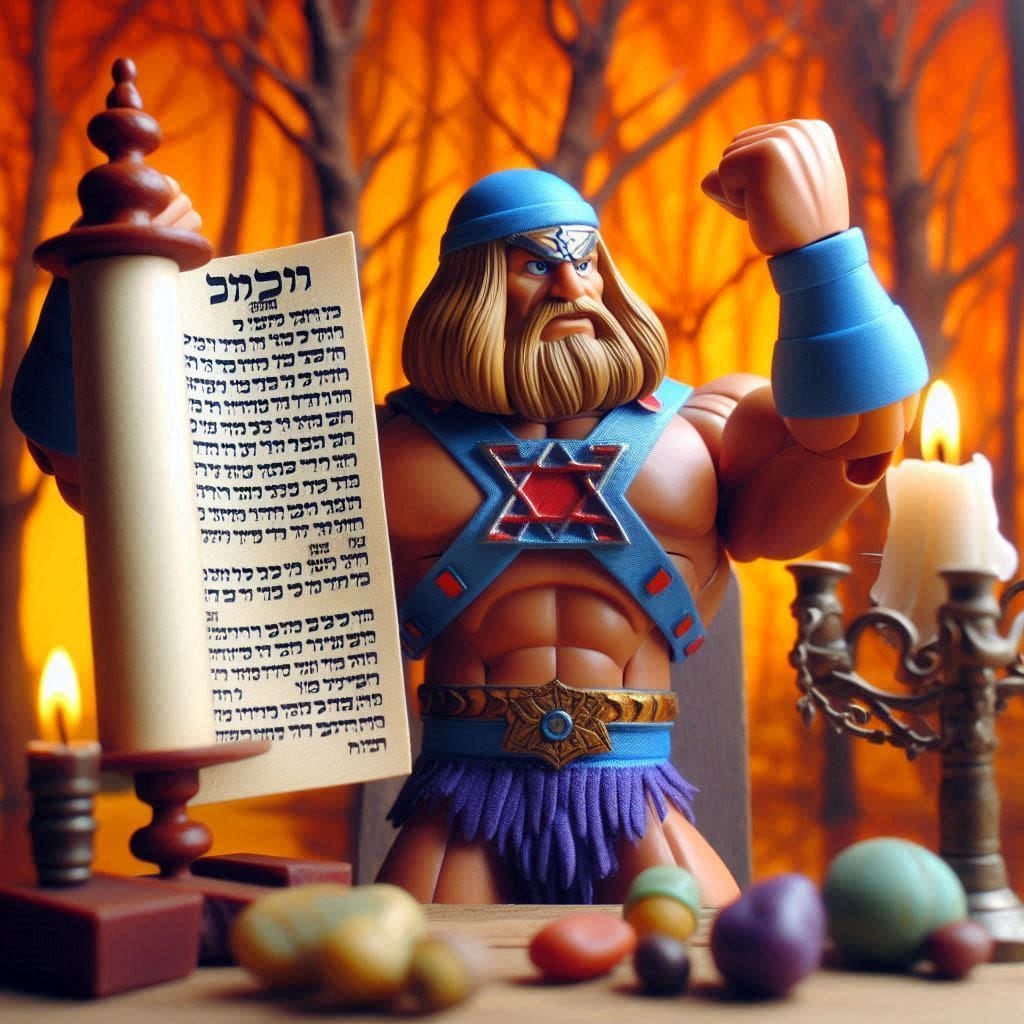
2. He-Man as a Maccabee-Type Hero
The Maccabees were not merely strong men. That is too shallow. The Maccabee story is not about power for its own sake. It is about strength in service of covenant.
A Maccabee fights because holiness is under attack. He fights because the sanctuary has been invaded. He fights because Torah, worship, identity, and covenantal life are being threatened. He is not a conqueror looking for glory. He is a defender standing between desecration and the sacred center.
This is why He-Man works as a Maccabee-type image. He is obviously strong. He has the body of a warrior. But his famous transformation does not begin with himself. He does not say, “By my muscles, I have the power.” He does not say, “By my ego, I have the power.” He says:
“By the power of Grayskull…”
Only after that does he say:
“I have the power.”
That order matters.
First comes the source. Then comes the vessel.
First comes the calling. Then comes the strength.
First comes the guarded mystery. Then comes the transformed hero.
That is a Jewish way of thinking about power. In Torah, a person does not simply own power. Kingship belongs to Hashem. Wisdom belongs to Hashem. Strength belongs to Hashem. A human being may be given strength, but he must use it as a servant, not as a tyrant.
So He-Man, read symbolically, is not just “a strong man.” He becomes an image of gevurah under discipline — strength placed in the service of righteousness.
The Maccabee does not fight because he loves fighting. He fights because holiness needs defenders.
The true hero is not the man who wants power. The true hero is the man who accepts responsibility.
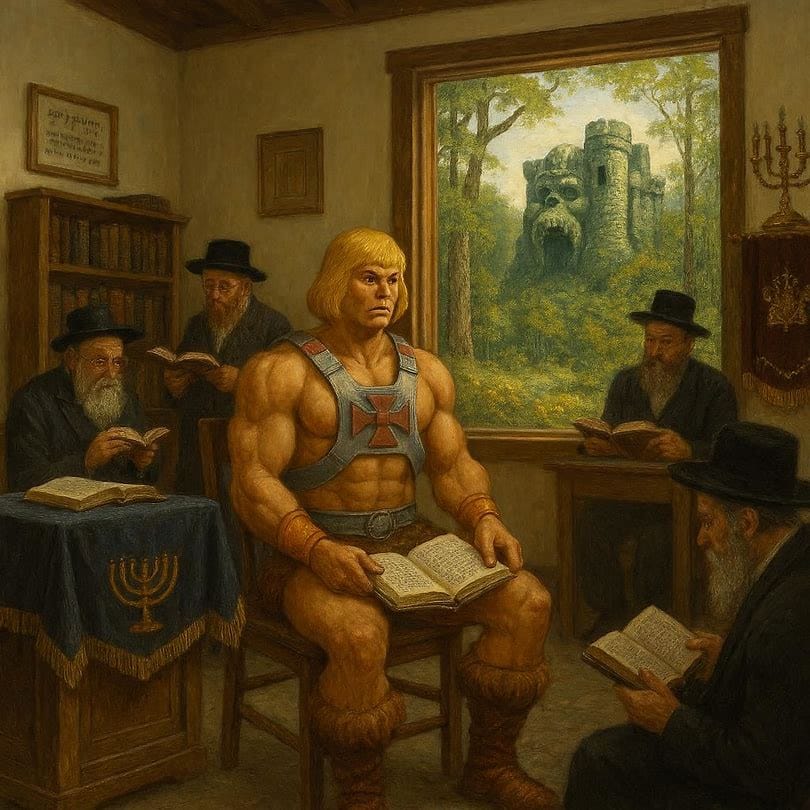
3. Castle Grayskull as the Guarded Center
Castle Grayskull is not just a castle. In the mythology, it is a hidden place of ancient power, mystery, danger, and protection. The righteous guard it. The wicked want to seize it. Whoever controls Grayskull controls something far greater than a building.
In Jewish language, we have to be careful. We are not saying Castle Grayskull is the Temple. We are not turning a cartoon into Torah. But symbolically, it functions like a shadow of an old truth:
The holy center must be guarded.
The Mishkan was guarded. The Mikdash was guarded. The Torah is guarded. The covenant is guarded. Holy things are not thrown open to whoever wants to use them.
Not because holiness is weak.
Because human beings are dangerous when they touch holy power without humility.
That is the difference between He-Man and Skeletor.
He-Man receives power to defend the kingdom.
Skeletor wants power to own the kingdom.
He-Man stands under the source.
Skeletor wants the source under him.
He-Man becomes a servant-warrior.
Skeletor becomes a tyrant-magician.
This is the first major lesson: the same power can become holy or destructive depending on the vessel that receives it.
A sword in the hand of a righteous man can defend the innocent.
A sword in the hand of a wicked man can enslave the world.
The question is not only, “Where is the power?”
The deeper question is, “Who is receiving it, and for what purpose?”
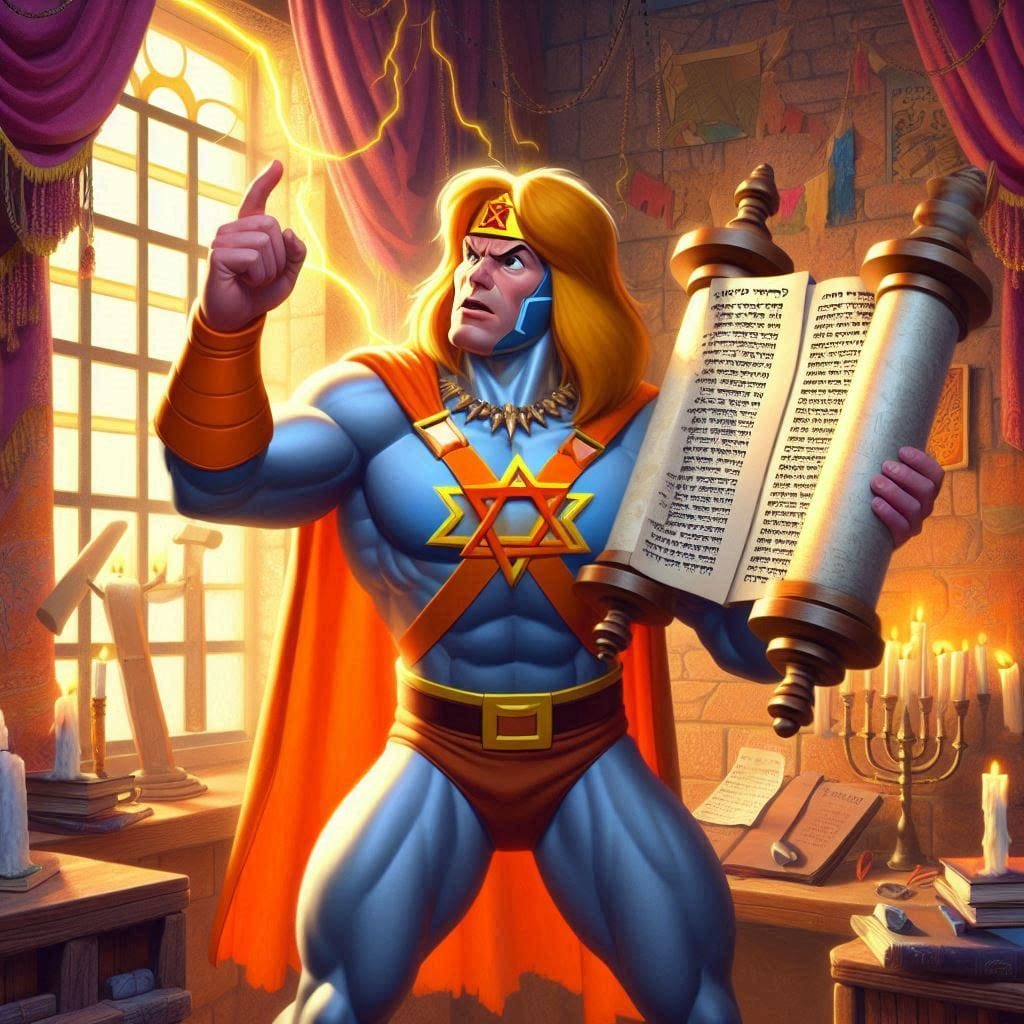
4. “By the Power”:
Source Before Ego
The famous cry is the center of the whole mythology:
“By the power of Grayskull… I have the power!”
A child hears that and thinks: now the hero becomes strong.
But an adult can hear something deeper: power descends before power is possessed.
He-Man does not begin with “I.” He begins with “by.” That means his power comes through something beyond himself. He invokes the source before he declares the result.
That is the difference between holy strength and arrogant strength.
Arrogant strength says:
“I am powerful because I am great.”
Holy strength says:
“I have been entrusted with power, therefore I am responsible.”
This distinction is everywhere in Torah. Moshe has authority, but he is the servant of Hashem. David is king, but he is still under the King of kings. The kohanim serve in the Mikdash, but they do not own the holiness. The prophets speak, but they speak only what they are given.
So the phrase “I have the power” must be read correctly.
If it means, “I own the power,” it becomes dangerous.
If it means, “I have received the power to serve,” it becomes noble.
That is the Jewish reading.
The hero is not the source. The hero is the vessel.
This is why a person can be gifted and still be dangerous. Talent without humility becomes arrogance. Knowledge without yirat Shamayim becomes manipulation. Leadership without service becomes tyranny. Spiritual passion without discipline becomes chaos.
Power must begin above the person, not inside his ego.
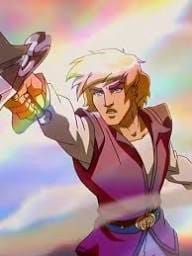
5. Keter: The White Light Above and the Rainbow Light of Tiferet
In the transformation scenes, especially when the light descends from above, the first sefirotic image is Keter.
Keter means the crown. It is the hidden source, the supernal will, the point above the revealed structure. Symbolically, Keter is like white light before it divides into colors. All the colors are hidden inside it, but they have not yet separated.
That fits the He-Man transformation very well.
The light comes from above. It is not manufactured by Adam. It is not created by his muscles. It descends. That is Keter imagery.
The crown is above the head. It does not come from the body. It rests above the person to show that authority is higher than the person. A king wears a crown because kingship is not supposed to be ego. It is supposed to be responsibility under Heaven.
So the white source-light in the He-Man transformation can be read as Keter.
The light is above him.
The power is beyond him.
The calling is higher than him.
He receives before he acts.
That is why the scene is deeper than simply “a man gets strong.” It is a descent of power from a hidden source into a chosen vessel.
But that also creates danger. The higher the light, the more carefully it must be received.
A small light can be handled casually.
A great light requires a vessel.
A holy light requires measure.
This brings us to the key distinction of the whole teaching:
Torah is the light, but Halacha is the filter that makes the light livable.
The transformation scene is also full of color: white, gold, blue, violet, red, and rainbow-like energy. We see this in Kevin Smith’s Masters of the Universe: Revelation, and even in the 2026 film imagery. This is where the sefirotic reading becomes especially powerful.
The sefirah most naturally connected to “all colors together” is Tiferet.
Tiferet means beauty, harmony, balance, compassion, splendor, and truth. It stands in the middle column and harmonizes Chesed and Gevurah — mercy and judgment.
That is why Tiferet is not one flat color. It is ordered beauty. It is many colors brought into harmony. It is the place where strength becomes beautiful because it is balanced by compassion, and compassion becomes strong because it is guarded by judgment.
He-Man’s transformation, then, is not merely the movement from weakness to strength. It is a symbolic movement from scattered potential into ordered heroic form.
That is Tiferet.
The true hero is not simply the strongest man. The true hero is the man whose strength has become beautiful — strength disciplined by judgment, softened by compassion, lifted by purpose, and ordered toward the good.
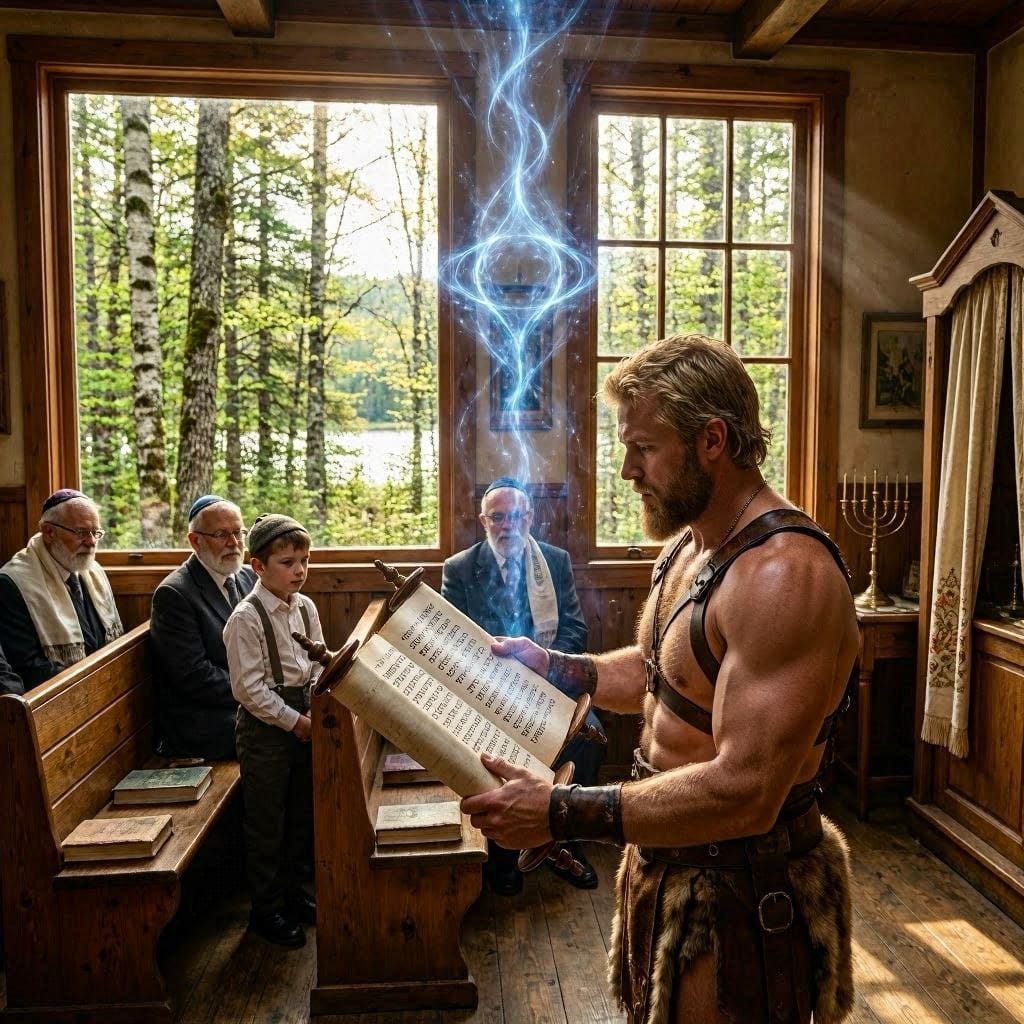
6. Torah as the Light
Torah is not merely a rulebook.
Torah is light.
“Torah orah” — Torah is light. It reveals. It illuminates. It shows what the world is, what man is, what holiness is, what Hashem asks from us. Torah is divine teaching entering human language.
So in this symbolic structure, Torah is not the sword first. Torah is the light that descends from the Source.
Torah is the revelation of divine wisdom.
Torah is the light of Heaven entering the world.
Torah is the great “power” that can transform a human being.
But light by itself is intense. Light reveals, but it can also blind. Fire warms, but it can also burn. Water gives life, but in the wrong measure it can drown. Spiritual force is the same way. If a person receives Torah as raw intensity without proper discipline, he may become worse, not better.
That is why a person can quote verses and still be cruel.
He can love “Bible” and hate the actual discipline of Torah life.
He can speak of holiness while rejecting the boundaries that make holiness possible.
He can love the light but despise the vessel.
This is one of the great errors of many spiritual movements: they want Torah as inspiration, but not Torah as obligation. They want the feeling of light, but not the yoke of mitzvot. They want the glow of ancient Hebrew words, but not the discipline of halacha.
But Torah was not given to remain a vague light in the sky. Torah was given to become life.
That requires halacha.
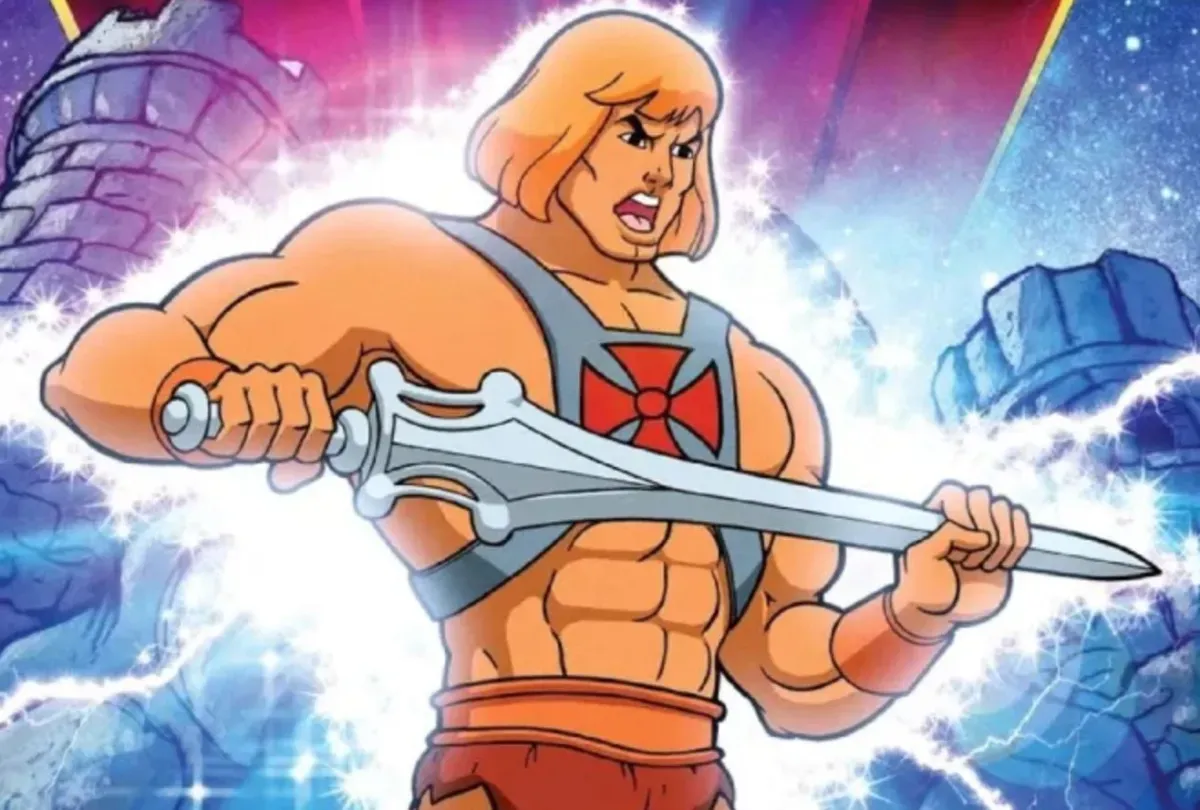
7. Halacha as the Sword and Filter
Now the whole image becomes clear:
Torah is the light.
Halacha is the sword.
Not because halacha is violent, chas v’shalom. Halacha is the sword because it gives the light edge, form, boundary, discipline, and measure.
The Hebrew word halacha comes from walking — the way one goes. Halacha is the path by which Torah becomes livable. It takes the great light of Torah and says:
This is how it enters time.
This is Shabbat. This is weekday. This is festival. This is fast day. This is morning. This is evening.
This is how it enters the body.
This is kosher. This is forbidden. This is permitted. This is modest. This is holy eating.
This is how it enters speech.
This is a blessing. This is a vow. This is lashon hara. This is testimony. This is prayer.
This is how it enters the home.
This is mezuzah. This is Shabbat candles. This is family purity. This is honoring parents. This is the table.
This is how it enters society.
This is charity. This is damages. This is business honesty. This is courts. This is justice.
That is the filter.
Halacha does not weaken Torah. It makes Torah usable. It measures the light so the human vessel can receive it without breaking.
This is why law is mercy.
People sometimes think law is the enemy of spirituality. But in Judaism, law protects spirituality from becoming madness. Law protects holiness from becoming ego. Law protects fire from burning down the house.
Halacha is the Sword of Power in the holy sense.
It does not create the light.
It does not replace the source.
It does not worship the vessel.
It regulates the flow, so the light can become holy life.
Without halacha, Torah can be misused as raw spiritual energy. With halacha, Torah becomes covenantal life.
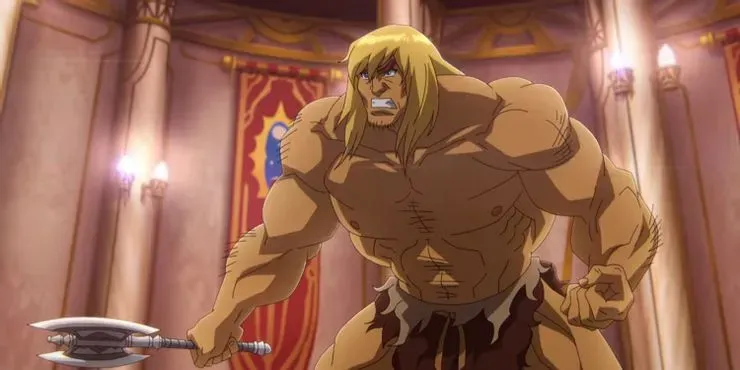
8. Savage He-Man: Power Without the Sword
The Kevin Smith continuation, Masters of the Universe: Revelation, gives us the perfect missing piece.
Adam discovers that he can call the Power of Grayskull without the Sword of Power. He raises his hand and says the words, and the power comes. But the result is not the noble, balanced He-Man we know. Instead, he becomes Savage He-Man: enormous, overwhelming, almost beast-like, governed by primal rage.
Mattel’s own description of Savage He-Man says that Adam receives the full Power of Grayskull, but “without the Sword of Power to temper these mighty forces,” he becomes “all strength with no intellect to control it.”
That is the whole teaching.
The sword was not the source.
The sword was the filter.
It did not create the power.
It measured the power.
It allowed Adam to receive the power in a form that his body, mind, and soul could survive.
Without the sword, the power still comes. But it comes unregulated. It overwhelms him. He is strong, but not refined. Victorious, but dangerous. He can defeat enemies, but he becomes a threat even to his friends.
That is exactly what happens with spirituality without halacha.
A person may access real light. He may feel real inspiration. He may be moved by Torah. He may speak about Hashem. He may feel fire in his soul. But without halacha, without mesorah, without mitzvot, without discipline, without measure, that fire can become destructive.
He may become arrogant.
He may become cultish.
He may become antinomian.
He may become cruel while thinking he is holy.
He may mistake intensity for truth.
He may mistake emotion for prophecy.
He may mistake power for kedushah.
That is Savage He-Man religion.
It has light, but no sword.
It has power, but no filter.
It has force, but no holy measure.
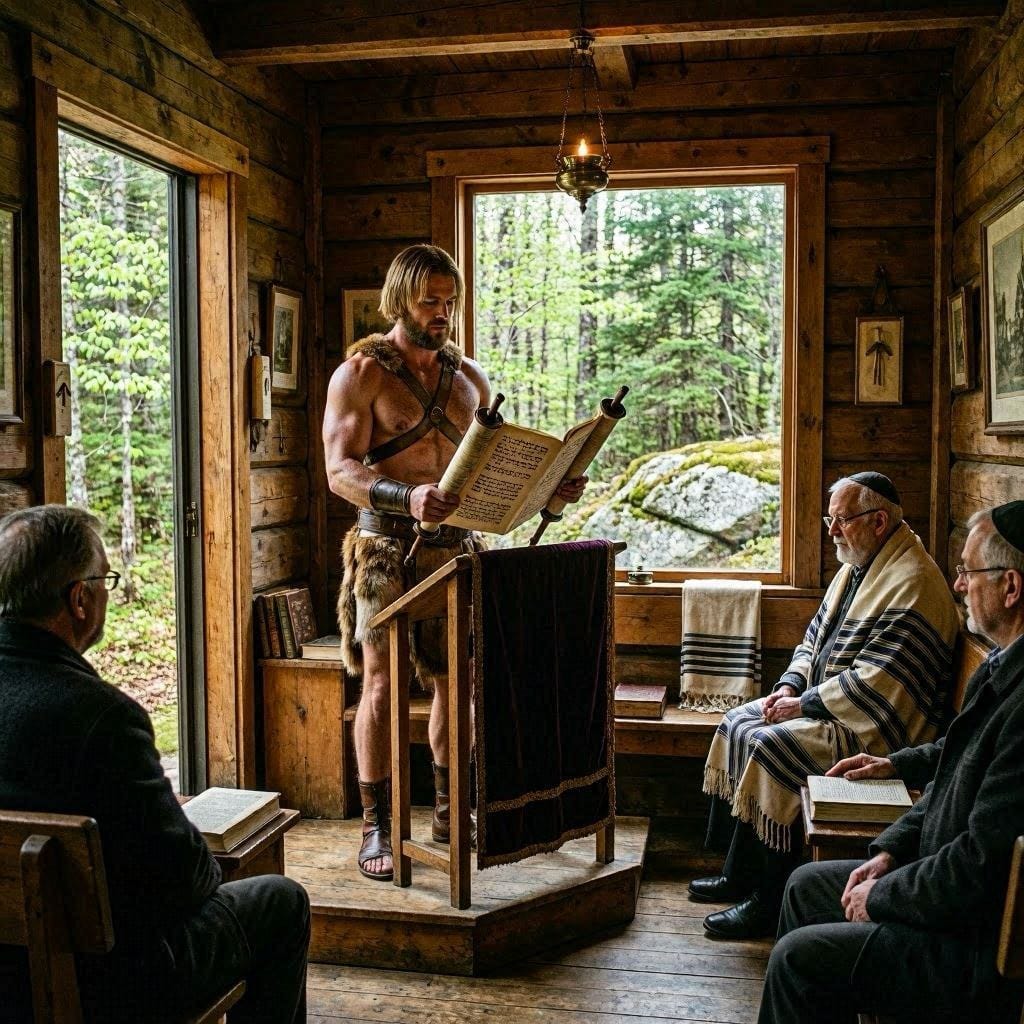
9. Torah Without Halacha Becomes Berserker Spirituality
This is the heart of the lecture:
Torah without halacha becomes berserker spirituality.
Halacha without Torah becomes empty machinery.
Torah through halacha becomes holy life.
Torah without halacha is dangerous because it leaves the light unmeasured. A person can take verses and make his own religion. He can take Hebrew words and create fantasy. He can take commandments and keep only the ones that flatter him. He can take the Bible and use it against the very people who received it.
That is unfiltered power.
It may look spiritual, but it is unstable.
It may speak of light, but it lacks vessels.
It may speak of God, but it lacks obedience.
Halacha without Torah is also a danger. If a person forgets that Torah is light, then halacha can become dry, mechanical, harsh, or lifeless. The sword without light becomes metal. The law without inner Torah becomes routine without flame.
So both are needed.
Torah gives the light.
Halacha gives the form.
Torah gives the vision.
Halacha gives the path.
Torah reveals Heaven.
Halacha brings Heaven into the kitchen, the marriage, the business, the calendar, the mouth, the body, and the community.
That is the Jewish genius: not light escaping the world, and not law without light, but ohr inside kelim — light inside vessels.
This is why the true mighty person is not the one who has the most spiritual intensity. Pirkei Avot teaches: “Who is mighty? One who conquers his inclination.”
The real hero is not the one who can call down power.
The real hero is the one who can receive power without becoming a beast.
The real hero is the one whose strength passes through discipline.
The real hero is the one whose light becomes mitzvah.
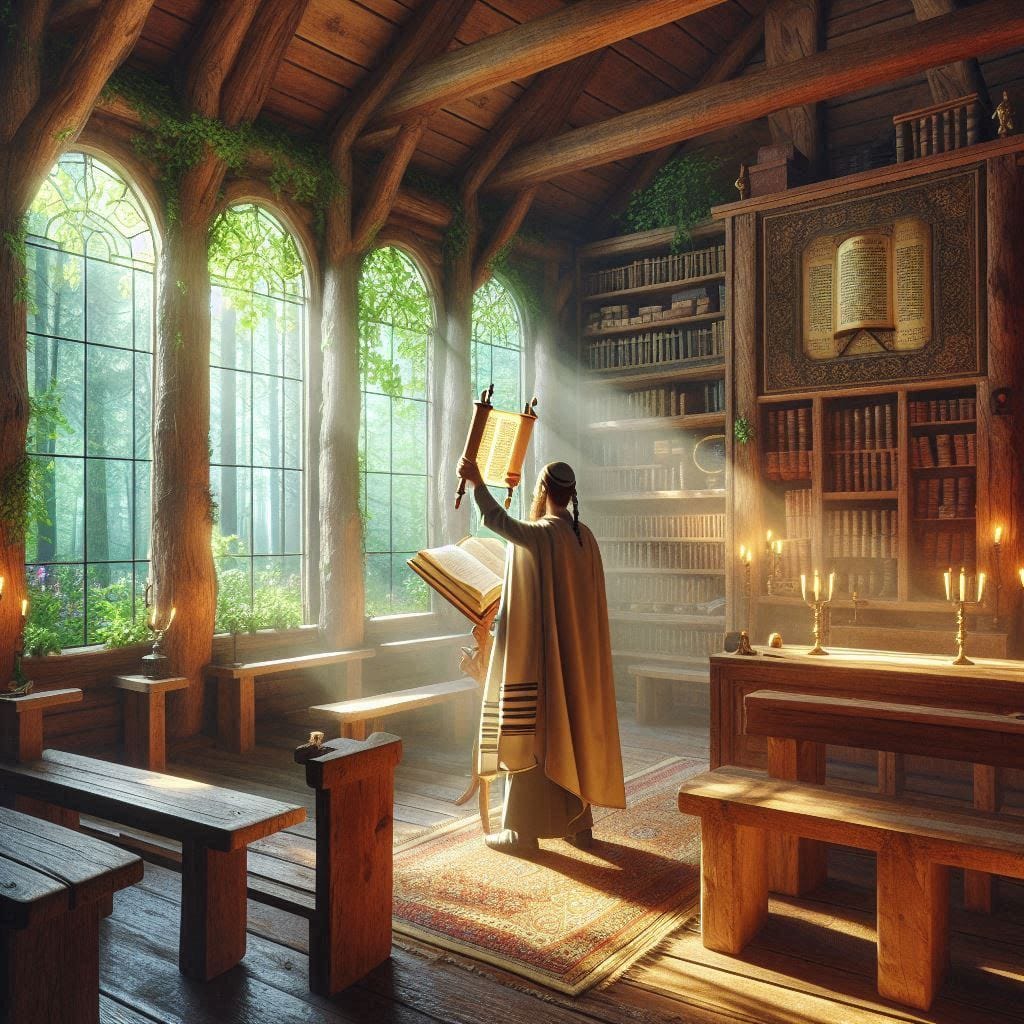
10. Malkhut: The Light Must Become Responsible Action
The power does not remain above. It comes down into the world. That is Malkhut.
Malkhut means kingship, manifestation, speech, rule, and the place where hidden things become visible. In the He-Man story, Eternia is the kingdom under threat. Castle Grayskull is the hidden center. He-Man is the vessel through whom the power becomes active in the world.
In Jewish life, the world itself is where Torah must become action.
Holiness does not remain in theory. Torah comes down into food, speech, money, family, marriage, justice, Shabbat, community, and daily conduct.
A person can talk about light all day. But the real test is how that light enters Malkhut — actual life.
Can a strong man be gentle?
Can a leader avoid humiliating people?
Can a teacher use knowledge without crushing students?
Can a father discipline without rage?
Can a rabbi lead without ego?
Can a warrior fight evil without becoming evil?
That is Malkhut.
This is also where Skeletor becomes the opposite model. Skeletor wants the power, but not the responsibility. He wants Grayskull, but not humility. He wants the crown, but not service. He wants the source, but he does not want purification.
That is the way of tyranny.
The righteous hero receives power to serve.
The wicked tyrant seizes power to dominate.
So the final structure is:
Hashem is the Source.
Torah is the light.
Halacha is the sword and filter.
The Jew is the vessel.
The world is Malkhut, where holiness must become responsible action.
And now the final teaching becomes clear:
It is not enough to call the power.
It is not enough to receive the power.
It is not enough to become strong.
The real question is:
Can the power pass through the right vessel, in the right measure, for the right purpose, without destroying the person who receives it?
That is why the sword matters.
Without the sword, Adam can still receive the power — but he becomes Savage He-Man.
With the sword, the power is filtered, measured, and harmonized — and he becomes He-Man.
And in Jewish life:
Without halacha, Torah-light can become berserker spirituality.
With halacha, Torah-light becomes covenantal life.
That is the whole lesson.
By the power above me, not by the ego within me, I have been given strength. But strength must pass through Torah, halacha, discipline, harmony, and measure. Otherwise the hero becomes a beast, and salvation itself becomes dangerous.
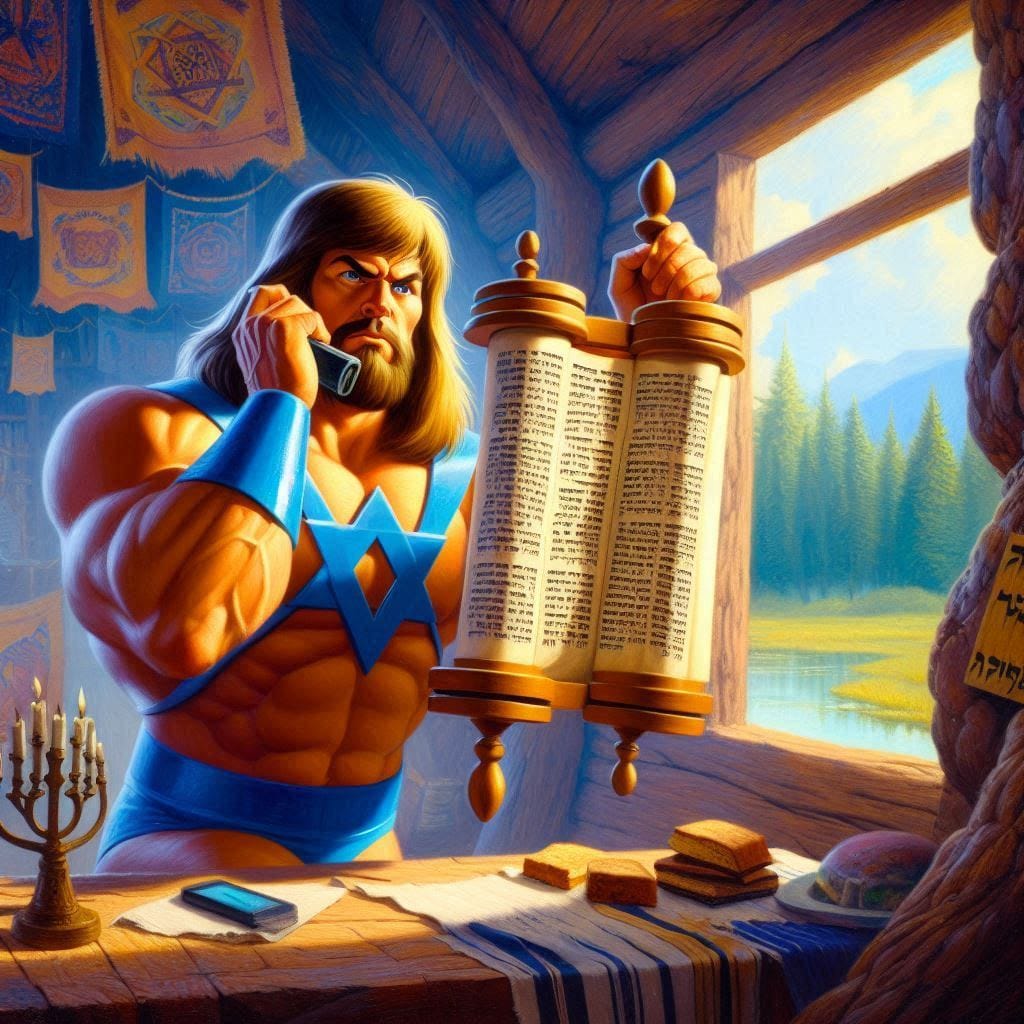
By the Power of Grayskull — He-Man, Torah, Kabbalah, and the Discipline of Holiness
What can an animated hero from the 1980s teach us about Torah, Halakhah, spiritual responsibility, and the proper use of strength?
By the Power of Grayskull explores the mythology of He-Man and Masters of the Universe through the lens of traditional Jewish thought, examining the symbolic connections between the heroic warrior, the Maccabees, Jewish mysticism, and the relationship between divine wisdom and human responsibility.
Beginning with the Jewish creative influences associated with the early Masters of the Universe franchise, this Torah teaching considers He-Man as a symbolic Maccabee-like defender whose strength is intended for service rather than domination.
The lecture then examines the language of Kabbalah and the sefirot, particularly Keter, Tiferet, and Malkhut, using the transformation of Prince Adam into He-Man as an illustration of spiritual power received, balanced, and expressed through responsible action.
At the heart of the teaching is a fundamental distinction:
Torah is the light. Halakhah is the sword and filter. The human being is the vessel through which holiness enters the world.
The Sword of Power becomes a metaphor for Halakhah, providing the discipline, boundaries, and structure necessary to transform spiritual inspiration into a life governed by mitzvot.
The example of Savage He-Man further illustrates the danger of power without restraint. Just as unregulated strength can become destructive, religious enthusiasm separated from Halakhah, Jewish tradition, and moral discipline can lead to arrogance, confusion, and spiritual instability.
This is a symbolic comparison for educational purposes, not a claim that Masters of the Universe is a Jewish religious text or that its fictional mythology constitutes authentic Kabbalistic teaching.
Presented by Rabbi Ariel Manning of Shaarei Tzafon (The North Gate), this lecture forms part of an independent Orthodox Jewish educational and publishing initiative based in Northeastern Michigan, serving the Alpena, Hillman, and Rogers City areas while extending its educational vision throughout the northern boreal regions.
Through Torah study, Jewish philosophy, Halakhah, and carefully considered cultural comparisons, Shaarei Tzafon seeks to demonstrate how traditional Jewish wisdom can illuminate questions of power, humility, responsibility, and spiritual growth.
The essential lesson: True strength is not the possession of power, but the ability to govern that power through Torah, Halakhah, humility, and service to HaShem.
Shaarei Tzafon — The North Gate
Orthodox Jewish Life and Torah Study in Northeastern Michigan
Shaarei Tzafon — The North Gate, led by Rabbi Ariel Manning, is an independent, family-led Orthodox Jewish educational and publishing initiative based in Northeastern Michigan. We support traditional Jewish life, Torah study, Halakhah, and Jewish education throughout Alpena, Hillman, Rogers City, and surrounding communities. Those interested in traditional Judaism are welcome to contact us for educational resources, Torah learning, and opportunities for discussion by prior arrangement.
Rooted locally, our greater mission extends northward from the 45th parallel — The North Gate — through Michigan, Canada, and Alaska toward the Arctic. We seek to encourage independent Jewish communities, family-centered Torah education, and the renewal of small batei midrash and shtieblach, preserving the rich traditions of Orthodox Judaism for future generations.
Our work begins in Northeastern Michigan, but our vision extends from the 45th parallel toward the Arctic.
Guided by Rambam and Mori Qafiḥ, uplifted by Rebbe Nachman, and grounded by Avraham ben HaRambam’s balance of halakha and inward avodah.
The Orchard’s Path
publishes our books and curricula.
Our mission: a bright, authentic Jewish presence in every northern town.
Created with ©systeme.io


