
Can Women Become Rabbis?
B”H
Part I — Perhaps We Are Asking the Wrong Question
Can women become rabbis?
This question has generated considerable controversy throughout the Jewish world, particularly within Orthodox Judaism. Some regard the very suggestion as a departure from traditional Jewish practice. Others argue that women who have demonstrated exceptional knowledge of Torah and Halakhah deserve formal recognition for their accomplishments.
At Shaarei Tzafon, we believe the discussion should begin by examining the question itself.
Perhaps we should ask something different:
Can a woman study Torah, Mishnah, Gemara, and Halakhah to an advanced level and receive formal recognition for her knowledge and competence?
Our answer is yes.
However, the question of recognizing scholarship must be distinguished from the question of appointing someone to a particular religious office.
There is also the matter of terminology.
The word Rabbi developed as a masculine honorific within rabbinic Hebrew. It historically designated male Torah teachers and authorities. Nevertheless, linguistic usage alone does not settle the entire halakhic question, particularly because modern Jewish communities employ the title differently.
Our preference is to preserve the traditional distinction between masculine and feminine titles while recognizing that women can become accomplished Torah scholars.
We are not suggesting that men and women must occupy identical religious roles. Nor are we suggesting that a woman who masters considerable portions of Halakhah should be denied recognition simply because she is a woman.
These are separate issues.
We should distinguish among three questions:
Can women acquire advanced Torah scholarship?
Can women receive a certificate or ordination recognizing that scholarship and authorizing particular forms of religious instruction?
Which communal offices and forms of authority may they exercise according to Halakhah?
The first question concerns knowledge.
The second concerns recognition and authorization.
The third concerns the boundaries established by Jewish law and communal tradition.
One cannot properly answer all three by examining the English word rabbi.
To understand the matter, we must begin with our earliest rabbinic literature.

Part II — The Origins of Rabbinic Authority
The institution of rabbinic leadership developed over many generations.
During the period of the Zugot, the pairs of leading sages associated with the late Second Temple era, Torah scholarship and judicial authority were already organized around recognized teachers and courts.
The title Rabbi, however, became particularly associated with the Tannaim, whose teachings form the foundation of the Mishnah, compiled around 200 CE.
The Mishnah preserves legal disagreements, interpretations, and rulings attributed to the sages of earlier generations.
These scholars were not merely religious speakers.
They interpreted Torah, transmitted received traditions, debated legal questions, and participated in the development of practical Halakhah.
Classical rabbinic authority was closely connected with the institution of semikhah.
Originally, semikhah referred to the transmission of judicial authorization within an established chain of recognized sages.
This is important because modern rabbinic ordination is not identical to that ancient institution.
Today, a rabbinic certificate ordinarily recognizes a person's mastery of particular portions of Jewish law and authorizes the recipient to teach or issue rulings within an understood field of competence.
A modern Yoreh Yoreh certificate, for example, represents a different kind of authorization from the classical semikhah that empowered judges within the ancient judicial system.
The two should not be confused.
A certificate cannot automatically grant every authority possessed by a member of the ancient Sanhedrin.
Likewise, someone may become highly knowledgeable without holding an official communal appointment.
The question of women receiving modern rabbinic ordination therefore requires examining what the ordination actually grants.
Does it certify knowledge?
Does it authorize teaching?
Does it authorize answering ordinary halakhic questions?
Does it confer a position of communal government or judicial power?
These distinctions determine the nature of the discussion.
At Shaarei Tzafon, we approach rabbinic authority through the classical legal literature, especially the Mishnah, Talmud, Geonim, and Rambam.
Our concern is not merely whether a person possesses a prestigious title.
Our concern is whether that person understands Torah, recognizes the limits of personal authority, and can faithfully transmit Jewish law.
Scholarship must precede recognition.
A title does not create Torah knowledge. Torah knowledge must justify the title.

Part III — What Does the Rambam Actually Teach?
For our halakhic foundation, we must turn to the Rambam.
In the Mishneh Torah, Hilkhot Sanhedrin veha-Onashin ha-Mesurin lahem, Chapter 4, Rambam discusses classical semikhah.
He traces its transmission from Moshe Rabbeinu to Yehoshua, through the elders and subsequent generations of recognized judges.
This chapter concerns the judicial authority of classical ordination.
It is not simply a discussion of the modern practice of granting a certificate after completing studies in Yoreh De'ah or another area of Halakhah.
Throughout the chapter, the language describes the traditional male judicial authorities who received semikhah.
Nevertheless, we must be careful.
The appearance of masculine grammatical language does not, by itself, prove a prohibition against women receiving every possible modern form of rabbinic certification.
Hebrew legal literature frequently employs masculine grammatical constructions.
A stronger discussion must examine the actual qualifications for religious office.
In Hilkhot Sanhedrin 2:1, Rambam describes the qualifications for members of the Sanhedrin, specifying men of outstanding wisdom and understanding.
More directly, in Hilkhot Melakhim u-Milḥamoteihem 1:5, Rambam rules that a woman is not appointed to kingship and extends the principle to other positions of public authority in Israel.
These passages establish a significant framework for the traditional restriction of certain offices.
However, whether every contemporary position of Torah instruction or advisory responsibility constitutes the kind of public appointment addressed by Rambam is a question requiring interpretation.
We should not pretend that this debate disappears simply because modern ordination has a different form.
Nor should we pretend that every modern teaching position is equivalent to membership in the Sanhedrin.
There is another important source.
In Hilkhot Talmud Torah 1:13, Rambam writes that a woman who studies Torah receives reward for doing so, while also recording significant traditional restrictions concerning the instruction of daughters, particularly in the Oral Torah.
His position must be acknowledged rather than omitted.
Yet the very discussion recognizes the possibility of a woman acquiring Torah knowledge.
At Shaarei Tzafon, we take Rambam seriously, including when his rulings challenge modern assumptions.
We also distinguish between a woman's intellectual capacity, her personal religious obligations, her education, and her eligibility for particular offices.
These are related questions, but they are not identical.
The halakhic question is not whether women possess the intelligence to study Torah. It is what authority may properly accompany their scholarship.

Part IV — Women and Torah Scholarship in the Biblical and Talmudic World
Long before the establishment of modern women's rabbinical schools, Jewish literature recognized women possessing remarkable wisdom.
Consider Devorah the prophetess.
In Judges 4:4–5, Devorah is described as judging Israel.
She occupied a position of public spiritual significance, and the people approached her for judgment.
Traditional commentators have discussed how her activities relate to the general legal qualifications of judges.
Some distinguish between holding formal judicial office and teaching legal decisions that the people voluntarily accepted.
Others discuss her exceptional prophetic status.
Whatever position one adopts, Devorah cannot simply be dismissed from the discussion.
The daughters of Tzelofḥad provide another example.
In Bava Batra 119b, the sages describe them as wise, skilled in interpretation, and righteous.
Their understanding of inheritance law demonstrates that women were capable of presenting sophisticated legal arguments.
We then arrive at the Tannaitic period.
Perhaps the most famous woman associated with rabbinic scholarship is Beruriah, the wife of Rabbi Meir and daughter of Rabbi Ḥananya ben Teradyon.
In Pesachim 62b, the Gemara describes the extraordinary scope of her studies, using the striking example of three hundred teachings learned from three hundred sages in a single day.
Whether understood literally or as an expression of exceptional scholarship, the passage unmistakably praises her learning.
More importantly, Beruriah does not appear merely as a passive observer.
In Tosefta Kelim Metzia 1:3, she expresses a legal opinion concerning an object used at a doorway on Shabbat.
When her position is presented to Rabbi Yehoshua, he approves her words.
This is a particularly important example.
The tradition does not merely record that a woman possessed knowledge.
It records a woman presenting a legal interpretation that a leading sage approved.
There remains a distinction between a scholar's contribution to halakhic discussion and formal appointment to judicial office.
Nevertheless, the testimony cannot be ignored.
We should never confuse the absence of a familiar institutional title with the absence of genuine religious learning.
Jewish history is more complicated than that.

Part V — Beruriah, Yalta, and the Authority of Knowledge
Beruriah's scholarship appears again in Berakhot 10a.
The Gemara recounts that Rabbi Meir was troubled by individuals who behaved wickedly and prayed for their deaths.
Beruriah challenged his interpretation of Psalm 104:35.
She argued that the verse should direct one's prayer toward the disappearance of sin rather than the destruction of sinners.
Rabbi Meir accepted the correction and prayed for their repentance.
This passage demonstrates something extraordinary.
A woman offered a scriptural interpretation that corrected the religious approach of a recognized rabbinic sage.
The Gemara preserves the account as an example of wisdom.
We encounter another remarkable woman in Yalta, the wife of Rav Naḥman and daughter of the Exilarch.
In Chullin 109b, Yalta presents an argument concerning the relationship between prohibited foods and permitted alternatives.
She observes that Torah prohibitions are sometimes accompanied by permitted experiences with comparable characteristics.
Her discussion prompts Rav Naḥman to arrange a preparation of an animal's udder in response to her request for a permissible food resembling meat and milk.
The passage demonstrates familiarity with legal categories and the ability to formulate a structured argument.
Yalta also appears in Berakhot 51b, where her encounter with Ulla illustrates her forceful personality and her expectation of being treated with dignity.
Neither Beruriah nor Yalta provides straightforward proof of modern rabbinic ordination.
That would be an anachronism.
They do, however, undermine the notion that serious female participation in Jewish legal discussion is entirely foreign to our tradition.
We must distinguish between describing what the sources say and claiming more than they establish.
Beruriah was not documented as having received a modern-style certificate.
Yalta was not described as holding the office of a contemporary congregational rabbi.
Yet both demonstrate that the intellectual world surrounding the sages included women who were capable of theological and halakhic reasoning.
This should encourage serious study rather than dismissive attitudes.
The honor of Torah is not protected by denying the existence of knowledgeable women.
It is protected by evaluating interpretations responsibly, according to the sources and the accepted halakhic process.

Part VI — Women Scholars of the Medieval and Early Modern Periods
The historical record becomes increasingly interesting as we move into the medieval and early modern periods.
Traditions concerning Rashi's daughters portray them as possessing unusual Torah knowledge.
However, we should distinguish later legends from contemporary historical evidence.
These accounts may reflect how later Jewish communities remembered learned women, but they cannot all be accepted as documented facts.
Other cases are more firmly established.
Rivkah bat Meir Tiktiner, a sixteenth-century Jewish educator, composed Meneket Rivkah, a Yiddish ethical and religious work published after her death in 1609.
The book demonstrates substantial familiarity with biblical interpretation, rabbinic literature, and practical religious instruction.
Its importance is not that its author held the title Rabbi.
Rather, it demonstrates that Jewish women contributed to the transmission of Torah through writing and teaching.
Perhaps the most remarkable historical example is Asenath Barzani, who lived in the late sixteenth and seventeenth centuries in Kurdistan.
Her father, Rabbi Shmuel Barzani, provided her with an extensive religious education.
She married Rabbi Yaakov Mizraḥi, who subsequently led a yeshiva.
Asenath became deeply involved in teaching its students and eventually assumed leadership after her husband's death.
She was known by the honorific Tanna'it, associating her with the image of an accomplished teacher of Torah.
Some modern writers have described her as an early female rabbi.
However, the historical evidence more securely establishes her as a highly regarded Torah scholar and yeshiva leader than as a recipient of classical judicial semikhah.
This distinction matters.
We should honor her actual accomplishments without needing to invent credentials.
Asenath taught students preparing for religious leadership.
She was respected for her scholarship.
She exercised educational responsibility within a traditional Jewish environment.
These facts deserve recognition.
They also remind us that Jewish communities have sometimes accommodated extraordinary women scholars without first developing an entirely new theory of gender.
History does not provide an automatic ruling for every contemporary controversy.
It does provide evidence that traditional Jewish life has included greater variety than some modern arguments acknowledge.

Part VII — Women and Spiritual Leadership in Hasidic Judaism
Women also occupied significant positions in the development of Hasidic Judaism.
Here, however, we must distinguish between a rebbe and a rav.
A Hasidic rebbe traditionally serves as a spiritual guide, teacher, and central religious personality within a community of followers.
The role can include halakhic instruction, but it is not identical to the judicial authority associated with classical semikhah.
One extraordinary example is Ḥannah Rachel Verbermacher, commonly known as the Maiden of Ludmir.
She lived during the nineteenth century and became known for her religious devotion, spiritual instruction, and unusual position within Hasidic society.
Historical accounts describe her attracting followers and functioning in ways ordinarily associated with a Hasidic rebbe.
Her life has been examined extensively by historian Nathaniel Deutsch.
Other Hasidic women acquired considerable influence through their religious learning, personal holiness, communal responsibilities, and relationships with rabbinic families.
Some rebbetzins became important sources of counsel and direction.
Yet we should avoid treating every influential rebbetzin as if she automatically occupied the formal position of her husband.
Influence is not always equivalent to office.
Spiritual leadership is not always identical to halakhic ordination.
Nevertheless, these examples challenge any suggestion that traditional Judaism has always reduced women to complete silence in religious affairs.
The traditions surrounding these women developed within communities deeply committed to inherited Jewish practice.
We can acknowledge this history without claiming that every innovation is therefore justified.
At Shaarei Tzafon, our approach to Jewish life draws from multiple historical traditions, including Hasidic devotion and the rationalist halakhic methodology of Rambam and the Geonim.
There is no contradiction in appreciating a learned Hasidic woman while maintaining traditional distinctions concerning communal roles.
Our responsibility is to understand the historical evidence and determine the appropriate practical boundaries through Halakhah.
Respect for women scholars does not require erasing every distinction between masculine and feminine religious responsibilities.
Neither does preserving those distinctions require denying women's accomplishments.

Part VIII — Modern Orthodox Women's Ordination
The modern discussion became especially prominent with the establishment of Yeshivat Maharat.
In 2009, Rabbi Avi Weiss and Rabbi Daniel Sperber ordained Sara Hurwitz, who initially received the title Maharat.
Maharat is an acronym associated with leadership in Halakhah, spirituality, and Torah.
The institution developed an educational program designed to prepare Orthodox women for advanced religious leadership.
In 2013, its first class of graduates completed the Core Semikha program.
Since then, graduates have employed titles including Maharat, Rabba, Rabbanit, and Rabbi.
The development has been controversial.
The Rabbinical Council of America adopted a policy in 2015 opposing women's ordination into the Orthodox rabbinate, regardless of the title used, and opposing their appointment to rabbinic positions in its member institutions.
The Orthodox Union has likewise maintained policies restricting women from serving in synagogue rabbinic clergy positions.
These positions deserve accurate representation.
Their objections are not simply objections to feminine grammatical terminology.
They involve broader halakhic arguments about religious office, communal authority, and continuity with established Orthodox practice.
At the same time, advocates of women's ordination argue that extensive scholarship, modern forms of certification, and particular teaching responsibilities can be distinguished from classical judicial appointments.
Therefore, the disagreement cannot be resolved merely by substituting Rabba for Rabbi.
Changing the title does not automatically settle the underlying halakhic question.
We should also recognize that not every Orthodox institution educating women in advanced Halakhah supports women's rabbinic ordination.
There are institutions that certify women as scholars or specialized advisers while maintaining traditional restrictions concerning the rabbinate.
Our own position should be understood within this distinction.
We believe women may demonstrate significant knowledge of Torah and receive meaningful recognition for that knowledge, including advanced credentials within frameworks that authorize such recognition.
We also believe that the precise scope of any ordination or authorization must be established.
We do not equate every certificate with classical semikhah, nor assume universal Orthodox acceptance.
Our concern is the preservation of genuine Torah scholarship alongside the distinctions that we understand to be important within traditional Jewish life.

Part IX — Proper Titles and the Importance of Practical Halakhah
If a woman has received advanced Torah education or ordination, how should she be addressed?
At Shaarei Tzafon, we prefer terminology that preserves the traditional linguistic distinctions.
Several titles are available, although they do not all mean the same thing.
Morah — מורה
A feminine Hebrew term meaning teacher.
It is appropriate for a woman who teaches Torah and Jewish religious subjects. It does not, by itself, imply rabbinic ordination.
Rabba — רבה
A modern feminine rabbinic title used by some Orthodox women who have received ordination.
It communicates rabbinic status while retaining a feminine form.
Maharat — מהרת
A modern title associated particularly with graduates of Yeshivat Maharat.
It identifies a specific form of advanced religious leadership and education.
Rabbanit — רבנית
Historically used for a rabbi's wife and also as a respectful designation for certain learned women.
Some contemporary ordained women use it as their professional title.
Its precise meaning therefore depends upon context.
Rebbetzin
A Yiddish title traditionally associated with the wife of a rabbi or rebbe.
It can convey considerable communal respect but does not independently establish that its bearer possesses rabbinic ordination.
We should not confuse these terms.
A woman can be a rebbetzin without holding any ordination.
A woman can be a qualified Torah teacher without being married to a rabbi.
Likewise, a woman may hold advanced religious credentials without possessing unrestricted authority in every area of Halakhah.
One particularly important field is Hilkhot Niddah and Taharat HaMishpachah.
Women often face sensitive questions involving menstruation, staining, childbirth, fertility, and bodily examinations.
For some women, discussing these matters with another woman is considerably more comfortable.
A properly trained female halakhic adviser can provide substantial assistance.
The Nishmat Yoatzot Halacha program demonstrates one established Orthodox approach.
Its graduates receive extensive training in the laws of family purity, women's health, and relevant halakhic literature.
The institution specifically distinguishes its certification from rabbinic ordination and requires consultation with recognized poskim when questions exceed the adviser's authority.
This is a valuable model of specialized scholarship serving practical Jewish needs.
We know that some Orthodox women possess qualifications and knowledge exceeding those of many men who carry rabbinic titles.
Recognizing that fact does not diminish the rabbinate.
It reminds us that competence must be taken seriously.
A responsible scholar understands not only what she knows but also when a difficult question requires consultation with another authority.
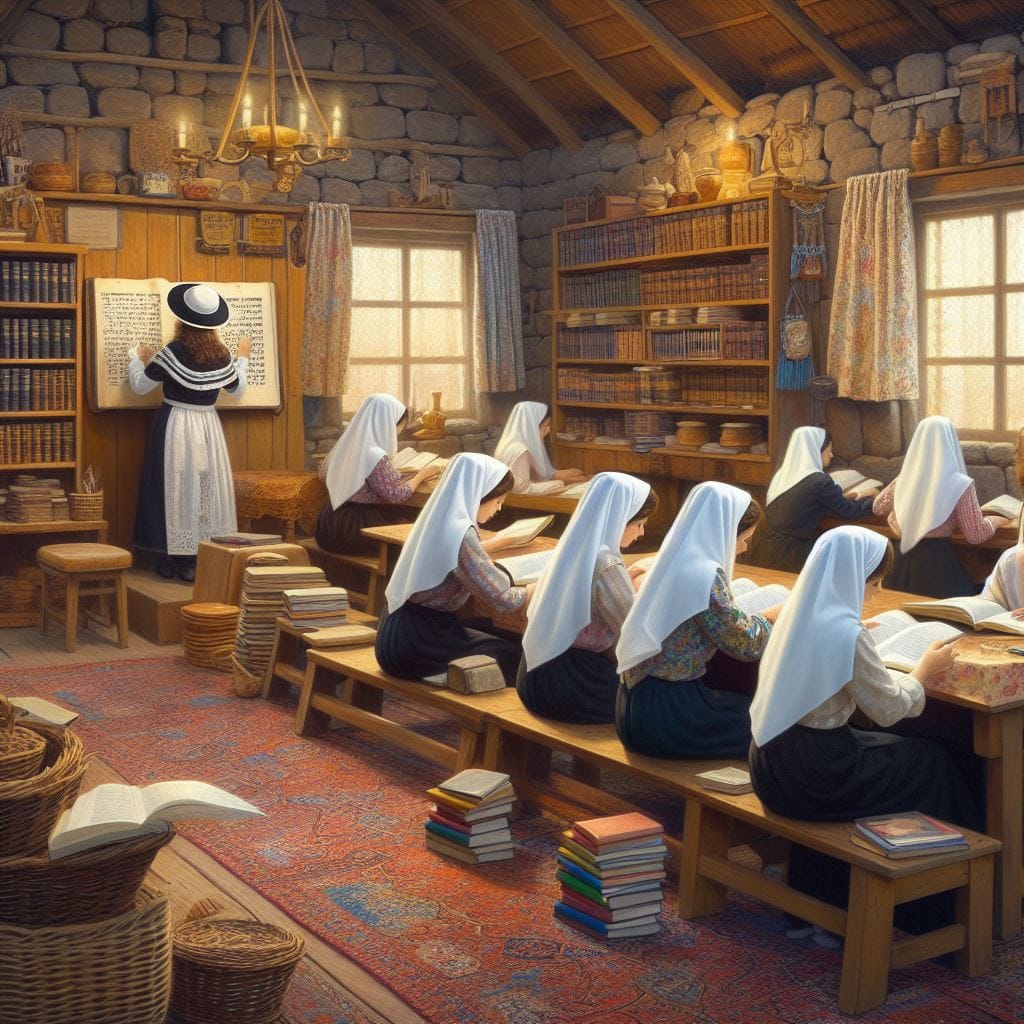
Part X — Shaarei Tzafon's Position: Tradition, Scholarship, and Holiness
We now return to the original question.
Can women become rabbis?
Our preferred formulation remains:
Can women receive advanced Torah education, formal recognition, and authorization to teach or advise in matters of Halakhah?
Yes, within the boundaries of their training and the halakhic framework under which they serve.
But this does not mean that every religious office is interchangeable or that every form of ordination carries identical authority.
At Shaarei Tzafon, we believe the inherited distinctions between men and women should be preserved in Jewish religious life.
We do not regard these distinctions as evidence that one sex possesses greater intellectual value than the other.
Men and women possess the capacity for profound Torah knowledge, devotion, ethical responsibility, and service to HaShem.
We nevertheless maintain that equality of human dignity does not necessarily mean uniformity of religious obligation or office.
The Rambam's treatment of public authority remains central to our understanding of traditional communal structures.
At the same time, the historical examples of Beruriah, Yalta, Asenath Barzani, and other learned women demonstrate why intellectual accomplishments should not be ignored.
Our position is therefore neither the wholesale rejection of women's Torah scholarship nor the unrestricted adoption of every modern model of religious leadership.
It is an attempt to preserve meaningful distinctions while acknowledging learning wherever it exists.
We prefer feminine titles for women engaged in religious instruction and leadership.
This is a matter of our traditional linguistic and communal preference; the broader halakhic dispute concerning ordination cannot be reduced to grammar alone.
We believe that Jewish life is damaged when titles become more important than knowledge, when personal ambition replaces religious responsibility, or when scholarship is treated merely as a means of acquiring status.
Our communities need people who know Torah.
They need teachers who understand Mishnah and Gemara.
They need individuals capable of explaining Halakhah carefully and compassionately.
They need learned women who can assist other women with sensitive religious questions.
And they need men and women who understand that the ultimate objective is service to HaShem rather than personal recognition.
This is especially important in rural communities.
Here in Northeastern Michigan, where Jewish households may live considerable distances from established Orthodox institutions, Torah knowledge and responsible instruction are particularly valuable.
Our broader educational vision extends northward from the forty-fifth parallel, through the northern regions of Michigan, Canada, and Alaska toward the Arctic.
In such communities, the preservation of traditional Judaism depends upon dedicated study, responsible teaching, access to reliable halakhic knowledge, and respect for the obligations that bind Jewish life together.
The rebuilding of small Jewish study houses and family-centered religious life requires cooperation among serious students of Torah.
It does not require eliminating the distinctions of our tradition.
Neither does it require withholding respect from a woman who has devoted years to mastering Jewish law.
If a woman possesses extraordinary knowledge of Hilkhot Niddah, we should appreciate her contribution.
If she teaches Torah accurately, we should value her instruction.
If she has received a recognized credential, we should examine what that credential actually authorizes rather than making assumptions.
And if a question involves a religious office restricted by our understanding of Halakhah, we must acknowledge that boundary.
We should never confuse courtesy with surrendering principle, or fidelity to tradition with dismissing genuine knowledge.
The purpose of Torah study is not to produce impressive titles.
It is to produce Jews who understand their obligations and fulfill them.
That remains our guiding principle.
A woman's knowledge of Torah does not make her less feminine, just as a man's knowledge of Torah does not make him more masculine. Scholarship is an accomplishment of the mind and soul; the responsibilities assigned to each person must still be considered according to Halakhah.
Let us honor Torah scholarship.
Let us preserve our traditions.
Let us maintain the distinctions that we believe HaShem has established, while treating every person with dignity and respect.
And above all, let our discussions be conducted for the sake of Heaven.
Torah is not diminished when it is studied seriously. It is diminished when we abandon careful reasoning, honest scholarship, and respect for its authority.
About This Teaching
Can Women Become Rabbis? is a ten-part examination of women's Torah scholarship, rabbinic ordination, and traditional gender roles within Orthodox Judaism. Drawing upon the Mishnah, Talmud, Rambam's Mishneh Torah, and Jewish history, Rabbi Ariel Manning explores the contributions of Beruriah, Yalta, Asenath Barzani, and other learned Jewish women.
The teaching distinguishes between Torah scholarship, modern semikhah, classical rabbinic authority, and communal religious offices. It also examines feminine titles including Morah, Rabba, Maharat, and Rabbanit, while discussing women's important contributions to practical Halakhah, especially the laws of Niddah and family purity.
Published by Shaarei Tzafon — The North Gate, an independent Orthodox Jewish educational and publishing initiative based in Alpena, Northeastern Michigan, serving Jewish learning in Alpena, Hillman, Rogers City, and surrounding communities. Our broader educational mission encourages traditional Jewish life and Torah study from the 45th parallel northward through Michigan, Canada, and Alaska toward the Arctic.
Primary Texts and Historical References
Berakhot 10a — Beruriah and Rabbi Meir
Pesachim 62b — Beruriah's scholarship
Chullin 109b — Yalta's legal reasoning
Bava Batra 119b — The daughters of Tzelofḥad
Rabbinical Council of America — Policy Concerning Women Rabbis

Shaarei Tzafon — The North Gate
Orthodox Jewish Life and Torah Study in Northeastern Michigan
Shaarei Tzafon — The North Gate, led by Rabbi Ariel Manning, is an independent, family-led Orthodox Jewish educational and publishing initiative based in Northeastern Michigan. We support traditional Jewish life, Torah study, Halakhah, and Jewish education throughout Alpena, Hillman, Rogers City, and surrounding communities. Those interested in traditional Judaism are welcome to contact us for educational resources, Torah learning, and opportunities for discussion by prior arrangement.
Rooted locally, our greater mission extends northward from the 45th parallel — The North Gate — through Michigan, Canada, and Alaska toward the Arctic. We seek to encourage independent Jewish communities, family-centered Torah education, and the renewal of small batei midrash and shtieblach, preserving the rich traditions of Orthodox Judaism for future generations.
Our work begins in Northeastern Michigan, but our vision extends from the 45th parallel toward the Arctic.
Guided by Rambam and Mori Qafiḥ, uplifted by Rebbe Nachman, and grounded by Avraham ben HaRambam’s balance of halakha and inward avodah.
The Orchard’s Path
publishes our books and curricula.
Our mission: a bright, authentic Jewish presence in every northern town.
Created with ©systeme.io


