
Cheshvan and Kislev Blessings and Rain — Dreams and Snow
B"H
חשוון — CHESHVAN
The Month of Blessings and Rain
גשמים • ברכה • אמונה
Rain • Blessing • Faithfulness
Part I — The Blessing of Ordinary Days
Cheshvan begins when the great celebrations of Tishrei have passed.
The shofar no longer sounds. The sukkah has been dismantled, and the dancing of Simchat Torah has ended. The Jewish household returns to ordinary routines, carrying the memories and obligations of the festivals into another year.
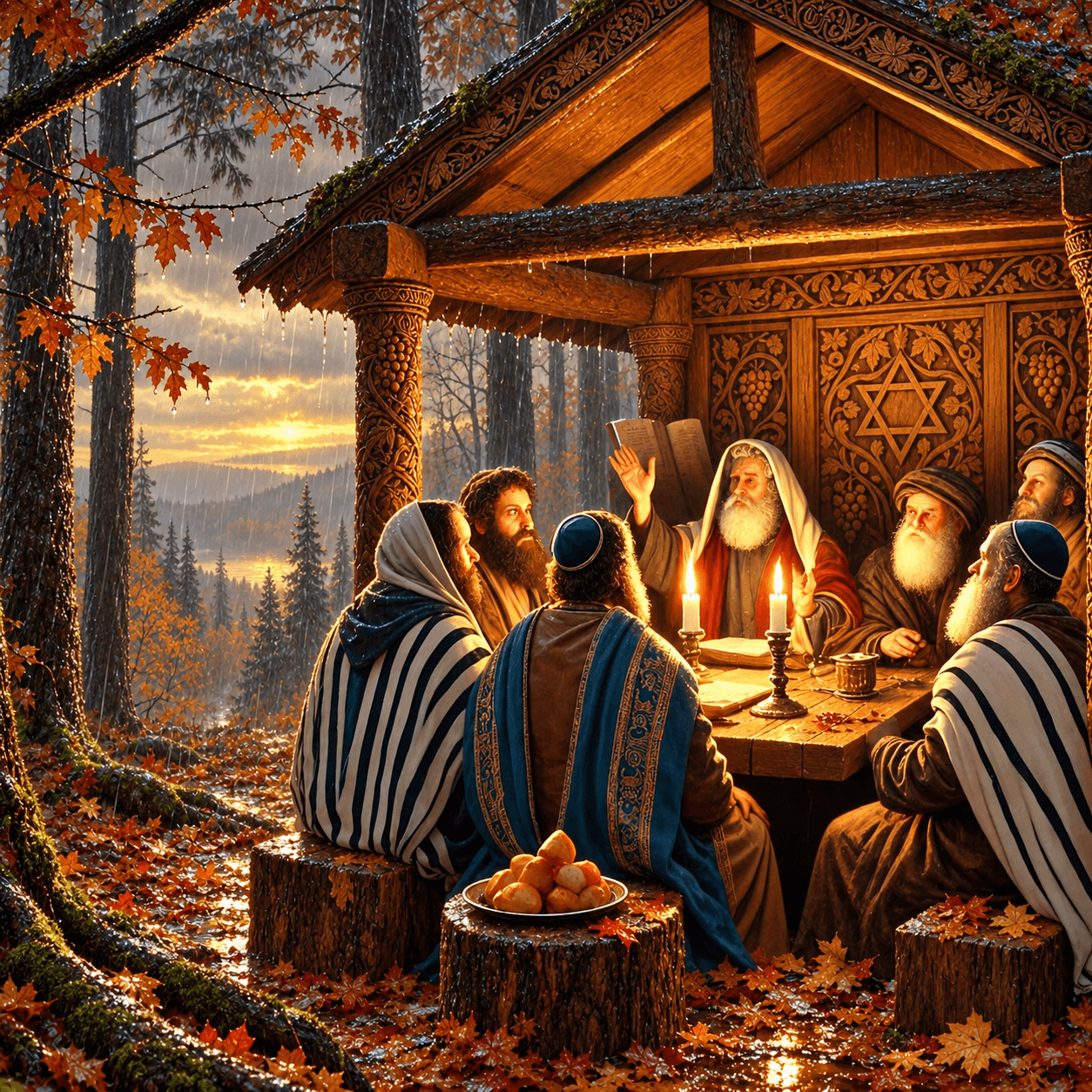
In northern Michigan, the transition is equally unmistakable. Autumn leaves gather beneath the trees. Cold rain falls across the fields. The orchards become quiet, and the forests gradually surrender their color.
What remains is stillness.
Yet Cheshvan teaches that stillness need not signify spiritual emptiness.
The Baal Shem Tov, whose teachings occupy the southwestern direction of the Boreal Compass, emphasized the possibility of serving HaShem through everyday circumstances. The Hasidic tradition associated with him calls attention to the spiritual worth of the ordinary Jew, the working family, and the simplest acts performed with sincerity.
In Tzava'at HaRivash, an early collection of teachings associated with the Baal Shem Tov and his circle, even circumstances that interrupt ordinary study are treated as opportunities to remain mindful of HaShem.
This teaching has particular significance during Cheshvan.
The month possesses no major festival around which the household must organize itself. Its spiritual character must therefore emerge through daily activity.
Preparing food, teaching children, repairing a home, studying Torah, and fulfilling commitments become occasions for sincere divine service.
The southwestern direction adds warmth to this ordinary faithfulness. The goal is not merely to complete responsibilities, but to approach them with gratitude.
A person who works honestly to sustain a household performs something meaningful. A parent who patiently teaches a child participates in the transmission of Torah. A neighbor who helps another prepare for winter expresses compassion through action.
None of these activities requires public recognition.
The rain that falls upon the northern earth is rarely celebrated. Nevertheless, it nourishes the soil and prepares the natural world for another season.
So too does ordinary goodness sustain Jewish life.
Cheshvan teaches that the quietest days may contain blessings of lasting significance.
Part II — Rain and the Language of the Soul
The Torah presents rain as an expression of divine provision.
Deuteronomy 11:14
וְנָתַתִּי מְטַר־אַרְצְכֶם בְּעִתּוֹ יוֹרֶה וּמַלְקוֹשׁ
And I shall give the rain of your land in its season, the early rain and the late rain.
Rain reminds humanity of its dependence upon the Creator.
We may prepare the field and plant its seed, yet growth depends upon conditions beyond our control.
Rebbe Nachman of Breslov, representing the southern direction of the Boreal Compass, teaches a deeply personal approach to this dependence.
In Likutey Moharan II:25, he encourages the individual to establish regular periods of personal conversation with HaShem.
This practice, known as hitbodedut, invites the individual to speak openly, expressing gratitude, difficulties, disappointments, hopes, and the desire for greater closeness to the Creator.
The connection with Cheshvan is particularly beautiful.
As rain descends upon the northern forest, a person may reflect upon the blessings already received and the needs that remain unanswered.
One may give thanks for shelter, family, sustenance, and Torah.
One may also acknowledge uncertainty.
The individual does not need to pretend that every difficulty has already been resolved.
Nor must personal prayer consist entirely of gratitude.
Rebbe Nachman permits the heart to speak truthfully.
There are seasons of joy and seasons of disappointment. There are moments of confidence and moments when the future appears uncertain.
The purpose of personal prayer is not to guarantee an immediate change in circumstances. It is to cultivate an honest relationship with HaShem amid those circumstances.
Rain offers an illustration.
Some rainfall produces visible growth almost immediately. Other precipitation enters the soil, where its effects remain hidden.
Likewise, the fruit of prayer is not always immediately apparent.
This does not make prayer meaningless.
Cheshvan teaches that gratitude and longing can exist within the same heart.
The person who has received blessings may still pray for greater wisdom, compassion, and understanding.
And the person awaiting relief may still discover reasons for thanksgiving.

Part III — Avraham ben HaRambam and the Stillness of the Forest
The western direction of the Boreal Compass belongs to Rabbeinu Avraham ben HaRambam.
His HaMaspik LeOvdei HaShem, also known as The Guide to Serving God, develops a disciplined approach to inward religious life.
Among its most compelling discussions is the practice of solitude.
Avraham ben HaRambam distinguishes outward solitude from inward solitude.
Outward solitude involves withdrawing from distractions. Inward solitude involves directing one's attention toward HaShem.
The first provides an opportunity.
The second represents the deeper spiritual purpose.
This distinction prevents solitude from becoming an end in itself.
A person may enter the forest, sit beside a lake, or remain alone in a room while the mind continues racing from one concern to another.
Merely escaping other people does not create spiritual peace.
Avraham ben HaRambam's approach requires a deliberate turning of attention toward the Creator.
For the northern Jewish household, Cheshvan provides a fitting environment for this practice.
The leaves have fallen. Rain moves through the branches. The natural world appears to withdraw from the activity of summer and early autumn.
There is less movement to observe and fewer distractions demanding attention.
One may sit quietly and contemplate the dependence of creation upon HaShem.
But this contemplation must not become an attempt to empty the mind of every meaningful thought.
Its purpose is to direct the intellect and heart toward divine service.
Here a relationship emerges between Avraham ben HaRambam and Rebbe Nachman.
Avraham ben HaRambam emphasizes concentrated inward attention.
Rebbe Nachman emphasizes heartfelt speech.
Their practices differ, but they illuminate two complementary possibilities: to become quiet before HaShem and to speak sincerely before Him.
Neither requires extraordinary surroundings.
Solitude may be practiced within a modest room as readily as in a forest.
The spiritual lesson of Cheshvan is that silence becomes valuable when it cultivates attention.
The rain invites stillness.
Stillness invites contemplation.
Contemplation invites greater awareness of the Creator.

Part IV — Compassion Beneath the Autumn Rain
The southwestern direction of the Boreal Compass brings the teachings of Rabbi Levi Yitzchak of Berditchev, Rabbi Elimelech of Lizhensk, and the wider Hasidic tradition into the month of Cheshvan.
Rabbi Levi Yitzchak, associated with Kedushat Levi, became especially remembered for his compassionate concern for the Jewish people and his tendency to seek their merit.
His approach encourages an important spiritual discipline: to recognize the dignity and potential goodness of others.
Cheshvan provides numerous opportunities for such compassion.
As winter approaches, the difficulties of ordinary life become more visible.
Heating costs increase. Travel becomes less predictable. Elderly neighbors may struggle with household preparation. Families living far from established Jewish communities may experience greater isolation.
A person need not wait for an extraordinary religious occasion before responding.
A telephone call, an offered meal, assistance with winter preparations, or time spent studying with someone who is lonely may become significant acts of kindness.
Rabbi Elimelech of Lizhensk, in Noam Elimelech, discusses lovingkindness and the spiritual responsibility associated with concern for others.
His teaching provides a useful reminder that spiritual development should not become entirely self-centered.
The person who studies, prays, and contemplates must also remember those beyond the boundaries of personal experience.
This concern finds a sympathetic place within the Biala Hasidic tradition, whose devotional inheritance emphasizes heartfelt avodah and attachment to the teachings of the Hasidic masters.
For a northern Jewish family, compassion must remain practical.
It is easy to speak about loving one's neighbor while overlooking the person who lives nearby.
It is easy to admire spiritual generosity while neglecting small responsibilities toward others.
Cheshvan asks us to make kindness consistent.
The landscape offers a fitting illustration.
Rain does not fall only upon the strongest trees. It reaches the small sapling, the aging trunk, and the ground beneath both.
Human compassion should likewise resist the temptation to value people only according to their strength, usefulness, or achievements.
The blessing of Cheshvan is not complete when it is merely received. It becomes fruitful when it is shared.
Part V — Three Paths Through the Quiet Month
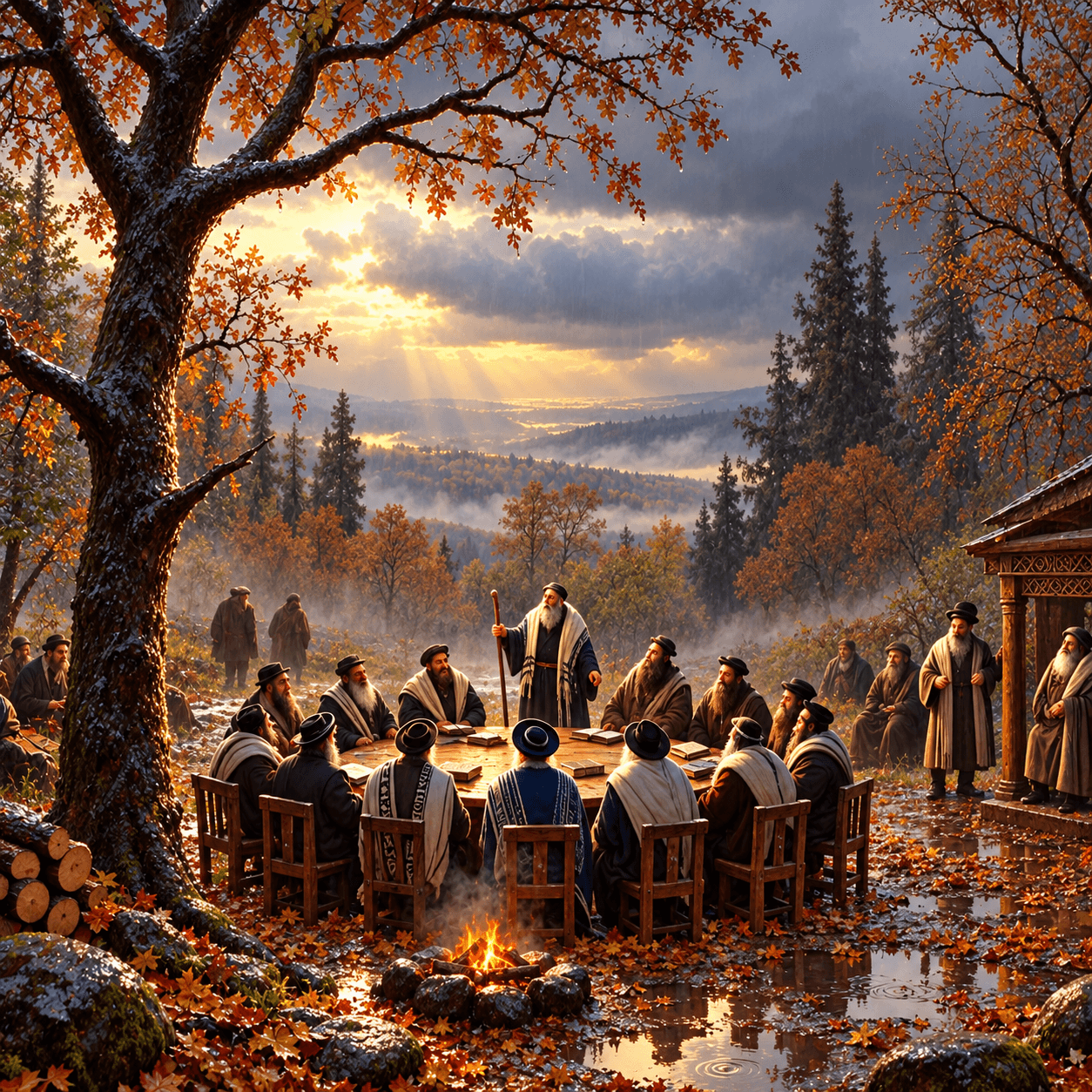
The final lesson of Cheshvan joins South, Southwest, and West into a practical pattern of spiritual life.
From the South, Rebbe Nachman teaches the importance of honest conversation with HaShem.
From the Southwest, the Hasidic masters teach gratitude, compassion, joy, and the sanctification of everyday responsibilities.
From the West, Avraham ben HaRambam teaches disciplined contemplation and inward stillness.
Together, these three directions offer a balanced response to the ordinary days following the festivals.
A Jewish household may begin by giving time to quiet reflection.
One may consider the blessings received during the past year and the responsibilities that accompany them.
Personal prayer may follow, using sincere language rather than elaborate expressions.
Then contemplation and prayer must become recognizable through conduct.
One may strengthen a family relationship, assist someone in need, establish a dependable study routine, or renew attention to an overlooked responsibility.
The purpose is not to create a new Cheshvan ceremony.
These practices are applications of established Jewish spiritual teachings to the circumstances of the season.
A useful question for the month is:
“What blessings has God bestowed upon me, and how can I use those blessings to bring goodness into the life of another person?”
The question joins inward and outward life.
One first recognizes what has been given.
One then considers how gratitude may become action.
The northern autumn offers the concluding image.
Rain falls upon the forest, nourishing the land before winter. Much of its work takes place beneath the surface.
The trees may appear inactive, but the processes sustaining them continue.
So too with faithful Jewish living.
Not every act of goodness produces an immediate result.
Not every prayer brings immediate clarity.
Not every season of contemplation produces an extraordinary spiritual experience.
Yet each may contribute to the gradual formation of character.
Cheshvan is the month of blessings and rain because it teaches us to receive, contemplate, and share the goodness entrusted to us.

כסלו — KISLEV
The Month of Dreams and Snow
חלומות • שלג • אור
Dreams • Snow • Light
Part VI — Snow and the Hidden Life of the Soul
Kislev arrives as the northern landscape moves toward winter.
Snow begins covering the fields. The forests grow quiet, and the remaining colors of autumn disappear beneath a white covering.
The days shorten while the nights lengthen.
What once appeared abundant now seems almost empty.
Yet the apparent emptiness is deceptive.
Beneath the snow, much of the natural world remains alive.
Trees preserve their living tissues. Roots endure within the soil. The arrival of winter does not destroy the possibility of spring.
This provides an illustration for the spiritual teaching of Avraham ben HaRambam.
The deeper life of the soul is not always outwardly visible.
A person may be engaged in contemplation, repentance, and spiritual refinement without experiencing dramatic emotional changes.
In HaMaspik LeOvdei HaShem, inward concentration is not treated as mere inactivity. It is purposeful spiritual discipline.
The individual withdraws attention from distractions in order to direct the heart more fully toward HaShem.
Kislev encourages such inward attention.
The snowy landscape offers fewer outward distractions, allowing its stillness to become a reminder of the importance of inner life.
Yet this stillness must not be confused with withdrawal from necessary responsibilities.
Avraham ben HaRambam's demanding devotional ideals belong to a tradition of disciplined religious service, not an invitation to abandon ordinary obligations.
The quiet of winter can be received with gratitude while family duties, study, and communal responsibilities continue.
For the northern Jewish household, the lesson is particularly relevant.
A spiritual life dependent entirely upon excitement may struggle when circumstances become repetitive or difficult.
But one rooted in contemplation and faithful practice can endure long periods of apparent stillness.
Kislev teaches that hiddenness is not necessarily absence.
What cannot be seen may still be developing.
What appears dormant may still possess life.
And the heart that remains directed toward HaShem may continue growing even when outward circumstances seem unchanged.

Part VII — Dreams, Longing, and the Journey of Yaakov
Kislev is associated with the biblical dreams of Yaakov and Yosef through the familiar annual Torah-reading cycle.
In Genesis 28, Yaakov dreams of a ladder joining earth and heaven.
Genesis 28:12
וַיַּחֲלֹם וְהִנֵּה סֻלָּם מֻצָּב אַרְצָה וְרֹאשׁוֹ מַגִּיעַ הַשָּׁמָיְמָה
And he dreamed, and behold, a ladder was set upon the earth, and its top reached toward heaven.
Yaakov's dream occurs while he is traveling, separated from the familiar surroundings of his father's household.
His future remains uncertain.
Yet the dream is accompanied by divine reassurance.
He awakens to recognize the significance of the place in which he has rested.
This narrative offers an especially meaningful lesson when approached through the southern and western directions of the Boreal Compass.
Rebbe Nachman emphasizes the value of longing for greater closeness to HaShem.
Avraham ben HaRambam emphasizes directing the heart and intellect toward the Creator.
Yaakov's experience illustrates how a person may encounter profound religious meaning while still living amid uncertainty.
The dream does not end his journey.
He must continue traveling, working, enduring difficulties, and establishing his household.
The spiritual experience does not remove ordinary responsibility.
Rather, it accompanies him into the responsibilities that follow.
Yosef's dreams introduce a similar lesson.
His visions anticipate circumstances he cannot yet understand. Before their larger significance becomes apparent, he experiences suffering and prolonged uncertainty.
Here Kislev teaches patience.
It is important, however, to distinguish biblical revelation from ordinary dreams.
Not every dream is prophetic, nor should personal dreams automatically be treated as instructions from HaShem.
The value of these narratives lies in what they teach about providence, endurance, and faithful conduct.
Dreams may awaken hope, but responsibility gives that hope its proper direction.
In the northern winter, when the road ahead may appear covered and uncertain, the stories of Yaakov and Yosef remind us that meaningful journeys are often completed through persistence rather than immediate clarity.

Part VIII — Rebbe Nachman and Hope Beneath the Snow
Perhaps no direction of the Boreal Compass speaks more directly to the spiritual character of Kislev than the South.
Rebbe Nachman repeatedly emphasizes the necessity of hope.
His teaching in Likutey Moharan I:282, known as Azamra, encourages the individual to discover genuine points of goodness within others and within oneself.
The teaching addresses a familiar spiritual difficulty.
A person may become so conscious of mistakes, shortcomings, and disappointments that all personal goodness seems to disappear.
Rebbe Nachman refuses to allow this perception to become the final judgment.
One must search for something genuinely good.
Perhaps it is an act of kindness.
Perhaps it is a mitzvah fulfilled despite difficulty.
Perhaps it is a sincere desire to improve.
That good point can become the beginning of renewed joy and spiritual movement.
Kislev provides a natural illustration.
The snow covers the landscape, concealing familiar details beneath its surface.
Yet the covering does not determine everything that exists beneath it.
Similarly, personal discouragement may conceal genuine progress without erasing it.
Rebbe Nachman's teaching does not require denying wrongdoing or pretending that hardship is pleasant.
Rather, it encourages a person to recognize whatever goodness genuinely remains and build upon it.
The practice of hitbodedut adds another important dimension.
During the long northern evenings, one may establish a regular time for personal prayer.
A person might speak about unresolved concerns, disappointment, hopes for the family, or the desire to grow in Torah.
No elaborate speech is necessary.
The sincerity of the conversation matters more than its elegance.
And when words are difficult to find, Rebbe Nachman allows even that difficulty to become part of the prayer.
This is the great lesson of the southern direction:
The individual need not wait until life has become perfect before turning toward HaShem.
The opportunity for prayer already exists.
The snow may cover the earth, but it cannot extinguish the possibility of renewal.
Hope begins when the person refuses to declare that growth has become impossible.

Part IX — Chanukah and the Warmth of the Southwest
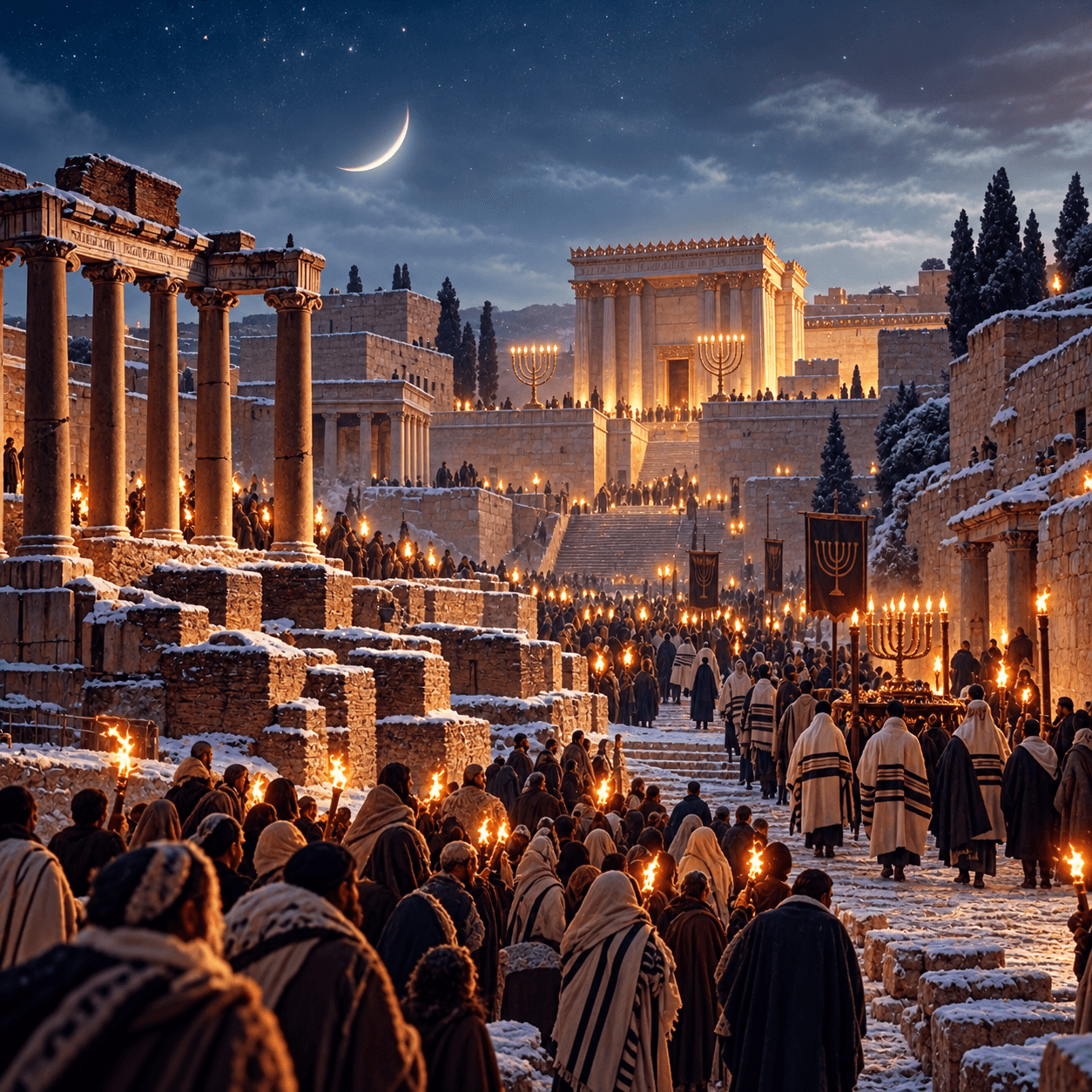
On the twenty-fifth day of Kislev, Chanukah begins.
The festival commemorates the restoration and rededication of the Temple and the preservation of Jewish religious life.
In northern Michigan, the festival arrives amid early darkness, cold weather, and the possibility of deep snow.
The flames of Chanukah appear especially beautiful against this setting.
Yet their meaning comes from Jewish history and halakhah, not from the winter landscape.
The southwestern direction of the Boreal Compass adds another dimension to the celebration.
The Baal Shem Tov's devotional tradition emphasizes joy in serving HaShem.
In Kedushat Levi, Rabbi Levi Yitzchak of Berditchev develops rich teachings concerning Chanukah, thanksgiving, divine kindness, and the spiritual significance of the festival.
His discussion of Chanukah in Kedushot for Chanukah connects the celebration with praise and thanksgiving, presenting the festival as an occasion for recognizing divine goodness.
This provides an important lesson for the northern Jewish household.
The Chanukah lights should not become merely decorative objects admired through a window.
They are connected with mitzvah, memory, gratitude, and the responsibilities of Jewish life.
The household gathers not simply because winter evenings are dark, but because Israel received an obligation to remember and proclaim the miracle.
Rabbi Elimelech of Lizhensk's broader teachings concerning lovingkindness and devotion also enrich this period.
Joy should not become detached from concern for others.
A family celebrating Chanukah may remember households that lack companionship, children who need encouragement, or individuals whose circumstances make celebration difficult.
The warmth of the southwestern direction is therefore both emotional and practical.
It includes song, gratitude, hospitality, and generous attention to others.
The Biala tradition's emphasis upon heartfelt Hasidic devotion likewise finds an appropriate place within this understanding of the festival.
The central lesson is not that darkness possesses spiritual power.
Rather, the darkness makes the ordinary human experience of light especially noticeable.
The mitzvah itself remains grounded in Jewish sacred memory.
The light of Kislev becomes most meaningful when it illuminates the heart and encourages goodness beyond the home.
Part X — Three Directions, One Spiritual Journey
The final lesson of Kislev joins the three selected directions of the Boreal Compass.
The South teaches hope and personal prayer.
The Southwest teaches compassion, gratitude, joy, and spiritual warmth.
The West teaches contemplation, inward stillness, and disciplined attention toward HaShem.
Together, these directions describe a journey from the inward life of the individual toward meaningful action in the world.
Avraham ben HaRambam teaches the person to become still.
Rebbe Nachman teaches the person to speak.
The Baal Shem Tov and the Hasidic masters teach the person to bring joy and compassion into ordinary life.
Their teachings differ in historical setting and spiritual method. They should not be presented as though they constitute one formally established school.
Nevertheless, their relationship within the Boreal Compass offers a useful educational synthesis.
Consider the northern winter.
A person rises in the morning while the world remains dark.
The house is warm, but the forest outside is covered with snow.
Before beginning the day's work, the individual may spend time studying or contemplating the greatness of HaShem.
Later, an opportunity for personal prayer allows gratitude and concern to be expressed sincerely.
Throughout the day, the person encounters family members, neighbors, coworkers, and others who require patience or assistance.
Contemplation has prepared the heart.
Prayer has given it expression.
Compassion has given it direction.
This is not a new religious ceremony.
It is an application of the teachings of these Jewish spiritual traditions to everyday life.
Kislev's association with dreams adds a final element.
Hope must never become an excuse for passivity.
Yaakov awakens from his dream and continues his journey.
Yosef endures difficult circumstances before the meaning of his experiences becomes clear.
The Chanukah story remembers a people who acted to restore their religious life.
Likewise, the person who hopes for a better future must participate responsibly in bringing about whatever improvement is possible.
The northern forest offers one last illustration.
Beneath the snow, life continues through the winter.
Its renewal is not yet visible, but the processes that sustain it remain.
So too must the Jewish soul preserve its inner life through seasons of difficulty, uncertainty, and waiting.
Kislev is the month of dreams and snow because it teaches us to preserve hope, cultivate stillness, and carry warmth into the world.

Closing Meditation — From Rain to Snow
Cheshvan begins with rain.
Kislev follows with snow.
The first nourishes the earth.
The second covers it in quietness.
And through these changes, the northern Jewish household encounters two different forms of spiritual instruction.
Cheshvan teaches the reception and sharing of blessing.
Kislev teaches the preservation of hope through periods of hiddenness.
Avraham ben HaRambam reminds us that stillness can cultivate attention toward the Creator.
Rebbe Nachman reminds us that even the uncertain heart may speak openly before HaShem.
The Baal Shem Tov and the Hasidic masters remind us that devotion must become joy, compassion, and kindness within ordinary life.
These teachings are not determined by the weather.
They belong to the enduring inheritance of Jewish spirituality.
Yet the rain, snow, forests, and long winter evenings of the North may provide illustrations through which their meaning becomes more deeply appreciated.
Cheshvan: Receive the blessing.
Kislev: Preserve the hope.
And through both months, allow contemplation to become prayer, prayer to become gratitude, and gratitude to become compassion.
For the rain nourishes what has been planted, and the snow shelters what has not yet awakened.

Shaarei Tzafon — The North Gate
Orthodox Jewish Life and Torah Study in Northeastern Michigan
Shaarei Tzafon — The North Gate, led by Rabbi Ariel Manning, is an independent, family-led Orthodox Jewish educational and publishing initiative based in Northeastern Michigan. We support traditional Jewish life, Torah study, Halakhah, and Jewish education throughout Alpena, Hillman, Rogers City, and surrounding communities. Those interested in traditional Judaism are welcome to contact us for educational resources, Torah learning, and opportunities for discussion by prior arrangement.
Rooted locally, our greater mission extends northward from the 45th parallel — The North Gate — through Michigan, Canada, and Alaska toward the Arctic. We seek to encourage independent Jewish communities, family-centered Torah education, and the renewal of small batei midrash and shtieblach, preserving the rich traditions of Orthodox Judaism for future generations.
Our work begins in Northeastern Michigan, but our vision extends from the 45th parallel toward the Arctic.
Guided by Rambam and Mori Qafiḥ, uplifted by Rebbe Nachman, and grounded by Avraham ben HaRambam’s balance of halakha and inward avodah.
The Orchard’s Path
publishes our books and curricula.
Our mission: a bright, authentic Jewish presence in every northern town.
Created with ©systeme.io


