
Epilogue to the Mikra Series: Torah Without Masorah Is a Fool’s Errand.....
B"H
Introduction
This teaching marks the 70th teaching of Shaarei Tzafon, and it also serves as the epilogue to the Mikra Series. That is fitting, because the number seventy carries deep weight in Jewish thought: the seventy nations, the seventy elders appointed with Moshe, the later structure of the Sanhedrin, and the broader chain of Torah authority carried through the sages, the courts of Israel, and the Anshei Knesset HaGedolah, the Men of the Great Assembly.
Seventy reminds us that Torah speaks with breadth. It reaches the nations. It speaks to history, morality, family, civilization, and the ordering of human life. But Torah is not rootless. It is not a private book floating above the people of Israel. It was given to Israel, guarded by Israel, interpreted through Israel’s courts and teachers, and preserved through the Masorah.
This teaching is not meant to become the center of our work. It is a boundary statement. Shaarei Tzafon can speak respectfully with traditional Christians, discuss history, morality, philosophy, and religious seriousness, and recognize discipline wherever it is found. But we are traditional Jews, and we must be clear: Torah cannot be separated from Masorah.
So as we close the Mikra Series, we say plainly: we love Mikra, but we do not accept Mikra torn away from Israel’s living Torah tradition. Torah belongs with Masorah, Masorah belongs with Israel, and Israel is entered through covenant with humility.

1. This Is the Only Time I Am Going to Bring Up Hebrew Roots and Messianics in a Teaching
This is the only time I am going to bring up Hebrew Roots and Messianics in this kind of teaching, because we are traditional Jews. After this, I should not have anything else to say about it. I want the matter to be clear, careful, and firmly placed within traditional Jewish teaching.
This does not mean we cannot speak respectfully with traditional Christians. I have no problem speaking with serious Catholics, Orthodox Christians, Lutherans, Baptists, Presbyterians, Methodists, or other traditional Christians about history, morality, religious seriousness, the second temple period, the separation of Judaism and Christianity, philosophy, family, virtue, or the dangers of secularization. Those conversations can be meaningful and even beautiful when everyone remains honest about who they are and what tradition they belong to.
The problem begins when someone uses those conversations to strengthen their own faith against Judaism, missionize Jews, or claim that an outside reading of Scripture gives them authority over the Jewish people.
That is where the line is drawn.
2. The Problem Is Not Curiosity; The Problem Is Refusal to Commit
My issue with Hebrew Rooters and Messianics is not that they are curious about Torah. Curiosity is good. A person may love the Hebrew Bible. A person may admire Shabbat. A person may be moved by the festivals, the shofar, the Hebrew language, the prophets, and the holiness of Israel.
The problem is when a person wants Jewish practice without Jewish obligation.
They want Shabbat, but not halacha.
They want tzitzit, but not conversion.
They want Hebrew words, but not the Masorah.
They want Jewish identity, but not the Jewish people.
They want the Torah, but not the court system, tradition, and discipline that Torah itself created.
That is the issue.
If a person truly wants Judaism, then there is a door. It is called halachic conversion. It requires commitment, humility, learning, mitzvot, and acceptance of the Jewish people’s authority to define Jewish life.
But if a person does not want to fully commit to Judaism, then they should be honest. It is better for them to remain a traditional Christian than to invent a cult or new religion.
3. Torah Without Masorah Is Not Torah Judaism
The heart of the problem is this: they often want Torah without Masorah.
Masorah means transmission. It is the living chain by which Israel knows how to read, interpret, apply, and preserve Torah. Torah was not dropped into the world as a private book for isolated individuals to interpret however they wish. Torah was given to Israel. It came with judges, priests, elders, courts, teachers, rulings, and communal life.
Without Masorah, the Torah becomes a book torn away from its people.
That is why the anti-rabbinic claim is so foolish. Someone says, “I follow Torah, not the rabbis.” But Torah itself gives authority to judges and teachers. Torah itself requires legal interpretation. Torah itself creates a covenantal people with courts and transmitted law.
So when a person rejects the Oral Torah, rejects halacha, rejects the authority of the Jewish people, and then claims to follow “biblical religion,” they are not returning to ancient Israel. They are creating something modern, private, and unstable.
It may look old. It may use Hebrew words. But it is not Torah Judaism.
4. Belt-Loop Tzitzit and Cheeseburgers: The Practical Problem
This is where the issue becomes visible.
A person may wear belt-loop tzitzit, knotted in imitation of Jewish tzitzit, and then say, “I am following the biblical religion.” But they are not submitting to the halachic system that defines the mitzvah. They are taking the outer sign and stripping it away from the covenantal discipline behind it. Even on the level of Mikra itself, tzitzit are commanded on the corners of one’s garment, not on a circular waistband or belt loop. The Torah says to place tzitzit on the corners of their garments and on the four corners of the garment with which one covers himself (Numbers 15:38–39; Deuteronomy 22:12).
Or a person may take kosher meat, or even non-kosher meat that they call “clean” instead of kosher, make a cheeseburger, and then boast that Jews are wrong for not mixing meat and dairy. This whole thing is a travesty. The Torah itself distinguishes between permitted and forbidden animals, clean and unclean, and commands Israel not to eat what is forbidden (Leviticus 11; Deuteronomy 14:3–21). But even a permitted species is not automatically kosher merely because someone calls it “clean.” The Torah speaks of slaughtered meat, saying, “you shall slaughter from your herd and from your flock… as I have commanded you” (Deuteronomy 12:21). It also forbids eating an animal that dies on its own and gives laws concerning blood and slaughter (Deuteronomy 14:21; Leviticus 17:13–14).
In traditional Judaism, this means meat requires valid shechitah, performed within the authority of Israel (WHOM IS A JEW) and according to the received law. It is not enough to say, “This animal is biblically clean.” A cow, sheep, goat, deer, chicken, or other permitted animal does not become kosher just because someone eats it with Hebrew words around it.
And even Karaites, who reject rabbinic Oral Torah, still have their own slaughtering tradition. Karaite sources themselves speak of Karaite shechita and preserve laws of ritual slaughter; the Karaite Jews of America list Mikdash Me’at Section 15 as explaining the traditional Karaite method of ritual slaughter and its laws. A Karaite interview about modern Karaite shechita describes training, practical testing, and distinct Karaite requirements, including the severing of four signs. So even the Karaites are not simply saying, “If the Bible calls the animal clean, eat it however you want.” They also have a tradition of slaughter.
The Torah also repeats the command not to cook a kid in its mother’s milk three times (Exodus 23:19; Exodus 34:26; Deuteronomy 14:21). Traditional Judaism does not treat that repetition as decoration. It is part of the halachic foundation for the separation of meat and milk.
When a person may take kosher meat, or even non-kosher meat that they call “clean” instead of kosher, make a cheeseburger, and then boast that Jews are wrong for not mixing meat and dairy.
That is not enlightenment. That is not a return to the Bible. That is breaking halacha and then pretending that rebellion is purity.
This is why the matter is not merely theoretical. These movements often take Jewish symbols and detach them from Jewish law. They borrow the clothing of Torah while refusing the yoke of Torah. They want the signs of Israel without the covenant of Israel. They want the appearance of obedience without the humility of submission.
That is not humility.
That is not scholarship.
That is not biblical restoration.
It is religious imitation dressed up as ancient truth.
It is a fool’s errand.

5. The Karaite Problem Must Also Be Addressed
We cannot only address Messianics and Hebrew Rooters. We also have to address Karaism, because many Hebrew Rooters and Messianics borrow Karaite arguments without understanding Karaism itself.
Karaism is not Hebrew Roots. It is older. It has its own history, its own inherited structure, and its own communal tradition. But from the standpoint of traditional Judaism, Karaism still rejected the Oral Torah and therefore stands outside rabbinic Torah Judaism.
Many modern Hebrew Rooters are not even serious Karaites. They are internet Karaites. They take anti-rabbinic claims from here and there, calendar theories from somewhere else, Essene language from another place, and then call the result “biblical.”
But that is not serious scholarship. If someone wants to talk about Karaites, then they should understand actual Karaite tradition. If someone wants to talk about the Sons of Zadok, they should understand the historical issues. If someone wants to talk about the Essenes, they should understand that the Essenes had their own discipline, their own sectarian order, and their own historical setting.
They were not modern Americans with belt-loop tzitzit and YouTube theology.
Bad history creates bad religion.
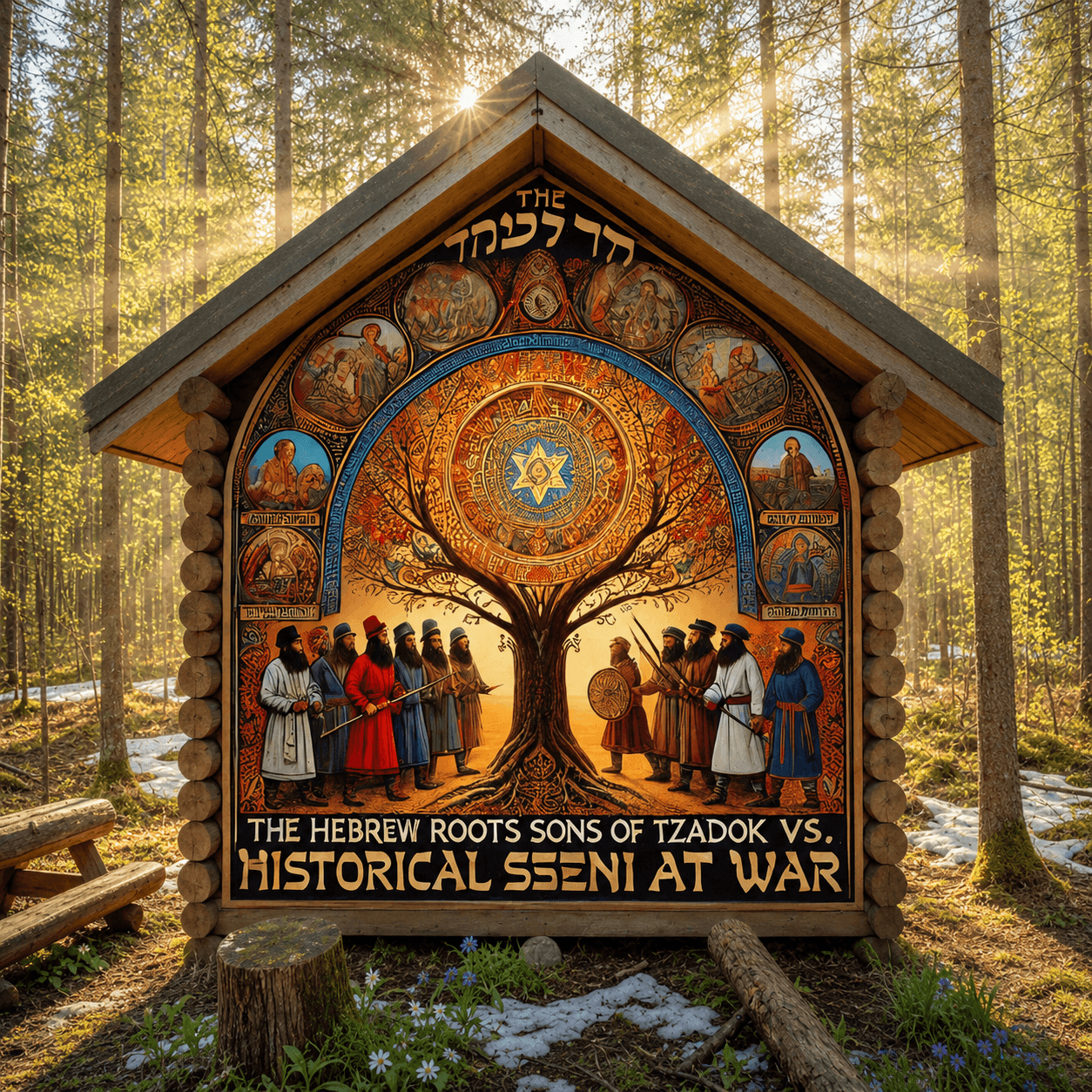
6. The Sons of Zadok and Essene Confusion
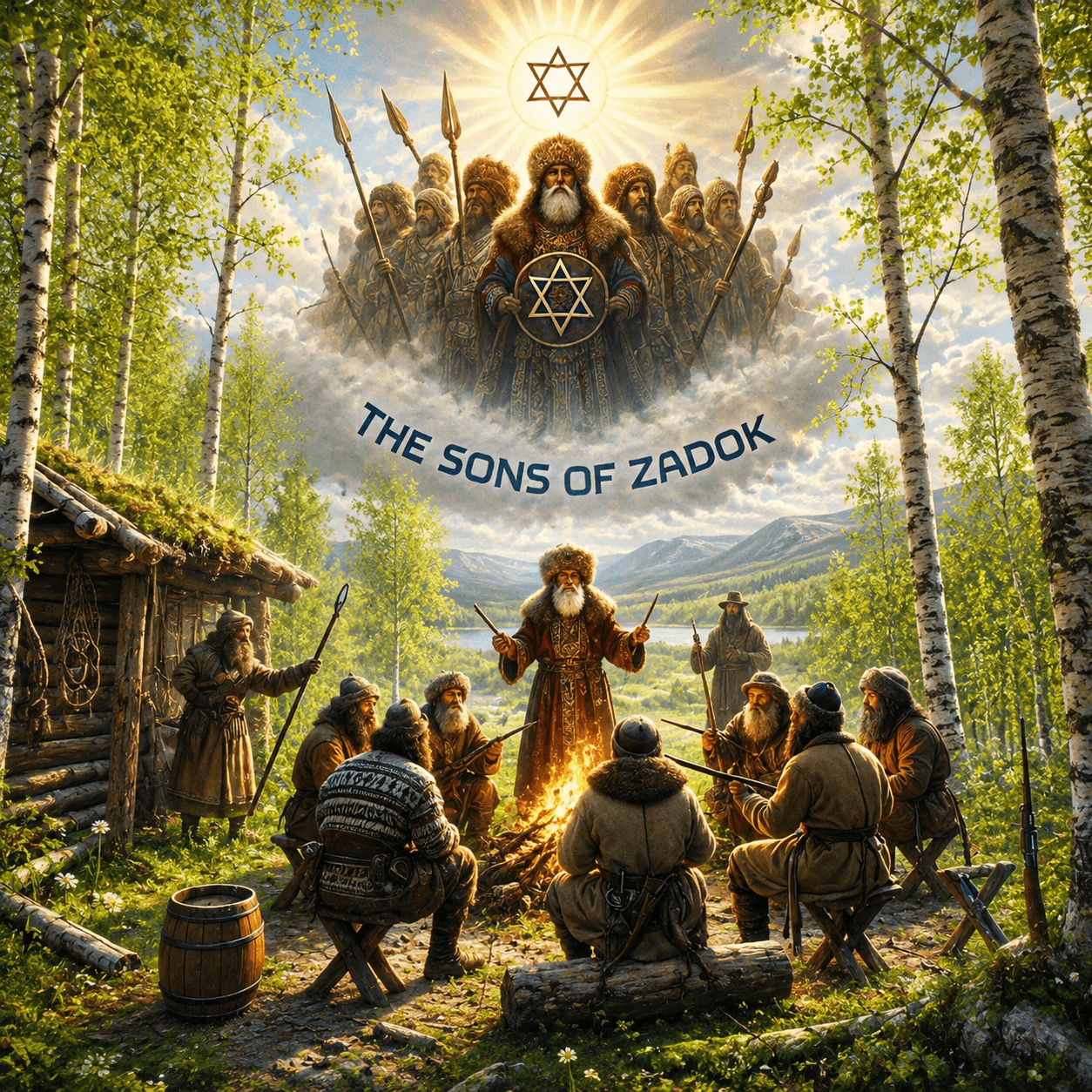
A lot of modern people like to claim ancient authority. They say they are restoring the way of the Sons of Zadok. They say they are returning to the Essenes. They say they have recovered the real calendar, the real priesthood, the real ancient faith.
But most of this is historically weak.
The Essenes were not simply “Bible-only believers.” They were not modern Hebrew Rooters. They were not nondenominational churches with Hebrew vocabulary. They were an ancient Jewish sect with strict communal rules, purity systems, and a very specific worldview. Whatever one thinks of them historically, they were not doing what these modern groups are doing.
The Sons of Zadok are also not a toy for modern identity-building. These terms belong to real Jewish history, real Second Temple debates, and complicated historical sources.
When modern people pull these labels out of context, they are not honoring history. They are using history as decoration.
Traditional Judaism does not need to play that game. We have a living Masorah. We have Mishnah. We have Talmud. We have Rambam. We have Shulchan Aruch. We have generations of halachic communities. We do not need invented priestly fantasies.
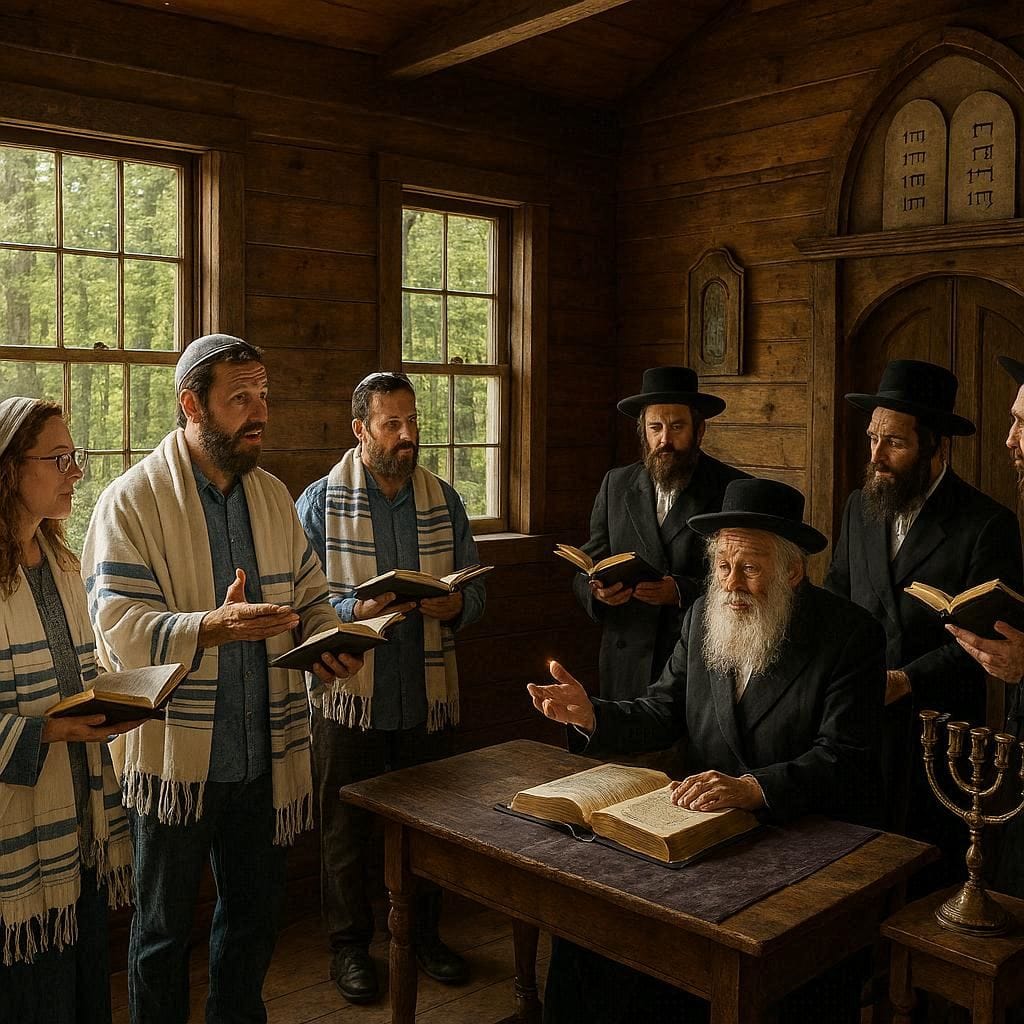
7. Messianics: The Issue Is Authority
With Messianics, the issue is not always identical to Hebrew Roots, but the test is the same:
Where is the authority?
If the New Testament is placed above Torah, that is not Judaism.
If the Christian Bible is placed above halacha, that is not Judaism.
If missionizing Jews is treated as acceptable, that is not Judaism.
If Jewish identity is claimed without conversion, that is not Judaism.
If the Masorah is treated as corruption, that is not Judaism.
If a belief becomes a tool to overturn Torah, reject halacha, or pull Jews away from Judaism, then they are outside the boundary.
Traditional Judaism will never accept the New Testament as a source of halacha. It does not accept the Christian Bible as a legal authority. It does not allow outside texts to redefine Torah for Israel.
That must be said plainly.
8. Honest Christianity Is Better Than Fake Hebrewism
I would rather a person be an honest traditional Christian than pretend to be a Hebrew from the days of the Hebrew Bible.
That may sound harsh, but it is actually respectful. If someone is Catholic, then be Catholic. If someone is Orthodox Christian, then be Orthodox Christian. If someone is Lutheran, Baptist, Presbyterian, Methodist, or part of another serious traditional Christian community, then belong to that tradition honestly.
Have clergy. Have doctrine. Have discipline. Have a community. Know who you are.
There can be respectful conversations between Jews and traditional Christians. We can speak about moral seriousness, family, education, ancient philosophy, opposition to secularization, and our shared concern for the collapse of religious life. We can discuss similarities between Judaism and traditional Christianity without pretending that our religions are the same.
But Hebrew Roots often refuses that honesty. It wants to be Christian and Jewish at the same time while submitting fully to neither. It wants Torah language without Torah authority. It wants Jewish signs without Jewish obligation. It wants biblical seriousness without halachic commitment. It wants the beauty of ancient Israel without entering the covenantal life of Israel.
That is why it becomes unstable.
So yes, for many people, it is better to return to church and be a serious traditional Christian than to live inside a confused imitation of Judaism/Hebrewism. Judaism has a door, and that door is conversion.
If a person does not want to enter through that door, then honesty requires them to remain what they are rather than inventing a fake Hebrewism.
A Personal Reflection: Judaism, Christianity, and the Failure of Messianic Judaism, Hebrew Roots, and Its Derivatives
There was a time when I believed that engaging with Messianics might encourage them to embrace traditional Judaism. In 2017, I even endorsed a book introducing Christians and Messianics to rabbinic Jewish thought, hoping that exposure to Torah, Mishnah, Talmud, and Halakhah would lead them toward authentic Judaism. I do not deny that history, nor do I regret my intentions. However, experience has taught me that this approach does not work as a means of reconciling these fundamentally different religions. Judaism cannot be reconciled with Christianity, and Messianic Judaism cannot serve as a legitimate bridge between them. Individual people may abandon Messianic beliefs and embrace Judaism, but the theology itself remains incompatible with Torah and Masorah.
For some time, I am now actively seeking to have my 2017 endorsement removed from the website where it continues to appear. Although I willingly provided that endorsement at the time, I no longer consent to its continued promotional use in a context that could suggest an ongoing association with or approval of Messianic Judaism.
My original intention was to encourage greater understanding of authentic Jewish tradition, never to endorse Messianic/Christian theology.
I believe it is important to acknowledge my history honestly while making equally clear that my religious convictions and the Orthodox Jewish identity of Shaarei Tzafon are not open to misunderstanding.
Let there be no misunderstanding:
Orthodox Judaism categorically rejects Christian theology, its understanding of the Creator, the divinity and messiahship attributed to Jesus, and the claimed prophetic and scriptural authority of the New Testament.
While Jews and Christians both profess belief in the Creator, our theological understandings are profoundly different. Judaism recognizes neither Jesus as Messiah nor Christian revelation as authoritative. These differences cannot be resolved through Hebrew terminology, Jewish customs, or selective quotations from rabbinic literature. Nevertheless, rejecting Christian theology does not mean rejecting Christians as people. Traditional Christians who sincerely wish to understand Judaism, its history, Torah, and Halakhah are welcome to engage in respectful educational dialogue. We can respect Christianity as a distinct religious tradition without accepting its theological claims or allowing them to redefine Judaism.
This brings us to Messianic Judaism, Hebrew Roots, and their various derivatives. These movements, in our view, bastardize both Judaism and traditional Christianity by constructing hybrid religious systems that neither tradition can honestly recognize as its own. They appropriate Jewish practices and terminology while retaining fundamentally Christian theological commitments, frequently dismissing the very rabbinic authority that preserves Jewish religious life. In doing so, they commit a disservice not only to Judaism but also to historic Christianity, obscuring its distinct identity beneath a manufactured appearance of Jewish authenticity.
Traditional Christianity does not need to masquerade as Judaism to possess its own religious integrity, nor does Judaism need Christian reinterpretation to validate its covenant with HaShem. Shaarei Tzafon therefore maintains an uncompromising separation from Messianic and Hebrew Roots movements while remaining open to sincere, respectful dialogue with traditional Christians.
Let Judaism remain Judaism, and Christianity remain Christianity. Religious honesty demands nothing less.
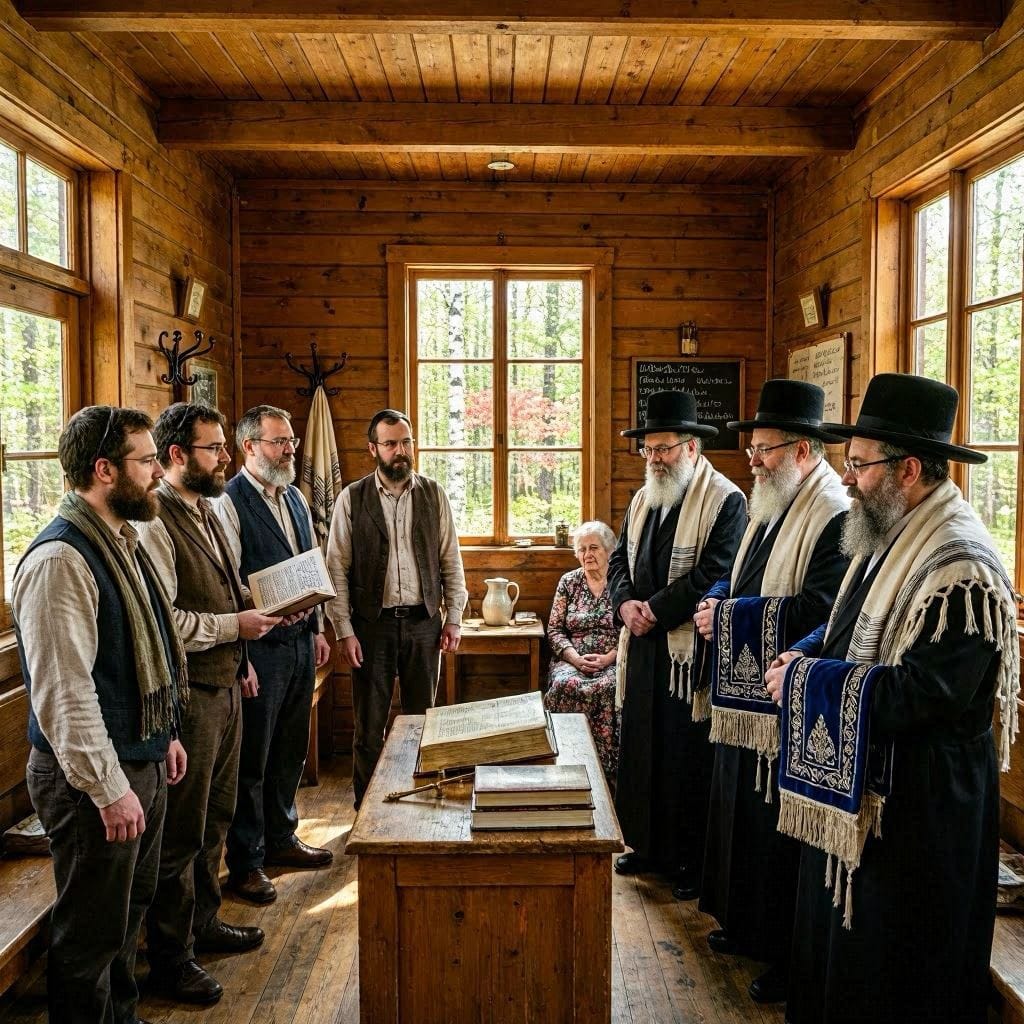
9. The Door Into Judaism Is Conversion
This is the simple truth: if someone truly wants Torah, then come through the door.
The door is conversion.
Not self-identification.
Not Hebrew vocabulary.
Not keeping feasts.
Not tzitzit.
Not internet study.
Not claiming to be Ephraim.
Not saying “I am grafted in.”
Not saying “I am spiritual Israel.”
The door is halachic gerut.
A person who wants to join Israel must accept the mitzvot, submit to Jewish law, enter through a beit din, and become part of the Jewish people. That is not gatekeeping in the negative sense. That is covenantal order.
Every serious religion has boundaries. A Lutheran pastor cannot simply become a Catholic priest without Catholic rites and authority. A Jew cannot walk into a mosque and declare himself an imam. A Muslim cannot run a synagogue. A Baptist cannot take over an Orthodox church and redefine its liturgy.
So why would Judaism be different?
If someone wants Judaism, they must become Jewish according to Judaism.

10. The Final Shaarei Tzafon Position
The Shaarei Tzafon position is simple.
Shaarei Tzafon is not a Hebrew Roots group. It is not a Messianic group. It is not a movement built around the Christian Bible, the New Testament, or the claims made inside those writings. As traditional Jews, we do not follow the Christian Bible as Scripture. We do not receive it as Torah or halacha. We do not accept it as binding on Israel. The Christian Bible and its claims can never overturn Torah, Mishnah, Talmud, Rambam, Shulchan Aruch, or the Masorah of Klal Yisrael.
We have no hatred for sincere people. We have no problem speaking respectfully with traditional Christians. We have no problem discussing history, morality, philosophy, or religious seriousness. We can admire discipline wherever it is found.
As an Orthodox rabbi, part of my responsibility is to protect religious tradition and to maintain honest dialogue with people of other serious Abrahamic faiths. But when someone comes to undermine and destroy tradition itself, I oppose that. We are traditionalists. These hodgepodge movements often openly claim to oppose tradition, but Mikra itself commands Israel to follow the authorized judges and teachers of the Torah. The Torah says that when a matter is difficult, Israel must go to the place HaShem chooses, listen to the priests, Levites, and judges, and not turn aside from the ruling they give, right or left. That is the principle of lo tasur, “do not turn aside” (Deuteronomy 17:8–13).
In this limited sense, I also stand with my traditional Christian brothers and sisters in defense of serious religious tradition. We do not agree with their creeds, and we do not receive their writings as Torah or halacha. Christianity is a different religion from Judaism, and we are not pretending otherwise. But we can recognize that traditional Christians have their own inherited structures, creeds, councils, confessions, clergy, disciplines, and forms of succession. Catholics and Orthodox Christians speak in terms of apostolic succession and ancient conciliar faith. The Nicene Creed remains a central statement in Catholic and Orthodox Christianity. Lutheran tradition has the Book of Concord and remembers Luther’s Ninety-Five Theses as part of its historical development. Presbyterians have the Westminster Confession of Faith. Baptists have confessional traditions such as the 1689 London Baptist Confession. Anglicans have the Thirty-Nine Articles.
Again, we do not accept those Christian doctrines as Jews. We do not agree with their claims about the New Testament or Christian theology. But we can still respect that these are real traditions with real histories. They have inherited structures. They have communities. They have clergy. They have ways of preserving what they believe they received.
This is why Hebrew Roots and similar movements are a problem not only for Judaism, but also for traditional Christianity. Many of these people came out of Christian churches, but instead of remaining within those traditions or honestly converting to Judaism, they reject both. They reject Jewish Masorah, but they also reject the Christian churches, creeds, confessions, and successions that formed them. They often have neither Jewish halachic authority nor Christian apostolic, ecclesial, or confessional continuity. They stand outside both houses and then claim to have corrected both.
When these movements reject the ancient Christian traditions from which they came, they also undermine the Christian inheritance they claim to be purifying. That is not restoration. That is religious rootlessness dressed up as ancient faith.
Likewise, when a movement rejects the very tradition that Torah commands Israel to follow, it is not merely opposing rabbis. It is opposing the order HaShem placed within Torah itself. That, too, is religious rootlessness dressed up as ancient faith.
So, as Orthodox and traditional Jews, we reject Torah without Masorah.
We reject Jewish symbols without Jewish obligation.
We reject anti-rabbinic arrogance.
We reject missionizing Jews.
We reject fake Jewish identity.
We reject the claim that the Christian Bible can correct the Torah of Israel.
We reject the idea that a person can bypass conversion and still claim Israel’s covenant.
Hebrew Roots and Messianic systems are not ancient Judaism. They are modern religious inventions. They may contain sincere people. They may contain scattered sparks. They may even contain people who are moving toward truth. But the system itself is not Torah Judaism.
A person has two honest choices.
Remain a respectful traditional Christian, or come into Judaism through halachic conversion.
But do not stand outside the house, take the family heirlooms, rearrange them, and then tell the family they no longer understand their own inheritance.
That is the fool’s errand.
Torah belongs with Masorah.
Masorah belongs with Israel.
Israel is entered through covenant.
And covenant requires humility.
That is where Shaarei Tzafon stands.
We stand with Traditionalism
We stand with Judaism
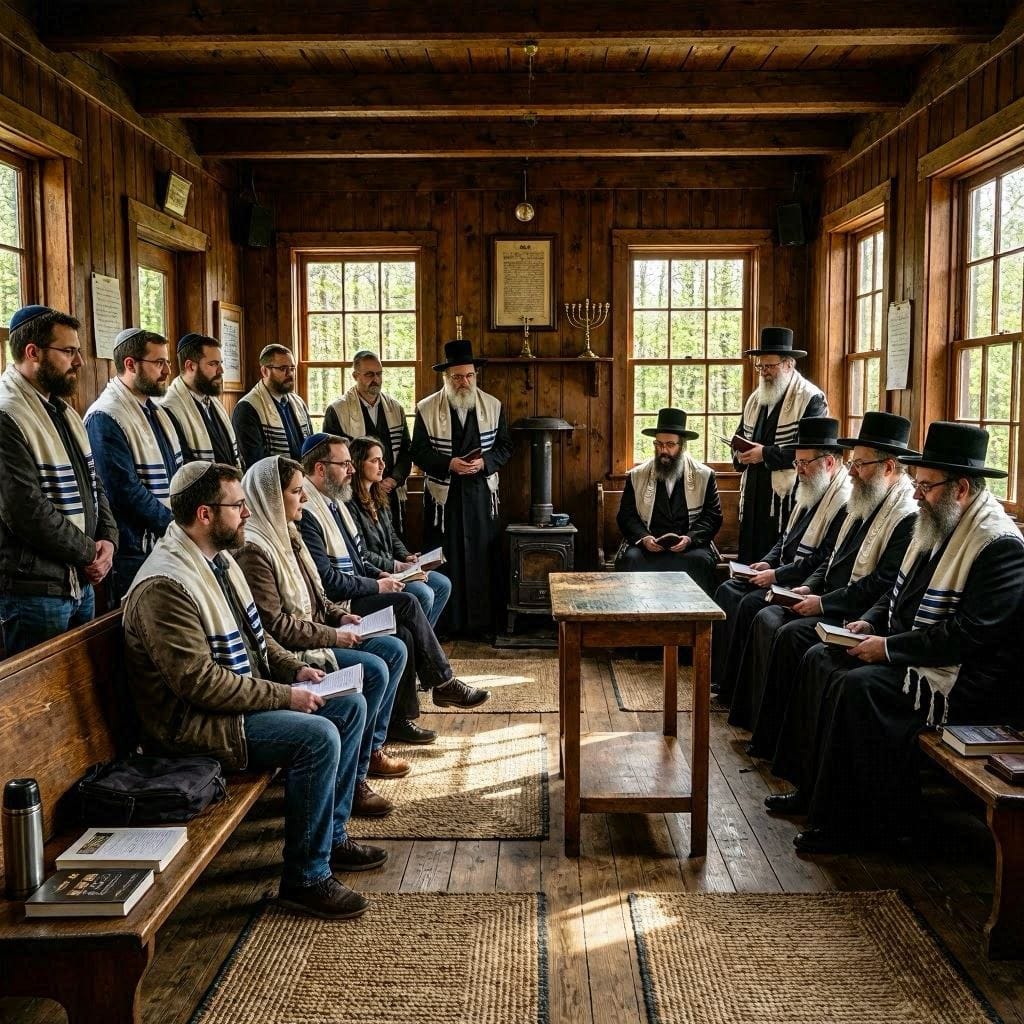
Shaarei Tzafon — The North Gate
Orthodox Jewish Life and Torah Study in Northeastern Michigan
Shaarei Tzafon — The North Gate, led by Rabbi Ariel Manning, is an independent, family-led Orthodox Jewish educational and publishing initiative based in Northeastern Michigan. We support traditional Jewish life, Torah study, Halakhah, and Jewish education throughout Alpena, Hillman, Rogers City, and surrounding communities. Those interested in traditional Judaism are welcome to contact us for educational resources, Torah learning, and opportunities for discussion by prior arrangement.
Rooted locally, our greater mission extends northward from the 45th parallel — The North Gate — through Michigan, Canada, and Alaska toward the Arctic. We seek to encourage independent Jewish communities, family-centered Torah education, and the renewal of small batei midrash and shtieblach, preserving the rich traditions of Orthodox Judaism for future generations.
Our work begins in Northeastern Michigan, but our vision extends from the 45th parallel toward the Arctic.
Guided by Rambam and Mori Qafiḥ, uplifted by Rebbe Nachman, and grounded by Avraham ben HaRambam’s balance of halakha and inward avodah.
The Orchard’s Path
publishes our books and curricula.
Our mission: a bright, authentic Jewish presence in every northern town.
Created with ©systeme.io


