
Hanukkah
B"H
Northward Light — Introduction
In the far North the sun descends early and the forest grows still. Snow muffles the earth; breath becomes visible; darkness lingers for half the day. Then, from a cabin window, a single flame trembles—the ner Ḥanukkah.
That little light is not nostalgia. It is a declaration that holiness survives distance and cold. At Shaarei Tzafon, “The North Gate,” Ḥanukkah expresses the Boreal covenant: halakhic precision joined to warmth of spirit. We read the festival through Rambam’s clarity, Talmudic structure, Zoharic light, and Rebbe Naḥman’s joy. In that synthesis—Minhag Borealish—a candle becomes a philosophy: reason and faith burning as one.
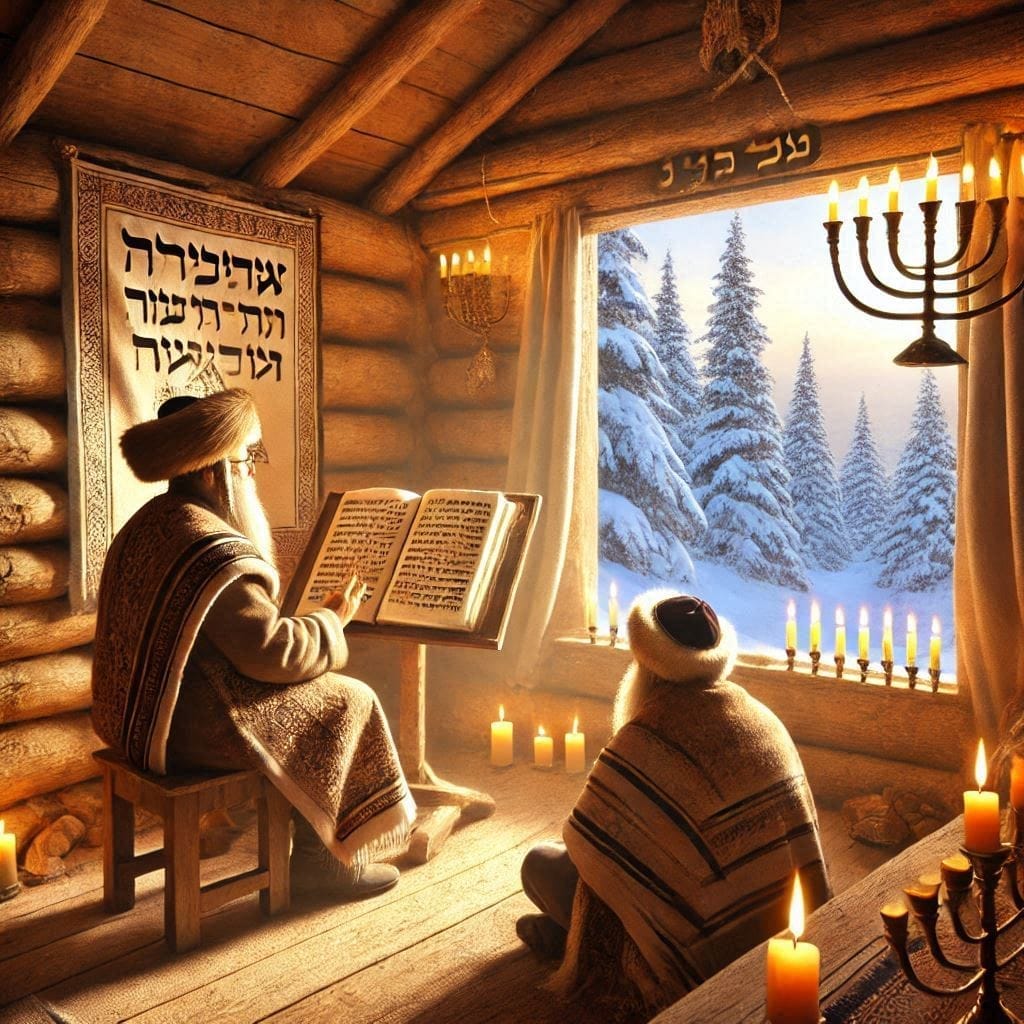
Torah Foundations — The Menorah’s Eternal Archetype
Though rabbinic in form, Ḥanukkah’s soul is already written in the Torah.
Four parashiyot give its architecture:
Tetzaveh (Ex. 27:20–21) – “They shall bring to you pure olive oil, crushed for illumination, to kindle a lamp continually.”
Purity and continuity define divine service. The miracle of one sealed flask later echoes this command—the preservation of zakh shemen amid defilement.
Tzav (Lev. 6:5–6) – “A perpetual fire shall burn on the altar; it shall not go out.”
The altar’s flame is covenantal endurance. The menorah in every home becomes its heir: the altar’s fire transposed from Temple to hearth.
Shemini (Lev. 9) – On the eighth day of inauguration, heavenly fire descends. “Eight” always means beyond nature. So Ḥanukkah’s eight days announce that Divine help exceeds the natural order.
Emor (Lev. 24:1–4) – The Menorah’s command stands beside the calendar of festivals. The Torah thus unites light with sacred time. Ḥanukkah, added centuries later, continues that pattern—time made holy through light.
Together these passages show that the home-menorah is not imitation but continuation: the Temple’s radiance surviving in exile.
We follow the tradition inside house, near the doors opposite of the mezuzah..
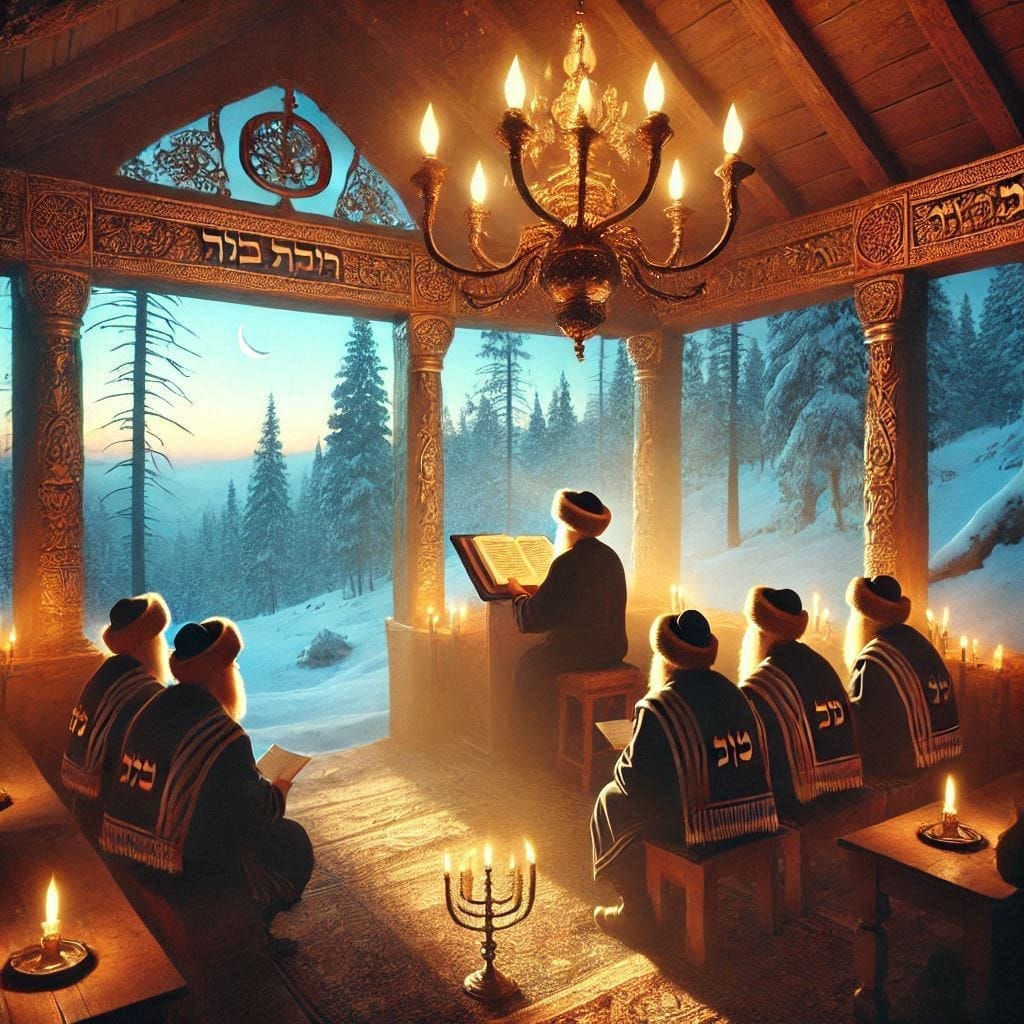
“Who Commanded Us” — The Authority of a Rabbinic Mitzvah
We bless: “אֲשֶׁר קִדְּשָׁנוּ בְּמִצְוֹתָיו וְצִוָּנוּ לְהַדְלִיק נֵר חֲנֻכָּה.”
How can we say “commanded” if the Torah nowhere states it?
Because the Torah itself empowered the sages:
“According to the law which they shall teach you … you shall not turn aside.” (Deut. 17:11)
Rambam explains that every fixed rabbinic ordinance—Megillah, ʿEruv, Hallel—carries Torah authority through that verse. Thus, lighting the Ḥanukkah lamp fulfills Hashem’s command by obeying His court.
On the first night we recite three blessings:
Lehadlik ner Ḥanukkah
Sheʿasah nissim la-avoteinu
Sheheḥeyanu
On later nights, two; a bystander who sees the lamp recites the latter blessings only. Each morning of the festival we add Hallel shalem and Al HaNissim—praise that translates intellect into gratitude. In Rambam’s view, Ḥanukkah is not folklore; it is public philosophy.
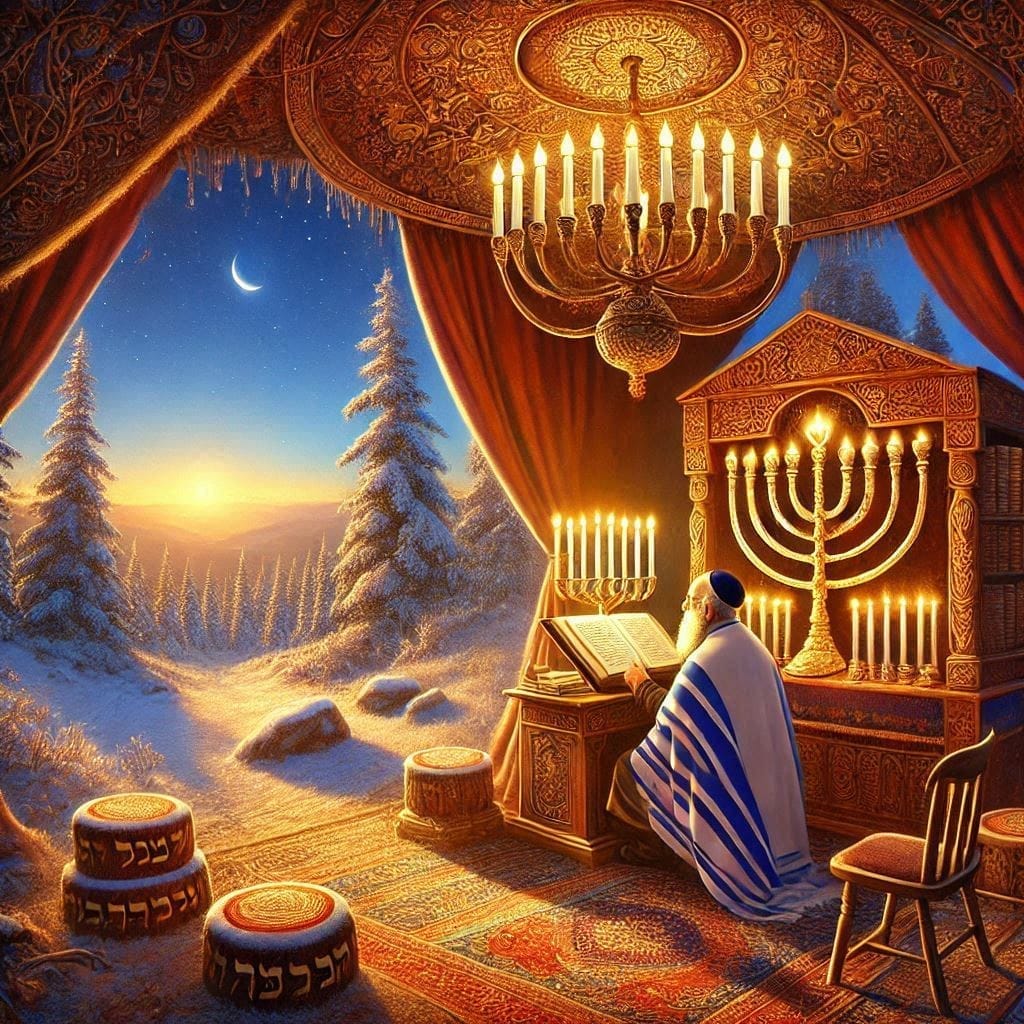
The Halakhic Core — Law as Structure for Light
מאי חנוכה? the Talmud asks (Shabbat 21b). Defiled oil, one sealed cruse, eight days of burning. Rambam (Hil. Ḥanukkah 3–4) distills this into law:
Obligation: Men and women alike; even one person must light. A traveler lights where he stays if none light for him at home.
How Many:
Basic mitzvah – one lamp for the household each night.
Mehadrin – one per person.
Mehadrin min ha-mehadrin – Beit Hillel’s practice: add one light each night.
When: At tzeit ha-kokhavim (visible stars). Keep burning until foot traffic ceases—about thirty minutes. If forgotten, light while some still pass.
Where: Doorway outside on the left side (opposite the mezuzah); upstairs dwellers, window to the street. In danger or storm, a table indoors suffices—intent outweighs exposure.
Fuel & Use: All oils and wicks kosher; the flame’s clarity matters more than species. One may not use its light for work—keep a shammash nearby.
Priorities: If only one coin, the Shabbat home lamp precedes; peace within precedes publicity without. Between Kiddush wine and Ner Ḥanukkah, the latter may come first—yet peace remains the crown.
Rambam concludes: “The mitzvah of Ḥanukkah is exceedingly beloved.” Even a pauper sells his garment for a flask of oil, because the light proclaims the endurance of spirit.
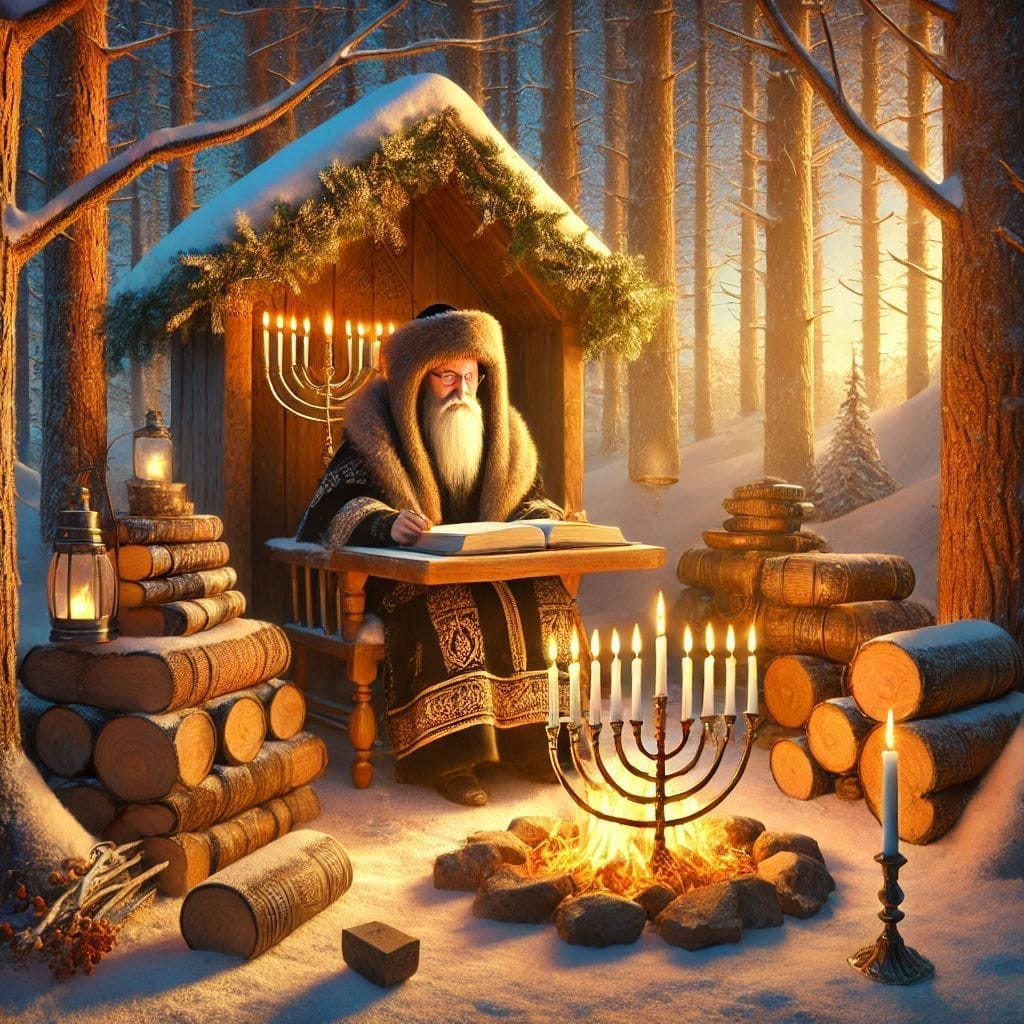
Borealish Adaptations — Halakhah in the Snow
Living above the 45th parallel changes the rhythm of night. Minhag Borealish keeps halakhic form while speaking northern reality.
Defining tzeit: Not by clock but by sky—when three medium stars are clearly visible. Children learn to find them; astronomy becomes avodah.
Placement: Outdoors when calm; otherwise indoors by a public-facing window. Pirsumei nissa means visibility, not frostbite.
Fuels of the forest: Olive oil is ideal; yet flax, sunflower, or pine-seed oils—local and clear—are valid. Purity of kavvanah sanctifies local produce.
Duration: Half an hour fulfills the law; an hour beautifies it—a symbolic stand against the long night.
Danger clause: Heavy storms, wildlife, or social hostility count as shaʿat sakana; lighting indoors at table suffices.
Height and dignity: Below twenty amot (~30 ft) so the light can meet the passer’s eye.
These adjustments embody a principle: Halakhah must live where Jews live. To guard the flame is not compromise; it is fidelity to purpose.
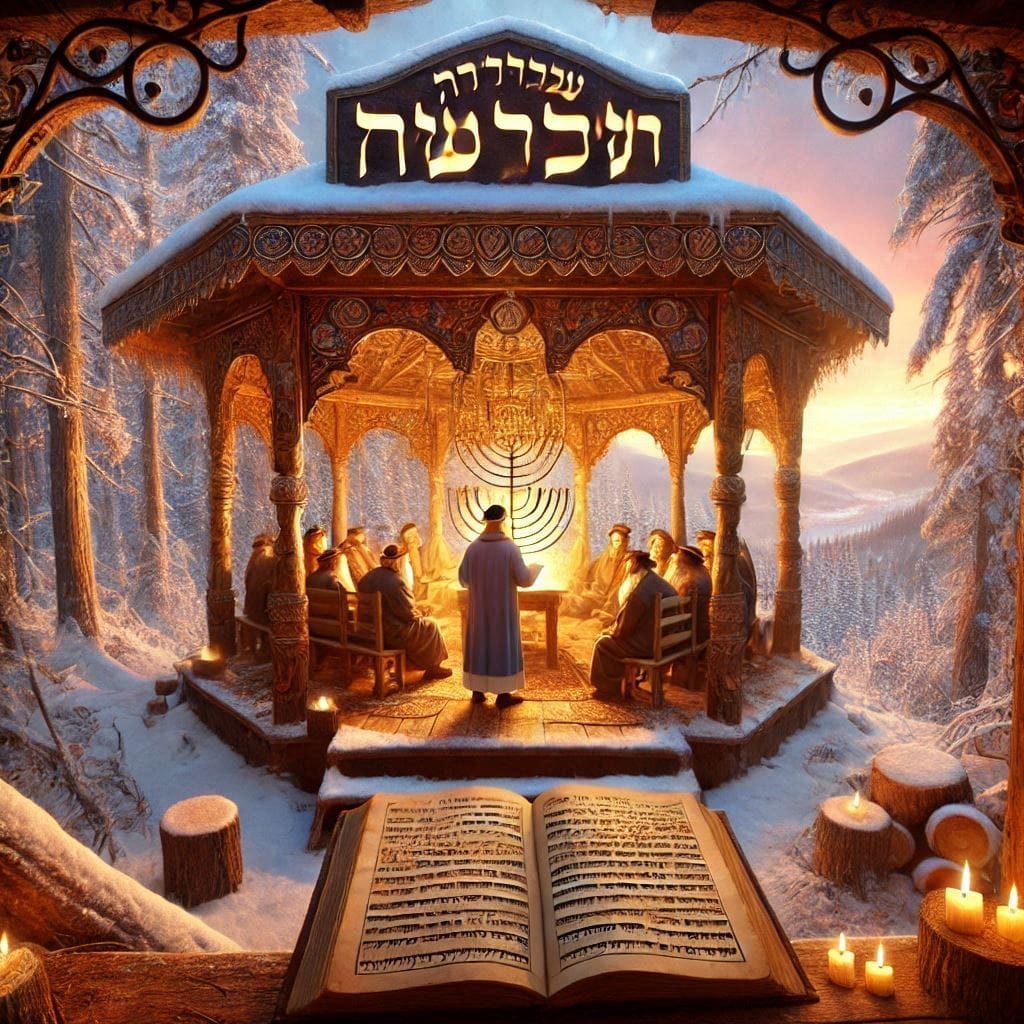
Light and Intellect — Rambam’s Philosophy of Illumination
For Rambam, or symbolizes truth apprehended by intellect:
“Through the intellect the soul perceives truth, as the eye perceives objects through physical light.” (Moreh Nevukhim I:64)
Greek thinkers sought enlightenment through speculation; Israel seeks it through revelation refined by reason. The miracle of the oil thus becomes the harmony of mind and faith—a sealed flask of undiluted wisdom.
In Yesodei HaTorah, Rambam teaches that contemplation of creation and Torah leads to love and awe. Knowledge that fails to inspire either is darkness by another name. Therefore, lighting the menorah is philosophical resistance: intellect bowed in service to God.
In northern winter this message glows literal—every candle a defiance of ignorance, every clear flame a victory of disciplined reason.
The Hidden Light — Mystical Resonances in the Boreal World
While Rambam sees light as intellect, the Zohar perceives its inward current:
“When the High Priest kindled the lamps, a supernal radiance emerged from the Hidden Light stored since creation.” (Zohar Behaʿalotekha 152b)
That Or HaGanuz will be revealed in the days of Mashiaḥ. Each Ḥanukkah lamp is a rehearsal—rational and mystical united.
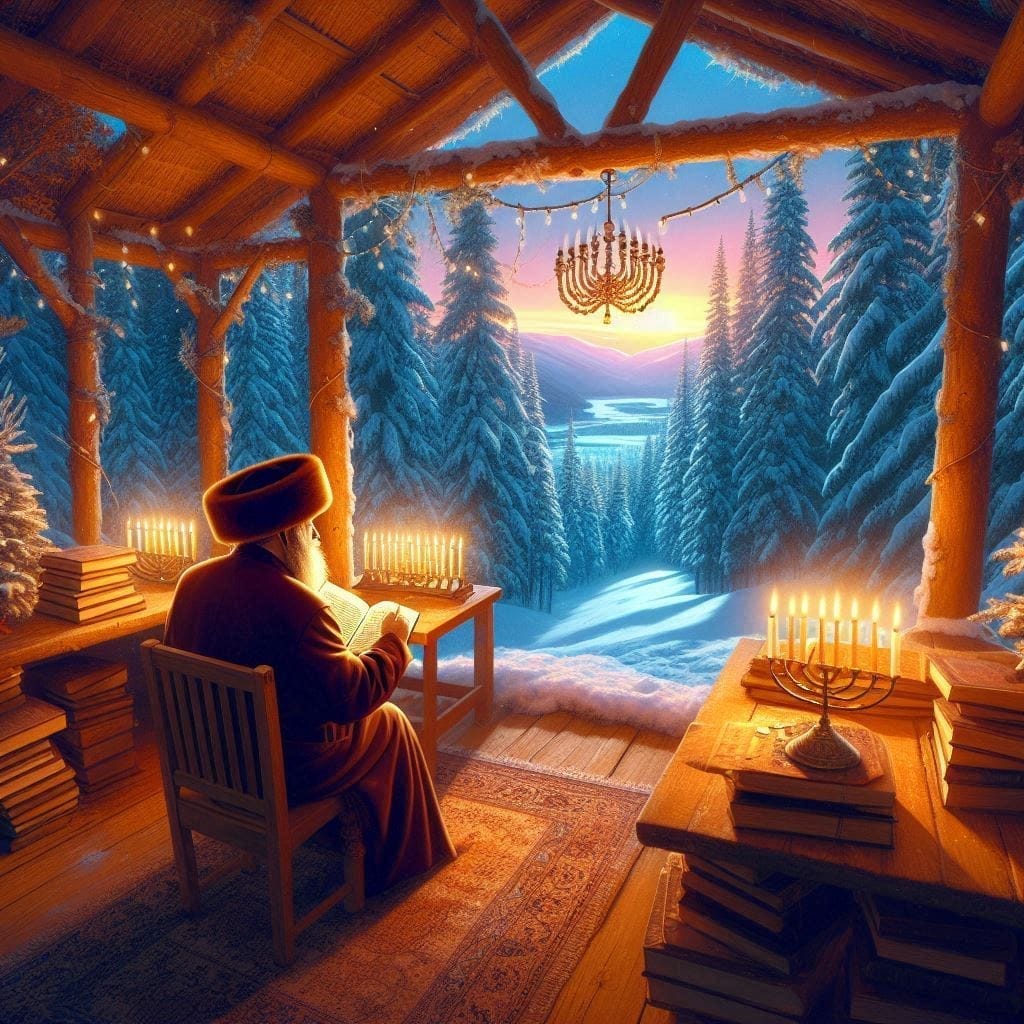
Several Hasidic Rabbanim taught: “A little light drives away much darkness.” In the snowy silence of the North this is visible truth: each flake reflects the menorah, scattering holiness in a thousand mirrors. To light in solitude is to join an unseen fellowship of lamps across the earth.
Boreal Devotion — Preparing and Serving Before the Flame
In Minhag Borealish, lighting the ner Ḥanukkah is not rushed. It is a small avodah—a sacred service—that begins with inward preparation and continues long after the match is struck. The halakhah sets the frame; kavvanah fills it with breath.
Preparation — L’shem Yiḥud and Purification
Before lighting, we pause for L’shem Yiḥud Kudsha Brikh Hu u-Shekhinteh—to unify the Holy One and His Presence through this mitzvah. There are several accepted texts of L’shem Yiḥud; some read one, others three or four, each expressing the intention that the act of kindling unites heaven and earth. Any version may be said softly in Hebrew; translation is not essential, only awareness.
If possible, immerse in a mikveh again before lighting—even if you already immersed in the morning. The second immersion cleanses the heart from the day’s dust and tunes the soul to receive the hidden light. When immersion is not possible, wash the hands with focus and recite the verse:
“I will wash my hands in innocence and encompass Your altar, Hashem.” (Ps. 26:6)
Lighting — Simple Act, Deep Intention
We follow the Sefardic text of the blessing:
“…לְהַדְלִיק נֵר חֲנֻכָּה”
not ner shel Ḥanukkah.
After the blessings, recite Ha-nerot Halalu and Maoz Tzur, as is customary in all Israel.
Light in weekday dress—hat, jacket, and gartel—for weekday nights, emphasizing humility over ceremony. On Erev Shabbat, light in Shabbat clothes before sunset; on Motza’ei Shabbat, light again in Shabbat garments before removing them, bridging holiness into the week. When lighting before Shabbat on Friday, we limit the service to blessings and songs; the extended recitations resume on the following nights.
Contemplation — Stillness as Avodah
After lighting, keep the room still. Watch the reflections of the flames in the glass, in the snow, and in one’s own eyes. This stillness is itself avodah—silent union of body and soul.
Recite quietly:
Tehillim 27 (Hashem ori veyishʿi – “Hashem is my light and my salvation”);
Tehillim 133 (Hineh mah tov u-mah naʿim – “How good and pleasant it is when brothers dwell together”).
Joy is drawn through unity; unity through stillness.
The Extended Service — Thirty Minutes Before the Light
Many ḥasidim, and likewise Borealish practitioners, remain before the menorah for at least half an hour. The following order of Psalms and prayers is cherished in northern custom:
The final verse of Psalm 90, followed by Psalm 91, both read seven times—shield of protection for the home.
Psalm 30 (Mizmor Shir Ḥanukkat HaBayit leDavid)—the psalm of dedication.
Psalm 67 (Elohim yeḥonenu v’varekhenu)—the Menorah-shaped psalm.
Ana Be-Koach—the mystical prayer of ascent.
Psalm 33—praise through harmony of nature and word.
Psalm 121 (Esa einai el he-harim)—trust amid mountains and snow.
Psalm 133 again—to close in peace and brotherhood.
Some add further readings, yet these seven circles of praise form a full thirty minutes of meditative flame-gazing. Each verse becomes light ascending the wick of the soul.
Daily Additions During Ḥanukkah
Full Hallel is recited every morning with blessings, reflecting the completeness of the miracle.
The Torah reading for each day follows Parashat Nesiʾim (Numbers 7), one prince per day, concluding with Zot Ḥanukkah.
In Modim of the Amidah and in the second blessing of Birkat HaMazon, add Al HaNissim with its Ḥanukkah passage.
After Shacharit, recite Psalm 30, the Psalm of Dedication, linking Temple and table, altar and home.
Ethics, Ecology, and Joy — Sanctifying the Material
Rambam warns, “Do not destroy trees needlessly; this is the way of the righteous, who rejoice in the welfare of creation.” (Hil. Melakhim 6:10)
Minhag Borealish extends that to the mitzvah’s materials:
Use local, renewable oils where possible.
Reuse glass jars; repurpose metal holders.
Avoid electric “Ḥanukkah bulbs” unless safety demands; real flame teaches humility.
When guests come to see the light, feed them warmth—soup, latkes, friendship.
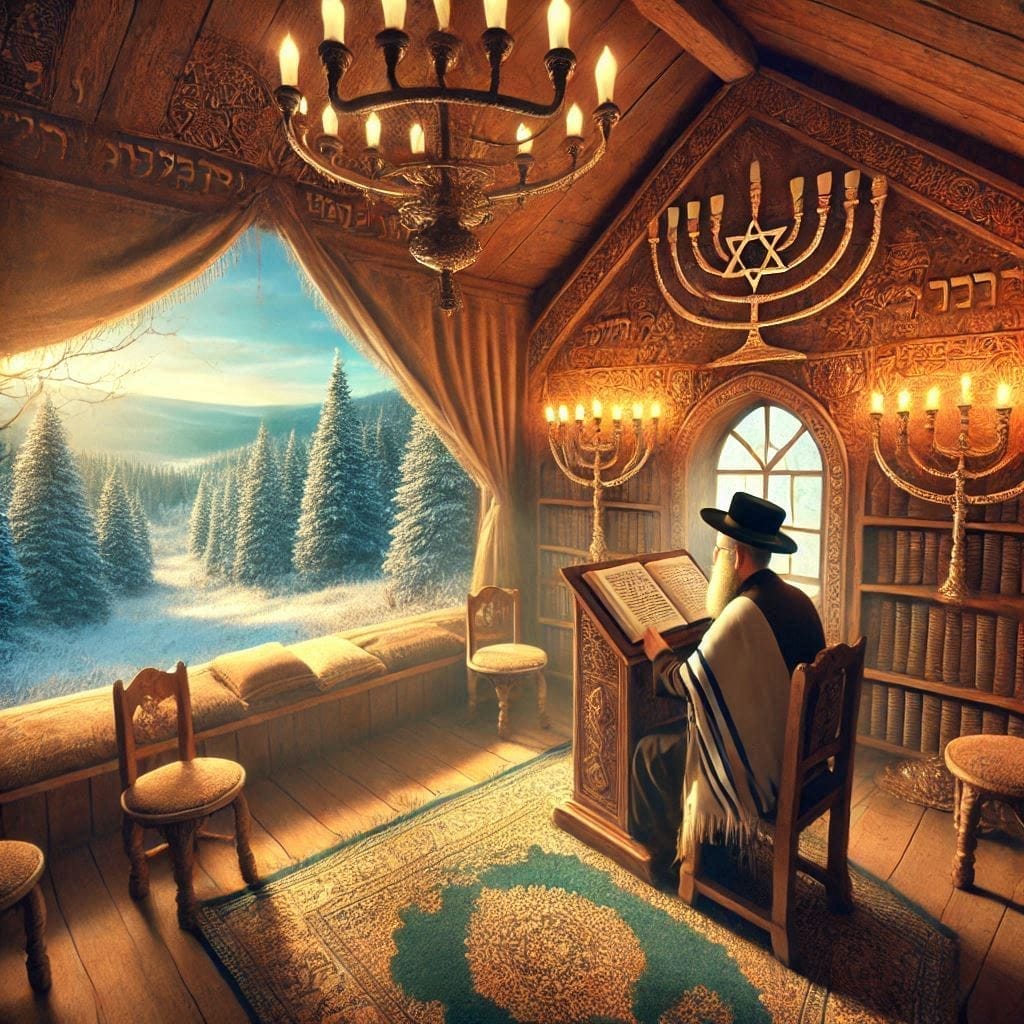
Rebbe Naḥman said, “The essence of a mitzvah is joy.” Dancing before the candles while snow howls outside is spiritual ecology: the heart generating its own climate.
Teaching and Solitude — The Family as Mikdash Meʿat
Each home can echo the Temple’s service. Suggested Boreal family rhythm:
Step outside at dusk—find the first three stars.
Recite blessings—Lehadlik, Sheʿasah Nissim, (Sheheḥeyanu night 1).
Light right-to-left, watch left-to-right.
Chant Ha-nerot halalu slowly; notice ba-zeman ha-zeh—“in this season”—as literal truth.
Sing Psalms, tell stories of the Maccabees, emphasizing persistence rather than power.
Add Al HaNissim in prayer and grace.
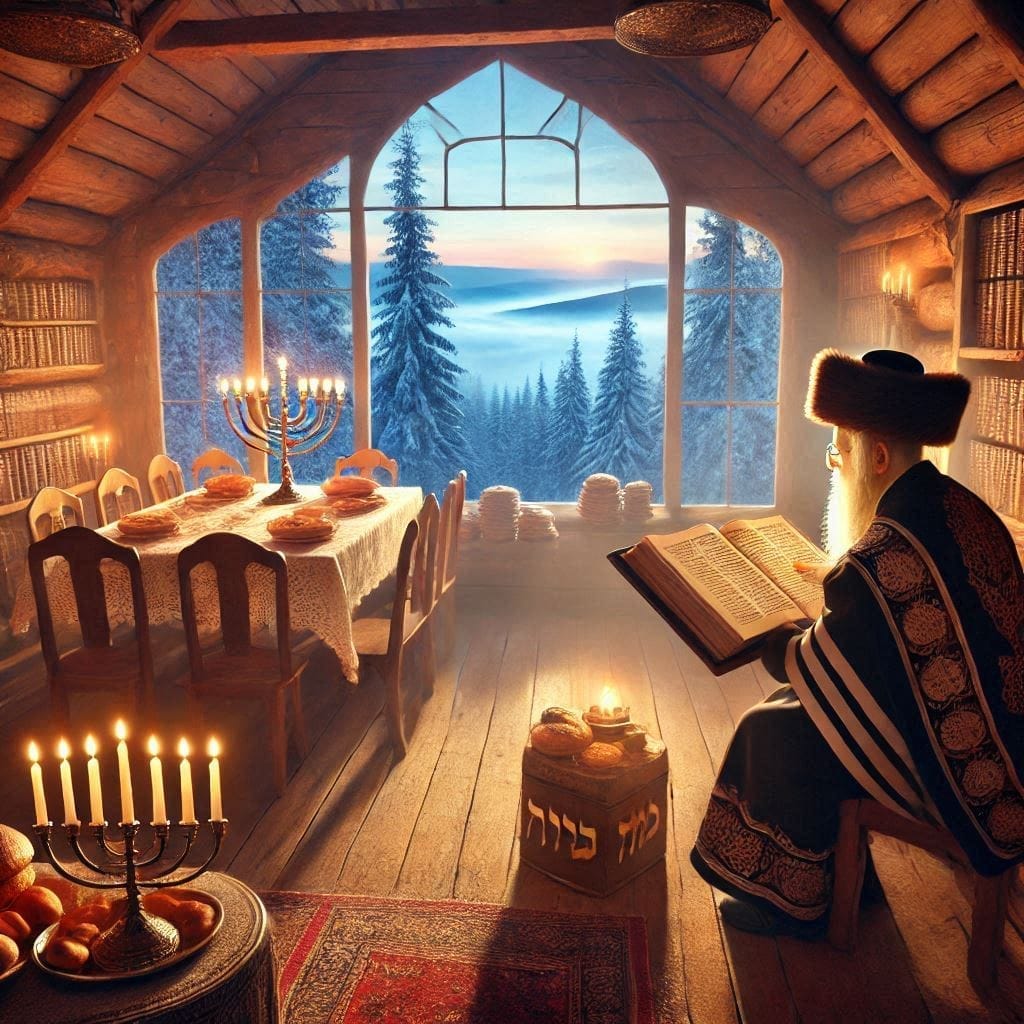
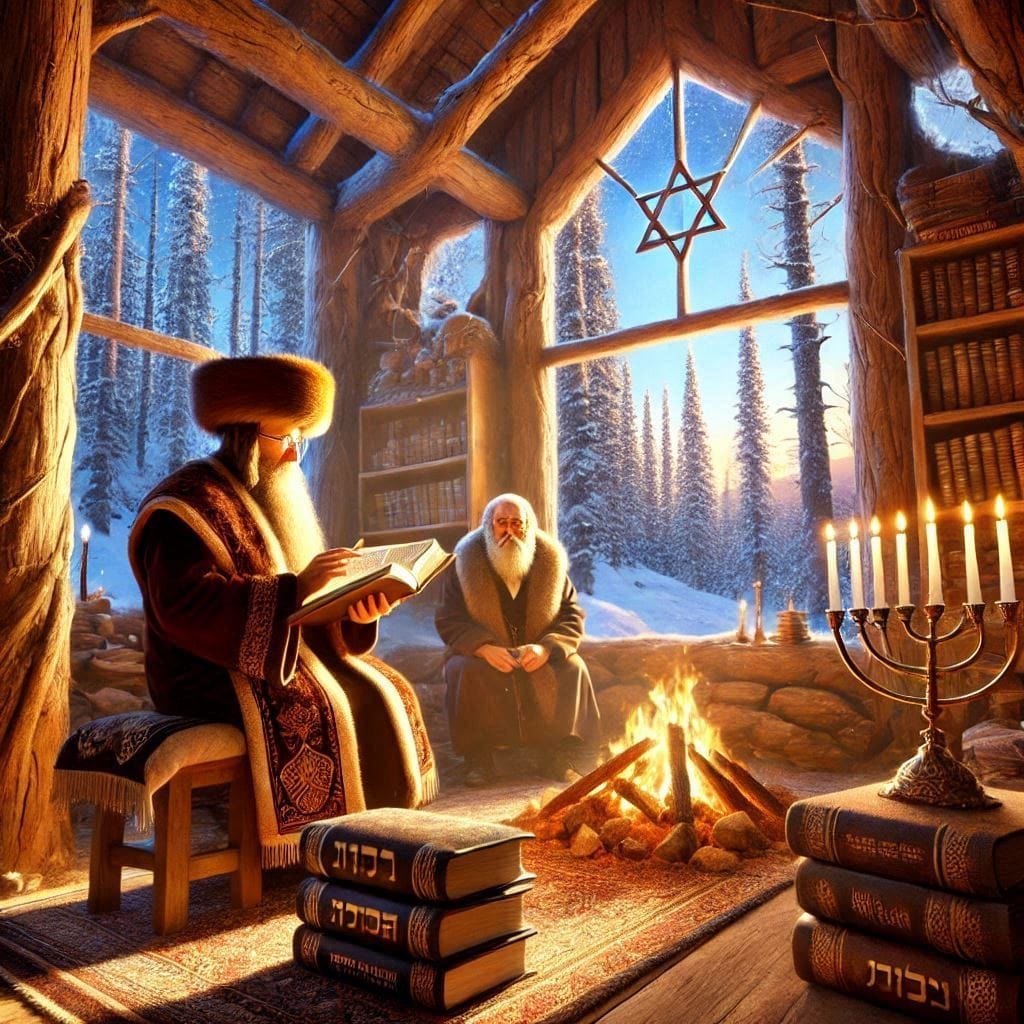
For those far from community, the same sequence holds. Even one Jew lighting in a cabin sanctifies a landscape. Isolation becomes hitbodedut, the prayer of the solitary—ancestral, legitimate, and luminous.
The Kabbalistic North — Hidden and Revealed
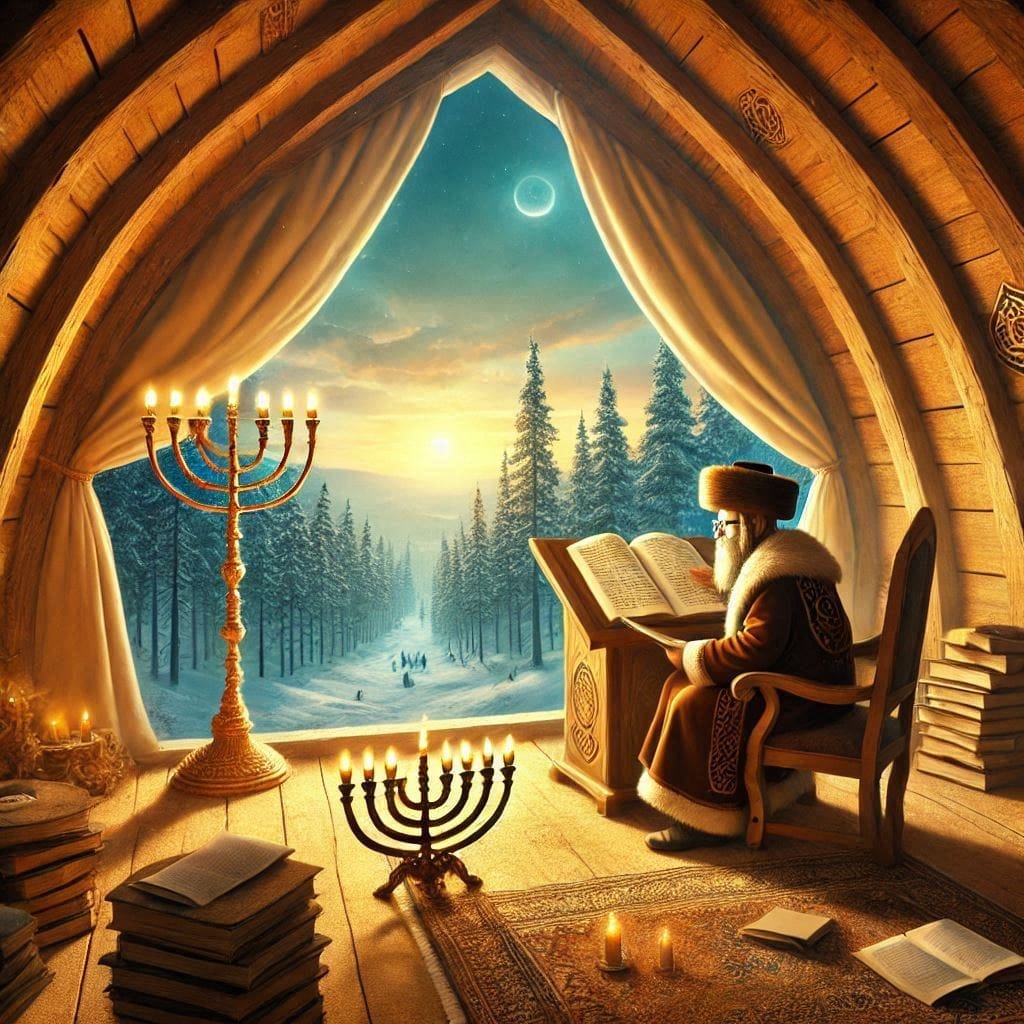
The North conceals—sun low, paths frozen—yet concealment itself ripens revelation. From hiddenness emerges redemption; from silence, song.
Ḥanukkah rehearses that mystery each year: darkness birthing light, exile birthing holiness. To dwell in the North is not to live far from Zion but to test the promise that Torah or can reach any latitude. Snow becomes parchment; flame becomes commentary.
Conclusion — Peace in the Window, Covenant in the Heart
Rambam ends his laws of Ḥanukkah with peace:
“If one must choose between the house-lamp and the Ḥanukkah-lamp, the house-lamp takes precedence, for it brings peace within the home. Great is peace, for the whole Torah was given to make peace in the world.” (Hil. Ḥanukkah 4:14)
Thus the final purpose of light is not spectacle but shalom bayit.
When the window glows against endless snow, that peace extends outward—reason reconciled with faith, man with nature, heaven with earth. Eight flames complete the circle, echoing the eight days of Shemini, the eternal menorah of Tetzaveh, the perpetual fire of Tzav, the sanctified time of Emor.
אוֹר זָרֻעַ לַצַּדִּיק וּלְיִשְׁרֵי־לֵב שִׂמְחָה (Ps. 97:11)
“Light is sown for the righteous, and for the upright of
heart—joy.”
May that light, sown in our snow, sprout as joy in every Jewish home north and south, until the hidden light shines openly once more.
Ḥag Urim Sameaḥ — חַג אוּרִים שָׂמֵחַ
From Shaarei Tzafon,— The North Gate of Torah Light.
Hanukkah — Torah, Halakhah, the Light of Rambam, and Minhag Borealish
What does Hanukkah teach us about Torah, Jewish law, spiritual illumination, and the preservation of Jewish life in the darkest seasons of the year?
This teaching from Rabbi Ariel Manning of Shaarei Tzafon (The North Gate) explores the religious foundations, practical Halakhah, and spiritual meaning of Hanukkah through the Tanakh, Talmud, Rambam, Kabbalah, and Hasidic tradition.
Beginning with the Torah's teachings concerning the Menorah, the perpetual flame, and the sanctity of Divine service, the lecture examines how the rabbinic festival of Hanukkah continues the Jewish tradition of illuminating sacred time through the fulfillment of mitzvot.
Particular attention is given to Rambam's Mishneh Torah, Hilkhot Megillah vaHanukkah, and the discussion in Shabbat 21b. These sources establish the obligation of lighting Hanukkah lamps, the blessings recited over them, the appropriate time and location for lighting, and the importance of Pirsumei Nisa—publicizing the miracle.
The teaching examines the distinctions between the basic obligation, Mehadrin, and Mehadrin min ha-Mehadrin, together with the observance of Hallel, Al HaNissim, and the traditional Torah readings of Hanukkah.
Beyond the legal foundations, the lecture considers the spiritual significance of light through Rambam's philosophical writings, the mystical teachings of the Zohar, and the devotional approach of Rebbe Nachman of Breslov.
The Minhag Borealish approach brings these teachings into the distinctive environment of Northeastern Michigan. Long winter nights, snowfall, rural isolation, and the challenges of northern Jewish life become opportunities to reflect upon the endurance of Torah and the importance of maintaining Jewish observance wherever Jews reside.
The article also explores preparation before lighting, traditional blessings, Psalms, contemplative prayer, family participation, and the importance of joy, humility, and spiritual intention. These devotional practices are presented alongside the established Halakhah, without confusing optional customs with obligatory Jewish law.
Special emphasis is placed upon Shalom Bayit, peace within the Jewish home. Rambam teaches that when a person must choose between the Shabbat household lamp and the Hanukkah lamp because of insufficient resources, the household lamp takes precedence for the sake of peace.
For Jewish families in Alpena, Hillman, Rogers City, and throughout Northeastern Michigan, Hanukkah offers a reminder that traditional Orthodox Jewish life does not depend upon proximity to large Jewish population centers. Torah study, Halakhah, prayer, family education, and the observance of mitzvot can continue even in geographically isolated communities.
Shaarei Tzafon is an independent, family-led Orthodox Jewish educational and publishing initiative based in Northeastern Michigan, with a broader educational vision extending from the 45th parallel through the boreal.
The essential lesson: Hanukkah teaches that Torah provides illumination, Halakhah gives that illumination practical form, and the Jewish home becomes a place where faith, wisdom, joy, and peace continue to shine through the darkness.
Shaarei Tzafon — The North Gate
Orthodox Jewish Life and Torah Study in Northeastern Michigan
Shaarei Tzafon — The North Gate, led by Rabbi Ariel Manning, is an independent, family-led Orthodox Jewish educational and publishing initiative based in Northeastern Michigan. We support traditional Jewish life, Torah study, Halakhah, and Jewish education throughout Alpena, Hillman, Rogers City, and surrounding communities. Those interested in traditional Judaism are welcome to contact us for educational resources, Torah learning, and opportunities for discussion by prior arrangement.
Rooted locally, our greater mission extends northward from the 45th parallel — The North Gate — through Michigan, Canada, and Alaska toward the Arctic. We seek to encourage independent Jewish communities, family-centered Torah education, and the renewal of small batei midrash and shtieblach, preserving the rich traditions of Orthodox Judaism for future generations.
Our work begins in Northeastern Michigan, but our vision extends from the 45th parallel toward the Arctic.
Guided by Rambam and Mori Qafiḥ, uplifted by Rebbe Nachman, and grounded by Avraham ben HaRambam’s balance of halakha and inward avodah.
The Orchard’s Path
publishes our books and curricula.
Our mission: a bright, authentic Jewish presence in every northern town.
Created with ©systeme.io


