
Happy Thanksgiving from Your Local Orthodox Rabbi
B״H
By Rabbi Ariel Manning
Shaarei Tzafon — The North Gate
Traditional Jewish Life Above the 45th Parallel
Alpena, Michigan and the surrounding area
Part One — A Thanksgiving Greeting to Our Friends and Neighbors
As Thanksgiving approaches here in Northeastern Michigan, I would like to extend a warm and heartfelt greeting to our friends, neighbors, and families throughout Alpena, Hillman, Rogers City, and the surrounding communities.
From our family and Shaarei Tzafon, I wish each of you a peaceful and meaningful Thanksgiving.
As an Orthodox Jewish rabbi, I realize that some people may find it interesting to receive a Thanksgiving greeting from me.
After all, Thanksgiving is not a Jewish religious holiday.
It is not part of our biblical festival calendar, nor is it a celebration established by the rabbis of antiquity.
Nevertheless, there is something about Thanksgiving that speaks directly to the heart of Judaism.
Gratitude.
The simple act of pausing to recognize the goodness we have received is among the most important responsibilities taught within our religious tradition.
And I believe it is something that people of many different backgrounds can appreciate.
Whether you are Catholic, Protestant, Orthodox Christian, Jewish, a member of another faith, or someone who does not identify with a particular religion, the importance of recognizing goodness is something we can share.
We may understand the Source of our blessings differently.
We may disagree about theology, religious authority, and the meaning of faith.
Those differences are important, and I do not believe we need to pretend otherwise.
But we can still recognize the value of family, friendship, compassion, generosity, and human decency.
Here in our little corner of Northern Michigan, we share more than geography.
We share communities.
We work alongside one another.
We depend upon the kindness of neighbors.
And we experience many of the same joys and difficulties that accompany ordinary human life.
Rather, I would like to offer something from within my own Jewish faith that I hope will encourage everyone.
Perhaps we can use this Thanksgiving season to consider not only what we have received, but also how we might become a blessing in the lives of others.
Because a grateful heart should ultimately become a generous heart.
And that is a message worth sharing with everyone.
Part Two — What Thanksgiving Means in Judaism
In Judaism, gratitude is not reserved for one particular day of the year.
It is woven throughout our daily religious life.
One of the Hebrew expressions we use is hakarat hatov — הכרת הטוב — recognizing the good.
The idea is simple but profound.
When someone shows us kindness, we should acknowledge it.
When we receive a blessing, we should appreciate it.
And when we enjoy the ordinary provisions of life, we should not allow familiarity to make us forget their value.
Jewish prayer continually reminds us of these responsibilities.
In the traditional daily Amidah, we recite a blessing called Modim, an expression of thanksgiving to HaShem.
In the morning, many Jews begin their day with Modeh Ani, thanking HaShem for the restoration of life upon awakening.
Before eating, we recite blessings acknowledging the goodness of creation.
And after eating a meal with bread, we recite Birkat HaMazon, the blessing after meals.
This last practice contains a particularly beautiful lesson.
The Torah teaches in Deuteronomy 8:10:
וְאָכַלְתָּ וְשָׂבָעְתָּ וּבֵרַכְתָּ אֶת־יְיָ אֱלֹהֶיךָ
"And you shall eat, and be satisfied, and bless HaShem your God."
Notice that the commandment concerns what happens after we have eaten.
When we are hungry, we readily recognize our need for food.
But once we are satisfied, it becomes easier to forget how fortunate we are.
The Torah teaches us to remember even when our immediate needs have been met.
I think this is something all of us can appreciate.
A warm home can become so familiar that we forget what a blessing it is.
The companionship of family can become so ordinary that we forget how precious our loved ones are.
The ability to enjoy a meal, to work, to breathe freely, and to awaken each morning can pass without reflection.
Judaism encourages us to pause and recognize these things.
Our Sages teach in Pirkei Avot 4:1:
"Who is rich? One who rejoices in his portion."
This does not mean that we should abandon ambition or stop working toward a better life.
It means that genuine contentment begins with recognizing the goodness already present.
Thankfulness is not merely a response to abundance. It is a way of learning to see life itself as a gift.
And that lesson does not belong exclusively to the Jewish people.
It is something I am happy to share with all our neighbors.
Part Three — A Little-Known Jewish Connection to American Thanksgiving
Some readers may be surprised to learn that Jewish participation in American
Thanksgiving has a history reaching back to the earliest years of the United States.
I have appreciated several lectures by my Rabbi and Teacher Rabbi Yitzchok Kolakowski, an Orthodox rabbi who has discussed the historical and halakhic questions surrounding Thanksgiving.
One of the particularly interesting points he raises concerns George Washington's
Thanksgiving proclamation of 1789.
On October 3 of that year, President Washington recommended that Americans observe November 26 as a day of public thanksgiving and prayer.
The occasion was connected with the establishment of the new government under the United States Constitution.
Washington encouraged Americans to acknowledge the blessings they had received.
What I find especially meaningful is how some of America's early Jewish citizens responded.
At Congregation Shearith Israel, the historic Spanish and Portuguese synagogue in New York, a Thanksgiving observance was held on November 26, 1789.
Its spiritual leader, Gershom Mendes Seixas, delivered a religious sermon.
The Jewish congregation expressed its gratitude through its own religious tradition.
These Jews did not need to adopt Christian theology or attend Christian worship to participate in a national expression of thanksgiving.
They could offer thanks to HaShem as Jews.
And I believe that is an important historical distinction.
Later, in 1863, President Abraham Lincoln issued the Thanksgiving proclamation that helped establish the continuing annual national tradition.
Lincoln did so during the American Civil War, when the nation was experiencing extraordinary suffering.
His proclamation called upon Americans not only to recognize their blessings but also to approach the occasion with humility and penitence.
He drew attention to widows, orphans, mourners, and others suffering because of the war.
This is something I find especially moving.
Thanksgiving was not presented simply as a day of enjoying prosperity.
It was also an invitation to consider the needs of others.
Of course, the history of Thanksgiving is more complicated than any single familiar story.
The early encounters between European colonists and Indigenous peoples included cooperation, but later history also included terrible injustice, dispossession, and suffering.
Acknowledging that history does not diminish gratitude.
Rather, it reminds us that genuine thankfulness should be accompanied by honesty and compassion.
For me, this is an important lesson.
We can appreciate the blessings of our country without pretending that its history has been perfect.
And perhaps the best way to honor those blessings is to continue working toward a more just, compassionate, and decent society.
Part Four — Can Orthodox Jews Celebrate Thanksgiving?
Now, I would like to address aquestion some readers may naturally have.
Can an Orthodox Jew celebrate Thanksgiving?
The answer requires some explanation, because Orthodox rabbis have expressed differing opinions.
Within Judaism, there are religious boundaries governing our participation in the practices of other nations.
The Torah instructs us not to adopt certain foreign religious customs.
This principle is discussed by great authorities, including Maimonides, whom we commonly call the Rambam, and later in the Shulchan Arukh, one of the central works of Jewish law.
However, Jewish law also recognizes that not everything practiced by non-Jews is automatically forbidden to Jews.
We share in the ordinary life of society.
We work, learn, participate in civic affairs, and maintain relationships with people of different religious backgrounds.
The important questions concern the nature of a practice and whether participation conflicts with Jewish religious obligations.
Some Orthodox rabbis have discouraged Thanksgiving observance.
Others have permitted ordinary family meals and expressions of gratitude while cautioning against establishing Thanksgiving as a new obligatory religious festival.
Rabbi Moshe Feinstein, one of the most influential Orthodox authorities of the twentieth century, addressed these distinctions in several responsa.
Rabbi Joseph B. Soloveitchik is also remembered for participating in family Thanksgiving meals.
Rabbi Kolakowski has offered additional arguments drawing upon early American Jewish history.
My own understanding is that there is a legitimate Orthodox halakhic basis for a Jewish family to enjoy a Thanksgiving meal and express gratitude, provided the observance remains consistent with Jewish law.
However, I want to emphasize something important.
Thanksgiving is not a Jewish religious festival.
It is not Shabbat, Passover, Sukkot, Hanukkah, or Purim.
We do not invent new commandments or claim that the Torah requires its celebration.
Nor are Jewish families obligated to observe it.
But gathering around a table, enjoying appropriate food, expressing appreciation, and sharing kindness with others are certainly not foreign to Jewish life.
I also believe we should respect Orthodox families whose traditions lead them to refrain from celebrating Thanksgiving.
Religious disagreement should not automatically become personal hostility.
And to our non-Jewish neighbors, I would simply say this:
When your Jewish neighbors express gratitude, we are doing so from within our own ancient religious tradition.
We may observe the occasion differently, but we can still appreciate the happiness and goodness it brings to your families.
Part Five — Gratitude Is More Than Saying Thank You
One of the most meaningful teachings within Judaism is that gratitude should influence how we behave.
It is relatively easy to say thank you.
It is more difficult to live in a manner that reflects genuine appreciation.
In Jewish tradition, we speak frequently about chesed, loving-kindness, and gemilut chasadim, acts of kindness performed for others.
These are not merely optional expressions of politeness.
They form an essential part of Jewish ethical and religious life.
The prophet Micah teaches:
עֲשׂוֹת מִשְׁפָּט וְאַהֲבַת חֶסֶד וְהַצְנֵעַ לֶכֶת עִם־אֱלֹהֶיךָ
"To do justice, to love kindness, and to walk humbly with your God." (Micah 6:8)
I find these words particularly appropriate for Thanksgiving.
If we are grateful for the blessings we enjoy, perhaps we should consider how we might share some of those blessings.
If we have food upon our table, perhaps we can remember someone who is hungry.
If we have a warm home, perhaps we can consider someone who is struggling to stay warm.
If we enjoy companionship, perhaps we can reach out to someone who is lonely.
And if someone has shown us kindness, perhaps we can find an opportunity to extend kindness in return.
This is especially meaningful in small communities such as ours.
Here in Northeastern Michigan, we may not have the population or resources of a large metropolitan area.
But we have something equally important.
We have the ability to know our neighbors.
A person helping another person prepare for winter may not consider the act especially remarkable.
Neither might someone bringing food to a struggling family.
But these ordinary acts of goodness are what make communities places of genuine human care.
I do not believe gratitude should become an excuse for ignoring injustice or suffering.
Nor should people who are experiencing difficulties be made to feel guilty because they are struggling to find reasons for thankfulness.
Sometimes the most meaningful response to another person's hardship is not to tell them to be grateful.
It is to become someone for whom they can be grateful.
Thanksgiving should remind us not only of what we have received, but also of what we have the opportunity to give.
That is a teaching I believe can speak to every household.
Part Six — Our Neighbors, Our Differences, and Our Shared Humanity
As an Orthodox Jewish rabbi living in Northeastern Michigan, I spend considerable time reflecting upon what it means to preserve a distinctive religious life within a predominantly non-Jewish region.
Judaism has its own religious beliefs, commandments, festivals, and traditions.
We understand HaShem, the Torah, and our religious obligations through a particular theological and legal inheritance.
Those convictions are important to us.
I do not believe genuine friendship requires us to surrender them.
Nor do I believe we should expect our neighbors to surrender their religious identities in order to be our friends.
A Catholic family can remain sincerely Catholic.
A Protestant family can remain sincerely Protestant.
An Orthodox Christian family can remain sincerely Orthodox Christian.
And a Jewish family can remain faithfully Jewish.
We can acknowledge our differences without allowing them to become excuses for mistreatment.
I think this is especially important in our present society, where disagreements about religion, politics, and culture can quickly become personal.
We sometimes seem to have forgotten how to disagree without becoming enemies.
But human decency should not depend upon complete agreement.
I can disagree with another person's theology and still respect that person's dignity.
I can disagree with someone's politics and still recognize the goodness of their character.
I can maintain my own religious boundaries while wishing genuine happiness and peace to another family.
The Torah teaches us to act with justice and to exercise concern for others.
Jewish tradition also recognizes the importance of peaceful and compassionate relationships within the wider human community.
These principles should shape how we behave.
I would hope that our neighbors, when thinking about Orthodox Jewish life here in Alpena, would recognize not only our devotion to Torah but also our commitment to honesty, kindness, and responsibility.
Our faith should make us better neighbors.
And our neighbors should never need to agree with our faith in order to experience our kindness.
We do not have to believe the same things to treat one another as human beings worthy of dignity and compassion.
That, I believe, is one of the most important messages we can share this Thanksgiving.
Part Seven — Giving Thanks Even When Life Is Difficult
There is something about Thanksgiving that can be particularly difficult for those who are suffering.
While many families gather around tables filled with food and conversation, others may find themselves facing a very different experience.
Perhaps someone has lost a spouse.
Perhaps a parent is grieving a child.
Perhaps a family is struggling financially.
Perhaps someone is recovering from illness.
Or perhaps a person simply has nowhere to go.
A holiday centered upon family and abundance can sometimes intensify the pain of loneliness and loss.
I believe we should be sensitive to that reality.
Judaism does not teach that suffering is imaginary.
Our Scriptures contain profound expressions of sorrow, grief, fear, and uncertainty.
The Psalms in particular remind us that the human relationship with HaShem includes both joy and lamentation.
Rabbi Kolakowski, in his Thanksgiving teachings, discusses the connection between gratitude and simchah, the cultivation of joy.
I appreciate that connection.
There is something spiritually valuable about learning to recognize goodness even when circumstances are difficult.
But I would add an important pastoral qualification.
Gratitude should never become a demand that someone conceal their pain.
Sometimes a grieving person does not need a lecture about thankfulness.
They need someone to sit beside them.
Sometimes a struggling family does not need to be reminded how fortunate they are.
They need practical assistance.
Sometimes a lonely person does not need advice about finding happiness.
They need companionship.
As we approach Thanksgiving, perhaps we should consider whether someone in our community might benefit from a telephone call, a visit, a shared meal, or a simple expression of concern.
And perhaps we should remember those who will spend the holiday working.
Our healthcare workers, emergency responders, caregivers, and others who continue serving their communities while many families are gathered at home.
Their contributions deserve appreciation.
I believe one of the greatest expressions of thanksgiving is the willingness to recognize the unseen goodness performed by others.
A grateful society should also be a compassionate society.
And a compassionate society does not forget those who are struggling.
Part Eight — Thanksgiving in the Northern Michigan Wilderness
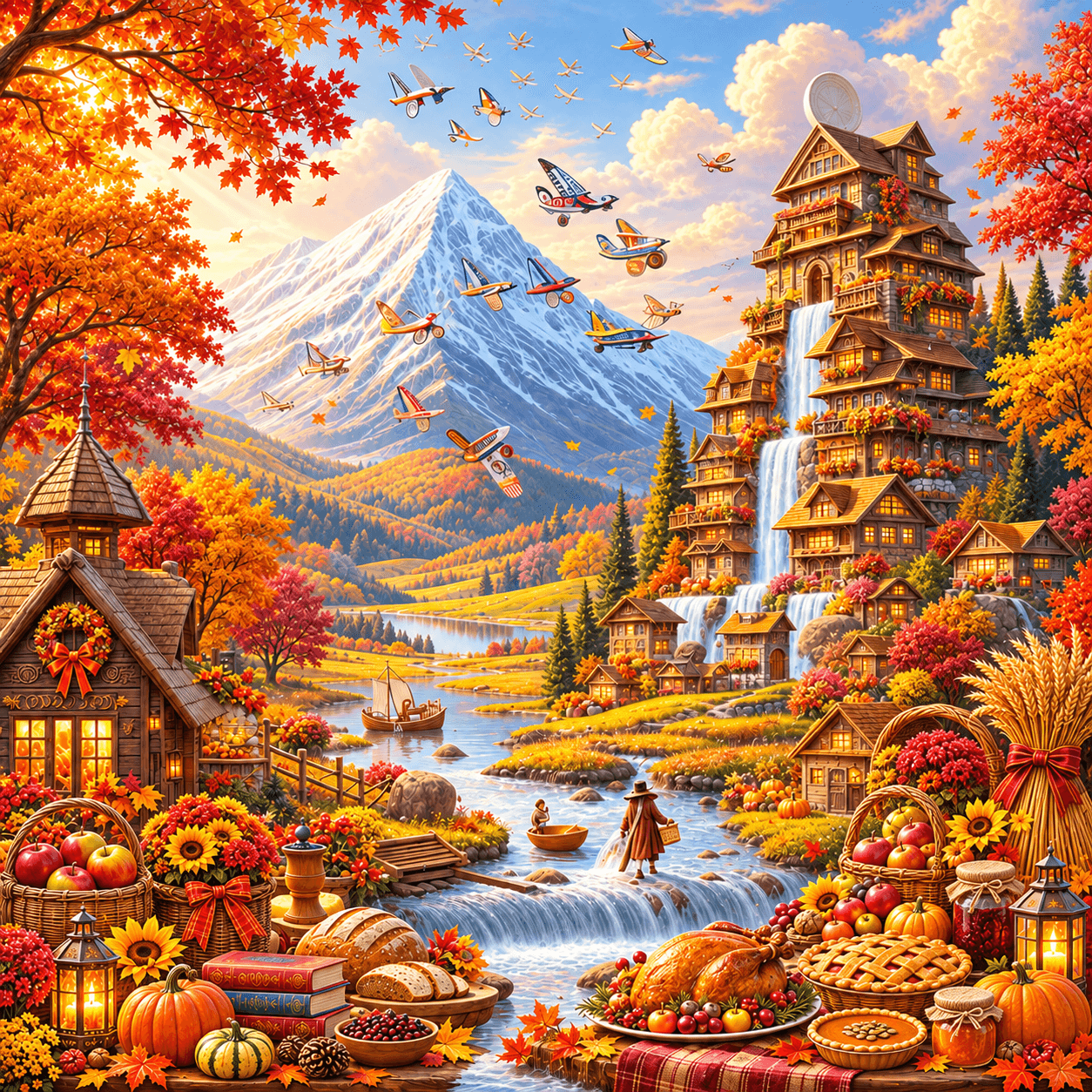
Living in Northeastern Michigan provides us with a particularly beautiful setting in which to reflect upon gratitude.
We live among forests, lakes, orchards, fields, and the changing seasons.
As late November approaches, the landscape becomes increasingly quiet.
The leaves have fallen.
The days grow shorter.
Cold winds move through the trees.
And the approaching winter reminds us of the importance of preparation, warmth, shelter, and companionship.
There is something deeply humbling about living close to the rhythms of the natural world.
During the warmer months, food grows in our gardens and orchards.
The forests are alive with birds, animals, and vegetation.
The lakes reflect the long summer evenings.
Then autumn arrives, followed by the long northern winter.
Life changes its appearance, but it does not disappear.
Rabbi Kolakowski offers a beautiful reflection concerning the properties of water.
When a lake freezes, ice forms upon the surface while liquid water remains beneath.
Fish and other aquatic life continue their existence throughout the winter.
It is a familiar natural process, but one worthy of contemplation.
The Rambam teaches that reflecting upon the works of creation can lead a person toward greater appreciation and reverence for the Creator.
For us here in the northern woods, there is no shortage of opportunities for such reflection.
A tree standing through winter.
A family gathered around a warm table.
A meal prepared from the provisions we have received.
A quiet evening with loved ones.
These are ordinary experiences.
Yet they are also blessings.
I think one of the dangers of modern life is that we sometimes become so occupied with what we lack that we forget what remains present before us.
There is nothing wrong with wanting to improve our circumstances.
There is nothing wrong with working toward prosperity or seeking a more comfortable life.
But we should also learn to recognize the value of what we already possess.
For me, Thanksgiving is an opportunity to remember the goodness of living in this beautiful region.
And I hope it is an opportunity for our neighbors to do the same.
Sometimes gratitude begins simply by looking around and recognizing that the ordinary things of life are not so ordinary after all.
Part Nine — The Blessing of Freedom and the Responsibility It Brings
As an Orthodox Jew, I am particularly grateful for the religious freedom we enjoy in the United States.
Throughout history, Jewish communities have experienced persecution, displacement, discrimination, and restrictions upon their religious observance.
For generations, our people struggled to preserve Torah study, religious education, and traditional Jewish life under difficult circumstances.
The freedom to practice Judaism openly is something we should never take for granted.
Here in Northeastern Michigan, that freedom allows us to preserve our religious traditions even though we live far from larger Jewish population centers.
At Shaarei Tzafon, we can study Torah, teach Halakhah, publish Jewish educational materials, and work toward the preservation of authentic Orthodox Jewish life.
These opportunities are meaningful blessings.
But religious freedom should also teach us to respect the freedom of others.
If I value the right to practice Judaism, I must recognize the importance of protecting the lawful religious freedom of my neighbors.
This does not require me to agree with their theology.
It requires me to recognize their dignity and freedom of conscience.
I also believe it is important to distinguish gratitude for one's country from unquestioning loyalty to any particular government or political party.
I consider myself a conservatarian in many respects, with a strong appreciation for religious tradition, individual liberty, limited government, and personal responsibility.
But my religious convictions come before my political philosophy.
The Torah must guide my understanding of justice, compassion, and moral responsibility.
We may disagree about public policy.
We may disagree about political leaders.
We may disagree about the best direction for our country.
But those disagreements should not prevent us from recognizing our shared responsibilities toward one another.
Freedom does not give us permission to exploit others, mistreat our neighbors, or abandon human decency.
Rather, it places upon us the responsibility to use our liberty wisely.
This Thanksgiving, I hope we can appreciate the blessings of our country while also remembering that its highest ideals require continued moral effort.
Patriotism should not make us indifferent to injustice.
Religious devotion should not make us indifferent to suffering.
And gratitude should not make us forget those who have been denied the blessings we enjoy.
The freedoms we possess are worth preserving.
And one of the best ways to preserve them is to exercise them with wisdom, humility, and compassion.
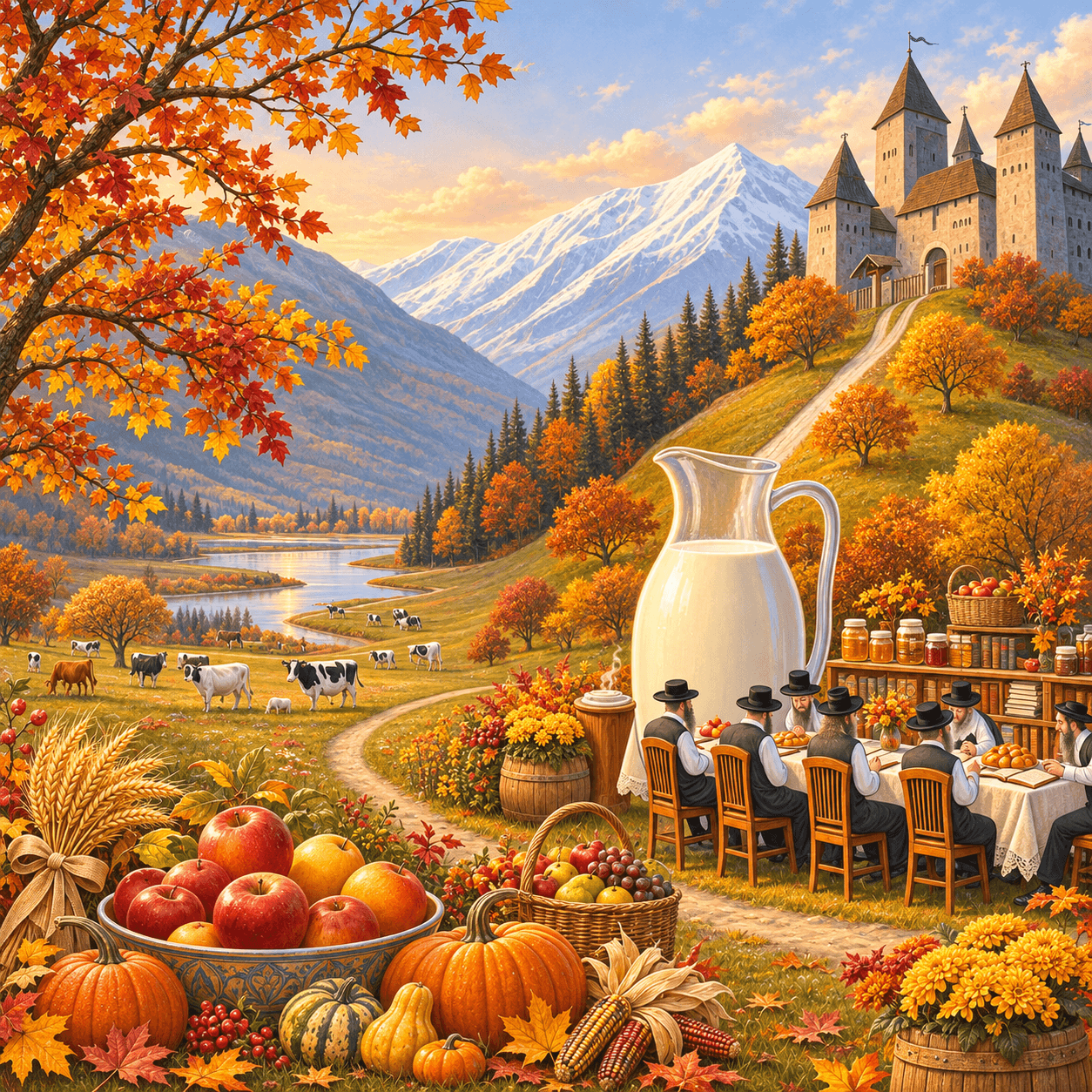
Part Ten — A Personal Thanksgiving Message from Your Local Orthodox Rabbi
As I conclude these reflections, I would like to speak personally to our friends and neighbors throughout Northeastern Michigan.
I am grateful for the opportunity to live a life committed to Torah and Halakhah.
I am grateful for the Jewish traditions that have been preserved and transmitted across generations.
I am grateful for family, for our home, and for the quiet blessings that accompany ordinary daily life.
I am grateful for the opportunity to teach, study, and help preserve traditional Orthodox Judaism here in our northern communities.
And I am grateful for our neighbors.
For the kindness shown by people of different religious backgrounds.
For those who work to make our communities better places to live.
For those who care for the sick, assist the elderly, help struggling families, and quietly perform acts of goodness without expecting recognition.
I believe that one of the greatest responsibilities we possess is to recognize the humanity of others.
We do not have to agree about everything.
We do not have to share the same religious convictions.
And we do not have to pretend that our differences are unimportant.
But we can still show kindness.
We can still care about the well-being of our neighbors.
We can still rejoice when others experience blessings.
And we can still respond with compassion when others are suffering.
In Judaism, Psalm 100 is known as Mizmor LeTodah — a psalm of thanksgiving.
It calls upon us to serve HaShem with joy and to enter His gates with thanksgiving.
And Psalm 107:1 declares:
הוֹדוּ לַייָ כִּי־טוֹב כִּי לְעוֹלָם חַסְדּוֹ
Hodu la-Adonai ki tov, ki le'olam chasdo.
"Give thanks to HaShem, for He is good; for His loving-kindness endures forever."
These words belong to the Jewish religious tradition, but I hope the spirit of gratitude they express can encourage people of many backgrounds.
Whatever your circumstances this Thanksgiving, I hope you find something meaningful to appreciate.
If your home is filled with family and friends, may you recognize the beauty of that companionship.
If you are celebrating quietly, may you find peace in the ordinary blessings of life.
If you are grieving, may you find comfort.
If you are struggling, may someone extend a helping hand.
And if you have been blessed with abundance, may you find opportunities to share that goodness with others.
I hope our children learn that gratitude is not merely something we express before a meal.
It is something we practice through the way we treat people.
I hope they learn that kindness is not weakness.
That compassion is not contrary to conviction.
And that authentic religious faith should inspire us toward greater honesty, humility, and human decency.
Here at Shaarei Tzafon, we remain committed to preserving traditional Orthodox Jewish life above the 45th parallel.
But we also recognize that we share this beautiful region with families of many different backgrounds.
We are grateful to be part of the wider Northeastern Michigan community.
And I sincerely hope that our Jewish presence here will always be associated with Torah, learning, kindness, and respect for others.
May our gratitude make us more generous.
May our convictions make us more thoughtful.
May our freedom make us more responsible.
And may our differences never prevent us from recognizing the dignity and goodness of another human being.
From our family and Shaarei Tzafon, to yours:
Happy Thanksgiving, Northeastern Michigan.
May your homes be filled with peace, your families with love, and your lives with
reasons for gratitude.
And may we all remember that one of the greatest blessings we can receive is the opportunity to become a blessing to someone else.
בְּבִרְכַּת שָׁלוֹם
With blessings of peace,
Rabbi Ariel Manning
Shaarei Tzafon — The North Gate
Traditional Jewish Life Above the 45th Parallel
Alpena, Michigan
Did You Know? American Jews Have Observed Thanksgiving Since the Nation's Earliest Years
On November 26, 1789, Congregation Shearith Israel in New York observed President George Washington's national Thanksgiving proclamation.
Its spiritual leader, Gershom Mendes Seixas, delivered a sermon marking the occasion.
The congregation expressed gratitude through its own Jewish religious tradition, demonstrating that Jewish identity and appreciation for American civic life need not be contradictory.
This early observance is one of several historical examples discussed by Orthodox rabbis when examining the relationship between Thanksgiving and Jewish religious practice.
It reminds us that American Jewish life has long involved both the preservation of distinctive religious traditions and an appreciation for the freedoms of the wider society.
Sources for Further Study: Deuteronomy 8:10; Leviticus 18:3, 19:18; Psalms 100 and 107; Micah 6:8; Pirkei Avot 4:1; Rambam, Mishneh Torah, Hilkhot Avodat Kokhavim 11:1 and Hilkhot Yesodei HaTorah 2:2; Shulchan Arukh, Yoreh De'ah 178; Rabbi Moshe Feinstein, Igrot Moshe, Even HaEzer 2:13, Orach Chaim 5:20:6, and Yoreh De'ah 4:11; Gershom Mendes Seixas's Thanksgiving discourse (1789); Washington's Thanksgiving Proclamation (1789); Lincoln's Thanksgiving Proclamation (1863); and the Thanksgiving teachings of Rabbi Yitzchok Kolakowski.
Shaarei Tzafon — The North Gate
Orthodox Jewish Life and Torah Study in Northeastern Michigan
Shaarei Tzafon — The North Gate, led by Rabbi Ariel Manning, is an independent, family-led Orthodox Jewish educational and publishing initiative based in Northeastern Michigan. We support traditional Jewish life, Torah study, Halakhah, and Jewish education throughout Alpena, Hillman, Rogers City, and surrounding communities. Those interested in traditional Judaism are welcome to contact us for educational resources, Torah learning, and opportunities for discussion by prior arrangement.
Rooted locally, our greater mission extends northward from the 45th parallel — The North Gate — through Michigan, Canada, and Alaska toward the Arctic. We seek to encourage independent Jewish communities, family-centered Torah education, and the renewal of small batei midrash and shtieblach, preserving the rich traditions of Orthodox Judaism for future generations.
Our work begins in Northeastern Michigan, but our vision extends from the 45th parallel toward the Arctic.
Guided by Rambam and Mori Qafiḥ, uplifted by Rebbe Nachman, and grounded by Avraham ben HaRambam’s balance of halakha and inward avodah.
The Orchard’s Path
publishes our books and curricula.
Our mission: a bright, authentic Jewish presence in every northern town.
Created with ©systeme.io


