
Is Kabbalah Important?
B”H
1. Introduction — What We Are Really Asking
Whenever someone asks, “Is Kabbalah important?”, the question is rarely academic.
Hidden underneath is a deeper anxiety:
Does Kabbalah define what makes a Jew spiritual?
Is one incomplete without it?
Does it determine identity, worth, or closeness to Hashem?
And for those living above the 45th parallel — in the forests, the silence, the snow, the long winters, the profound isolation — the question gains urgency:
What inner tools sustain Jewish life when communal structures are thin and solitude grows thick?
In Shaarei Tzafon, the North Gate, we do not dismiss mystical yearning.
Nor do we elevate it above Torah.
We do not disparage those drawn to the Zohar, nor do we claim that one must study it to be whole.
Instead, we ask the real question:
Where does Kabbalah truly fit in a life guided by Torah, halacha, rational clarity, and emotional honesty — especially in the Boreal North?
To answer, we turn first not to mystics but to the Rambam, the greatest master of halachic rationalism; then to Avraham ben HaRambam, the father of Jewish contemplative practice; and then to Rebbe Nachman, who opened the gates of deveikut to every human being.
And finally, we consider the Boreal environment itself — the land, the silence, the isolation — and ask how Kabbalah serves the Jew in the North.
Is Kabbalah important?
Yes.
But not for the reasons many think.
And never as a requirement of identity.
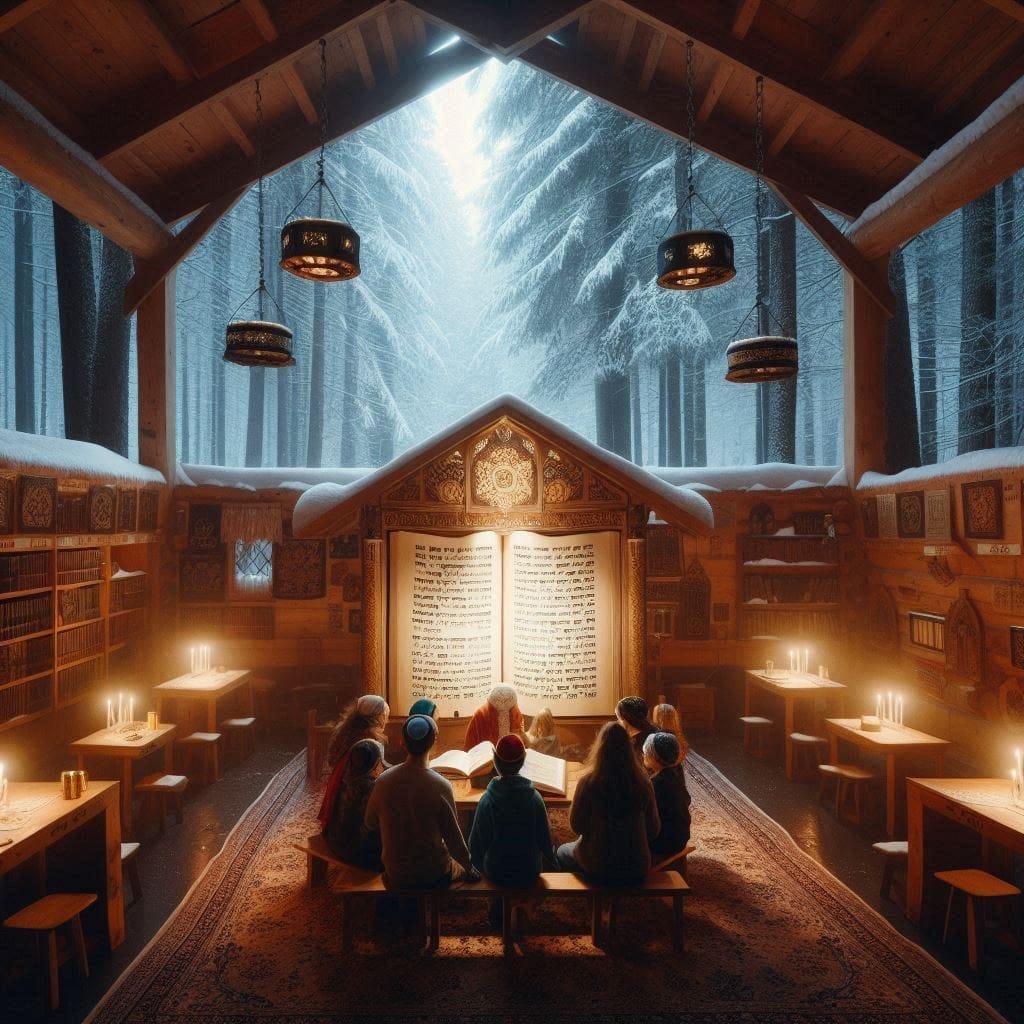
2. Rambam and Kabbalah — Two Languages of Truth
Rambam did not teach Zoharic Kabbalah.
He taught a majestic, disciplined intellectual mysticism rooted in prophecy, metaphysics, and the purification of the intellect.
He spoke in categories, principles, definitions — not in sefirot, names, and emanations.
Yet his writings reveal a profound truth:
Rambam’s world is deeply mystical, but never irrational; deeply spiritual, but never undisciplined.
He affirms:
that reality is layered,
that the human being can ascend toward divine knowledge,
that contemplative prayer lifts the soul,
and that closeness to Hashem is a real experience — not emotional fantasy.
Thus, in the Boreal derech, we say:
Kabbalah is important only when it is held within the boundaries of reason, halacha, and discipline.
Without the Rambam, Kabbalah has no vessel.
Rambam warns against superstition, astrology, amulets, incantations, magical thinking, and wild imagination masquerading as spirituality.
Many fall into these mistakes precisely because they approach Kabbalah without the intellectual and halachic foundations that Rambam demands.
In the North, where people often live far from structured communities, the danger of undisciplined mysticism is real.
Thus the first principle of the Boreal derech is:
Mysticism is not the foundation.
Halacha is the foundation.
Kabbalah is the illumination on top.
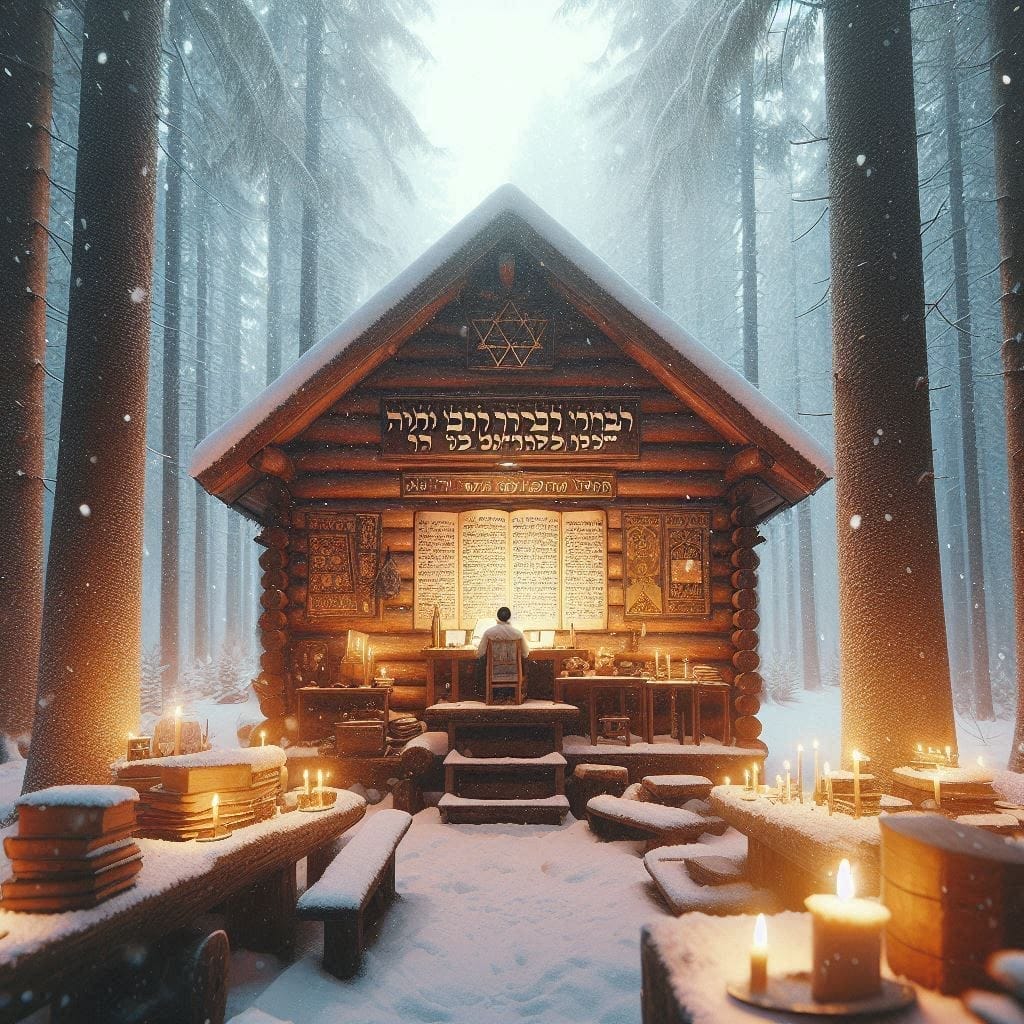
3. Avraham ben HaRambam — The Origin of Jewish Meditation
Long before the rise of Lurianic Kabbalah, long before the Hasidic movement, long before the popularization of mystical imagery, Avraham ben HaRambam articulated a deep, authentic, disciplined Jewish mysticism.
He taught:
hitbodedut (secluded personal prayer),
contemplative meditation,
purification of thought,
inward repentance,
emotional refinement,
quiet solitude in nature,
and the search for deveikut through sincerity.
In many ways, what modern Jews call “Hasidic meditation” first appears in Avraham ben HaRambam.
He bridges halachic rationalism and inner mystical experience without ever crossing into superstition or metaphysical elitism.
For the Boreal North, he is foundational.
He shows us that:
the forest,
the silence,
the open sky,
the early dawn,
the stillness of snow,
all serve as environments for contemplative connection.
And he teaches that this connection belongs to any human being who seeks Hashem with integrity, not only to a select metaphysical class.
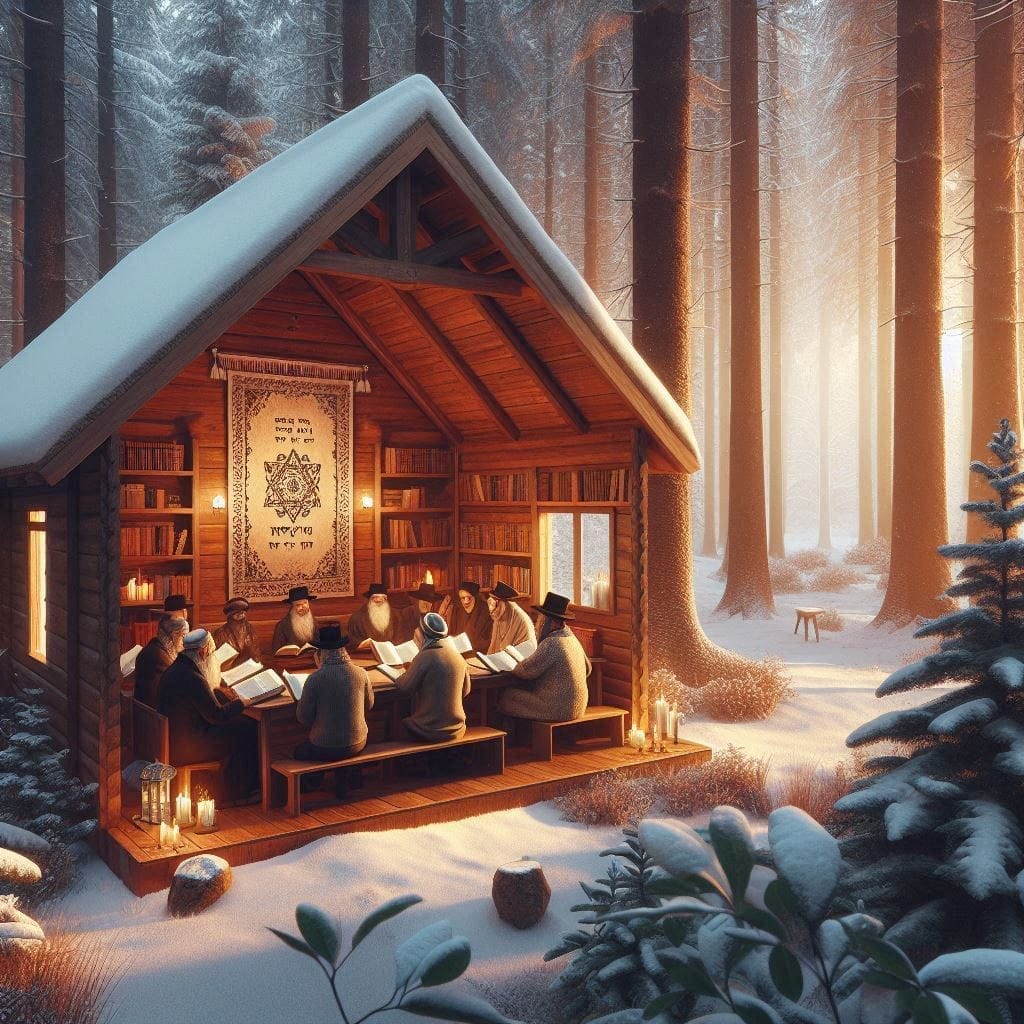
4. Rebbe Nachman — Universality, Joy, and Accessible Deveikut
Then comes Rebbe Nachman, who accomplishes something revolutionary:
He democratizes mysticism.
He teaches:
that simple people can reach the highest spiritual heights,
that tears and joy are both pathways to Hashem,
that solitude in nature brings clarity,
that inner honesty is the key to deveikut,
and that any human being can become extremely close to Hashem.
This is where our derech diverges sharply from the Tanya’s metaphysics.
The Tanya elevates the “Jewish soul” as inherently divine and the non-Jewish soul as inherently bound to klipah.
Rebbe Nachman does not speak this way.
He proclaims:
that holiness is acquired through sincerity,
that the gates of teshuvah and deveikut are open to all,
that anyone can sit next to HaKadosh Baruch Hu,
that no one is ontologically disqualified from closeness to Hashem.
Our derech follows Rebbe Nachman on this point with full conviction:
Spiritual greatness is not inherited.
It is chosen.
And anyone who joins the covenant stands equal before God.
Thus, the Boreal Jew — whether born-Jew or ger — enters the mystical path not through metaphysical privilege, but through halachic commitment and personal yearning.
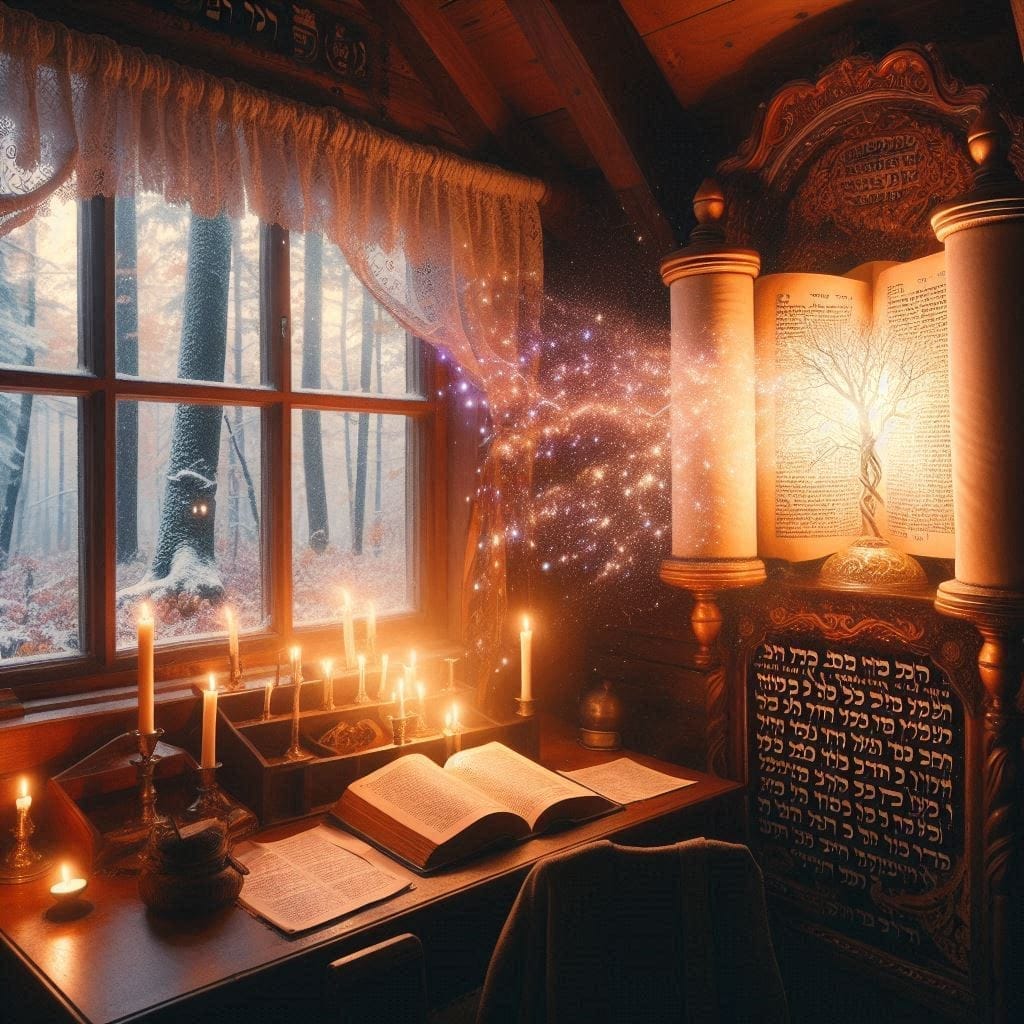
5. Why Kabbalah Is Important — When Grounded Correctly
When approached with proper boundaries, Kabbalah is profoundly valuable.
It deepens Jewish life by:
Revealing the inner meaning of mitzvot
Ritual becomes radiance; halacha becomes song.
Teaching about the soul’s ascent and descent
Not in elitist terms but in universal psychological language.Strengthening deveikut
Helping the Jew find Hashem beyond the surface.Sanctifying nature
Especially crucial for those living among forests, lakes, and snow.Providing emotional resilience
Through symbolic meaning, cosmic hope, and spiritual interpretation of suffering.Integrating halacha with inner intention
So that mitzvot are not mechanical but alive.
And for Jews in rural regions, Kabbalah gives an interior map when exterior community is scarce.
But it must be disciplined, not chaotic; structured, not fantastical; halachic, not magical.
6. The Dangers of Undisciplined Kabbalah
Precisely because Kabbalah contains spiritual power, it is vulnerable to misuse.
We reject:
Chabad/Tanya-style soul elitism,
amulets and magical sigils,
distorted Christian mysticism,
pseudo-Kabbalistic teachings circulating online,
ungrounded visions and ecstatic fantasies,
emotional experiences mistaken for revelation,
mystical systems that bypass halacha,
and mystical arrogance that divides Jews from converts or from the nations.
We insist that:
Kabbalah must be contained by halacha, anchored in Rambam, guided by reason, and purified of superstition.
Rebbe Nachman himself warns that one can drown in mystical visions.
Rambam warns that imagination can dominate the mind.
Avraham ben HaRambam warns against self-deception in meditation.
Thus, in Shaarei Tzafon, we teach:
Kabbalah is not the first step.
It is the last step.
And only safe when all earlier steps are solid.
7. Kabbalah in the North: An Optional Light — However, Not for the Reasons Many Think, and Never a Requirement of Identity
This is the section that must be stated with clarity, humility, and courage.
Many assume that Jews in remote areas need mysticism to compensate for the lack of community.
Sometimes this is true.
But the real reason Kabbalah helps The Northern Jew is not mystical identity, but human environment.
Rejecting Tanya-Style Jewish Soul Theology
The Tanya’s teaching that Jews possess a “divine soul” of holiness while non-Jews possess a soul rooted in klipah is, for our derech, profoundly incorrect.
It contradicts:
Rambam
Rebbe Nachman
Avraham ben HaRambam
Halacha itself
And the principle that a convert becomes fully Israel
Jewish identity is covenantal, not metaphysical.
Holiness is acquired through mitzvot, not birth.
Closeness to Hashem is open to anyone.
Thus:
Kabbalah cannot be used to elevate Jews above others, nor to diminish the spiritual potential of converts or seekers.
Why Kabbalah Helps Boreal Jews in Particular
The North is quiet.
Cold.
Spacious.
Slow.
Isolated.
Mystical symbolism speaks naturally in such a landscape because:
silence invites contemplation,
long nights invite introspection,
forests awaken awe,
isolation forces inner resilience,
the lack of communal structures demands inward strength.
This has nothing to do with “Jewish souls.”
It has everything to do with human souls in challenging environments.
Universal Access to Mystical Ascent
We teach firmly that:
a born Jew
a ger tzedek
a seeker on the path
a simple farmer
a homesteader
a new family in the North
all have equal access to deveikut.
No barrier stands between them and HaKadosh Baruch Hu.
Thus, Kabbalah in the North is optional, not identity-defining; helpful, not obligatory; a tool, not a badge.
8. Kabbalah Is Important — But Never Foundational
After everything said, we can now answer:
Is Kabbalah important?
Yes — as inner light, meaning, depth, interpretation, resilience, and spiritual beauty.
Is Kabbalah essential?
No — halacha is essential.
Kabbalah is an adornment.
Does Kabbalah define Jewish identity?
No — covenant and mitzvot define identity.
Is Kabbalah necessary for spiritual greatness?
No — sincerity, humility, halacha, and devotion are necessary.
Is Kabbalah universally accessible?
Yes — when purified of elitist metaphysics and grounded in halacha.
Is Kabbalah dangerous without instruction?
Yes — mysticism without halacha becomes fantasy.
Thus:
Kabbalah is the crown of the palace.
But the important part, the palace is built from Torah, halacha, and rational clarity.
9. Conclusion — The Shaarei Tzafon Answer
So is Kabbalah important?
Yes — but not for the reasons many imagine.
It is not important because it defines Jews.
It is not important because it creates spiritual hierarchy.
It is not important because of metaphysical soul theories.
It is important because:
It brings meaning to mitzvot.
It opens the heart to Hashem.
It builds resilience in isolation.
It sanctifies nature.
It transforms silence into prayer.
It heals inner brokenness.
It connects the Northern Jew to the divine presence permeating the North.
And yet:
It is entirely optional.
Never a requirement of identity.
Never a measure of Jewishness.
Kabbalah, when properly framed, becomes a gentle inner fire — not a demand, not a burden, not a gatekeeper.
For those in the Boreal North, it is a companion.
For those who prefer pure halacha, it is not required.
For the born Jew and the ger, the doors stand equally open.
Halacha is the vessel.
Kabbalah is the light.
And in the silence of the North, light is precious — but always optional.

Kabbalah, Torah, Jewish Spirituality, and the Northern Tradition
At Shaarei Tzafon — The North Gate, we believe that traditional Orthodox Jewish life must remain firmly grounded in Torah and Halakhah while recognizing the spiritual richness of Jewish mysticism, Hasidic teachings, and the legitimate diversity of Jewish religious thought.
Here in Northeastern Michigan, including Alpena, Hillman, Rogers City, and surrounding communities, our educational work encourages Jewish individuals and families to understand the foundations of Jewish spirituality rather than assume that one particular mystical philosophy defines authentic Judaism.
The question of whether Kabbalah is necessary provides an important example.
Throughout Jewish history, the rationalist teachings of Rambam, the contemplative practices associated with Avraham ben HaRambam, the mystical traditions of the Zohar, and the devotional teachings of Rebbe Nachman of Breslov have offered different approaches to understanding the relationship between humanity and HaShem.
Although these traditions sometimes differ considerably in their theological explanations, they demonstrate the breadth of Jewish intellectual and spiritual life.
Our approach places particular emphasis upon Torah, Mishnah, Talmud, Rambam, and the Geonim as foundations of religious learning, while appreciating the spiritual insights preserved within Hasidic and other Jewish mystical traditions.
We distinguish between binding Halakhah and optional mystical interpretations. A Jewish individual does not become less Jewish by declining to accept Kabbalistic teachings, nor does mystical knowledge automatically establish greater religious authority.
Jewish spirituality is not limited to the study of Kabbalah. Prayer, repentance, kindness, contemplation, Torah study, and the observance of mitzvot provide meaningful paths toward closeness with HaShem.
This distinction becomes particularly meaningful for Jewish families living in rural northern regions, where forests, lakes, solitude, and long winters invite contemplation but where access to established Jewish institutions may be limited.
The wider mission of Shaarei Tzafon extends northward from the 45th parallel — our symbolic North Gate — through Michigan, Canada, and Alaska toward the Arctic.
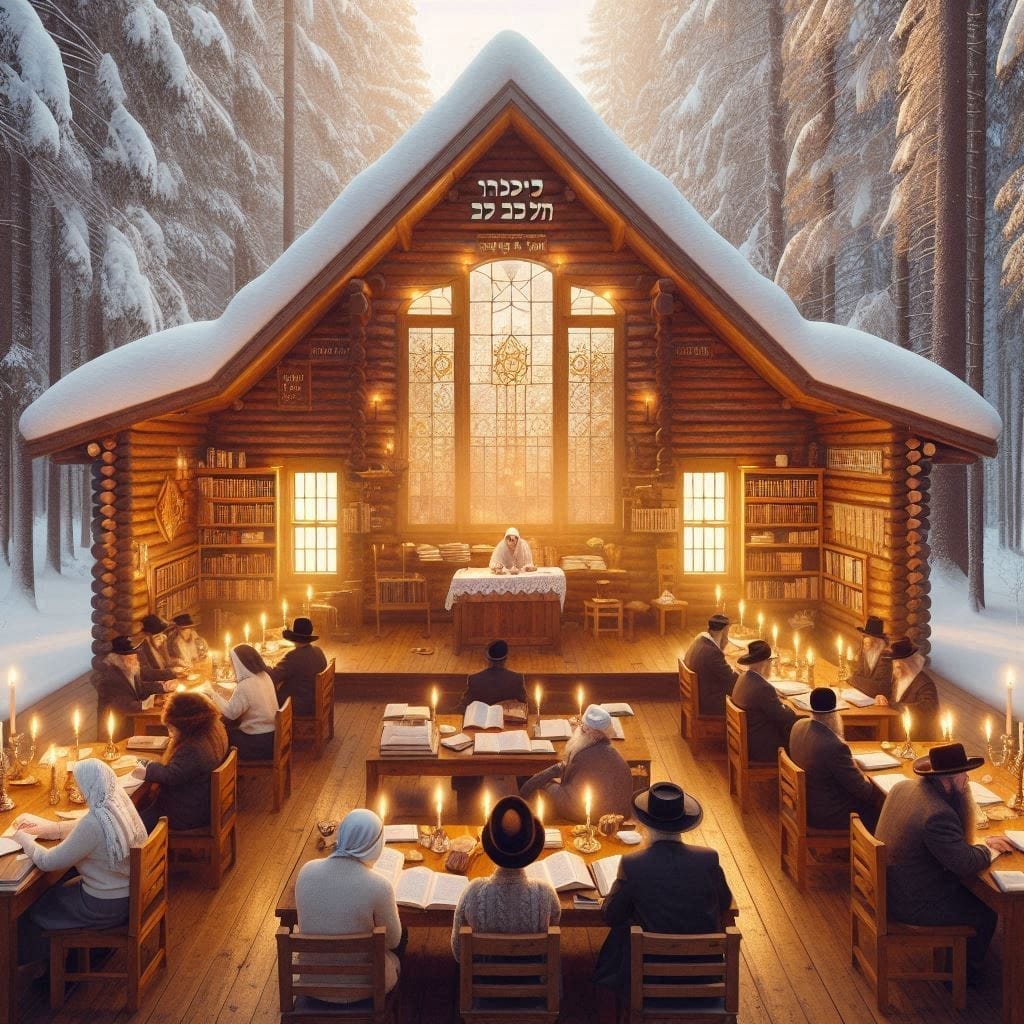
We seek to encourage family-centered Orthodox Jewish life, independent batei midrash, and small traditional communities where Torah and Halakhah provide a common foundation while legitimate differences in Jewish philosophy, spirituality, and inherited customs are respected.
Our purpose is not to establish a new mystical movement or impose one system of Jewish spirituality upon others, but to demonstrate that Jewish religious life can remain intellectually rigorous, spiritually meaningful, and firmly grounded in the commandments.
Kabbalah may illuminate Jewish life, but Torah and Halakhah establish its foundations. A Jew does not need to become a mystic to live a life of holiness.
Shaarei Tzafon — The North Gate
Orthodox Jewish Life and Torah Study in Northeastern Michigan
Shaarei Tzafon — The North Gate, led by Rabbi Ariel Manning, is an independent, family-led Orthodox Jewish educational and publishing initiative based in Northeastern Michigan. We support traditional Jewish life, Torah study, Halakhah, and Jewish education throughout Alpena, Hillman, Rogers City, and surrounding communities. Those interested in traditional Judaism are welcome to contact us for educational resources, Torah learning, and opportunities for discussion by prior arrangement.
Rooted locally, our greater mission extends northward from the 45th parallel — The North Gate — through Michigan, Canada, and Alaska toward the Arctic. We seek to encourage independent Jewish communities, family-centered Torah education, and the renewal of small batei midrash and shtieblach, preserving the rich traditions of Orthodox Judaism for future generations.
Our work begins in Northeastern Michigan, but our vision extends from the 45th parallel toward the Arctic.
Guided by Rambam and Mori Qafiḥ, uplifted by Rebbe Nachman, and grounded by Avraham ben HaRambam’s balance of halakha and inward avodah.
The Orchard’s Path
publishes our books and curricula.
Our mission: a bright, authentic Jewish presence in every northern town.
Created with ©systeme.io


