
Is the Mechitzah Necessary?
B”H
Part I — The Ideal and the Beginning
Is a mechitzah necessary?
Our answer is that a mechitzah should be the standard for an established Orthodox synagogue. However, it is important to understand that a developing Jewish community and a fully functioning synagogue are not necessarily the same thing.
Jewish communities must begin somewhere.
Not every community begins with a building, a minyan, a Torah scroll, or the financial resources to construct a complete sanctuary.
Some begin with a family. Others begin with two or three people studying Torah together.
In rural communities, especially those far removed from major Jewish population centers, the process can be considerably slower.
It would be unreasonable to expect a developing Jewish study group to possess all the facilities of a long-established congregation before its members could begin gathering and learning.
This is particularly relevant to Shaarei Tzafon in Northeastern Michigan.
We hope to cultivate a living Jewish community, with Torah study, communal prayer, and eventually a functioning minyan.
But these things must be developed.
Our position is that the mechitzah is an objective to work toward as the community grows, not an architectural prerequisite for beginning every form of Jewish communal activity.
A small Torah study group, family gathering, or informal educational meeting does not necessarily require a physical partition.
However, once regular public prayer becomes established, the traditional arrangement should be put into place.
The objective is not to eliminate the mechitzah.
It is to understand when and where its use becomes important, while allowing Jewish life to develop naturally and responsibly.
There is a difference between temporarily lacking a religious facility and deliberately rejecting the principles of traditional Jewish worship.
We favor the mechitzah.
We also favor building a community capable of sustaining one.

Part II — The Talmudic Foundation
The primary discussion concerning the separation of men and women appears in Mishnah Sukkah 5:2 and Babylonian Talmud Sukkah 51b.
During the celebration of Simchat Beit HaSho'evah in the Temple, the Sages established what the Mishnah calls a tikkun gadol, a great arrangement.
The Gemara explains that the original seating arrangement placed men and women in different areas.
However, this did not adequately prevent inappropriate levity.
The arrangement was changed, but the difficulty persisted.
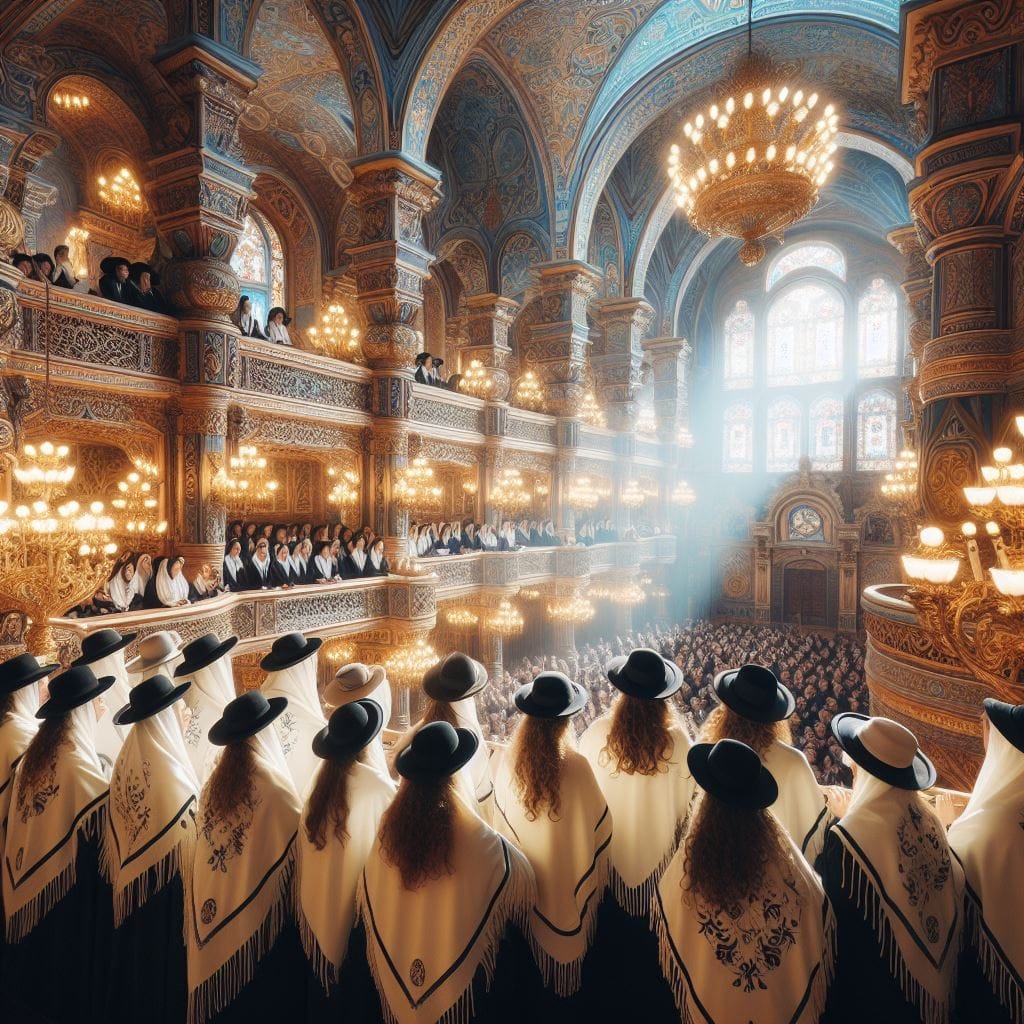
Finally, the Sages established a balcony, allowing women to occupy the upper level while men remained below.
This is particularly important to our discussion.
The solution was not simply to construct a wall dividing the assembly into two isolated groups.
The arrangement provided separate locations while allowing the women to observe the celebration.
The Gemara also connects the principle of separation to Zechariah 12:12, which describes families mourning separately.
The Sages reason that if separation has significance during mourning, it may be even more important during occasions of communal rejoicing.
Later authorities used this discussion to establish principles concerning separation during synagogue prayer.
However, the Gemara does not present a detailed universal architectural plan for every synagogue.
The context is the Temple and its celebrations.
The subsequent application to synagogue prayer emerges through halakhic interpretation.
This distinction matters because we should not confuse the underlying principle with every possible physical arrangement.
The Sages recognized a religious purpose for separation.
They also demonstrated that architecture could be adapted to meet that purpose.
At Shaarei Tzafon, we favor preserving this traditional principle while taking account of the circumstances and development of an actual community.
Part III — The Rambam and the Balcony
Our preference for a balcony has a strong historical foundation.
In Mishneh Torah, Hilkhot Beit HaBechirah 5:9, Rambam describes the Women's Courtyard of the Temple:
"The Women's Courtyard was surrounded by a balcony so that the women could observe from above and the men from below, without their intermingling."
He also discusses the separation during Sukkot in Hilkhot Shofar, Sukkah veLulav 8:12.
These passages demonstrate the importance of distinguishing between physical separation and exclusion from religious activity.
The women occupied a different level, but they were still present.
They could observe what was occurring.
They were not simply removed from the celebration.
This represents an important aspect of our preference for a balcony arrangement.
I personally favor a synagogue designed with a women's balcony overlooking the main sanctuary.
Such an arrangement can preserve separation while providing a clear view of the service.
Women should be able to see the bimah, follow the Torah reading, hear the prayers, and experience the spiritual atmosphere of the congregation.
A poorly designed partition may leave women feeling hidden from the activities taking place in the sanctuary.
A well-designed balcony can avoid this problem.
Of course, a balcony is not automatically superior in every circumstance.
If it is too distant, difficult to access, or constructed with poor visibility and acoustics, it may create problems of its own.
Nevertheless, a properly designed balcony is our preferred long-term arrangement.
Interestingly, Rabbi Moshe Feinstein also expressed a preference for a women's balcony in Iggerot Moshe, Orach Chaim I:39.
His reasoning concerns the effectiveness of physical separation.
Our additional concern is that the arrangement should allow women to remain meaningfully connected to the worship experience.
Both considerations deserve attention.
Part IV — Not Every Gathering Is a Synagogue Service
One of the most important distinctions in this discussion concerns the character of the gathering itself.
A synagogue prayer service, a Torah lecture, a Shabbat meal, and a family gathering do not necessarily possess identical halakhic requirements.
The Gemara in Kiddushin 81a records that Abaye arranged earthenware vessels as a boundary, while Rava used reeds.
Rashi explains that such arrangements were associated with gatherings where men and women assembled.
These accounts demonstrate concern for appropriate boundaries, but they should not be treated as universal rules requiring a synagogue-style mechitzah at every Jewish gathering.
More directly, Rabbi Moshe Feinstein discusses the distinction between public prayer and Torah instruction in Iggerot Moshe, Orach Chaim V:11.
He permits a public Torah lecture to proceed without a mechitzah under certain circumstances, particularly when insisting upon one would prevent people from attending and learning.
He distinguishes this from the requirements governing prayer.
This distinction is particularly useful in rural Jewish life.
Suppose a family invites several individuals to study the weekly Torah portion.
They may study Chumash, Mishnah, Gemara, Midrash, or Rambam.
The gathering is not thereby transformed into a regularly functioning synagogue.
Similarly, a small group studying Jewish philosophy or practical Halakhah does not necessarily need the same architectural arrangements as an established congregation holding formal public services.
The primary objective is Torah learning.
We should encourage people to participate in that learning.
At the same time, appropriate conduct and respect between men and women remain important.
A community should not dismiss traditional boundaries merely because the gathering is educational.
But requiring a physical partition for every study session may be neither necessary nor conducive to the development of a small Jewish community.
Torah study must be allowed to begin before a community possesses every feature of a synagogue.
Part V — When Does the Mechitzah Become Necessary?
This brings us to the practical question.
At what point should a developing community establish its mechitzah?
Our general answer is when it begins functioning as a regular communal place of prayer.
For example, a group of three or four individuals meeting to study Torah is not the same as a functioning minyan.
If that group occasionally gathers for private prayer, the specific circumstances must be considered.
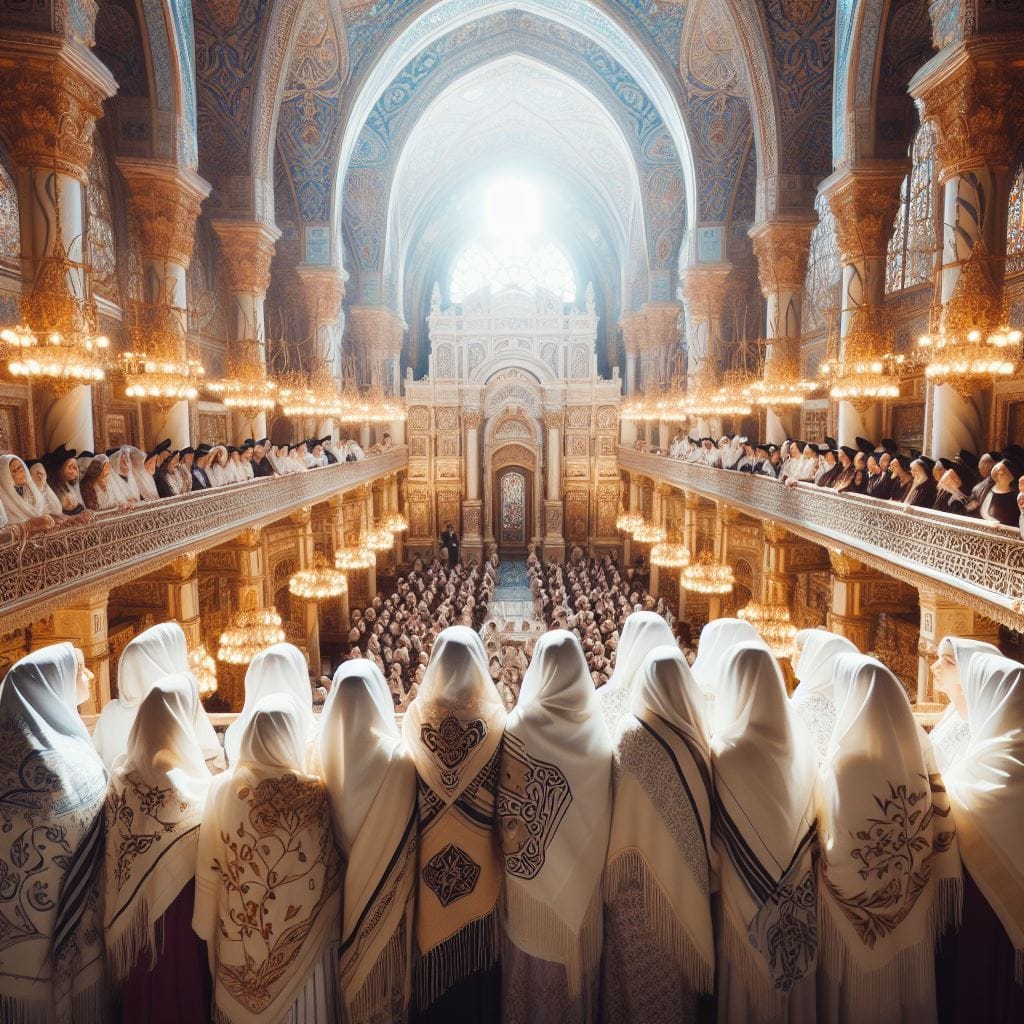
However, when a community develops a regular public minyan, establishes a designated worship space, and begins functioning as a synagogue, the expectation changes.
At that point, the traditional separation should be provided.
The relevant halakhic distinction is not simply whether ten Jewish men are present on a particular occasion.
Rather, it concerns whether the gathering is private or public, occasional or established, and whether the location functions as a regular place of communal prayer.
Rabbi Moshe Feinstein makes distinctions between private gatherings and publicly accessible prayer settings in Iggerot Moshe, Orach Chaim V:12.
These distinctions demonstrate that not every gathering requires an identical arrangement.
Nevertheless, they should not be turned into unlimited permission to establish a regular public minyan without a mechitzah.
For Shaarei Tzafon, the practical approach is straightforward.
At the beginning, the priority is gathering interested Jews, studying Torah, strengthening observance, and establishing relationships.
There may be no minyan at all.
As the community develops, the need for formal prayer arrangements becomes more immediate.
When a regular minyan becomes a reality, establishing a proper mechitzah should be part of the preparations.
This is not an excuse to avoid the traditional arrangement.
It is an acknowledgment that communities develop in stages.
The objective should be known from the beginning, even when its physical implementation belongs to a later stage.
Part VI — Why I Prefer a Women's Balcony
The design of a synagogue communicates something about the community's understanding of religious participation.
A badly constructed mechitzah can create the impression that women are being excluded from the very activities they came to attend.
I do not believe this should be the objective of traditional synagogue separation.
The purpose is to establish appropriate boundaries during communal prayer, not to make women feel unimportant.
This is why I prefer a balcony arrangement.
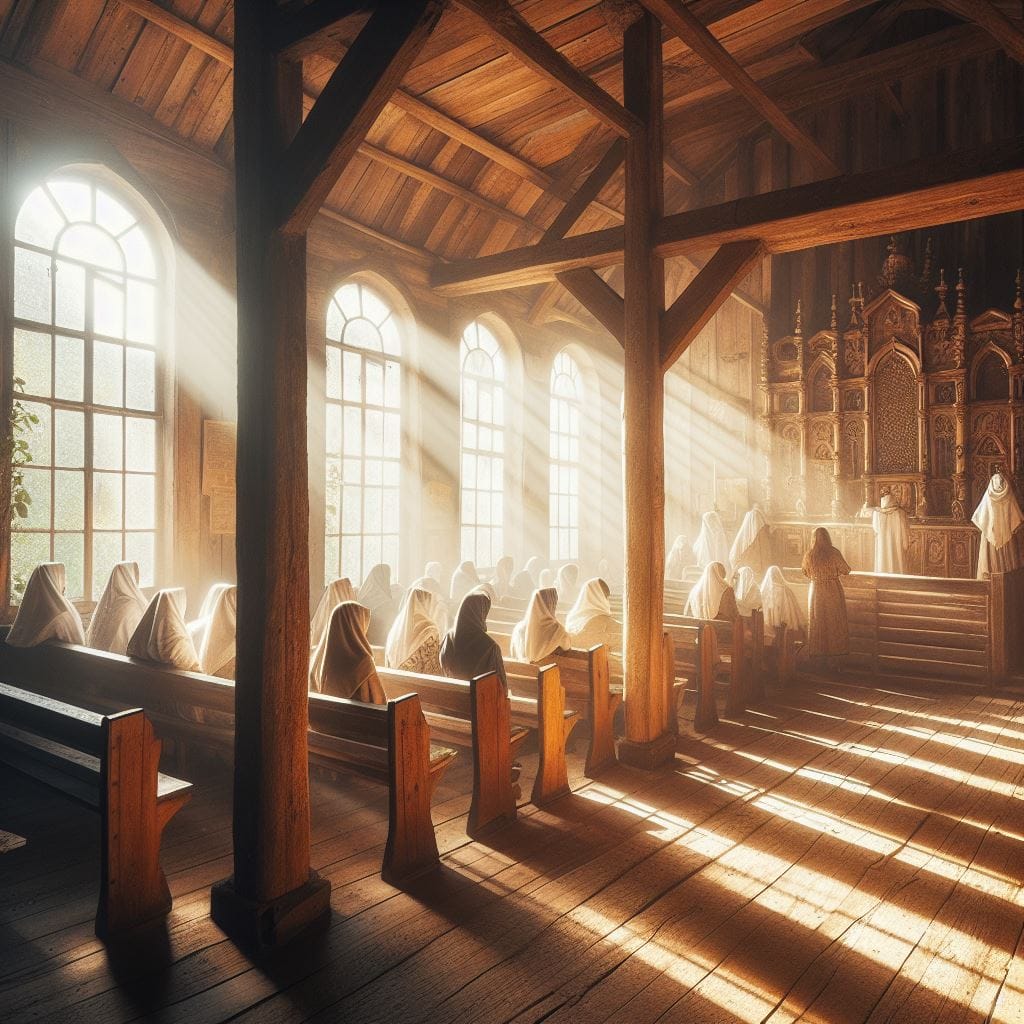
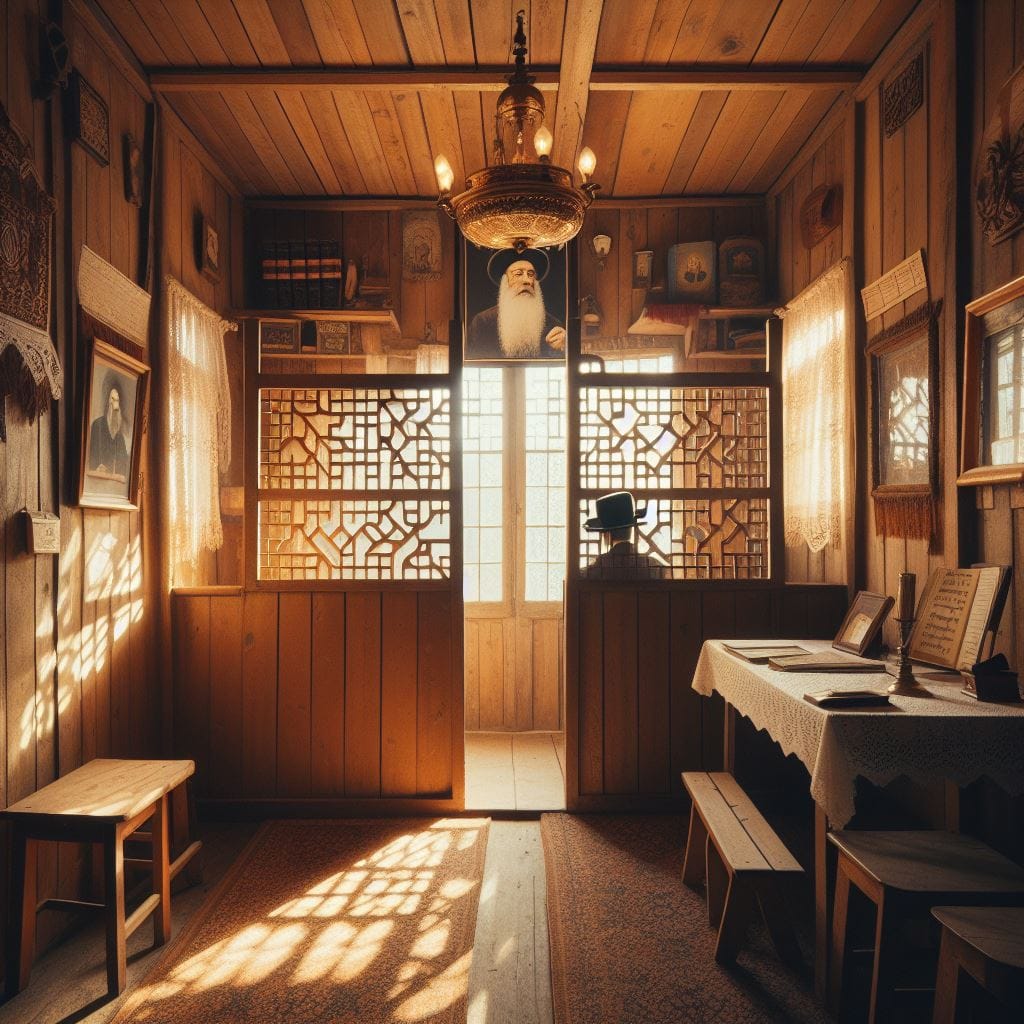
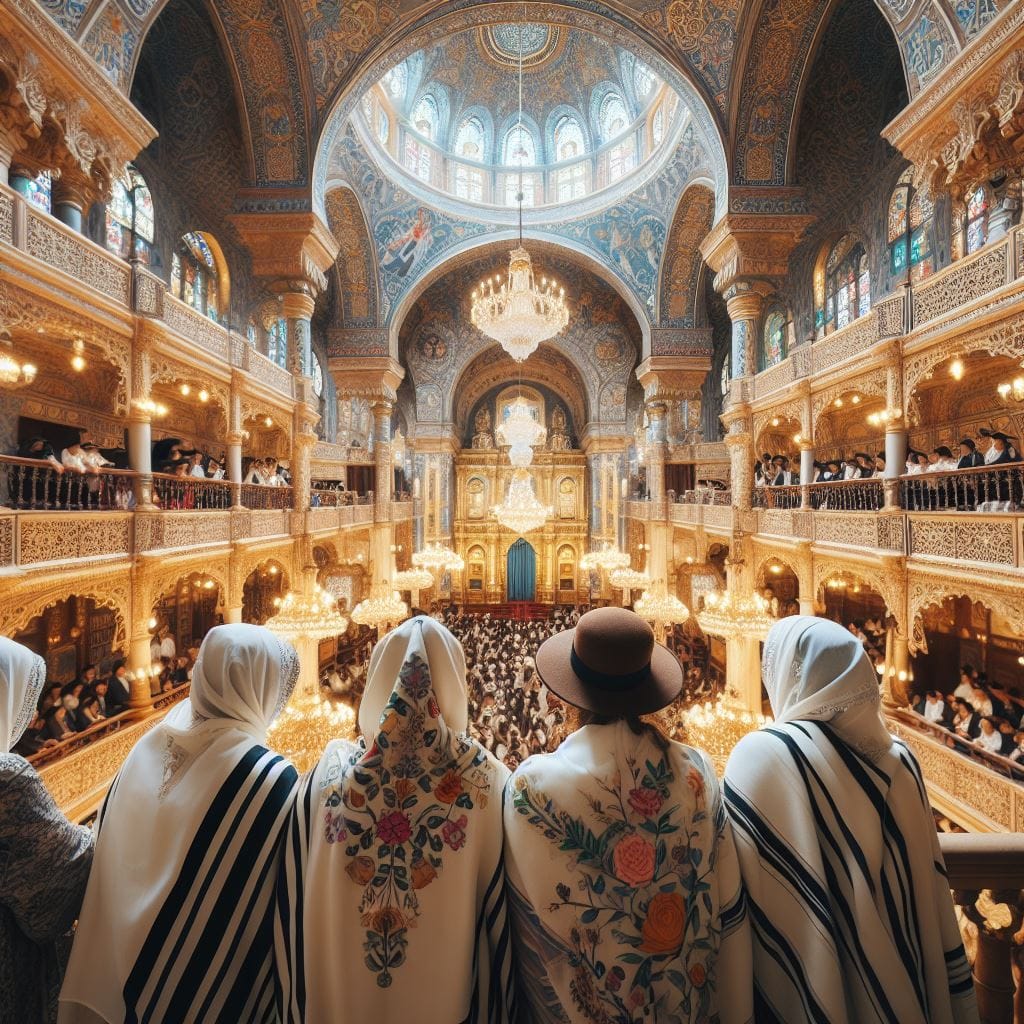
Imagine a modest synagogue with a central bimah, an Aron Kodesh, and a comfortable women's gallery overlooking the sanctuary.
The women can see the Torah being read.
They can follow the prayers.
They can hear the sermon or Torah lecture without difficulty.
They can participate in the appropriate congregational responses and share in the religious experience.
There is separation, but not unnecessary isolation.
Historically, women's galleries existed in many traditional synagogues, including Ashkenazi communities throughout Europe.
Some were beautifully designed, while others offered considerably less comfortable arrangements.
We should learn from both the strengths and weaknesses of these historical examples.
A women's balcony should have sufficient space, clear sightlines, safe access, and good acoustics.
Accessibility must be considered, particularly for elderly worshippers or those who have difficulty using stairs.
It should also be recognized that not every woman prefers a balcony. Some may favor a same-level women's section with an appropriate partition.
The goal should be to hear women's practical concerns and create an arrangement that serves the congregation.
My preference remains a balcony because I believe it can combine traditional separation with a more open view of the sanctuary.
A synagogue should preserve Halakhah while demonstrating that the women of the community are valued members of its religious life.
Part VII — The Dignity and Participation of Women
Traditional Judaism has never required women to be absent from Jewish religious life.
Women have studied Torah, supported communal institutions, participated in religious celebrations, and played significant roles in preserving Jewish observance.
The historical examples of Miriam, Bruriah, and Yalta remind us that women possessed meaningful roles in Jewish spiritual and intellectual history.
The Mekhilta deRabbi Yishmael, Tractate Shirah 10, describes Miriam leading the women in song following the crossing of the sea.
Pirkei deRabbi Eliezer, chapter 41, describes men and women standing separately at Sinai while emphasizing the importance of the women's acceptance of the Torah.
These sources should not be confused with direct architectural rulings for a synagogue.
But they demonstrate that separation and religious participation are not necessarily contradictory.
In practical terms, a women's section should allow women to follow the service and hear the Torah reading.
A properly arranged balcony can provide a good view of the sanctuary while maintaining the expected separation.
There is also an educational consideration.
A congregation that wishes to encourage women and girls to strengthen their Jewish knowledge should make it reasonably comfortable for them to attend Torah lectures and communal activities.
Such gatherings may have different requirements from formal prayer services.
We should not impose unnecessary obstacles upon Jewish learning.
This does not mean abandoning the laws of modesty or adopting arrangements contrary to established Orthodox practice.
It means understanding that the purpose of communal religious organization includes strengthening the participants' relationship with HaShem.
The physical design of a synagogue should serve that purpose.
A mechitzah should be constructed thoughtfully.
A women's balcony should be welcoming.
And a community should never treat women as an afterthought.
Separation should protect the dignity of prayer without diminishing the dignity of those who come to pray.

Part VIII — Historical Flexibility and the Traditional Synagogue
The history of American Orthodox Judaism provides examples of communities that developed under difficult circumstances.
During the twentieth century, a number of synagogues adopted mixed family seating.
This created substantial disagreement among Orthodox rabbis.
Most prominent Orthodox authorities regarded mixed seating during regular synagogue prayer as unacceptable.
However, Rabbi Chaim Dovid Regensburg adopted an exceptional position concerning Orthodox rabbis serving Traditional congregations that lacked mechitzot.
His reasoning, as discussed by Harry Maryles, emphasized preserving Jewish education and observance within congregations that might otherwise lose their Orthodox connections.
Many authorities strongly disagreed with this approach.
We should not present Rabbi Regensburg's position as the normative Orthodox ruling.
Nevertheless, the historical discussion highlights the difficulty of serving Jewish communities whose institutional arrangements are incomplete or inconsistent.
Some congregations eventually established separate mechitzah minyanim, and others moved toward traditional seating arrangements.
A more recent example is Beth HaMedrosh Hagodol–Beth Joseph in Denver.
For many years, its main sanctuary maintained mixed seating despite the congregation's Orthodox background.
In 2025, the congregation began transitioning toward the inclusion of a mechitzah in its main sanctuary.
The significant lesson is not that a synagogue can permanently dispense with traditional expectations.
Rather, it demonstrates that communal arrangements can change as members reconsider their religious priorities.
At Shaarei Tzafon, our situation is different.
We are not attempting to preserve an established synagogue that has abandoned its mechitzah.
We are attempting to build Jewish communal life where relatively little organized Orthodox infrastructure presently exists.
The distinction is substantial.
We are beginning with Torah education and the hope of developing a minyan.
Our objective includes the eventual establishment of a suitable, traditionally arranged prayer space.
The challenge is to make that objective attainable rather than allowing it to discourage the first steps toward communal development.
Part IX — Developing a Rural Jewish Shtiebel
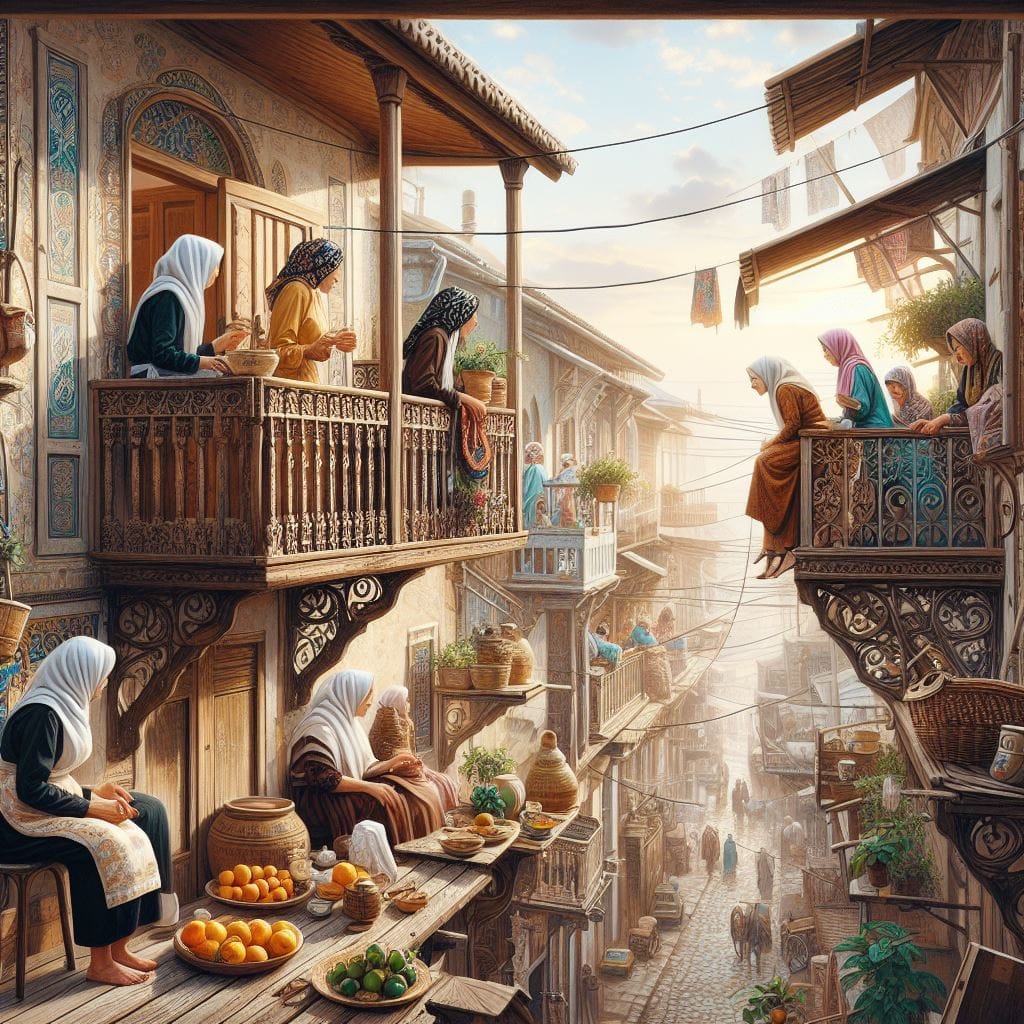
The realities of rural Jewish life must be considered.
In Northeastern Michigan, Jewish families may live considerable distances from one another.
A person interested in Torah study may be located in Alpena, Hillman, Rogers City, Posen, Lachine, Hubbard Lake, or another surrounding community.
Assembling even a small group requires time, trust, transportation, and shared commitment.
Developing a regular minyan is a considerably larger undertaking.
For this reason, I do not believe the first question for a developing study group should be how to construct a complete synagogue sanctuary.
The first question is how to establish meaningful Jewish learning and relationships.
Can we meet to study Torah?
Can we discuss Mishnah, Gemara, and practical Halakhah?
Can families become better acquainted?
Can we strengthen traditional Jewish observance in our region?
These are the foundations upon which a future synagogue may develop.
If only a handful of people are gathering for informal Torah learning, I see no reason to insist upon constructing a mechitzah solely for those educational meetings.
The nature of the gathering does not necessarily require one.
If the group grows toward a regular minyan, then we should begin preparing a suitable arrangement for formal prayer.
Initially, that might involve a movable partition in an appropriate space.
Eventually, if a permanent building becomes possible, I would prefer a proper women's balcony overlooking the sanctuary.
The balcony would be incorporated into the building's design from the beginning.
It would not be an improvised afterthought.
It should provide women with an excellent view of the bimah and allow them to hear the service clearly.
The important thing is that the long-term direction remains faithful to traditional Orthodox practice.
We are not building an alternative form of Judaism.
We are attempting to establish a small, independent Orthodox Jewish community under circumstances that require patience and resourcefulness.

Part X — The Position of Shaarei Tzafon
Let us make our position clear.
Shaarei Tzafon favors the mechitzah as the proper standard for an established Orthodox synagogue.
We believe that traditional separation should be maintained during regular communal prayer.
We also recognize that a small developing Jewish community does not necessarily begin with a fully functioning synagogue.
In the earliest stages, when people are gathering primarily for Torah study, discussion, and informal educational activities, a physical mechitzah is not automatically required.
Our immediate objective is to encourage Torah learning and the development of genuine Jewish relationships.
We hope eventually to establish a regular minyan.
When that becomes a functioning part of our communal life, the necessary arrangements for traditional communal prayer should be established.
We should not intentionally create a permanent public synagogue without addressing the mechitzah.
Nevertheless, it is equally important that we not place unnecessary architectural or financial obstacles before people who are merely beginning to gather and learn.
We should distinguish the requirements of a regular synagogue from those of an informal Jewish educational circle.
For our long-term vision, I personally prefer a synagogue with a women's balcony.
This arrangement has historical foundations in the Temple descriptions preserved in the Mishnah, Talmud, and Rambam.
It also offers an opportunity to design a sanctuary in which women can observe the service and feel connected to the congregation without abandoning traditional separation.
A mechitzah should not become an instrument of exclusion.
It should help establish an atmosphere of reverence, dignity, and respect.
Women should have comfortable and accessible accommodations, a clear view, and the ability to hear and follow the proceedings.
Our ambition is not simply to establish a building.
It is to cultivate traditional Jewish life in Northeastern Michigan.
We wish to gather people around Torah, Mishnah, Gemara, Halakhah, Midrash, prayer, and a sincere commitment to HaShem.
We hope to see the development of a minyan, a small beit midrash, and eventually a fully functioning community.
But this work begins with people.
It begins with learning.
It begins with the willingness to gather and undertake the responsibilities of Jewish life.
Shaarei Tzafon is an independent, family-led Orthodox Jewish educational and publishing initiative based in Northeastern Michigan, serving the area around Alpena, Hillman, Rogers City, and neighboring communities.
Our broader educational vision extends from the forty-fifth parallel—the Northern Gate—toward the Arctic, embracing the challenges of traditional Jewish life in rural Michigan, Canada, and Alaska.
Throughout these regions, we wish to encourage the development of independent Jewish study circles, shtieblach, and communities grounded in Torah and Halakhah.
This requires building institutions suited to the circumstances of the people who will use them.
Begin with Torah. Build the community. Establish the minyan. Provide the appropriate mechitzah. And when the opportunity for a permanent synagogue arrives, build a beautiful and welcoming women's balcony.
We should not allow the absence of a building to prevent Jewish life from beginning.
Nor should we allow the difficulties of beginning to cause us to abandon the traditional standards we hope eventually to establish.
The objective is a living, functioning Orthodox Jewish community.
And every sincere beginning deserves the opportunity to grow.
Is a Mechitzah Necessary in an Orthodox Synagogue?
Is a mechitzah required in Orthodox Judaism? This teaching from Rabbi Ariel Manning of Shaarei Tzafon examines the traditional Jewish laws of separation during communal prayer, drawing upon the Mishnah, Talmud Sukkah 51b, Rambam, and later halakhic authorities.
The article distinguishes between a developing Jewish study group and an established Orthodox synagogue. While a proper mechitzah is the preferred standard for regular communal prayer, small communities beginning with Torah study and informal gatherings do not necessarily require a physical partition.
Special attention is given to the traditional women's balcony, an arrangement that preserves separation while allowing women to see, hear, and participate meaningfully in synagogue services.
Based in Northeastern Michigan, Shaarei Tzafon encourages Orthodox Jewish learning and community development throughout Alpena, Hillman, Rogers City, and surrounding communities.
Our approach emphasizes building Jewish life gradually: beginning with Torah study, developing a minyan, and eventually establishing a fully functioning Orthodox community with appropriate facilities for traditional prayer.
Through our wider educational mission, we encourage independent Orthodox Jewish life from the 45th parallel across Northern Michigan, Canada, and Alaska toward the Arctic.
Shaarei Tzafon — The North Gate: Traditional Jewish Life Above the 45th Parallel.
Principal Sources
Mishnah Sukkah 5:2; Babylonian Talmud Sukkah 51b.
Zechariah 12:12.
Rambam, Mishneh Torah, Hilkhot Beit HaBechirah 5:9.
Rambam, Hilkhot Shofar, Sukkah veLulav 8:12.
Rambam, Commentary on the Mishnah, Sukkah 5:2.
Babylonian Talmud Kiddushin 81a.
Mekhilta deRabbi Yishmael, Tractate Shirah 10.
Pirkei deRabbi Eliezer, chapter 41.
Rabbi Moshe Feinstein, Iggerot Moshe, Orach Chaim I:39; III:23; V:11–12.
Rabbi Chaim Navon, The Mechitza, Torat Har Etzion.
Rabbi Chaim Dovid Regensburg, historical position discussed by Harry Maryles in Emes Ve-Emunah.
Beth HaMedrosh Hagodol–Beth Joseph, statements concerning its 2025 sanctuary transition.
Shaarei Tzafon — The North Gate
Orthodox Jewish Life and Torah Study in Northeastern Michigan
Shaarei Tzafon — The North Gate, led by Rabbi Ariel Manning, is an independent, family-led Orthodox Jewish educational and publishing initiative based in Northeastern Michigan. We support traditional Jewish life, Torah study, Halakhah, and Jewish education throughout Alpena, Hillman, Rogers City, and surrounding communities. Those interested in traditional Judaism are welcome to contact us for educational resources, Torah learning, and opportunities for discussion by prior arrangement.
Rooted locally, our greater mission extends northward from the 45th parallel — The North Gate — through Michigan, Canada, and Alaska toward the Arctic. We seek to encourage independent Jewish communities, family-centered Torah education, and the renewal of small batei midrash and shtieblach, preserving the rich traditions of Orthodox Judaism for future generations.
Our work begins in Northeastern Michigan, but our vision extends from the 45th parallel toward the Arctic.
Guided by Rambam and Mori Qafiḥ, uplifted by Rebbe Nachman, and grounded by Avraham ben HaRambam’s balance of halakha and inward avodah.
The Orchard’s Path
publishes our books and curricula.
Our mission: a bright, authentic Jewish presence in every northern town.
Created with ©systeme.io


