
Is there an Rabbi in Northeast Michigan and the surrounding area & Shaarei Tzafon
B"H
Understanding the Classical Role of a Rabbi, the Authority of Torah and Halakhah, and the Restoration of Traditional Jewish Life in Northern Michigan
Are you looking for a rabbi in Northeast Michigan, particularly around Alpena, Hillman, Rogers City, or the surrounding communities?
Rabbi Ariel Manning of Shaarei Tzafon — The North Gate — discusses the classical Jewish understanding of the rabbinate, the importance of Torah and Halakhah, and his work encouraging traditional Orthodox Jewish life in Northern Michigan.
Although Shaarei Tzafon is currently a family-led educational and publishing initiative rather than an established synagogue congregation, its vision includes the hope of developing a sincere circle of Jewish learning and, eventually, a halakhic minyan.
By Rabbi Ariel Manning — Shaarei Tzafon (The North Gate)
Part I — Is There a Rabbi in Northeast Michigan?
Is there a rabbi in Northeast Michigan?
It is a reasonable question. Someone searching for Jewish life in Alpena, Hillman, Rogers City, or the surrounding communities might wonder whether there is anyone nearby who teaches Torah, explains Halakhah, or provides guidance concerning traditional Jewish observance.
I know of one.
However, before answering that question fully, we should consider what a rabbi actually is.
In contemporary American society, people generally associate the word rabbi with someone who stands behind a pulpit, delivers sermons, presides over synagogue services, officiates at weddings, and serves as the professional religious leader of a congregation.
Certainly, these are legitimate responsibilities of many rabbis which I can do, but they do not exhaust the meaning of the title.
Historically, Jewish life has known many rabbis who were primarily teachers, scholars, legal authorities, authors, and students of Torah. Some led large congregations. Others taught in small study houses. Still others devoted their lives to writing, answering questions, and transmitting Torah from one generation to the next.
Their importance did not depend upon the size of their building or the number of people attending their lectures.
Here in Northeast Michigan, I understand the rabbinate primarily in this older educational sense.
My purpose is not to establish myself as the religious representative of every Jew in Northern Michigan. Nor do I claim to govern an established congregation.
Instead, my work centers on disseminating Torah, teaching Halakhah, publishing Jewish texts, encouraging traditional Jewish observance, and cultivating a genuine love for the Jewish people.
That work takes place through Shaarei Tzafon, an independent, family-led Orthodox Jewish educational and publishing initiative based in Northeast Michigan.
A rabbi does not cease being a rabbi simply because he has no pulpit.
And Torah does not cease being Torah because it is taught in the wilderness.

Part II — What Is a Rabbi in the Classical Jewish Sense?
The Hebrew word rav carries the meaning of a teacher or master.
Throughout Jewish history, the rabbinic vocation has been closely associated with learning, teaching, interpreting, and preserving Torah.
The Mishnah teaches:
עשה לך רב — Aseh lekha rav — Make for yourself a teacher. (Pirkei Avot 1:6)
Notice what the Mishnah does not say.
It does not instruct every person to find the largest synagogue, the most impressive institution, or the most socially influential religious personality.
It emphasizes the importance of having a teacher.
A person who studies Torah requires guidance, correction, explanation, and intellectual companionship. The teacher helps the student understand not merely the words of Torah but the methods through which those words are interpreted and applied.
This relationship lies at the heart of the rabbinic tradition.
The prophet Malachi describes the responsibility of preserving religious knowledge:
"For the lips of a priest should guard knowledge, and Torah they should seek from his mouth." (Malachi 2:7, translation adapted)
Although the verse speaks specifically of the priest, its principle is relevant to religious instruction: knowledge must be preserved and transmitted responsibly.
A rabbi should therefore be measured, in significant part, by his dedication to Torah learning and teaching.
Does he study?
Does he explain?
Does he preserve the tradition?
Does he encourage others to become knowledgeable and observant?
Does he recognize the limits of his own knowledge and consult other scholars when necessary?
These questions matter more to me than whether a rabbi occupies a particular office.
Of course, rabbinic learning and contemporary ordination (which I possess Orthodox semikah) must not be confused with the original judicial semikhah associated with the ancient Sanhedrin. Different forms of rabbinic authority have existed throughout Jewish history.
A teacher is not automatically a supreme legal authority.
Nevertheless, teaching Torah remains an essential rabbinic responsibility.
For myself, the title is not intended as a declaration of personal greatness.
It represents a commitment to continued study, responsible instruction, and the preservation of the Jewish legal and intellectual tradition.

Part III — A Rabbi Without a Pulpit
I am not a pulpit rabbi.
That distinction is important because people naturally assume that every rabbi must preside over a synagogue congregation.
My work in Northeast Michigan follows a different model.
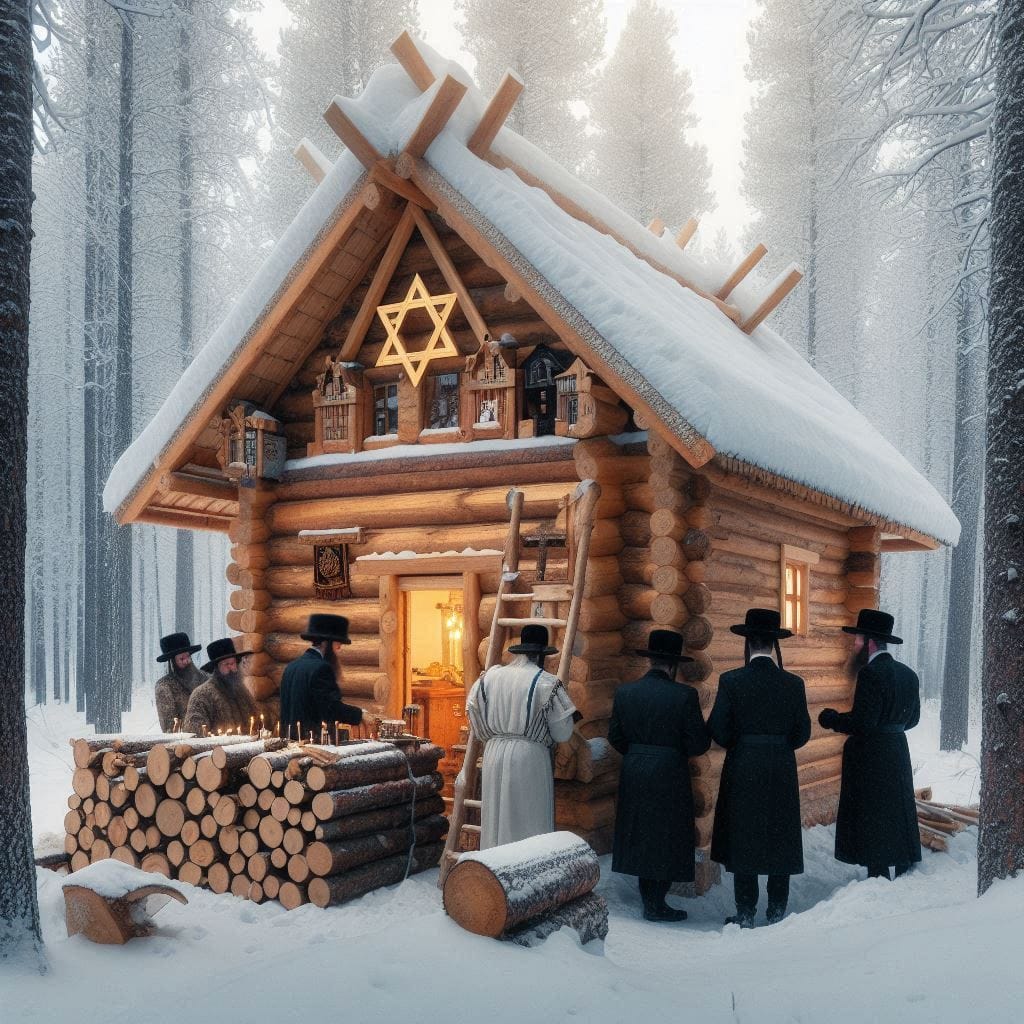
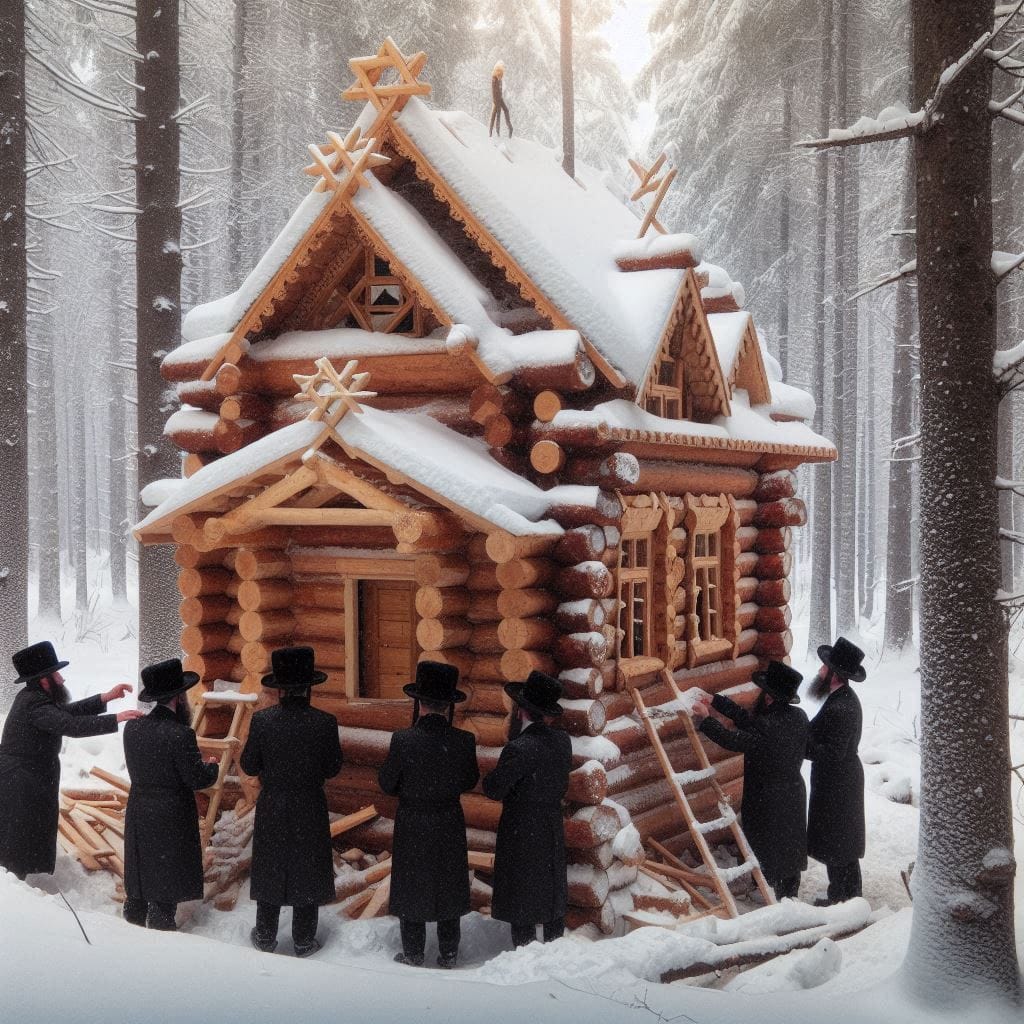
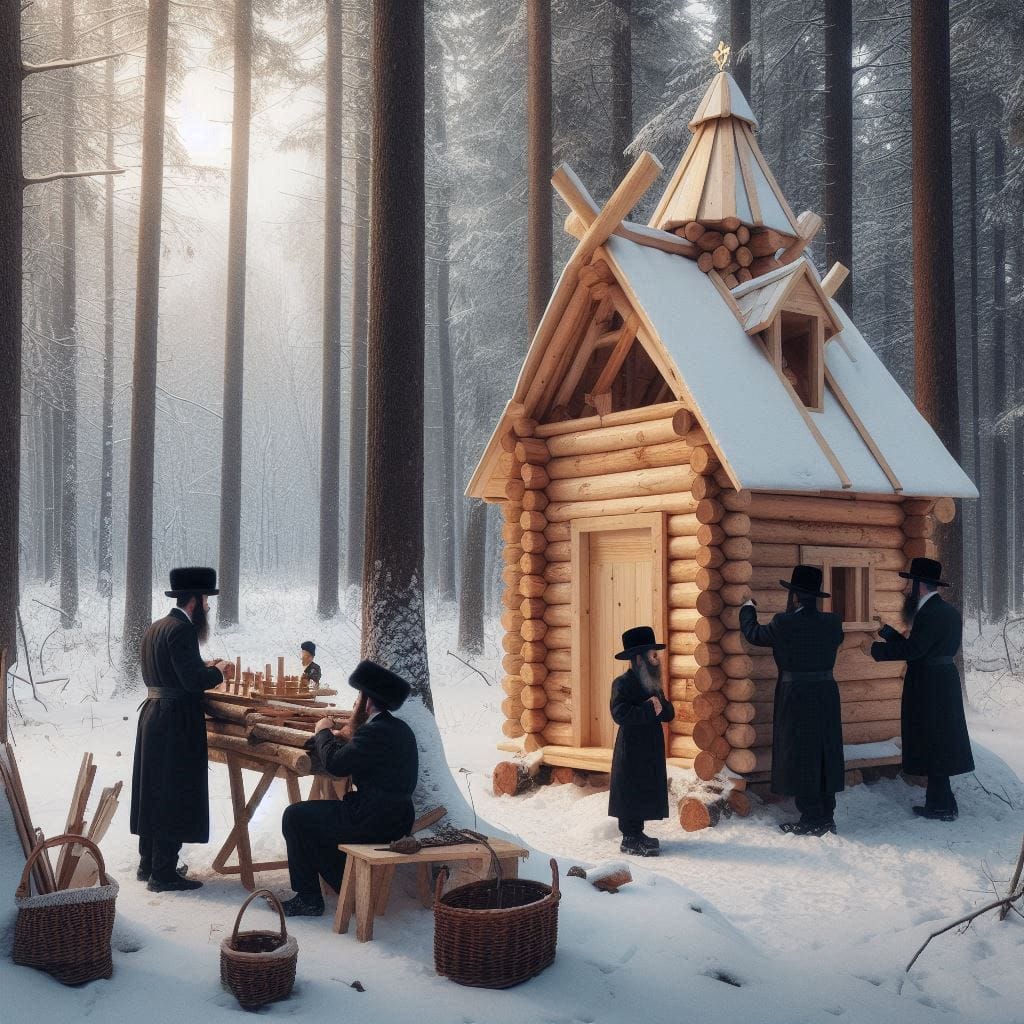
Through Shaarei Tzafon, my family and I seek to encourage a form of Jewish life rooted in the traditional shtiebel and beit midrash: small, accessible environments devoted to Torah learning, prayer, and practical observance.
Our initiative is not an established congregation, nor do we present ourselves as the governing body of the region's Jewish population.
We are an independent Orthodox Jewish educational and publishing organization.
However, this does not mean I have no desire for a congregation or a minyan.
Quite the opposite.
I would very much like to see a minyan established here in Northeast Michigan under Shaarei Tzafon, with the right people: sincere Jews committed to Torah, Halakhah, mutual respect, and building something meaningful together.
I do not want a minyan merely for the sake of saying that we have ten people. I want a minyan in which those who gather genuinely desire to pray, learn, and encourage one another in Jewish life.
I would also love to have a group that meets regularly to study Torah, Mishnah, Gemara, Halakhah, Midrash, and the great works of Jewish learning.
This is something I pray for every day.
Perhaps such a gathering will become a reality in the future. Perhaps it will begin with only one or two additional individuals sitting together over a text.
That would already be a blessing.
But we must build toward such things patiently, with the right foundations and with people who share a sincere commitment to the purpose.
In the meantime, our work continues.
We translate Jewish texts, prepare educational materials, examine halakhic questions, write articles, and encourage Jewish families to cultivate serious religious lives wherever they reside.
Some of our work concerns the Rambam, the Geonim, the Mishnah, and the development of Jewish legal reasoning.
Other projects concern prayer, Jewish history, family education, customs, and the challenges of maintaining traditional observance in rural communities.
We do not need a congregation of hundreds to make this work meaningful.
A single person studying Torah sincerely is already engaged in something of lasting value.
Likewise, a family establishing a consistent pattern of Jewish prayer, learning, and observance is participating in the preservation of Jewish life.
I believe that small Jewish institutions deserve renewed attention.
Large synagogues and yeshivot have their places. Their contributions should not be dismissed. However, the existence of large institutions does not make smaller, independent undertakings unnecessary.
In rural Northern Michigan, the nearest established Jewish institutions may be separated by considerable distances.
Traditional Jewish life must therefore be cultivated deliberately.
Sometimes it begins with a synagogue.
Sometimes it begins with a study group.
And sometimes it begins with one family, a shelf of sefarim, and a determination to keep learning.

Part IV — Love for Jews and Respect for Traditional Judaism
At the center of my understanding of the rabbinate is love for the Jewish people.
I do not believe that Jewish religious leadership should be reduced to maintaining institutional boundaries or protecting organizational influence.
A rabbi should care about Jews as human beings.
He should care about their families, education, religious development, difficulties, and opportunities to participate in Jewish life.
The Torah commands:
ואהבת לרעך כמוך — Ve'ahavta l're'akha kamokha — Love your fellow as yourself.
(Leviticus 19:18)
The Rambam discusses the obligation to love fellow Jews in Hilkhot De'ot 6:3.
This love must be more than a pleasant sentiment.
It should be reflected in how we teach, speak, answer questions, and treat those who are unfamiliar with traditional observance.
A Jew who has never learned Hebrew remains a Jew.
A Jew who knows little about Halakhah remains a Jew.
A Jew who was raised without a meaningful Jewish education should not be treated as though ignorance were a moral defect.
Our responsibility is to make knowledge accessible.
At the same time, love for Jews does not require abandoning religious distinctions or pretending that every interpretation of Judaism is equally consistent with traditional Halakhah.
We can recognize differences without turning those differences into personal hostility.
My respect also extends to non-Jews who approach Judaism sincerely.
There are individuals who admire Jewish history, study the Hebrew Scriptures, appreciate Jewish ethical teachings, and respect the Jewish people without claiming to be Jewish themselves.
I welcome that respect.
One need not become Jewish to acknowledge the value of Jewish learning or to treat Judaism with dignity.
Hillel taught that we should be among the disciples of Aaron, loving peace, pursuing peace, loving people, and drawing them near to Torah (Pirkei Avot 1:12).
That is a model worth remembering.
We can welcome honest curiosity while preserving the integrity of our religious tradition.
Respect does not require agreement, and disagreement does not require hatred.
Part V — Torah Cannot Be Separated From the Jewish People
Here I must address something about which I sometimes speak rather strongly.
There are religious movements and individuals who declare that they follow Torah while simultaneously distancing themselves from Judaism and Jewish rabbinic tradition.
Some speak admiringly of Moses while dismissing the generations of Jewish scholars who transmitted and interpreted his teachings.
Others adopt Jewish religious terminology, practices, and symbols while insisting that Judaism itself has fundamentally misunderstood its own Scriptures.
I find this position deeply problematic.
Why?
Because Torah was not delivered as an isolated book to individuals who were instructed to invent their own religious systems.
Torah was given to Israel within a covenantal relationship.
It establishes commandments, obligations, judicial procedures, communal responsibilities, and mechanisms of religious instruction.
The Jewish people were not incidental to this revelation.
They were its covenantal recipients.
The Torah itself repeatedly addresses Israel as a people, not merely as a collection of independent religious readers.
Consequently, the historical relationship between Torah and the Jewish people cannot simply be discarded.
This does not mean every Jewish interpretation throughout history is correct.
Jewish scholarship contains disagreement, debate, criticism, and competing legal conclusions.
The Mishnah and Talmud themselves preserve extensive arguments between sages.
Nevertheless, disagreement conducted within a recognized legal tradition differs from rejecting that tradition altogether.
It is perfectly reasonable for a non-Jew to study Torah.
It is also reasonable to appreciate particular commandments, historical teachings, or ethical principles.
However, claiming to represent authentic Torah while rejecting Judaism's covenantal identity and legal tradition raises a serious contradiction.
One cannot establish Jewish religious authority merely by borrowing Jewish terminology.
Nor does familiarity with Hebrew automatically confer authority to reinterpret Jewish law independently of its historical legal framework.
For me, this is not primarily a dispute over cultural ownership.
It is a question of intellectual honesty and religious consistency.
Torah belongs to the covenantal history of Israel. To understand it faithfully, one must take that history seriously.
Part VI — Rabbinic Law Is Sanctioned by Torah Law
This brings us to one of the most important distinctions in traditional Judaism.
Rabbinic law is not simply a collection of religious preferences invented by later scholars.
The Torah itself establishes judicial authority and commands Israel to heed its rulings.
Deuteronomy 17:8–13 describes cases that are too difficult for local adjudication and directs the people toward the authorized judicial institution.
Verse 11 commands obedience to the instruction and judgment given there.
It further warns against turning aside from the ruling, either to the right or to the left.
This passage provides a foundational biblical basis for the authority of Jewish courts.
The Rambam addresses this directly in Mishneh Torah, Hilkhot Mamrim 1:1–2.
He identifies the Great Sanhedrin in Jerusalem as the central institutional authority of the Oral Law and connects obedience to its decisions with the commandments of Deuteronomy 17.
Consider the implications.
The Written Torah does not establish a system in which every individual possesses unlimited authority to decide independently what biblical law means.
It recognizes an authorized process of legal interpretation and adjudication.
This is essential to understanding traditional Judaism.
The Mishnah preserves teachings, legal decisions, and disputes associated with earlier generations of Jewish sages.
The Talmud analyzes those teachings and preserves further developments in legal reasoning.
Later authorities, including the Geonim, the Rambam, and the authors of subsequent halakhic works, continued interpreting and applying that inherited legal corpus.
The Rambam's introduction to the Mishneh Torah further distinguishes the widely binding authority of the Talmudic legal tradition from later rulings and customs that did not necessarily receive universal acceptance.
This distinction matters.
Not every statement made by a modern rabbi possesses biblical authority.
Not every local custom is universally obligatory.
Not every rabbinic opinion is identical to a decree of the ancient Sanhedrin.
But none of these qualifications permits us to discard rabbinic law as though the Torah had never established judicial authority.
We must distinguish between legitimate disagreement within Halakhah and rejection of the legal institution itself.
Traditional Judaism does not place rabbinic authority above Torah. It understands properly constituted rabbinic authority as operating under the Torah's own legal framework.
Part VII — Why I Can Be Harsh Toward Those Who Claim Torah Without Judaism
I readily acknowledge that I can sometimes be harsh toward those who claim to follow Torah while rejecting Judaism.
Perhaps, at times, my words are stronger than necessary.
But the reason for my concern deserves explanation.
It is not simply that these individuals disagree with my personal religious philosophy.
Jewish tradition already contains substantial philosophical diversity.
My own intellectual approach draws heavily upon the Rambam, the Geonim, and rationalist strands of Jewish scholarship, while I also appreciate elements of Hasidic spiritual life.
I do not expect every Orthodox Jew to share precisely the same philosophical outlook.
Nor do I believe that every Jewish community must adopt identical customs.
The concern is more fundamental.
When someone declares that rabbinic law is illegitimate while presenting himself as an authoritative interpreter of Torah, he is challenging a legal structure that the Torah itself establishes.
When that person also rejects Jewish religious identity or treats historical Judaism with contempt, the contradiction becomes especially troubling.
However, we must make an important distinction.
A non-Jew is not automatically obligated to observe the entire body of Jewish rabbinic law.
My criticism is not that every non-Jew must become halakhically observant as a Jew.
The problem arises when someone claims to teach Judaism or authentic Torah observance while denying the authority and identity of the tradition being represented.
That distinction should remain clear.
We also must distinguish a person's sincerity from the accuracy of his claims.
Someone may genuinely believe he is honoring Torah while misunderstanding the foundations of Jewish law.
In such cases, patient explanation may accomplish more than angry confrontation.
I have no desire to make personal hostility the defining characteristic of Shaarei Tzafon.
Strong disagreement can be expressed without humiliating another human being.
Still, I refuse to pretend that theological and legal distinctions are meaningless.
A rabbi who teaches Halakhah must sometimes explain why a particular approach is incompatible with traditional Jewish law and philosophy.
That is not a declaration of hatred.
It is an exercise of religious responsibility.

Part VIII — Welcoming Those Who Respect Judaism Without Surrendering Its Identity
There is a considerable difference between respecting Judaism and attempting to redefine it.
I appreciate individuals who approach Jewish learning with sincerity.
A person may be fascinated by the Hebrew language, biblical history, Jewish philosophy, the Talmud, or the development of Halakhah.
Such interests can lead to thoughtful conversations and genuine intellectual friendships.
There is no need to discourage them.
Indeed, the accessibility of Jewish texts today creates opportunities that earlier generations could scarcely have imagined.
Through digital libraries, online booksellers, historical manuscripts, and educational resources, people living far from established Jewish centers can encounter serious Jewish scholarship.
In Northeast Michigan, this accessibility is particularly valuable.
Nevertheless, respectful study requires recognizing that Judaism possesses its own religious commitments and institutions.
A person who wishes to learn about Halakhah should be prepared to understand the legal assumptions upon which Halakhah rests.
A person who wishes to discuss Jewish observance should recognize the significance of Jewish communal history.
And a person who disagrees with rabbinic Judaism should identify that disagreement honestly rather than claiming to speak on behalf of the tradition being rejected.
That honesty makes genuine dialogue possible.
I do not require visitors or readers to agree with every conclusion I reach.
Questions are welcome.
Difficult questions are welcome.
Respectful disagreement is welcome.
But religious education must not become an exercise in disguising one theological system as another.
Jewish identity, conversion, and participation in particular religious activities also carry halakhic distinctions. These cannot simply be eliminated in the name of inclusivity.
Respectful educational engagement is not the same as full participation in every aspect of Jewish religious life.
The purpose of maintaining such distinctions is not to cultivate superiority.
It is to preserve the integrity of the covenantal tradition we have inherited.
We can keep the door to learning open without removing the foundations upon which the house stands.

Part IX — Shaarei Tzafon and the Restoration of Small Jewish Institutions
What does all of this have to do with Northeast Michigan?
Quite a great deal.
One of the central purposes of Shaarei Tzafon is to demonstrate that meaningful traditional Jewish life can exist outside major metropolitan Jewish centers.
The name Shaarei Tzafon, meaning the Northern Gates, expresses a geographical and spiritual vision.
The 45th parallel serves as our symbolic gateway into the northern lands, extending through Michigan, Canada, and Alaska toward the Arctic.
Yet our actual work begins here in Northeast Michigan.
Alpena, Hillman, Rogers City, and the neighboring communities are not merely geographic keywords.
They represent the region in which our educational work is rooted.
Our purpose is not to claim that we have established congregations throughout the North.
Rather, we seek to encourage the possibility of small, independent Jewish institutions wherever families and individuals are committed to living according to Torah and Halakhah.
The traditional shtiebel provides an important model.
Jewish communities have long benefited from modest places where people gathered to pray, study, discuss religious questions, and cultivate meaningful relationships.
Such institutions did not always require professional staffs or elaborate buildings.
Their strength often rested in the commitment of those who participated.
This is the spirit we hope to encourage.
And I must confess that this is more than an intellectual vision for me.
Every day, I pray that HaShem will make it possible for us to gather a minyan here in Northeast Michigan, and to establish a small circle of Jews who genuinely desire to learn Torah together.
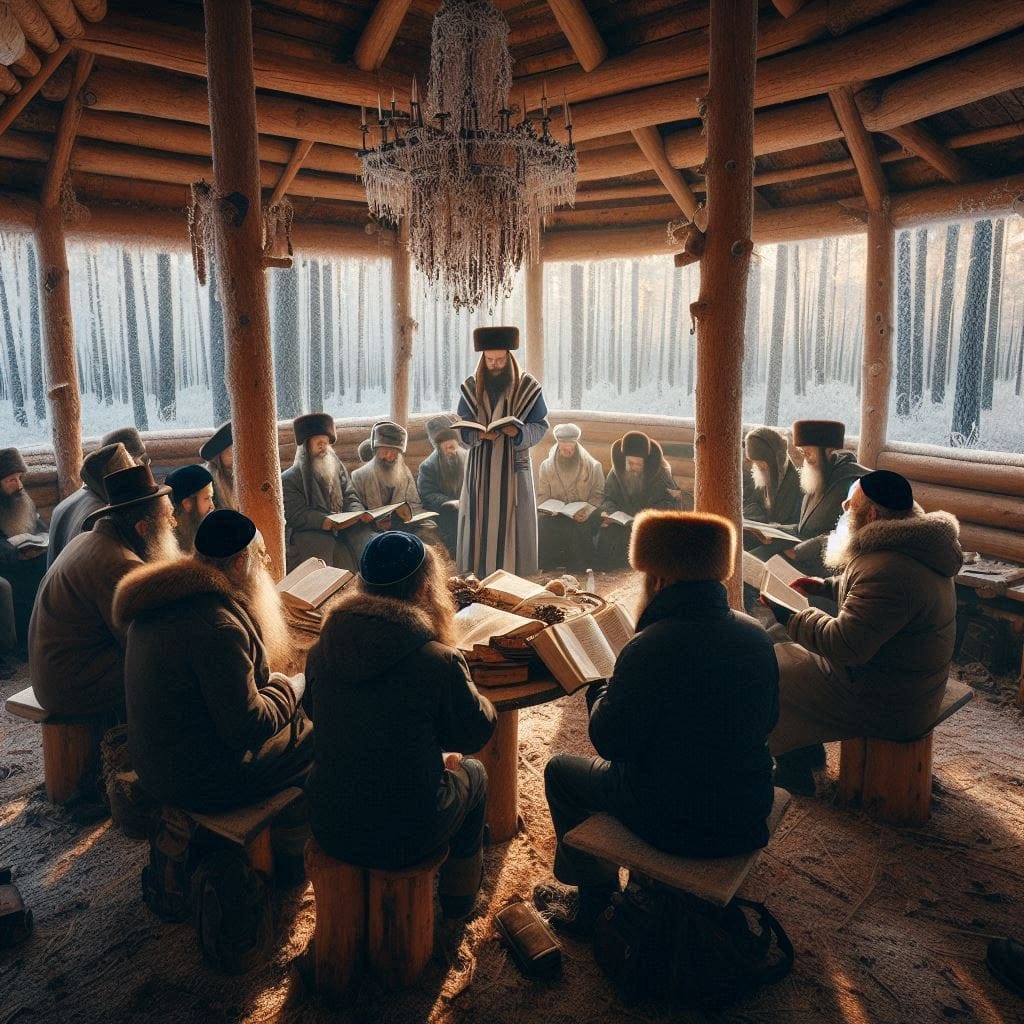
I imagine sitting around a table with others, opening a Chumash, studying Mishnah, working through a difficult passage of Gemara, examining the reasoning of the Rambam, discussing practical Halakhah, or exploring the ethical and spiritual lessons of the Midrashim.
Not because we must agree upon every interpretation.
Jewish learning has always involved discussion and disagreement.
But because we would share a commitment to learning within the Jewish tradition, honoring one another, and building something worthwhile.
I want the right people, not merely a certain number of people.
By the right people, I mean those who are sincere, dependable, respectful, and prepared to help cultivate a genuine Jewish environment. I am not looking for people who agree with me in every detail or who are without shortcomings.
None of us is without shortcomings.
I want people who are willing to learn and grow together.
A halakhically constituted minyan has its own requirements, but even before such a minyan becomes possible, two or three Jews gathering regularly for Torah study would be a meaningful beginning.
Perhaps such a group will form.
Perhaps, with HaShem's help, it will eventually grow into a regular minyan and a lasting beit midrash.
But such things cannot simply be declared into existence.
We must build toward them, patiently and honestly, rather than pretending that something exists before it has taken root.
For now, Shaarei Tzafon continues through education, family observance, and Jewish publishing.
Translation, commentary, educational articles, siddurim, and the preservation of historical halakhic works are practical ways to extend Torah learning beyond a single household.
A person may never visit Northeast Michigan yet still benefit from something produced here.
At the same time, wider educational outreach must not overshadow the actual communities closest to us.
Our first responsibility is to cultivate meaningful work where we live.
We do not need to imitate a large metropolitan congregation.
We need to demonstrate that serious Torah learning, Jewish education, and traditional observance can take root even in a rural northern environment.
A small beginning is still a beginning.
And perhaps, through patience, prayer, and perseverance, that small beginning will one day become the gathering for which I pray.
Part X — So, Is There a Rabbi in Northeast Michigan?
Let us return to the original question.
Is there a rabbi in Northeast Michigan?
Yes.
I am Rabbi Ariel Manning, and my work through Shaarei Tzafon is dedicated to teaching Torah, explaining Halakhah, preserving Jewish texts, encouraging traditional observance, and cultivating love for the Jewish people.
I am not claiming to be the appointed religious authority over every Jewish individual or institution in the region.
I am not presenting Shaarei Tzafon as an established synagogue congregation.
And I do not believe that rabbinic legitimacy should be determined solely by institutional prominence.
I understand my responsibility primarily through the older role of the rabbi as teacher and transmitter of Torah.
That responsibility requires continual learning.
It requires humility when confronted with questions beyond one's expertise.
It requires respect for the Jewish legal tradition and willingness to acknowledge genuine scholarly disagreement.
It also requires the courage to explain what traditional Judaism teaches, even when those teachings are unpopular or misunderstood.
I love the Jewish people.
I respect those who sincerely wish to learn about Judaism.
And I believe that Torah and Halakhah should remain accessible to Jews living far beyond the boundaries of established Jewish population centers.
But accessibility must never be confused with abandoning religious integrity.
Jewish life is not merely the bare minimum requirements of Halakhah, even though a person could choose to live at that minimum.
There is a much greater world to cultivate: study, devotion, ethical refinement, family education, communal responsibility, Jewish memory, and the beauty of inherited religious customs.
These are the things that give Jewish life depth.
A rabbi should help make that world accessible.
He need not possess a magnificent synagogue.
He need not command a large congregation.
But he must be prepared to dedicate himself to the work of Torah.
Do I wish to have a minyan? Absolutely.
Do I hope to sit with others and regularly study Torah, Mishnah, Gemara, Halakhah, Midrash, and the great works of our sages? Very much so.
It is something I bring before HaShem in prayer every day.
But I also recognize that meaningful Jewish institutions must be cultivated with patience, sincerity, and mutual commitment.
We are not there yet.
And I am willing to acknowledge that, because there is no shame in beginning small.
Here, among the forests, orchards, lakes, and small towns of Northeast Michigan, that work continues.
Not because we have already built something enormous.
Not because we seek institutional recognition at any cost.
But because Torah deserves to be studied, Jewish life deserves to be preserved, and the Jewish people deserve teachers who care about them.
So, if someone in Alpena, Hillman, Rogers City, or the surrounding region asks whether there is a rabbi committed to traditional Torah and Halakhah in Northeast Michigan, the answer is yes.
And perhaps one day, that question will become something more.
Not merely, "Is there a rabbi here?"
But, "Where can we gather to learn Torah together?"
That is the future I hope and pray for.
Until then, the work continues, one lesson, one book, one conversation, and one sincere student at a time.
Shaarei Tzafon — The North Gate
Traditional Jewish Life Above the 45th Parallel
An independent, family-led Orthodox Jewish educational and publishing initiative based in Northeast Michigan.
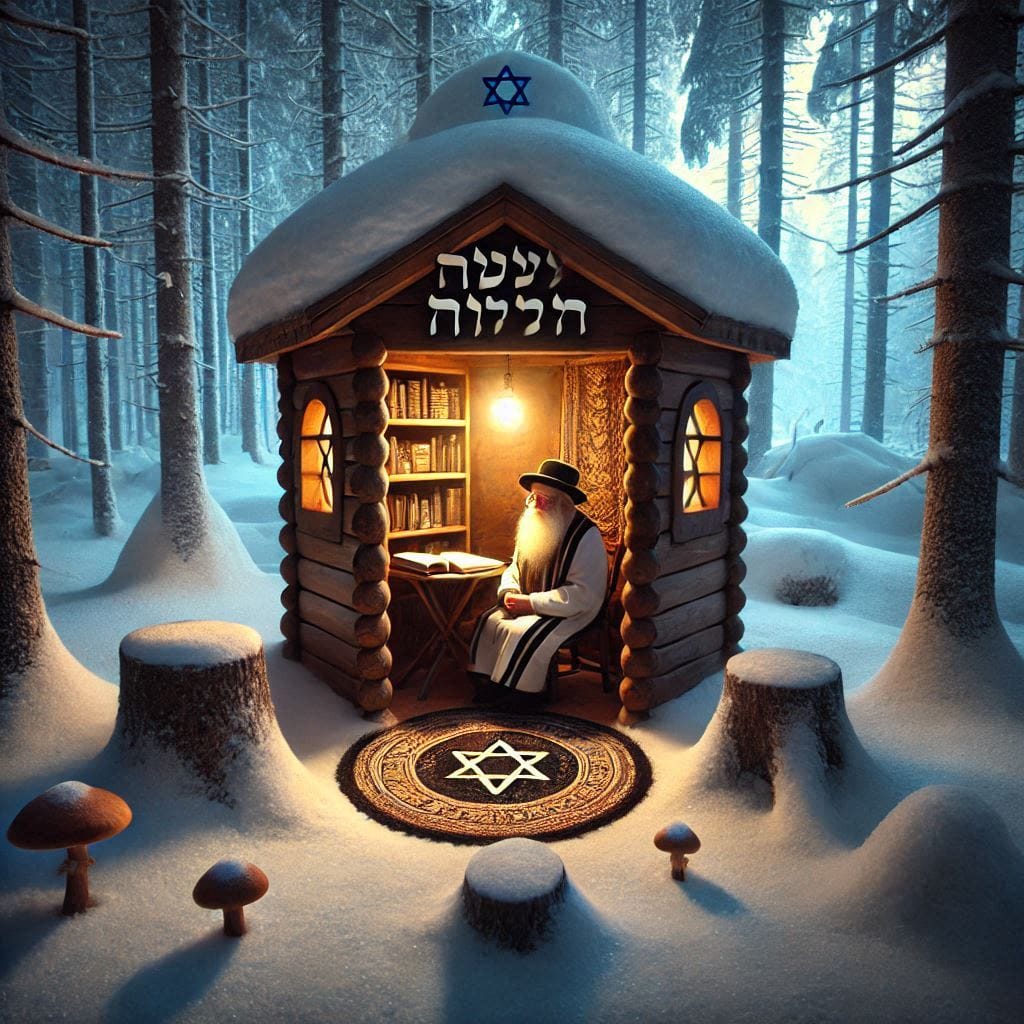
Shaarei Tzafon — The North Gate
Orthodox Jewish Life and Torah Study in Northeastern Michigan
Shaarei Tzafon — The North Gate, led by Rabbi Ariel Manning, is an independent, family-led Orthodox Jewish educational and publishing initiative based in Northeastern Michigan. We support traditional Jewish life, Torah study, Halakhah, and Jewish education throughout Alpena, Hillman, Rogers City, and surrounding communities. Those interested in traditional Judaism are welcome to contact us for educational resources, Torah learning, and opportunities for discussion by prior arrangement.
Rooted locally, our greater mission extends northward from the 45th parallel — The North Gate — through Michigan, Canada, and Alaska toward the Arctic. We seek to encourage independent Jewish communities, family-centered Torah education, and the renewal of small batei midrash and shtieblach, preserving the rich traditions of Orthodox Judaism for future generations.
Our work begins in Northeastern Michigan, but our vision extends from the 45th parallel toward the Arctic.
Guided by Rambam and Mori Qafiḥ, uplifted by Rebbe Nachman, and grounded by Avraham ben HaRambam’s balance of halakha and inward avodah.
The Orchard’s Path
publishes our books and curricula.
Our mission: a bright, authentic Jewish presence in every northern town.
Created with ©systeme.io


