
Judaism Is the Torah Movement
B”H
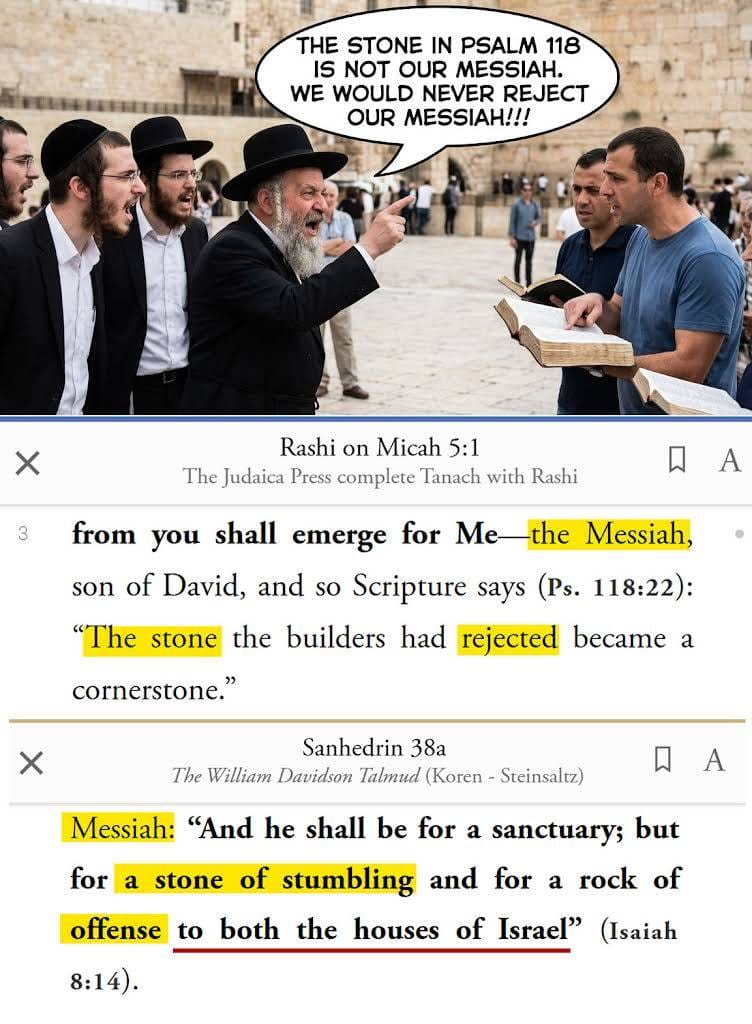
I received the meme below right before Shabbat…
Here is my response...
1. The First Principle: Judaism Is Not Built on Opposition
My friend, thank you for sharing this image. I understand why it may feel powerful from a Christian or Messianic reading. It places Jewish-looking men at the Western Wall, gives them an angry speech bubble, then shows highlighted rabbinic sources that appear to say: “Look, even your own rabbis admit the rejected stone is the Messiah.”
But from within Torah Judaism, this does not prove that Psalm 118, Micah 5, Isaiah 8, or Sanhedrin 38a identify Jesus as Mashiach.
The first thing we must say is simple:
Judaism is not the Anti-Jesus movement. Judaism is the Torah movement.
Our purpose is not to spend our precious time hating Christianity, mocking Jesus, or attacking Christian prophets. That is not the center of Jewish life. The center of Jewish life is Torah, mitzvot, halacha, Shabbat, kashrut, tefillah, teshuvah, tzedakah, family, community, and the covenant of Israel.
Christianity has its own tradition, its own covenantal claims, its own scriptures, its own saints, its own churches, and its own path for the nations. But Israel has the Torah given at Sinai. Israel has the mitzvot. Israel has the mesorah. Israel has the halachic covenant. Israel has the burden and the privilege of walking before HaShem as a holy nation.
So we do not need to answer this meme with rage.
We can answer calmly.
We can say:
Christianity, her creator and her prophets are not for us.
That is enough.
We do not need to turn Judaism into hate speech. We do not need to build an entire religious identity around what we reject. We do not need to spend every day proving why we are not Christians. We are Jews. We serve HaShem through Torah.
That is the beginning of the answer.
2. We Respect Traditional Christians, But Our Path Is Different
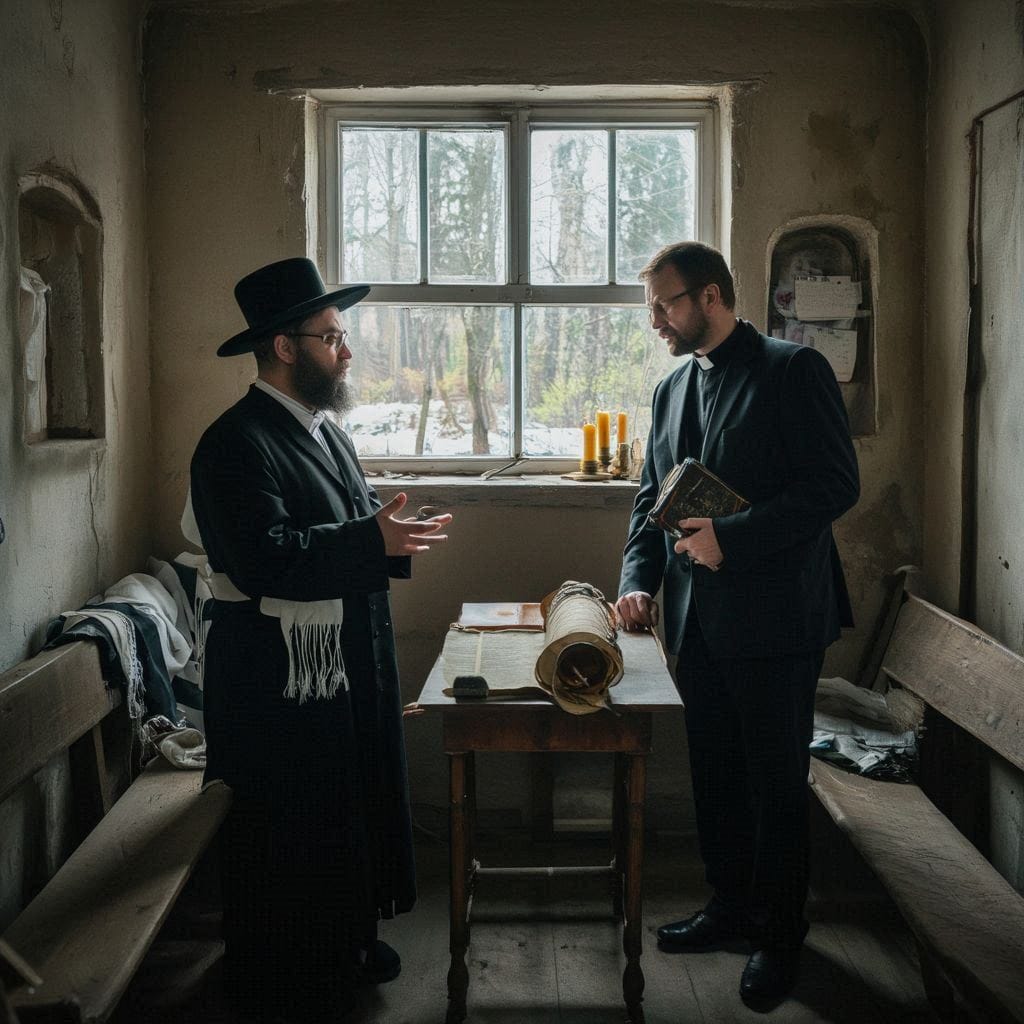
At Shaarei Tzafon, we have said many times — and people can read this throughout our articles — that we are not enemies of traditional Christians. We are friends with traditional Christians when they approach us with respect, honesty, and goodwill.
We stand with traditional Christians against the over-secularization of the world. We stand with them when they defend family, reverence, modesty, prayer, moral order, the sanctity of life, and the reality that man is not God. In a world that increasingly mocks religion, mocks holiness, mocks the family, mocks biblical morality, and mocks the Creator, Jews and traditional Christians often find themselves defending many of the same basic truths.
But friendship does not mean theological agreement.
Respect does not mean surrender.
Standing together against secularism does not mean erasing the difference between Judaism and Christianity.
We can say to traditional Christians:
We respect your seriousness. We respect your desire to honor God. We respect your attempt to preserve moral civilization. But our path is different.
You have your church. We have Torah.
You have your sacraments. We have mitzvot.
You have your Christology. We have Shema Yisrael.
You have your reading of Tanakh through Christology. We have Tanakh through Torah, halacha, Talmud, midrash, and mesorah.
So when Christians bring Jewish sources and say, “See, this proves Jesus,” we do not need to mock them. But we also do not need to accept their conclusion.
We can say:
Thank you, but no. That is not how these sources function within Judaism.
That is not hatred.
That is clarity.
3. Psalm 118: The Rejected Stone
Psalm 118 says:
אֶבֶן מָאֲסוּ הַבּוֹנִים הָיְתָה לְרֹאשׁ פִּנָּה
Even ma’asu ha-bonim hayetah le-rosh pinnah
“The stone that the builders rejected became the cornerstone.”
This is a powerful verse. It is royal. It is redemptive. It is full of reversal.
The one overlooked becomes chosen.
The one despised becomes central.
The one pushed aside becomes the foundation.
In Jewish interpretation, this verse can refer to David HaMelekh, to Israel, or to the future Mashiach ben David. Rashi connects the verse to Mashiach in his commentary to Micah 5 because Mashiach comes from David, and David himself was once overlooked, rejected, and underestimated.
David was not the obvious choice. When Shmuel came to anoint a king from the house of Yishai, David was not even brought forward at first. He was outside with the sheep. He was hidden. He was not presented as the likely future king of Israel. Yet he became the chosen king.
That is the Jewish pattern of the rejected stone.
Yosef was rejected by his brothers.
Moshe was rejected at first by his own people.
David was overlooked.
Yirmeyahu was persecuted.
Israel itself has been rejected among the nations.
So yes, the rejected stone can be messianic language. But here is the essential point:
Rejected stone imagery is messianic language, but it is not a messianic ID card.
Just because someone is rejected does not mean he is Mashiach.
Many people have been rejected.
Many religious figures have been controversial.
Many claimants have been opposed.
Rejection alone proves nothing.
The question is not: “Was this person rejected?”
The question is: Did this person complete the messianic task according to Torah Judaism?
4. Rashi on Micah 5 Does Not Prove Christianity
The meme highlights Rashi on Micah 5 and says, in effect, “Rashi says the rejected stone is the Messiah, therefore Jews must accept Jesus.”
But that is not honest.
Rashi does connect Micah’s prophecy to the Messiah, son of David. He also connects the Davidic redeemer to Psalm 118:22, the rejected stone becoming the cornerstone.
You need to understand Rashi is not saying Jesus is Mashiach.
Rashi is not teaching Christian theology.
Rashi is not secretly admitting the New Testament.
Rashi is reading Tanakh through Jewish tradition.
In Rashi’s world, Mashiach is the Davidic redeemer who restores Israel according to Torah. He is not a figure who cancels halacha. He is not a figure who creates a new religion. He is not a figure who redirects Israel away from Sinai. He is not a figure whose followers become a separate civilization with doctrines foreign to Jewish law.
Rashi’s messianic reading remains fully Jewish.
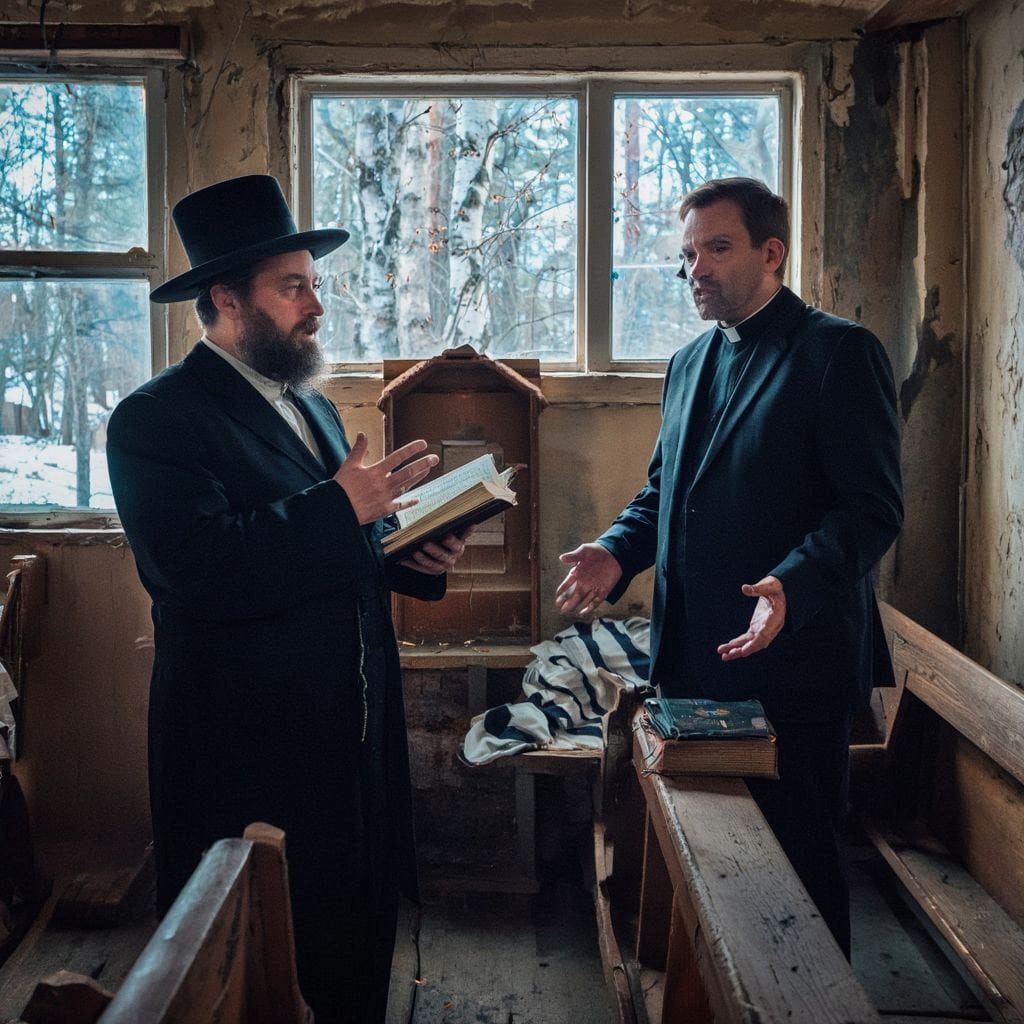
So when a Christian or Messianic reader says, “Rashi says the rejected stone is the Messiah,” we can answer:
Yes, in a Jewish sense. Not in your sense.
Yes, the verse may be read messianically.
No, that does not identify Jesus.
Yes, Jewish sources can speak of Mashiach being hidden, rejected, overlooked, or opposed.
No, that does not mean every rejected messianic claimant is the true redeemer.
This is why proof-texting is dangerous. A person can take one phrase from Rashi, one phrase from the Talmud, one phrase from Psalms, one phrase from Isaiah, and then build a conclusion that none of those sources actually teach.
That is not Torah learning.
That is religious marketing.
Torah requires context.
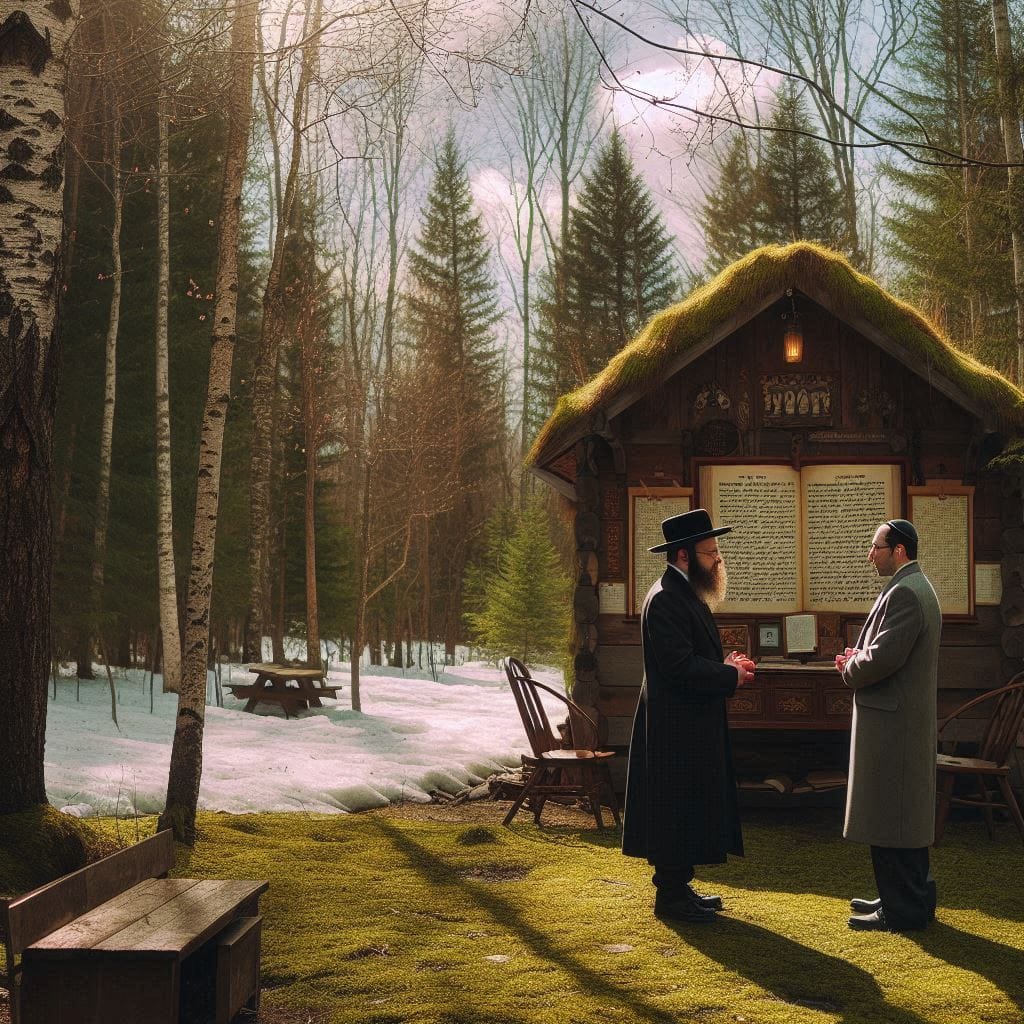
5. Sanhedrin 38a and the Stone of Stumbling
The meme also uses Sanhedrin 38a, where Isaiah 8:14 is cited:
“He shall be for a sanctuary; but for a stone of stumbling and for a rock of offense to both the houses of Israel.”
Again, the meme wants the reader to think: “The rabbis admitted the Messiah would be a stumbling stone to Israel. Jesus was a stumbling stone to Israel. Therefore Jesus is the Messiah.”
But this is too quick.
In Tanakh, a “stone of stumbling” can mean that HaShem Himself, His sanctuary, His Torah, His judgment, or His appointed ruler becomes a test. The image is about spiritual accountability. It means that holiness can expose the heart. Divine truth can become either refuge or stumbling, depending on how a person approaches it.
But Sanhedrin 38a does not teach Christian doctrine.
It does not say Israel rejected Jesus.
It does not say the Messiah came, failed to complete the messianic mission, and should still be accepted because people stumbled over him.
It does not say halacha is replaced.
It does not say the covenant of Sinai is suspended.
It does not say the Jewish people must accept the theology of the church.
The passage remains inside the Jewish world. It is part of rabbinic discussion. It belongs to the beit midrash, not to Christian proof-texting.
This is the mistake of the meme: it takes Jewish language and places it into a Christian frame, then acts as if the Christian frame is obvious.
But it is not obvious.
It is imported.
The Jewish source must be read as Jewish.
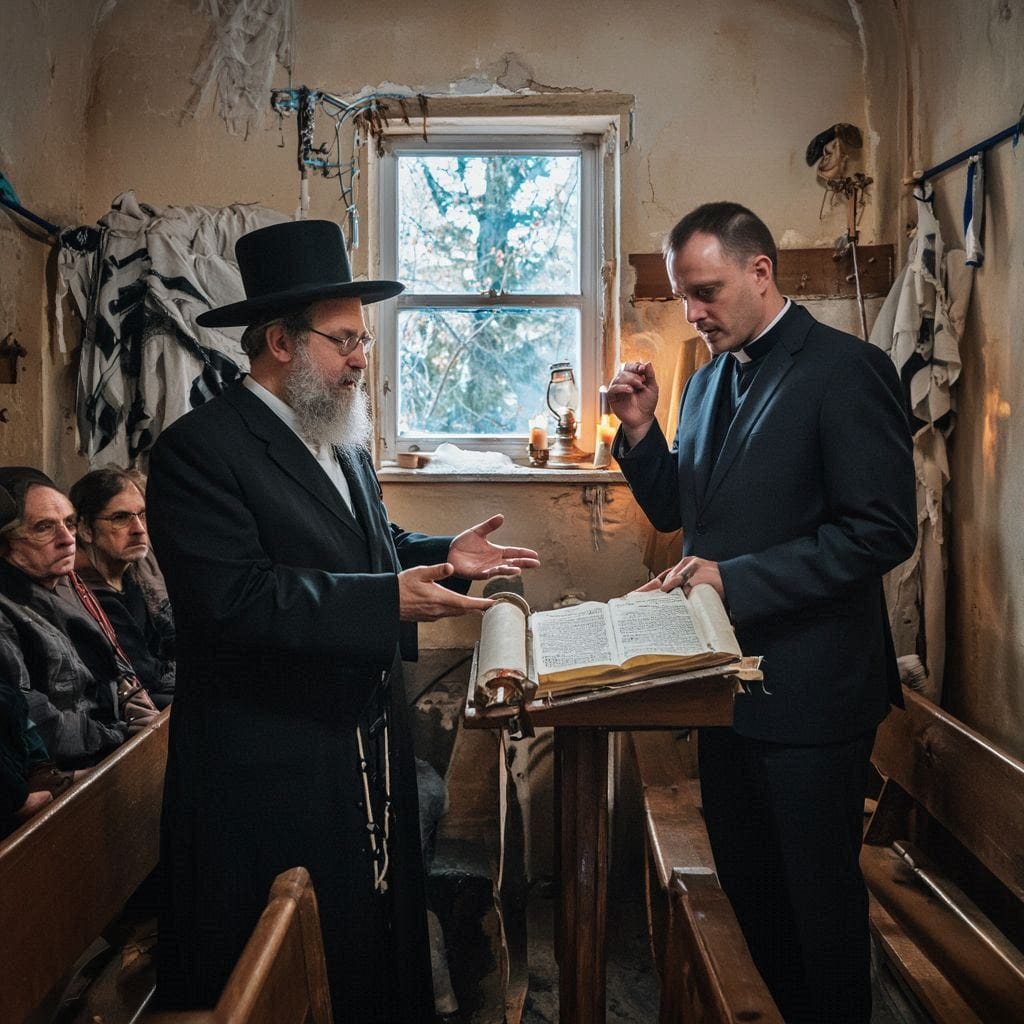
6. The Rambam: Mashiach Is Known by What He Does
The most important halachic principle comes from the Rambam in Mishneh Torah, Hilkhot Melakhim uMilchamot, chapter 11.
The Rambam does not say Mashiach is recognized because people find verses that can be applied to him after the fact.
He does not say Mashiach is recognized because he is rejected.
He does not say Mashiach is recognized because he has followers among the nations.
He gives a legal standard.
Mashiach is a Davidic king who restores Torah, fights the wars of HaShem, gathers Israel, rebuilds the Temple, and brings the world to the knowledge of HaShem. In the Rambam’s structure, messiahship is not merely poetic. It is not merely emotional. It is not merely mystical. It is not merely based on scattered verses.
It is historical, national, halachic, and covenantal.
The messianic age must actually arrive.
The exiles must actually be gathered.
The Temple order must actually be restored.
The world must actually be transformed.
Universal knowledge of HaShem must actually fill the earth.
Peace and justice must actually be established.
That is why Torah Judaism says Jesus is not Mashiach. Not because Jews hate him. Not because Jews are afraid of Psalm 118. Not because Jews deny that rejected-stone language can be messianic.
Rather, because the messianic work has not been completed according to Torah Judaism.
That is the answer.
Calm.
Firm.
Halachic.
No hatred needed.
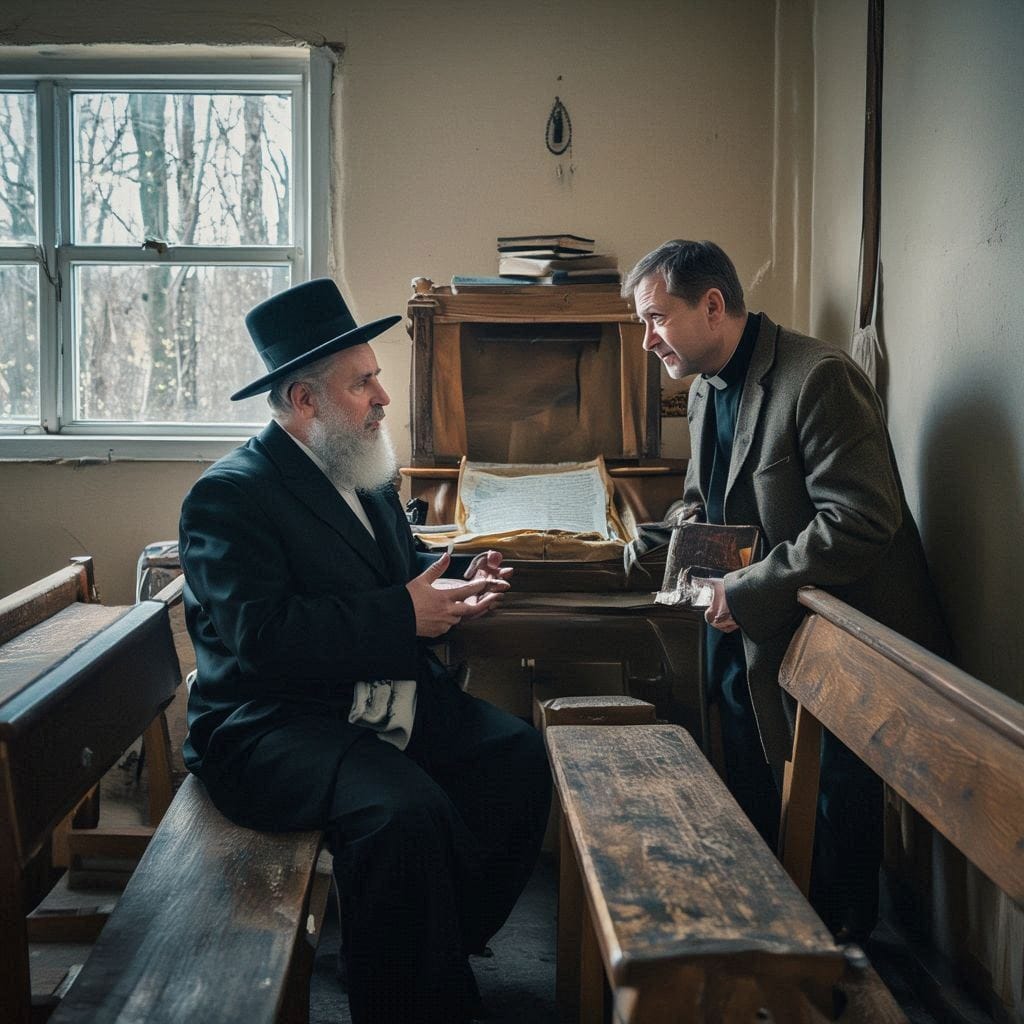
7. The Meme’s Problem: It Turns Torah into a Weapon Against Jews
The image is not just making an argument. It is mocking Jews.
It portrays religious Jews as angry, foolish, and hypocritical, standing at the Western Wall while supposedly denying what their own sources prove. This is the kind of rhetoric that turns Jewish texts into weapons against Jewish people.
That is why we must be careful.
A Christian may sincerely believe Jesus is the Messiah. That is his faith. We understand that. We may disagree, but we understand that this belief is central to Christianity.
But when Jewish sources are ripped from their Jewish home and used to humiliate Jews, that is no longer respectful dialogue. That becomes polemical manipulation.
The proper way to discuss Judaism is not to say:
“Your own rabbis prove you wrong.”
The proper way is to ask:
“How do Jews understand these sources within Judaism?”
That one question changes everything.
Because within Judaism, Psalm 118 remains Jewish.
Micah 5 remains Jewish.
Isaiah 8 remains Jewish.
Sanhedrin 38a remains Jewish.
Rashi remains Jewish.
The Talmud remains Jewish.
None of these sources becomes Christian just because a Christian reader highlights certain words.
Torah is not a hostage.
Jewish commentary is not a missionary tool.
The beit midrash is not a warehouse of proof-texts waiting to be used against Israel.
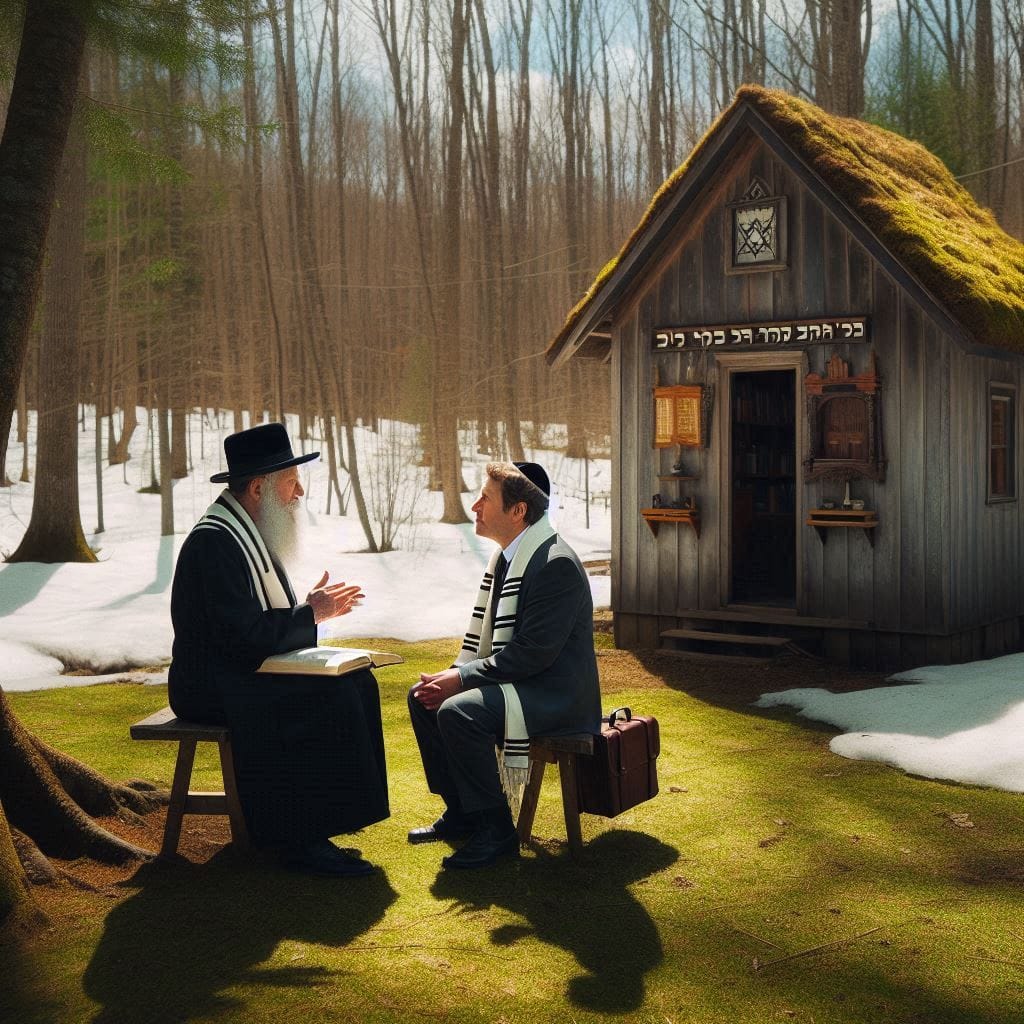
8. The Danger of Becoming Only Anti-Christian
Now we must also speak to our own side.
There are Jewish groups and teachers who spend enormous time attacking Christianity. Some of this work is necessary. Jews should be protected from deceptive missionary arguments. Anti-missionary education can be important. Organizations like Jews for Judaism have done valuable work in that area, and we can respect that.
But there is a danger when Judaism becomes only a reaction.
There is a danger when the whole message becomes:
“Jesus is false.”
“Christianity is false.”
“The New Testament is false.”
“Missionaries are wrong.”
All of that may have its place in a limited defensive context. But it is not the fullness of Judaism.
Judaism is not merely the negation of Christianity.
Judaism is the positive covenant of Israel.
Judaism is waking up and saying Modeh Ani.
Judaism is putting on tefillin.
Judaism is lighting Shabbat candles.
Judaism is making Kiddush.
Judaism is learning Chumash, Mishnah, Rambam, Shulchan Aruch, and halacha.
Judaism is burying the dead with dignity.
Judaism is giving tzedakah.
Judaism is guarding the tongue.
Judaism is raising children in Torah.
Judaism is sanctifying time.
Judaism is blessing HaShem before and after food.
Judaism is building a home where the Shechinah can rest.
If all we do is attack Christianity, then we have allowed Christianity to define the Jewish conversation.
That is not freedom.
That is still being trapped in someone else’s religious argument.
The better path is:
Ignore and redirect.
When someone comes only to debate Jesus, redirect to Torah.
When someone comes only to argue Isaiah 53, redirect to how Jews read Tanakh.
When someone comes only to prove Christianity, redirect to halacha, mitzvot, and the covenant of Israel.
We do not need to let missionaries set the agenda.
Our agenda is Torah.

9. The Problem of Offering Only Noahidism
There is another issue that must be said honestly.
Some anti-missionary groups are very good at taking people out of Christianity but not very good at giving them a real path forward.
A Christian begins to doubt his faith. He watches debates. He hears arguments. His old world collapses. Then he asks, “What now?”
Too often the answer is simply:
“Be a Noahide.”
But in our view, that is often not enough.
The halachic category of Bnei Noach is real. The Rambam discusses the obligations of the nations. The idea that non-Jews can serve HaShem righteously is absolutely part of Torah.
But modern Noahidism often lacks structure. It often lacks community. It lacks a full religious civilization. It lacks a stable siddur-centered life. It lacks a clear rhythm of sanctified time. It often leaves people isolated, confused, and spiritually homeless.
For many sincere Christians or Muslims who already have a functioning religious life, it may be better for them to remain Christian or Muslim than to enter a lonely and underdeveloped Noahide identity with no real community.
That does not mean Christianity or Islam is Judaism. They are not.
It means we should not recklessly dismantle someone’s religious world without offering a real path.
And this is where Rabbi Asher Meza’s point is important:
Offer Judaism.
Not to everyone.
Not cheaply.
Not without halacha.
Not without conversion.
Not without beit din.
Not without commitment.
But if someone truly loves Torah, truly desires mitzvot, truly wants to join Israel, truly wants to live as a Jew, truly accepts the yoke of halacha, and truly attaches himself to the Jewish people, then we should not only say, “Be a Noahide.”
We should say:
There is a path into Judaism. It is conversion. It is serious. It is demanding. It is beautiful. And if this is truly your soul’s calling, then walk it honestly.
Do not only destroy falsehood.
Build truth.
Do not only take away Jesus.
Offer Torah.
Do not only empty the house.
Fill it with mitzvot.
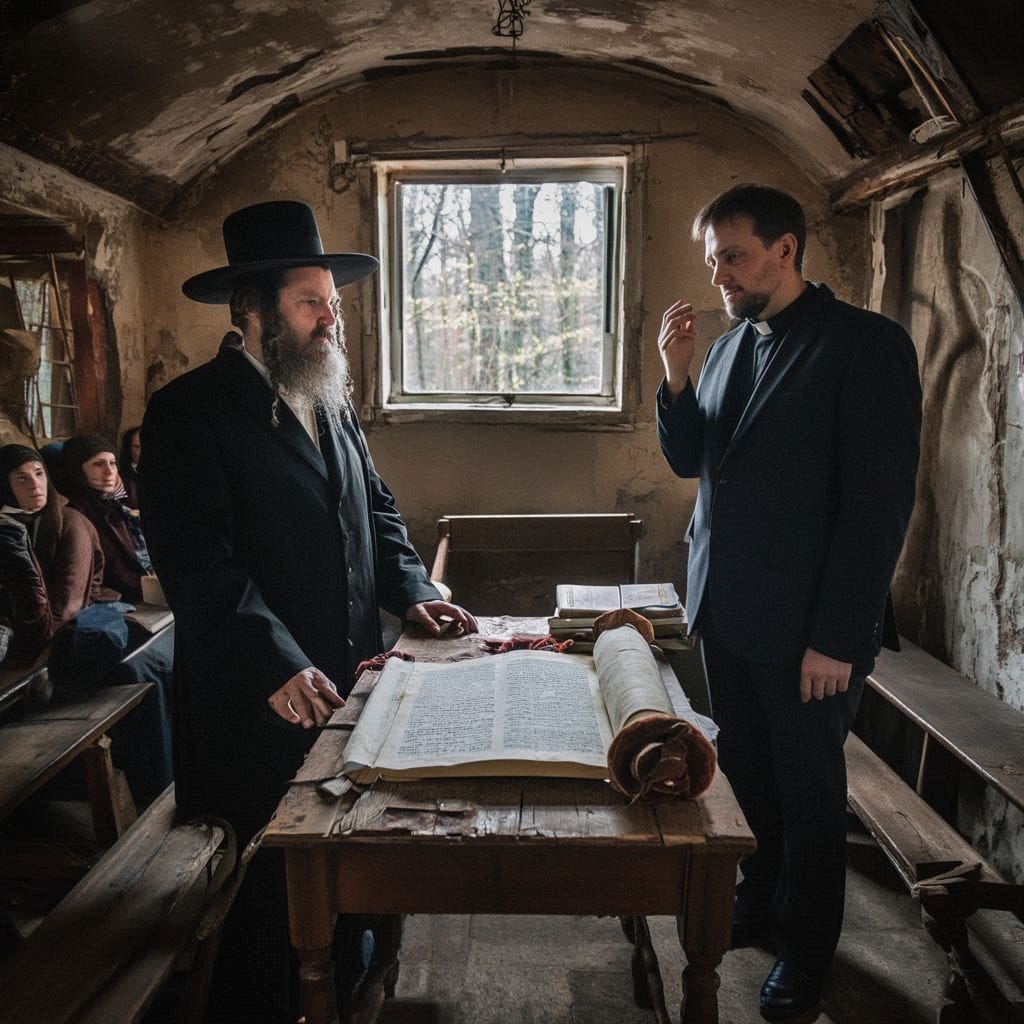
10. The Gentle Answer: Thank You, But No
So how do we answer the image?
We answer like this:
My friend, thank you for sharing this. I understand why this image feels powerful from a Christian or Messianic perspective. But from within Torah Judaism, it does not prove that Psalm 118, Micah 5, Isaiah 8, or Sanhedrin 38a identify Jesus as Mashiach.
Yes, Psalm 118 says the rejected stone became the cornerstone.
Yes, Rashi connects this verse to the Messiah, son of David.
Yes, Sanhedrin discusses “a stone of stumbling” in a profound rabbinic context.
But none of this means Jesus is the Messiah.
Rejected stone imagery is messianic language, but it is not a messianic ID card. Rashi’s Messiah is the Davidic redeemer of Torah Judaism. The Talmud’s discussion is not Christian theology. Isaiah’s “stone of stumbling” does not cancel halacha. And Judaism does not recognize Mashiach by memes, highlights, or after-the-fact proof-texts. Judaism recognizes Mashiach by the fulfillment of the messianic mission.
The Jewish position is not hatred.
It is faithfulness.
Christianity, her creator, and her prophets are not for us.
We do not need to curse Christians to say that. We do not need to mock Jesus to say that. We do not need to turn Judaism into an anti-Christian campaign.
To our traditional Christian friends, we say:
We respect your seriousness. We stand with you against the over-secularization of the world. We stand with you in defending reverence, moral order, family, faith, and the belief that human beings are accountable before God. We have written many articles with fairness toward traditional Christians, and we will continue to do so.
But our path is different.
Our path is Torah.
Our path is Sinai.
Our path is mitzvot.
Our path is halacha.
Our path is the covenant of Israel.
So the final answer is:
Thank you, but no. These sources do not prove Jesus is Mashiach. They show that Jewish tradition can read Psalm 118 and Isaiah 8 in messianic ways, but always within Torah, halacha, and the Davidic redemption. We respect your faith, but we do not accept your conclusion. If you want to understand Judaism, come learn Torah with us — not against us, not as a weapon, not as a trap, but with honesty, humility, and love for HaShem.
Judaism does not need to be anti-Christian in order to be faithful.
Judaism only needs to be what it has always been:
the living Torah path of Israel before HaShem.

Shaarei Tzafon — The North Gate
Orthodox Jewish Life and Torah Study in Northeastern Michigan
Shaarei Tzafon — The North Gate, led by Rabbi Ariel Manning, is an independent, family-led Orthodox Jewish educational and publishing initiative based in Northeastern Michigan. We support traditional Jewish life, Torah study, Halakhah, and Jewish education throughout Alpena, Hillman, Rogers City, and surrounding communities. Those interested in traditional Judaism are welcome to contact us for educational resources, Torah learning, and opportunities for discussion by prior arrangement.
Rooted locally, our greater mission extends northward from the 45th parallel — The North Gate — through Michigan, Canada, and Alaska toward the Arctic. We seek to encourage independent Jewish communities, family-centered Torah education, and the renewal of small batei midrash and shtieblach, preserving the rich traditions of Orthodox Judaism for future generations.
Our work begins in Northeastern Michigan, but our vision extends from the 45th parallel toward the Arctic.
Guided by Rambam and Mori Qafiḥ, uplifted by Rebbe Nachman, and grounded by Avraham ben HaRambam’s balance of halakha and inward avodah.
The Orchard’s Path
publishes our books and curricula.
Our mission: a bright, authentic Jewish presence in every northern town.
Created with ©systeme.io


