
The Covenant of Torah and the Question of Belonging
B״H
1 · The Question
People often ask:
Must a person become Jewish in order to live by the Torah?
It's America you technically can do whatever you want...
But....
We say if you follow and live by Torah;
It is better to be Jewish....
The question touches the heart of covenantal identity. No one is compelled to convert merely to respect the Torah or study its beauty. Yet authentic Torah observance—the total life of mitzvot, calendar, and halacha—belongs to the people who stood at Mount Sinai. Whoever wishes to live by its commandments in their entirety must stand within that people, whether by birth or by halachic conversion.
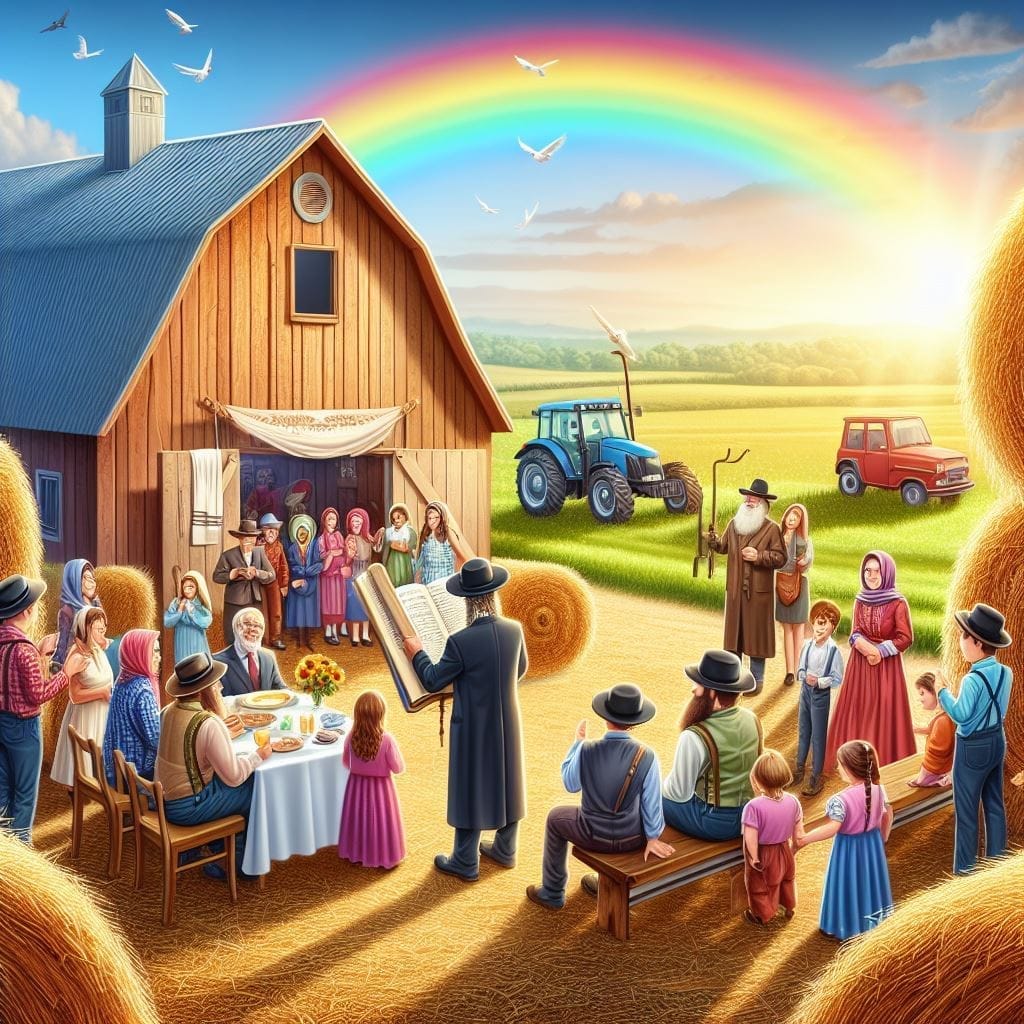
To illustrate, imagine an Amish farmer attempting to live as a Roman Catholic while remaining Amish. The Amish trace their origin to the Radical Reformation through the Mennonite stream; Catholicism rests on its own canon law, sacraments, and priesthood. Each faith is complete within itself; to live either faithfully one must enter its community.
So too with Judaism. The Torah is the constitution of Israel, not a loose set of morals detached from nationhood. It is the covenant sealed between HaKadosh Baruch Hu and Am Yisrael, a sacred contract of peoplehood, law, and destiny. Whoever desires to live wholly by Torah must therefore enter that covenant and accept the obligations that define it.
2 · The Nature of Torah
The Torah is more than ethics or philosophy—it is revelation. At Sinai, the Creator declared, “You shall be to Me a kingdom of priests and a holy nation” (Exodus 19:6). With that declaration Israel received six-hundred-and-thirteen mitzvot regulating every dimension of existence: faith, family, labor, agriculture, speech, and even thought.
Rambam writes in Hilchot Yesodei HaTorah 8 that Israel’s belief rests not on the miracles of prophets but on that national revelation itself. The covenant is therefore both historical and eternal. Each mitzvah forms a meeting point between heaven and earth: Shabbat sanctifies time; kashrut sanctifies eating; tzedakah sanctifies wealth; prayer sanctifies speech. Observance is not a personal aesthetic but a participation in the Divine order.
The verse “Torah tzivah lanu Moshe, morashah kehillat Yaʿakov” (Deut. 33:4) calls Torah an inheritance, not an idea. Inheritance presupposes heirs; one cannot inherit another family’s covenant by imitation. To live by Torah is to walk within Israel’s collective memory, to join the rhythm that has pulsed from Sinai through exile and return.
3 · Universal Morality without a Separate System
All humans are created b’tzelem Elohim—in the image of God. Conscience itself teaches justice, compassion, and truth; every civilization has glimpsed fragments of these eternal principles. But covenant is deeper than moral intuition. It is not the discovery of good and evil but a formal alliance sealed by revelation and commanded law.
Since Sinai, that covenant rests solely with Israel. There exists today no second binding framework for outsiders that parallels it. Attempts to revive a “Noahide religion” without Temple or Sanhedrin are legally void and spiritually barren. They offer rules without ritual, faith without peoplehood. When moral instinct lacks sacred form, the heart grows cold; detachment soon gives way to disbelief.
A non-Jew who reveres the Creator will find more stability within a living monotheistic tradition—Christianity or Islam—than within a self-invented creed lacking community or prayer. Those systems, despite differences, at least maintain worship, discipline, and conscience. To serve God sincerely within them is honorable; to mimic Torah practice without covenantal foundation is confusion.
Torah wisdom belongs to all humanity; Torah law belongs to the covenant. Whoever feels called to keep it fully must enter Israel through halachic conversion. Others may walk righteously inside the faith structures that already sustain them.
4 · Conversion as Covenant, Not Preference
When we say “It is better to be Jewish,” we mean that complete Torah observance exists only inside the covenant of Israel. The mitzvot are not voluntary meditations; they are binding duties of a nation that accepted them before God.
Rambam, in Hilchot Issurei Biʿah 14, defines giyur as a legal transformation through which the convert becomes ke-Yisrael b’chol davar—“as an Israelite in every respect.” Ruth ha-Moaviyyah embodies this: “Your people shall be my people, and your God my God.” Conversion is not cultural sympathy; it is covenantal rebirth. The ger tzedek joins Israel’s destiny of exile, joy, and redemption alike. Scripture commands thirty-six times to love and protect the convert—proof that Heaven treasures those who enter the covenant by choice.
5 · The Risk of Detached Observance
When a non-Jew adopts Jewish practices privately, detached from halachic authority or community, the results are fragmentation and error. The mitzvot form an interwoven system: each presumes the rest. To light Shabbat candles without accepting the full halacha of Shabbat, or to avoid non-kosher food without the laws of shechitah and bishul akum, reduces sacred law to personal custom.
The Torah forbids creating new religions (Deut. 13); Rambam echoes this in Avodah Zarah 1:3—anyone who invents religious forms outside the Torah deviates from its truth. Detached observance becomes theater. The remedy is humility: learning, guidance, and, if conviction deepens, conversion through lawful means.
Judaism respects those who admire it; it only insists that imitation be replaced by sincerity. The door stands open—but one must enter through it.
6 · How to Convert to Judaism
1. Intention (Kavanah) — Conversion begins with a genuine desire to accept the God of Israel and His Torah. The candidate studies belief, mitzvot, and Hebrew practice until both heart and intellect are ready. Motivation must be spiritual, never romantic or material.
2. Acceptance of Mitzvot (Kabbalat Mitzvot) — Before a beit din of three observant Jews (two may suffice post-facto in hardship even at night; this is not done normally), the candidate affirms acceptance of all commandments. The judges outline responsibilities and obligations; acceptance must be free and complete.
3. Circumcision (Milah) — For men, circumcision—or symbolic drawing of covenantal blood—signifies entry into Abraham’s pact (Genesis 17).
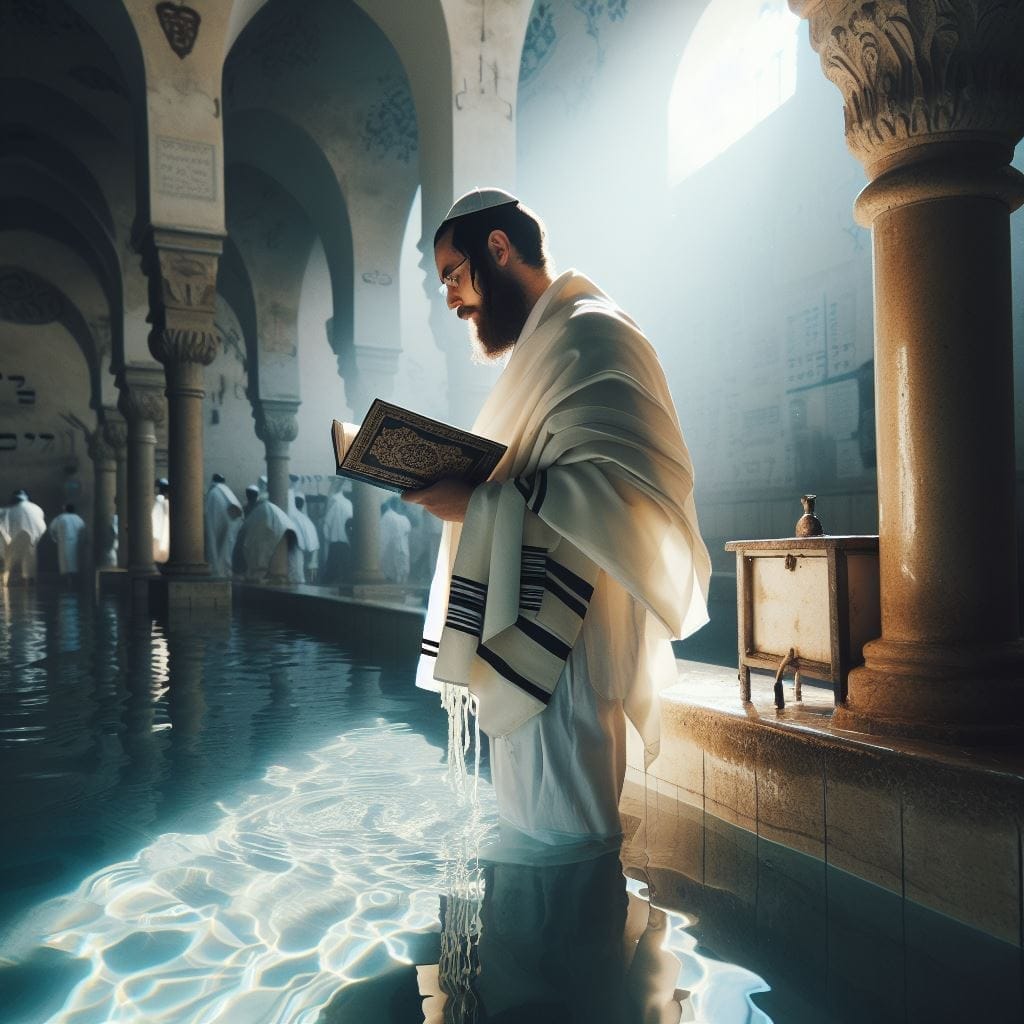
4. Immersion (Tevilah) — Men and women immerse completely in a kosher mikveh before the court, emerging as new souls within Israel. The judges declare: “You are now Israel.”
5. Korban in the Future — The Torah requires a convert’s offering in the Temple (Leviticus 12:8). Because the Temple stands in ruin, this obligation awaits its rebuilding; the conversion today is wholly valid without it.
6. Integration into the Community — The convert is now fully Jewish: bound by all mitzvot, eligible for Jewish marriage, and counted in communal prayer. The Torah warns, “Do not wrong the convert, for you were strangers in Egypt.” Welcoming them renews our own memory of redemption.
Conversion, therefore, is not symbolic—it is juridical and covenantal, witnessed by heaven and earth.
7 · Freedom of Conscience and the Modern World
Ours is an era of unprecedented religious liberty. Each person may search for meaning according to conscience. Yet freedom without structure quickly dissolves into isolation. Rambam teaches in Moreh Nevukhim III that commandments shape character and society; ideals alone cannot preserve moral life.
One who finds inspiration in Torah but rejects its discipline risks turning reverence into opinion.
The Creator does not need our admiration; He desires our obedience. Freedom reaches its perfection when it chooses duty. Thus, those who remain in their faiths should serve God within them through justice and prayer; those who seek Torah must embrace its covenant. Standing between the two, without people or halacha, leaves the soul unanchored.
8 · The Role of Community — and the Caveat of Solitude in our situation
“It is fitting for a person to seclude himself from the corruptions of society and focus his heart upon his Creator in solitude and reflection.”
— Rabbi Avraham ben HaRambam, HaMaspik lʿOvdei HaShem
Torah life normally flourishes within community—synagogue, study hall, festival, and friendship. The individual strengthens and is strengthened by the kehilla. Yet halacha also recognizes that a Jew may at times live apart. Rabbi Avraham ben HaRambam taught that genuine solitude is not flight from humanity but purification of the heart and mind: a deliberate turning toward HaShem through reflection and disciplined order.
Rambam rules (Hilchot Deʿot 6) that when a society’s ways are corrupt, “one should dwell alone … or go to the deserts and mountains and not walk in their paths.” Such separation, when guided by law, becomes obedience rather than escape. In these northern lands—where snow and silence reign—a Jew can live fully observant and alive in Torah. Each act – lighting candles, reciting Shema, studying a halacha – becomes a quiet conversation with Heaven.
Solitude, however, demands structure. One must keep regular tefillah, Shabbat, kashrut, and daily study. Without a minyan, omit Kaddish and Kedushah but one may recite them privately as praise. The cabin becomes a mikdash meʿat – a small sanctuary whose silence is oneg Shabbat. The Boreal hermit’s joy is measured and rational: reason guiding emotion, emotion warming reason.
When others appear, the solitary Jew opens his door and joins them, turning forest to synagogue. Thus community remains the ideal, but solitude—when lived through halacha and yirat Shamayim—is its noble companion. Even alone beneath northern skies, the covenant endures and the Presence abides.
9 · Approaching Judaism with Reverence
Those drawn toward Judaism should come gently, aware that Torah has been carried through fire and exile. Study with teachers, attend services as guests, support Jewish causes—these are honorable beginnings. But full ritual observance while remaining outside the covenant is inconsistent. The mitzvot are not personal experiments but national obligations.
Avraham ben ha-Rambam wrote that the truest service of God unites knowledge and humility. To imitate outward forms without grasping their halachic core is vanity. Therefore, whoever wishes to live by Torah must either enter its covenant or stand beside it with respect. Those who do not convert are still beloved creations capable of righteousness within their own paths.
Judaism does not seek conquest but illumination. “For out of Zion shall go forth Torah, and the word of HaShem from Jerusalem.” Israel’s role is to guard the flame so that its light reaches every shore.
10 · Conclusion — Choosing the Covenant of Life
Torah is the eternal covenant between God and Israel, binding heaven to earth through commandment and compassion. Its observance expresses belonging, duty, and love. Non-Jews may learn from its wisdom and adopt its ethics, but full observance belongs within the covenantal people.
Those who feel the inner call to join Israel are invited to walk the path of giyur—a journey of study, sincerity, and rebirth. Others may serve the Creator faithfully within their own monotheistic traditions. Both routes, when pursued with integrity, honor Heaven. What must be avoided is the invention of a “religion of imitation,” a body without soul, a law without people.
To live by Torah is to step into a river of revelation that began at Sinai and flows through every generation. Whoever enters that river joins the story of Israel; whoever honors it from afar still receives its light. The gate of covenant stands open for all who seek truth—enter with reverence, and life will never be the same.
Shaarei Tzafon — The North Gate
Orthodox Jewish Life and Torah Study in Northeastern Michigan
Shaarei Tzafon — The North Gate, led by Rabbi Ariel Manning, is an independent, family-led Orthodox Jewish educational and publishing initiative based in Northeastern Michigan. We support traditional Jewish life, Torah study, Halakhah, and Jewish education throughout Alpena, Hillman, Rogers City, and surrounding communities. Those interested in traditional Judaism are welcome to contact us for educational resources, Torah learning, and opportunities for discussion by prior arrangement.
Rooted locally, our greater mission extends northward from the 45th parallel — The North Gate — through Michigan, Canada, and Alaska toward the Arctic. We seek to encourage independent Jewish communities, family-centered Torah education, and the renewal of small batei midrash and shtieblach, preserving the rich traditions of Orthodox Judaism for future generations.
Our work begins in Northeastern Michigan, but our vision extends from the 45th parallel toward the Arctic.
Guided by Rambam and Mori Qafiḥ, uplifted by Rebbe Nachman, and grounded by Avraham ben HaRambam’s balance of halakha and inward avodah.
The Orchard’s Path
publishes our books and curricula.
Our mission: a bright, authentic Jewish presence in every northern town.
Created with ©systeme.io


