
The Shtiebel in the Wilderness Orthodox Jewish Life in Northern Michigan
B"H
Restoring Torah Study, Jewish Independence, and Traditional Orthodox
Jewish Life in Northern Michigan
A ten-part lecture from Shaarei Tzafon — The North Gate
Part I — The Jewish Home as a Place of Torah
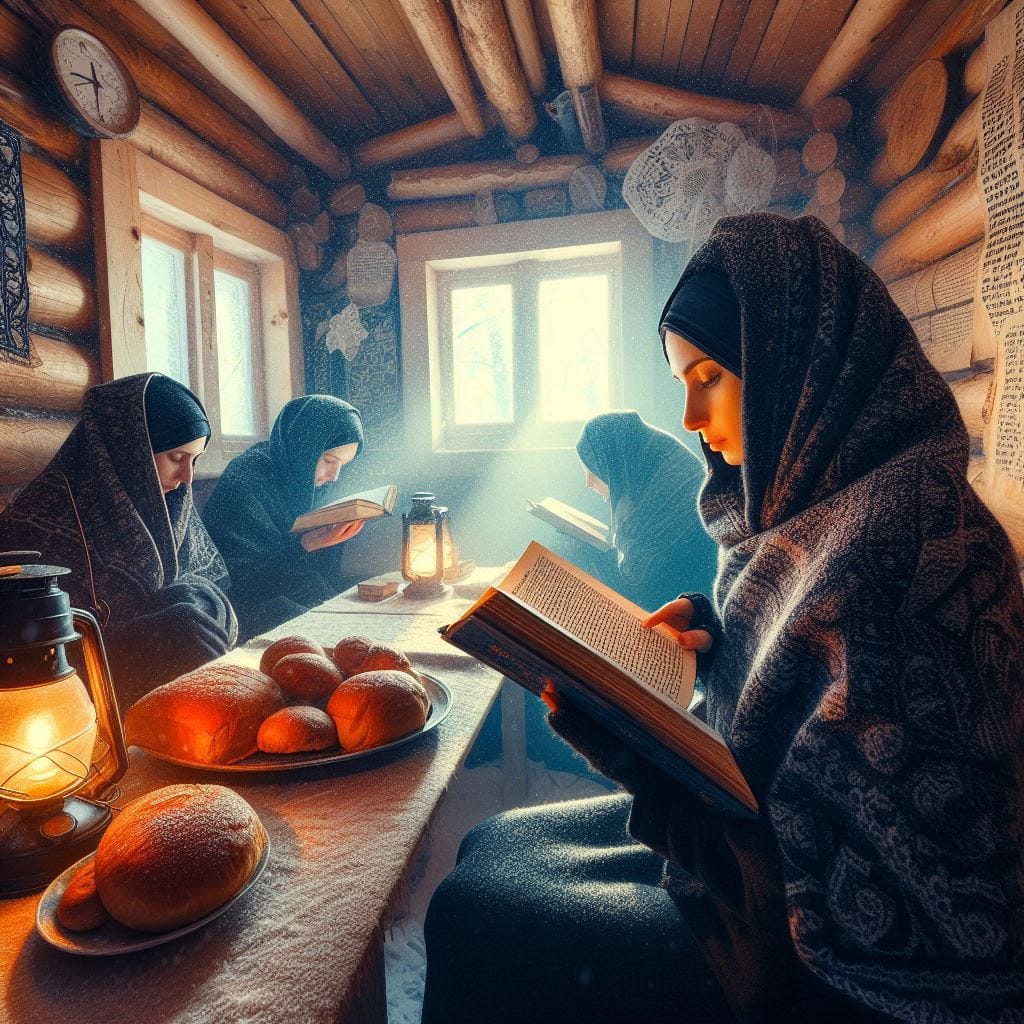
There was a time when Jewish life was not defined primarily by large buildings, elaborate institutions, or impressive organizational structures. In the villages and towns of Eastern Europe, Jewish life often revolved around something much simpler: the home, the beis midrash, and the shtiebel.
These were places where Torah was studied, halakhah was discussed, prayers were offered, and Jewish life unfolded naturally.
The Jewish home was not merely a residence. It was a place where the commandments of HaShem were lived. Children heard the words of Torah. Parents discussed questions of Jewish law. Guests were welcomed around the table. The sacred and the ordinary were woven together.
The Torah commands:
"And you shall teach them diligently to your children, and shall speak of them when you sit in your house, and when you walk by the way, and when you lie down, and when you rise up." — Devarim 6:7
Notice where Torah is to be taught: in the home, along the road, in the morning, and in the evening.
The Torah does not restrict Jewish education to a classroom or require the sponsorship of a national organization. It establishes learning as part of daily existence.
This is the spirit we seek to cultivate through Shaarei Tzafon — The North Gate, an independent, family-led Orthodox Jewish educational and publishing initiative based in Northern Michigan.
Our work is rooted in Torah study, halakhah, Jewish education, and the preservation of traditional Jewish life above the forty-fifth parallel.
We are not attempting to recreate every feature of an Eastern European Jewish village. Rather, we seek to recover something essential: a Jewish home where Torah, halakhah, prayer, and learning remain central.
And what we seek to cultivate here can be cultivated elsewhere. Jewish families need not wait for an institution to arrive before beginning.
Part II — The Shtiebel and the Beis Midrash
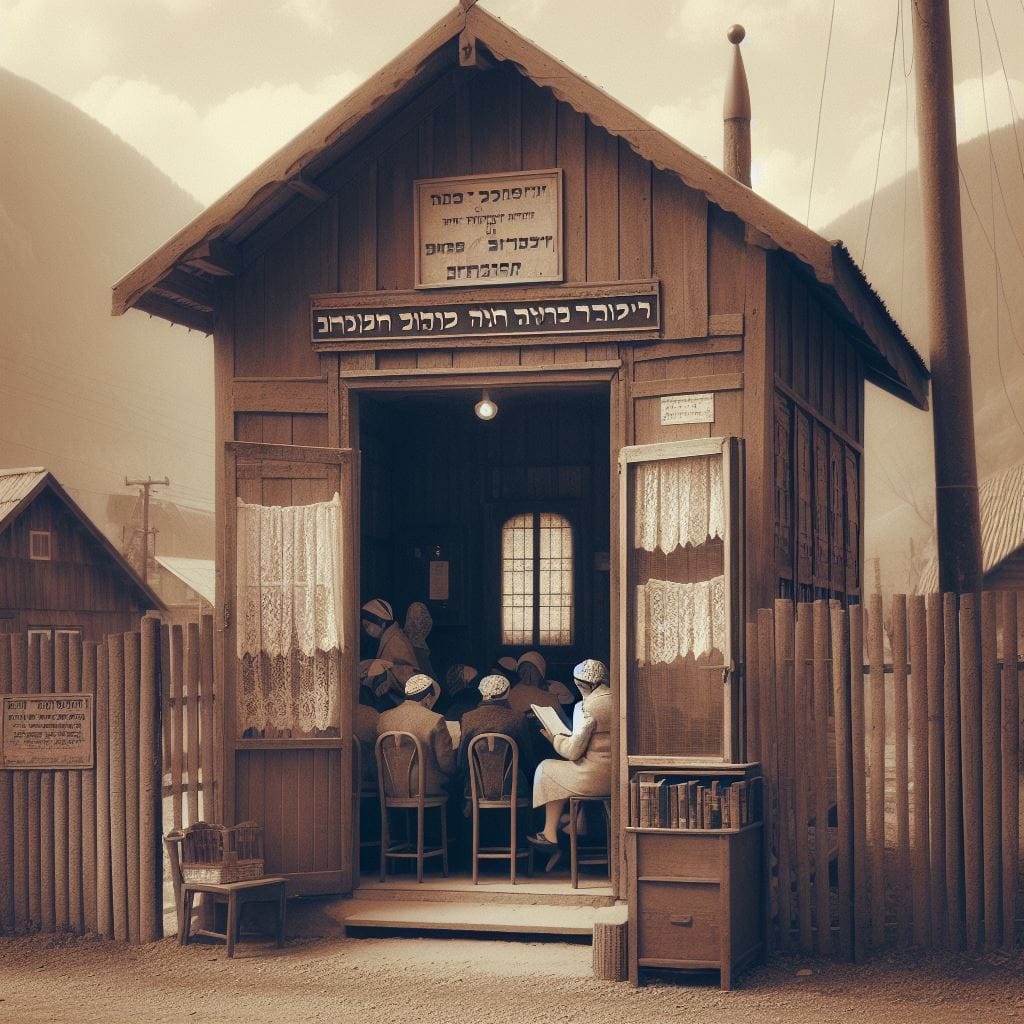
The traditional shtiebel was often a modest gathering place. It might occupy a small building, a few rooms, or a space associated with a particular Hasidic community.
The beis midrash, literally a house of study, served as a place where Jews gathered to engage with sacred texts.
These institutions were not identical, but their activities frequently overlapped.
One person might be studying Chumash. Another might be examining a passage of Gemara. Someone else might be reviewing the practical halakhot governing Shabbat, kashrut, or prayer.
The room was alive with the sound of Jewish learning.
In some communities, men studied before beginning their daily labor. Others returned after completing their work. Learning was not reserved exclusively for those who could dedicate their entire lives to scholarship.
The Mishnah teaches:
"Make your Torah study a fixed practice." — Pirkei Avot 1:15
This instruction establishes regularity rather than prestige as a defining characteristic of Jewish learning.
Not everyone can become a full-time scholar. Not everyone can spend eight hours each day studying Talmud.
But a farmer, shopkeeper, laborer, craftsman, or parent can establish fixed periods for Torah.
The beauty of the old beis midrash was that Torah belonged to the Jewish people, not exclusively to a scholarly profession.
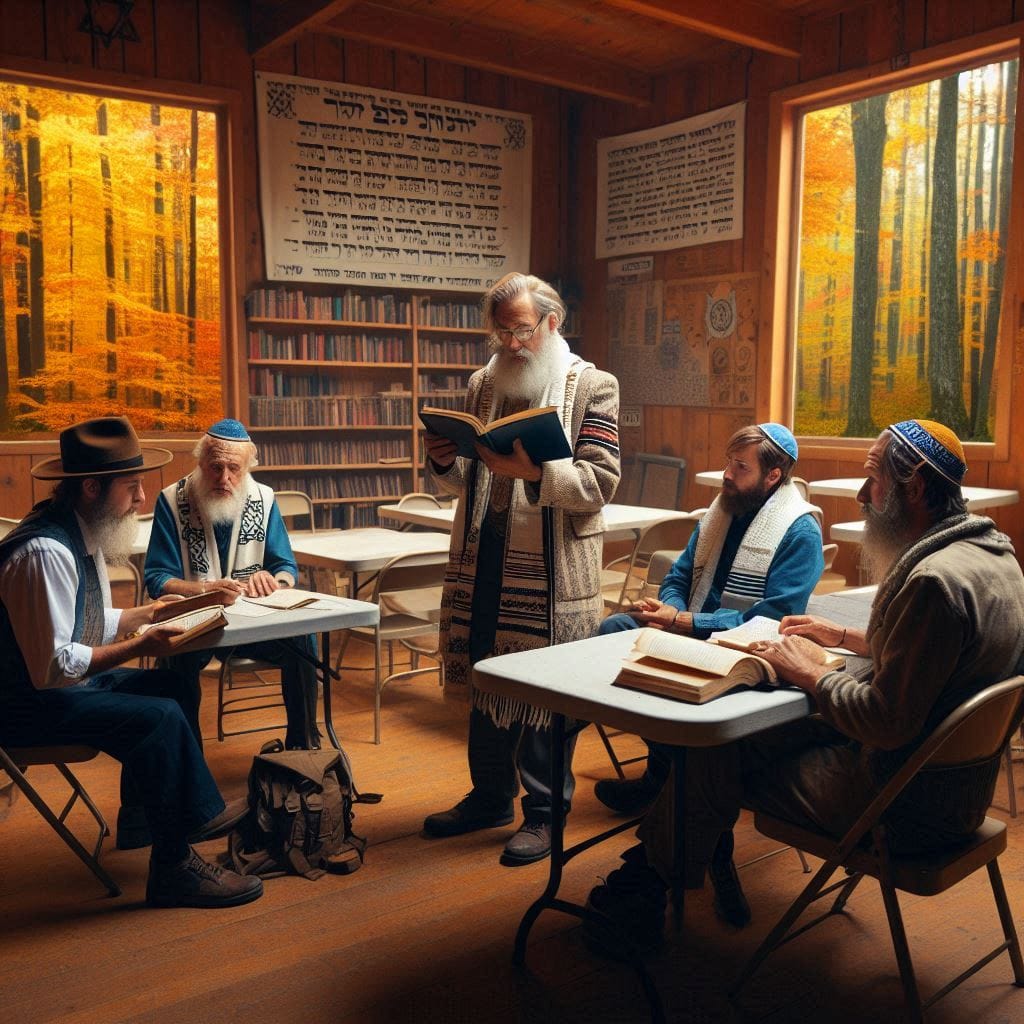
And this remains possible today. Across America, small shtieblach and batei midrashim could emerge wherever Jewish families are willing to organize themselves.
They need not become branches of Chabad or any other national institution. A small library, a table, a few chairs, and the willingness to study can become the beginning of something enduring.
This traditional model of Jewish learning is especially meaningful in rural regions, including Northern Michigan, where families may live considerable distances from established Jewish institutions.

Part III — Torah Is Not the Possession of Institutions
Throughout Jewish history, formal institutions have played an indispensable role in preserving Torah. Yeshivot, rabbinical courts, synagogues, and communal schools have transmitted Jewish knowledge across generations.
We should never diminish their accomplishments.
Yet Torah itself is not the private possession of any institution.
The Rambam writes in Mishneh Torah, Hilkhot Talmud Torah 3:1, that the crown of Torah stands available to all Israel, and whoever wishes may come and take it.
This teaching expresses an extraordinary principle.
The opportunity to study Torah is not dependent upon wealth, social standing, institutional recognition, or an impressive building.
It depends upon dedication, discipline, and the willingness to learn.
Of course, learning requires humility. A person studying independently must recognize the limits of personal knowledge, seek qualified guidance when necessary, and avoid confusing private interpretation with established halakhic authority.
But halakhic authority and organizational control are not the same thing.
A family can respect rabbinic scholarship without surrendering the direction of its religious life to a national organization.
A community can maintain established halakhic standards without adopting another community's customs or institutional identity.
Independence should never become intellectual isolation. Nevertheless, the existence of established institutions does not prevent smaller places of Jewish study from flourishing.
A family library can become a place of serious learning without claiming the authority of a yeshivah.
A home can welcome Torah discussion without claiming to be a synagogue.
This distinction is essential to Shaarei Tzafon. Our approach to Orthodox Jewish learning draws upon classical Jewish texts, including the Rambam, the Mishnah, the Talmud, and the writings of the Geonim, while maintaining an independent educational and publishing identity.
We seek neither institutional prestige nor competition for its own sake. Our purpose is to cultivate faithful Jewish learning where we live.
Part IV — The Meaning of Yiddishkeit
Yiddishkeit is sometimes translated simply as Jewishness, but the word carries a richness that exceeds a dictionary definition.
It describes a lived Jewish world.
It is the sound of Hebrew blessings spoken at the table, the familiar melodies of Shabbat, the turning pages of a sefer, and the conversations between generations.
It is the smell of food prepared for a festival, the anticipation of candle lighting, and the quiet seriousness of preparing for the Days of Awe.
Yiddishkeit includes both the obligations of halakhah and the culture that develops around their observance.
Yet we must distinguish between these two dimensions.
Halakhah establishes religious duties and boundaries. Customs, melodies, stories, and inherited cultural practices enrich Jewish experience, but they do not all possess identical legal authority.
This distinction allows us to preserve tradition thoughtfully.
We can cherish Eastern European Jewish culture without imagining that every historical custom is universally binding.
We can appreciate Hasidic storytelling, Ashkenazic melodies, and the warmth of the shtiebel while examining Jewish law through the classical sources.
It also means that Jewish families need not adopt the particular minhagim of whichever organization happens to operate nearest to them.
A German Jewish family may preserve its inherited customs. A Yemenite family may maintain its traditions. An Ashkenazic household may continue its established practices.
Organizational independence can help protect this diversity within the boundaries of halakhah.
This is especially meaningful for traditional Orthodox Jewish life in Northern Michigan, where families may seek to preserve their inherited practices while living far from larger Jewish population centers.
We cannot reproduce the exact circumstances of the old shtetl. Nor should we attempt to.
But we can cultivate the same love of Torah, attachment to HaShem, respect for halakhah, and sense of Jewish continuity.
Part V — The Library as a Living Beis Midrash
A Jewish library is more than a collection of books.
It is an invitation to enter a conversation extending across centuries.
On one shelf may stand the Torah and its commentaries. On another, the Mishnah and Talmud. Nearby are the writings of the Geonim, the Rambam, later halakhic authorities, and works of Jewish ethics and devotion.
Each generation asks questions, examines earlier interpretations, and contributes to the preservation of Jewish knowledge.
But the purpose of a library is not simply to accumulate volumes.
A book that remains permanently unopened cannot accomplish the same educational purpose as one that is studied, questioned, and taught.
The Rambam teaches in Hilkhot Talmud Torah 1:8 that every Jewish man is obligated in Torah study, whether poor or wealthy, healthy or suffering, young or old.
The circumstances of life do not erase the responsibility to learn.
This makes the personal Jewish library particularly meaningful.
A person need not be employed as a full-time scholar to maintain a serious collection of sefarim.
Nor does a household require an institutional appointment before its members can begin teaching what they are qualified to teach.
At Shaarei Tzafon, our library supports the study of classical Jewish literature, the education of our children, and our translation and publishing work through The Orchard's Path, the publishing arm of Shaarei Tzafon.
Through The Orchard's Path, we develop Jewish books, English translations, educational curricula, and editions of classical Torah and halakhic texts, including projects involving the Rambam and Geonic literature.
It is not a museum. It is a working collection.
And the same principle applies elsewhere. A modest collection of carefully chosen sefarim, regularly studied, may accomplish more than shelves of books maintained only for display.
The purpose is to bring Torah from the printed page into daily life.
Part VI — The Northern Michigan Beis Midrash
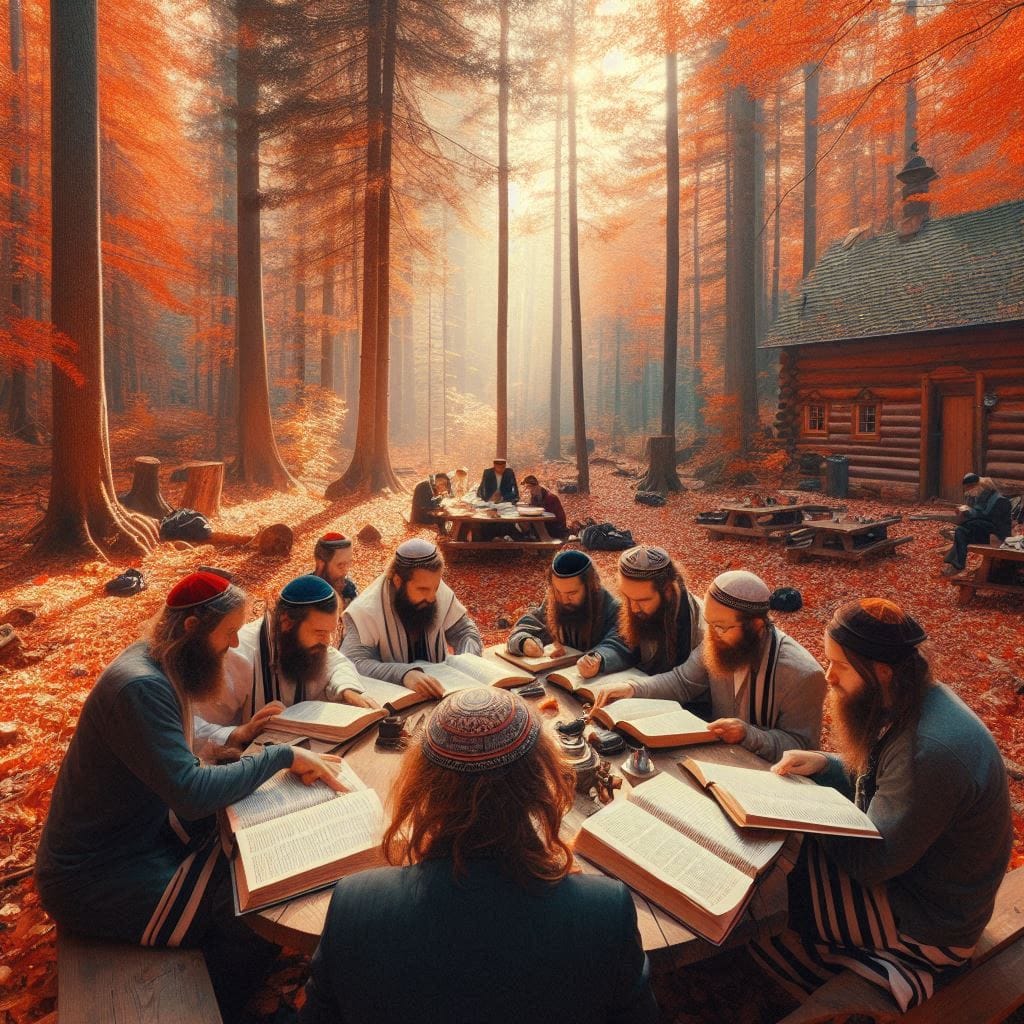
There is something distinctive about attempting to cultivate traditional Orthodox Jewish life in the forests and rural communities of Northern Michigan.
We are far from densely populated Jewish neighborhoods where kosher establishments, synagogues, schools, and communal gatherings may be readily accessible.
Distance creates genuine difficulties.
Jewish communal life requires more than enthusiasm. A halakhic minyan requires the necessary participants. Certain religious obligations require communal resources, trained individuals, or appropriate facilities.
These realities cannot be dismissed through romantic descriptions of rural independence.
Yet geographical distance need not eliminate Jewish learning.
The Mishnah teaches:
"In a place where there are no men, strive to be a man." — Pirkei Avot 2:5
The teaching calls upon individuals to exercise responsibility where necessary leadership or moral initiative is lacking.
It does not authorize disregarding established law. Rather, it encourages a person to fulfill his responsibilities even when circumstances are difficult.
A Jewish family living above the forty-fifth parallel can establish regular Torah study.
Children can learn Hebrew, Chumash, Mishnah, and Jewish history.
Adults can examine the Rambam, study the weekly Torah portion, and discuss practical halakhah.
Shabbat can be observed with seriousness and joy.
And this possibility is not unique to Northern Michigan.
A Jewish family in rural Maine, Montana, Ohio, or the Upper Peninsula need not wait for Chabad or another organization to establish a presence before beginning its own study gathering.
A home can become a place where Jewish learning is visible and continuous.
This is the foundation of our approach to Torah study and Jewish education in Northern Michigan: the conviction that meaningful religious learning can begin within the family and grow according to local circumstances.
This is not a substitute for every dimension of communal Jewish life.
It is a foundation upon which additional relationships and opportunities may eventually develop.

Part VII — Learning Together Without Becoming an Institution
One of the most attractive features of the traditional small study gathering is its simplicity.
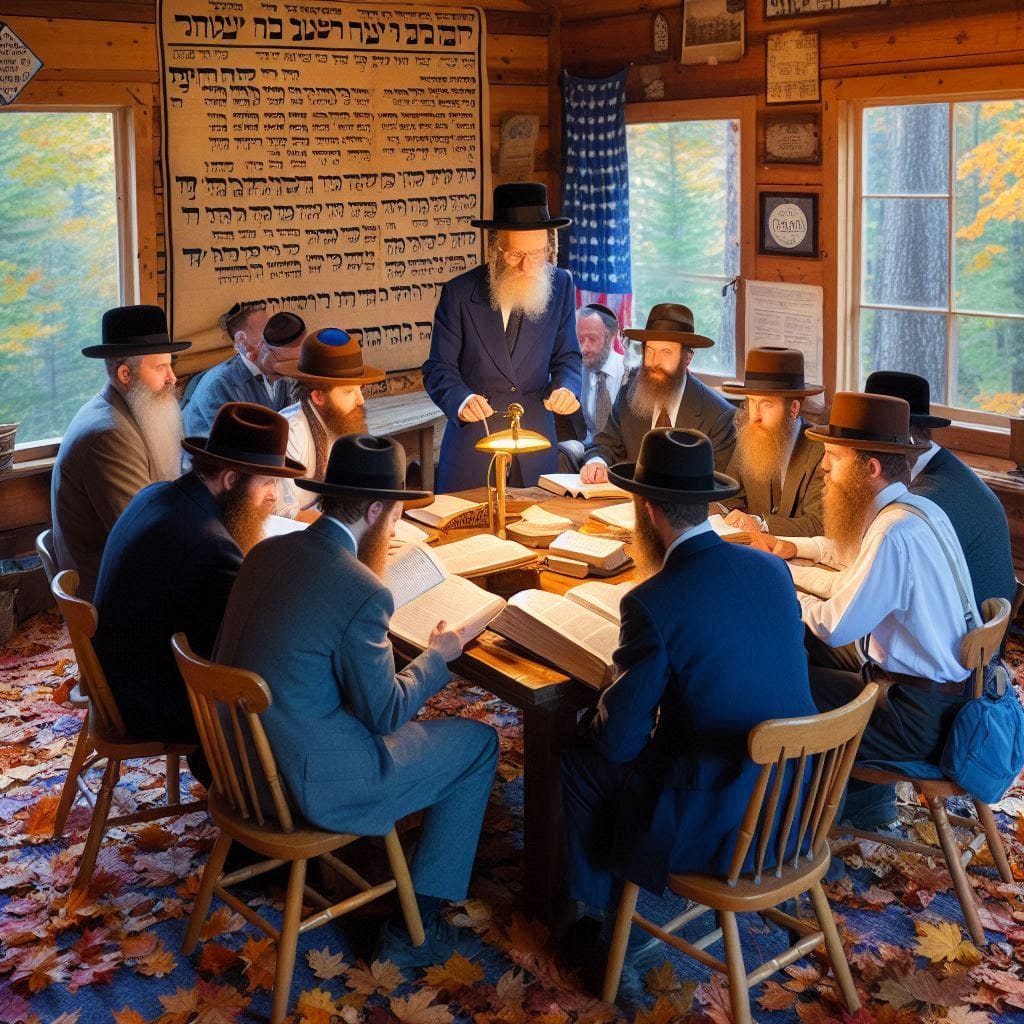
Imagine several people sitting around a table, each bringing different levels of knowledge and experience.
One has studied Hebrew for many years. Another is beginning to learn the alphabet. Someone wishes to understand the weekly Torah portion. Another has questions concerning the laws of Shabbat.
The gathering does not need to resemble a university seminar.
It can be organized, serious, and intellectually demanding while remaining warm and accessible.
This resembles, in certain respects, the cooperative model familiar to many families who educate their children at home.
Participants share knowledge, resources, and responsibilities.
The Mishnah teaches:
"Provide yourself with a teacher, acquire for yourself a companion." — Pirkei Avot 1:6
Jewish learning benefits from both guidance and companionship.
A teacher helps prevent misunderstanding. A study companion encourages questioning, review, and intellectual growth.
In such an environment, the objective is not merely to complete a curriculum. It is to develop people who love learning.
For Shaarei Tzafon, this model offers a meaningful possibility.
Our home may remain primarily a family place of study. Yet when appropriate, others might participate in learning, discussion, or religious education.
Such participation need not transform the household into a formal congregation.
Neither must it require joining a national movement or accepting outside organizational governance.
Small, independent circles of learning can develop according to local circumstances, maintaining relationships with qualified scholars while preserving responsibility for their own daily activities.
The essential purpose remains unchanged: to study Torah, understand halakhah, and strengthen devotion to HaShem.

Part VIII — Love of HaShem, Torah, and Halakhah
If there is one principle that must govern this entire undertaking, it is love.
We begin with love of HaShem.
From that love comes attachment to His Torah.
From attachment to Torah comes appreciation for its commandments.
And through the study of halakhah, we learn how those commandments are to be practiced.
This progression is important because Jewish observance should not be reduced to burdensome regulations or dependence upon institutional programs.
The Torah commands:
"And you shall love HaShem your God with all your heart, with all your soul, and with all your might." — Devarim 6:5
Love is not presented as an optional decoration upon Jewish life.
It stands at the center of our relationship with the Creator.
Halakhah gives practical expression to that relationship.
The laws of Shabbat shape our experience of sacred time. The laws of kashrut govern ordinary eating. The laws of prayer direct our words and thoughts toward HaShem.
These commandments establish a disciplined way of life.
And that life can be cultivated in an ordinary Jewish household without requiring an elaborate organizational structure.
A small beis midrash should therefore cultivate more than technical knowledge.
It should encourage humility, kindness, patience, intellectual honesty, and reverence.
A person may know many legal details and still fail to treat others properly.
Likewise, independence itself is not a virtue if it produces arrogance, hostility, or contempt for other Jews.
Our independence must serve Torah, not replace it as our purpose.
The objective of learning is to understand the will of HaShem and allow that understanding to transform our conduct.

Part IX — True Independence
When a small Jewish initiative begins to establish itself, an understandable question arises: How does it relate to larger Jewish organizations?
Northern Michigan already has Jewish institutions and individuals who contribute to Jewish religious and cultural life.
Their existence does not diminish the value of a smaller, independent undertaking.
Jewish history contains numerous forms of communal organization: large academies, small study houses, neighborhood synagogues, family gatherings, and circles of scholars.
Not every institution has served an identical purpose.
The Mishnah teaches:
"Who is wise? One who learns from every person." — Pirkei Avot 4:1
This principle encourages intellectual openness without requiring organizational dependence.
Shaarei Tzafon can maintain its independent approach to Torah study, halakhic methodology, education, and publishing while recognizing the contributions of others.
Our purpose is to encourage you to recognize that meaningful Jewish life and Torah study do not require dependence upon Chabad or any other large, overreaching Jewish organization.
We believe that Jewish families can take responsibility for cultivating their own places of Torah study, halakhic learning, and traditional Yiddishkeit without surrendering their independence, inherited minhagim, or communal identity to outside institutions.
We do not need to wait for a national organization to come into our town, establish a branch, appoint leadership, or provide a program before we begin studying Torah.
We can begin ourselves.
We can establish small shtieblach and batei midrashim across the United States, rooted in local families, traditional Jewish learning, and established halakhic practice.
We can cooperate with larger institutions when appropriate without surrendering our independence or inherited minhagim.
The more important question is whether we are faithfully accomplishing the work before us.
Are our children learning Torah? Are our books being studied? Are we growing in knowledge and observance?
If others discover our work and benefit from it, that is a blessing.
If no larger community develops, the work remains worthwhile.
Independence is not hostility. It is the willingness to accept responsibility for Jewish learning and religious life without making their existence dependent upon institutional expansion.
This is the principle underlying Shaarei Tzafon's work in Northern Michigan, and it is a model that other Jewish households may consider wherever they live.
Part X — A Light Among the Northern Forests
The prophet Yeshayahu declares:
"For out of Zion shall go forth Torah, and the word of HaShem from Jerusalem." — Yeshayahu 2:3
The verse reminds us that Torah possesses a sacred source and a universal horizon of instruction.
Its teachings are not confined to the place where any individual happens to live.
A Jewish family may find itself in Jerusalem, Brooklyn, Warsaw, Yemen, or a rural township in Northern Michigan.
The geography changes.
The obligation to study Torah remains.
And perhaps this is the central lesson of the shtiebel.
A meaningful Jewish life does not begin when we acquire a large building, establish an elaborate organization, attract a substantial following, or receive sponsorship from an established movement.
It begins when we open a sefer.
It begins when a parent teaches a child the words of the Shema.
It begins when a family prepares for Shabbat, when someone studies a difficult halakhah, and when another person discovers the joy of understanding Torah.
From these modest beginnings, something enduring can grow.
Imagine small shtieblach and batei midrashim scattered throughout America, each preserving its own traditions, each cultivating Torah, each contributing to Jewish continuity without needing to become a branch of something larger.
Perhaps one day several Jewish households will gather regularly for study and prayer.
Perhaps a small circle of students will emerge.
Perhaps the publications produced in our home will reach readers whom we will never meet.
Or perhaps Shaarei Tzafon will remain what it is today: a family-centered place of learning, teaching, observance, and publication.
None of these possibilities determines its spiritual worth.
The Mishnah teaches:
"It is not upon you to complete the work, but neither are you free to desist from it." — Pirkei Avot 2:16
We are not responsible for controlling the future.
We are responsible for the Torah placed before us today.
So let the books be opened.
Let the children ask questions.
Let the words of the Rambam, the Mishnah, the Talmud, and the earlier sages be studied carefully.
Let the melodies of Shabbat be heard within the home.
Let our learning be guided by humility, our observance by halakhah, and our service by love of HaShem.
And let us remember that the purpose of restoring the old shtiebel spirit is not to build a monument to the past.
It is to make Torah a living presence in the present.
We do not seek to establish another institution upon which Jewish families must depend. We seek to demonstrate that Jewish families can cultivate places of Torah and Yiddishkeit for themselves.
For where Torah is studied with sincerity, where the commandments are cherished, and where a Jewish family seeks to live faithfully before HaShem, the spirit of the beis midrash continues.
Even here, among the forests of Northern Michigan.
Even above the forty-fifth parallel.
Even within the walls of an ordinary home.
And wherever another Jewish family decides to begin.
May HaShem bless the work of our hands, strengthen our devotion to His Torah, and grant that the light of Jewish learning continue from generation to generation.
Amen.

Shaarei Tzafon — The North Gate
Orthodox Jewish Life and Torah Study in Northeastern Michigan
Shaarei Tzafon — The North Gate, led by Rabbi Ariel Manning, is an independent, family-led Orthodox Jewish educational and publishing initiative based in Northeastern Michigan. We support traditional Jewish life, Torah study, Halakhah, and Jewish education throughout Alpena, Hillman, Rogers City, and surrounding communities. Those interested in traditional Judaism are welcome to contact us for educational resources, Torah learning, and opportunities for discussion by prior arrangement.
Rooted locally, our greater mission extends northward from the 45th parallel — The North Gate — through Michigan, Canada, and Alaska toward the Arctic. We seek to encourage independent Jewish communities, family-centered Torah education, and the renewal of small batei midrash and shtieblach, preserving the rich traditions of Orthodox Judaism for future generations.
Our work begins in Northeastern Michigan, but our vision extends from the 45th parallel toward the Arctic.
Guided by Rambam and Mori Qafiḥ, uplifted by Rebbe Nachman, and grounded by Avraham ben HaRambam’s balance of halakha and inward avodah.
The Orchard’s Path
publishes our books and curricula.
Our mission: a bright, authentic Jewish presence in every northern town.
Created with ©systeme.io


