
The Spiritual Side of the Field of Sacred Apples: The Foothills of Elul Part 1
B"H
Introduction: Torah in the North
At Shaarei Tzafon, we do not treat the Jewish calendar as an abstract schedule. We live it in the body, in the home, in the weather, in the table, in the forest, and in the soul. The calendar comes to us through halachah, through tefillah, through the words of the sages, and through the rhythm of Jewish life. But here in the North, the calendar also becomes visible in the land itself.
The wind changes. The light changes. The fruit begins to ripen. The forest that was full and green in the height of summer begins to hint at the coming of autumn. The soul, if it is paying attention, begins to feel the same movement.
Shaarei Tzafon is built on a simple principle: Torah must remain Torah wherever a Jew lives. A Jew in Jerusalem, New York, Morocco, Lithuania, Yemen, Detroit, or rural Northern Michigan is bound by the same covenant. But the way Torah is felt in daily life may be colored by the place where Hashem has planted us. The land does not create the Torah. The land becomes a commentary on the Torah.
This is the meaning of the Field of Sacred Apples.
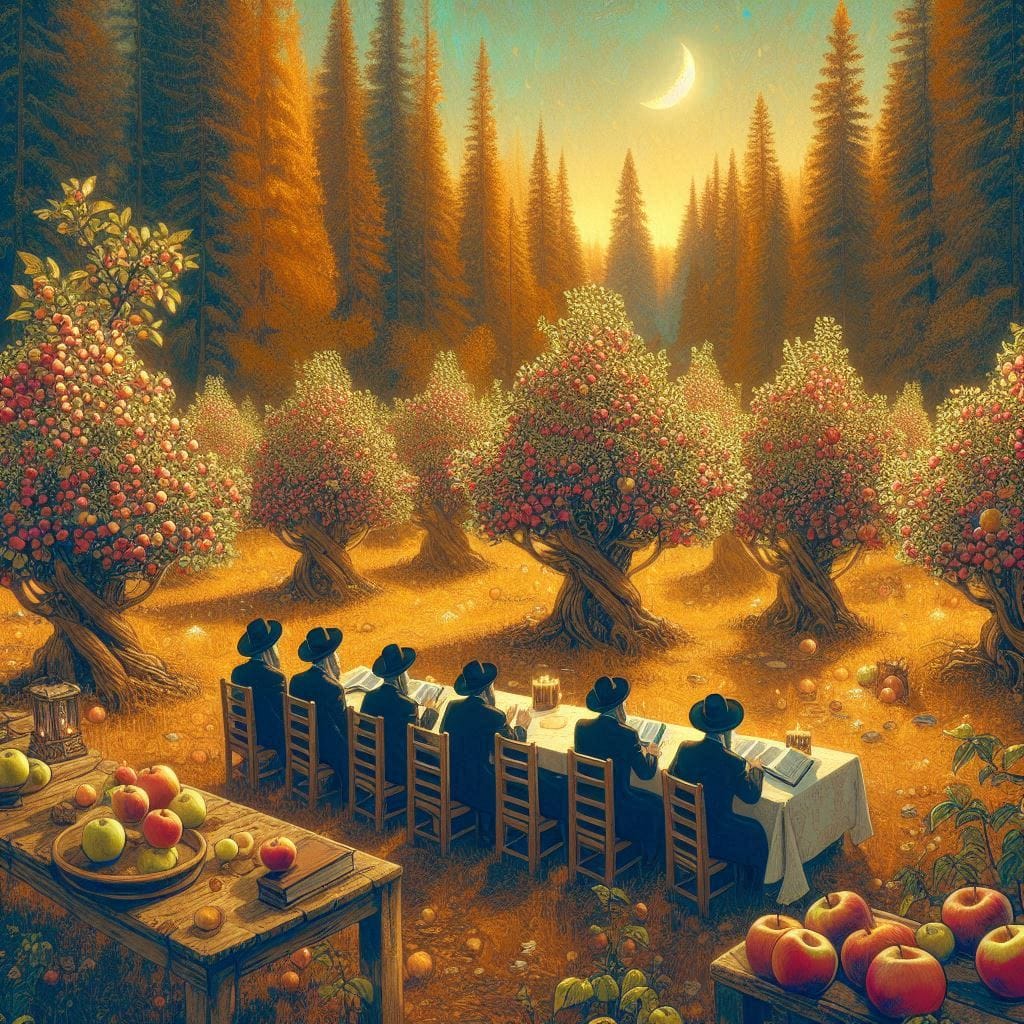
On our land, near the property line, stand apple trees. Six are ours, and two are shared with neighbors. They are not magical trees. They are not objects of worship. They are ordinary apple trees, created by Hashem, sustained by His will, and governed by the same laws of growth, weather, fruit, and decay as all trees. Yet Torah trains the Jewish eye to see creation as a mashal, a parable. When the heart is rooted in halachah, even an apple tree can become a teacher.
The apple trees begin to speak most clearly during the season of teshuvah. Their fruit develops during the Three Weeks. Some apples ripen after Tish’a B’Av. Others ripen through Elul and into the Days of Awe. One tree, when it bears, gives a later winter apple, ripening after Sukkot. In this simple order of fruit, Shaarei Tzafon sees a spiritual map: sorrow, awakening, judgment, sweetness, shelter, and delayed mercy.
This is why we call this season the foothills of Elul.
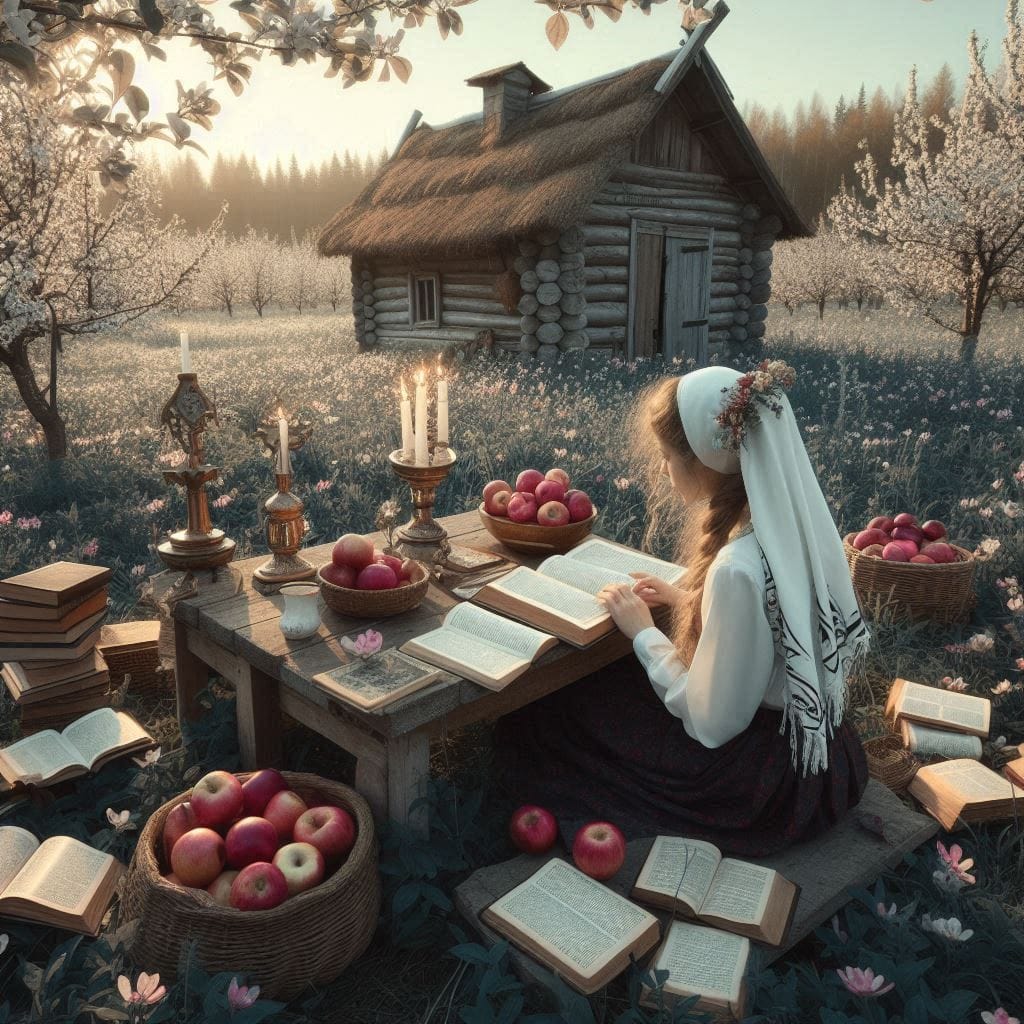
The Foothills Begin Before Elul
Many Jews think of teshuvah as beginning with Elul. That is understandable. Elul brings the shofar. Elul brings the words, “Ani l’dodi v’dodi li” — “I am my Beloved’s and my Beloved is mine.” Elul brings the feeling that the King is in the field, close to His people, receiving them before the great judgment of Rosh Hashanah.
But Shaarei Tzafon begins the walk earlier.
The foothills of Elul begin on the 17th of Tammuz, when the walls of Jerusalem were breached. From that fast day until Tish’a B’Av, we enter the Three Weeks, the season of national mourning. This is not private sadness. It is the grief of Israel. It is the memory of the Temple destroyed, the Shekhinah hidden, the people scattered, and the world left spiritually incomplete.
Teshuvah cannot begin honestly if we refuse to mourn. A person who rushes to sweetness without facing brokenness has not yet begun the work. The soul must first understand that something has been lost. The Jewish people are not whole. The world is not whole. The Temple is not standing. The Divine Presence is not openly revealed. We are still in exile.
Here in the North, this mourning happens during the fullness of summer. The forest is alive. The air is warm. The trees are green. Yet in the orchard, the apples are still hard and unfinished. They are formed, but not ready. They are growing, but not sweet.
This is a powerful image for the Three Weeks. Something exists, but it has not yet reached its tikkun. The fruit is present, but it cannot yet be eaten. The promise is visible, but the sweetness is delayed.
That is the beginning of teshuvah.
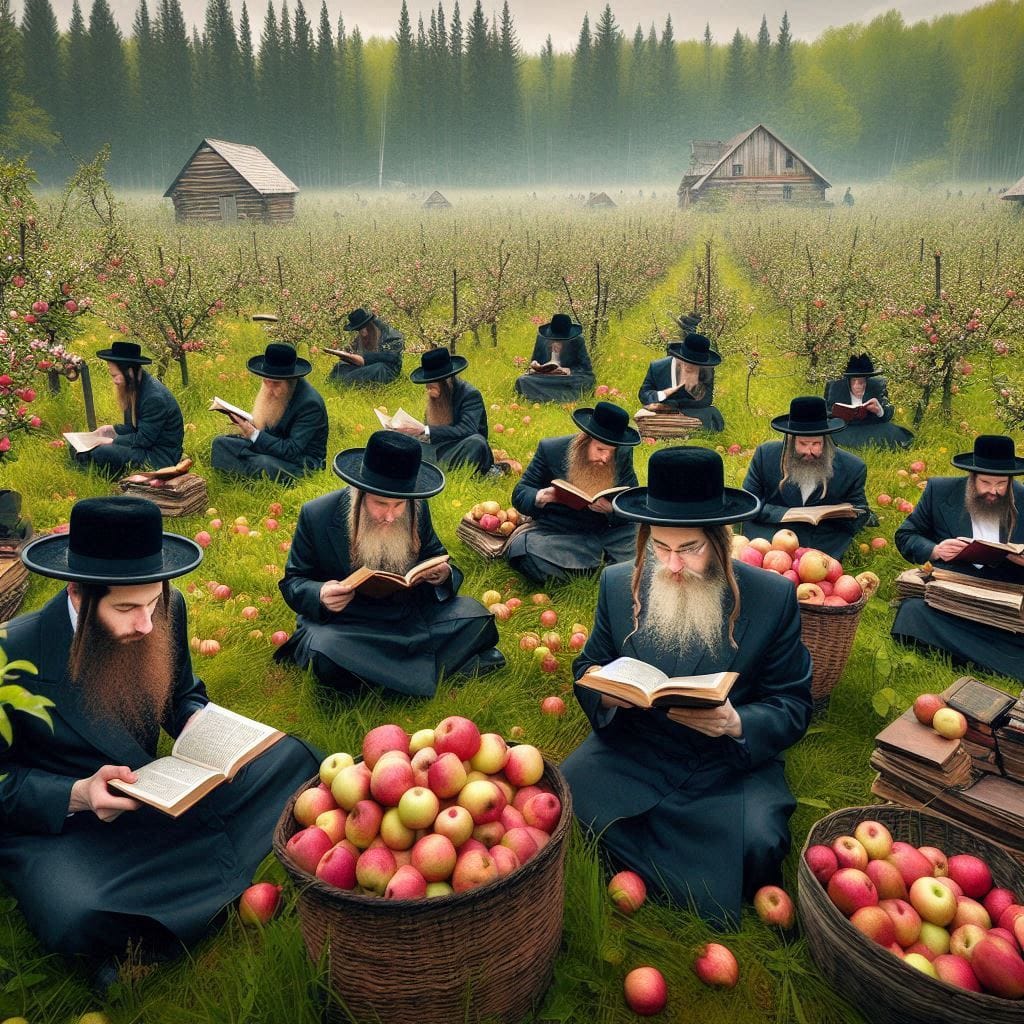
After Tish’a B’Av: The First Sweetness
After Tish’a B’Av, the Jewish people rise from the ground. We have read Eikhah. We have remembered the burning of the Temple. We have tasted the bitterness of exile. Then, slowly, comfort begins.
The haftarot of consolation begin. The heart begins to lift. The world does not become repaired all at once, but a different sound enters the soul. The mourning is not erased. It is redirected. It becomes longing.
In the Field of Sacred Apples, this is when the first summer apples begin to ripen.
This is not an accident to us. It is not halachah, and we do not pretend that it is. But it is a sign in creation that helps the heart understand the order of the season. After mourning, the first sweetness appears. After destruction, Hashem allows the fruit to ripen. After sitting low, the Jew begins to stand again.
The apple after Tish’a B’Av teaches that comfort is not denial. We do not say, “There was no destruction.” We say, “From within destruction, Hashem prepares renewal.” We do not say, “There is no exile.” We say, “Even in exile, Hashem feeds His people.”
This is essential to the Shaarei Tzafon path. We are not interested in false optimism. We do not build Jewish life by pretending that everything is easy, normal, or complete. Rural Jewish life is hard. Exile is real. Distance is real. Loneliness is real. The lack of infrastructure is real. But Hashem’s mercy is also real.
The first apple after Tish’a B’Av is not the end of mourning. It is the beginning of consolation.
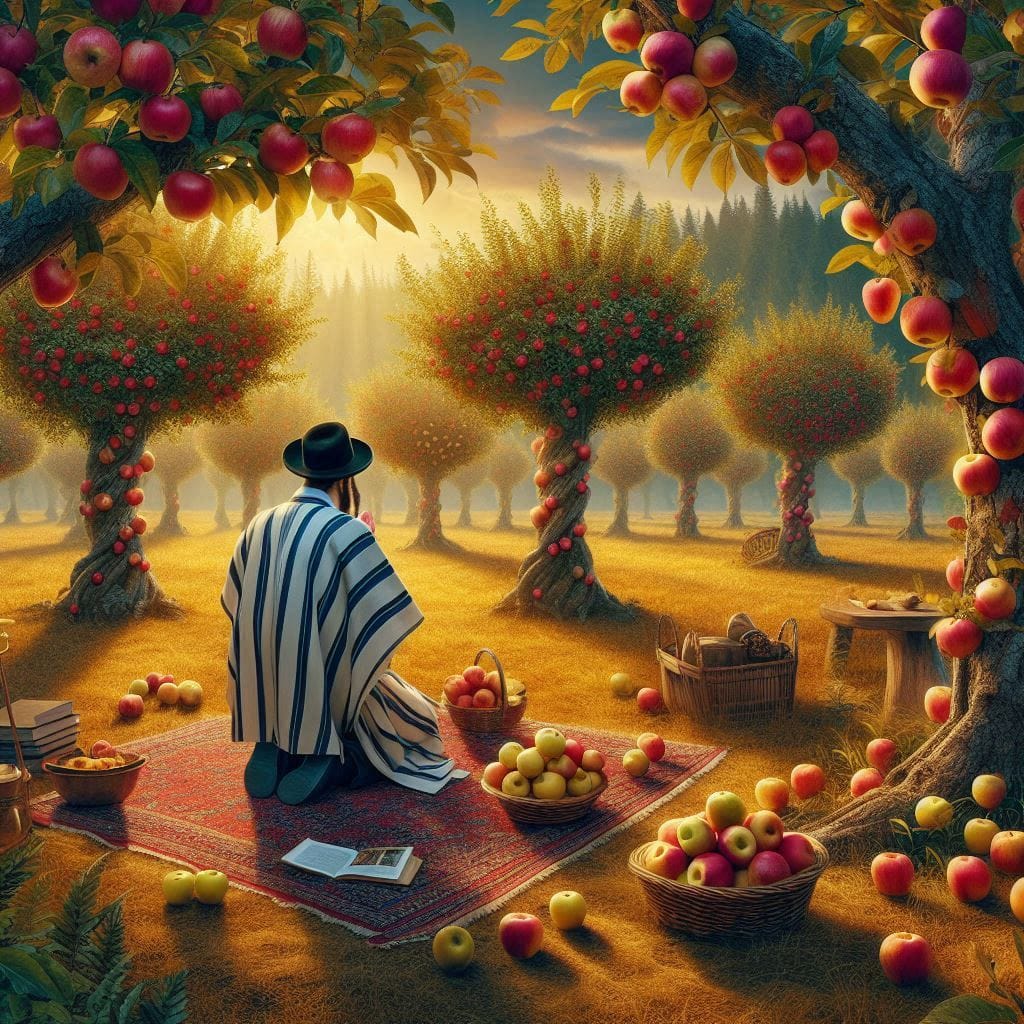
The Orchard as a Map of Souls
The Field of Sacred Apples is small, but it teaches a large lesson. Each tree has its own timing. One tree ripens early. Others ripen more slowly. Some fruit hangs into the Days of Awe. One tree gives its fruit late, after Sukkot, when the colder air has already arrived.
This is how souls return.
Some people wake up quickly. The first sound of the shofar is enough. A single word from the siddur, a line from Tehillim, a memory from childhood, or a moment of shame before Hashem breaks open the heart. They return quickly because the fruit was already close to ripening.
Others need the whole month of Elul. They need repetition. They need selichot, reflection, confession, quiet, learning, and time. Their teshuvah is not false because it is slow. It is simply still ripening.
And then there are winter apples.
Some souls do not ripen when expected. They miss the obvious season. They do not awaken during the first call. They may even pass through Rosh Hashanah, Yom Kippur, and Sukkot without fully understanding what Hashem was asking of them. But later, when the air is cold and the obvious sweetness has passed, something happens. The fruit finally becomes ready.
Shaarei Tzafon must make room for this truth. A Torah community cannot be built only for those who ripen early. It must also understand the slow, the wounded, the hidden, the delayed, and the winter soul. Halachah remains firm. Boundaries remain real. But patience is also part of Torah.
An apple tree is not forced into sweetness by shouting at it. It is guarded, tended, pruned, watered, and given time. So too with people. Teshuvah must be demanded, but it must also be cultivated.
The Field of Sacred Apples in Jewish Language
The phrase “Field of Sacred Apples” is not merely poetic. It echoes the language of the Kabbalists, who speak of the Chakal Tapuchin Kadishin, the holy field of apples associated with the Shekhinah and the mystery of Shabbat.
Shaarei Tzafon uses this language carefully.
We do not turn Kabbalah into decoration. We do not use holy phrases loosely. We do not claim that our orchard is literally the supernal field. Rather, we say that the lower world can awaken memory of the upper world. Creation below can remind the soul of holiness above.
The apple itself appears in the language of Shir HaShirim: “Like an apple tree among the trees of the forest, so is my beloved among the sons.” The apple carries fragrance, shade, beauty, sweetness, and desire. It is a fruit of love, but also of distinction. Among the trees of the forest, the apple tree stands apart.
That verse matters to us in the North. We live among forests. We know what it means for one tree to stand among many. The apple tree does not reject the forest, but it has its own fruit. So too, the Jew does not despise the place where he lives, but he must know his covenant. He may live among the nations, work among them, speak with them, and be a neighbor to them, but his fruit must remain the fruit of Torah.
This is the balance Shaarei Tzafon seeks: rooted in the North, but not absorbed by it; respectful to local life, but not reshaped by it; open to creation, but ruled by Torah.
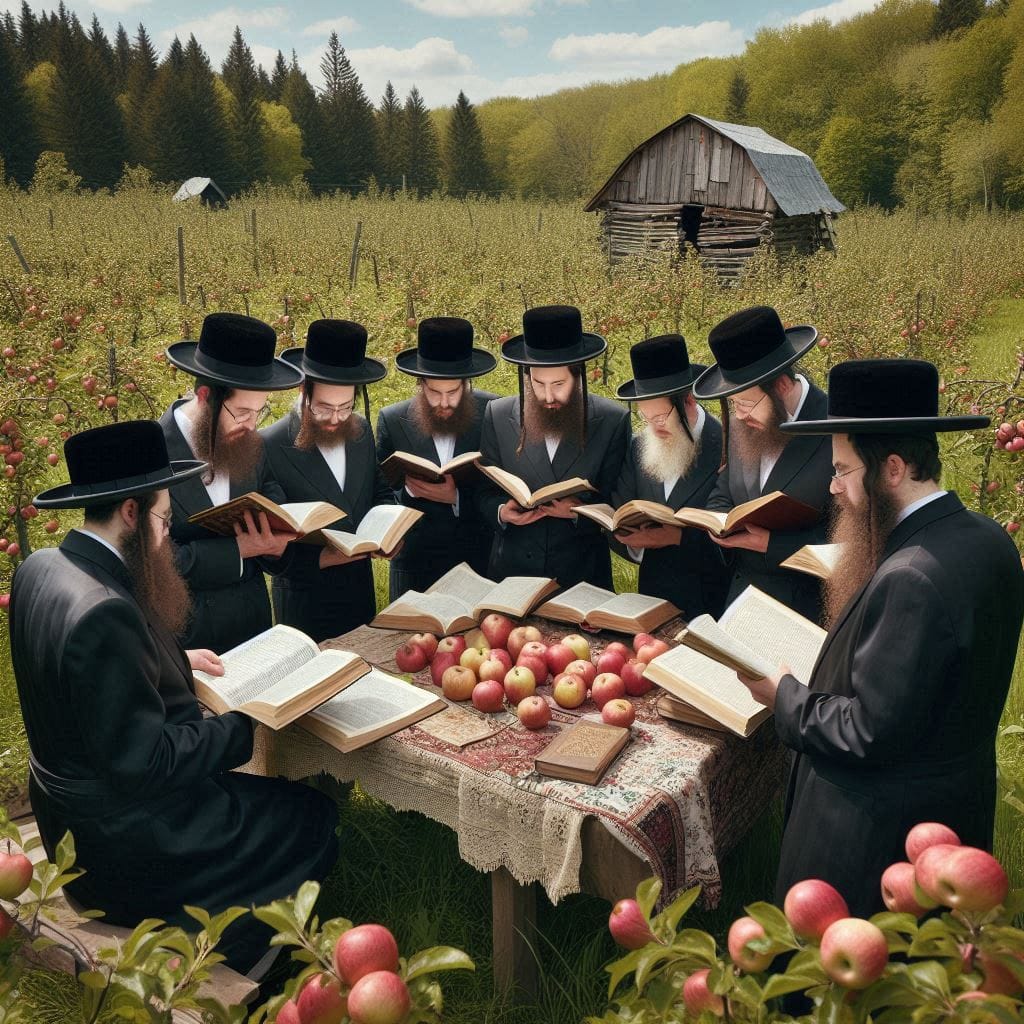
Sweetening Judgment
Rosh Hashanah and Yom Kippur are days of judgment. This cannot be softened into sentimentality. Hashem is King. Hashem is Judge. The books are opened. Life, death, livelihood, peace, hardship, blessing, and decree stand before Him.
But Jewish judgment is not pagan terror. Hashem is not a cruel power to be manipulated. He is Avinu Malkeinu, our Father and our King. His judgment is part of His mercy, because without judgment there can be no repair.
The apple teaches this.
An unripe apple is hard and sour. It is not evil. It is unfinished. Given time, sun, cold nights, and the hidden processes Hashem placed within it, the sourness becomes sweetness. The judgment was not destroyed. It was sweetened.
This is the meaning of dipping the apple in honey on Rosh Hashanah. We do not ask for a year without truth. We ask for truth sweetened by mercy. We do not ask Hashem to ignore reality. We ask Him to guide reality toward life, blessing, repair, and return.
The Sephardic world has preserved this feeling beautifully in the sound of Selichot. The prayers are serious, but often sung with warmth and hope. A Jew comes before Hashem with trembling, but not despair. We confess because return is possible. We cry out because the gates are open.
At Shaarei Tzafon, this is central. Fear without sweetness can crush a person. Sweetness without fear can make a person shallow. Torah requires both. The apple and honey hold them together.
Elul: The King in the Field
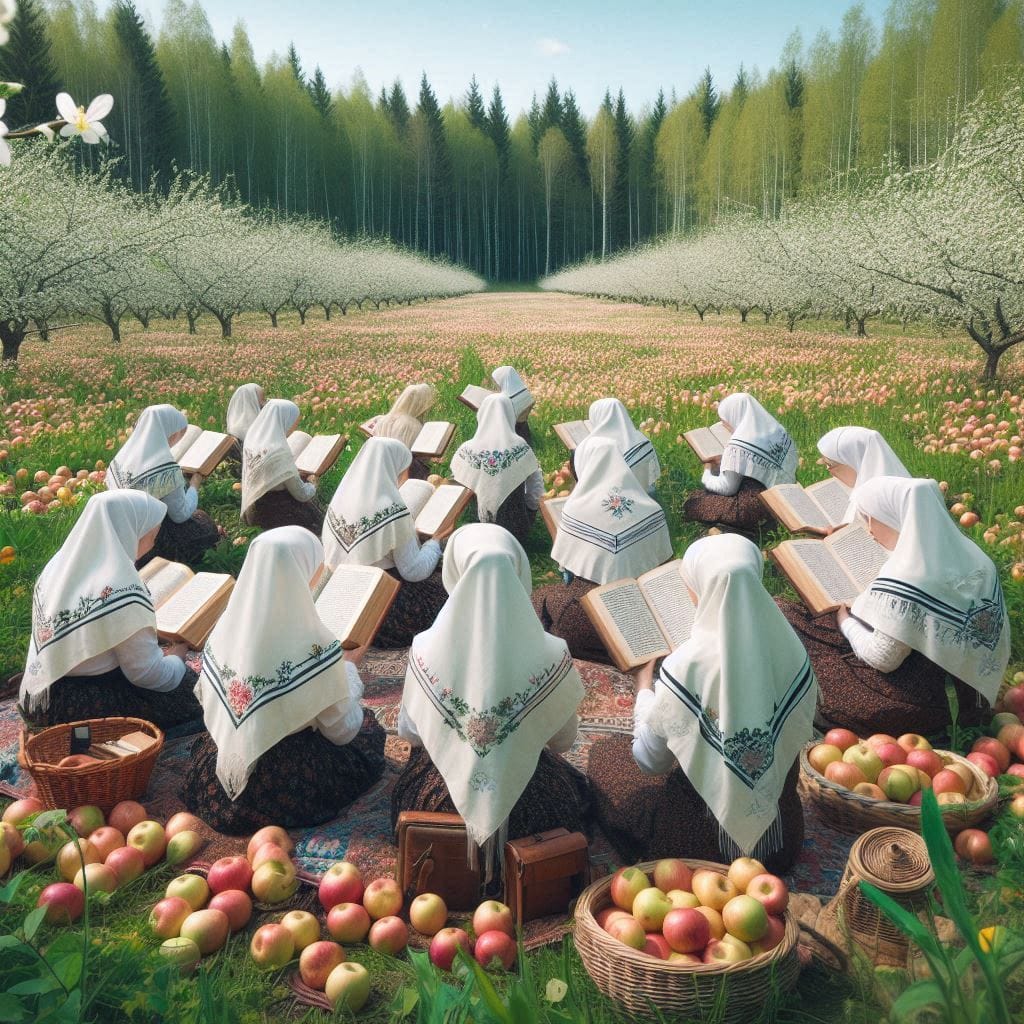
When Elul arrives, the Field of Sacred Apples enters its fullness. The branches are heavier. The light is lower. The nights cool. The first signs of autumn begin to gather. The soul feels that the year is turning.
This is when we hear the teaching: the King is in the field.
In Elul, Hashem is near. The King who will soon sit in judgment allows Himself to be encountered before the formal day of coronation. He is still King, but He is approachable. He is still Judge, but He is calling His children home.
In a rural place, this teaching becomes especially strong. The “field” is not a metaphor we have to imagine. We know fields. We know tree lines. We know long grass, dirt roads, cold mornings, and the quiet of land. We know what it means to step outside and feel the world open.
But the point is not nature. The point is nearness.
Shaarei Tzafon teaches that a Jew can meet Hashem here, without pretending this place is Jerusalem and without forgetting Jerusalem. We do not replace the Temple with the forest. We do not replace the beit midrash with the orchard. But we also do not say that Hashem is absent from the North.
The King is in the field. Even here.
Yom Kippur: The Orchard in Silence
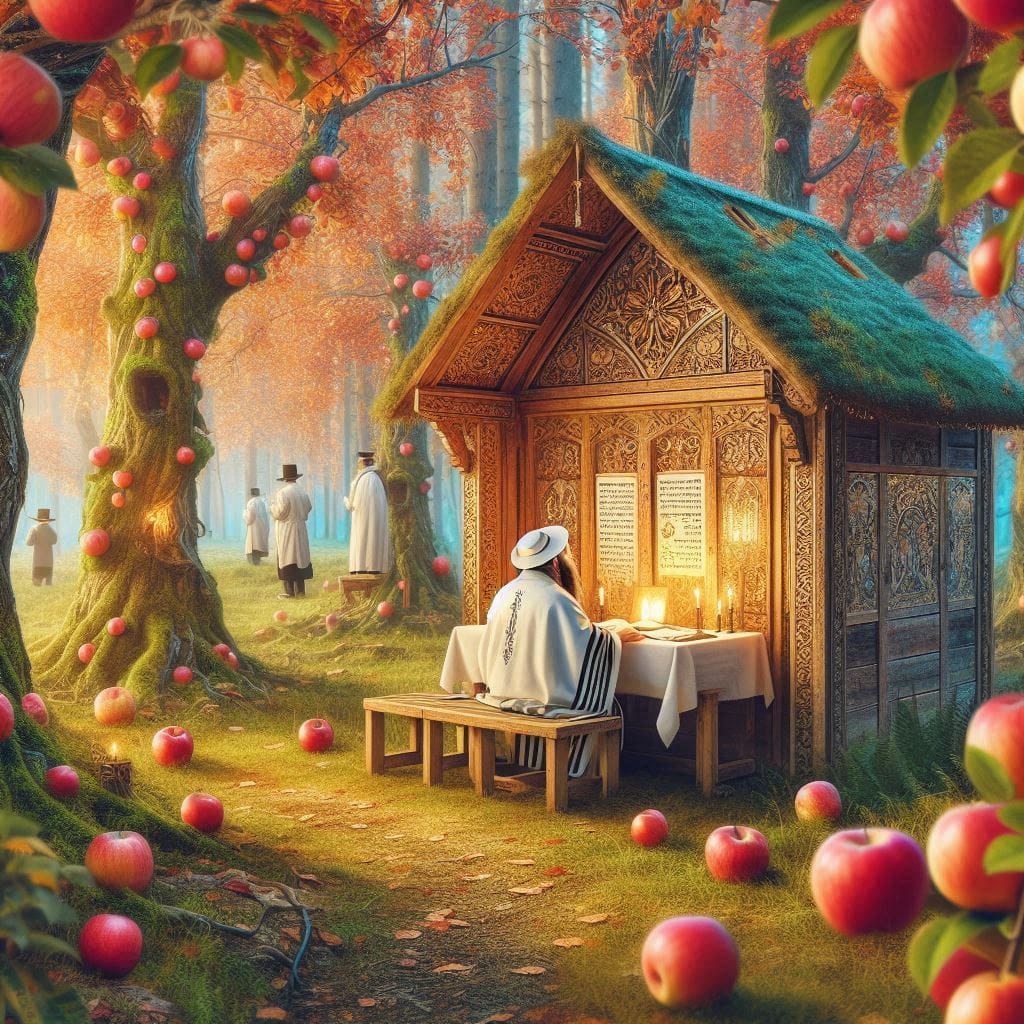
On Yom Kippur, the orchard stands differently. The Jew does not go out to gather fruit as usual. He fasts. He withdraws. He confesses. He becomes like an angel for one day, leaving behind food, drink, leather shoes, washing, anointing, and marital life. The body is quieted so the soul can speak.
The apples may still hang on the branches, but the Jew does not approach them in the same way. Their sweetness waits. They become witnesses.
This is also a lesson. Not every sweetness is for immediate use. Sometimes mercy is present, but we must first pass through restraint. Sometimes Hashem prepares nourishment, but the soul must first be emptied.
Yom Kippur teaches that teshuvah is not merely self-improvement. It is standing naked before Hashem. It is admitting the truth. It is saying, “We have sinned,” not as theater, but as reality. It is returning not only to better behavior, but to the covenant itself.
Then, after the fast, sweetness returns. Food returns. Family returns. Building returns.
We move from Yom Kippur into Sukkot, from confession into shelter, from awe into joy.
Sukkot and the Winter Apple
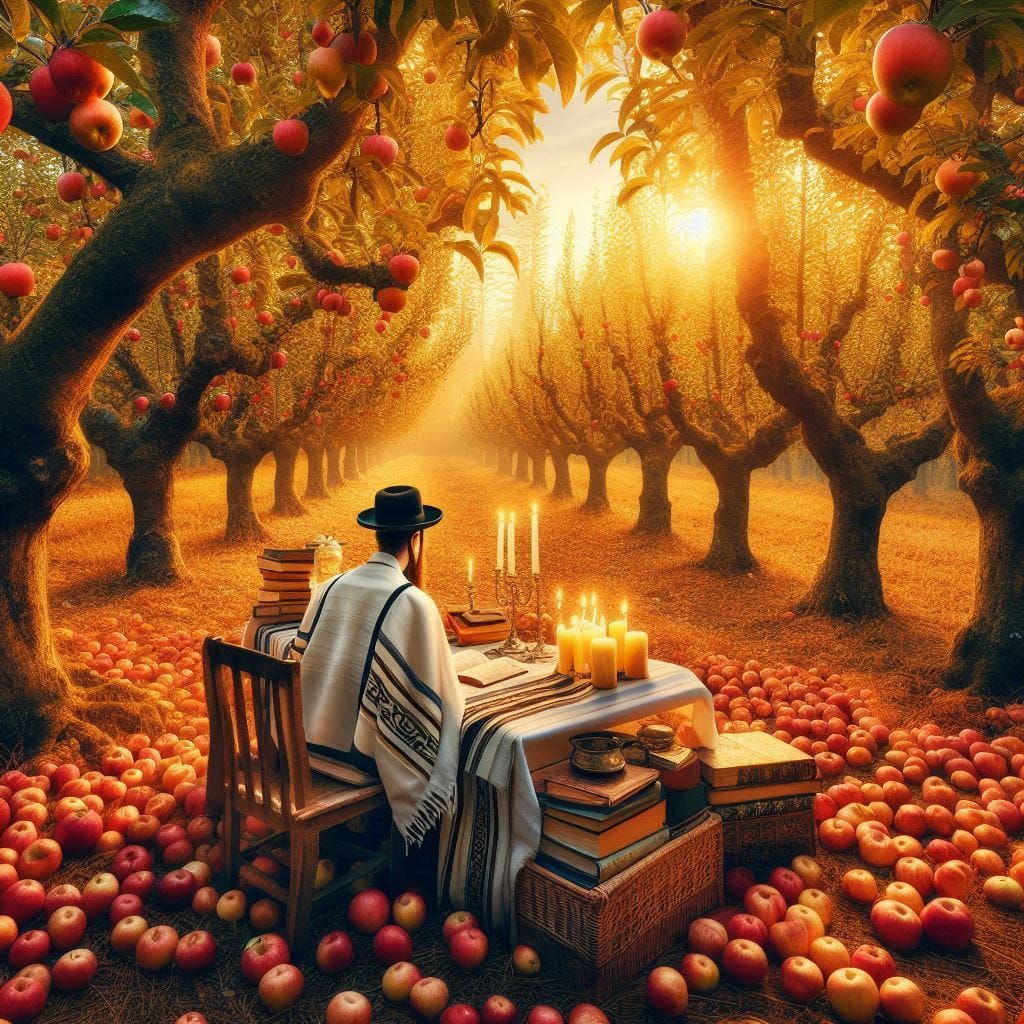
Sukkot completes what began in the foothills of Elul. We leave the security of the house and enter the sukkah. We sit under branches. We remember that Israel survived not by permanent walls, but by Hashem’s protection.
For Shaarei Tzafon, Sukkot is one of the clearest examples of Torah meeting place. We build with what the land gives. We feel the cold more sharply. We understand shelter because the North teaches us what exposure means. A sukkah in a warm climate teaches one lesson. A sukkah in the North teaches another. Both are Torah, but the body hears them differently.
Then comes the winter apple.
When that late tree bears fruit, its apples ripen after Sukkot. This is a deep symbol. The main season has passed. The festivals are over. The sukkah has come down. The year has moved forward. And yet, sweetness still appears.
This teaches that Hashem’s mercy is not limited to our official moments of inspiration. A person may miss Elul and still return. A person may pass through the Days of Awe distracted and still awaken later. A person may only understand the message after the season is gone.
The winter apple tells us: do not despair after the gates seem closed. The formal season ends, but Hashem remains near to every person who truly returns.
The Shaarei Tzafon Path
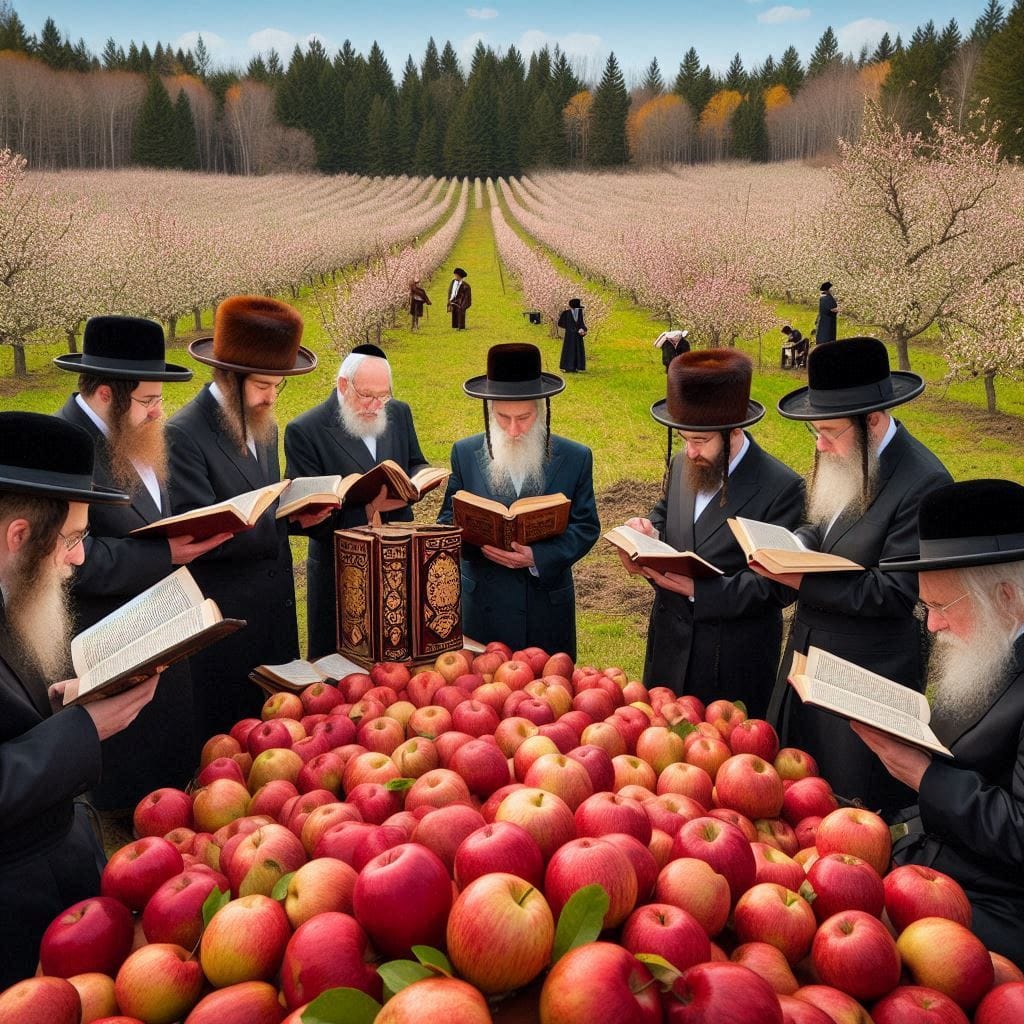
The Field of Sacred Apples expresses the deeper work of Shaarei Tzafon.
We are not trying to invent a new Judaism. We are trying to live Torah faithfully in a place where Jewish infrastructure is thin, where community must be built slowly, and where the land itself constantly reminds us of dependence on Hashem.
Our foundation is halachah. Without halachah, symbolism becomes fantasy. Without mitzvot, nature becomes self-expression. Without Torah, the orchard is only an orchard.
But with Torah, the orchard can teach.
It teaches that Jewish life in the North must be patient. Trees do not bear fruit the day they are planted. Communities do not become strong overnight. Children do not absorb Torah in one conversation. Converts, returnees, families, and seekers do not ripen by pressure. They ripen through truth, consistency, boundaries, warmth, and time.
It also teaches that rural Jewish life must be real. Not theatrical. Not borrowed identity. Not nostalgia. Not pretending to be something we are not. Shaarei Tzafon is not built on performance. It is built on Shabbat, kashrut, prayer, Torah study, modesty, family life, derekh eretz, and the slow discipline of mitzvot.
The North gives us imagery. Torah gives us obligation.
The apple gives us sweetness. Halachah gives us form.
The field gives us quiet. The covenant gives us purpose.
Conclusion: From the Orchard Below to the Orchard Above
The Field of Sacred Apples stands as a living parable for the journey from the 17th of Tammuz to Sukkot. It teaches that teshuvah does not begin with sweetness. It begins with mourning. It begins with the breach in the wall, the memory of destruction, the honesty that something is broken.
Then comes the first fruit after Tish’a B’Av. Then Elul. Then the King in the field. Then Rosh Hashanah, when judgment is crowned. Then Yom Kippur, when the soul stands bare before Hashem. Then Sukkot, when the Jew enters the fragile shelter of joy. And sometimes, after all of it, the winter apple ripens, reminding us that mercy continues even after the season appears complete.
This is the voice of Shaarei Tzafon: Torah rooted in the North, halachah before poetry, creation as witness, and teshuvah as the work of returning to Hashem with the whole self.
As the apples ripen, may our souls ripen.
As the judgment is written, may it be sweetened.
As the King enters the field, may we have the courage to meet Him.
And as the Field of Sacred Apples below awakens our longing for the Field of Sacred Apples above, may all Israel return to Hashem, may the Shekhinah be lifted from exile, and may the whole world become an orchard of teshuvah, sweetness, and peace.
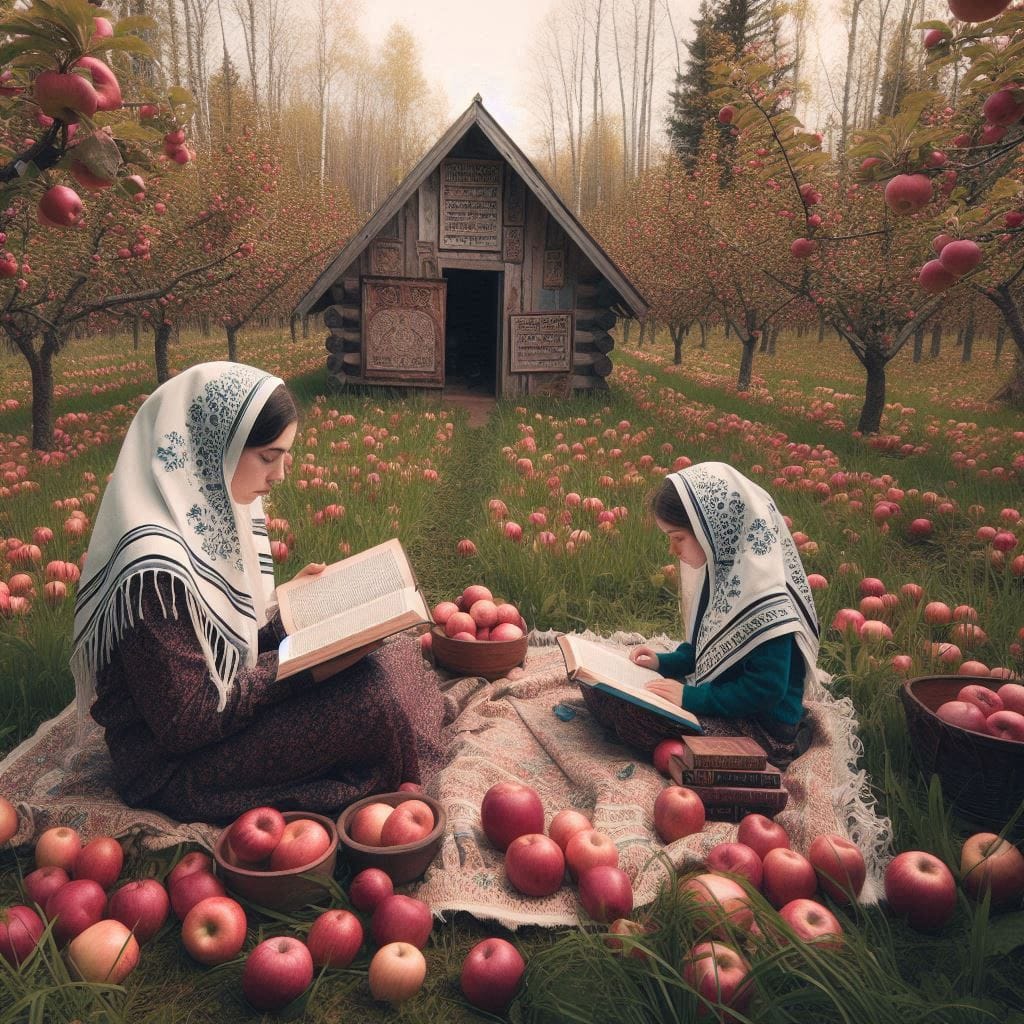
The Spiritual Side of the Field of Sacred Apples — Torah, Teshuvah, and the Foothills of Elul
The Spiritual Side of the Field of Sacred Apples explores the spiritual journey of the Jewish year through the changing seasons, the ripening of apples, and the traditional teachings of Torah, Halakhah, and Jewish mysticism.
Beginning with the mourning of the Seventeenth of Tammuz and Tisha B'Av, the teaching follows the Jewish soul through consolation, renewal, repentance, and the approaching Days of Awe.
The transition from mourning to hope is reflected in Shabbat Nachamu and Tu B'Av, when the Jewish calendar begins turning toward the spiritual preparation of Elul. Just as apples ripen gradually in the orchards of Northeastern Michigan, genuine Teshuvah requires patience, reflection, humility, and meaningful change.
The imagery of the Field of Sacred Apples, associated with the Kabbalistic expression Chakal Tapuchin Kadishin, provides a poetic framework for understanding the relationship between creation, Jewish spiritual life, and the Divine Presence. The orchard serves as an illustration of Torah teachings rather than a replacement for Halakhah or traditional Jewish observance.
The journey continues through Elul, Rosh Hashanah, Yom Kippur, and Sukkot, emphasizing the importance of prayer, repentance, forgiveness, covenantal responsibility, and renewed closeness to HaShem.
Presented by Rabbi Ariel Manning of Shaarei Tzafon (The North Gate), this teaching reflects the experience of traditional Orthodox Jewish life in Alpena, Hillman, Rogers City, and throughout Northeastern Michigan.
Shaarei Tzafon is an independent, family-led Orthodox Jewish educational and publishing initiative devoted to Torah study, Halakhah, Jewish philosophy, and the preservation of traditional Jewish life, with a broader educational vision extending from the 45th parallel through the boreal regions toward the Arctic.
The essential lesson: Just as the apple ripens in its appointed season, the Jewish soul grows through mourning, consolation, Teshuvah, and renewed devotion to HaShem. The orchard reminds us of the seasons, but Torah teaches us how to live through them.
Shaarei Tzafon — The North Gate
Orthodox Jewish Life and Torah Study in Northeastern Michigan
Shaarei Tzafon — The North Gate, led by Rabbi Ariel Manning, is an independent, family-led Orthodox Jewish educational and publishing initiative based in Northeastern Michigan. We support traditional Jewish life, Torah study, Halakhah, and Jewish education throughout Alpena, Hillman, Rogers City, and surrounding communities. Those interested in traditional Judaism are welcome to contact us for educational resources, Torah learning, and opportunities for discussion by prior arrangement.
Rooted locally, our greater mission extends northward from the 45th parallel — The North Gate — through Michigan, Canada, and Alaska toward the Arctic. We seek to encourage independent Jewish communities, family-centered Torah education, and the renewal of small batei midrash and shtieblach, preserving the rich traditions of Orthodox Judaism for future generations.
Our work begins in Northeastern Michigan, but our vision extends from the 45th parallel toward the Arctic.
Guided by Rambam and Mori Qafiḥ, uplifted by Rebbe Nachman, and grounded by Avraham ben HaRambam’s balance of halakha and inward avodah.
The Orchard’s Path
publishes our books and curricula.
Our mission: a bright, authentic Jewish presence in every northern town.
Created with ©systeme.io


