
Traditionalism The New Counter-Culture:
B"H
Foundational Essay
1. Opening Reflections — A World Without Anchors
Every generation proclaims its own enlightenment, yet the louder humanity celebrates progress, the more it drifts from purpose. In an age that worships novelty, people feel increasingly hollow, their inner world fragmented by relativism. What once gave life rhythm—Sabbath, prayer, family, modesty—has been traded for convenience and self-expression.
Against this tide stands a quiet resistance: Traditionalism. It is not nostalgia, nor reactionary pride; it is fidelity to the sacred order revealed by Heaven and carried through generations. In a civilization that prizes self-invention, obedience itself becomes revolutionary. To be a Traditionalist today is to become the new counter-culture—a rebellion on behalf of faith, family, and enduring truth.
2. Defining Traditionalism
The word tradition derives from tradere—“to hand down.” It is continuity made living: the wisdom of our ancestors transmitted through time. Traditionalism, therefore, is not blind submission but conscious stewardship. It affirms that moral and spiritual truths are received, not invented, and that revelation, once given, obligates every generation.
In religion, this means that divine law is not an evolving consensus but a covenant. True tradition is dynamic because life renews its forms, yet immutable because its essence flows from eternity. As a great teacher observed, “Tradition is the living faith of the dead; traditionalism is the dead faith of the living.” We choose the first—a faith alive precisely because it remembers.
3. The Prophetic Nature of Tradition
Far from imprisoning us in the past, authentic tradition opens a window to the future. The wisdom of the ancients is prophetic: it reveals moral cause and consequence across centuries. When Israel recalls its exodus, it is not indulging nostalgia; it is re-entering covenant. “He established a testimony in Jacob…that they should make them known to their children” (Tehillim 78). Each generation becomes a link in an eternal dialogue—teacher, student, and yet-unborn child united in one continuous act of faith.
To engage tradition properly is therefore to read history as revelation. It trains the heart to humility, reminding us that we are not the first to wrestle with truth nor the last to bear its burden.
4. Tradition as Antidote to Individualism
Modern spirituality often mirrors the ego. Religion becomes a matter of taste, ethics a matter of opinion. This fragmentation isolates the soul. By contrast, tradition binds the individual to community and the community to Heaven.
Submission to halacha, discipline, or inherited form is not slavery—it is liberation from self-worship. The commandments restrain us precisely so that we may be free of caprice. “You shall be holy,” the Torah commands, because holiness requires structure. When faith is lived communally rather than privately imagined, life regains coherence. Tradition heals the loneliness of modern man by giving him ancestors, teachers, and disciples.
5. The Role of Tradition in Jewish Civilization
Judaism is the archetype of a traditional civilization. From Sinai onward, it transmitted both Torah Shebikhtav—the Written Law—and Torah Shebe‘al Peh—the Oral Law—through an unbroken chain of learning. The Sages of the Mishnah and Gemara, the Geonim, Rishonim, and Acharonim each served as guardians of this sacred inheritance.
To be a Jew is not simply to believe in God; it is to live within a covenant that sanctifies every detail of life. Mitzvot, prayer, and study are not cultural symbols but instruments of divine connection. In every era, the Jewish people renew the same revelation under new conditions. Therefore, Traditional Judaism is not a style or faction—it is the normative baseline of Jewish existence. All later movements are measured by their fidelity to that chain.
6. Tradition Beyond the Jewish People — Building Bridges, Not Walls
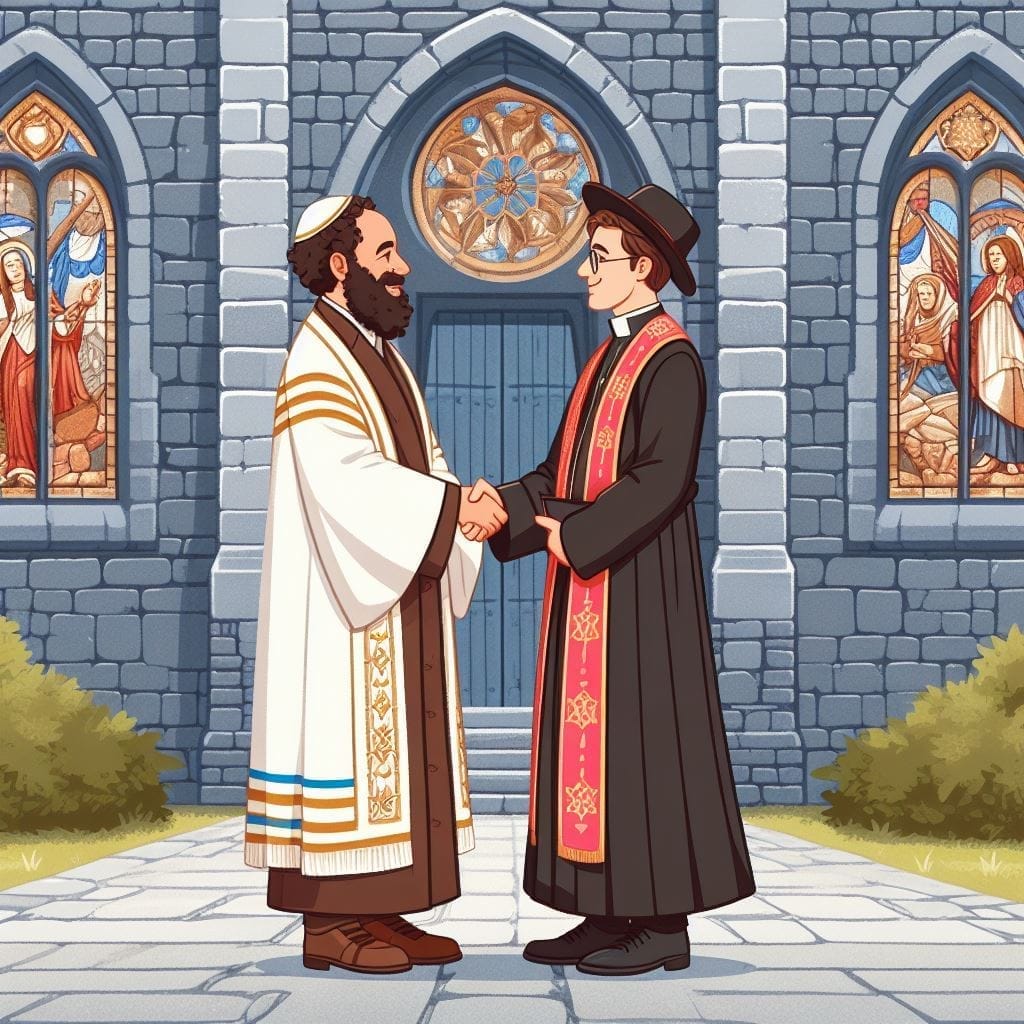
While Judaism stands at the heart of divine revelation, other ancient faiths have preserved elements of sacred order and moral clarity that echo aspects of the eternal truth. Throughout history, great traditional religions have served as barriers against chaos, reminding humanity that holiness, family, and reverence are pillars of civilization.
Traditional forms of Christianity—Catholic, Eastern Orthodox, and Oriental Orthodox—maintain disciplined liturgy, fasting cycles, and moral teachings rooted in antiquity. Certain Protestant bodies—the Lutheran Church–Missouri Synod, the Reformed Church of America, Methodists, Anglicans/Episcopalians, Anabaptists/Mennonites, and Baptists—retain vestiges of sacred structure and conscience.
Though our theologies diverge, we share a common struggle against secularism’s dissolution of faith and family. Wherever awe of Heaven survives—where people pray, honor marriage, and uphold moral restraint—there lies the ground for friendship. Mutual respect among Traditionalists of every path strengthens society’s moral spine. We seek not enemies but neighbors; not competition but cooperation.
The world is dark enough without believers in G-d.
At the same time, our identity is clear: we practice Orthodox and Traditional Judaism, loyal to the Written and Oral Torah and guided by halachic authority. We extend respect without surrender, fellowship without dilution. Conviction and courtesy must coexist.
Principal Traditional Religions and Denominations
Orthodox Judaism and Traditional Judaism*
Catholic, Eastern Orthodox, and Oriental Orthodox Churches
Reformed and Lutheran Churches (Lutheran Church–Missouri Synod and Reformed Church of America)
Methodist traditions
Anglican/Episcopalian communities
Anabaptist/Mennonite fellowships
Baptist congregations
*Traditional Judaism grows from Orthodoxy yet adapts to modern conditions under halachic guidance—seen today in Modern Orthodoxy, Conservadoxy, and Halachic Judaism.
When a Person Has No Spiritual Home
If you find yourself without a place of worship or between traditions, our message is welcome. Respecting other faiths does not mean endorsing their doctrines; it means recognizing the divine image in every seeker. We invite sincere learners to study Torah, experience Jewish life, and see whether our path resonates with their calling.
Our principles:
Pro-Judaism first. We affirm Torah as the center of identity, not politics. Unity rests in Torah, not a state or ideology.
Pro-conversion for the sincere. Those who truly seek to enter the covenant of Israel through halachic means are supported with dignity.
Loyalty to both Torahs—Written and Oral—is non-negotiable; together they define divine service.
Open doors to earnest seekers who wish to live by Torah’s fullness with integrity and humility.
Acceptance of the Thirteen Principles of Faith as the foundation of belief.
Commitment to modest and holy living—discipline, compassion, and humility.
Building enduring micro-communities—fifteen to twenty families joined in study, prayer, and mutual aid.
Our dream is that our great-grandchildren, in their old age, will still sit beneath the same light of Torah that guided us. To reach that day we must build bridges of goodwill with our neighbors, showing that fidelity to one’s own faith need not breed hostility toward another’s. The preservation of faith depends not only on conviction but on kindness and cooperation among all who revere Heaven.
7. Family, Gender, and the Structure of Life
A society that dismantles the family dismantles itself. Traditional Judaism sanctifies the household as the first sanctuary. Husband and wife mirror divine partnership; children extend covenant across time. Modesty, fidelity, and mutual respect are not restrictions—they are protections of sanctity.
While cultures blur distinctions, Torah defines complementarity: man and woman different yet equal before Heaven. Strength and tenderness, intellect and nurture, justice and mercy—each completes the other. The home becomes the seed of civilization; its order radiates outward into community and nation.
8. Education — The Chain of Wisdom
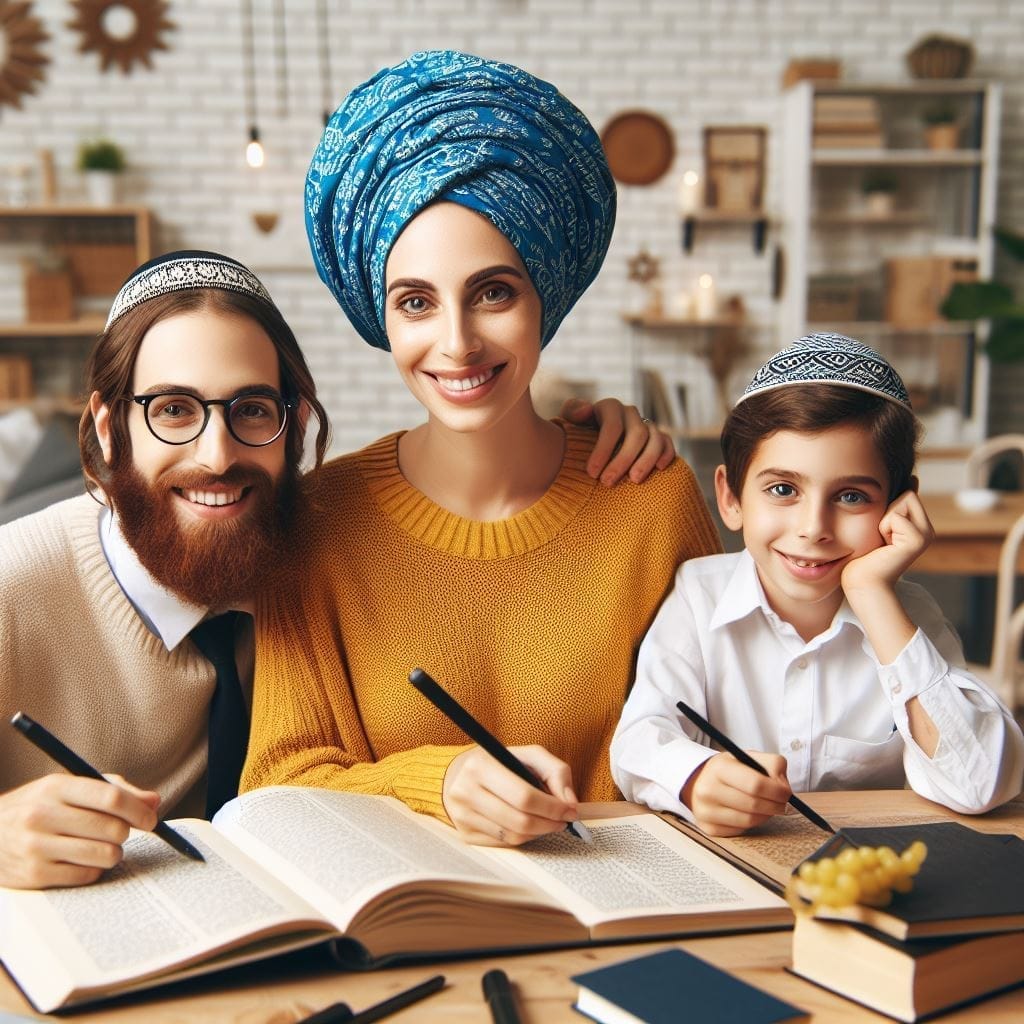
Civilization endures only when it remembers. Traditional education aims not merely to produce workers but to shape souls. In Judaism, learning is worship: “And you shall teach them diligently to your children.” Knowledge divorced from ethics breeds arrogance; ethics without knowledge decays into sentimentality. The union of both forms the educated heart.
From the cheder to the yeshivah, study is dialogue across generations. The teacher is custodian of revelation; the student is its next guardian. Classical education—whether Jewish or Western—once sought to cultivate virtue through Scripture, philosophy, and disciplined reasoning. Restoring that vision is essential to restore moral sanity.
9. The Modern Crisis and the Call to Return
Ours is an age of unraveling. Truth is privatized, virtue politicized, and freedom idolized. Institutions erode because they no longer believe in what built them. Even religion is recast to suit the tastes of the moment.
The Traditionalist rejects this inversion. We do not reshape Torah to fit the times; we reshape ourselves to fit Torah. Moral law is not subject to vote. Revelation stands above fashion. Fidelity, therefore, becomes the boldest form of dissent.
To live traditionally today is to live prophetically—to remind a forgetful world that truth does not expire. Where others discard boundaries, we find blessing within them. The covenant remains our compass amid the storm.
10. A Vision for a possible future Community
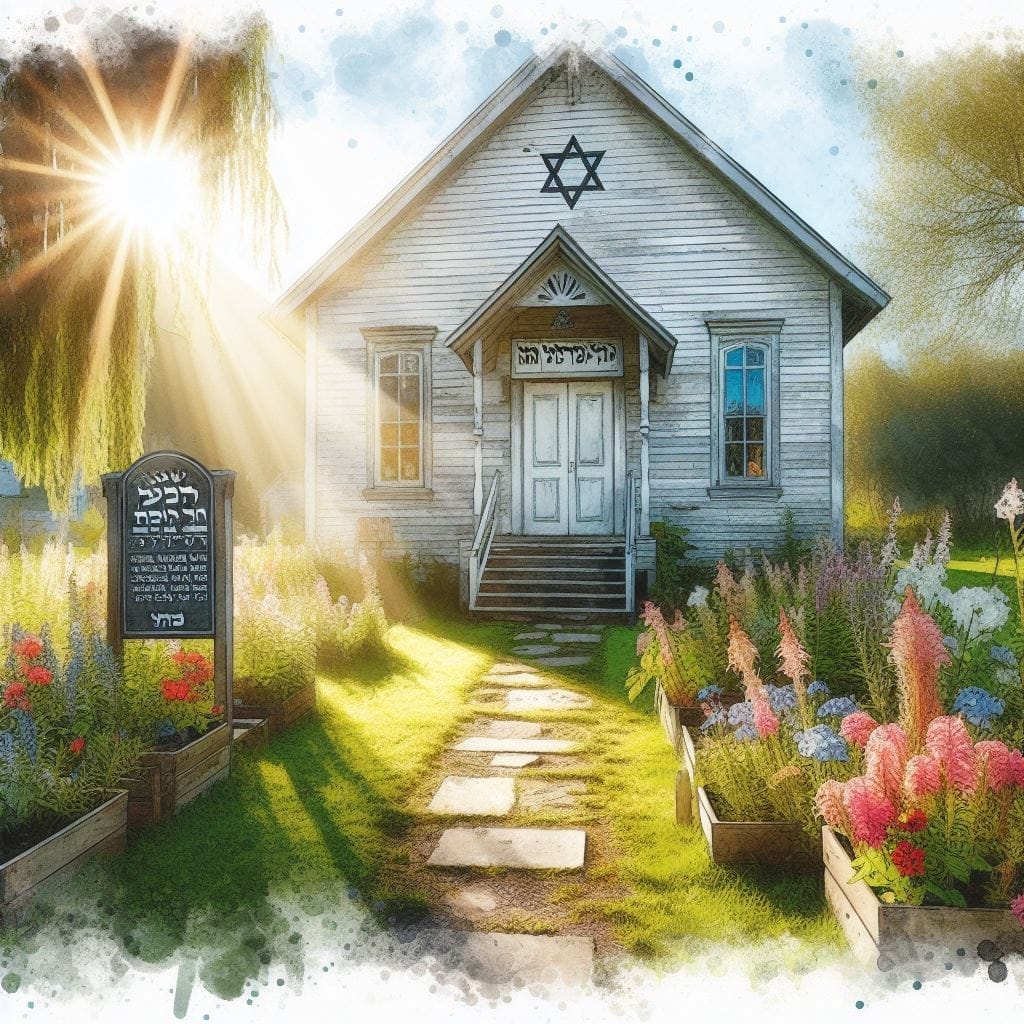
We call upon all who cherish holiness to anchor their lives in genuine Traditional Judaism. Our mission is restorative, not sectarian. We uphold halacha, the Thirteen Principles of Faith, modesty, and compassion. We advocate study, hospitality, and the conversion of sincere souls who long to enter Israel’s covenant.
The Vision for our community is small and will remain small —families gathered for prayer, meals, and learning, sustaining one another through faith and friendship. We seek cooperation, not uniformity, with our Traditionalist neighbors of other creeds. In an age of alienation, shared reverence for the sacred can renew the world’s moral oxygen.
Leaving a religion, denomination, and/or spiritual community must be done with humility, never contempt. Bridges must be crossed carefully so that they remain standing for those who follow. The future of faith depends on courage tempered by courtesy.
Conclusion — Fidelity as Revolution
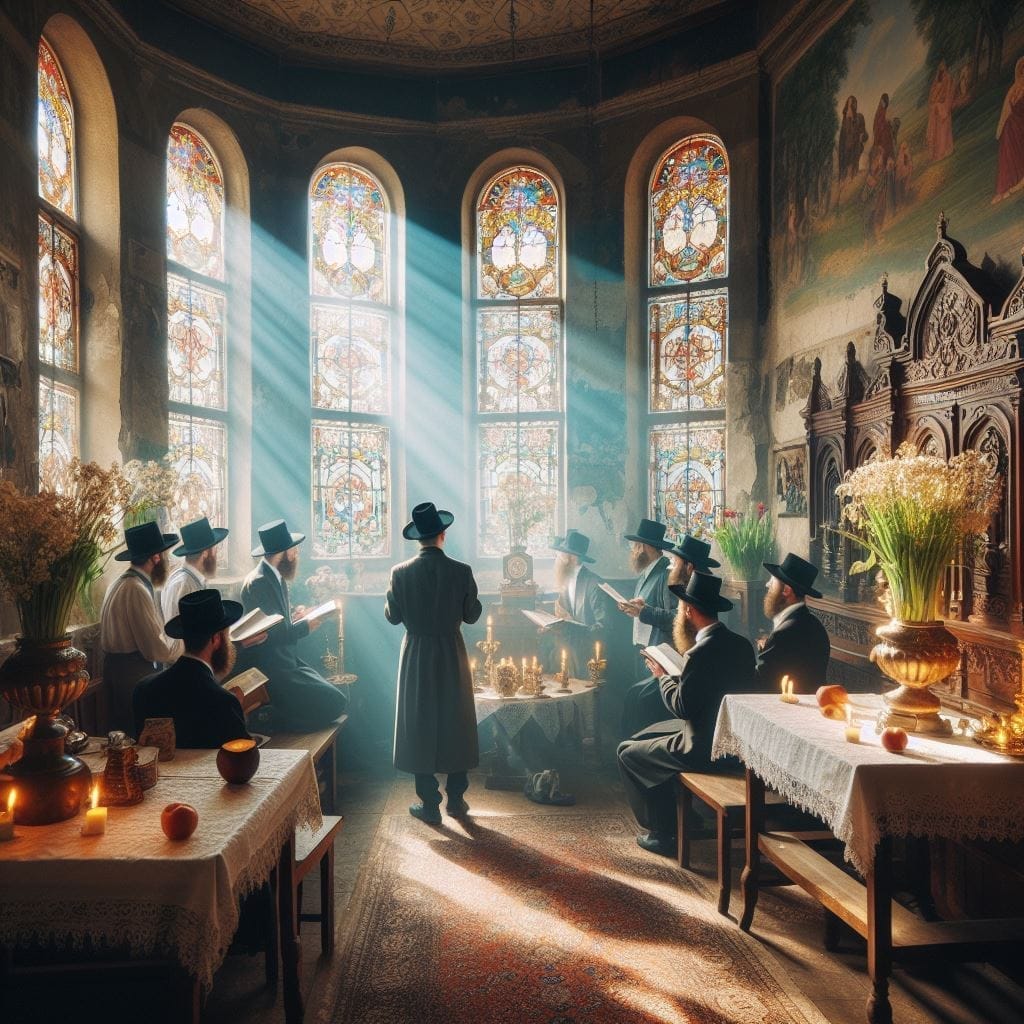
To be a Traditionalist today is to swim against the current; to guard light in an age of glare; to choose covenant over chaos. The prophets called this act teshuvah—return. Every genuine renewal begins not with invention but with remembrance.
We therefore affirm without hesitation:
We are Traditionalists.
We believe that revelation is real, family sacred, and law eternal. We believe that to live modestly, study deeply, and act kindly is to rebel against despair.
As the prophet Yirmiyahu said: “Stand at the crossroads and look; ask for the ancient paths, where the good way lies, and walk in it, and you shall find rest for your souls.” In those words lies the essence of our movement. Tradition is not the echo of the past—it is the voice of eternity, still speaking to those who will listen.
Traditionalism in Action — From Alpena to the Arctic
Traditionalism cannot survive as an intellectual position alone. It must be practiced, taught, and transmitted through the daily lives of individuals and families.
Here in Northeastern Michigan, Shaarei Tzafon — The North Gate seeks to put these principles into practice. Based in the Alpena region, our independent, family-led Orthodox Jewish educational and publishing initiative encourages Torah study, halakhah, Jewish education, and the cultivation of traditional Jewish life.
We believe that Judaism in Alpena, Hillman, Rogers City, and surrounding communities can be strengthened through personal dedication, family learning, and the gradual development of meaningful Jewish relationships.
Yet our vision reaches beyond Northern Michigan.
The 45th parallel represents the Gate through which our northern mission unfolds, extending across Michigan, Canada, and Alaska toward the Arctic. Throughout these northern regions, Jewish families can preserve the extraordinary religious inheritance of both Ashkenazi and Sephardi civilization while cultivating their own local customs and independent places of Torah learning.
The great yeshivot have already been rebuilt. Now we must encourage the renewal of the small shtieblach, batei knesset, and batei midrash where traditional Jewish life can flourish in ordinary communities.
This renewal begins not with grand institutions but with deeds: a family studying Torah, a household observing Shabbat, a child learning Hebrew, and neighbors gathering to strengthen Jewish life.
Our work begins locally, but its message belongs to everyone seeking to preserve traditional Judaism wherever they live.
Traditionalism is not merely a philosophy to defend. It is an inheritance to live.
Shaarei Tzafon — The North Gate
Orthodox Jewish Life and Torah Study in Northeastern Michigan
Shaarei Tzafon — The North Gate, led by Rabbi Ariel Manning, is an independent, family-led Orthodox Jewish educational and publishing initiative based in Northeastern Michigan. We support traditional Jewish life, Torah study, Halakhah, and Jewish education throughout Alpena, Hillman, Rogers City, and surrounding communities. Those interested in traditional Judaism are welcome to contact us for educational resources, Torah learning, and opportunities for discussion by prior arrangement.
Rooted locally, our greater mission extends northward from the 45th parallel — The North Gate — through Michigan, Canada, and Alaska toward the Arctic. We seek to encourage independent Jewish communities, family-centered Torah education, and the renewal of small batei midrash and shtieblach, preserving the rich traditions of Orthodox Judaism for future generations.
Our work begins in Northeastern Michigan, but our vision extends from the 45th parallel toward the Arctic.
Guided by Rambam and Mori Qafiḥ, uplifted by Rebbe Nachman, and grounded by Avraham ben HaRambam’s balance of halakha and inward avodah.
The Orchard’s Path
publishes our books and curricula.
Our mission: a bright, authentic Jewish presence in every northern town.
Created with ©systeme.io


