
Traditionalist Series: Wealth, Poverty, Secular Work, and the Price of Torah
B"H
1. The Personal Beginning: Losing Everything for Torah
This is another part of the traditional series, and this one is personal. We are going to talk about wealth, poverty, work, rabbinic freedom, and what it means to pay the price of Torah.
When we left Christianity and started our process of conversion to Judaism, I was let go from my ministry job. I had been working for an international ministry, making about $30,000-40,000 a year. Once I made it clear that I was converting to Judaism, the relationship no longer made sense. In plain words, that organization had no use for me anymore, and I had no use for that organization anymore.
It was painful. But in another sense, I was being saved from a life that was no longer mine.
After that, we had almost nothing. The little money we had went toward conversion costs, travel, hotel rooms, and the practical expenses of entering Torah life. After conversion, we lived in poverty for about six or seven years.
But looking back, I believe HaShem was teaching us something. We were paying the price of Torah. We were paying the price of belonging to Torah and Israel.
And that price was real.
We lost income. We lost status. We lost friends. We lost people who said they were family. Some told us we were going to hell. Some said we had forsaken the promise of heaven. Very dark things were spoken over us.
But we had HaShem.
We had Torah and Halacha.
We had Judaism.
And that was enough.

2. Torah in Poverty
Chazal taught:
“Whoever fulfills the Torah in poverty will ultimately fulfill it in wealth; and whoever neglects the Torah in wealth will ultimately neglect it in poverty.”
Pirkei Avot 4:9
That teaching must be understood carefully. It does not mean every poor person automatically becomes rich. It does not mean Torah is a magic system for material success. It means that Torah lived through hardship becomes deep, tested, and real.
Poverty strips away illusions. Poverty reveals what a person truly worships. When the comfort is gone, when the support system is gone, when the applause is gone, when the old community rejects you, what remains?
For us, what remained was HaShem, Torah, and Judaism.
Chazal also teach:
“This is the way of Torah: bread with salt you shall eat, water in measure you shall drink, upon the ground you shall sleep, and a life of hardship you shall live; and in Torah you shall labor.”
Pirkei Avot 6:4
This does not mean poverty is romantic. Poverty is painful. Poverty is heavy. A person should not pretend that financial struggle is easy or holy in itself. There is nothing noble about a father worrying how he will feed his children. There is nothing glamorous about bills, stress, and uncertainty.
But there is something holy about remaining loyal to HaShem when life becomes hard.
There is something holy about saying: even if Torah costs me, I will not turn back.

3. “Poverty” or “Wealth” Is Not the Goal
Judaism does not despise work, money, or stability. A Jew needs bread. A Jew needs a home. A Jew needs clothing. A Jew needs to feed his children. A Jew needs dignity.
That is why Chazal say:
“If there is no flour, there is no Torah; and if there is no Torah, there is no flour.”
Pirkei Avot 3:17
This is balance. Torah is not meant to create helpless men who cannot provide, cannot function, and cannot live in the real world. Torah is meant to sanctify real life. Torah enters the ordinary and lifts it up.
So this teaching is not about glorifying poverty. It is not about despising money. It is about knowing what money is and what money is not.
Money is a tool.
This is why my wallet is messy...
Torah is life not money not wealth.
Years later, Baruch HaShem, we are not in the same poverty. We have a beautiful home. We live among the hills and forests. We have a Torah home. We have a whole home. My children are fed. My bills are paid. They have many of their needs and even some of their wants.
Do I have $100,000 in the bank? No.
But we have Shabbat.
We have Yom Tov.
We have kosher food.
We have prayer.
We have Jewish children.
We have a home built around Torah.
That is wealth.
Not wealth according to Wall Street.
Wealth according to covenant.
4. Secular Work Without Secularism
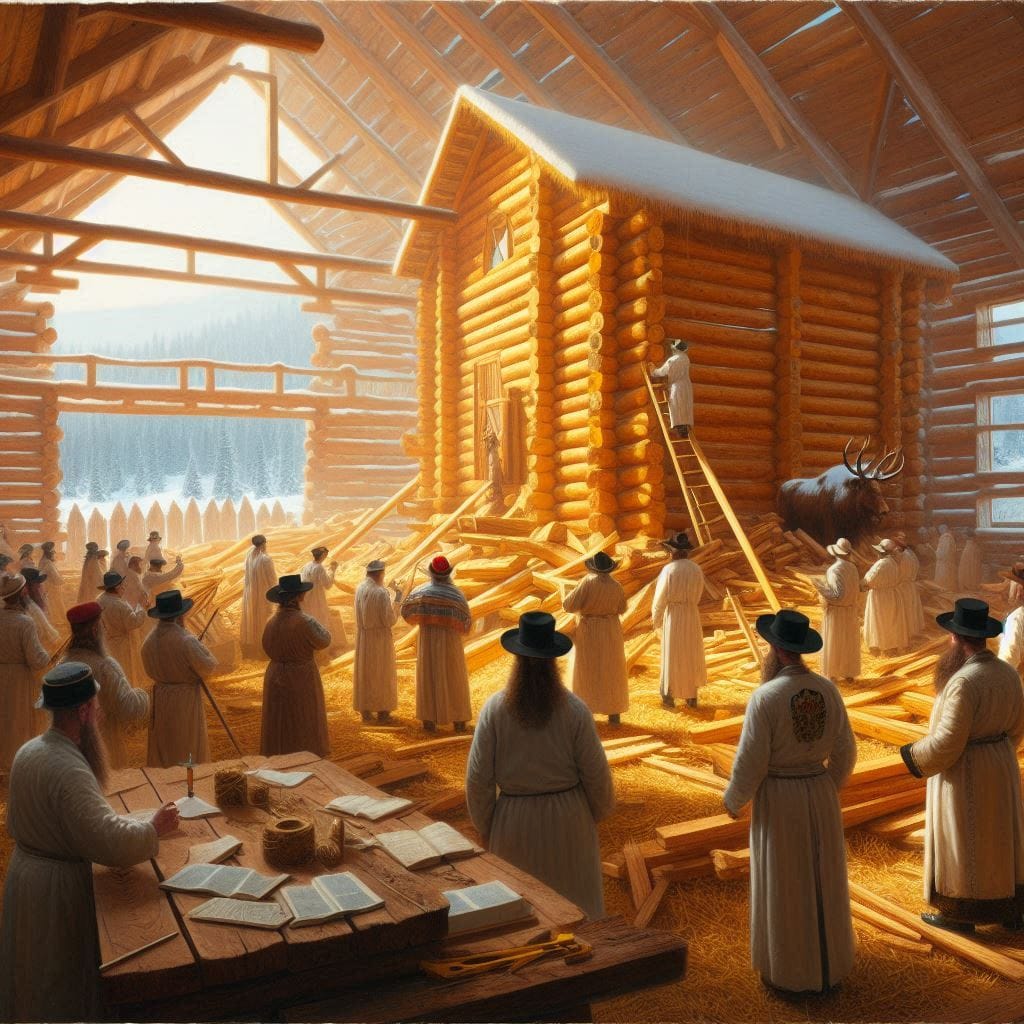
This is why I work a regular nine-to-five job in the secular world. I am part of a Torah vision that honors secular work.
Not secularism.
Secular work.
There is a major difference.
A Jew can work in the public world, in the ordinary world, in the marketplace, in the store, in the trade, in the office, and still bring holiness into that place. The problem is not work. The problem is forgetting HaShem inside the work.
Chazal teach:
“Beautiful is Torah together with derech eretz, for the labor of both of them causes sin to be forgotten; and all Torah that is not accompanied by work will ultimately cease and lead to sin.”
Pirkei Avot 2:2
That is not a small statement. Torah with derech eretz means Torah joined to normal human responsibility. It means Torah joined to labor, provision, discipline, and public life. It means the Jew does not flee the world, but enters it with holiness.
The store can become a place of honesty.
The workplace can become a place of patience.
The schedule can become a place where Shabbat is protected.
The paycheck can become a tool for feeding children, honoring one’s wife, giving tzedakah, and building a Jewish home.
That is holiness in the mundane.
That is Torah in the real world.

5. Rabbinic Freedom and Financial Independence
This is especially important for clergy, rabbis, and Torah teachers. There is a great benefit when clergy are able to work in the secular sector and support themselves honestly.
Why?
Because then the teacher is not always at the mercy of a pulpit, a board, donors, constituents, or a kehillah that may pressure him to say only what they want to hear.
When a rabbi is completely dependent on a congregation for his bread, there is always a danger. He may still be righteous. He may still be brave. But the pressure is real. The fear of losing income can influence what a person says, what he avoids saying, and how strongly he teaches.
Torah should be spoken with reverence before HaShem, not with fear of wealthy members, political factions, or institutional survival.
Rambam speaks very strongly about not turning Torah into a tool for personal financial dependence. He writes that one who decides to study Torah and not work, but instead live from charity, profanes the Name, dishonors Torah, extinguishes the light of religion, brings harm upon himself, and removes his life from the World to Come.
Mishneh Torah, Hilchot Talmud Torah 3:10
Now, this does not mean a rabbi can never be paid. Jewish law recognizes that teachers, judges, and communal servants may receive support under proper conditions.
A community needs teachers.
A community needs dayanim.
A community needs people who can serve.
But the ideal remains clear:
Torah should not become a leash.
Money should not own the mouth of the Torah teacher.

6. Shabbat, Yom Tov, and the Cost of Jewish Life
I know part of what keeps me from chasing certain kinds of money. It is Torah. It is Shabbat. It is Yom Tov. It is the life I chose before HaShem.
I cannot work on Shabbat. I cannot treat the holy days as optional. That limits certain jobs. That limits certain income. That closes most doors.
But those doors are not worth more than Shabbat.
Rambam writes that resting on the seventh day is a positive commandment, and doing forbidden labor on Shabbat is a negative commandment.
Mishneh Torah, Hilchot Shabbat 1:1
The Shulchan Aruch opens the laws of Shabbat preparation by saying that a person must be very careful to honor Shabbat.
Shulchan Aruch, Orach Chaim 242:1
So yes, Torah can cost money.
Shabbat can cost promotions.
Yom Tov can cost opportunities.
Kashrut can cost convenience.
Conversion can cost relationships.
But the question is simple:
What is a Jewish life worth?
The Gemara teaches that a person should work with dignity, even if the work is humble, and not say, “I am too important for this.”
Pesachim 113a
That has become my life.
Work honestly. Keep Shabbat.
Guard Yom Tov.
Feed your children.
Pay your bills.
Build a Torah home.
Do not worship money.
Do not worship men.
Do not let poverty break your emunah.
And do not let comfort make you forget HaShem.
7. Rabbi Versus Religious Control
Chazal warn against loving authority too much:
“Love work, hate lordship, and do not become too familiar with the authorities.”
Pirkei Avot 1:10
That is a powerful statement.
Love work.
Hate domination.
Be careful with power.
This is where we must distinguish between a rabbi and the kind of religious leader many people are used to in unhealthy religious systems.
A clergy is not supposed to own your life.
A clergy is not supposed to control your wife.
A clergy is not supposed to tell your family how to breathe, how to sleep, what sandwich you may buy, how much electricity you may use in your own home, or how every detail of your private household must operate.
That is not Torah.
That is domination.
The role of a rav is to teach Torah, clarify halacha, explain the law, and help a person understand the range of valid Jewish practice.
A rav can say, “This is forbidden.”
A rav can say, “This is permitted.”
A rav can say, “This is the stricter view, and this is the more lenient view.”
A rav can say, “This is how Ashkenazim do it.
This is how Sephardim do it.
This is how Temanim do it.
This is how different communities have handled it.”
That is rabbinic guidance.
But rabbinic guidance is not cultic control.
This why ultimately you have the choice to do what the Rav states or not, this is freedom..
8. Make for Yourself a Rav, Not a Master
Pirkei Avot says:
“Make for yourself a rav, acquire for yourself a friend, and judge every person favorably.”
Pirkei Avot 1:6
And again:
“Make for yourself a rav, and remove yourself from doubt.”
Pirkei Avot 1:16
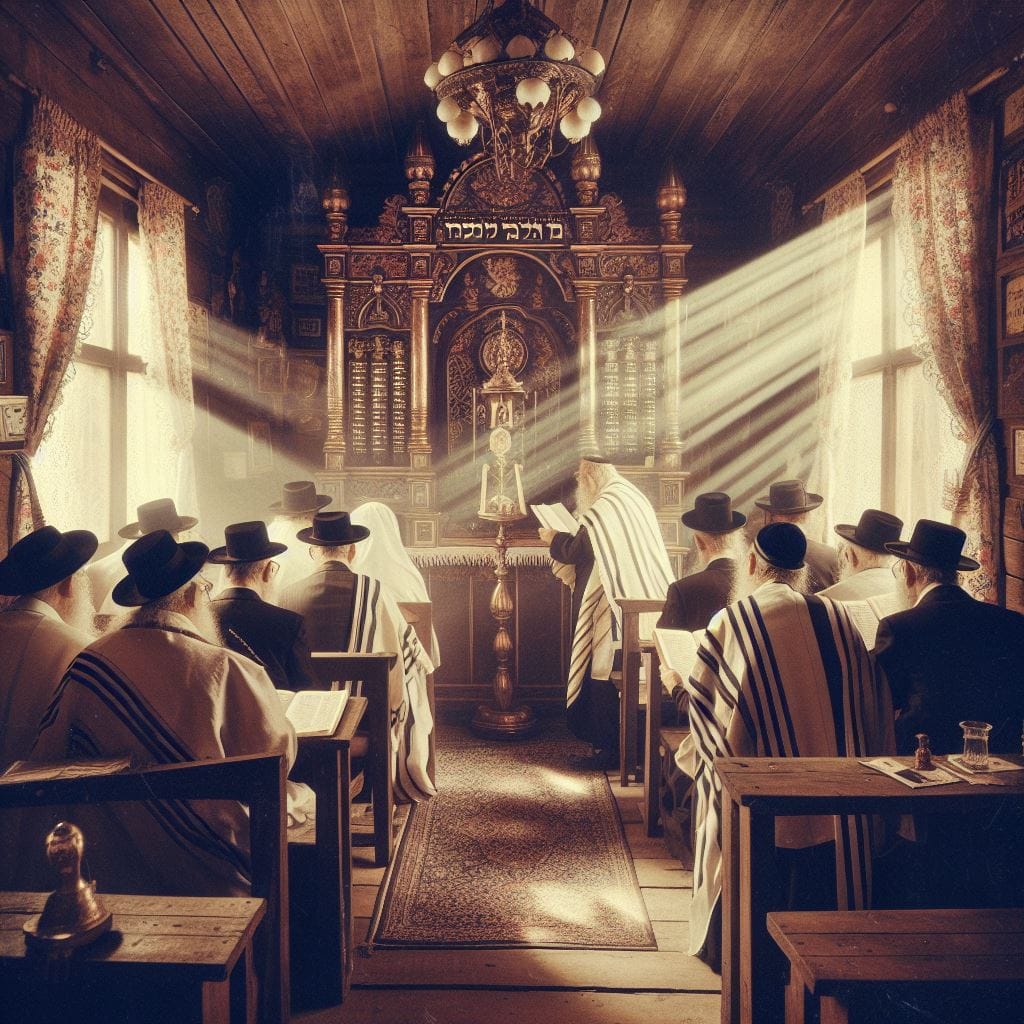
Notice the language: make for yourself a rav. A person needs guidance. A person needs Torah authority. A person needs accountability. A Jew should not drift through halacha alone, inventing Judaism for himself without discipline, tradition, or correction.
But at Shaarei Tzafon, we also teach what Rabbi Asher Meza teaches through Torah Judaism International: a person may have more than one rabbi/rav, especially when trying to understand the full range of halacha and minhagim.
Why?
Because not every rabbi knows every minhag. Not every rav is equally familiar with Ashkenazi, Sephardi, Baladi, Shami, Chassidic, Lithuanian, Spanish-Portuguese, Moroccan, Dutch, or other minhagim (traditions). A rav may know halacha and his own community minhag very well, but that does not mean he knows the whole range of Jewish practice across Klal Yisrael.
That matters.
A Jew should know what is forbidden.
A Jew should know what is permitted.
A Jew should know what is strict law.
A Jew should know what is custom.
A Jew should know what is a chumrah.
A Jew should know what is a valid leniency.
A Jew should know when one community is strict and another community is lenient.
A Jew should know when something is halacha and when something is simply the minhag of one group.
This is especially important for converts, rural Jews, isolated Jews, and families without a stable local community. If a person only learns from one narrow framework, he may accidentally think that one community’s custom is the whole Torah.
That can make Judaism feel much heavier than it actually is.
The role of a rav is to teach Torah, clarify halacha, explain the law, and help a person understand the range of valid Jewish practice. A rav can say, “This is forbidden.” A rav can say, “This is permitted.” A rav can say, “This is the stricter view, and this is the more lenient view.” A rav can say, “This is how Ashkenazim do it, this is how Sephardim do it, this is how Temanim do it, and this is how other communities have handled it.”
That is rabbinic guidance.
But rabbinic guidance is not cultic control.
At the same time, having more than one rav does not mean shopping around until someone tells you what you want to hear. That is not Torah. Once a real halachic question is asked and answered, a person should not treat rabbis like customer-service representatives until he finds the easiest answer. There must be honesty. There must be yirat Shamayim. There must be respect for psak.
But there is a major difference between learning the full range of halacha and shopping for loopholes.
Learning the full range of halacha is healthy.
Shopping for loopholes is not.
A rav is not a replacement for HaShem.
A rav is not a replacement for conscience.
A rav is not a replacement for the husband and wife governing their own Torah home.
There must be religious order, because man will fail. Without order, people drift into chaos.
But order does not mean tyranny.
Halacha is order.
Torah is order.
A beit din is order.
A rav giving a clear psak is order.
But a man inserting himself into another man’s marriage, finances, household, wife, children, work, and daily private decisions in a controlling way is not order. It is spiritual danger.
The Gemara gives a stunning teaching about leadership.
When Rabban Gamliel appointed leaders, he told them:
“Do you think I am giving you authority? I am giving you servitude.”
Horayot 10a
That is the Jewish model.
Leadership is service.
Rabbinic authority is not about ruling over people like a king. It is about carrying responsibility before HaShem.
A rav or any clergy should help a family serve HaShem better.
He should not replace the family.
He should not replace the home.
He should not replace the husband.
He should not replace the wife.
He should not replace HaShem.
So yes, make for yourself a rav. But do not turn a rav into a master. And do not mistake one community’s minhag for the entire Torah. Learn broadly. Ask honestly. Respect halacha. Honor minhag. Seek guidance from those who know the range of Jewish law and Jewish communities.
That is normal Torah life.

9. The Torah Home and Rural Normalcy
This is one reason I believe it is healthy for a man to work a secular job, provide for his family, and build a Torah home that is not financially chained to religious politics.
In our home, we embrace a traditional model: the man works and provides, and the wife is able to be home with the children, raise them, school them, and form the inner atmosphere of the home. That model is not possible for every family, and not every family is built the same way, but for us it is beautiful.
Rambam writes that a husband is obligated to provide his wife with food, clothing, and marital care.
Mishneh Torah, Hilchot Ishut 12:1–2
This is not merely financial. It is covenantal. A husband must not outsource his home to another man’s spiritual control. He must take responsibility for his wife, his children, his income, his Shabbat, his Yom Tov, and his Torah and Halachic life.
This is also part of why rural life matters to us. In a rural area, it is often easier to live this way. It is easier to have a home-based life. It is easier to build around family, land, work, prayer, and Torah.
But the goal is not to become backwards.
The goal is not to flee reality.
The goal is to become normal without becoming secularized.
We are not trying to build something strange, unstable, hysterical, or cult-like.
We are trying to build something normal.
A man works.
A wife builds the home.
Children are raised with Torah.
Shabbat is guarded.
Yom Tov is honored.
Bills are paid.
Food is on the table.
The home is warm.
That is normal Torah life.

10. True Wealth and True Freedom
The Torah says:
“In all your ways, know Him.”
Mishlei / Proverbs 3:6
Chazal understand this as a deep principle: even ordinary human activities can be directed toward Heaven when done properly.
Berakhot 63a
That is the path.
Not poverty for its own sake.
Not wealth for its own sake.
Not rabbinic power for its own sake.
Not secular work for its own sake.
But Torah in the real world.
Being a good Jew is not measured by how much money is in the bank. It is measured by covenant. It is measured by loyalty. It is measured by being connected to HaShem and His Torah forever.
Money comes and goes.
Wealth comes and goes.
Jobs come and go.
Friends come and go.
Even comfort comes and goes.
But Torah remains.
And if a person loses money for Torah, loses status for Torah, loses friends for Torah, or gives up opportunities for Shabbat and Yom Tov, that person has not become poor. He has purchased something eternal.
As Chazal say:
“Make His will like your will, so that He may make your will like His will.”
Pirkei Avot 2:4
That is the heart of it.
We did not become rich in the worldly sense. But we gained a Torah home. We gained Shabbat. We gained Jewish children. We gained a life before HaShem.
And that is wealth.
Because at the end of the day, a Jew is not free because he has money.
A Jew is free because he belongs to HaShem.
Further Torah Study
To explore the foundations of Jewish religious authority and traditional observance, continue reading How Judaism Functions.
For additional discussions of traditional Orthodox Jewish life, explore the Traditionalist Series from Shaarei Tzafon.

Shaarei Tzafon — The North Gate
Orthodox Jewish Life and Torah Study in Northeastern Michigan
Shaarei Tzafon — The North Gate, led by Rabbi Ariel Manning, is an independent, family-led Orthodox Jewish educational and publishing initiative based in Northeastern Michigan. We support traditional Jewish life, Torah study, Halakhah, and Jewish education throughout Alpena, Hillman, Rogers City, and surrounding communities. Those interested in traditional Judaism are welcome to contact us for educational resources, Torah learning, and opportunities for discussion by prior arrangement.
Rooted locally, our greater mission extends northward from the 45th parallel — The North Gate — through Michigan, Canada, and Alaska toward the Arctic. We seek to encourage independent Jewish communities, family-centered Torah education, and the renewal of small batei midrash and shtieblach, preserving the rich traditions of Orthodox Judaism for future generations.
Our work begins in Northeastern Michigan, but our vision extends from the 45th parallel toward the Arctic.
Guided by Rambam and Mori Qafiḥ, uplifted by Rebbe Nachman, and grounded by Avraham ben HaRambam’s balance of halakha and inward avodah.
The Orchard’s Path
publishes our books and curricula.
Our mission: a bright, authentic Jewish presence in every northern town.
Created with ©systeme.io


