
True Spirituality vs. Carnal Spirituality
B"H
1. The Question of Man
When we speak about creation, the age of the earth, the beginning of mankind, and the mysteries of human development, we eventually come to a deeper question: What is man?
Is man only flesh? Is he only instinct? Is he only a creature of appetite, environment, survival, and reproduction? Or is man something more?
The Torah begins with a radical answer. Man is made בְּצֶלֶם אֱלֹקִים — b’tzelem Elokim, in the image of God. This does not mean that man is divine. It does not mean man is God. It means that man carries a unique role within creation. Man is a creature who can know, choose, name, build, bless, judge, pray, repent, and sanctify.
Animals live within creation. Man can contemplate creation.
Animals eat. Man can bless before eating.
Animals mate. Man can enter covenantal marriage.
Animals build nests, burrows, dams, and shelters. But man builds homes, cities, courts, schools, temples, books, music, law, philosophy, and civilizations.
This is not accidental. Man is the creature who stands between earth and heaven. He is formed from dust, yet breathed into by HaShem. He is physical, yet spiritual. He has flesh, yet he has moral responsibility. He has desire, yet he has Torah.
Therefore, the central question is not whether man has appetite. Of course he does. The question is: Will man be ruled by appetite, or will he elevate appetite into holiness?
That is the difference between true spirituality and carnal spirituality.
2. The Created Potential Within Humanity
When discussing the differences between peoples, climates, regions, and inherited traits, we must speak carefully. It is better not to say that a person simply moves to a place and immediately “turns off” or “turns on” a trait. Human inheritance is more complex than that. Over generations, families and populations adapt, inherit, change, and express different physical tendencies.
But from a Torah perspective, the deeper idea remains powerful: HaShem created humanity with tremendous inner potential.
Human beings spread across the earth. Some lived in hot regions, some in cold regions, some in forests, some in mountains, some by oceans, some in deserts, some in snowy lands. Over generations, people became suited to their environments in different ways. But all of this still belongs to one human family. The external differences of humanity do not erase the unity of mankind before HaShem.
The Torah does not teach that mankind is divided into separate creations of unequal worth. The Torah teaches that man is one created family, descended from Adam and later from Noach. All human beings share the dignity of being made in the image of God.
This matters for the lecture because physical difference is not the main point. The main point is that man, wherever he is, carries a spiritual calling. Whether in the desert, the forest, the city, the north, the south, the east, or the west, man must decide what to do with the body, the mind, the soul, and the world around him.
Creation gives man material.
Torah gives man direction.
Without Torah, man may become brilliant and still become corrupt. With Torah, even the simplest act can become holy.

3. Man as the Builder
Animals build, but animals do not build like man.
A bird builds a nest. A beaver builds a dam. An ant colony builds tunnels. A squirrel gathers and shelters. These are amazing acts within creation, and they reveal the wisdom of HaShem in the natural world. But man builds differently.
Man builds not only because he needs shelter. Man builds because he has memory, imagination, language, law, beauty, and spiritual purpose.
Man builds a house, but then he places a mezuzah on the door.
Man builds a table, but then he turns it into a Shabbat table.
Man builds a school, but then he fills it with Torah.
Man builds a court, but then he judges according to law.
Man builds a sanctuary, but then he directs his heart to Heaven.
This is the unique dignity and danger of man. He can build a Mishkan, a dwelling place for the Divine Presence. But he can also build Bavel, a tower of arrogance. He can build a Beit Midrash, or he can build an idol temple. He can use technology to serve life, or he can use technology to enslave the soul. He can create music that lifts the heart toward HaShem, or he can create music that inflames the lowest parts of man.
So creativity is not automatically holy.
Human creativity must be judged by its direction.
Does it serve HaShem, or does it serve ego?
Does it elevate the world, or does it corrupt the world?
Does it bring man closer to Torah, or farther from Torah?
Man is a builder. But Torah asks: What are you building, and for whom are you building it?

4. The Two Inclinations
The heart of this teaching is the Jewish idea of the yetzer hatov and the yetzer hara.
Many people misunderstand the yetzer hara. They think it means only evil, wickedness, cruelty, or demonic desire. But in Jewish thought, the yetzer hara is also the raw driving force of human life. It includes appetite, hunger, sexuality, ambition, competition, possession, survival, and the desire to build.
Without the yetzer hara, a man would not marry, build a house, have children, work, trade, create, plant, harvest, or develop civilization. The yetzer hara is dangerous, but it is not useless. It is powerful energy.
The problem is not that man has desire.
The problem is when desire becomes king.
The yetzer hatov does not destroy desire. It governs desire. It directs desire. It places desire under the yoke of Heaven.
This is why Judaism is not a religion of body-hatred. Torah does not say, “Stop being human.” Torah says, “Become a holy human.”
A holy person still eats.
A holy person still marries.
A holy person still builds.
A holy person still enjoys beauty.
A holy person still works, creates, and lives in the world.
But he does not live as an animal. He does not live as a slave to impulse. He does not say, “Because I want it, it must be good.” He says, “I have desire, but desire must answer to HaShem.”
That is the battle within man.
The yetzer hara says: Take.
The yetzer hatov says: Receive, bless, elevate, and serve.

5. Food: Appetite or Avodah
Food is one of the clearest examples.
A person can eat like an animal. He can grab, devour, consume, indulge, and forget. In that case, food remains merely physical. It fills the stomach but does not elevate the soul.
But a Jew can eat differently.
A Jew pauses. He recognizes that the food did not come from nowhere. The bread came from grain. The grain came from earth. The earth received rain. The rain came by the mercy of Heaven. The strength to plant, harvest, grind, bake, buy, and prepare all comes from HaShem.
So before eating, a Jew says a berakhah, a blessing.
This changes the act.
The food is still food. The body is still eating. The stomach is still receiving nourishment. But the act has been lifted. It is no longer blind consumption. It is now recognition. It is gratitude. It is service.
The same bread can be animal appetite or holy nourishment.
The difference is not the bread.
The difference is the consciousness, the commandment, and the blessing.
This is the genius of Torah. Judaism does not teach that physical things are automatically dirty. It teaches that physical things must be received properly.
Food without blessing becomes consumption.
Food with blessing becomes avodah, divine service.
When a person eats in order to have strength to serve HaShem, to learn Torah, to raise children, to do mitzvot, to work honestly, to help others, and to live with dignity, then eating itself becomes part of holiness.
6. Marriage: Desire or Covenant
The same is true with marital intimacy.
This is where the distinction between true spirituality and carnal spirituality becomes very sharp.
Carnal spirituality says: “If I feel it deeply, it must be sacred.”
Torah says: “Not every powerful feeling is holy.”
Desire is powerful. Attraction is powerful. Emotion is powerful. But power is not the same as holiness. A fire can warm a home, or it can burn the house down. The question is whether the fire is contained within the proper vessel.
In Torah, marital intimacy is not dirty. It is not shameful. It is not a necessary evil. Within marriage, modesty, love, responsibility, family purity, and covenant, it can be holy.
But outside of the Torah’s boundaries, desire becomes destructive.
This is where hedonistic systems make their great mistake. They take physical pleasure and try to spiritualize it without submitting it to HaShem. They use religious language, mystical language, emotional language, and even “sacred” language, but underneath it all is often the same old message: I want what I want, and I want my wanting to be called holy.
Torah refuses this.
Torah does not say the body is evil.
Torah says the body must be consecrated.
Torah does not say desire must be erased.
Torah says desire must be disciplined.
Torah does not say pleasure is forbidden.
Torah says pleasure must be placed within covenant, law, modesty, and holiness.
That is true spirituality.
7. Carnal Spirituality
The phrase carnal spirituality is important.
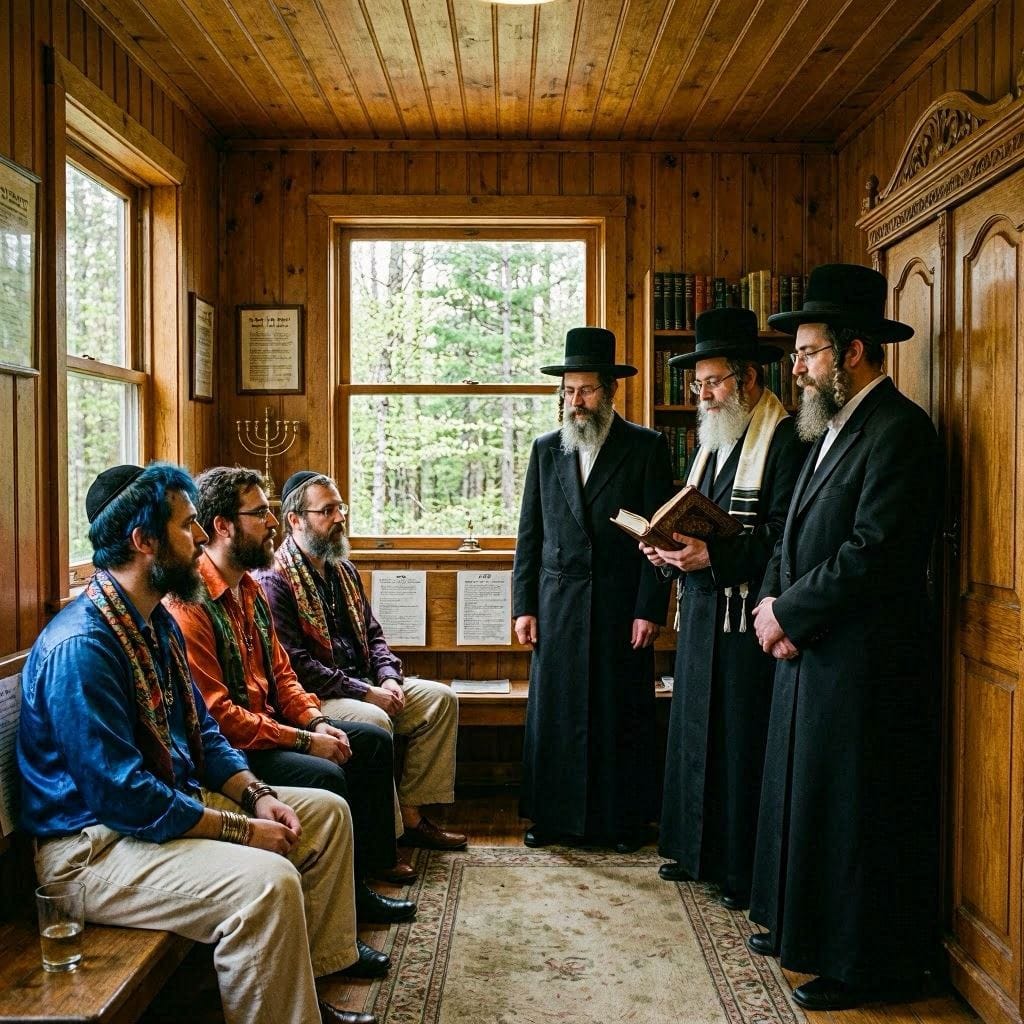
Carnal spirituality is not simple atheism. It is not always secular. It can be very religious. It can have rituals, candles, chanting, music, robes, incense, visions, ecstasy, nature language, divine language, and mystical vocabulary.
But beneath all of that, carnal spirituality is the attempt to make appetite sacred without obedience.
It says:
“This is my truth.”
“This is my energy.”
“This is my sacred pleasure.”
“This is liberation.”
“This is the divine within me.”
“This is my authentic self.”
But very often, what it really means is:
“I do not want my desires judged by God.”
That is the root of the problem.
Carnal spirituality does not necessarily deny spirituality. It misuses spirituality. It takes the language of holiness and places it around the throne of the self.
This is why it is so dangerous. A person who is openly materialistic may know he is chasing pleasure. But a person trapped in carnal spirituality may believe his indulgence is enlightenment. He may believe that his surrender to appetite is actually a spiritual path.
But Torah asks a harder question:
Does this bring you under the will of HaShem, or does it simply baptize your desires in religious language?
If there is no commandment, no discipline, no humility, no modesty, no repentance, no covenant, and no obedience, then it is not true holiness.
It is flesh wearing the mask of spirit.

8. True Spirituality
True spirituality is not measured by intensity.
It is not measured by emotion.
It is not measured by how mystical something feels.
True spirituality is measured by whether it brings a person closer to the will of HaShem.
In Judaism, holiness is not self-invented. Holiness is commanded, formed, guarded, and practiced. It is not vague. It has structure.
That is why Judaism has:
Berakhot over food.
Kiddush over wine.
Havdalah over separation.
Kashrut over eating.
Shabbat over time.
Tefillah over speech.
Tzedakah over money.
Taharat hamishpachah over marriage.
Beit din over justice.
Torah over thought.
Judaism takes every part of life and asks: How can this serve HaShem?
That is the opposite of indulgence.
Indulgence says: “I use the world for myself.”
Torah says: “I receive the world from HaShem and return it to Him through mitzvot.”
This is why the physical world is not rejected in Judaism. It is elevated. Wine becomes Kiddush. Bread becomes hamotzi. Marriage becomes covenant. Work becomes honest livelihood. Speech becomes prayer. Money becomes tzedakah. Time becomes Shabbat. A house becomes a Jewish home.
True spirituality does not float above life. It enters life and sanctifies it.

9. Gan Eden and the First Indulgence
The story of Gan Eden teaches this from the beginning.
The first sin involved eating.
That is not accidental.
Food itself was not evil. HaShem created food. The trees were good. The garden was good. The body was good. The problem was not eating. The problem was eating outside the command of HaShem.
This is the root of indulgence.
Indulgence is not merely enjoying something. Enjoyment can be holy. Indulgence means taking pleasure outside its proper boundary.
It means saying:
“I will take what I want, when I want, how I want, without submitting the act to HaShem.”
Torah says the opposite:
“I receive creation as a gift, but I use it according to the will of the Giver.”
That is the entire difference.
This is why Torah spirituality is so much deeper than mere pleasure or mere denial. Torah does not tell Adam and Chavah that all trees are forbidden. Most of the garden is permitted. But there is a command. There is a boundary. There is obedience.
Holiness requires both gift and limit.
A world with no gift is cruelty.
A world with no limit is chaos.
Torah gives both.
HaShem gives man a world to enjoy, but also commandments to guard that enjoyment from becoming corruption.
10. The Sanctified Human Being
The final message of this lecture is simple but powerful:
The difference between Torah spirituality and carnal spirituality is not that Torah rejects the body. The difference is that Torah refuses to worship the body.
Judaism does not ask man to become an angel.
Judaism asks man to become a holy human being.
A holy human being eats, but blesses.
A holy human being desires, but disciplines desire.
A holy human being marries, but within covenant.
A holy human being builds, but for the service of HaShem.
A holy human being creates, but does not worship his own creativity.
A holy human being enjoys the world, but remembers the Creator of the world.
This is the true war between the yetzer hara and the yetzer hatov. The yetzer hara is not always asking man to become obviously wicked. Sometimes it simply asks man to enthrone appetite. It says, “Your desire is your god. Your feeling is your truth. Your pleasure is your path.”
The yetzer hatov answers, “No. Desire is powerful, but HaShem is King. Pleasure is real, but Torah is higher. The body is good, but it must become a vessel for holiness.”
This is true spirituality.
Not hatred of the body.
Not worship of the body.
But the sanctification of the body through Torah.
The human being is dust and breath, earth and heaven, flesh and soul. If he follows only the flesh, he falls below himself. If he denies the body completely, he misunderstands his mission. But if he takes the body, the appetite, the desire, the creativity, the home, the table, the marriage, the work, the food, the wine, the speech, and the mind, and places them under Torah, then he becomes what man was created to be:
A servant of HaShem.
A builder of holiness.
A creature of earth who lives toward Heaven.
Further Torah Study
True spirituality is not separate from everyday Jewish life. It is expressed through Torah study, Halakhah, honest work, family responsibility, and the sanctification of ordinary activities.
Continue exploring these principles through How Judaism Functions, Judaism Is the Torah Movement, and our Traditionalist Series at Shaarei Tzafon.

Shaarei Tzafon — The North Gate
Orthodox Jewish Life and Torah Study in Northeastern Michigan
Shaarei Tzafon — The North Gate, led by Rabbi Ariel Manning, is an independent, family-led Orthodox Jewish educational and publishing initiative based in Northeastern Michigan. We support traditional Jewish life, Torah study, Halakhah, and Jewish education throughout Alpena, Hillman, Rogers City, and surrounding communities. Those interested in traditional Judaism are welcome to contact us for educational resources, Torah learning, and opportunities for discussion by prior arrangement.
Rooted locally, our greater mission extends northward from the 45th parallel — The North Gate — through Michigan, Canada, and Alaska toward the Arctic. We seek to encourage independent Jewish communities, family-centered Torah education, and the renewal of small batei midrash and shtieblach, preserving the rich traditions of Orthodox Judaism for future generations.
Our work begins in Northeastern Michigan, but our vision extends from the 45th parallel toward the Arctic.
Guided by Rambam and Mori Qafiḥ, uplifted by Rebbe Nachman, and grounded by Avraham ben HaRambam’s balance of halakha and inward avodah.
The Orchard’s Path
publishes our books and curricula.
Our mission: a bright, authentic Jewish presence in every northern town.
Created with ©systeme.io


