
Tu B’Av on the Foothills of Elul Part 2
B”H
Introduction: A Teaching within the Orchard Path
This teaching belongs within the larger framework of The Spiritual Side of the Field of Sacred Apples: The Foothills of Elul. It does not replace that teaching, and it should not stand disconnected from it. The Field of Sacred Apples remains the broader mashal: the orchard as a witness to the journey from mourning to teshuvah, from Tammuz to Av, from Elul to the Days of Awe, from Sukkot to the late sweetness of the winter apple.
But within that larger path, there is a specific turning point that deserves its own teaching.
That turning point is Tu B’Av, the fifteenth day of Av.
At Shaarei Tzafon, we do not treat the Jewish calendar as a flat list of dates. We receive it as a living terrain. There are valleys, breaches, descents, foothills, mountains, and shelters. A Jew does not leap straight from destruction to repentance. The soul must be led. It must pass through mourning, comfort, love, courage, and only then the open call of Elul.
This is why Tu B’Av matters.
Tu B’Av is often spoken of lightly, as if it were merely a romantic Jewish holiday. But Chazal did not speak of it lightly. The Mishnah teaches that there were no days as joyous for Israel as Tu B’Av and Yom Kippur. That comparison is astonishing.
Yom Kippur is the day of forgiveness, purification, and covenantal renewal.
If Tu B’Av stands beside it, then Tu B’Av must also belong to the deep structure of return.
Yom Kippur is the joy after judgment.
Tu B’Av is the joy after destruction.
Yom Kippur says: you can be forgiven.
Tu B’Av says: you are still loved.
In the Field of Sacred Apples, this is the moment when the first sweetness begins to appear after Tish’a B’Av. The apple is not yet the full harvest of Elul and Rosh Hashanah. It is not yet the apple dipped in honey. It is the first sign that the bitterness of destruction does not have the final word.
Tu B’Av is one of the foothills of Elul.

I. The Descent Before the Ascent
To understand Tu B’Av, we must first understand the descent that comes before it.
The path begins on the 17th of Tammuz, the day when the walls of Jerusalem were breached. This was not only a military tragedy. It was a spiritual rupture. A wall represents boundary, protection, order, and covenantal form. When the walls of Jerusalem were broken, the center of Israel’s life was exposed.
Chazal connect the 17th of Tammuz with several calamities: Moshe Rabbeinu breaking the first Tablets, the cessation of the daily offering, the breach of Jerusalem, and other wounds in Israel’s national memory. Each one represents interruption. The covenant is shaken. The daily order is disturbed. The place where Israel stands before Hashem is wounded.
From that day we enter Bein HaMetzarim, the Three Weeks, the days “between the straits.” These are narrow days. The soul is pressed. The Jewish people remember not only the destruction of buildings, but the condition of exile itself: the Temple destroyed, Jerusalem burned, the Shekhinah hidden, Israel scattered, and the world left spiritually incomplete.
This descent reaches its lowest point on Tish’a B’Av.
Tish’a B’Av is not merely the anniversary of destruction. It is the yearly encounter with the fact that the Beit HaMikdash is not standing. It is the grief of distance from the revealed Presence of Hashem. It is the sorrow of a world in which heaven and earth no longer openly meet in the House chosen by Hashem.
Shaarei Tzafon insists that teshuvah cannot be honest if it skips mourning. A person who rushes to sweetness without facing brokenness has not yet begun the work. Before Elul can call us upward, Tish’a B’Av must teach us what has been lost.
The soul must first be able to say: something is broken.
Only then can it say: I want to return.
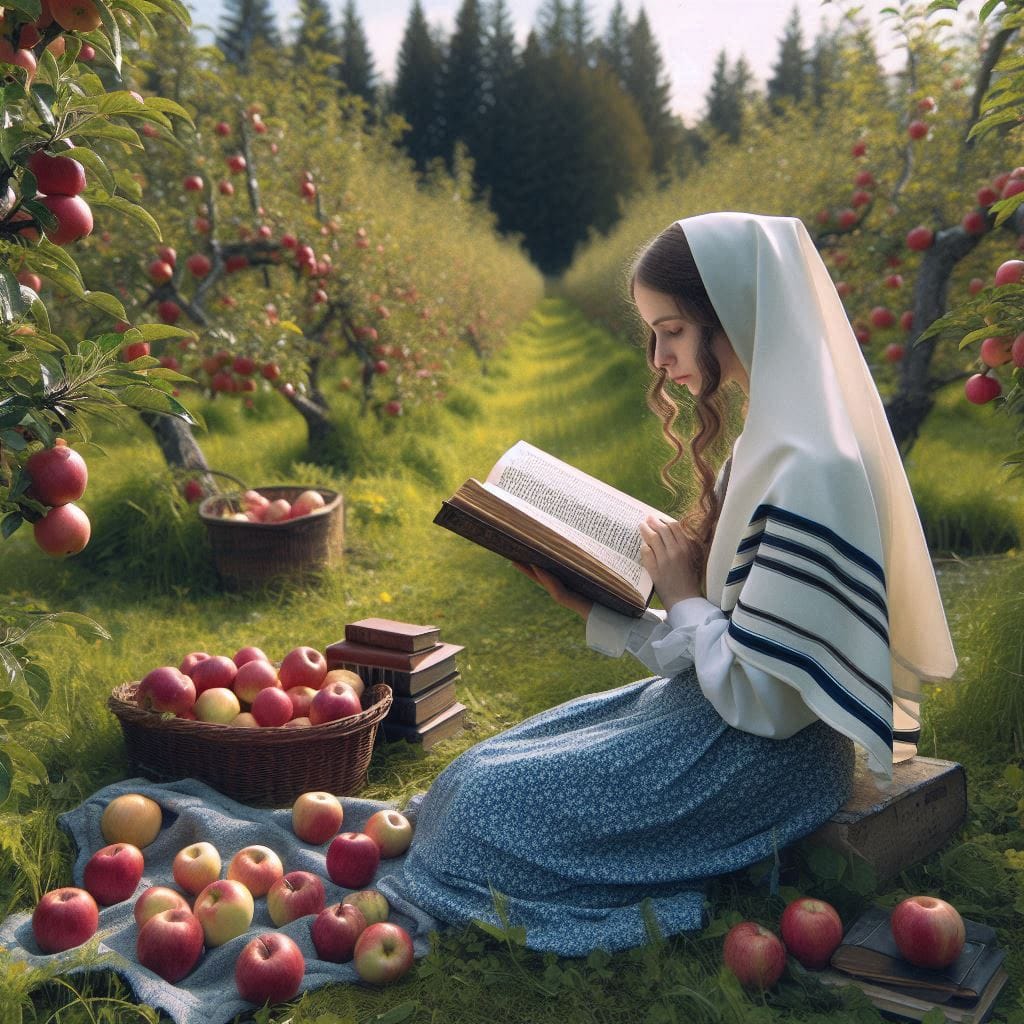
II. Tu B’Av: The First Turning of the Heart
Tu B’Av comes only six days after Tish’a B’Av, yet spiritually it stands as its opposite.
Tish’a B’Av is the darkened moon of exile.
Tu B’Av is the full moon of hidden consolation.
Av is the month of mourning, but on the fifteenth of Av the moon is full. This is not just calendar imagery. It teaches a principle: the same month that contains destruction also contains the first fullness of comfort. Hashem does not wait for a different world to begin healing us. He begins from within the wound itself.
Tu B’Av is not yet Elul. It is not yet Selichot. It is not yet the shofar. It is not yet Rosh Hashanah. It is softer than all of that. It is the first movement of the heart after grief.
In the language of the soul:
Tish’a B’Av says: I have lost the House.
Tu B’Av says: I am still part of the covenant.
Tish’a B’Av says: the Presence is hidden.
Tu B’Av says: love has not been destroyed.
Tish’a B’Av says: sit low and mourn.
Tu B’Av says: stand up and begin to hope.
This is why Tu B’Av belongs to the foothills of Elul. It does not demand the full climb yet. It does not ask the soul to run. It simply begins to restore the possibility of return.
At Shaarei Tzafon, this matters because we are not interested in religious theater. We do not pretend that people can move from brokenness to holiness in one dramatic leap. Torah is truthful. It knows the order of the soul.
First there is grief.
Then there is comfort.
Then there is hope.
Then there is teshuvah.
Tu B’Av is hope.
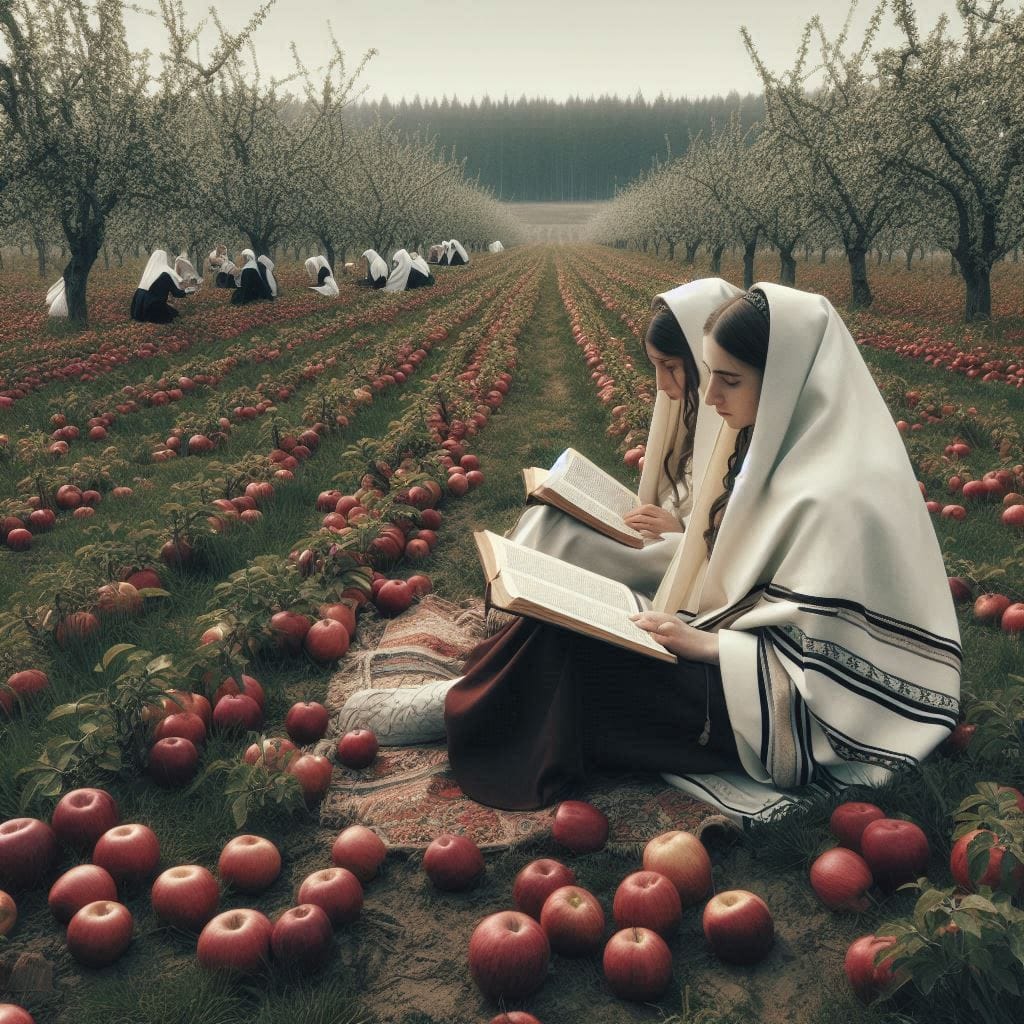
III. The Events of Tu B’Av: Reconnection after Separation
The Gemara explains that several events are associated with Tu B’Av. They may appear different on the surface, but they share one root: reconnection.
The decree against the generation of the wilderness came to an end. The tribes were permitted to intermarry. The tribe of Binyamin was allowed back into the life of Israel after the terrible events recorded in Sefer Shoftim. The roadblocks set up by Yeravam ben Nevat to prevent pilgrimage to Jerusalem were removed. The dead of Beitar were finally allowed burial.
Each of these events repairs a form of separation.
A generation separated from the Land reaches closure.
Tribes separated from one another are permitted to join.
Binyamin, nearly cut off from Israel, is restored.
Pilgrims blocked from Jerusalem can go up again.
The dead of Beitar, denied burial, receive dignity.
Tu B’Av is therefore not only about romance. It is about the healing of broken bonds. It is about Israel becoming whole again. It is about the removal of blockages. It is about paths reopening.
This is the deeper meaning of the young women going out in white garments and the formation of marriages on Tu B’Av. Marriage is not merely private happiness. In Torah, marriage is covenantal building. It is the creation of a bayit, a house. After the loss of the House of Hashem on Tish’a B’Av, Tu B’Av begins with the rebuilding of houses within Israel.
The Beit HaMikdash is not yet rebuilt.
But Jewish homes can begin to heal.
The national House is gone.
But the covenantal house can still be formed.
This is part of the Shaarei Tzafon teaching: Jewish rebuilding does not begin with slogans. It begins with homes, marriages, children, learning, modesty, prayer, and the slow restoration of trust between Jews, between families, and between the soul and Hashem.
Tu B’Av teaches that after destruction, the first rebuilding is relational.
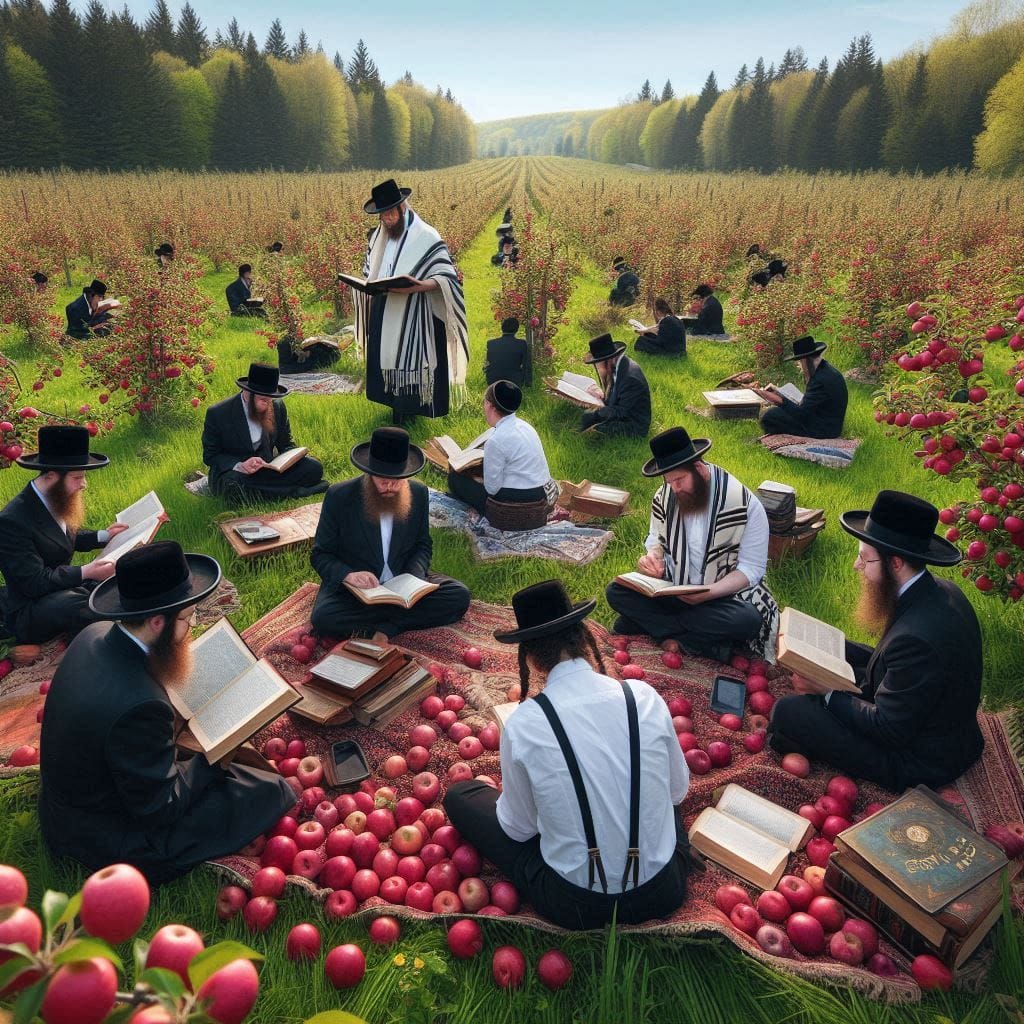
IV. Nachamu: The Voice that Follows the Turning
Tu B’Av is closely connected in spirit to Shabbat Nachamu, the Shabbat after Tish’a B’Av, when we begin the seven haftarot of consolation from Sefer Yeshayahu.
The opening words are:
Nachamu, nachamu ami, yomar Elokeichem.
“Comfort, comfort My people, says your God.”
The doubling matters. “Comfort, comfort” is not mere repetition. It is tenderness. It is the language of a Father who knows that one word of comfort is not enough for a deeply wounded people. The wound was doubled through the destruction of the First Temple and the Second Temple, and therefore the comfort is doubled. But the repetition also reveals closeness. Hashem does not comfort Israel from a distance. He speaks directly into the wound.
Tu B’Av awakens the heart.
Shabbat Nachamu gives that awakening a voice.
Tu B’Av says: love is still possible.
Nachamu says: Hashem Himself is speaking comfort.
Almost twenty years ago, I heard an Orthodox rabbi offer an inward reading of these words: “Comfort yourselves; comfort yourselves.” This is not the simple grammatical meaning of the verse, but it has remained with me ever since. Hashem gives the comfort, yet the wounded soul must become willing to receive it. Sometimes a person becomes so accustomed to sorrow that comfort itself begins to feel unfamiliar.
Comfort in Torah is not denial. It does not mean pretending that the churban never happened or declaring that everything is now complete. The Temple is still not standing. Exile is still real. The Shekhinah is still hidden.
But Hashem says: My people are still My people.
That is the foundation of teshuvah. A Jew can return because the covenant still exists. A Jew can confess because Hashem still listens. A Jew can repair because Hashem has not abandoned him.
For many years, Leonardo Gonçalves’s album Avinu Malkenu, and especially the song “Nachamu, Nachamu,” has accompanied this season for our family. The artist comes from a Bnei Anusim background, but the album itself does not arise from within Orthodox Jewish communal life. Shaarei Tzafon therefore does not receive it as a source of nusach, halachah, theology, or religious authority.
Shaarei Tzafon is a developing Orthodox Jewish organization. Accordingly, we do not treat the album as a whole as Jewish religious music. Anusim ancestry, by itself, does not establish halachic Jewish status without a verifiable maternal Jewish line. Where such status cannot be established, halachic conversion is required. In addition, several tracks on the album arise from Christian belief or contain non-Jewish religious material. We therefore exclude those tracks entirely.
Our listening is strictly limited to selections whose words and content are authentically Jewish—drawn from Tanakh, the siddur, the machzor, or established Jewish song. Even these selections are received only as musical interpretations of Jewish texts. They are not used to blur the boundary between Judaism and Christianity, to confer halachic Jewish standing upon the artist, or to characterize the album as a whole as Jewish religious music.
Within those boundaries, however, the album became part of an important transition toward Judaism. Sometimes a person first hears an echo before reaching the Jewish source from which the words came. The echo must never replace the source, but it may awaken the longing that leads a person toward it.
The album’s haunting sound carries the feeling of seasonal change. In Northern Michigan, we hear it as summer begins turning toward autumn: the evenings cool, the light softens, leaves prepare to fall, and the apples become heavy on their branches. In Brazil, where the album arose, the same time of year carries winter toward spring. The seasons move in opposite directions, yet both landscapes stand at a threshold.
One world prepares for harvest and rest.
The other prepares for awakening and renewed growth.
Teshuvah contains both movements. Something must fall away, and something must awaken. Old leaves must be released, while new life must be trusted. Fruit must ripen, and the seed of the coming year must be prepared.
In the Field of Sacred Apples, Nachamu is the first sweetness after bitterness. The fruit begins to ripen not because the destruction was false, but because Hashem’s mercy is deeper than destruction. The orchard is not Torah, and the music is not Torah. They are witnesses that help the heart receive what Torah has already spoken.
First comes mourning.
Then Shabbat Nachamu declares that Israel is still Hashem’s people.
Then Tu B’Av teaches that love survived.
Then Elul begins. The apples ripen, the field opens, and the King draws near.
The soul that has learned to receive comfort can finally begin to return.
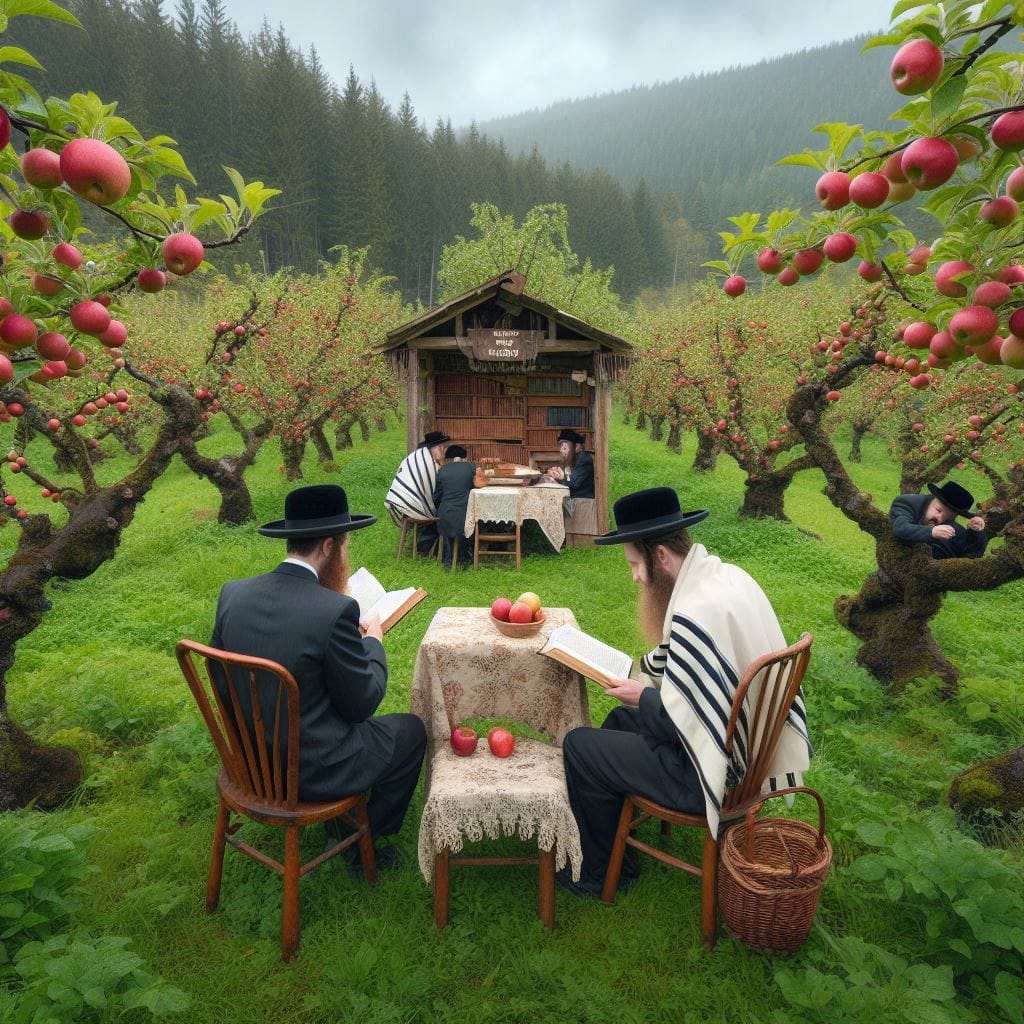
V. Tu B’Av as the Foothills of Elul
Elul is often described as a mountain of teshuvah. It is the month of the shofar. The month of accounting. The month when the King is in the field. The month when the soul begins to prepare for Rosh Hashanah and Yom Kippur.
But mountains are not climbed all at once.
Before the mountain come the foothills.
Tu B’Av is not the mountain. It is not yet the full labor of Elul. It is the first incline. It is the gentle rise after the valley of mourning. It is the place where the soul begins to breathe again.
This is one of the central teachings of Shaarei Tzafon: the path of return must be truthful to the condition of the soul. A person cannot be bullied into teshuvah. He can be commanded. He can be taught. He can be warned. But inward return requires hope.
Without hope, confession becomes despair.
Without love, judgment becomes terror.
Without comfort, Elul becomes pressure instead of invitation.
Tu B’Av gives the soul permission to believe that return is possible.
This is why it belongs inside the larger Field of Sacred Apples cycle. In that teaching, the orchard shows us that fruit does not ripen all at once. Some apples ripen early, some during Elul, some near the Days of Awe, and some only after Sukkot. Tu B’Av is the first ripening after mourning. It is the early apple of consolation.
It is not the whole harvest.
But it tells us the harvest is coming.
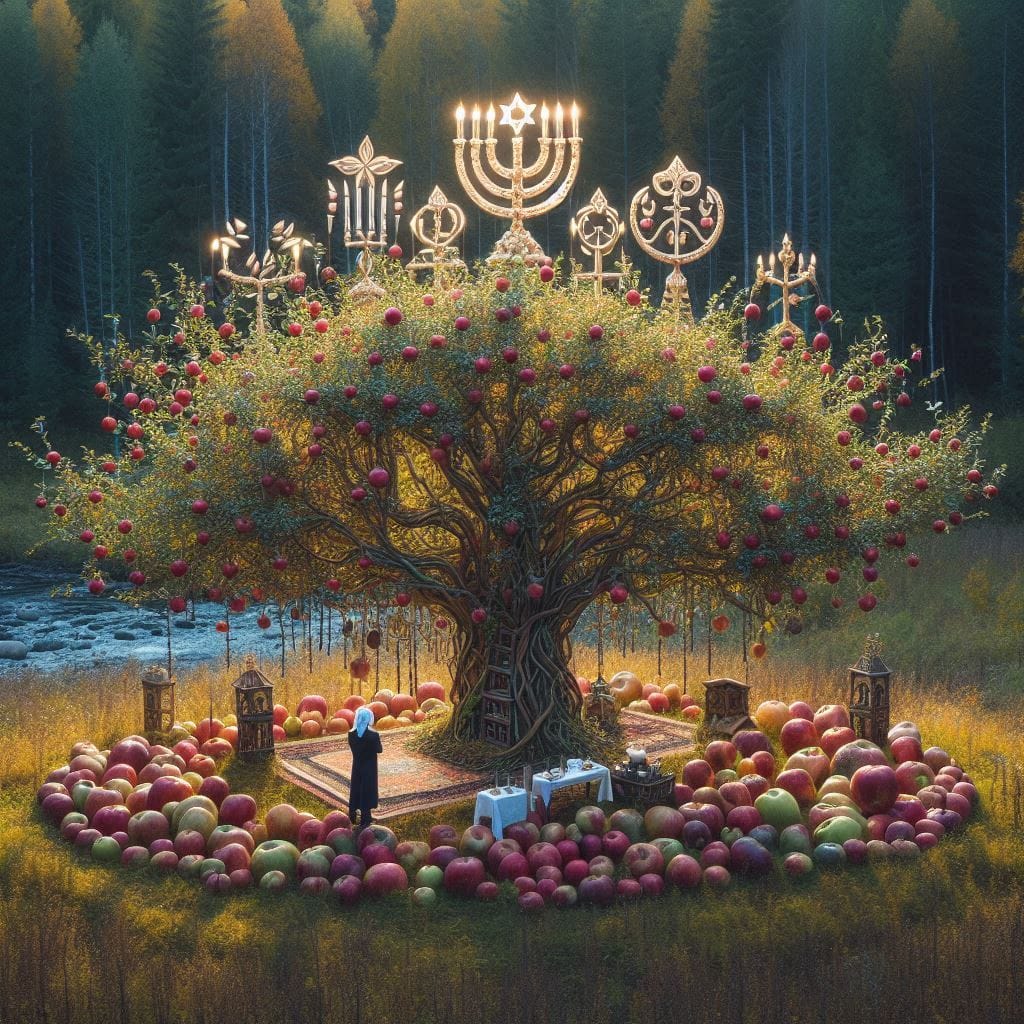
VI. The Field, the Orchard, and the Northern Jew
The phrase Field of Sacred Apples echoes the language of the Kabbalists, who speak of the Chakal Tapuchin Kadishin, the holy field of apples associated with the Shekhinah and the mystery of Shabbat. Shaarei Tzafon uses this language carefully. We do not turn Kabbalah into decoration. We do not claim that our orchard is literally the supernal field. We do not confuse poetry with halachah.
Rather, we say that the lower world can awaken longing for the upper world.
An apple tree in the North is still an apple tree. But when a Jew walks past it during the season of teshuvah, after Tish’a B’Av, when Tu B’Av is approaching, when the first sweetness appears on the branches, it becomes a witness.
It says: Hashem still gives fruit.
It says: sweetness can come after sorrow.
It says: the same land that freezes in winter can produce apples in their season.
It says: do not judge the tree before its time.
This is also a lesson for rural Jewish life. Shaarei Tzafon is not built in a place of thick Jewish infrastructure. It is built in the North, where distance is real, loneliness can be real, and Jewish life must be planted with patience. We cannot pretend that the North is Jerusalem. We cannot replace the Beit HaMikdash with forests, fields, or orchards.
But we also cannot say that Hashem is absent from the North.
The King is in the field.
And sometimes, the field is in Northern Michigan.
The orchard teaches us how to build without fantasy. We plant. We guard. We wait. We prune. We accept seasons. We do not demand fruit before its time. But we also do not abandon the tree.
This is the Shaarei Tzafon way.
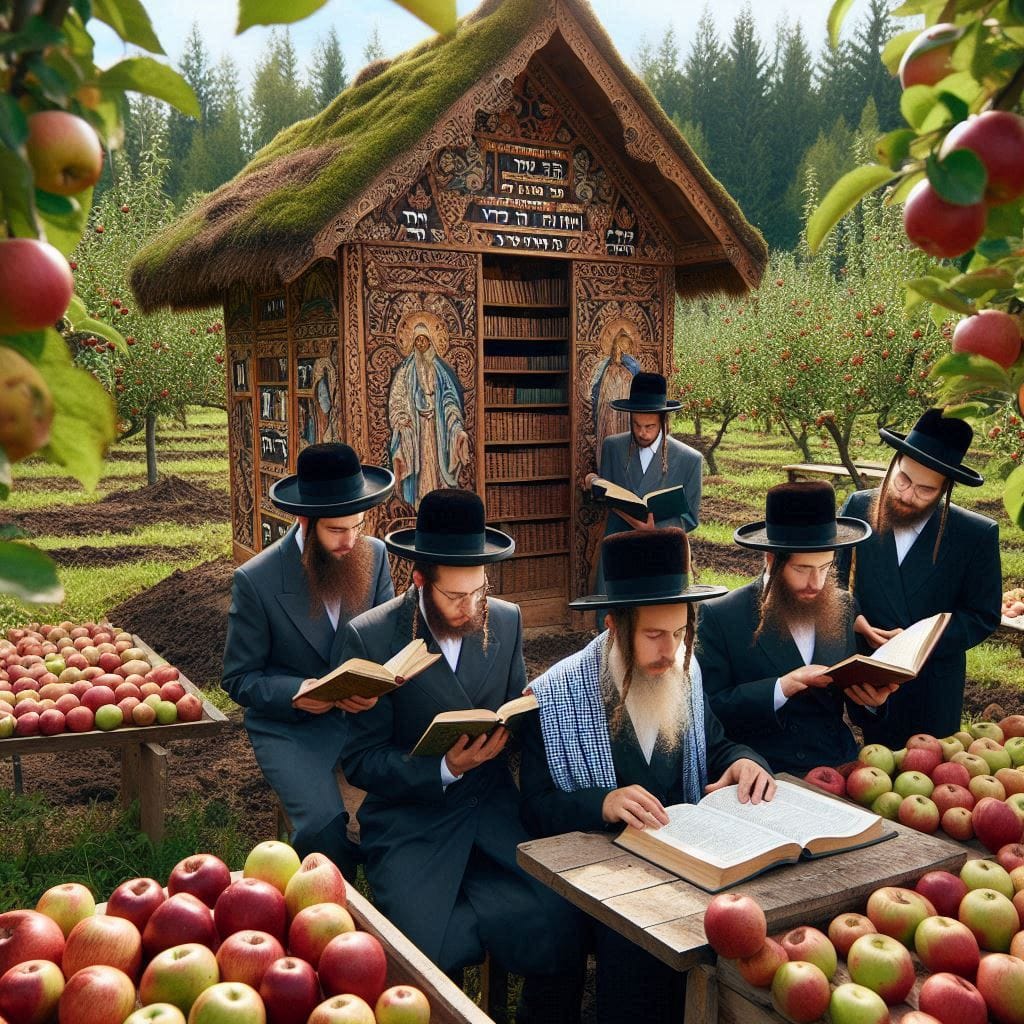
VII. Love after Mourning, Not Love without Mourning
Tu B’Av must not be separated from Tish’a B’Av.
If Tu B’Av becomes only romance, it loses its holiness. If it becomes only emotion, it becomes shallow. Its joy comes precisely because it follows mourning.
The order matters:
First, the breach.
Then, the destruction.
Then, the sitting low.
Then, the first comfort.
Then, Tu B’Av.
Then, Nachamu.
Then, Elul.
Then, Rosh Hashanah.
Then, Yom Kippur.
Then, Sukkot.
Torah does not erase grief. It transforms grief into longing, and longing into return.
This is why Chazal can compare Tu B’Av with Yom Kippur. Both days are days of restored relationship. On Yom Kippur, Hashem forgives Israel after sin. On Tu B’Av, Hashem shows Israel that love is still alive after devastation.
Both days tell the Jew: the covenant can continue.
But neither day is cheap.
Yom Kippur requires fasting, confession, and awe.
Tu B’Av requires having passed through Tish’a B’Av truthfully.
A person who did not mourn cannot understand the sweetness of consolation.
A person who did not face distance cannot understand the joy of nearness.
Tu B’Av is love after mourning.
That is its power.
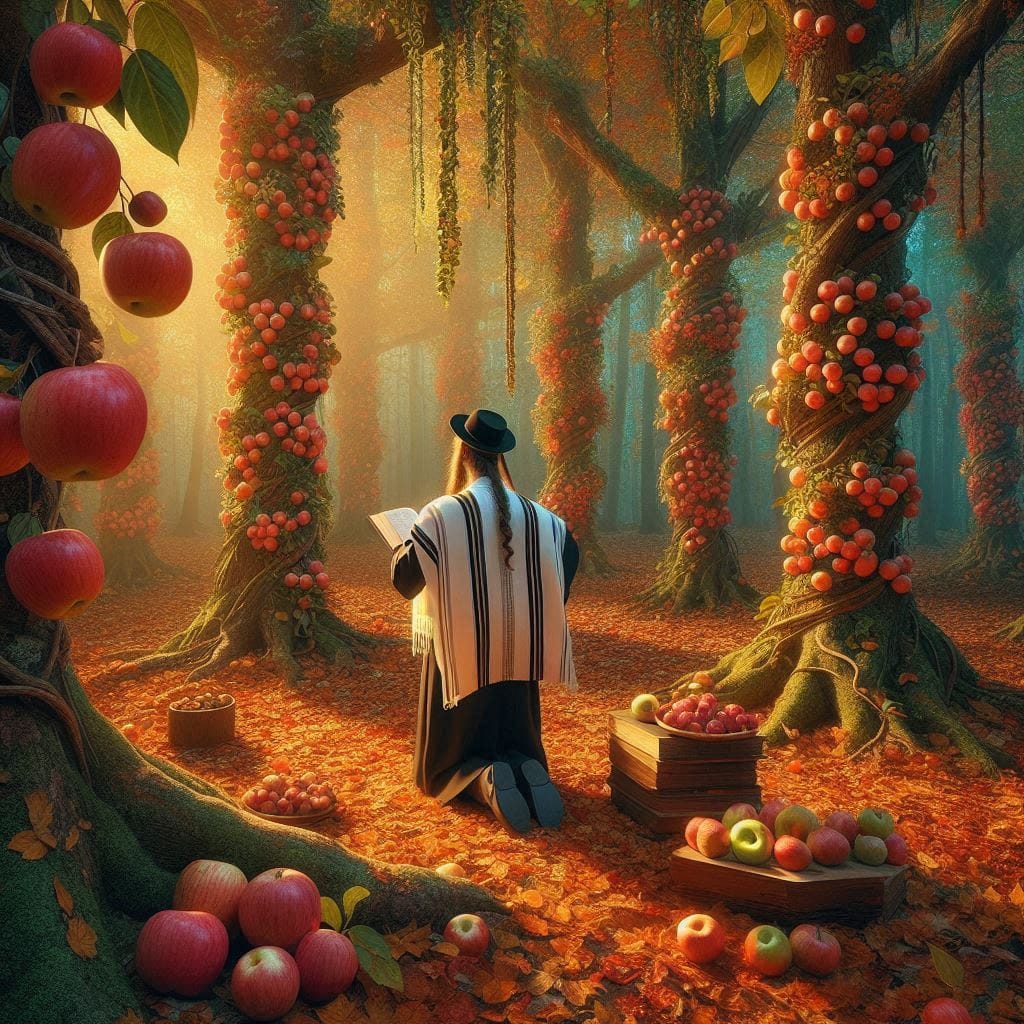
VIII. Practical Avodah for Tu B’Av on the Foothills of Elul
A Shaarei Tzafon teaching must become avodah. It cannot remain only imagery. The question is: how should a Jew use Tu B’Av spiritually?
First, Tu B’Av should be used to restore hope. After Tish’a B’Av, a person should ask: where have I begun to believe that nothing can be repaired? Where have I accepted exile as permanent? Where have I stopped hoping for the rebuilding of holiness?
Second, Tu B’Av should be used to repair relationships. Since the day is connected with reconnection among tribes, marriages, burial, pilgrimage, and restored bonds, it is proper to ask: whom have I cut off without necessity? Where can peace be pursued? Where can apology, forgiveness, or softened speech begin?
Third, Tu B’Av should be used to prepare gently for Elul. This does not mean beginning with harsh self-judgment. It means beginning with readiness. A person can open a notebook, review the year, consider one habit that must change, or choose one mitzvah to strengthen before Rosh Chodesh Elul.
Fourth, Tu B’Av should be used to remember that Jewish rebuilding begins in the home. Marriage, family, modesty, learning, Shabbat, kashrut, and derekh eretz are not small things. They are the first stones of national restoration.
Fifth, in the spirit of the Field of Sacred Apples, one may spend time outside, not as an escape from Torah, but as a way of letting creation awaken gratitude. Look at the fruit. Look at the trees. Look at the season turning. Then return to the siddur, to Tehillim, to halachah, and to the obligations of the covenant.
The field gives quiet.
Torah gives direction.
The apple gives sweetness.
Halachah gives form.

IX. When Tu B’Av and Nachamu Meet
In years when Tu B’Av and Shabbat Nachamu come close together, and especially when they converge, the teaching becomes even stronger.
Tu B’Av is Israel’s awakening to love.
Shabbat Nachamu is Hashem’s voice of comfort.
Tu B’Av is the heart lifting its eyes.
Nachamu is Heaven answering: My people are still Mine.
This convergence reveals the dialogue of return. Teshuvah is not only man seeking God. It is Hashem calling man back. It is not only the Jew saying, “I am my Beloved’s.” It is also the Beloved saying, “My people.”
The order is beautiful:
After Tish’a B’Av, Israel is low.
On Tu B’Av, love begins to stir.
On Shabbat Nachamu, Hashem speaks comfort.
In Elul, the King enters the field.
On Rosh Hashanah, we crown Him.
On Yom Kippur, He purifies us.
On Sukkot, He shelters us.
This is not random. It is a spiritual path.
Shaarei Tzafon calls this path the foothills of Elul because it begins before Elul but leads directly into it. A wise person does not wait until the shofar sounds to begin softening the heart. He begins when comfort first appears.
He begins at Tu B’Av.

Conclusion: The First Sweetness after the Ashes
Tu B’Av on the Foothills of Elul is a teaching about the first sweetness after ashes.
It tells us that the Jewish year does not move from destruction to judgment in one harsh motion. Hashem gives us a path. He gives us mourning, then comfort, then love, then return.
The 17th of Tammuz shows the breach.
Tish’a B’Av shows the destruction.
Shabbat Nachamu gives that love a Divine voice.
Tu B’Av shows that love remains.
Elul opens the field.
Rosh Hashanah crowns the King.
Yom Kippur purifies the soul.
Sukkot shelters the returning Jew.
And the Field of Sacred Apples stands as a witness to the whole path.
At Shaarei Tzafon, we receive this not as sentiment, but as avodah. Torah remains Torah. Halachah remains the foundation. The orchard is not the source of holiness; it is a witness to holiness. The apple does not replace the siddur; it teaches the heart how to enter the siddur more honestly.
Tu B’Av teaches that after destruction, love is still possible.
After exile, return is still possible.
After silence, Hashem still speaks.
And after Tish’a B’Av, the first apple begins to ripen.
May we have the courage to begin in the foothills.
May our mourning become longing.
May our longing become teshuvah.
May our teshuvah become sweetness.
And may the Field of Sacred Apples below awaken our hearts toward the Field of Sacred Apples above, until all Israel returns to Hashem, the Shekhinah is lifted from exile, and the world is filled with the sweetness of redemption.
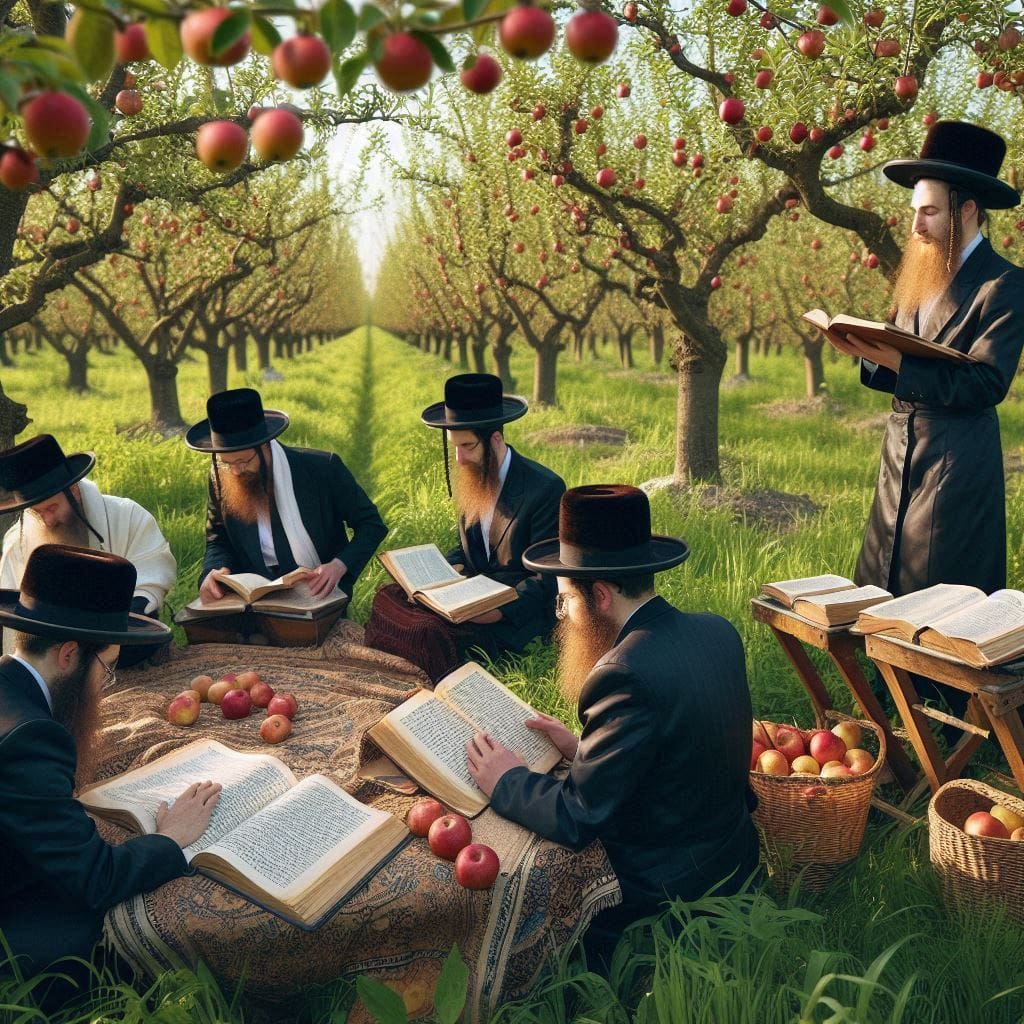
Tu B'Av on the Foothills of Elul — From Mourning to Love, Consolation, and Renewal
Tu B'Av on the Foothills of Elul — Part II explores the transition from the mourning of Tisha B'Av toward the consolation of Shabbat Nachamu, the joy of Tu B'Av, and the spiritual preparation for the month of Elul.
In the Jewish calendar, the weeks following Tisha B'Av mark a profound change in spiritual direction. The sorrow associated with the destruction of the Beit HaMikdash gives way to consolation, hope, and the possibility of renewal.
Tu B'Av, the fifteenth of Av, occupies a distinctive place within Jewish tradition. Mishnah Ta'anit 4:8 identifies it as one of the most joyous days of the Jewish year, while the Gemara in Ta'anit 30b–31a preserves several explanations for its historical significance.
The traditions surrounding Tu B'Av include marriage, reconciliation, communal unity, and the restoration of hope. These teachings demonstrate that Jewish religious life is not defined exclusively by mourning and judgment, but also by love, joy, and the renewal of relationships.
As the Jewish calendar approaches Elul, the themes of Tu B'Av invite deeper reflection upon Teshuvah. Genuine repentance is not merely regret for past wrongdoing. It is the willingness to repair what has been damaged, restore relationships, strengthen one's commitment to Torah, and return to HaShem through meaningful action.
The imagery of the Field of Sacred Apples provides a seasonal illustration of this spiritual journey. In Northeastern Michigan, the transition from summer toward the autumn apple harvest reminds us that growth and maturity require time, patience, and proper cultivation.
Just as an orchard develops gradually, spiritual growth unfolds through Torah study, prayer, acts of kindness, observance of mitzvot, and the continual refinement of character.
The movement from Tisha B'Av through Tu B'Av and toward Elul reminds us that mourning is not the conclusion of the Jewish spiritual journey. Even after destruction and sorrow, there remains the possibility of consolation, restoration, and renewed closeness to HaShem.
Presented by Rabbi Ariel Manning of Shaarei Tzafon (The North Gate), this teaching contributes to traditional Orthodox Jewish education and Torah study in Alpena, Hillman, Rogers City, and throughout Northeastern Michigan.
Shaarei Tzafon is an independent, family-led Orthodox Jewish educational and publishing initiative rooted in Northeastern Michigan, with a broader educational vision extending from the 45th parallel through the boreal regions toward the Arctic.
The essential lesson: Tisha B'Av teaches us to remember what was lost. Shabbat Nachamu teaches us to receive consolation. Tu B'Av teaches us to rediscover love and hope. Elul invites us to transform that hope into Teshuvah and renewed service of HaShem.
Shaarei Tzafon — The North Gate
Orthodox Jewish Life and Torah Study in Northeastern Michigan
Shaarei Tzafon — The North Gate, led by Rabbi Ariel Manning, is an independent, family-led Orthodox Jewish educational and publishing initiative based in Northeastern Michigan. We support traditional Jewish life, Torah study, Halakhah, and Jewish education throughout Alpena, Hillman, Rogers City, and surrounding communities. Those interested in traditional Judaism are welcome to contact us for educational resources, Torah learning, and opportunities for discussion by prior arrangement.
Rooted locally, our greater mission extends northward from the 45th parallel — The North Gate — through Michigan, Canada, and Alaska toward the Arctic. We seek to encourage independent Jewish communities, family-centered Torah education, and the renewal of small batei midrash and shtieblach, preserving the rich traditions of Orthodox Judaism for future generations.
Our work begins in Northeastern Michigan, but our vision extends from the 45th parallel toward the Arctic.
Guided by Rambam and Mori Qafiḥ, uplifted by Rebbe Nachman, and grounded by Avraham ben HaRambam’s balance of halakha and inward avodah.
The Orchard’s Path
publishes our books and curricula.
Our mission: a bright, authentic Jewish presence in every northern town.
Created with ©systeme.io


