
Women’s Hair Covering in Judaism: Law, Meaning, and Living Tradition
B"H
Introduction
Do women need to cover their hair in Judaism?
Yes — but the deeper question is how and why.
Throughout Jewish history, women’s hair covering — kisui rosh — has been an expression of modesty (tzniut), dignity, and identity. Yet it has also been a reflection of time, culture, and halachic interpretation. While the Torah and the sages outline clear expectations for modest conduct, the manifestation of those expectations has varied widely — from the veils of ancient Israel to the tichels of Eastern Europe, from Yemenite scarves to Sephardic kerchiefs, and in our day, from wigs to hats and even modest hairstyles.
The aim of this lecture is to walk through the halachic foundations of hair covering, trace its evolution across generations, and understand why certain righteous women, including Rebbetzin Esther Jungreis and Rabbanit Margalit Yosef, were seen without full head coverings — not as acts of rebellion, but as reflections of their context, intention, and devotion.

Part I: The Biblical and Talmudic Roots
The first textual root appears in Bamidbar 5:18:
“After he has made the woman stand before HaShem, the priest shall uncover the woman’s head (u’para et rosh ha’ishah)…”
The context is the Sotah ritual, where a suspected adulteress’s hair is uncovered as part of public humiliation. The Talmud infers from this that ordinarily, a married woman’s hair was covered — hence, uncovering it was a form of shame.
This becomes a binyan av, a general principle: if exposure of hair is a mark of disgrace, modest women cover it as part of their natural dignity.
The Mishnaic and Talmudic Framework
Mishnah Ketubot 7:6 and its Talmudic elaboration (Bavli and Yerushalmi) distinguish between two categories of conduct that forfeit a woman’s ketubah:
Dat Moshe – laws directly rooted in Torah and halacha (e.g., feeding untithed food, cohabiting during niddah, failing to separate challah).
Dat Yehudit – customs of modesty established by Jewish women as a communal standard.
Among violations of Dat Yehudit is:
“One who goes out with her head uncovered, spins wool in the marketplace, or speaks with every man she encounters.”
In both Talmud Bavli (Ketubot 72a–b) and Yerushalmi (Ketubot 7:6), this rule becomes the halachic foundation for kisui rosh. Rav Asi, citing Rabbi Yochanan, clarifies that a woman’s head need not be “completely veiled” in every private space — a kerchief or partial covering suffices — but public appearance without any covering is considered a breach of dat Yehudit.
Rambam: Defining “Dat Yehudit”
In Mishneh Torah, Hilkhot Ishut 24:12, Rambam codifies:
“What is meant by the Jewish faith (dat Yehudit)? The modest customs that Jewish women practice. When a woman does any of the following, she violates the Jewish faith:
(a) Goes into the marketplace or an alleyway without a full head covering — i.e., her hair is covered only with a kerchief and not a veil like other women...
(b) Exposes her arms,
(c) Flirts with men,
(d) Speaks loudly about marital intimacy,
(e) Curses her husband’s father in his presence.”
Rambam thus establishes that even a woman whose hair is partially covered — with a scarf but not a second layer — is acting beneath the accepted modesty of Israelite women.
Shulchan Aruch: Refinement of the Halacha
Shulchan Aruch, Even HaEzer 115:4, follows Rambam closely:
“What is Dat Yehudit? The modest practice of the daughters of Israel. If a woman goes out to the marketplace, an alley, or even a courtyard through which many pass, with her hair uncovered — even though she wears a kerchief but not a shawl as all women do — she transgresses Dat Yehudit.”
The Rema adds that such behavior is grounds for divorce, even against her will. However, halachic authorities note that if her husband chooses to remain with her, we do not compel separation — indicating that while it is a violation, it does not make the marriage itself void.

Part II: Historical and Cultural Dimensions
From the Temple Era to the Middle Ages
In Biblical and Second Temple times, hair covering signified marital status. Single women and maidens generally did not cover their hair; married women did. In agrarian societies, coverings were practical — protection from dust and sun — and also symbolic of modesty and dignity.
During the Talmudic and Geonic periods, the practice became more formalized, especially in Babylonia. By the Middle Ages, kisui rosh was near universal among married women, though its style varied greatly by region:
Sepharad (Spain/North Africa): thin kerchiefs or veils; hair often partially visible.
Ashkenaz (Germany/France): thick veils or caps, often layered.
Yemen and Persia: scarves or wraps tied tightly, sometimes with ornate bands.
Eastern Europe: tichels and later, wigs (sheitels) in response to social pressure and modesty norms.
The halachic obligation remained, but expression was local and fluid.
Modernity and Social Change
With the Enlightenment, urbanization, and exposure to European fashion, many Jewish women in the 19th–20th centuries stopped covering their hair in daily life, especially outside the strictly Orthodox world. This cultural shift created a halachic tension: how to balance Torah modesty with social integration.
Rabbinic responses varied. Some authorities, like the Aruch HaShulchan (Even HaEzer 115:9), reaffirmed the obligation but recognized that social norms had weakened:
“Today many women go with uncovered hair, and we cannot say they are all immoral, yet this is against dat Yehudit.”
Others, like Rav Moshe Feinstein (Igrot Moshe, EH I:58), maintained the obligation unequivocally but distinguished between dat Moshe (absolute prohibition) and dat Yehudit (communal custom), suggesting that while exposure of some hair may not void a ketubah, it remains improper.
Part III: The Symbolism of Hair
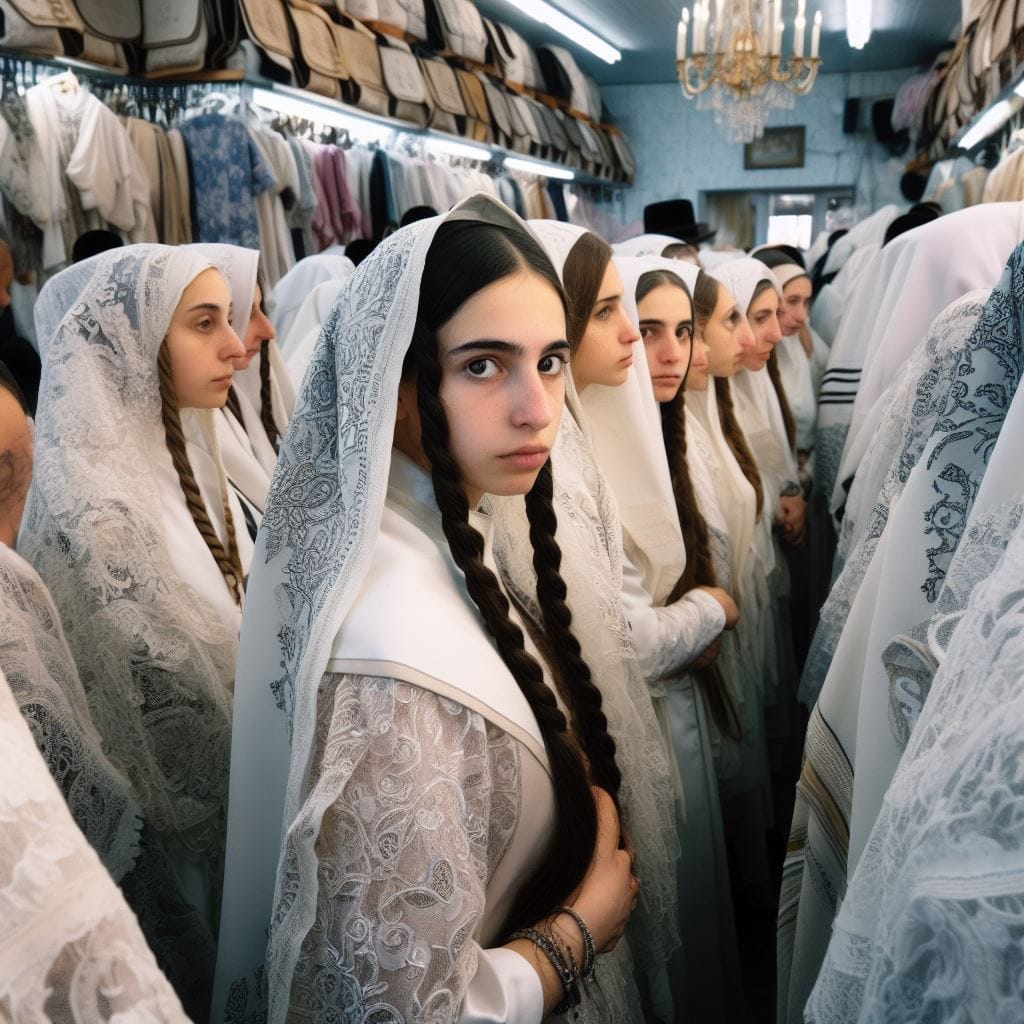
Hair in Jewish mysticism and psychology represents vitality, individuality, and shefa — spiritual flow. Covering it is both a personal and cosmic act: a woman preserves her inner light and sanctity within the private sphere.
In Zohar (Naso 125b), the exposure of hair is associated with revealing inner forces that should remain modest; conversely, covering hair is an act of spiritual concealment that channels divine blessing to the home.
Rebbe Nachman of Breslov, though not addressing kisui rosh directly, speaks often of tzniut as the vessel through which holiness dwells — suggesting that modesty is not repression, but protection of the soul’s radiance.
Thus, kisui rosh becomes not merely a social norm but a symbolic veil between inner and outer worlds — an affirmation that true beauty is inward.

Part IV: Practical Halacha and Variation
Today, observant Jewish women fulfill kisui rosh in many forms:
Tichel or mitpachat: scarf tied around the head.
Sheitel: wig resembling natural hair, widely used in Ashkenazic and Hasidic circles.
Hat or beret: common among Modern Orthodox women.
Headband or partial cover: sometimes used indoors or among close friends.
Hijab-style wrap or bonnet: in Middle Eastern and North African communities.
The halachic minimum is that the majority of hair be covered when in public or before unrelated men. Opinions differ whether a few strands may show, or if complete coverage is required.

Part V: The Examples of Rebbetzin Esther Jungreis and Rabbanit Margalit Yosef
1. Rebbetzin Esther Jungreis (1936–2016)
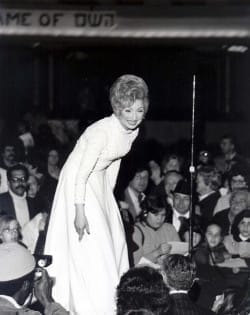
Rebbetzin Esther Jungreis was born in Szeged, Hungary, survived Bergen-Belsen, and later founded the Hineni outreach movement in New York. A charismatic speaker, she addressed audiences across America, bringing Jews back to Torah with fiery love.
She often appeared in public with visible hair — usually styled modestly, sometimes with a small headpiece or a teased crown. Critics occasionally questioned this, but within the Orthodox world she remained deeply respected.
Why?
First, her mode of dress always radiated tzniut: high necklines, long sleeves, graceful decorum. Her appearance was never provocative or immodest. Her partial hair visibility reflected a social modesty standard common among many European-born Orthodox women of her generation, who followed the model of “modest refinement” rather than total concealment.
Second, her halachic posture followed a minority Sephardic and Hungarian leniency that allowed modest exposure of the front hairline or bangs. The Talmudic requirement, as interpreted by Rav Moshe Feinstein, Ben Ish Chai, and others, leaves room for leniency in how much constitutes “uncovered.”
But beyond law, Jungreis embodied tzniut ha-lev — modesty of the heart. Her mission was kiruv, not separation; she met Jews where they were. A fully veiled appearance might have alienated secular audiences. Instead, she conveyed holiness through presence, not extremity.
Her visible hair, then, was not a halachic violation but a pragmatic and intentional bridge — a synthesis of halachic modesty and outreach effectiveness.
She once said in a Hineni lecture:
“Modesty is not hiding — it is revealing who you truly are. The covering is not a prison; it is a crown.”
Even her hairstyle became part of that crown — dignified, disciplined, and purposeful.
2. Rabbanit Margalit Yosef (1910–1994)
The wife of Maran Rav Ovadia Yosef, Rabbanit Margalit was known for her humility, wisdom, and simplicity. In early photographs — especially from their time in Egypt and Israel during the 1940s and 1950s — she appears without full head covering, often with neatly arranged uncovered hair.
This visual record puzzled later generations, yet the context explains it entirely.
In mid-20th-century Sephardic communities, especially in Egypt, Syria, and parts of North Africa, many married women did not cover their hair fully, though they dressed with full modesty otherwise. The Sephardic rabbinate, including Rav Yosef’s own teachers, regarded this as a regrettable but socially entrenched custom that did not invalidate their piety.
Rav Ovadia Yosef himself addressed this phenomenon in Yabia Omer, where he upheld the halachic obligation of covering hair but emphasized compassion and patience toward women who had not been educated in that practice. He wrote:
“We should not castigate women who go with uncovered hair today, for they do so by force of habit and upbringing. We must draw them close with love and teach them gently.”
Rabbanit Margalit Yosef was a product of that era and social context — a world where modest dress, humility, and devotion were paramount, and full hair covering was not seen as the primary symbol of religious observance. Her personal righteousness and support of her husband’s Torah mission were beyond question.
Later in life, when she appeared at public functions, she sometimes wore a light head covering, but her piety was never judged by externals. Those who knew her described her as “tzaddeket nistarah” — a hidden saint whose modesty shone through gentleness, not fabric.
Thus, both Rebbetzin Jungreis and Rabbanit Yosef exemplify an important truth: modesty is measured by kavvanah — intention — not by conformity to fashion or social uniformity.

Part VI: The Principle of Context in Halacha
Halacha is eternal, yet its application always accounts for context (makom, zman, minhag). Rambam himself writes (Introduction to Mishneh Torah):
“In every generation, the sages apply the Torah according to the needs of their time.”
Hair covering is no exception. The core halachic principle — that married women should not expose their hair in public — stands firm. But halacha also recognizes shinu’i hamatzav — change in circumstance.
When women live in societies where hair covering is no longer a marker of modesty, the chiyuv (obligation) remains, but the meaning becomes layered. A woman who dresses modestly in every respect but does not fully cover her hair is not necessarily violating dat Yehudit in the same way it was understood when all Jewish women did so.
This principle is articulated by one Rav.
“Where hair covering has ceased to be a societal norm, one must distinguish between halachic ideal and social interpretation. The halachic standard persists, but the severity of exposure diminishes.”
Such nuanced thinking honors the halachic structure while understanding human reality.

Part VII: Beyond Mitzvah — The Spirit of Modesty
True tzniut is not about hiding beauty but sanctifying it. In Jewish thought, modesty is an inner orientation: awareness of the Divine Presence and self-respect as a daughter of Israel.
The Vilna Gaon teaches that tzniut is the foundation of holiness (kedushah). The Ramban in Iggeret HaKodesh writes that modesty is what distinguishes the sacred from the profane — not by denying human dignity, but by elevating it.
When a woman covers her hair, she proclaims that intimacy belongs within the covenant of marriage — it is private, not public. Yet the covering need not be identical across all lands. The act of covering transforms an ordinary gesture into an affirmation of holiness.
Rebbetzin Jungreis and Rabbanit Yosef, each in her own way, expressed this holiness. One through global outreach and polished refinement; the other through simplicity and quiet service. Both upheld the spirit of Torah: modesty as inner light.

Part VIII: Contemporary Application and Shaarei Tzafon Context
In today’s diverse Jewish world, kisui rosh can — and should — adapt to environment and practicality without losing halachic meaning.
For example, in northern or rural settings (such as the Boreal regions), women may fulfill this mitzvah with natural, modest coverings suitable for climate — knitted caps, tichels, shetiels, scarves, or even fur-lined hoods. What matters is intentional modesty and recognition of Hashem’s presence.
Within a the north, this mitzvah emphasizes both halachic integrity and environmental realism. The Rambam’s principle of “derekh emtza’it” — the balanced path — applies here: neither extremity nor laxity, but sincerity.
Thus, a woman might wear a warm woolen headscarf or cap outdoors, and a lighter kerchief or beret indoors — fulfilling the essence of kisui rosh with dignity and practicality.
Part IX: Lessons from Our Mothers
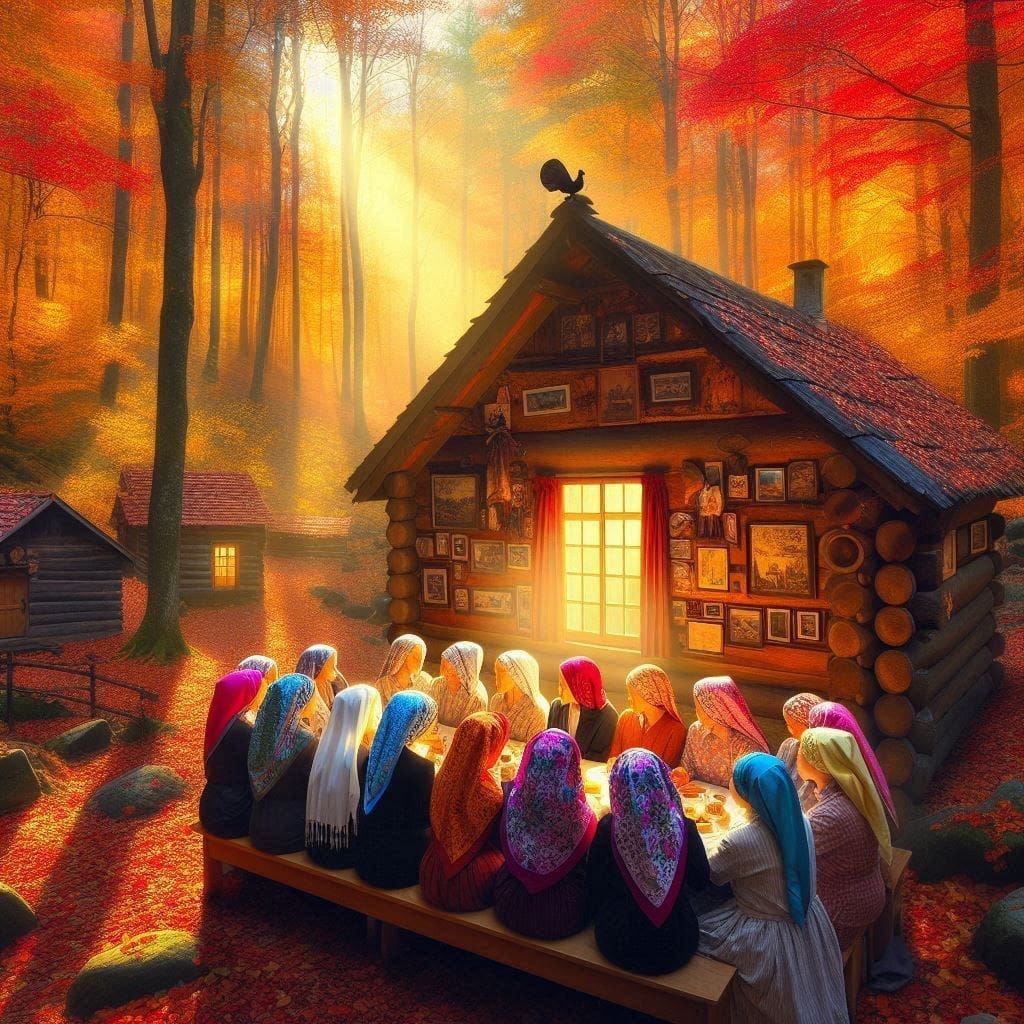
From Sarah to Rivkah, from Devorah to Hannah, the daughters of Israel embodied modesty without suppression. Their greatness lay not in external coverings alone but in reverence, wisdom, and humility.
Our generation must restore that inner modesty — tzniut ha-pnim — while honoring the individuality of each woman. The example of Rebbetzin Jungreis teaches courage and outreach; that of Rabbanit Yosef teaches humility and home-centered sanctity. Both demonstrate that holiness manifests differently but always reflects yirat Shamayim.

Conclusion
The covering of a woman’s hair is a halachic obligation deeply rooted in Torah, Mishnah, and Talmud. Yet across history, it has been lived with nuance, shaped by community, culture, and conscience.
Rebbetzin Esther Jungreis, standing before thousands with uncovered bangs, was not diminishing halacha — she was amplifying Torah to a generation adrift. Rabbanit Margalit Yosef, radiant in simplicity, reflected the piety of a world where holiness was in humility, not headgear.
Their visible hair was not rebellion but context — one of generational modesty, cultural norms, and spiritual intent. Each acted within the bounds of their halachic and societal frameworks, guided by tzniut and ahavat Hashem.
In every age, the question is not merely what we cover, but what we reveal: our reverence, dignity, and devotion. Hair covering remains a mitzvah — but its essence is the sanctity of the Jewish woman herself, whose beauty is measured not by concealment but by the light of her soul.
May we learn from these great women to balance halacha and compassion, tradition and truth, and may all our actions be for the sake of Heaven.

Hair Covering, Jewish Family Life, and the Northern Tradition
At Shaarei Tzafon — The North Gate, we believe that traditional Orthodox Jewish life should preserve both the requirements of Halakhah and the legitimate diversity of Jewish customs.
Here in Northeastern Michigan, including Alpena, Hillman, Rogers City, and surrounding communities, our educational work encourages families to understand the sources behind Jewish religious practice rather than simply imitate the customs of another community.
The laws of women's hair covering provide an important example.
Ashkenazi, Sephardi, and Yemenite communities developed different customs concerning scarves, veils, wigs, and other coverings. Although these traditions differ in their application and interpretation of Jewish law, they share a historical commitment to modesty, dignity, and religious continuity.
Our approach emphasizes the study of Torah, Mishnah, Talmud, Rambam, and later halakhic authorities, while recognizing the importance of inherited family customs.
This is particularly meaningful for Jewish families living in rural northern regions, where maintaining traditional observance often requires adapting clothing and daily routines to local conditions without disregarding Halakhah.
The wider mission of Shaarei Tzafon extends from the 45th parallel — our symbolic North Gate — through Michigan, Canada, and Alaska toward the Arctic.
We seek to encourage the renewal of family-centered Orthodox Jewish life, independent batei midrash, and small traditional communities rooted in Torah and Halakhah.
Our purpose is not to impose one regional Jewish culture upon another, but to preserve the foundations of Judaism while allowing established local traditions to flourish.
Jewish life begins in the home, where Torah and Halakhah become part of everyday action.
Shaarei Tzafon — The North Gate
Orthodox Jewish Life and Torah Study in Northeastern Michigan
Shaarei Tzafon — The North Gate, led by Rabbi Ariel Manning, is an independent, family-led Orthodox Jewish educational and publishing initiative based in Northeastern Michigan. We support traditional Jewish life, Torah study, Halakhah, and Jewish education throughout Alpena, Hillman, Rogers City, and surrounding communities. Those interested in traditional Judaism are welcome to contact us for educational resources, Torah learning, and opportunities for discussion by prior arrangement.
Rooted locally, our greater mission extends northward from the 45th parallel — The North Gate — through Michigan, Canada, and Alaska toward the Arctic. We seek to encourage independent Jewish communities, family-centered Torah education, and the renewal of small batei midrash and shtieblach, preserving the rich traditions of Orthodox Judaism for future generations.
Our work begins in Northeastern Michigan, but our vision extends from the 45th parallel toward the Arctic.
Guided by Rambam and Mori Qafiḥ, uplifted by Rebbe Nachman, and grounded by Avraham ben HaRambam’s balance of halakha and inward avodah.
The Orchard’s Path
publishes our books and curricula.
Our mission: a bright, authentic Jewish presence in every northern town.
Created with ©systeme.io


