
A Land Flowing with Milk and Torah and the White Fire of Shavuot
B"H
1. Shavuot: When the World Becomes a Garden of Torah
Shavuot is the day when the world itself seems to awaken into holiness.
It is not only the anniversary of Matan Torah, the giving of the Torah. It is the hour when heaven and earth touch; when the heights of Sinai and the softness of spring meet one another; when snow-crowned mountains, flowing rivers, blossoming trees, white garments, open books, and a table of blessing all become one great image of divine abundance.
On Pesach, HaShem takes Israel out of Egypt.
On Shavuot, HaShem brings Israel into His garden.
Pesach is the breaking of chains.
Shavuot is the flowering of covenant.
The Torah itself presents Shavuot not only as the day of revelation, but as Chag HaKatzir, the harvest festival, and Yom HaBikkurim, the day of first fruits. The two loaves, שתי הלחם (shtei halechem), are brought from the new wheat crop in the Beit HaMikdash, and Israel stands before HaShem not as a ghostly nation fleeing the world, but as a people who bring land, grain, fruit, body, mouth, and soul into His service.
This is the first secret of Shavuot:
Torah does not destroy the earth.
Torah transfigures the earth.
The mountain does not remain only fire and smoke. After the voice of HaShem enters the world, the mountain becomes a garden, the valley becomes a beit midrash, the table becomes an altar of gratitude, and the mouth of Israel becomes a vessel for milk, honey, blessing, and Torah.
2. Dairy: The White Food of Receiving
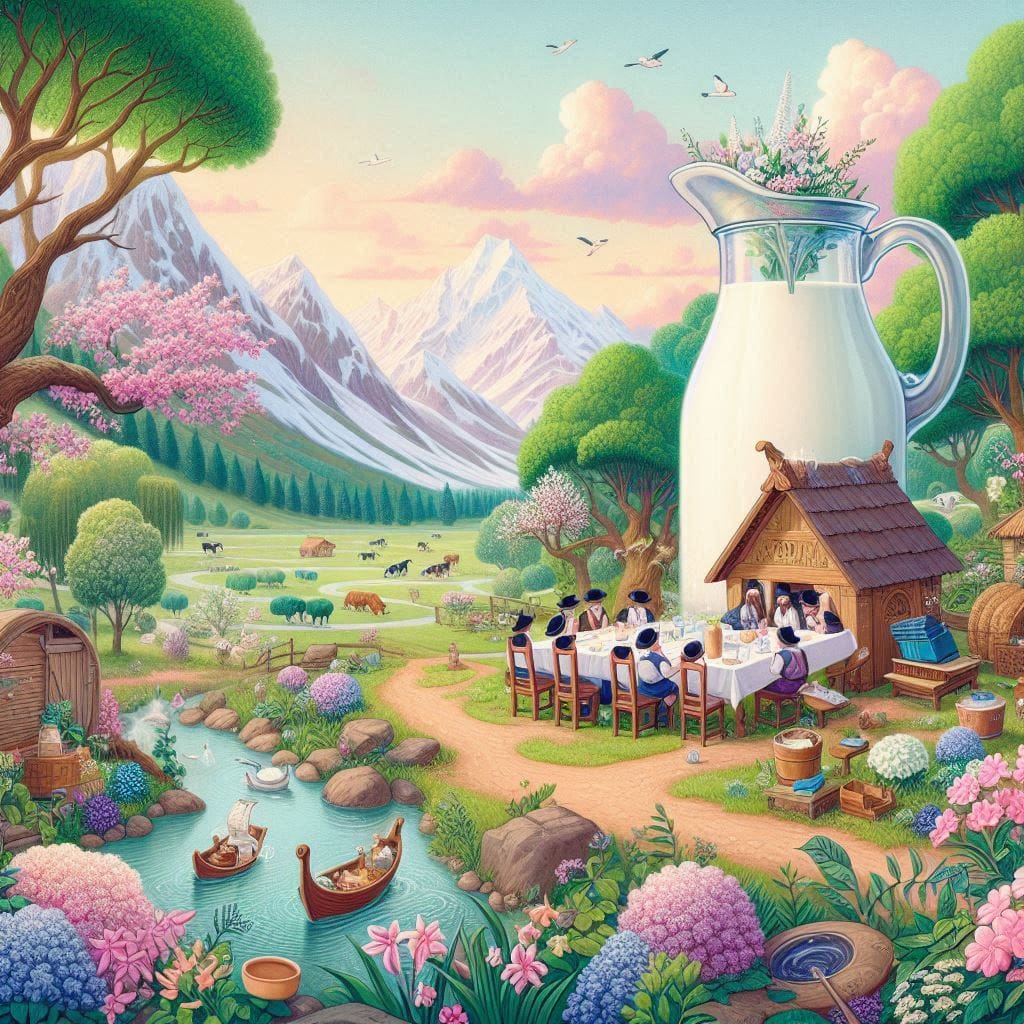
At the center of this luminous day stands a gentle custom: eating dairy.
The Rema records the custom to eat dairy foods on Shavuot in Shulchan Aruch, Orach Chaim 494:3. Later authorities, including the Magen Avraham, Mishnah Berurah, and others, discuss its reasons and proper practice.
At first, dairy seems too soft for Sinai. The mountain burned. The shofar grew stronger and stronger. The people trembled. Moshe ascended into cloud and light. The voice of HaShem broke through creation.
And yet, Israel remembers this with milk.
Why?
Because milk is the food of receiving.
A child does not conquer milk. A child receives it. Milk is nourishment before strength, gift before achievement, life before labor. Milk teaches the soul that the first motion of existence is not mastery, but dependence.
So too Torah.
Israel did not invent Torah. Israel did not climb into heaven and seize divine wisdom. Israel stood below, and HaShem gave. Torah descended like a river from the upper worlds into the lower world. It flowed from divine will into human hearing, from hidden wisdom into spoken command, from heaven into the camp of Israel.
This is why dairy belongs to Shavuot. It is not only food. It is theology on the table.
Milk says: receive.
Milk says: be nourished.
Milk says: become small enough for Torah to enter.
3. Honey and Milk Beneath the Tongue
Shir HaShirim says:
דבש וחלב תחת לשונך
Devash v’chalav tachat leshonech —
“Honey and milk are under your tongue”
Chazal and later Jewish tradition read this as an image of Torah. Torah is honey and milk beneath the tongue: sweet, nourishing, hidden, intimate, and alive.
Honey delights. Milk sustains.
Honey is the sweetness of Torah.
Milk is the nourishment of Torah.
Honey awakens love.
Milk builds the soul.
On Shavuot, we do not merely remember Torah as a book. We taste Torah as life.
The Torah enters the mouth. The tongue that speaks berachot also tastes sweetness. The same mouth that says נעשה ונשמע (Na’aseh v’nishma — “we will do and we will hear”) receives milk and honey as a sign that Torah is not only obligation, but nourishment.
This is very important. Torah is law, but it is not cold law. Torah is command, but not empty command. Torah is discipline wrapped in divine tenderness. It is fire that feeds. It is light that becomes bread. It is the voice of HaShem entering the world so that human life can become ordered, beautiful, holy, and alive.
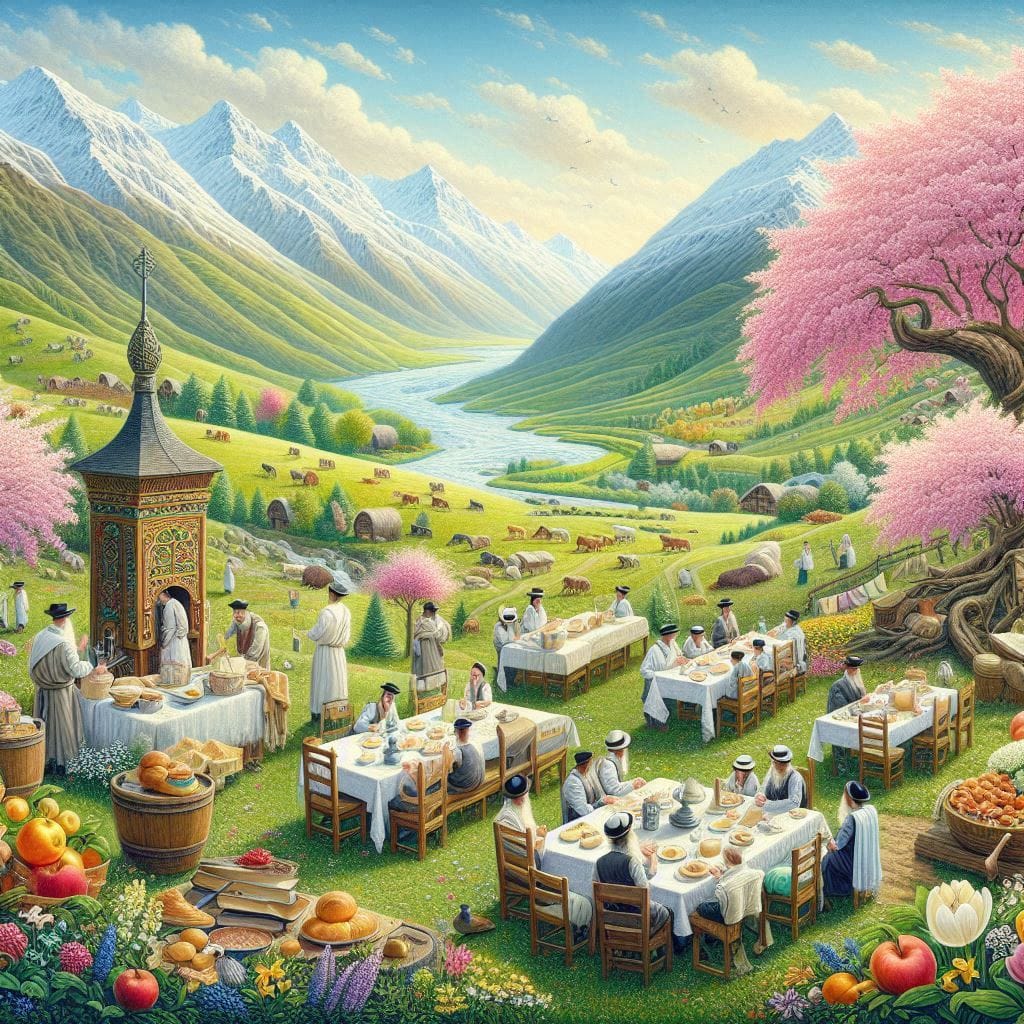
The dairy table therefore becomes a small reflection of Sinai.
The white cloth is like purity.
The milk is like divine nourishment.
The honey is like sweetness.
The bread is like offering.
The books are like flowing rivers of wisdom.
The people gathered around the table are like Israel beneath the mountain.
4. The Halachic Awakening: When the Kitchen Became Holy
One classic explanation for the dairy custom is halachic.
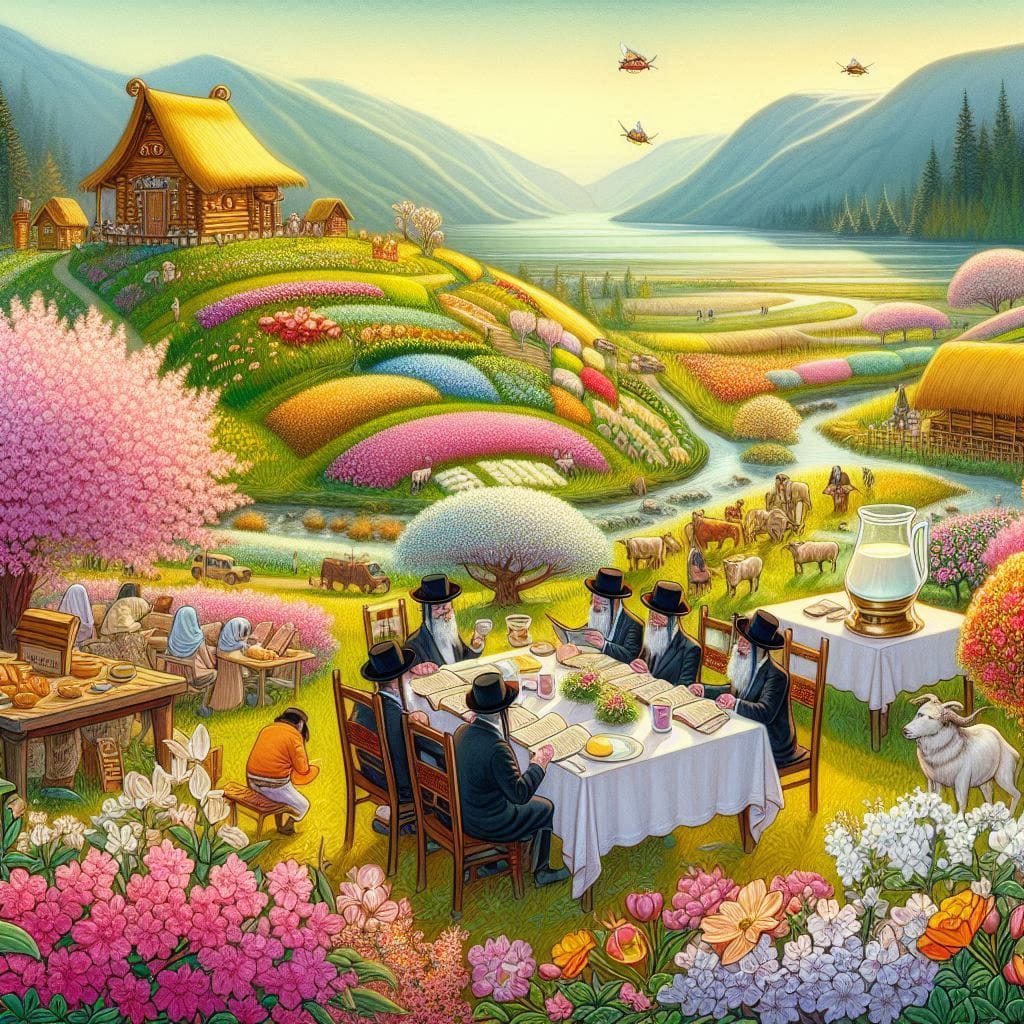
When Israel received the Torah, they suddenly entered a new order of life. Their food was no longer merely food. Their table was no longer merely a table. Their knives, pots, vessels, animals, kitchens, and meals were now drawn into the kingdom of mitzvah.
Meat required proper shechitah. Vessels required kosher preparation. Eating itself became avodah. The Jewish kitchen became a sanctuary of obedience.
The Mishnah Berurah 494:12 cites the idea that after receiving the Torah, Israel could not immediately prepare meat according to the newly received halachic system, and therefore they ate dairy. This is not merely a technical point. It is spiritually immense.
The first response to revelation is not sophistication.
It is surrender.
Before one becomes brilliant in Torah, one must become obedient to Torah. Before one argues, one must receive. Before one builds a house of halachic reasoning, one must first stand under the mountain with humility.
Dairy is the food of that humility.
It is simple. White. Gentle. Plain. It does not arrive with the drama of a royal feast. It arrives like morning light over a field.
And yet within that simplicity is the beginning of all halachic holiness.
The moment Israel received Torah, the physical world changed. Food became mitzvah. Vessels became sanctified by use. The table became disciplined. Appetite became governed. The body was not rejected; it was trained to serve HaShem.
That is the glory of halacha.
Halacha is not the enemy of mysticism.
Halacha is the vessel that allows the light to remain in the world.
5. Two Meals, Two Loaves, Two Worlds
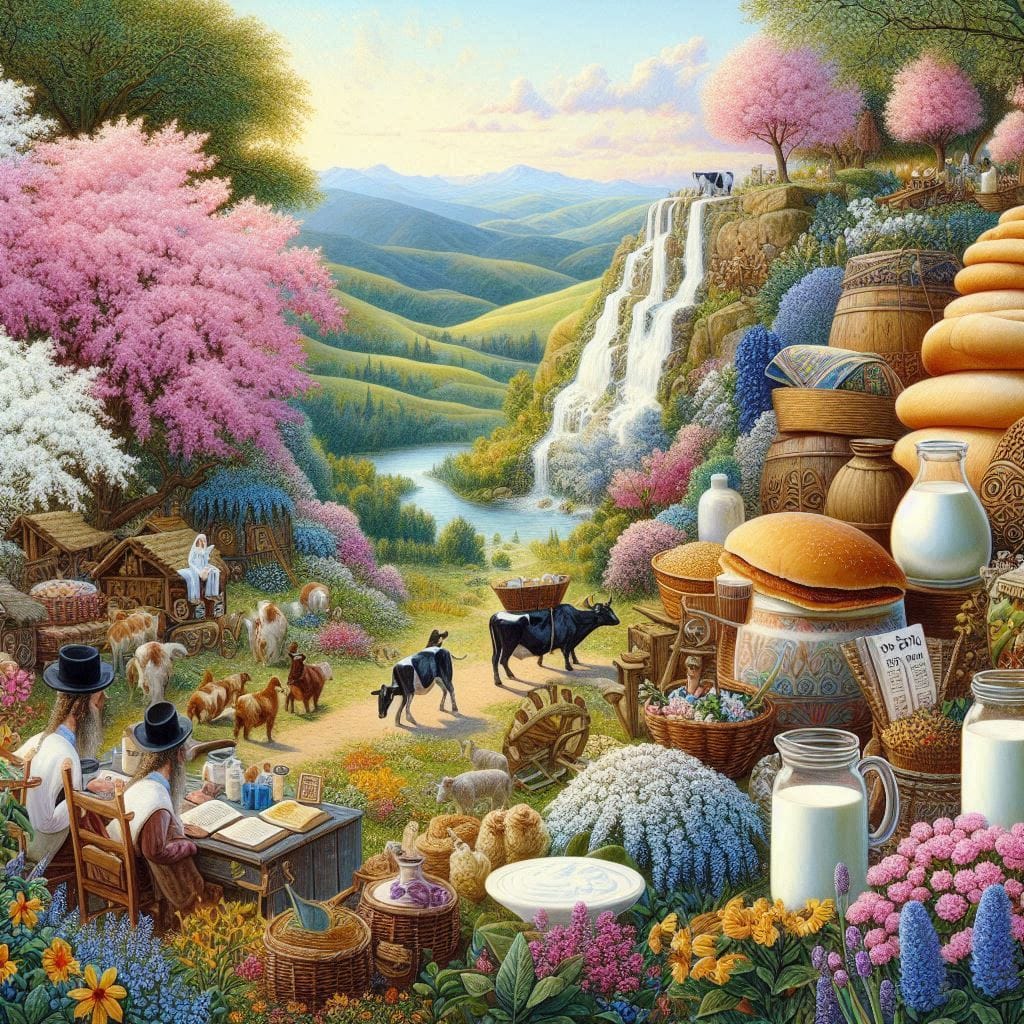
The Rema also connects the dairy custom to the שתי הלחם (shtei halechem), the two loaves brought on Shavuot. Some therefore eat a dairy meal and later a meat meal, using separate bread and following the laws of separation, so that the table itself remembers the two-loaf offering.
Here, halacha and symbolism meet beautifully.
Dairy represents receiving: softness, whiteness, inwardness, nourishment.
Meat represents strength: action, discipline, korban, service, embodied avodah.
Dairy is Torah entering the soul.
Meat is Torah entering the world.
But this must be done properly. Shulchan Aruch, Yoreh Deah 89 discusses the separation between meat and dairy. After meat, one waits before eating dairy according to the accepted custom of one’s community. After ordinary dairy, one may proceed to meat with proper cleansing and checking of the hands and mouth, while hard cheese has additional stringencies in many communities.
This is itself part of the Shavuot teaching.
Even joy needs order.
Even sweetness needs halacha.
Even mystical longing must enter vessels.
The table becomes holy not by emotion alone, but by mitzvah. A person can speak about upper worlds all day, but if the table is not governed by halacha, the light has no vessel. On Shavuot, we learn that the river of divine abundance must flow through channels.
Without channels, water becomes a flood.
With channels, water becomes a garden.
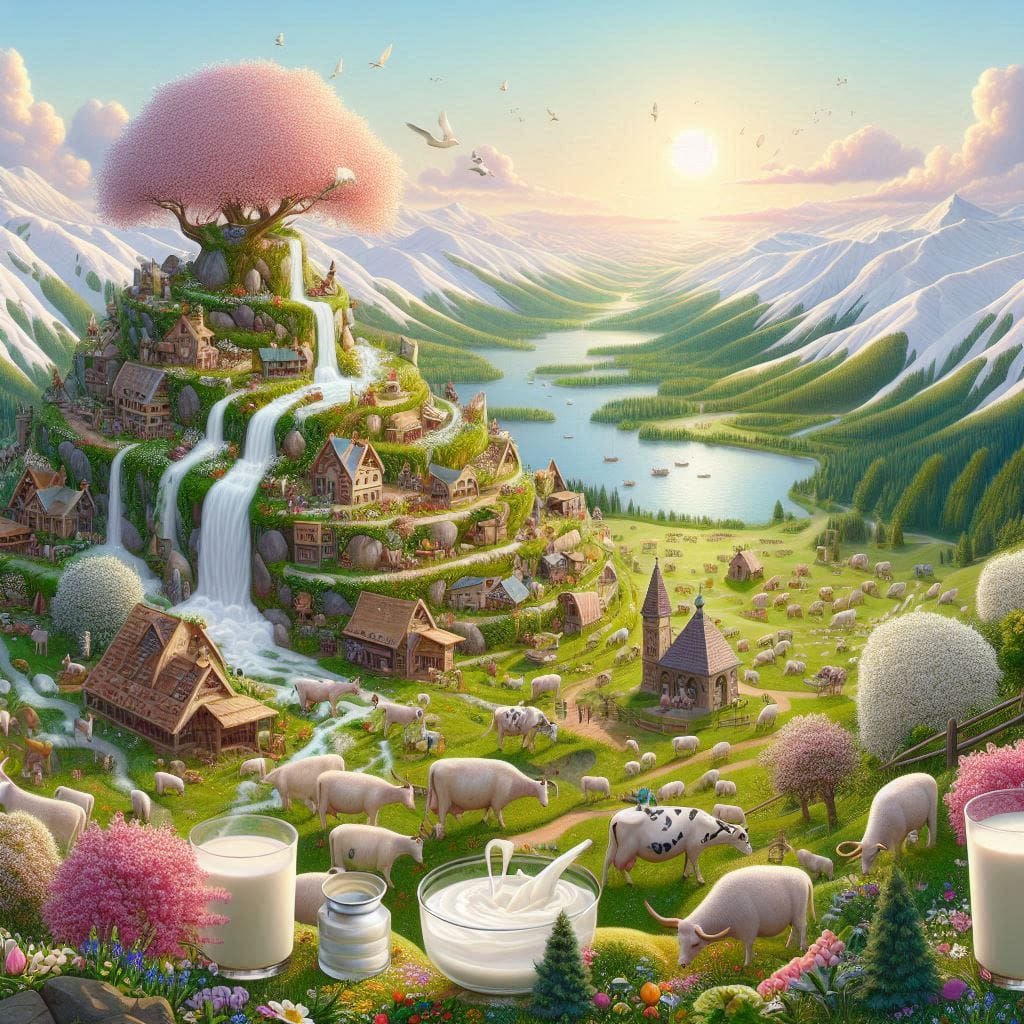
6. Chalav, Forty, and the Soul Becoming New
The word חלב (chalav — milk) has the gematria of forty.
Forty is the number of formation.
Forty days of the embryo.
Forty se’ah of a mikveh.
Forty years in the wilderness.
Forty days Moshe Rabbeinu remained on the mountain.
Milk is forty because milk forms. Milk builds. Milk takes the fragile and helps it grow strong.
On Shavuot, Israel becomes new again.
This is why Shavuot must never become only an intellectual holiday. It is not merely the celebration of learning. It is the celebration of being formed by Torah.
The question is not only:
How much Torah do I know?
The deeper question is:
Am I still soft enough to receive Torah?
The Sefat Emet teaches repeatedly on Shavuot that Torah must be received as something new, not as an old possession. The power of bikkurim, first fruits, is the power of firstness: the ability to bring the beginning back into the present.
That is Shavuot.
Every year, the soul stands again beneath the mountain. Every year, HaShem gives again. Every year, the Jew must become new again.
Milk is the taste of that renewal.
It is the white river of becoming.
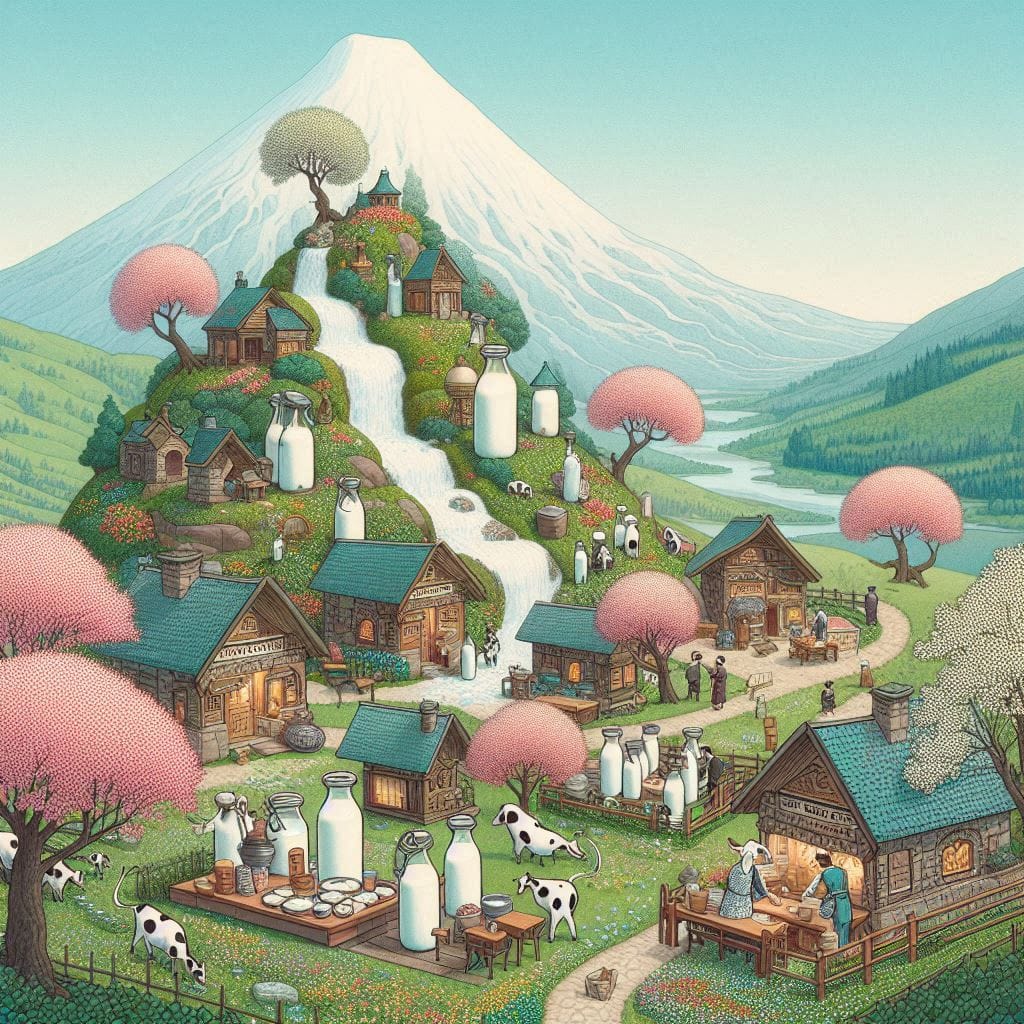
7. Binah: The Supernal River of Milk
In Kabbalah, milk belongs to the mystery of בינה (Binah — Understanding), the supernal mother.
חכמה (Chochmah) is the lightning flash of wisdom, the hidden point of insight. בינה receives that point and expands it into form, structure, language, comprehension, and birth. Binah is the womb of understanding. It takes the seed of wisdom and mothers it into
revelation
This is precisely the movement of Shavuot.
Before Sinai, Torah is hidden in the divine will.
At Sinai, Torah becomes spoken.
The concealed becomes revealed.
The upper light becomes command.
The infinite becomes near.
Milk is this movement: a white flow from above to below, a river of nourishment descending from the upper mother into the lower worlds.
The Zohar speaks of Shavuot night as the time of adorning the bride, and this becomes the foundation for Tikkun Leil Shavuot, the custom of staying awake to learn Torah on Shavuot night. The later Kabbalistic tradition, especially in the writings of the Arizal and later Sephardic authorities such as Kaf HaChaim, Orach Chaim 494, develops this night as a time of preparation, adornment, and union.
In this language, Israel learns Torah at night like one adorning the Shekhinah. Every pasuk, every mishnah, every word of Torah becomes another jewel. The beit midrash becomes a palace. The table of books becomes a garden of light.
And then morning comes.
After the night of Torah, the body receives dairy. The mouth that spoke Torah now tastes milk. The tongue that learned now tastes honey. The body says: I too stood at Sinai.
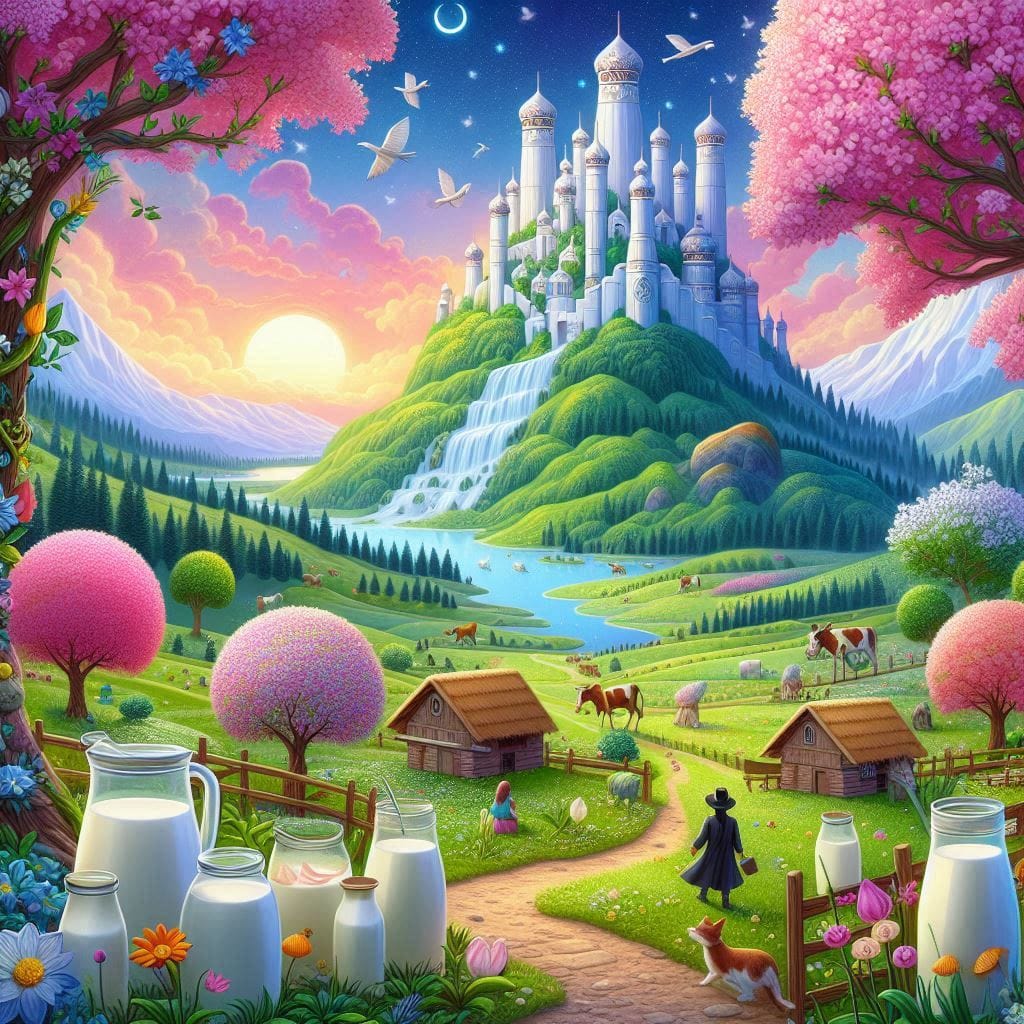
8. Ruth: Malchut Blossoming in the Field
On Shavuot we read Megillat Ruth.
Ruth is the soul of Shavuot walking through a field.
If Sinai is the mountain, Ruth is the valley.
If Sinai is thunder, Ruth is a whisper.
If Sinai is fire, Ruth is grain.
If Sinai is revelation from above, Ruth is loyalty rising from below.
Ruth leaves Moav and clings to Naomi. She says:
עמך עמי ואלקיך אלקי
Amekh ami, v’Elohayikh Elohai —
“Your people are my people, and your God is my God.”
This is Kabbalat HaTorah in human form.
Ruth enters Israel not through spectacle, but through humility. She gleans in the field. She survives on the compassion built into halacha: leket, shikchah, and pe’ah. Before kingship comes from her, Torah feeds her.
This is the hidden beauty of Shavuot: the highest light comes through the lowest doorway.
David HaMelech comes from Ruth. The messianic hope of Israel comes through the convert in the field. The royal line begins in modesty, loyalty, and bread.
In Kabbalistic language, Ruth is מלכות (Malchut) hidden in poverty. Malchut receives. It has no light of its own until it receives from above. But when it receives faithfully, it becomes kingship.
This is why dairy fits Ruth.
Dairy is not imperial food. It is pastoral food. Field food. Shepherd food. Mother food. Child food. It belongs to simplicity, nourishment, and hidden royalty.
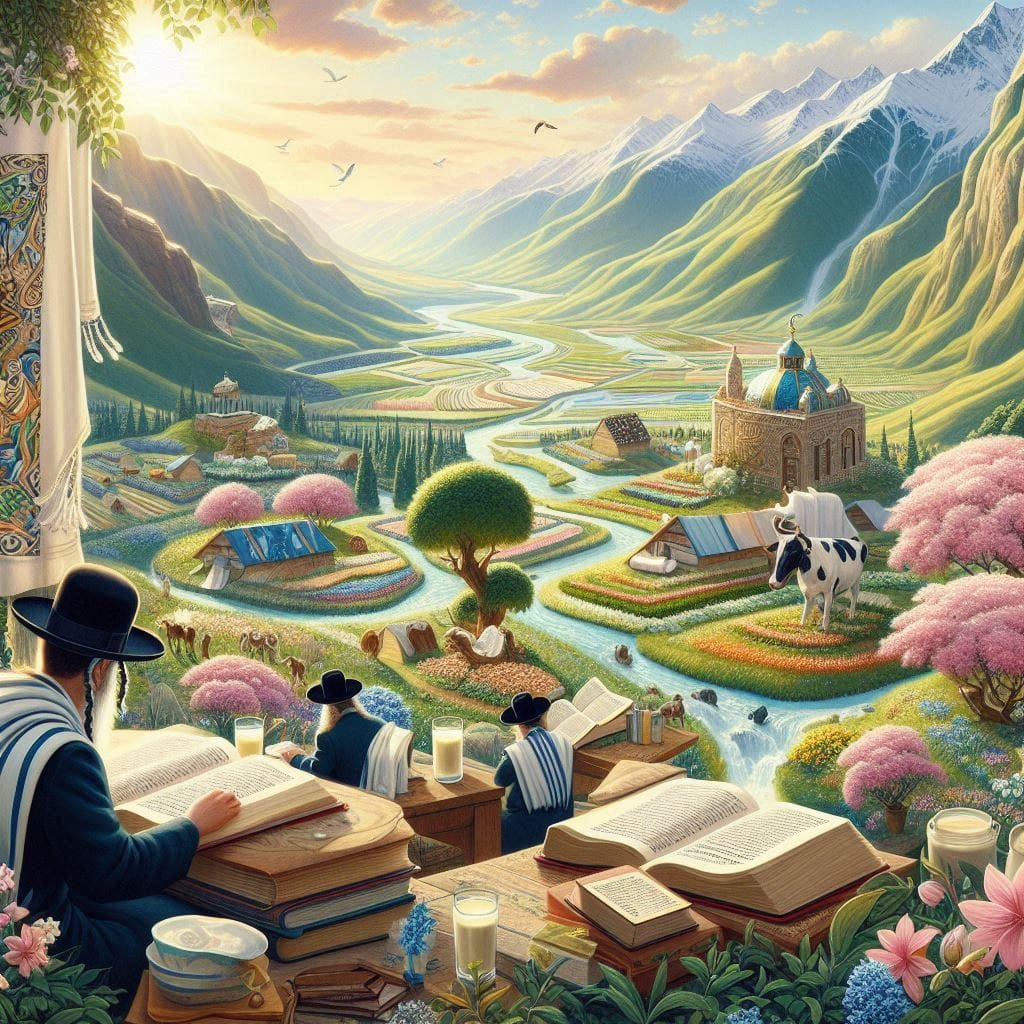
9. Hasidic Sweetness: The Body Must Also Rejoice
The Hasidic masters teach that Torah must be received not only with the mind, but with the whole being.
The Gemara, Pesachim 68b, teaches that regarding Atzeret, Shavuot, all agree that there must be an element of לכם (lachem — physical enjoyment for you), because it is the day the Torah was given. The Kedushat Levi explains this with great beauty: on Shavuot, the soul naturally rejoices in Torah, but the body also needs to be brought into the joy.
This is a deep teaching.
The body asks:
What does Shavuot mean for me?
So we give the body holy sweetness. Milk. Honey. Bread. Cheese. Wine. Song. Rest. A beautiful table. A meal of gratitude.
Not indulgence without holiness, God forbid. Rather, the body is invited into the covenant. The body that could have been merely animal becomes a servant of HaShem. The mouth eats with blessing. The hands prepare with mitzvah. The table becomes a place of Torah.
The Baal Shem Tov taught that divine service must be filled with joy, simplicity, and attachment to HaShem. The Toldot Yaakov Yosef and later Hasidic works preserve this vision: that even simple physical acts, when done for Heaven, can become vessels of divine service.
Rebbe Nachman of Breslov teaches again and again about renewal, simplicity, joy, and speaking to HaShem with a living heart. That belongs deeply to Shavuot. Torah must not become old in the mouth. Torah must become new, like spring water, like blossoms after winter, like milk given to a child.
Hasidut does not remove halacha. It warms it. It says: keep the mitzvot, but do not become stone. Learn Torah, but do not lose wonder. Eat the Shavuot meal, but taste the river of mercy flowing through it.
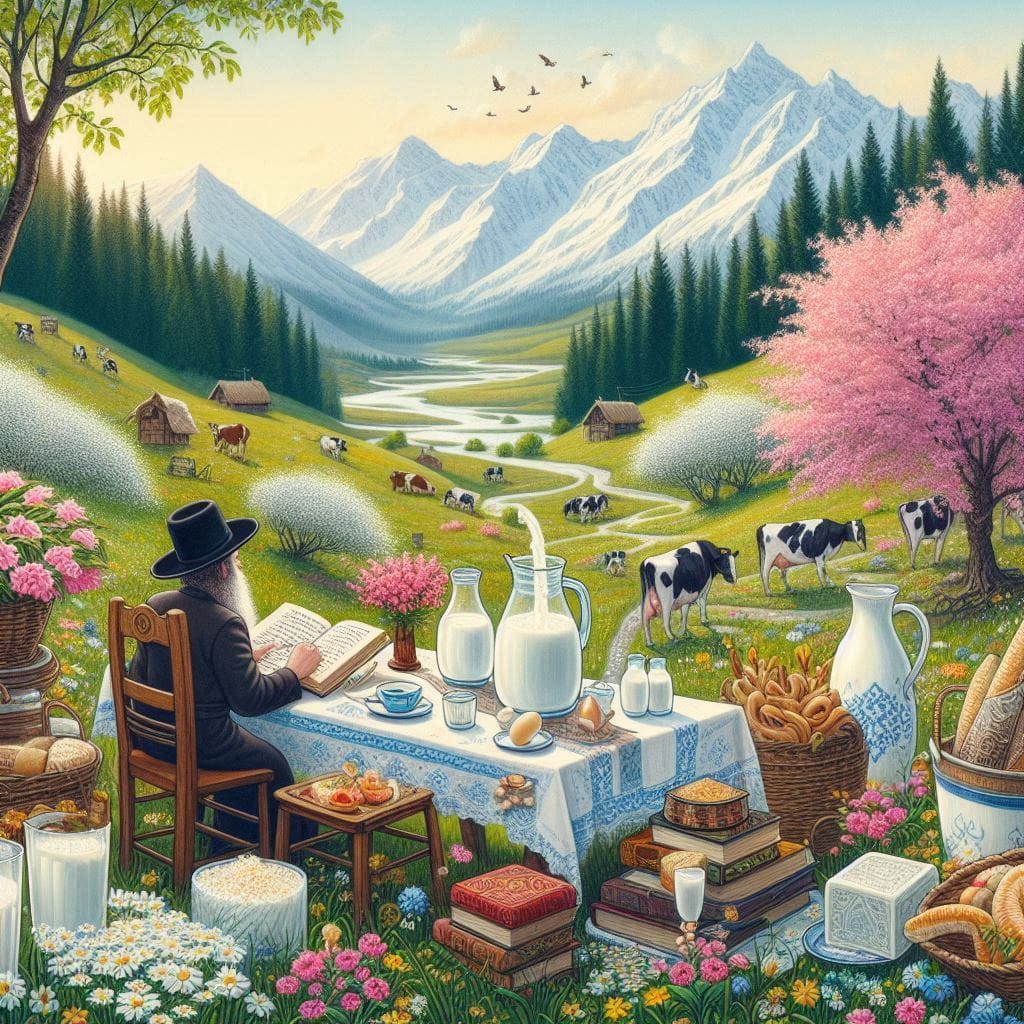
10. Northern Shavuot: Sinai in the Forest
In northern rural places, Shavuot can be felt with rare beauty.
The long concealment of winter has passed. The earth softens. The trees open. The grass returns. Rivers run bright. Animals graze. Flowers appear. The world seems newly washed.
In such a place, Shavuot does not feel abstract.
The land itself seems to say: receive.
This is not a replacement for Eretz Yisrael. The Torah’s phrase ארץ זבת חלב ודבש (eretz zavat chalav u’devash — a land flowing with milk and honey) belongs first and foremost to the Land of Israel. But Jewish life outside the Land can still hear echoes of that promise. Wherever a Jew receives Torah, a small reflection of Sinai appears.
In a northern Shavuot, the imagery becomes especially alive:
The snowy mountains recall Sinai.
The rivers recall Torah flowing downward.
The blossoms recall first fruits.
The grazing animals recall milk and pastoral abundance.
The books in the grass recall Torah entering the land.
The white table recalls purity, fellowship, and covenant.
The gathered Jews recall Israel standing together beneath the mountain.
This is the Boreal Shavuot: Torah among trees, Sinai in the forest, milk and honey in the north country, the voice of HaShem echoing through cedar, birch, spruce, rain, soil, and morning light.
To eat dairy on Shavuot in such a place is to declare:
Torah can descend here too.
Into this home.
Into this family.
Into this rural table.
Into this small community.
Into this wilderness.
Wherever Israel receives Torah, Sinai stands again.
Closing: The White Fire Still Flows
Dairy on Shavuot is not a cute custom.
It is a luminous act of memory.
It remembers Sinai.
It remembers kashrut.
It remembers the two loaves.
It remembers the harvest.
It remembers Ruth.
It remembers Binah.
It remembers Shekhinah.
It remembers that Torah is not only fire from heaven, but milk beneath the tongue.
So when we eat dairy on Shavuot, we should not eat casually.
We should taste the milk and remember the mountain.
We should taste the honey and remember the sweetness.
We should taste the bread and remember the offering.
We should taste the fruit and remember the Land.
We should taste the simplicity and remember humility.
We should taste the whiteness and remember the hidden light.
The Torah is not far away.
It is here.
At the table.
In the mouth.
In the home.
In the field.
In the book.
In the flowing river of Jewish life.
Still descending.
Still nourishing.
Still sweet.
Still white with the fire of Sinai.
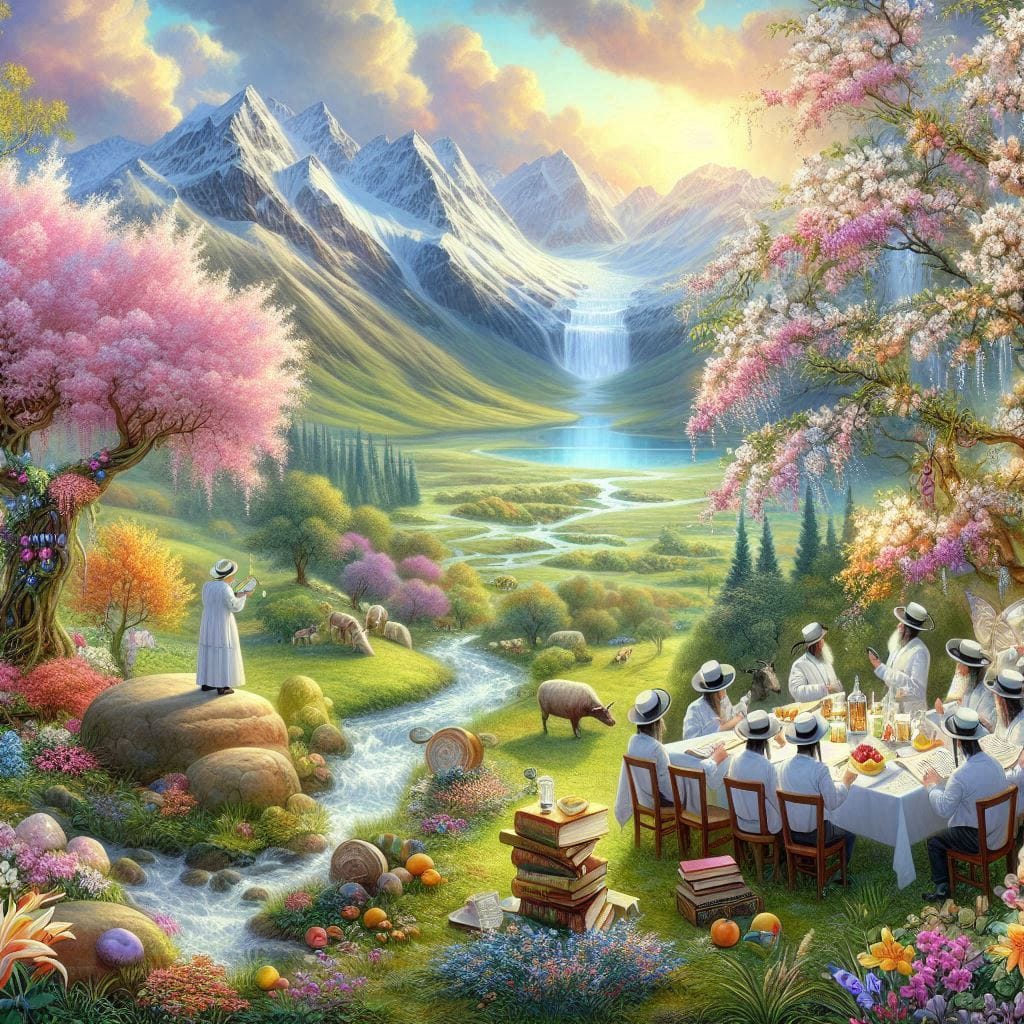
A Land Flowing with Milk and Torah — The White Fire of Shavuot
Shavuot, Torah Study, Dairy Customs, and the Renewal of Jewish Life in Northern Michigan
Why does the Jewish people celebrate the giving of the Torah with milk, honey, flowers, Torah study, and the sweetness of the natural world?
Shavuot commemorates Matan Torah, the giving of the Torah at Mount Sinai, when the Jewish people entered into their covenantal responsibility to HaShem. Yet the holiday is also connected to the harvest, the first fruits, the beauty of creation, and the nourishment of the human soul.
In this teaching, Rabbi Ariel Manning explores the relationship between Torah,
Halakhah, and the traditional custom of eating dairy foods on Shavuot.
The Rema, in Shulchan Aruch, Orach Chaim 494:3, records the custom of eating dairy on Shavuot. Later authorities explain its significance through the giving of the Torah, the laws of Kashrut, and the two loaves brought in the Beit HaMikdash.
Milk becomes an image of nourishment and receptivity, while honey symbolizes the sweetness of Torah study. Together, they remind us that Torah is not simply an intellectual pursuit, but a living inheritance that shapes the home, the family, and daily conduct.
The teaching also explores the mystical symbolism of Binah, the practice of Tikkun Leil Shavuot, and the importance of Megillat Ruth. Ruth demonstrates how devotion to HaShem becomes visible through humility, kindness, loyalty, and practical obedience to Torah.
The Hasidic tradition adds another dimension: joy. Torah must illuminate the mind, guide the conduct of the body, and awaken love for HaShem.
For Jewish families living in Alpena, Hillman, Rogers City, and throughout Northeastern Michigan, Shavuot offers a particularly meaningful expression of traditional Jewish life.
The spring landscape, flowing waters, blossoming trees, and growing fields provide reminders of creation and renewal. Although the biblical promise of a land flowing with milk and honey refers specifically to Eretz Yisrael, Jewish families throughout the northern diaspora can experience the beauty of receiving and living by the Torah.
A modest Shavuot table, an evening of Torah study, a reading from Megillat Ruth, and the careful observance of Halakhah can preserve the meaning of Sinai even in the most isolated Jewish household.
The central message: Torah is not merely received once in history. It must be received again through study, obedience, humility, joy, and the daily practice of Jewish life.
Wherever a Jewish family faithfully studies Torah and observes its commandments, the inheritance of Sinai continues from generation to generation.
Published by Shaarei Tzafon — The North Gate, an independent, family-led Orthodox Jewish educational and publishing initiative based in Northeastern Michigan, serving Alpena, Hillman, Rogers City, and surrounding communities.
Shaarei Tzafon promotes traditional Jewish life, Torah study, practical Halakhah, and the renewal of independent Jewish learning communities throughout the northern boreal regions, extending from the 45th parallel toward the Arctic tundra.
Article: https://www.shaareitzafon.org/a-land-flowing-with-milk-and-torah-and-the-white-fire-of-shavuot
Shaarei Tzafon — The North Gate
Orthodox Jewish Life and Torah Study in Northeastern Michigan
Shaarei Tzafon — The North Gate, led by Rabbi Ariel Manning, is an independent, family-led Orthodox Jewish educational and publishing initiative based in Northeastern Michigan. We support traditional Jewish life, Torah study, Halakhah, and Jewish education throughout Alpena, Hillman, Rogers City, and surrounding communities. Those interested in traditional Judaism are welcome to contact us for educational resources, Torah learning, and opportunities for discussion by prior arrangement.
Rooted locally, our greater mission extends northward from the 45th parallel — The North Gate — through Michigan, Canada, and Alaska toward the Arctic. We seek to encourage independent Jewish communities, family-centered Torah education, and the renewal of small batei midrash and shtieblach, preserving the rich traditions of Orthodox Judaism for future generations.
Our work begins in Northeastern Michigan, but our vision extends from the 45th parallel toward the Arctic.
Guided by Rambam and Mori Qafiḥ, uplifted by Rebbe Nachman, and grounded by Avraham ben HaRambam’s balance of halakha and inward avodah.
The Orchard’s Path
publishes our books and curricula.
Our mission: a bright, authentic Jewish presence in every northern town.
Created with ©systeme.io


