
Antisemitism Series: History, Rhetoric, and Reality
B"H
The Introduction of the new series on Antisemitism.
Anti-Semitism is often discussed too broadly, too vaguely, or too emotionally to be understood clearly. In modern speech, the term is sometimes used so loosely that it loses precision, while in other cases it is denied even when it is plainly present. Because of that confusion, this series must begin carefully. It must define its subject in a way that is morally serious, historically responsible, and understandable to the ordinary reader, including the reader who may already carry suspicions or negative impressions about Jews. This introduction is therefore not meant to shout, condemn, or flatten every question into hatred. It is meant to open the subject honestly.
Not every negative thought about Jews arises in the same way. Some people inherit stereotypes without ever examining them. Some hear fragments of history, isolated stories, or public scandals involving individual Jews and then begin to generalize from the part to the whole. Some encounter passages from rabbinic literature without any historical setting and conclude that Judaism teaches contempt for all non-Jews. Some are reacting not to Jews they actually know, but to images, rumors, polemics, and partial truths handed down through culture, religion, politics, or the internet. If such people are to be corrected, they must first be addressed in a way that is serious enough to respect their questions and firm enough to challenge their conclusions.
For that reason, this introduction begins narrowly. In a free society, people may think wrongly, speak rashly, or carry prejudices that should be corrected, even though those things are not yet identical to physical violence. This is not said to excuse slander, mockery, or anti-Jewish speech. Such things are harmful, unjust, and corrosive. They damage trust, distort judgment, and harden the heart. Yet there remains a real difference between a person who is confused, suspicious, or even verbally hostile, and a person who crosses into intimidation, vandalism, assault, or murder. That distinction matters. It matters morally, socially, and practically. If we are to stop hatred from becoming violence, then we must be willing to speak to those who have not yet crossed that final line, even if what they are thinking or saying is already wrong.

This series, then, begins with anti-Jewish rhetoric and the road that leads from misunderstanding to hostility. It does not begin by assuming that every troubled or suspicious reader is unreachable. On the contrary, one of the purposes of this work is to say that misunderstanding can be corrected, falsehood can be untangled, and a person who has absorbed anti-Jewish ideas does not have to remain imprisoned within them. But that correction will not happen through patronizing language, shallow moralizing, or slogans. It can only happen through patient distinctions, historical context, and a willingness to face difficult material directly.
One of the great problems in this subject is that people often move too quickly from the existence of a troubling fact to a sweeping conclusion about Jews as a whole. A scandal involving a Jew becomes evidence against all Jews. A harsh statement in the Talmud becomes evidence of what “the Jews” supposedly think of all non-Jews. A historical conflict involving Jews and another people is read as though Jewish sources were composed in a vacuum, without danger, persecution, war, idolatry, or imperial domination surrounding them. In this way, context disappears, and once context disappears, distortion begins to feel like clarity.
This is especially important when discussing rabbinic literature. Many people who quote the Mishnah, the Talmud, or later Jewish sources against the Jews do so without asking the most basic questions. Who is being discussed? Under what historical conditions? What legal category is in view? What kind of world produced the text? Is the passage addressing all non-Jews in every age, or a much more specific situation shaped by ancient paganism, empire, persecution, and communal survival? Too often, these questions are never asked. A line is extracted, translated polemically, separated from its legal and historical setting, and then turned into an indictment of Judaism itself. This series intends to challenge that method.

At the same time, honesty requires saying that Jews are not above criticism merely because they are Jews. Bad Jews exist, just as bad Christians, bad Muslims, bad atheists, bad clergy, bad rabbis, bad officials, and bad citizens exist. To acknowledge that fact is not anti-Semitic. Jewish criminals do not cease to be criminals because they are Jewish, and Jewish wrongdoing should not be denied for the sake of communal image. Likewise, if a Jewish public figure speaks foolishly, arrogantly, or cruelly about non-Jews, that too should be rejected. Truth is not served by pretending that Jewish identity sanctifies every Jewish action. But neither is truth served when the failures of individual Jews are inflated into a theory about the Jewish people as such. The difference between criticism and anti-Semitism often lies precisely there: in whether one judges a person for what he has done, or judges an entire people through him.
This matters because anti-Semitism rarely presents itself as simple irrational hatred. More often, it presents itself as realism, discernment, courage, or merely “asking questions.” It borrows the language of concern, justice, or historical honesty. It says, in effect, that it is only noticing patterns, only reacting to evidence, only refusing to be naïve. But this pose of seriousness often conceals a deep carelessness. It treats complicated history as obvious. It treats polemical readings as objective fact. It treats anecdotes as collective truth. It does not distinguish between Judaism as a religious and civilizational tradition, Jews as a diverse people, and individual Jews as morally accountable persons. In this way, anti-Jewish rhetoric is built not only on hatred, but on intellectual shortcuts.
This introduction therefore seeks to establish several foundations for the series ahead. First, anti-Semitism is not the same thing as every hard question about Jews, Judaism, or Jewish texts. Some questions are legitimate and deserve real answers. Second, the presence of a troubling text, event, or scandal does not justify broad conclusions about Jews as a whole. Third, ancient and medieval Jewish literature must be read in the world in which it arose, especially when that world included pagan governments, forced assimilation, violence, humiliation, and the need for communal boundaries. Fourth, anti-Jewish rhetoric often gains its force by stripping away that world and presenting Jewish texts as though they were abstract declarations of racial contempt. Fifth, if this subject is to be handled justly, then both Jews and non-Jews must be addressed with honesty rather than flattery or caricature.
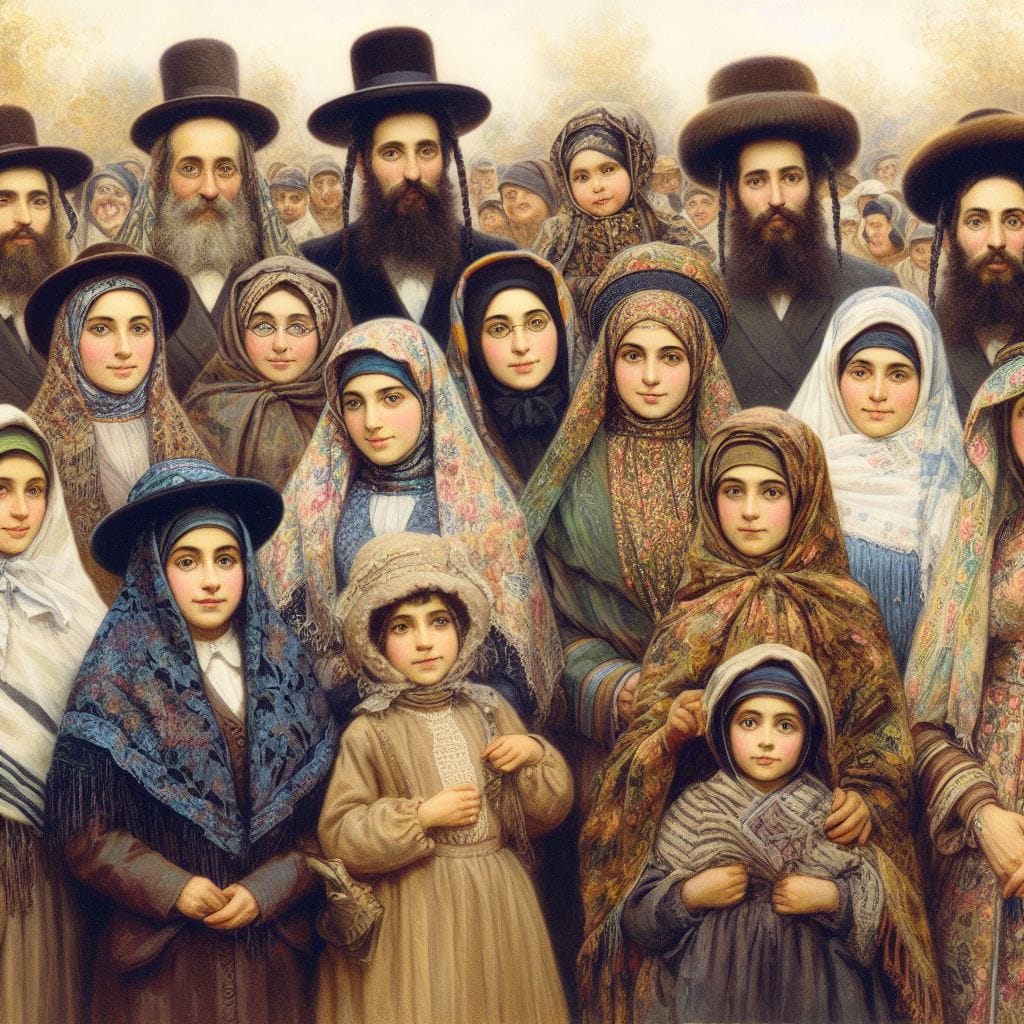
This series will pay special attention to the development of Christian anti-Judaism, not because all Christian thought is reducible to anti-Semitism, but because Christian polemic became one of the most historically powerful vehicles for anti-Jewish imagination in the West. The issue is not simply theology in the abstract, but what happens when a community seeking its own self-definition turns a group of people in this case the Jew into a permanent antagonist. The beginnings of the Jesus movement were within Judaism, yet as power shifted and institutional Christianity developed in the shadow of Rome and beyond it, Jews increasingly became useful as a negative image: the blind people, the rejected people, the stubborn people, the legalistic people, the people who missed God. Once such an image is fixed, it does not remain a theological point. It becomes a cultural reflex, and eventually a social weapon.
That process did not happen all at once, nor did it erase every better strand within Christian history. There have always been complexities, exceptions, and tensions. But the broad pattern matters. A people can be turned into a foil for someone else’s spiritual narrative. Once that happens, the people are no longer encountered as they are; they are encountered as symbols. And when Jews become symbols, they cease to be neighbors, and begin to function as explanations, warnings, obstacles, or enemies in the imagination of others. That symbolic function is one of the deepest engines of anti-Semitism.
Still, this series will not proceed by outrage alone. Outrage may feel righteous, but by itself it rarely clarifies. The goal here is not to produce a performance of indignation. The goal is to uncover how anti-Jewish rhetoric works, why it persists, what materials it feeds upon, and where its errors lie. Some of those errors are historical. Some are textual. Some are theological. Some are moral. Some arise from ignorance, while others arise from power. But all of them require careful treatment.

So this introduction serves as an invitation to slow down.
Before repeating what “the Talmud says,” we must ask what was happening when it was written. Before assuming that a Jewish criminal reveals the Jewish mind, we must ask whether we would permit the same reasoning for any other people. Before turning inherited religious polemic into historical fact, we must ask who benefited from that polemic and what it concealed. Before treating anti-Semitism as either everywhere or nowhere, we must define it carefully enough to be useful and seriously enough to matter.
That is where this series begins. It begins not with the claim that every critic is a monster, nor with the claim that every suspicion is baseless, but with the conviction that confusion must be corrected before it becomes hostility, and hostility must be confronted before it becomes harm. It begins with the belief that history matters, context matters, language matters, and truth matters. Above all, it begins with the belief that Jews must not be judged through fragments, distortions, or convenient enemies’ tales. They must be understood as a real people, with a real history, real texts, real wounds, real failures, and real dignity.
Only from that starting point can the deeper work begin.

Antisemitism Series: History, Rhetoric, and Reality
Understanding Anti-Jewish Prejudice Through Torah Study, Jewish History, and Responsible Interpretation
How can we distinguish legitimate criticism, historical misunderstanding, religious disagreement, and genuine antisemitism without confusing one for another?
This question forms the foundation of the Shaarei Tzafon Antisemitism Series.
In this introductory teaching, Rabbi Ariel Manning examines the historical, religious, and intellectual foundations of anti-Jewish rhetoric. Rather than assuming that every criticism of Jews constitutes antisemitism, the series seeks to identify how misconceptions develop, how stereotypes become accepted, and how hostility toward Jewish individuals can eventually become hostility toward an entire people.
A central concern is the misuse of Jewish religious literature.
The Torah, Mishnah, Gemara, Midrash, and later rabbinic writings belong to an extensive historical and legal tradition. Individual passages cannot be understood responsibly when removed from their original language, historical circumstances, legal context, and intended audience.
The Talmud, especially, is frequently misrepresented through isolated quotations and polemical interpretations. Serious Torah study requires asking who is being discussed, what legal question is involved, and how the passage was understood within Jewish tradition.
The article also introduces the historical development of Christian anti-Judaism. Religious disagreements between Judaism and Christianity influenced centuries of European attitudes toward Jews, sometimes creating stereotypes that continued long after their original theological settings had been forgotten.
Recognizing this history does not require condemning every Christian or dismissing sincere religious disagreement. It requires intellectual honesty and an understanding of how religious polemics can become social prejudice.
Likewise, acknowledging antisemitism does not place Jewish individuals, religious leaders, or institutions beyond legitimate criticism.
Wrongdoing must be judged according to evidence, responsibility, and justice. The conduct of one person cannot become a verdict against an entire people.
A fundamental principle of this series is that criticism must remain specific, evidence-based, and proportionate.
The distinction between prejudice, hostile rhetoric, intimidation, and physical violence also matters. Harmful ideas should be challenged before they develop into more dangerous behavior, while genuine historical questions deserve serious answers rather than slogans.
For students of Torah in Alpena, Hillman, Rogers City, and throughout Northeastern Michigan, this series offers an educational opportunity to examine Jewish history, religious misunderstanding, and the principles of responsible interpretation.
The central message: Antisemitism cannot be understood or confronted through ignorance, exaggeration, or collective accusations. Truth requires historical context, careful Torah study, moral responsibility, and respect for human dignity.
Jewish life is best defended not by avoiding difficult questions, but by answering them through knowledge, honesty, and fidelity to Torah.
Published by Shaarei Tzafon — The North Gate, an independent, family-led Orthodox Jewish educational and publishing initiative based in Northeastern Michigan, serving Alpena, Hillman, Rogers City, and surrounding communities.
Shaarei Tzafon promotes traditional Jewish life, Torah study, practical Halakhah, and the renewal of independent Jewish learning communities throughout the northern boreal regions, extending from the 45th parallel toward the Arctic tundra.
Article: https://www.shaareitzafon.org/antisemitism-series-history-rhetoric-and-reality
Shaarei Tzafon — The North Gate
Orthodox Jewish Life and Torah Study in Northeastern Michigan
Shaarei Tzafon — The North Gate, led by Rabbi Ariel Manning, is an independent, family-led Orthodox Jewish educational and publishing initiative based in Northeastern Michigan. We support traditional Jewish life, Torah study, Halakhah, and Jewish education throughout Alpena, Hillman, Rogers City, and surrounding communities. Those interested in traditional Judaism are welcome to contact us for educational resources, Torah learning, and opportunities for discussion by prior arrangement.
Rooted locally, our greater mission extends northward from the 45th parallel — The North Gate — through Michigan, Canada, and Alaska toward the Arctic. We seek to encourage independent Jewish communities, family-centered Torah education, and the renewal of small batei midrash and shtieblach, preserving the rich traditions of Orthodox Judaism for future generations.
Our work begins in Northeastern Michigan, but our vision extends from the 45th parallel toward the Arctic.
Guided by Rambam and Mori Qafiḥ, uplifted by Rebbe Nachman, and grounded by Avraham ben HaRambam’s balance of halakha and inward avodah.
The Orchard’s Path
publishes our books and curricula.
Our mission: a bright, authentic Jewish presence in every northern town.
Created with ©systeme.io


