
Antisemtism Series Part 6: Family, Friends, and Non-Traditional Religious Voices
B"H
1. My mother’s sacrifice and the beginning of discipline
Before I became who I am now, before I could explain Torah, Talmud, Jewish law, and history with any confidence, I was a child who struggled with speech and reading. My mother remembers something very simple but very important: when I tried to read the word “the,” I would say “they.” I could not pronounce it properly. That may seem small to someone else, but for a mother, it was a sign. She saw that the public school system in Toledo in the early 1980s was not giving her children what they needed. So she made a sacrifice.
She gave up things she loved. She sacrificed full-length mink coats. She ignored people who told her she was wasting her money. She invested in her sons.
That matters.
And part of that investment was sending me to Catholic school from second grade through sixth grade. I am Jewish. I do not subscribe to Catholic doctrine. I do not follow Catholic religion. But I can still say honestly that the schooling gave me something real: discipline, structure, seriousness, and academic rigor.
That is not a betrayal of Judaism. That is gratitude.
A Jew can say: “I do not accept your theology, but I recognize the educational discipline that was given to me.” That is not confusion. That is maturity.

2. Why being sent to Catholic school should not be a scandal
Some people criticize that. They hear, “You went to Catholic school,” and they act as if this somehow disqualifies a person from speaking as a Jew. But that is shallow thinking.
Many Jewish people have lived in exile under non-Jewish societies. We have had to navigate empires, languages, academies, courts, schools, and cultures that were not ours. The question is not whether a Jew ever encountered non-Jewish education. The question is whether he remained loyal to Torah.
A Jewish child can sit in a Catholic school and still later become a Torah-committed Jew. A Jewish adult can recognize the rigor of Catholic education and still reject Catholic theology. These are not contradictions.
In fact, this is part of the Jewish exile experience. We have always had to separate knowledge from worship, discipline from doctrine, and civilizational inheritance from covenantal loyalty.
Catholic schooling gave me discipline. It gave me order. It gave me seriousness. It gave me a sense that learning matters. That does not make me Catholic. It means my mother used the best tool available to rescue her children from a weak educational environment.
And I honor her for that.
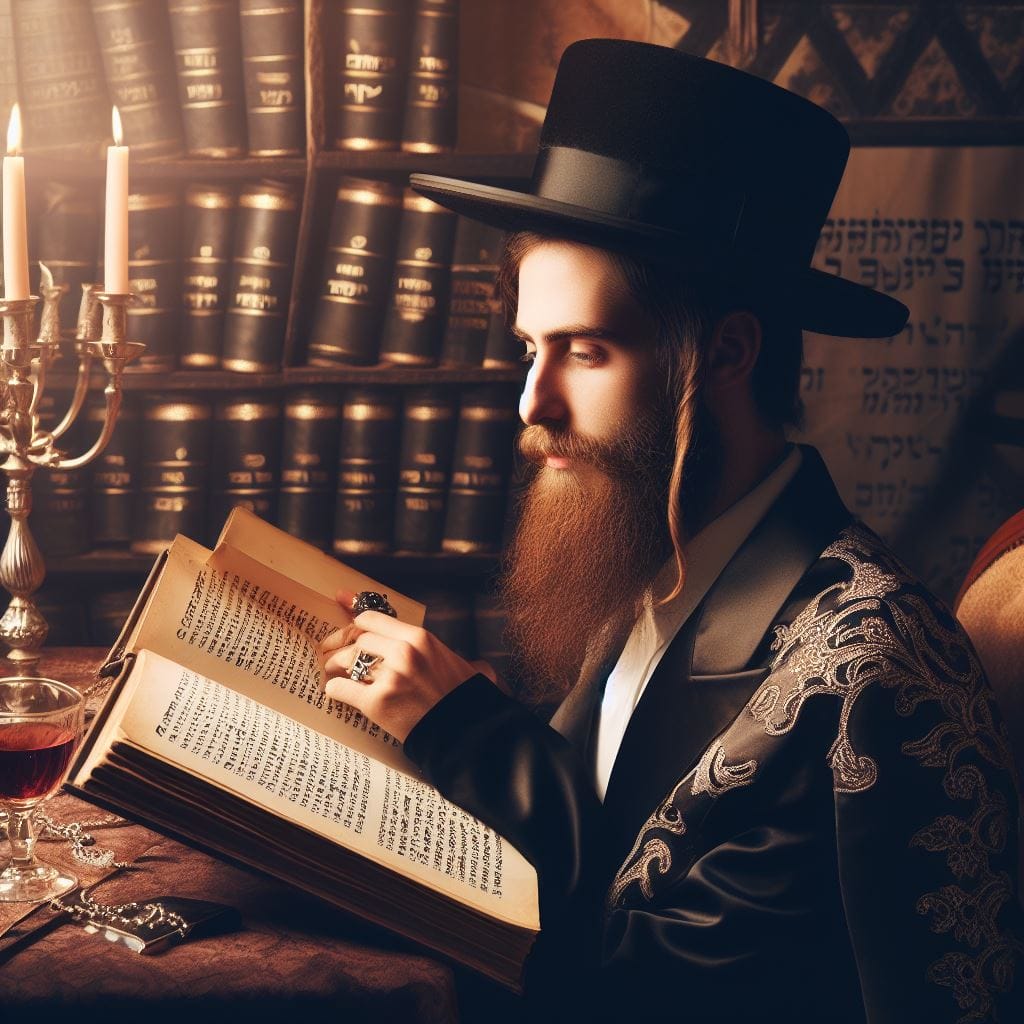
3. Catholicism, Rome, and the preservation of classical learning
Catholicism, historically, carried much of the educational and intellectual inheritance of the old Roman world into medieval Europe. That does not mean Rome was holy. It does not mean the Church was always righteous toward Jews. It does not erase persecution, forced disputations, censorship, or Jewish suffering under Christian rule. But historically, the Church became one of the major institutions through which classical learning, Latin education, formal theology, and scholastic methods were preserved and transmitted in Europe.
Medieval European philosophy was deeply connected to Christian theology, and many of its leading thinkers were churchmen. Scholasticism especially became a system of disciplined argument, logic, and philosophical theology, eventually drawing heavily on Aristotle.
That kind of rigor leaves a mark. Catholic schools often inherited this older educational culture: memorization, structure, catechism, recitation, grammar, discipline, uniforms, order, authority, and the idea that education forms the soul.
Again, we do not accept Catholic theology. We do not follow Rome. We follow Torah, halakhah, and the rabbinic chain. But we can recognize that Catholic schooling often preserved an older seriousness about education that many public systems abandoned.
That is the point. Not theology. Formation.
4. Judaism also knew the Greco-Roman and Persian worlds
Now this is where the conversation becomes important for our anti-Semitism series. People attack the Talmud as if the rabbis were isolated fanatics writing hateful things in a vacuum. That is false.
The rabbis of the Mishnah and Talmud lived in the real world. They lived under Rome. They lived under Persia. They lived in Babylonia.
They knew Greek, Latin, Persian, and Aramaic cultural environments. The rabbinic texts themselves preserve many Greek and Latin terms, and scholars note that Greek and Latin words appear in Talmud, Midrash, and Targum in phonetic Hebrew or Aramaic transcription. Encyclopaedia Iranica also notes that Talmudic Aramaic shows Middle Persian influence, including loan-translations and syntactic influence.
So when someone says, “The Talmud speaks about goyim,” we must ask: Which goyim? In what period? Under what conditions?
The rabbis were not speaking in modern America about a polite Christian grandmother, a Lutheran neighbor, a Catholic schoolteacher, or a decent non-Jewish coworker. Much of the Talmudic world was a world of pagan empire, Roman brutality, Persian power, social danger, idolatry, and Jewish vulnerability.
This is why context matters.
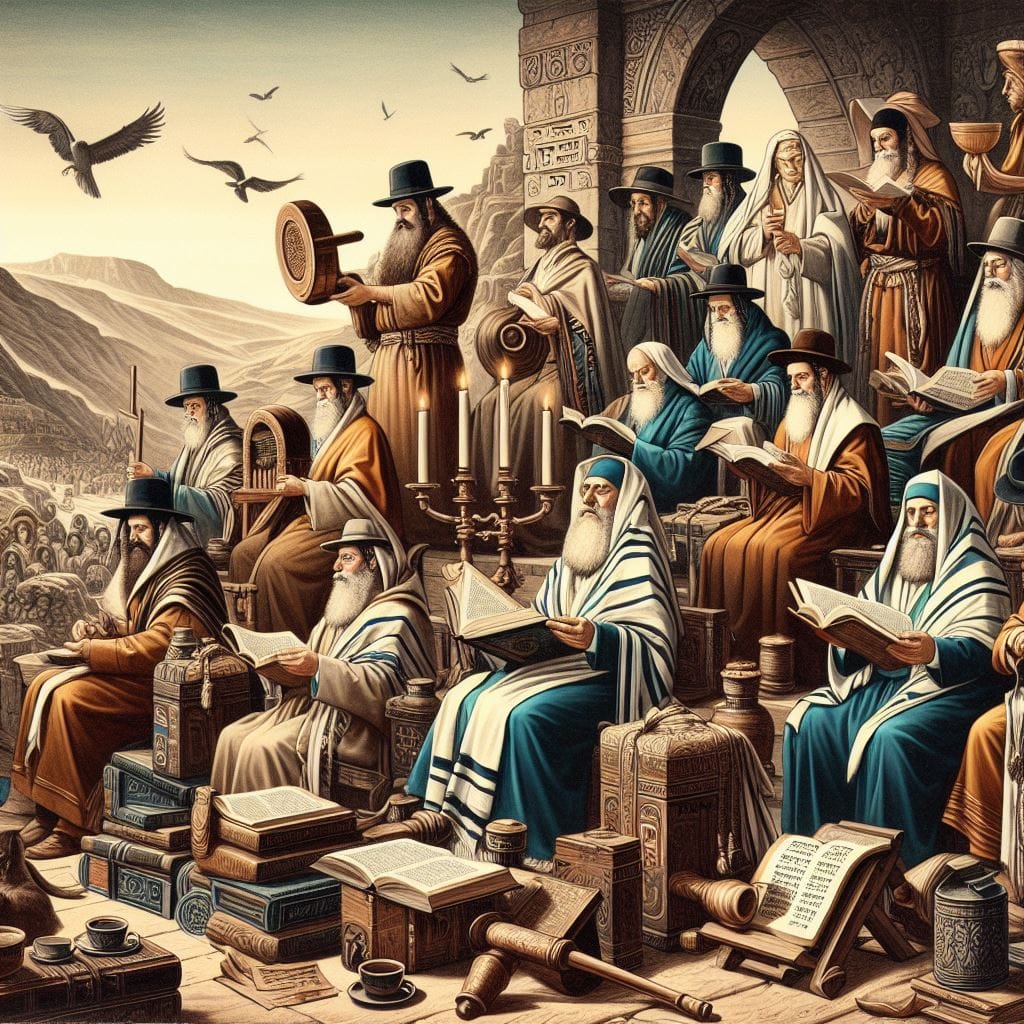
5. “Goyim” in the Talmud often means the nations as imperial powers
The word גוי / goy simply means “nation.” Israel itself is called a goy kadosh, a holy nation, in the Torah. But in later Jewish usage, goyim often means the non-Jewish nations. That term is not automatically a racial insult. It is a covenantal and national category.
When the Talmud speaks harshly about goyim, it often reflects Jewish experience under hostile nations. Rome destroyed the Second Temple in 70 CE. The Bar Kokhba revolt of 132–135 CE ended in devastation, persecution, slavery, and enormous Jewish suffering. Recent archaeological reporting has also discussed Jewish underground hideout systems from the Roman revolt period, showing how whole families prepared to survive Roman suppression.
This is not abstract. The rabbis knew what Rome did.
So when an anti-Semitic video quotes the Talmud and says, “Look how Jews talk about Gentiles,” it is often removing the emotional, legal, and historical context. The rabbis were speaking from a world where the nations were not merely “different people.” The nations were often imperial systems that killed Jews, taxed Jews, humiliated Jews, outlawed Jewish practices, or threatened Jewish survival.
The Talmud is not saying, “We hate your Christian neighbor.”
It is saying, “We survived Rome.”
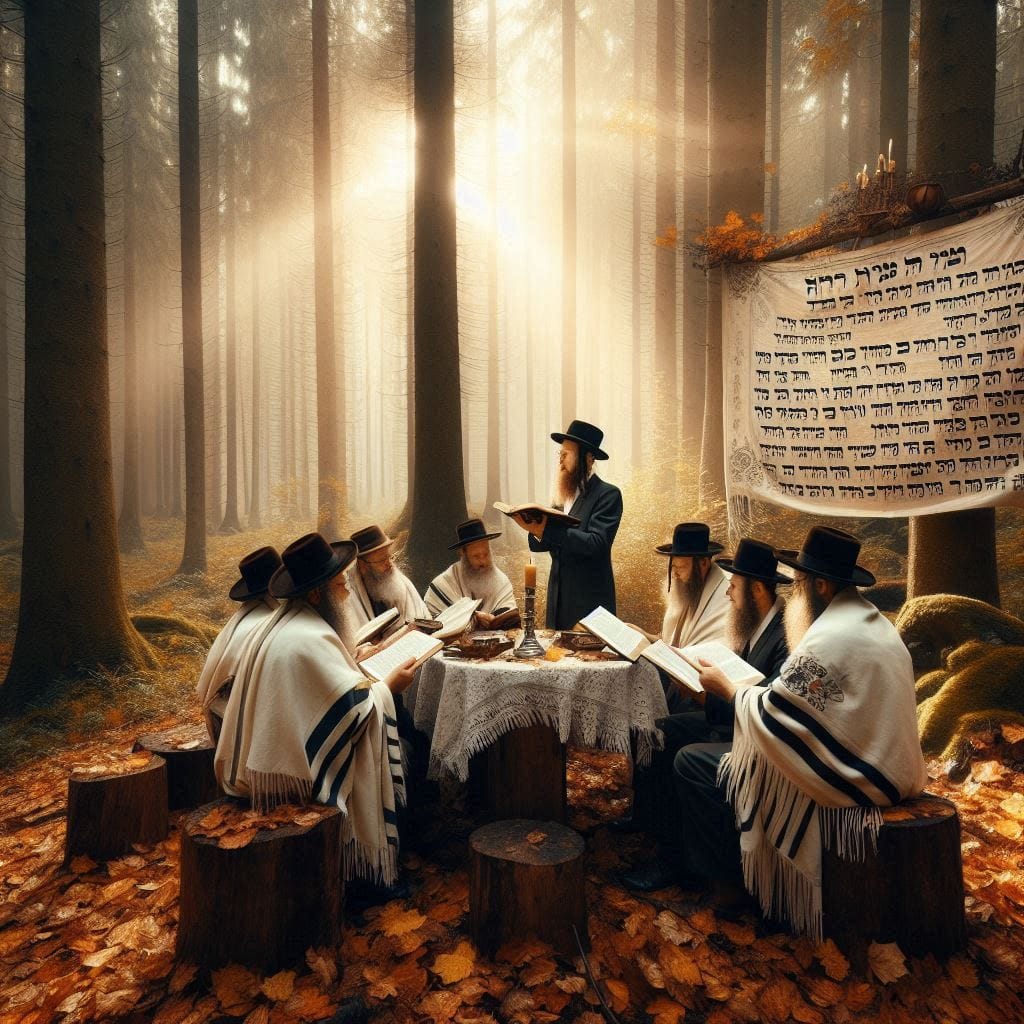
6. Family and friends need a calm but firm answer
This is especially important when the person sending the video is family. Your mother may not be attacking Judaism. She may be concerned. She may have seen something disturbing. She may not know how these videos manipulate sources.
So the response should not be angry. It should be calm, loving, and clear.
We can say:
“Mom, those videos usually take Talmud quotes out of context. When the Talmud speaks about goyim, it is often speaking from the world of Rome, Persia, Babylonia, pagan empire, persecution, and danger. It is not talking about every decent non-Jew today. Judaism teaches that every human being is created b’tzelem Elohim, in the image of God. But Judaism also remembers that the nations often treated Jews with cruelty. The harsh language comes from survival under empire, not racial hatred.”
That answer respects the concern without surrendering the truth.
It also honors the parent. My mother sent me to Catholic school because she wanted me to read, think, speak, and stand upright. So when she sends me something now, I do not respond as a child embarrassed by his education. I respond as a son who says: “You invested in me. Let me use that education to explain this properly.”
That is beautiful.
7. Traditional Christians are not the same as anti-Jewish agitators
Here we need to make a distinction. In our anti-Semitism series, especially when dealing with family and friends, we must distinguish between traditional Christians and non-traditional religious agitators.
Traditional Catholics, Eastern Orthodox Christians, Lutherans, Anglicans, Presbyterians, and other older branches of Christianity usually have an inherited religious structure. We disagree with their theology, but they often understand tradition, clergy, canon, hierarchy, liturgy, and inherited discipline. They may be wrong about Judaism, but they at least understand that religion is not invented yesterday.
The problem often comes from non-traditionalist movements: religious internet personalities, conspiracy movements, pseudo-Hebrew groups, anti-Talmud agitators, and fringe teachers who rip Jewish texts out of context. They do not have the rigor of Catholic scholasticism. They do not have the humility of traditional Protestant learning. They do not have the seriousness of real historical study. They often have screenshots, memes, bad translations, and rage.
That is not scholarship. That is religious vandalism.
So our message should be fair:
We can respect traditional Christians as people of inherited religious civilization while firmly rejecting Christian theology. We can even appreciate Catholic schooling, discipline, and scholastic habits. But we must reject anti-Jewish misuse of the Talmud, especially when it comes from people who have no training in Hebrew, Aramaic, rabbinic law, or Jewish history.

8. The final lesson: education becomes a shield
This is why my mother’s sacrifice matters. She did not merely send me to school. She gave me tools. Reading, discipline, structure, argument, reverence for learning — these became part of the foundation. Later, those tools were turned toward Torah.
That is the deeper story.
A mother gave up luxury so her sons could receive formation. A Jewish child passed through Catholic schooling, not to become Catholic, but to become disciplined. That discipline later served Torah. And now, when anti-Semitic videos twist the Talmud, that same child can answer with clarity.
So the lecture ends with this:
We do not hate the nations. We remember history. We do not worship Rome. But we can recognize discipline where discipline exists. We do not accept Catholic theology. But we can be grateful for Catholic schooling that helped form a child when public education failed him. We do not live by Greco-Roman tradition. We live by Torah and rabbinic tradition. But we understand that Jews lived among Greek, Roman, Persian, and Babylonian worlds, and the Talmud reflects that world.
Therefore, when someone quotes the Talmud against us, we answer:
“You are reading survival literature as if it were racial hatred. You are reading Jewish legal memory outside its historical world. You are taking words formed under Rome and pretending they were written about your neighbor down the street.”
And when family sends these things, we answer with love:
“Thank you for caring. Thank you for asking. Let me explain it properly.”
Because education is not just information. Education is a shield.
And sometimes, a mother’s sacrifice becomes the very tool by which her son can defend Torah with dignity.
Closing: The Goal Is Not to Copy Me, But to Learn How to Learn
And this is really what I want for people.
I do not want people to merely repeat my words. I do not want people to become copies of me. That is not Torah. That is not education. True education is not cloning a personality; it is forming a mind, strengthening a soul, and giving a person the tools to stand upright before God, before history, and before the world.
What my mother gave me was not just school. She gave me discipline. She gave me the chance to learn how to read, how to think, how to follow an argument, how to respect structure, and how to take learning seriously. Later, those tools became part of my Torah life. They helped me approach halakhah, history, language, philosophy, and Jewish tradition with order instead of chaos.
That is what I want to pass on.
I want people to become self-educating people. I want them to know how to ask better questions, how to check sources, how to distinguish a real argument from a cheap accusation, how to separate history from propaganda, and how to read Jewish texts with context, reverence, and discipline.
I want people to learn in a systematic way: Torah first, then mitzvot, then halakhah, then the wider sea of rabbinic discussion, history, midrash, philosophy, and spiritual depth. Not random screenshots. Not internet panic. Not shallow arguments. A person should learn how to build thought brick by brick, source by source, generation by generation.
So no, the goal is not for anyone to become “me.”
The goal is for each person to become more fully themselves before HaShem — educated, disciplined, rooted, thoughtful, and capable of defending truth without hatred and loving Torah without fear.
That is what real education does.
It does not merely give answers.
It teaches a person how to learn.
For more info please study the Antisemtism Series here in Shaarei Tzafon starting at:
https://www.shaareitzafon.org/antisemitism-series-history-rhetoric-and-reality

Shaarei Tzafon — The North Gate
Orthodox Jewish Life and Torah Study in Northeastern Michigan
Shaarei Tzafon — The North Gate, led by Rabbi Ariel Manning, is an independent, family-led Orthodox Jewish educational and publishing initiative based in Northeastern Michigan. We support traditional Jewish life, Torah study, Halakhah, and Jewish education throughout Alpena, Hillman, Rogers City, and surrounding communities. Those interested in traditional Judaism are welcome to contact us for educational resources, Torah learning, and opportunities for discussion by prior arrangement.
Rooted locally, our greater mission extends northward from the 45th parallel — The North Gate — through Michigan, Canada, and Alaska toward the Arctic. We seek to encourage independent Jewish communities, family-centered Torah education, and the renewal of small batei midrash and shtieblach, preserving the rich traditions of Orthodox Judaism for future generations.
Our work begins in Northeastern Michigan, but our vision extends from the 45th parallel toward the Arctic.
Guided by Rambam and Mori Qafiḥ, uplifted by Rebbe Nachman, and grounded by Avraham ben HaRambam’s balance of halakha and inward avodah.
The Orchard’s Path
publishes our books and curricula.
Our mission: a bright, authentic Jewish presence in every northern town.
Created with ©systeme.io


