
Can Women Wear Tzit-Tzit and Tefillin?
B”H
Really? Absolutely—yes!
Let’s take a look at the sources together:
Bamidbar (Numbers) 15:37–41
יהוה said to Moshe:
“Speak to the Israelites and instruct them to make for themselves tzitzit—fringes—on the corners of their garments throughout their generations, and to attach a thread of blue (techelet) to the fringe at each corner.
That shall be your fringe: look at it and remember all the commandments of יהוה, so that you will do them and not follow after your own heart and eyes, which lead you astray.
In this way, you will remember and keep all My commandments, and be holy to your God.
I am יהוה your God, who brought you out of the land of Egypt to be your God; I am יהוה your God.”

Sefer HaChinukh, Mitzvah 386
This mitzvah applies to men at all times and in every place, but not to women. Still, if a woman wishes to wear tzitzit, she may—though, according to some authorities, she does so without reciting a blessing (see Rambam, Hilchot Tzitzit 3:9). Others, such as Rabbenu Tam (in Tosafot, Rosh Hashanah 33a), hold that she may even say the blessing.
Anyone who wears a four-cornered wool or linen garment without tzitzit transgresses this positive commandment. Garments made of other materials are rabbinically obligated, not biblically. However, a borrowed garment is exempt for thirty days; after that, the borrower must affix tzitzit (see Rambam, Hilchot Tzitzit 3:4).

Talmud Bavli, Menachot 43a
The Sages taught:
Everyone is obligated in the mitzvah of tzitzit—priests, Levites, Israelites, converts, women, and Canaanite slaves.
Rabbi Shimon, however, exempts women, explaining that tzitzit is a positive, time-bound commandment, from which women are generally exempt.

Rambam, Mishneh Torah – Hilchot Tzitzit 3:9
It is permitted to enter a lavatory or bathhouse while wearing tzitzit. If one of the threads—white or techelet—tears, it may be discarded, since the mitzvah does not confer sanctity on the material itself.
A Jew may not sell a tallit with tzitzit to a non-Jew until the tzitzit are removed—not because the garment is holy, but because a Jew might mistake the gentile for a fellow Jew and endanger himself.
Women, servants, and minors are not biblically obligated in tzitzit, but it is a rabbinic custom to train children who can dress themselves to wear them.
If women or servants wish to wear tzitzit, they may do so without saying a blessing. The same applies to other positive commandments from which women are exempt—if they wish to perform them voluntarily, they should not be prevented, though they do not recite a blessing.
A tumtum or androgynos (whose gender status is uncertain) should also fulfill these commandments without a blessing, due to the doubt regarding their halachic classification.

Shulchan Aruch, Orach Chayim 17:2 (with Rema)
Women and slaves are exempt from tzitzit because it is time-dependent.
Rema: If they wish to wear tzitzit and recite the blessing, they may do so—just as with other time-bound mitzvot (following Tosafot, Rosh, and Ran on Rosh Hashanah and Kiddushin).
However, this can appear as if they are trying to appear overly pious, so it is generally discouraged. Tzitzit is a commandment related to the object, not the person (Agur §27).
Slaves are not required to be provided a tallit, though if they have one with four corners, it must have tzitzit.
A tumtum or androgynos wraps in tzitzit without a blessing due to doubt.
Rema adds: Since our custom is that women say blessings when performing time-bound mitzvot, they may do so here as well.
Note: This is not normally done, even though its technically allowed...
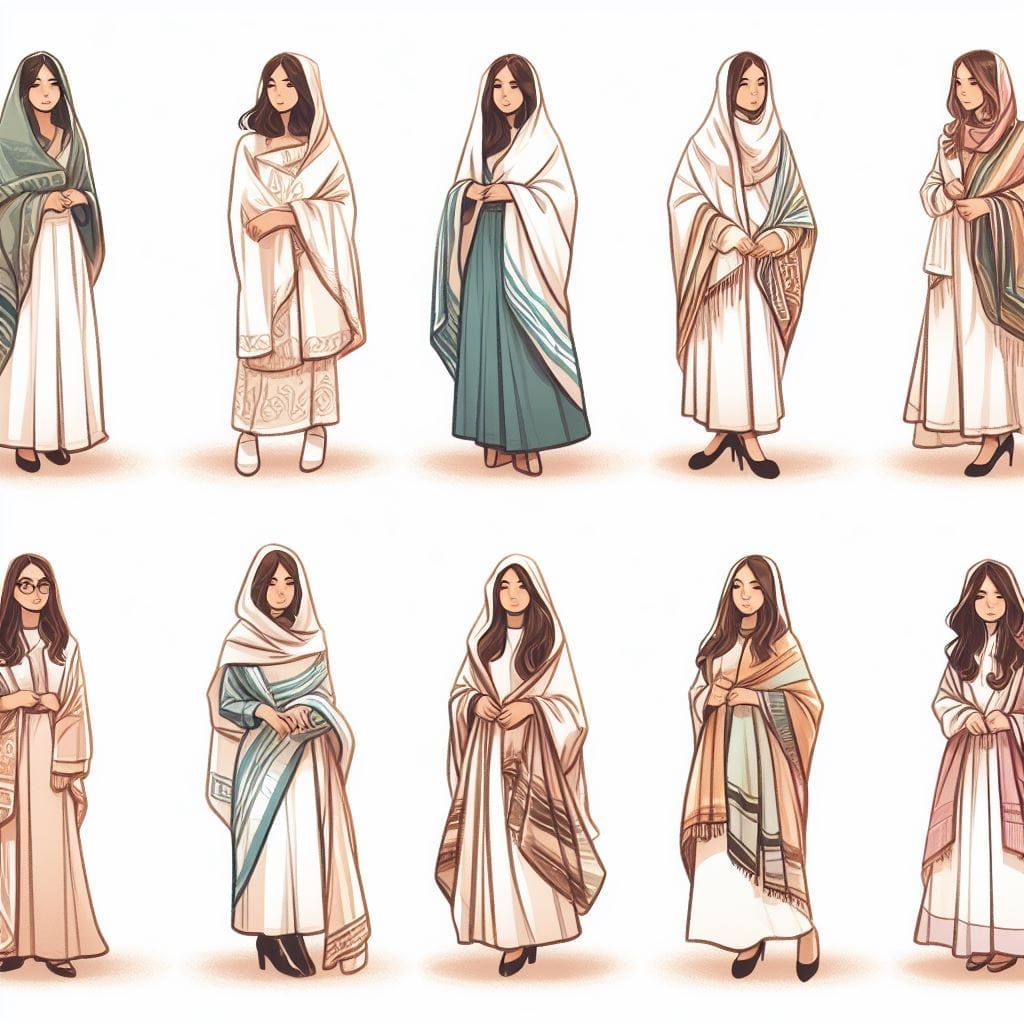
Can Women Wear Tzitzit and Tefillin?
Women, Voluntary Mitzvot, Rambam, and the Boundaries of Jewish Halakhah
Can Jewish women voluntarily perform commandments from which they are traditionally exempt, and does exemption from a mitzvah necessarily mean prohibition?
The relationship between women and positive time-bound commandments has been discussed throughout Jewish legal history. While traditional Halakhah exempts women from certain obligations, exemption does not always mean that participation is forbidden.
In Can Women Wear Tzit-Tzit and Tefillin?, Rabbi Ariel Manning of Shaarei Tzafon examines the biblical commandment of tzitzit, the discussion in Talmud Menachot 43a, Sefer HaChinukh, Rambam's Mishneh Torah, and the rulings of the Shulchan Aruch and Rema.
The article emphasizes an important distinction within Jewish law: a woman may be exempt from a particular commandment while still being permitted to fulfill it voluntarily.
Rambam, in Hilchot Tzitzit 3:9, explicitly permits women to wear tzitzit without reciting a blessing. The Rema records the Ashkenazic practice permitting women to recite blessings over certain voluntary commandments, while also expressing reservations about women wearing tzitzit as an unusual display of piety.
These differences illustrate how classical Jewish authorities distinguish biblical obligation, voluntary religious practice, established communal custom, and the appropriate recitation of blessings.
Although the article's title also raises the question of tefillin, its principal textual discussion concerns tzitzit. The halakhic treatment of women wearing tefillin requires separate consideration of its sources and customary restrictions.
The central message is simple: Halakhic exemption should not automatically be confused with prohibition. Jewish law recognizes distinctions between what is required, what is permitted, and what is customary. Understanding those distinctions allows us to approach the commandments with greater knowledge, responsibility, and respect for the classical sources.
Traditional Jewish life is not merely a collection of prohibitions. It is a disciplined relationship with Torah, Halakhah, inherited minhagim, and the sincere desire to serve HaShem.
Published by Shaarei Tzafon — The North Gate, an independent, family-led Orthodox Jewish educational and publishing initiative in Northeastern Michigan, serving Alpena, Hillman, Rogers City, and surrounding communities. Shaarei Tzafon promotes traditional Jewish life, Torah study, practical Halakhah, and the preservation of independent Jewish learning communities north of the 45th parallel.
https://www.shaareitzafon.org/can-women-wear-tzit-tzit-and-tefillin
Shaarei Tzafon — The North Gate
Orthodox Jewish Life and Torah Study in Northeastern Michigan
Shaarei Tzafon — The North Gate, led by Rabbi Ariel Manning, is an independent, family-led Orthodox Jewish educational and publishing initiative based in Northeastern Michigan. We support traditional Jewish life, Torah study, Halakhah, and Jewish education throughout Alpena, Hillman, Rogers City, and surrounding communities. Those interested in traditional Judaism are welcome to contact us for educational resources, Torah learning, and opportunities for discussion by prior arrangement.
Rooted locally, our greater mission extends northward from the 45th parallel — The North Gate — through Michigan, Canada, and Alaska toward the Arctic. We seek to encourage independent Jewish communities, family-centered Torah education, and the renewal of small batei midrash and shtieblach, preserving the rich traditions of Orthodox Judaism for future generations.
Our work begins in Northeastern Michigan, but our vision extends from the 45th parallel toward the Arctic.
Guided by Rambam and Mori Qafiḥ, uplifted by Rebbe Nachman, and grounded by Avraham ben HaRambam’s balance of halakha and inward avodah.
The Orchard’s Path
publishes our books and curricula.
Our mission: a bright, authentic Jewish presence in every northern town.
Created with ©systeme.io


