
God Is Not a Man Sitting on a Cloud Part 5
B”H
Ecstasy, Beauty, and the Phenomenology of Awe
A Continuation of the Yesodei HaTorah Teaching for Shaarei Tzafon
Part 1 – The Question After Discipline
Parts 1–4 removed projection.
We removed:
Physical imagery.
Conceptual structure.
Emotional anthropomorphism.
Metaphysical imagination.
We disciplined mysticism.
We subordinated imagination.
We anchored experience in Torah.
Now a serious question emerges:
If God has no image,
no form,
no structure,
no emotional fluctuation,
then what happens to ecstasy?
What happens to beauty?
What happens to the post-storm stillness that feels sacred?
Are these illusions?
Are they dangerous?
Or do they have a legitimate place within Divine simplicity?
They do.
But only when properly ordered.
Part 2 – The Shock of Necessary Being
The Rambam begins Yesodei HaTorah:
יסוד היסודות ועמוד החכמות לידע שיש שם מצוי ראשון
The foundation of foundations is to know that there exists a
First Being
If this remains philosophical, it produces no fire.
But when internalized, it destabilizes the ego.
You are not necessary.
Your existence is contingent.
Your breath is sustained.
Reality is not self-generating.
That realization produces awe.
Not because you saw something.
But because you understood something.
Awe is not visual.
It is ontological.
It is the collapse of imagined autonomy.
Part 3 – The Trembling of Consciousness
Awe begins when self-importance fractures.
When a person truly grasps:
“I am upheld.”
“I am not self-sustaining.”
“I cannot generate being.”
There is an interior trembling.
Not panic.
Not hysteria.
But ontological humility.
The Rambam writes in Yesodei HaTorah 2:2 that contemplating creation produces love and fear simultaneously.
The fear is not terror of punishment.
It is the recognition of smallness before Infinity.
This is phenomenological awe.
It requires no image.
In fact, it intensifies when image is absent.
Because nothing can contain what sustains all.
Part 4 – The Experience of Timelessness
Why does awe feel timeless?
Because ego generates urgency.
When ego quiets, time softens.
Moments after a storm.
Air washed clean.
Light emerging slowly.
Stillness across the horizon.
These experiences feel eternal.
Not because God is in the clouds.
But because internal noise has settled.
The mind is not narrating.
The heart is not demanding.
Awareness is simplified.
That simplification feels like stepping outside time.
This is not aesthetic idolatry.
It is psychological submission to metaphysical truth.
Part 5 – Ecstasy Without Ontology
Ecstasy is real.
Tears during prayer.
Joy in song.
Trembling during confession.
Moments of overwhelming clarity.
Judaism does not deny this.
But ecstasy must be interpreted correctly.
Ecstasy does not mean God moved.
Ecstasy means distraction dropped.
God does not intensify.
We do.
Ecstasy is intensified awareness of dependence.
If ecstasy becomes proof of metaphysical encounter,
the mind reintroduces projection.
If ecstasy is understood as internal alignment,
it becomes legitimate.
Part 6 – The Meaning of Aesthetic Theology
Now we address beauty directly.
Beauty awakens recognition of order.
Harmony.
Proportion.
Balance.
When the world appears ordered,
the mind intuits sustaining intelligence.
That intuition is not irrational.
It is cognitive.
The heavens declare glory —
not because they are God,
but because they are structured.
Beauty is revelation of order.
Order implies will.
But beauty is not identical with the Sustainer.
Aesthetic theology becomes idolatry when beauty replaces ontology.
It becomes legitimate when beauty points beyond itself.
Part 7 – The Shul-After-the-Storm Atmosphere
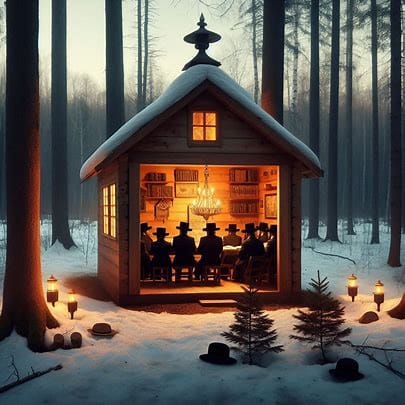
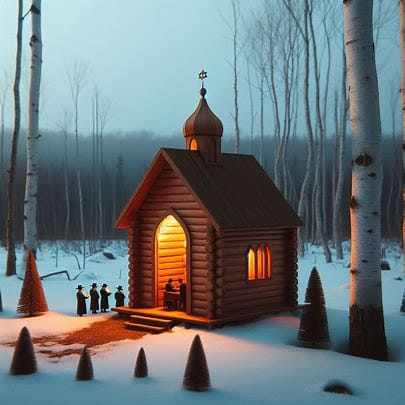
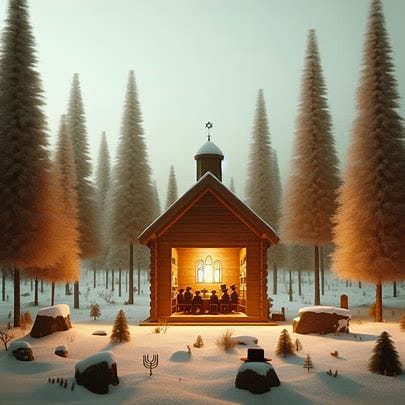
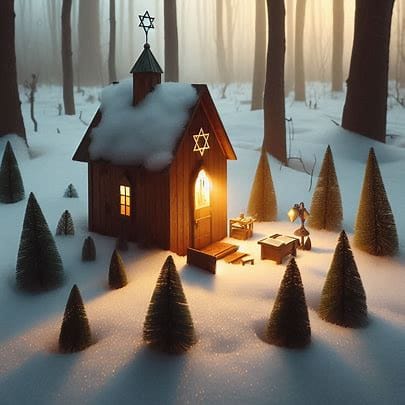
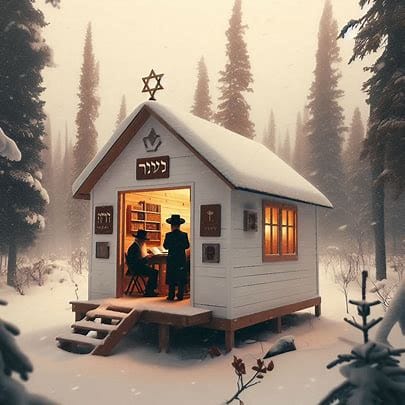
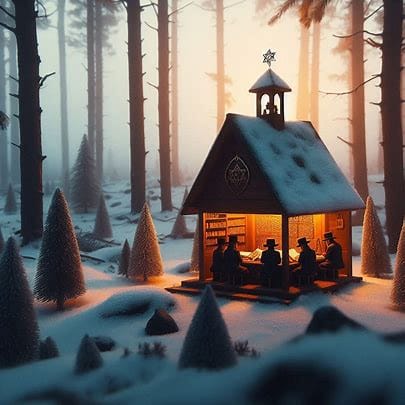
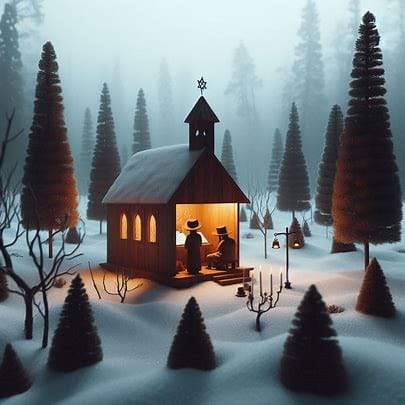
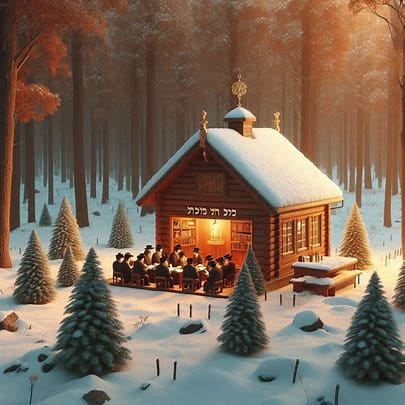
An old wooden building.
Soft light after rain.
A rainbow stretching across silence.
The quiet dignity of structure standing through weather.
Why does this feel sacred?
Because it mirrors covenantal stability.
Weather passes.
Structure remains.
Chaos moves.
Order endures.
The aesthetic evokes endurance, discipline, rootedness.
Those are Torah values.
But the building is not God.
The rainbow is not God.
The light is not God.
They are metaphors for sustained order.
If the aesthetic awakens gratitude and submission,
it is legitimate.
If it replaces theology,
it becomes atmosphere-worship.
The difference is subtle but decisive.
Part 8 – Ecstasy Inside Halacha
Jewish ecstasy never floats free.
Simchat Torah dancing.
Shabbat song.
Yom Kippur tears.
All permitted.
But always inside mitzvah.
Ecstasy without command becomes self-expression.
Ecstasy within command becomes service.
The fire is not suppressed.
It is directed.
The structure of halacha prevents emotional intensity from redefining God.
This is why structure deepens awe.
Not restricts it.
Part 9 – The Interior Fire of Deveikut
True deveikut is not fusion.
It is sustained awareness.
Walking, speaking, working —
while knowing:
Existence is upheld.
Accountability is constant.
Covenant binds action.
That awareness burns quietly.
It does not require spectacle.
It does not require imagery.
It does not require emotional excess.
It is steady flame.
Like embers beneath discipline.

Part 10 – Beauty Without Idolatry
You may stand in a forest after rain.
You may feel overwhelmed.
You may sense stillness that feels eternal.
But you must articulate correctly:
“This beauty is sustained.”
Not:
“This beauty is God.”
The first deepens monotheism.
The second dissolves it.
Beauty becomes pedagogy.
Not theology.
It trains the heart to love order.
Torah is ordered life.
So beauty becomes ally of covenant.
Part 11 – The Northern Synthesis
Shaarei Tzafon must not become sterile.
Nor sentimental.
It must cultivate:
Clarity without coldness.
Fire without fantasy.
Beauty without projection.
Ecstasy without metaphysical invention.
God remains:
Without image.
Without structure.
Without division.
But the human being may tremble.
May rejoice.
May stand in stillness after storm.
May feel the quiet dignity of covenantal order.
That experience is real.
But it does not define God.
It refines the soul.

Part 12 – The Final Intensity
The most intense form of awe is this:
Standing in silence,
knowing you are sustained,
knowing you are accountable,
knowing you are commanded,
and knowing you cannot conceptualize the One before Whom you stand.
No image.
No glow.
No projection.
Only awareness.
That awareness is more severe than ecstasy.
More powerful than aesthetic.
More humbling than fear.
Because nothing in the mind can contain it.
That is mature mystical intensity.
That is phenomenological awe under Divine simplicity.
That is ecstasy disciplined by Torah.
That is beauty ordered under covenant.
And that does not break Parts 1–4.
It fulfills them.
Final Seal – The Northern Gate
God is not a man sitting on a cloud.
He is not an image.
He is not light.
He is not atmosphere.
He is not emotion.
He is not structure.
He is the One who sustains all structure.
The Torah is not separate from Him.
Mysticism does not divide Him.
Imagination does not define Him.
Beauty does not contain Him.
Ecstasy does not alter Him.
But the human being may tremble.
May rejoice.
May stand in stillness after storm.
May burn inwardly with disciplined fire.
This is mature monotheism.
Clarity without sterility.
Fire without fantasy.
Beauty without idolatry.
Ecstasy without collapse.
This is the Northern Gate.
This is Shaarei Tzafon
Enter it seriously.

God Is Not a Man Sitting on a Cloud — Part Five
Ecstasy, Beauty, and the Phenomenology of Awe: Rambam, Divine Simplicity, and Jewish Spirituality
Can a Jew experience overwhelming beauty, spiritual ecstasy, and profound awe without imagining God as a physical presence or confusing the wonders of creation with the Creator Himself?
Jewish religious life has always recognized the power of beauty, joy, reverence, and emotional devotion. From the stillness of a forest after a storm to the singing of Shabbat melodies, the tears of Yom Kippur, and the celebration of Simchat Torah, human experience can awaken a profound awareness of HaShem.
Yet authentic Jewish monotheism requires an essential distinction: the beauty of creation is not God, and the intensity of religious emotion does not change the Divine nature.
In this fifth installment of God Is Not a Man Sitting on a Cloud, Rabbi Ariel Manning examines the relationship between spiritual ecstasy, aesthetic beauty, Divine simplicity, and the phenomenology of awe through the teachings of Rambam, particularly Hilchot Yesodei HaTorah.
Drawing upon Rambam's explanation that contemplation of creation awakens both love and reverence for HaShem, this teaching explores how the recognition of our dependence upon the Creator produces humility, gratitude, and spiritual awareness without requiring physical imagery or mystical speculation.
The discussion also considers deveikut, Jewish meditation, the emotional power of prayer, and the importance of keeping religious experiences grounded in Torah and Halakhah. Beauty and spiritual intensity become meaningful when they encourage greater responsibility, moral discipline, and faithful observance of the commandments.
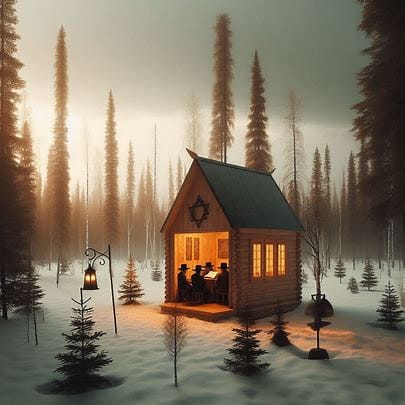
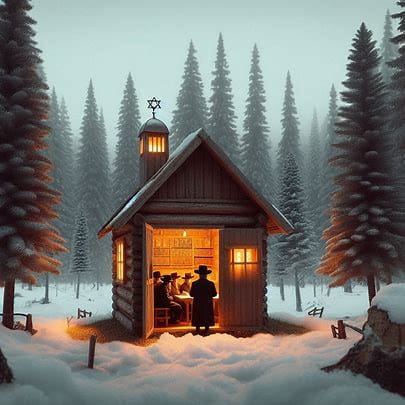
The northern landscape provides a particularly meaningful illustration. The quiet dignity of a wooden synagogue, the stillness following a storm, the forests, and the changing seasons can remind us of the order and endurance of creation without becoming objects of worship themselves.
The central message is simple: Beauty is not God, ecstasy does not define God, and spiritual emotion does not replace Torah. Rather, these experiences can awaken the human heart to recognize the Creator, deepen reverence for HaShem, and strengthen a life governed by Torah and Halakhah.
Jewish rationalism need not produce spiritual coldness, just as heartfelt devotion need not abandon intellectual clarity. The mature Jewish religious life unites knowledge with humility, discipline with joy, and unwavering monotheism with genuine spiritual wonder.
Published by Shaarei Tzafon — The North Gate, an independent, family-led Orthodox Jewish educational and publishing initiative based in Northeastern Michigan, serving Alpena, Hillman, Rogers City, and surrounding communities. Shaarei Tzafon promotes traditional Jewish life, Torah study, practical Halakhah, and the renewal of independent Jewish learning communities throughout the northern boreal regions, extending from the 45th parallel toward the Arctic tundra.
https://www.shaareitzafon.org/god-is-not-a-man-sitting-on-a-cloud-part-5
Shaarei Tzafon — The North Gate
Orthodox Jewish Life and Torah Study in Northeastern Michigan
Shaarei Tzafon — The North Gate, led by Rabbi Ariel Manning, is an independent, family-led Orthodox Jewish educational and publishing initiative based in Northeastern Michigan. We support traditional Jewish life, Torah study, Halakhah, and Jewish education throughout Alpena, Hillman, Rogers City, and surrounding communities. Those interested in traditional Judaism are welcome to contact us for educational resources, Torah learning, and opportunities for discussion by prior arrangement.
Rooted locally, our greater mission extends northward from the 45th parallel — The North Gate — through Michigan, Canada, and Alaska toward the Arctic. We seek to encourage independent Jewish communities, family-centered Torah education, and the renewal of small batei midrash and shtieblach, preserving the rich traditions of Orthodox Judaism for future generations.
Our work begins in Northeastern Michigan, but our vision extends from the 45th parallel toward the Arctic.
Guided by Rambam and Mori Qafiḥ, uplifted by Rebbe Nachman, and grounded by Avraham ben HaRambam’s balance of halakha and inward avodah.
The Orchard’s Path
publishes our books and curricula.
Our mission: a bright, authentic Jewish presence in every northern town.
Created with ©systeme.io


