
Guarding the Inheritance Part 1: Rav Hirsch Was Right
B"H
Guarding the Inheritance
This is a series about strength before survival, structure before revival, and covenant before charisma. It examines a hard truth facing historic Jewish communities — especially German, Sephardic, and Nordic congregations across Europe and North America: when internal halachic depth, educational rigor, financial transparency, and institutional confidence weaken, outside forces will inevitably step in to “strengthen” what has become fragile. This series argues that the solution is neither hostility nor dependency, but rebuilding from within.
Returning to the disciplined model of Rav Samson Raphael Hirsch, it calls communities to restore binding halacha, autonomous governance, serious Torah literacy, and shared leadership structures before crisis makes those decisions for them. It also explores how leadership integrity — through secular work and board-based governance — protects against both secular erosion and personality-driven control. Above all, this series is a call to guard inherited tradition not through fear of others, but through covenantal seriousness, institutional maturity, and the courage to rebuild our own foundations so firmly that no external movement can replace what we were meant to sustain ourselves.
Rav Hirsch Was Right — and Why Historic Communities Must Strengthen Themselves Before They Are Strengthened For Them
Across Europe and North America, particularly in German, Sephardic, and Nordic communities, a difficult reality has emerged:
Historic congregations with centuries of lineage are increasingly fragile — financially strained, educationally weakened, and institutionally unstable.
In such moments, organized and energetic movements step in offering revival, funding, leadership, and infrastructure.
Some call it salvation.
Others call it takeover.
The debate surrounding Chabad’s expansion into long-standing communities — including recent controversies in Hungary and elsewhere — is not merely about personalities or politics.
It is about a deeper question:
What happens when a historic Jewish community loses internal strength?
And what is the correct response?
To answer that question, we must return to Rav Samson Raphael Hirsch.
Because he already solved this problem.

I. The Original Crisis: Haskalah and Institutional Weakness
The nineteenth century presented German Jewry with a seismic shock.
The Haskalah opened doors to civil equality and secular education. Jews entered universities, professions, and civic life.
But emancipation exposed a structural weakness:
Communities were culturally Jewish — but often halachically thin.
Ritual remained — but literacy declined.
Identity persisted — but conviction softened.
Early reformers attempted to modernize Judaism to ensure survival.
Figures like Fanny Neuda and Grace Aguilar sensed the danger of spiritual erosion. They called for Hebrew literacy, Tanach study, and deeper religious education — especially for women.
They diagnosed fragility.
But they did not fully restore halachic binding authority.
That was Hirsch’s achievement.
II. Rav Hirsch’s Insight: Strength From Within
Hirsch understood something that remains true today:
A Jewish community must be internally strong before it can interact externally.
His doctrine of Torah im Derech Eretz offered a disciplined integration:
• Engage modern society.
• Pursue secular excellence.
• Speak the language of your country.
• Participate in civic life.
But:
• Halacha remains binding.
• Minhag remains sacred.
• Hebrew remains central.
• Governance remains autonomous.
Hirsch did not allow outside pressures — even well-intentioned ones — to redefine his community’s structure.
He built institutions.
He trained leadership.
He established schools.
He insisted on communal self-determination.
He did not wait to be “revived” by someone else.
That is the key lesson.
III. When Communities Become Vulnerable
Let us speak plainly.
Communities become vulnerable when:
• Membership declines.
• Education weakens.
• Financial transparency falters.
• Rabbinic authority is unclear.
• Youth disengage.
• Women lack Torah depth.
• Governance becomes factional.
When that happens, organized movements can step in and say:
“We will fix it.”
Sometimes they do.
But often, revival comes with structural absorption.
This is not unique to Chabad.
This is the nature of institutional power.
Strong institutions fill vacuums.
The question is not whether Chabad is energetic, disciplined, and mission-driven.
They are.
The question is whether historic communities have the internal strength to partner without being overtaken.
IV. The Hungary Case as a Warning
Recent disputes in Hungary illustrate the tension.
Some members of long-standing Orthodox communities believe Chabad-affiliated structures have effectively absorbed historic institutions.
Supporters call it revival.
Opponents call it takeover.
But beneath the rhetoric lies a sobering truth:
The historic community was financially unstable.
Leadership was divided.
Governance was fragile.
In that environment, outside strength becomes determinative.
The lesson is not anger.
The lesson is preparation.
V. Reform Is Not a Structural Defense
Many German communities historically moved into Reform frameworks in the nineteenth century.
While Reform preserved Jewish identity in certain eras, it gradually loosened halachic authority.
Without binding halacha:
• Communal boundaries soften.
• Membership definitions blur.
• Ritual becomes symbolic.
• Governance weakens.
• Sustainability declines.
A community rooted only in cultural Judaism will struggle to resist absorption by more disciplined halachic movements.
If German, Sephardic, or Nordic congregations wish to preserve autonomy, they must strengthen halachically.
Not abandon their heritage.
Not become someone else.
But restore covenantal seriousness.
Hirsch provides the blueprint.
VI. Why Rav Hirsch Is the Protective Model
Hirsch did not reject German culture.
He elevated it through Torah.
He demonstrated that one can be:
• Deeply halachic.
• Fully educated.
• Economically engaged.
• Civically loyal.
Without surrendering communal autonomy.
His model protects communities in two directions:
From secular dissolution.
From external absorption.
Because a halachically serious, well-governed, financially stable community cannot be easily overtaken.
It can cooperate.
It can partner.
It can share resources.
But it does not collapse under pressure.
VII. What Communities Must Do Now
If historic communities above the 45th parallel wish to remain themselves, they must:
Study Rav Hirsch seriously — not superficially.
Reintroduce structured halachic learning.
Strengthen Tanach literacy.
Invest in women’s Torah education (Neuda was correct here).
Reclaim intellectual confidence (Aguilar was correct here).
Important Note:
Fanny Neuda and Grace Aguilar emerged from what can fairly be described as a proto-Reform environment shaped by the Haskalah and early modernization efforts. In that context, they did not fully uphold halacha as binding in the same structured way that Rav Hirsch later insisted upon; in that respect, they were limited by their moment and, ultimately, mistaken in softening the centrality of halachic authority.
Yet they were profoundly correct about one essential point: Jewish women needed deeper literacy, stronger Hebrew grounding, and serious engagement with Tanach and tradition. They recognized that without educated mothers and intellectually confident daughters, Jewish continuity would weaken. Their call for women’s Torah literacy was right — but it required the halachic backbone that Hirsch would later restore.
Transition gradually from Reform structures toward halachic Traditionalism.
Build transparent governance.
Maintain clear membership standards.
Preserve local minhag.
Establish financial reserves.
Without these, revival will come from outside.
With them, revival comes from within.

VIII. This Is Not About Hostility
This must be emphasized.
The goal is not to attack Chabad.
The goal is not to vilify energetic outreach movements.
Chabad thrives because it is:
• Disciplined.
• Mission-focused.
• Organized.
• Confident.
• Halachically structured.
The question is:
Why should historic communities lack those same strengths?
The answer cannot be complacency.
It must be rebuilding.

IX. The Refined Historical Arc
The pattern now becomes clear:
Haskalah exposed fragility.
Proto-Reform thinkers warned about erosion.
Reform loosened halachic binding authority.
Hirsch restored covenantal structure.
Where Hirsch’s model was implemented, communities retained dignity and autonomy.
Where halachic authority weakened, structural vulnerability increased.
Today, communities must choose.

X. Final Appeal: Guard the Inheritance
German Jewry has an intellectual legacy.
Sephardic Jewry has halachic elegance.
Nordic communities have resilience born of survival.
Do not discard that heritage.
Do not remain halachically thin.
Do not assume cultural memory alone will sustain you.
Do not wait for someone else to rebuild your institutions.
Strengthen yourselves first.
If you become deeply rooted, no one can take you over.
If you remain fragile, someone eventually will.
Rav Hirsch was right.
Modern engagement without halachic compromise.
Autonomy without isolation.
Strength without hostility.
Continuity without surrender.
That is the sustainable path.
Guard the inheritance — not by fear, not by reaction, but by rebuilding its foundation so firmly that no outside force can shake it.
That is the lesson of the nineteenth century.
And it is the lesson of today.
Addendum: You Do Not Need to Be Replaced — You Need to Be Rebuilt
Communities must understand something clearly: you do not need Chabad — or any external movement — to rescue you if you are willing to rebuild yourselves. What you need is structure, halachic seriousness, disciplined education, and intellectual confidence. The German world already produced the model. Rav Shimshon Refael Hirsch demonstrated that a community can be fully modern, fully engaged in society, fully educated, and yet uncompromisingly bound to halacha. He did not import identity from elsewhere. He did not dissolve into Reform. He did not surrender governance. He built schools, strengthened families, trained leadership, and demanded covenantal fidelity. That model remains available to any community willing to do the work.
It is also important to say, respectfully, that aggressive institutional expansion was not the original intent of the Baal HaTanya, Rabbi Shneur Zalman of Liadi. His project was inward: deepen avodah, refine the intellect, sanctify the individual, elevate the soul through Chassidic understanding while remaining firmly within halachic structure. Even under Rabbi Yosef Yitzchak Schneersohn, the emphasis was on preserving Jewish life under persecution, not restructuring historic kehillot that already possessed living traditions. Something changed over time — not necessarily maliciously, but structurally — as global outreach became the dominant strategy. That shift does not make Chabad illegitimate; it simply means historic communities must be careful not to confuse revival with replacement.
The proper response is not hostility, but self-strengthening. When a community rediscovers its own Hirschian backbone (particularly in the German community) — disciplined Torah, binding halacha, financial transparency, and educational depth — it does not need to be taken over. It stands on its own.
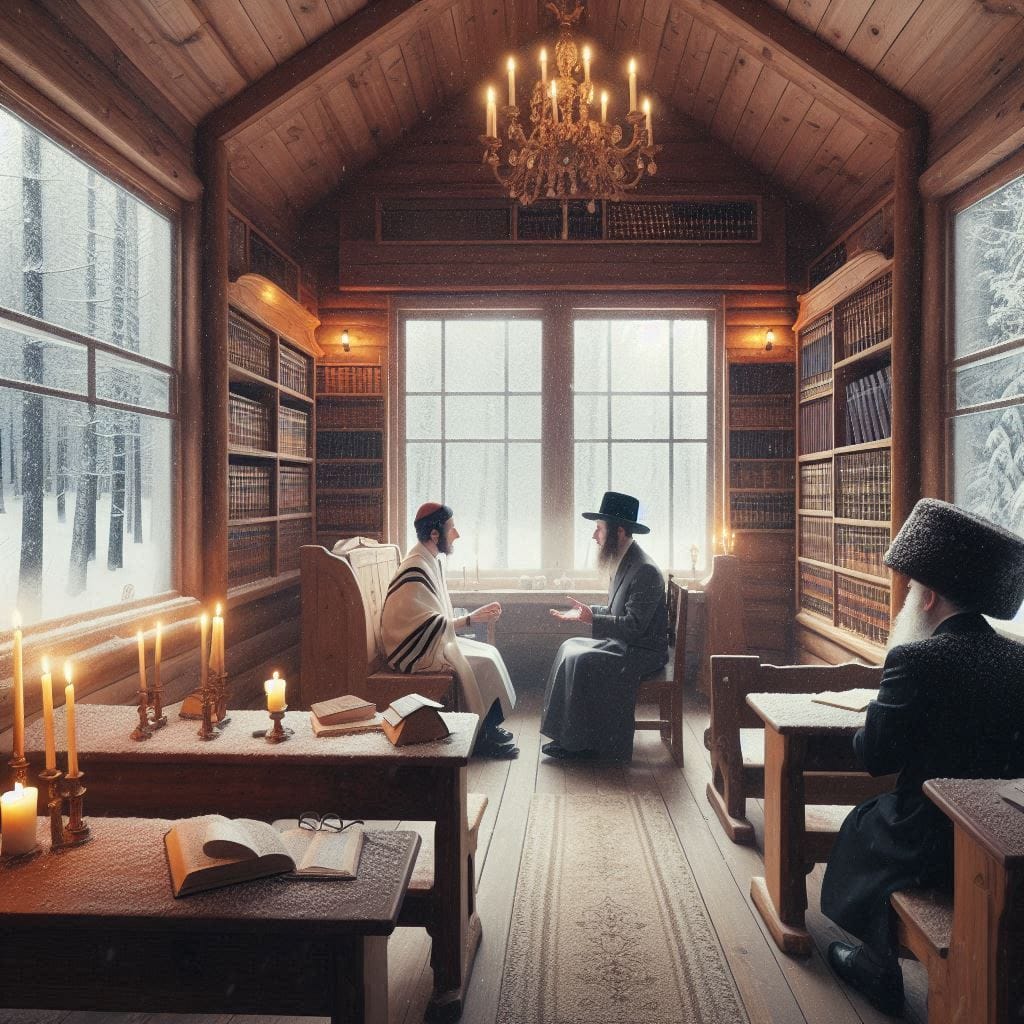
Guarding the Inheritance — Part One: Rav Hirsch Was Right
Can historic Jewish communities preserve their traditions, independence, and religious identity without surrendering themselves to outside organizations or abandoning binding Halakhah?
Rabbi Samson Raphael Hirsch confronted a similar challenge during the nineteenth century, when German Jewry faced the pressures of the Haskalah, religious reform, secularization, and institutional instability.
His answer was neither withdrawal from society nor surrender to modernity. Through Torah im Derech Eretz, he demonstrated that Jewish communities could embrace education, professional life, civic responsibility, and intellectual development while remaining firmly committed to Torah, Halakhah, and their inherited traditions.
In this first installment of Guarding the Inheritance, Rabbi Ariel Manning examines the lessons of Rav Hirsch for contemporary Jewish communities, including the importance of preserving German, Sephardic, and Northern European minhagim, strengthening Jewish education, developing responsible communal leadership, and maintaining institutional independence.
The discussion also considers the expansion of Chabad-Lubavitch and the distinction between outside assistance and the replacement of established communal traditions.
The central message is simple: Jewish communities do not need to surrender their inheritance in order to survive. They need the knowledge, confidence, and commitment to rebuild from within.
Published by Shaarei Tzafon — The North Gate, an independent Orthodox Jewish educational and publishing initiative in Northeastern Michigan, serving Alpena, Hillman, Rogers City, and surrounding communities.
https://www.shaareitzafon.org/guarding-the-inheritance-part-1-rav-hirsch-was-right
Shaarei Tzafon — The North Gate
Orthodox Jewish Life and Torah Study in Northeastern Michigan
Shaarei Tzafon — The North Gate, led by Rabbi Ariel Manning, is an independent, family-led Orthodox Jewish educational and publishing initiative based in Northeastern Michigan. We support traditional Jewish life, Torah study, Halakhah, and Jewish education throughout Alpena, Hillman, Rogers City, and surrounding communities. Those interested in traditional Judaism are welcome to contact us for educational resources, Torah learning, and opportunities for discussion by prior arrangement.
Rooted locally, our greater mission extends northward from the 45th parallel — The North Gate — through Michigan, Canada, and Alaska toward the Arctic. We seek to encourage independent Jewish communities, family-centered Torah education, and the renewal of small batei midrash and shtieblach, preserving the rich traditions of Orthodox Judaism for future generations.
Our work begins in Northeastern Michigan, but our vision extends from the 45th parallel toward the Arctic.
Guided by Rambam and Mori Qafiḥ, uplifted by Rebbe Nachman, and grounded by Avraham ben HaRambam’s balance of halakha and inward avodah.
The Orchard’s Path
publishes our books and curricula.
Our mission: a bright, authentic Jewish presence in every northern town.
Created with ©systeme.io


