
Hanukkah: Guarding and Remembering the Light
B״H
Teaching from Rabbi Ariel Manning — Shaarei Tzafon (The North Gate), Northeastern Michigan
I. The Light of Our Inheritance
In our previous lecture, Judaism: Torah, Halakhah, Tradition, and Memory, we considered a question that has remained with me for many years.
Is Judaism primarily a religion of Torah and Halakhah, or is it the preservation of Jewish tradition?
Our conclusion was that Torah and Halakhah are sufficient for living a faithful Jewish religious life. A Jew does not need to adopt every cultural custom or family tradition to be a good Jew.
Nevertheless, tradition and memory remain important because they connect us to Klal Yisrael, the collective people of Israel.
Hanukkah provides a beautiful illustration of this relationship.
Every year, Jewish families gather to kindle the Hanukkah lights. Some use olive oil, others candles. Some sing familiar melodies, prepare traditional foods, exchange gifts, or tell stories about the events commemorated by the festival.
These practices do not all possess equal halakhic authority.
The lighting of the Hanukkah lamps is a rabbinic obligation. Many accompanying family customs, however, are not obligatory.
Yet they remain meaningful.
Here in Northeastern Michigan, where winter brings snow-covered fields, evergreen forests, and long evenings, Hanukkah possesses a particularly memorable atmosphere.
Our family gathers around the lights. The children listen to stories, learn Jewish history, and participate in the celebration.
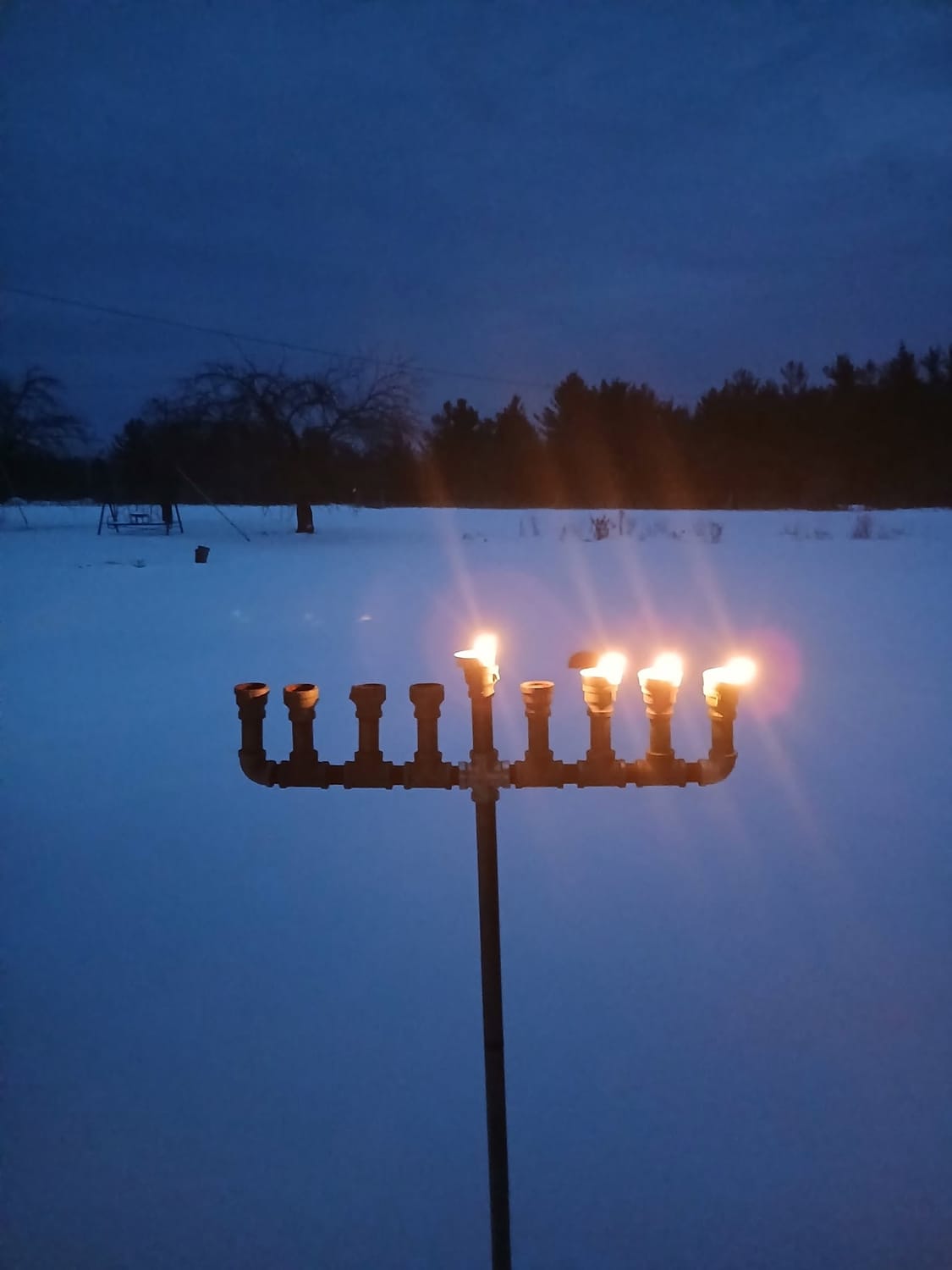
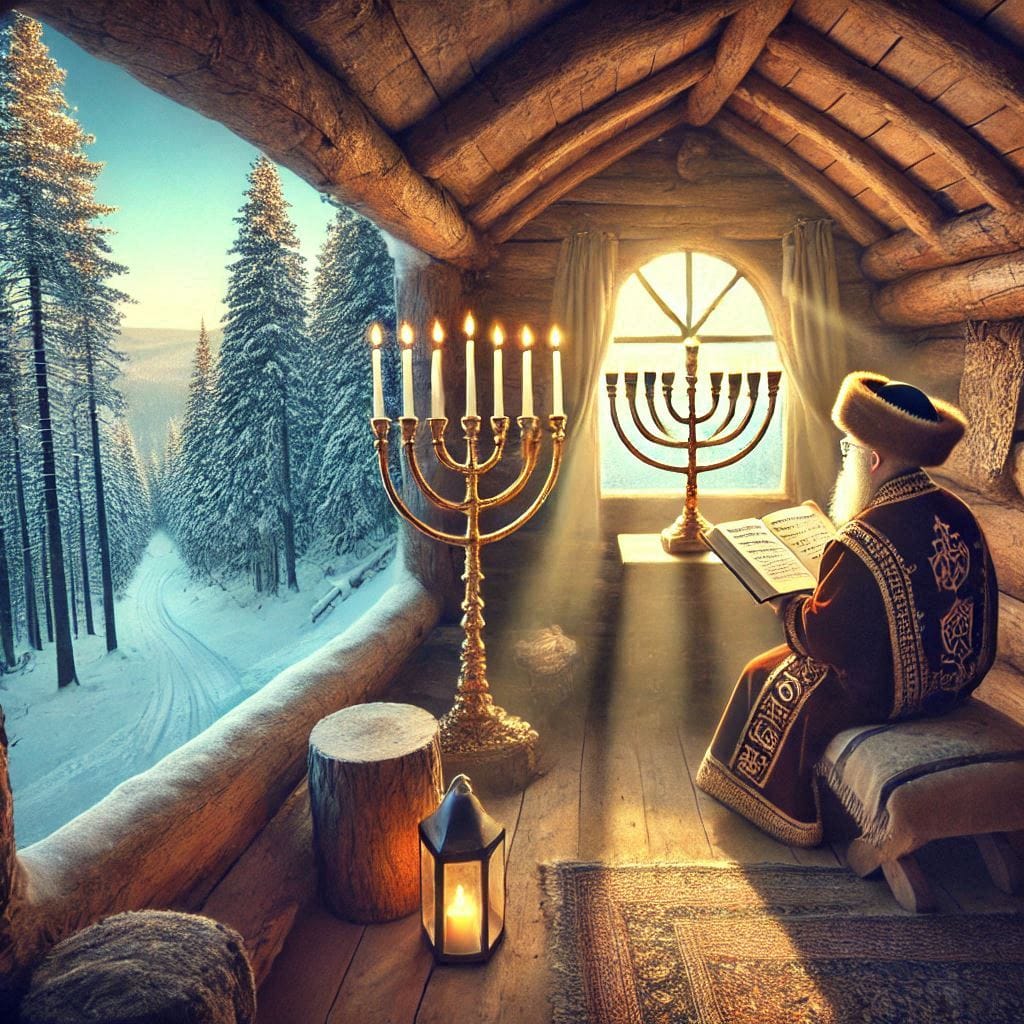
Sometimes the lights shine indoors, illuminating the bookshelves and the family table. At other times, we have photographed a hanukkiyah against the snow-covered landscape.
These experiences become memories.
And those memories become part of the inheritance our children carry into adulthood.
Hanukkah reminds us that the preservation of Jewish life requires both faithful observance and the transmission of memory.
II. The Historical Hanukkah: The Hasmoneans and the Temple
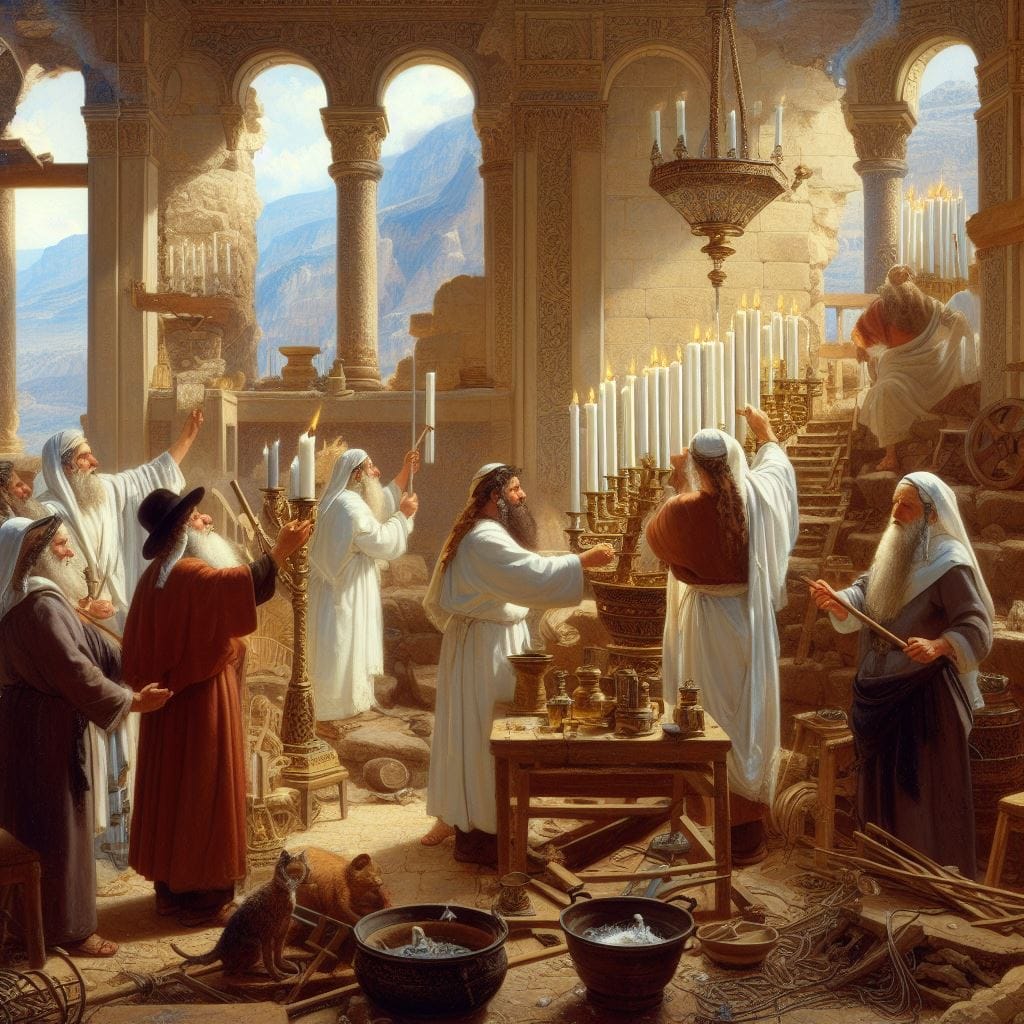
To understand Hanukkah, we must begin with the historical events of the second century BCE.
Judea was under the rule of the Seleucid kingdom, one of the Hellenistic states that emerged following the division of Alexander the Great's empire.
During the reign of Antiochus IV Epiphanes, severe religious persecution and conflict developed in Judea.
Jewish religious practices were suppressed, the Temple in Jerusalem was desecrated, and traditional Jewish religious life came under attack.
The Hasmonean family, traditionally associated with Mattathias and his sons, became central figures in the Jewish resistance.
Among them, Judah Maccabee emerged as an important military leader.
The conflict eventually resulted in the recapture and purification of the Temple, followed by its rededication.
An Important Clarification Concerning the Books of Maccabees
Before continuing, we must distinguish between historical literature and authoritative Jewish religious tradition.
The Books of Maccabees are not included in the Jewish Tanakh and do not possess canonical or halakhic authority within our religion which is Orthodox Judaism.
They are ancient Jewish writings, but their surviving textual transmission is associated primarily with Christian manuscript traditions.
First and Second Maccabees are preserved within Catholic and Eastern Orthodox christian biblical traditions. Anglican Christianity has also preserved and read these writings within its Apocrypha, although Anglican tradition distinguishes them from canonical Scripture used to establish doctrine.
Most modern Protestant biblical editions omit these books, although some Protestant traditions and editions preserve them as Apocrypha.
These distinctions are important.
We are not accepting Christian religious authority by consulting these writings.
Nor are we presenting the Books of Maccabees as part of the Jewish biblical canon.
We consult them strictly as historical witnesses that provide additional information concerning events in Jewish antiquity.
At the same time, we should express our appreciation to our brothers and sisters in the Christian traditions who, through the centuries, preserved these ancient writings. Although Judaism and Christianity differ in their understanding of religious authority, we can nevertheless recognize the historical value of texts that illuminate the experiences of the Jewish people.
Their preservation has allowed later generations, including Jewish historians and scholars, to examine important details surrounding the Hasmonean struggle, the restoration of the Temple, and the origins of Hanukkah.
Recognizing our theological differences need not prevent us from expressing gratitude, mutual respect, and appreciation for the preservation of historical knowledge.
Indeed, the study of history offers an opportunity for Jews and Christians to approach one another with understanding and goodwill, while remaining faithful to their respective religious traditions.
First Maccabees, particularly chapters 1 and 4, describes the persecution, the Hasmonean resistance, and the rededication of the Temple.
Second Maccabees 10:1–8 provides additional details concerning the celebration following the Temple's purification.
The Jewish historian Josephus also discusses these events in Antiquities of the Jews, Book 12.
Writing in the first century CE, Josephus describes the restoration of Temple worship and refers to the celebration as the Festival of Lights.
These accounts help illuminate the historical circumstances of Hanukkah.
Their individual details remain subject to historical evaluation.
Our religious understanding of Hanukkah, however, comes from the Jewish rabbinic tradition, particularly the Talmud, Rambam, and subsequent halakhic literature.
This distinction allows us to study history without confusing historical testimony with the authority of Torah.
III. Hanukkah, Sukkot, and the Rededication of the Temple
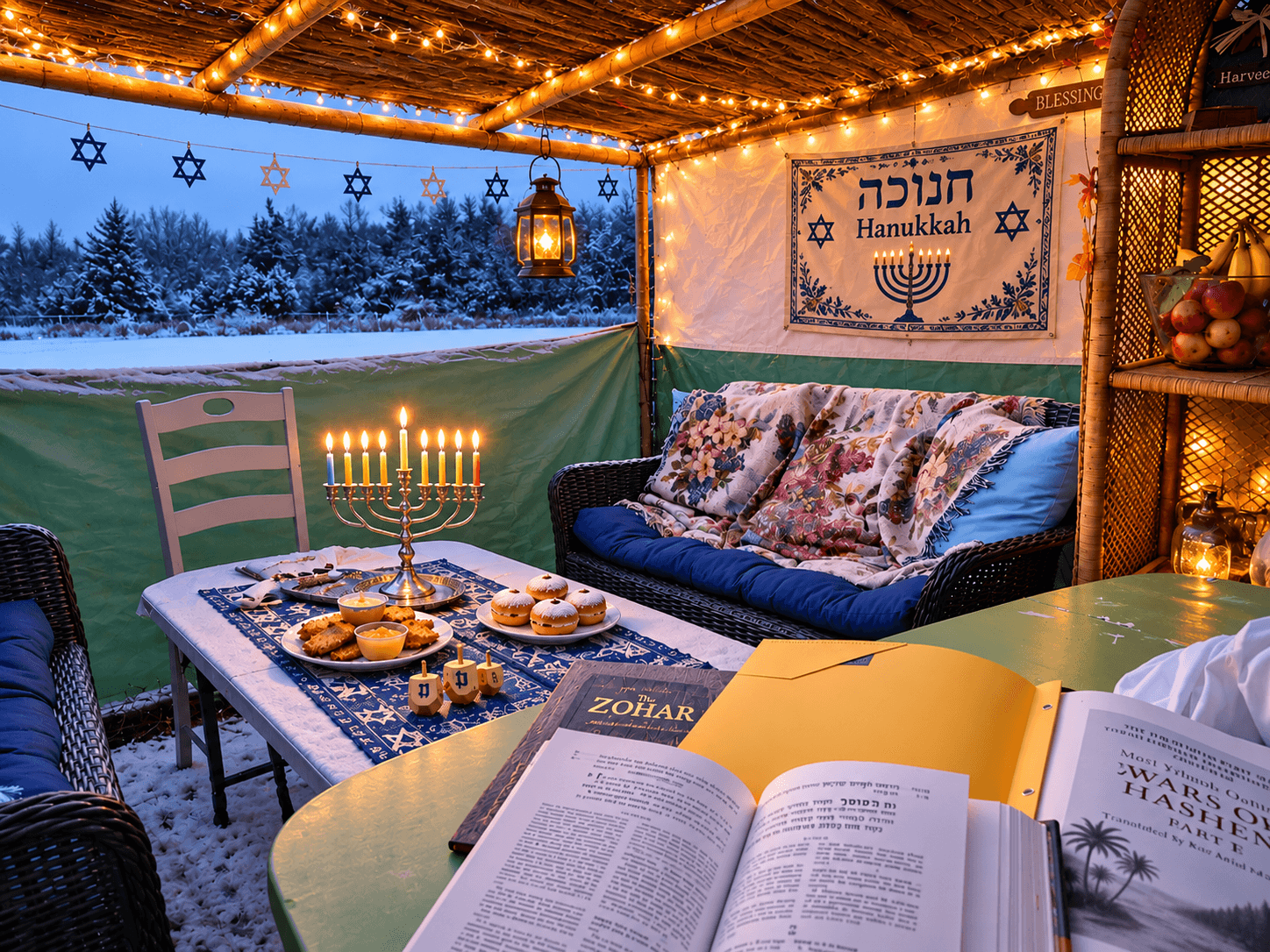
One of the most fascinating historical dimensions of Hanukkah is its relationship to Sukkot.
Second Maccabees 10:1–8 describes the purification of the Temple and the restoration of its religious service.
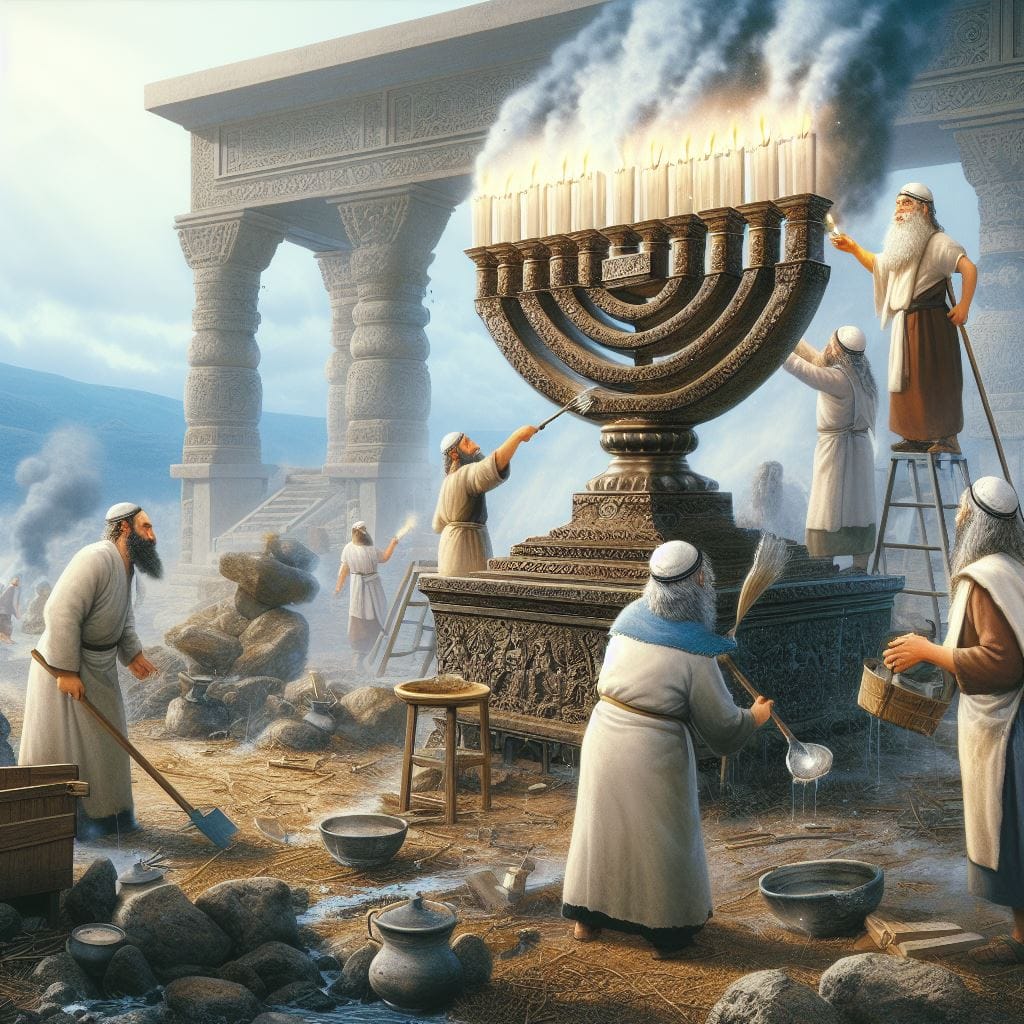
According to this historical account, the people rebuilt the altar, offered sacrifices, burned incense, kindled the Temple lamps, and restored the bread of the Presence.
The account then describes an eight-day celebration resembling Sukkot.
Why Sukkot?
Because the Jewish people had been unable to celebrate the earlier festival properly during the persecution and warfare.
The account recalls people hiding in mountains and caves.
Now, following the restoration of the Temple, they could rejoice openly.
Second Maccabees describes branches and palm fronds being carried while hymns of thanksgiving were sung.
First Maccabees 4:52–59 likewise describes the renewed offering of sacrifices, the dedication of the altar, and eight days of rejoicing.
These historical details are significant.
We encounter several interconnected elements:
The eight-day celebration.
The restoration of the altar and sacrifices.
The carrying of branches and palms.
Songs of praise and thanksgiving.
The memory of Sukkot.
The rededication of the Temple.
These connections help us understand the religious atmosphere surrounding the original celebration.
Sukkot itself is commanded in Leviticus 23.
The Torah instructs Israel to rejoice before HaShem with the four species, including palm branches.
Sukkot also possesses a distinctive Temple sacrificial service, described in Numbers 29.
The historical Hanukkah celebration appears to have drawn upon this familiar pattern of rejoicing and Temple worship.
However, we must distinguish historical resemblance from halakhic identity.
Hanukkah is not Sukkot, and the historical connection does not establish an obligation to build a sukkah or take the four species during Hanukkah.
Sukkot is a biblical festival.
Hanukkah is a rabbinic festival.
Their legal obligations remain distinct.
Nevertheless, the historical relationship is valuable because it shows how the memory of one festival could influence the celebration of another important event.
IV. Hallel: The Song Connecting Sukkot and Hanukkah
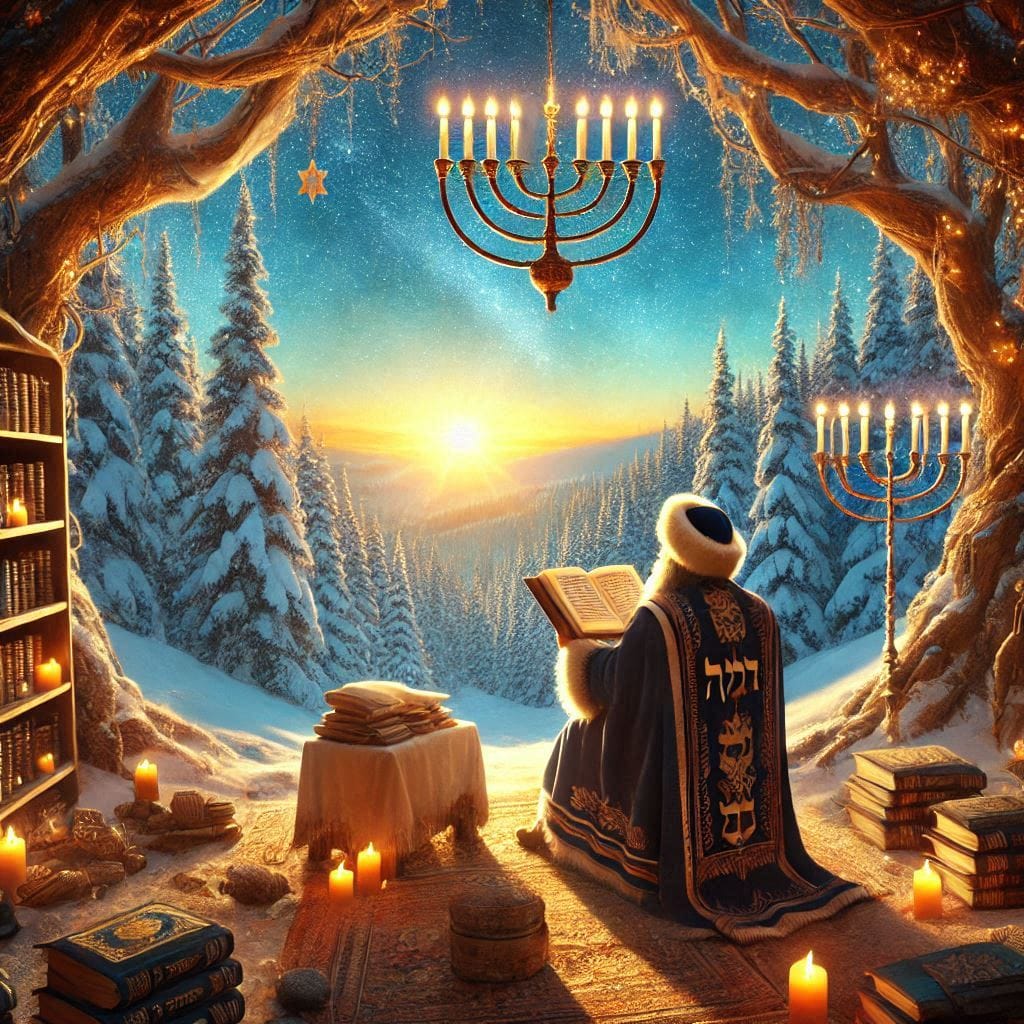
Perhaps the most important connection between Sukkot and Hanukkah is Hallel.
Hallel consists of Psalms 113–118, recited as an expression of praise and thanksgiving to HaShem.
The Rambam discusses Hallel in Mishneh Torah, Hilkhot Megillah vaHanukkah 3:5–7.
He explains that the complete Hallel is recited on eighteen days annually in the Land of Israel.
Among these are:
The eight days of Sukkot and the eight days of Hanukkah.
This is an important connection.
Both festivals involve eight days of complete Hallel, counting Shemini Atzeret with the seven days of Sukkot.
In the Diaspora, an additional day of Shemini Atzeret is observed, so the complete Hallel is recited on nine festival days in that season.
Hanukkah, however, remains eight days everywhere.
The Talmud, Arakhin 10a–b, discusses the occasions on which complete Hallel is recited.
One distinction concerns the festival sacrifices.
During Sukkot, the sacrificial order changes from day to day.
The Talmud contrasts this with Passover, where the later days do not possess the same distinction in sacrificial offerings.
Thus, complete Hallel is recited throughout Sukkot but only on the initial festival day of Passover in the Land of Israel.
Hanukkah has its own reason for complete Hallel: the miracle and deliverance commemorated by the festival.
The connection is therefore not that Hanukkah and Sukkot share identical laws.
Rather, both are occasions upon which Israel expresses extraordinary gratitude through the complete Hallel.
Consider the historical description in Second Maccabees.
The people carried branches and palms while singing hymns of thanksgiving following the Temple's restoration.
We cannot establish from that account alone that they recited the exact Hallel liturgy in its later rabbinic form.
Nevertheless, the themes are unmistakable.
There is rejoicing.
There is thanksgiving.
There is the restoration of sacred worship.
And there is the memory of Sukkot.
The rabbinic obligation to recite complete Hallel throughout Hanukkah gives these themes their established place within Jewish religious practice.
The Rambam teaches that Hallel is recited on every one of the eight days.
This is not merely a pleasant family custom.
It is part of the halakhic observance of Hanukkah.
And this distinction is important for our larger discussion.
The mitzvah of Hallel belongs to the religious foundation of the festival.
The melodies through which families sing and remember Hallel may become part of their inherited tradition.
Both can contribute to the continuity of Jewish life, although they possess different forms of authority.
V. The Miracle of the Oil and the Rabbinic Tradition
Our central rabbinic account of Hanukkah appears in the Babylonian Talmud, Shabbat 21b.
The Gemara asks:
מַאי חֲנוּכָּה
“What is Hanukkah?”
It then recounts the events surrounding the Temple's liberation.
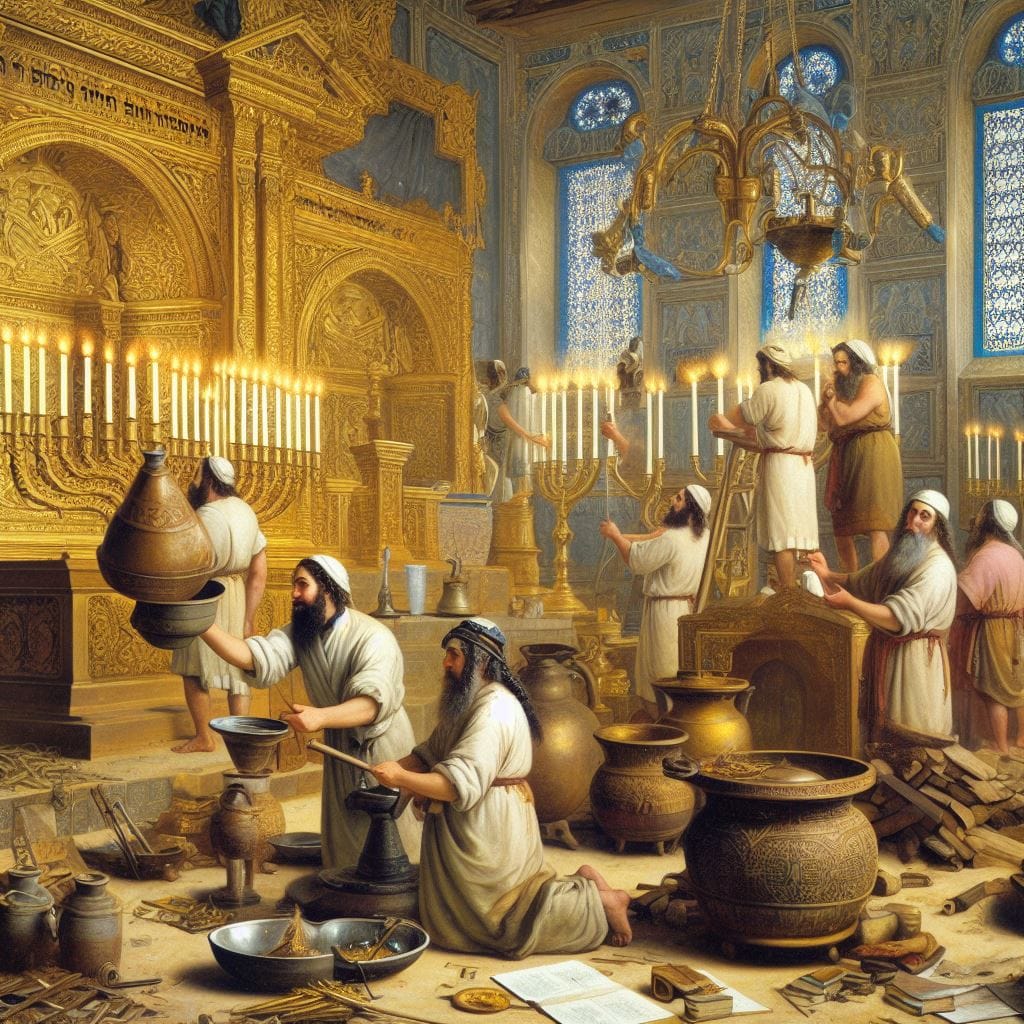
When the Hasmoneans overcame their enemies and entered the Temple, they discovered that the oil had been defiled.
Only one sealed container of pure oil remained, sufficient for a single day.
According to the Talmudic account, the oil lasted eight days.
The following year, the Sages established these days as occasions of praise and thanksgiving.
The historical narratives of Maccabees and Josephus emphasize the struggle, victory, and rededication.
The Talmud gives particular prominence to the miracle of the oil.
These accounts should not be treated as identical literary presentations.
They preserve different dimensions of the festival.
The military struggle explains the historical circumstances.
The restoration of the Temple explains the immediate occasion for celebration.
The rabbinic account of the oil provides the familiar religious explanation associated with the Hanukkah lights.
For Orthodox Jewish observance, it is the rabbinic tradition that establishes the festival's religious framework.
The miracle is not merely a story about a flame lasting longer than expected.
It reminds us of the restoration of sacred service.
The Temple had been desecrated.
Jewish religious life had been threatened.
Yet the service of HaShem was renewed.
The light of Hanukkah represents the continuation of Jewish religious life after an attempt to extinguish it.
And this brings us directly to our discussion concerning guarding and remembering.
VI. The Rambam: Hanukkah as Halakhah
The Rambam provides one of the clearest presentations of Hanukkah in Mishneh Torah, Hilkhot Megillah vaHanukkah, chapters 3–4.
He begins by recounting the persecution of the Jewish people under Greek rule.
He describes the suppression of Jewish religious life, the desecration of the Temple, and the deliverance brought about through the Hasmoneans.
He then explains the miracle of the oil and the establishment of the eight days of Hanukkah.
The Rambam identifies Hanukkah as days of rejoicing and praise.
The lighting of the lamps is a rabbinic mitzvah intended to publicize the miracle.
The basic obligation described in the Talmud is:
נֵר אִישׁ וּבֵיתוֹ
“One light for a person and his household.”
The Rambam then describes enhanced forms of observance, including the practice of increasing the number of lights.
This is important because it demonstrates that the halakhic foundation of Hanukkah is not dependent upon elaborate cultural practices.
A Jewish household can fulfill the lighting mitzvah without expensive decorations, elaborate celebrations, or special foods.
Nevertheless, Hanukkah observance encompasses more than lighting alone.
The complete Hallel is recited throughout the eight days.
Al HaNissim is included in the appropriate places within the Amidah and Birkat HaMazon.
These observances preserve the religious meaning of the festival within Jewish prayer and daily life.
The Rambam also emphasizes the importance of the Hanukkah lights, describing the mitzvah as especially beloved because it publicizes the miracle and expresses gratitude to HaShem.
Yet he establishes priorities.
In Hilkhot Hanukkah 4:14, he teaches that when a poor person must choose between obtaining a Shabbat lamp and a Hanukkah lamp, the Shabbat lamp takes precedence because of shalom bayit, peace within the home.
This is a profound teaching.
Religious observance must not become detached from the well-being of the household.
Hanukkah is important, but the peaceful functioning of the Jewish home is also a halakhic concern.
Here we find a balance between obligation, gratitude, and family life.
VII. Pirsumei Nisa: Publicizing the Miracle in the North
The Hanukkah lights are not intended merely as private decorations.
They serve the purpose of:
פִּרְסוּמֵי נִיסָּא — Pirsumei Nisa
Publicizing the miracle.
The Talmud discusses placing the Hanukkah lamp near the entrance of the home, outside the doorway.
Where circumstances make this impractical, lighting may take place indoors.
The details are developed further in the Rambam and Shulchan Arukh, Orach Chayim 671–673.
The essential purpose remains the same.
The lights proclaim the memory of Hanukkah.
In many Jewish communities, families place their hanukkiyot in windows where they can be seen from outside.
Here in Northeastern Michigan, winter conditions introduce practical considerations.
Snow, wind, freezing temperatures, and the safety of children must all be considered.
An outdoor display may be beautiful, but the mitzvah should be performed in a halakhically appropriate and safe manner.
An indoor lighting can fulfill the obligation under the appropriate circumstances.
The purpose is not to demonstrate endurance against the winter weather.
It is to fulfill the mitzvah.
Nevertheless, there is something particularly moving about seeing the Hanukkah lights against a landscape covered in snow.
The surrounding darkness makes the flames more noticeable.
And the quiet of a northern winter provides an opportunity for reflection.
We should remember, however, that the physical darkness of winter is not itself the historical meaning of Hanukkah.
The festival commemorates specific events in Jewish history.
Our northern environment simply provides a setting in which those events can be remembered.
Minhag Borealish does not replace Halakhah with local aesthetics. It seeks to preserve faithful Jewish observance within the northern environment.

VIII. Minhag, Family Customs, and the Education of Our Children
We now return to the central question of our two lectures.
If the halakhic observances of Hanukkah are established, why do Jewish families preserve so many accompanying customs?
Why prepare latkes or sufganiyot?
Why play dreidel?
Why sing particular songs?
Why decorate the table, exchange gifts, or tell stories that children may hear year after year?
The answer is that these practices can strengthen the experience of Jewish continuity.
They are not all halakhic obligations.
Some customs developed in particular communities and spread to others.
Some reflect local ingredients, languages, and cultural circumstances.
Others emerged much later in Jewish history.
A family does not need to reproduce every one of them.
Nevertheless, these practices often become the memories through which children recognize Hanukkah.
A child may learn the laws of Hanukkah from the Mishneh Torah.
But that child may remember the festival through the sight of a parent preparing the lights, the sound of familiar blessings, or the family gathered around the table.
These memories do not replace Halakhah.
They accompany it.
The Hebrew word chinukh means education or dedication, and it is closely related linguistically to Hanukkah.
The connection is particularly appropriate when we consider the importance of transmitting Jewish life to the next generation.
The Torah commands:
וְשִׁנַּנְתָּם לְבָנֶיךָ
“And you shall teach them diligently to your children.” — Deuteronomy 6:7
Jewish education is not limited to formal lessons.
It also takes place through the ordinary experiences of family life.
Children learn when they watch their parents prepare for Shabbat.
They learn when they participate in the Passover Seder.
They learn when they hear the blessings over the Hanukkah lights.
And they learn when their questions are taken seriously.
Why do we light the candles?
Why does the number of lights increase each evening?
Who were the Hasmoneans?
Why do we recite Hallel on all eight days?
What is the relationship between Hanukkah and Sukkot?
These questions provide opportunities to introduce children to Torah, Halakhah, and Jewish history.
The Talmud, Shabbat 21b, records the disagreement between Beit Shammai and Beit Hillel concerning the number of lights kindled each evening.
Beit Shammai teaches that the number should decrease, while Beit Hillel teaches that it should increase.
One explanation associates Beit Shammai's position with the decreasing number of bulls offered during Sukkot.
Beit Hillel's position is associated with the principle:
מַעֲלִין בַּקֹּדֶשׁ וְאֵין מוֹרִידִין
“We ascend in matters of holiness and do not descend.”
The accepted Halakhah follows Beit Hillel.
Here again, Sukkot and Hanukkah become connected within rabbinic discussion, even while their obligations remain distinct.
Our children should understand that Jewish religious life is something to cultivate and strengthen.
Learning does not end when a child memorizes a blessing.
Observance does not end when a person fulfills a particular commandment.
There is always an opportunity to deepen one's understanding, strengthen one's character, and develop a greater appreciation for Torah.
We are not merely teaching our children how to celebrate Hanukkah. We are teaching them that they belong to the continuing history of the Jewish people.
IX. Hanukkah in the Wilderness: Jewish Life Above the 45th Parallel
There is something meaningful about observing Hanukkah in a place where Jewish life is not particularly visible.
In larger Jewish communities, one may encounter synagogues, kosher establishments, Jewish schools, and families observing the same festivals.
The Jewish calendar becomes part of the surrounding community.
In rural Northeastern Michigan, circumstances are different.
Jewish families may live considerable distances from one another.
A person may travel through Alpena, Hillman, Rogers City, or the surrounding countryside without encountering an obvious sign of traditional Jewish religious life.
Nevertheless, Judaism does not cease to exist because a community is small.
Torah is not dependent upon population density.
Halakhah does not become irrelevant because the nearest established Jewish community is far away.
And the responsibility to transmit our inheritance does not disappear because we live in a northern forest rather than a large city.
This is part of the purpose behind Shaarei Tzafon — The North Gate.
Our work is rooted in Northeastern Michigan, with a broader educational vision extending northward from the 45th parallel through the boreal region.
We seek to encourage Torah study, traditional Jewish religious life, and the preservation of Jewish learning wherever Jewish families may be found.
The same Torah studied in Jerusalem, Vilna, Baghdad, or Yemen can be studied in a small home in Northern Michigan.
The same Mishneh Torah can be opened.
The same blessings can be recited.
The same Hanukkah lights can be kindled.
The circumstances may differ, but the religious inheritance remains.
And this is where tradition and memory become especially valuable.
When children grow up surrounded by a large Jewish community, many aspects of Jewish identity are reinforced by their environment.
When they grow up in relative isolation, the home assumes an especially important role.
The family table becomes a place of learning.
The bookshelf becomes a small beit midrash.
The observance of Shabbat and the festivals becomes a recurring reminder of the family's connection to the Jewish people.
Hanukkah offers a particularly beautiful illustration.
A hanukkiyah standing before a snow-covered field may appear unusual to someone accustomed to Jewish life in a warmer climate.
But there is nothing unusual about the mitzvah itself.
The lights proclaim the same religious memory.
They recall the restoration of Jewish worship and the gratitude expressed by generations of Jews.
Our northern surroundings do not create a different Judaism.
They simply provide another setting in which traditional Judaism can be lived.
We do not need to recreate the cultural circumstances of every earlier Jewish community in order to preserve the Torah they transmitted.
At the same time, we should not unnecessarily discard the customs and memories that connect us to those communities.
The task is to distinguish between what is obligatory, what is inherited, and what may appropriately develop within our own circumstances.
A family may fulfill the mitzvah of Hanukkah lighting with a simple lamp.
It may also establish traditions of storytelling, singing, studying, or gathering together.
Those traditions need not become binding religious obligations to possess value.
They may become the memories through which children recognize the Jewish home.
X. Guarding and Remembering: The Light We Pass Forward
We began our first lecture with a conversation between two Jews.
One emphasized religion.
The other emphasized tradition.
I answered that I had embraced Judaism for the religion, and I continue to believe that this was the correct answer.
Torah and Halakhah provide the foundation of faithful Jewish religious life.
A person does not need to accumulate cultural practices or adopt every inherited custom to serve HaShem properly.
But our discussion has revealed another important responsibility.
We must consider what happens when the memories and traditions of Jewish life are no longer transmitted.
A family may continue to observe the commandments while gradually
losing familiarity with the songs, stories, and practices that once connected it to earlier generations.
This does not invalidate its religious observance.
Nevertheless, something valuable may be lost.
The Torah instructs us to remember the generations that came before us.
It commands us to teach our children.
And throughout Jewish history, families and communities have developed ways of fulfilling these responsibilities.
Some are direct commandments.
Some are rabbinic enactments.
Some are established communal customs.
Others are simply beloved family traditions.
We must distinguish among them.
But we should also recognize their respective contributions to Jewish continuity.
Hanukkah demonstrates this relationship beautifully.
The historical events belong to the experience of the Jewish people.
The rabbinic enactments establish the religious observances.
The Halakhah governs the lighting and Hallel.
And the customs surrounding the celebration help transmit its memory.
Consider a child standing beside the Hanukkah lights.
The child may not yet understand the historical complexities of the Seleucid kingdom or the political struggles of the Hasmonean dynasty.
The child may not understand every discussion in Shabbat 21b.
But the child sees the flames.
The child hears the blessings.
The child learns that these lights commemorate something important in the history of the Jewish people.
And year after year, understanding can deepen.
Eventually, the child may study the Talmud, the Rambam, and the historical literature.
The childhood memory becomes connected to religious knowledge.
The experience and the learning strengthen one another.
This brings us back to the two expressions concerning Shabbat:
זָכוֹר — Zakhor — Remember
שָׁמוֹר — Shamor — Guard
In their original biblical context, these words concern the sanctification and observance of Shabbat.
But they also provide a meaningful illustration of our responsibilities toward Jewish life.
We guard what has been entrusted to us.
We remember those who preserved it before us.
We study Torah so that our religious observance remains grounded in knowledge rather than sentiment alone.
And we preserve worthwhile traditions so that our connection to Jewish history remains more than an abstract idea.
Tradition must never replace Torah, but neither should we imagine that tradition has no value simply because it is not always obligatory.
The Hanukkah lights themselves remind us of this distinction.
The mitzvah is fulfilled according to Halakhah.
The memories surrounding its fulfillment become part of the family's inheritance.
Neither should be confused with the other.
Yet both can contribute to the continuity of Jewish life.
Here in Northeastern Michigan, when our family gathers around the Hanukkah lights, we are participating in an observance shared by Jewish families throughout the world.
Some will use olive oil.
Others will use candles.
Some will sing melodies familiar to Ashkenazi communities.
Others will preserve Sephardic, Yemenite, or other Jewish traditions.
Some will gather in large homes surrounded by extended family.
Others will kindle their lights quietly, perhaps far from any established Jewish community.
The circumstances differ.
The religious foundation remains.
And across those differences, the Jewish people continue to remember.
This is the beauty of Klal Yisrael.
Our unity does not require every family to possess identical customs.
It rests upon our common inheritance of Torah, our covenant with HaShem, and our responsibility toward one another.
The traditions we preserve can deepen our appreciation for that inheritance.
They remind us that we are not the first generation to kindle these lights.
Nor, with HaShem's help, will we be the last.
As we look upon the Hanukkah flames, we should therefore consider not only what happened many centuries ago, but also what we are passing forward.
What will our children remember?
What will they understand?
What will they preserve?
And how will they teach the next generation?
These are questions worth asking in every Jewish home.
For Hanukkah is not merely an occasion to remember a victory long ago.
It is an opportunity to renew our commitment to Torah, express gratitude to HaShem, and strengthen the bonds that connect us to the Jewish people.
Torah and Halakhah teach us how to live faithfully as Jews. Tradition and memory help us recognize the generations whose inheritance we carry.
May we merit to preserve both the knowledge and the memory of Jewish life.
May our homes be filled with Torah, kindness, peace, and understanding.
May our children grow in wisdom and develop a lasting love for HaShem and His commandments.
And may the lights of Hanukkah remind us that our responsibility is not merely to receive an inheritance, but to preserve it faithfully and transmit it to those who follow.
חזק ונתחזק — Chazak ve-nitchazek.
Let us be strong and strengthen one another.
For Part 1 follow here:
https://www.shaareitzafon.org/judaism-torah-halakhah-tradition-and-memory
Principal Jewish and Historical Sources
Authoritative Jewish religious and halakhic sources
Babylonian Talmud, Shabbat 21b–23a — The Hanukkah lamps, the miracle of the oil, and publicizing the miracle.
Babylonian Talmud, Arakhin 10a–b — The recitation of complete Hallel and the distinction between festivals.
Mishneh Torah, Hilkhot Megillah vaHanukkah 3–4 — Rambam's presentation of Hanukkah, Hallel, and the laws of lighting.
Mishneh Torah, Hilkhot Mamrim 1:1–2 — The authority of rabbinic enactments.
Shulchan Arukh, Orach Chayim 670–684 — The laws and observances of Hanukkah.
Leviticus 23:33–43 — Sukkot, rejoicing, and the four species.
Numbers 29:12–38 — The festival offerings of Sukkot and Shemini Atzeret.
Psalms 113–118 — Hallel.
Deuteronomy 6:7 — Teaching Torah to our children.
Deuteronomy 32:7 — Remembering previous generations.
Historical sources consulted for context, not Jewish religious authority
First Maccabees 1; 4:36–59 — The persecution, the Hasmonean revolt, and the rededication of the Temple.
Second Maccabees 10:1–8 — The restoration of Temple worship, the eight-day celebration, and the historical connection to Sukkot.
Josephus, Antiquities of the Jews, Book 12, especially 12.316–325 — The restoration of Temple worship and the Festival of Lights.
Megillat Antiochus — A later Jewish narrative tradition concerning the Hanukkah events, distinct from the canonical Tanakh and normative halakhic sources.
The Books of Maccabees are ancient Jewish historical writings preserved largely through Christian textual traditions. Their use here is historical, not theological or halakhic.
About Shaarei Tzafon
Shaarei Tzafon — The North Gate is an independent, family-led Orthodox Jewish educational and publishing initiative based in the Alpena, Hillman, and Roger City. the area of Northeastern Michigan.
Our work is dedicated to Torah study, Halakhah, the preservation of Jewish tradition, and the cultivation of authentic Jewish religious life above the 45th parallel.
Our wider educational vision extends throughout the northern boreal region, encouraging the study and transmission of Torah wherever Jewish families and individuals may live.
Traditional Jewish Life Above the 45th Parallel
Shaarei Tzafon — The North Gate
Orthodox Jewish Life and Torah Study in Northeastern Michigan
Shaarei Tzafon — The North Gate, led by Rabbi Ariel Manning, is an independent, family-led Orthodox Jewish educational and publishing initiative based in Northeastern Michigan. We support traditional Jewish life, Torah study, Halakhah, and Jewish education throughout Alpena, Hillman, Rogers City, and surrounding communities. Those interested in traditional Judaism are welcome to contact us for educational resources, Torah learning, and opportunities for discussion by prior arrangement.
Rooted locally, our greater mission extends northward from the 45th parallel — The North Gate — through Michigan, Canada, and Alaska toward the Arctic. We seek to encourage independent Jewish communities, family-centered Torah education, and the renewal of small batei midrash and shtieblach, preserving the rich traditions of Orthodox Judaism for future generations.
Our work begins in Northeastern Michigan, but our vision extends from the 45th parallel toward the Arctic.
Guided by Rambam and Mori Qafiḥ, uplifted by Rebbe Nachman, and grounded by Avraham ben HaRambam’s balance of halakha and inward avodah.
The Orchard’s Path
publishes our books and curricula.
Our mission: a bright, authentic Jewish presence in every northern town.
Created with ©systeme.io


