
Judaism: Torah, Halakhah, Tradition, and Memory
B״H
Teaching from Rabbi Ariel Manning — Shaarei Tzafon (The North Gate), Northeastern Michigan
I. A Conversation Between Two Jews
Some years ago, while I was working, a fellow Yid (some one Jewish) approached me and asked a simple question.
“Are you Jewish?”
I answered, “Yes.”
He then asked me something that has remained with me ever since.
“Did you convert for the religion or for the tradition?”
Without hesitation, I answered, “For the religion.”
He responded that, for him, it was the tradition.
It was a brief conversation, but one that raises an important question concerning Jewish identity, religious observance, and the inheritance of our people.
What does it mean to be Jewish? Is Judaism primarily a religion governed by Torah and Halakhah, or is it the preservation of traditions, memories, and customs passed from one generation to another?
I believe my original answer was correct. I embraced Judaism because of Torah, Halakhah, and the obligation to serve HaShem.
Yet as I reflect upon that conversation, I also recognize something important about the answer given by my fellow Jew.
He was speaking about an inheritance.
Perhaps he remembered the Shabbat table of his childhood, the melodies of his grandparents, the lighting of the Hanukkah candles, or the foods prepared for the festivals. Perhaps these things connected him to generations of Jews who had lived before him.
I cannot know precisely what he meant. Nevertheless, his answer represented something familiar throughout Jewish history.
For many Jews, tradition is the means by which they remember who they are.
And that is something worth preserving.

II. Torah and Halakhah Are Sufficient
Let us establish something from the beginning.
Torah and Halakhah are sufficient for a Jew to live a faithful Jewish religious life.
A Jew does not need to adopt every custom practiced by the Jewish people. Nor must a Jew reproduce the cultural habits of Eastern Europe, Yemen, Morocco, Lithuania, or any other particular community to serve HaShem faithfully.
Judaism is not dependent upon a particular cuisine, style of clothing, melody, or cultural expression.
Its religious foundation is Torah.
Its practical observance is governed by Halakhah.
The Rambam, in his Mishneh Torah, presents Jewish religious obligations systematically, demonstrating that Torah observance encompasses belief, prayer, Shabbat, festivals, ethical conduct, family life, and our responsibilities toward others.
The commandments themselves provide a framework for living in the service of HaShem.
A Jew who observes Shabbat, studies Torah, fulfills the mitzvot, acts justly, and conducts life according to Halakhah is not somehow deficient because a particular family custom is absent.
We must distinguish between the requirements of Halakhah and those traditions that are beautiful but not obligatory.
Of course, this distinction requires care. Certain established communal customs possess halakhic authority, and one cannot simply dismiss them as optional. But many familiar practices are expressions of Jewish culture rather than independent religious obligations.
One does not become a better Jew merely by accumulating more customs.
Our purpose is not to collect traditions for their own sake.
Our purpose is to serve HaShem.
Nevertheless, this brings us to another question.
If Torah and Halakhah are sufficient, why should we concern ourselves with preserving traditions that are not strictly required?
Because Judaism is more than the religious experience of one individual.
We belong to a people.
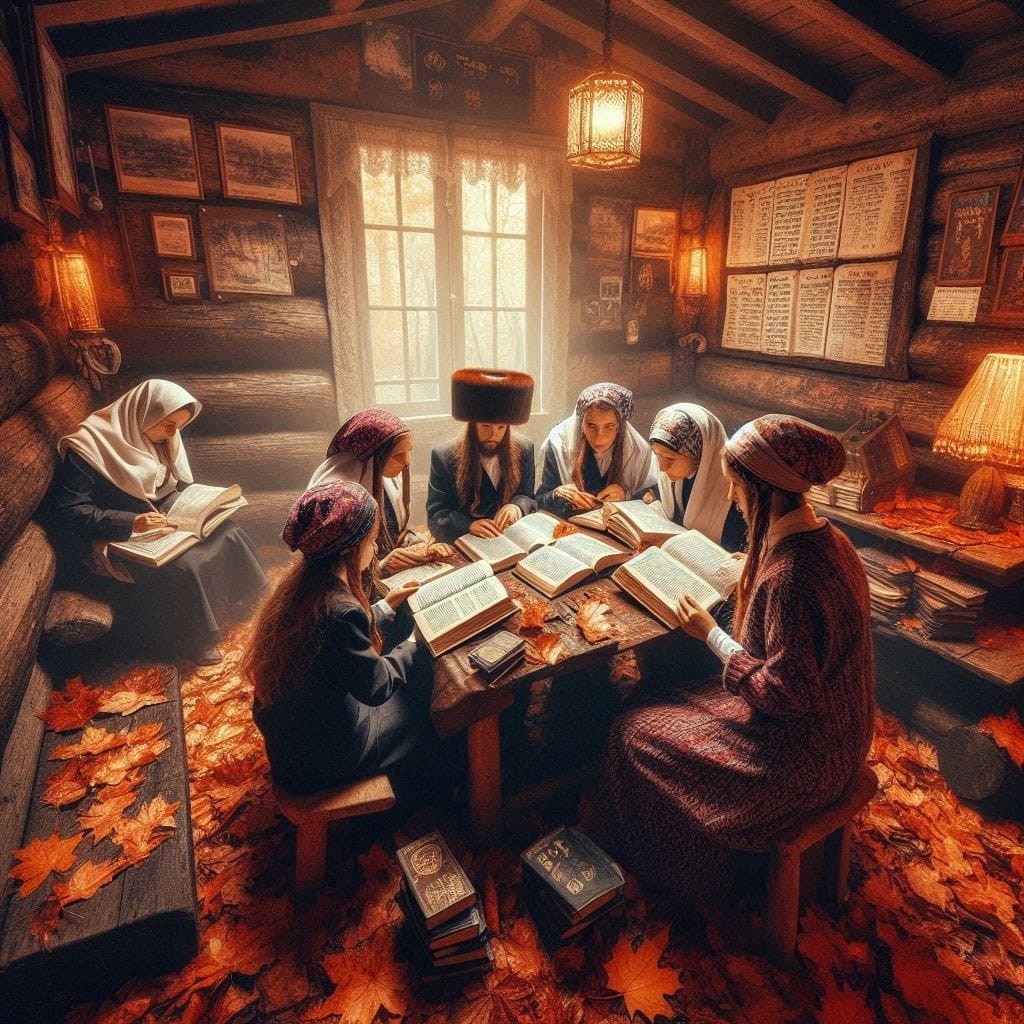
III. The Importance of Klal Yisrael
The Jewish people are not merely a collection of individuals who happen to observe the same religious laws.
We are Klal Yisrael — the collective people of Israel.
We share a covenant, a history, a sacred literature, and an inheritance extending across generations.
The Torah teaches:
זְכֹר יְמוֹת עוֹלָם בִּינוּ שְׁנוֹת דֹּר וָדֹר
“Remember the days of old; consider the years of generation after generation.” — Deuteronomy 32:7
Notice that the Torah does not merely instruct us to observe commandments.
It also instructs us to remember.
Remembering is an essential part of Jewish consciousness.
We remember the Exodus from Egypt. We remember the giving of the Torah.
We remember the wilderness, the Land of Israel, the Temple, the exile, and the generations who preserved our inheritance.
And much of this memory is transmitted through the ordinary practices of Jewish families.
Consider the melodies sung around the Shabbat table.
A particular melody may not be required by Halakhah. Nevertheless, when children hear the same melody that their grandparents once sang, something meaningful is transmitted.
They experience a connection with those who came before them.
The same can be said of family recipes, holiday customs, traditional stories, and the many small practices that distinguish one Jewish household from another.
These customs do not necessarily make someone more religious.
But they can strengthen a person's connection to the Jewish people.
Without them, a Jew may still possess Torah and Halakhah in their fullness.
Yet something of the emotional and historical connection with earlier generations may be diminished.
We can preserve the religion without preserving every custom, but we should recognize what may be lost when we abandon the memories carried by those customs.
This is particularly important in places where Jewish communities are small or geographically isolated.
When there are few Jewish families nearby, the traditions preserved within the home may become especially meaningful.
They remind our children that their Jewish lives are connected to something far greater than their immediate surroundings.
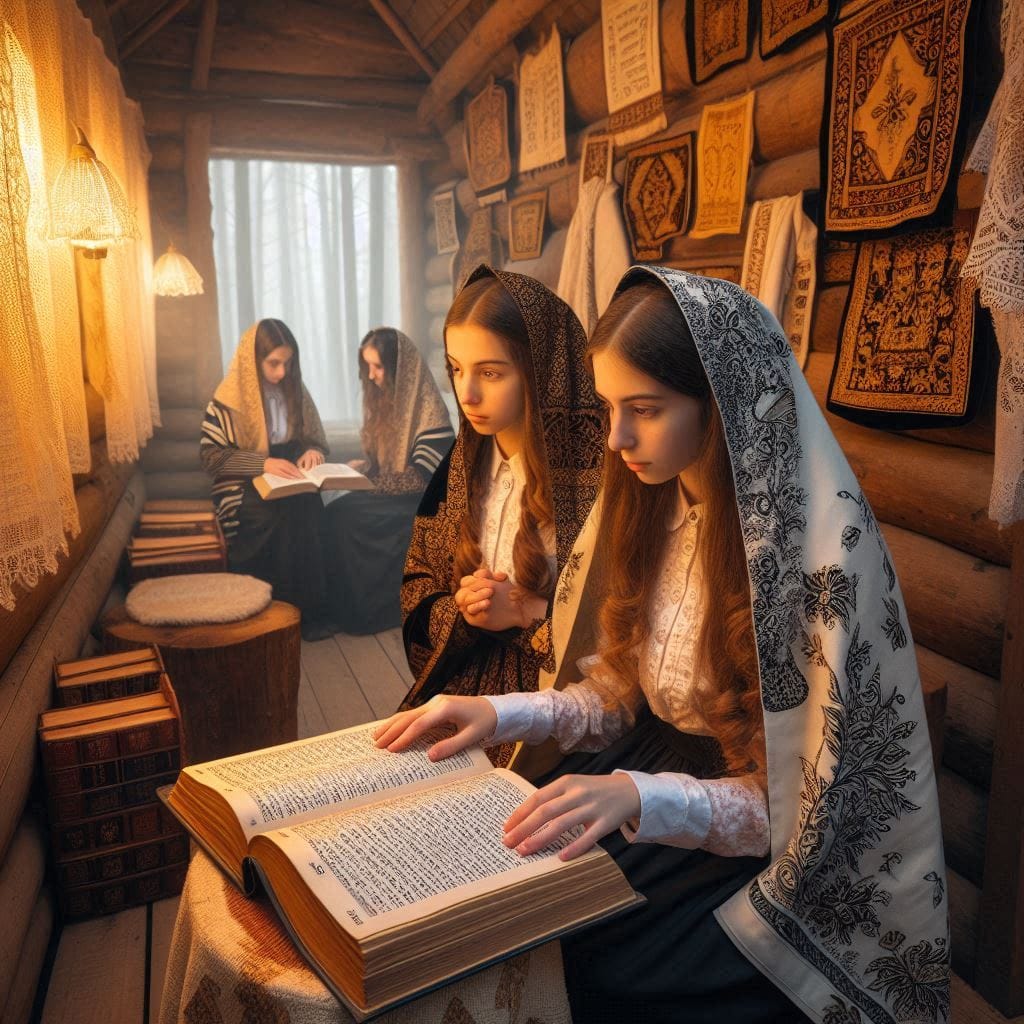
IV. Zakhor and Shamor: Remember and Guard
One of the most beautiful illustrations of this relationship comes from Shabbat.
In the Ten Commandments, the Torah presents two expressions concerning the Sabbath.
In Exodus 20:8, we read:
זָכוֹר אֶת־יוֹם הַשַּׁבָּת לְקַדְּשׁוֹ
“Remember the Sabbath day, to sanctify it.”
In Deuteronomy 5:12, we read:
שָׁמוֹר אֶת־יוֹם הַשַּׁבָּת לְקַדְּשׁוֹ
“Observe the Sabbath day, to sanctify it.”
The Talmud, Shevuot 20b, teaches that Zakhor and Shamor were spoken together in a single divine utterance.
These two expressions are commonly associated with the two Shabbat candles, particularly in later Jewish custom and mystical interpretation.
The basic mitzvah of Shabbat lighting does not require precisely two candles in every circumstance. Nevertheless, the symbolism is meaningful.
One candle represents remembering.
The other represents guarding.
Their original meaning concerns the sanctification and observance of Shabbat. But they also provide a valuable way to reflect upon the broader responsibilities of Jewish life.
We must guard the commandments entrusted to us.
We must also remember the inheritance through which those commandments have reached us.
The Torah itself recognizes the importance of transmitting knowledge between generations.
Deuteronomy 6:7 instructs us to teach the words of Torah diligently to our children.
And Proverbs 1:8 declares:
שְׁמַע בְּנִי מוּסַר אָבִיךָ וְאַל־תִּטֹּשׁ תּוֹרַת אִמֶּךָ
“Hear, my son, your father's instruction, and do not forsake your mother's teaching.”
Our religious inheritance is not intended to end with us.
We receive it, live by it, and transmit it.
And while Halakhah provides the governing framework, family and communal traditions can give that inheritance a recognizable voice.
A child may learn the laws of Shabbat from a book.
But that child may remember Shabbat through the sight of candles burning, the sound of familiar songs, and the warmth of the family gathered together.
Both experiences have value, although they fulfill different purposes.
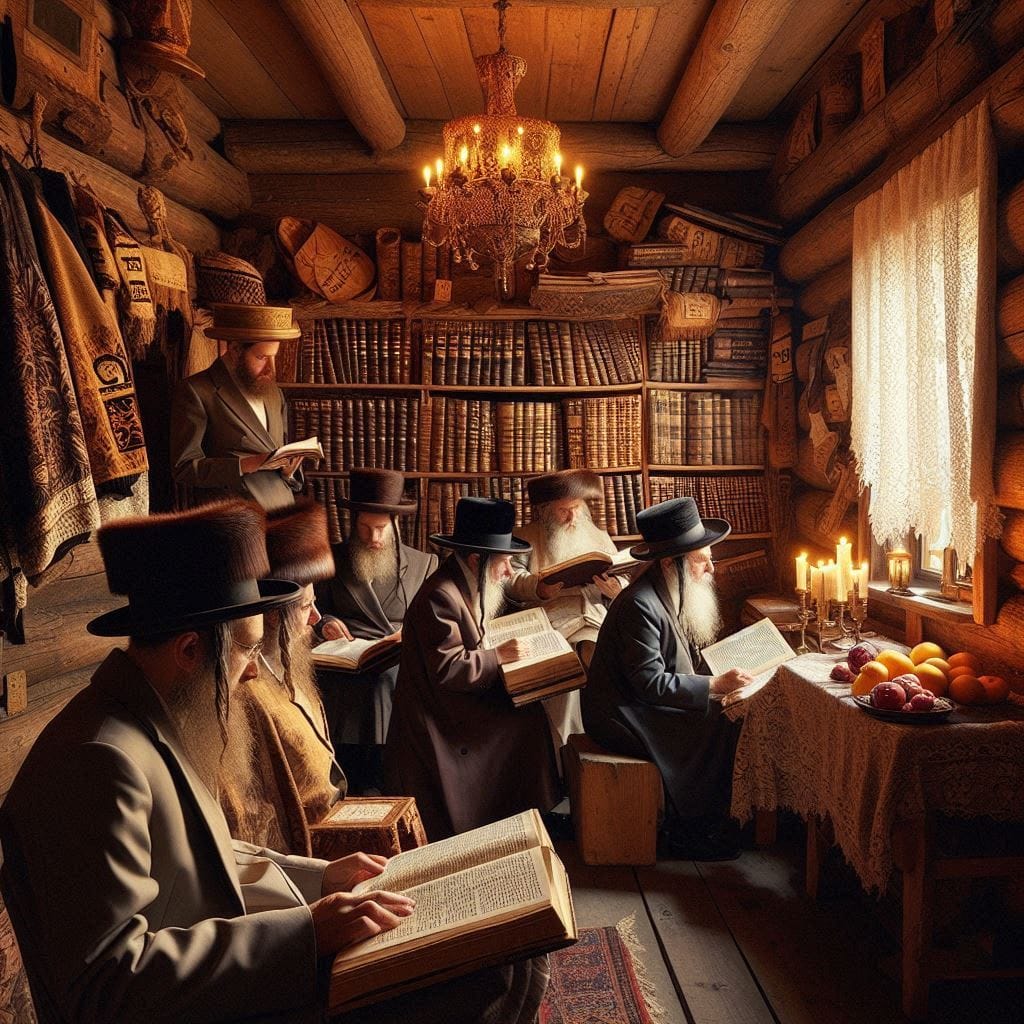
V. Guarding Our Inheritance for the Next Generation
Here in Northeastern Michigan, where Jewish families may be separated by considerable distances, these questions take on particular significance.
At Shaarei Tzafon, our foundation remains Torah and Halakhah.
We seek to study the classical Jewish sources, preserve faithful religious observance, and encourage traditional Jewish life in the Alpena, Hillman, and Rogers City region.
But we also recognize the importance of family, memory, and the preservation of Jewish customs.
Our children should understand not only what the Torah requires, but also that they belong to a people whose history extends far beyond the place where they live.
They should know the stories of our ancestors, recognize the significance of our festivals, and appreciate the many traditions that have accompanied Jewish families across centuries and continents.
This does not mean that every custom must be preserved without examination.
Some customs may change. Others may disappear. New local expressions may develop, provided they remain consistent with Halakhah.
The Jewish people have always lived in different lands, spoken different languages, and developed distinct communal traditions.
Yet the common foundation of Torah has bound these communities together.
An Ashkenazi Jew and a Yemenite Jew may sing different melodies, follow different permissible customs, and prepare different foods for Shabbat.
Neither is less Jewish because of those differences.
Indeed, the diversity of Jewish tradition demonstrates how our people have preserved a common religious inheritance while living in different circumstances.
And perhaps this is especially relevant to Jewish life above the 45th parallel.
Our surroundings may be different from those of the Jewish communities of earlier generations. Our winters are long, our communities are small, and our daily circumstances may require practical adaptations.
Nevertheless, the Torah remains the Torah.
Halakhah remains our guide.
And the responsibility to transmit our inheritance remains unchanged.
I return, therefore, to the conversation with which we began.
My fellow Jew told me that tradition was central to his Jewish identity.
I told him that I had embraced Judaism for the religion.
Today, I would still give the same answer.
Torah and Halakhah are sufficient for living a faithful Jewish religious life.
But I would add something.
The traditions and memories of our people are not meaningless decorations surrounding Judaism.
They are often the means by which generations recognize their connection to one another.
They help transform historical knowledge into living memory.
And when they are preserved thoughtfully, they strengthen our sense of belonging to Klal Yisrael.
We must never confuse a beautiful custom with a divine commandment.
But neither should we dismiss the value of an inherited tradition simply because it is not obligatory.
There is room within faithful Jewish life for both religious discipline and the preservation of memory.
Torah and Halakhah teach us how to live as Jews. Tradition and memory help us remember the generations of Jews whose inheritance we carry.
And together, they help us pass that inheritance to our children.
May we merit to guard the Torah, remember those who came before us, and faithfully transmit our inheritance to the generations that follow.
חזק ונתחזק — Chazak ve-nitchazek
Let us be strong and strengthen one another.
Next Lecture: Hanukkah — Guarding and Remembering the Light
https://www.shaareitzafon.org/hanukkah-guarding-and-remembering-the-light
A reflection on the rededication of the Temple, the preservation of Jewish religious life, and the importance of transmitting the memory of Hanukkah through the generations.

Shaarei Tzafon — The North Gate
Orthodox Jewish Life and Torah Study in Northeastern Michigan
Shaarei Tzafon — The North Gate, led by Rabbi Ariel Manning, is an independent, family-led Orthodox Jewish educational and publishing initiative based in Northeastern Michigan. We support traditional Jewish life, Torah study, Halakhah, and Jewish education throughout Alpena, Hillman, Rogers City, and surrounding communities. Those interested in traditional Judaism are welcome to contact us for educational resources, Torah learning, and opportunities for discussion by prior arrangement.
Rooted locally, our greater mission extends northward from the 45th parallel — The North Gate — through Michigan, Canada, and Alaska toward the Arctic. We seek to encourage independent Jewish communities, family-centered Torah education, and the renewal of small batei midrash and shtieblach, preserving the rich traditions of Orthodox Judaism for future generations.
Our work begins in Northeastern Michigan, but our vision extends from the 45th parallel toward the Arctic.
Guided by Rambam and Mori Qafiḥ, uplifted by Rebbe Nachman, and grounded by Avraham ben HaRambam’s balance of halakha and inward avodah.
The Orchard’s Path
publishes our books and curricula.
Our mission: a bright, authentic Jewish presence in every northern town.
Created with ©systeme.io


