
Mikra Series, Part Four פְּרִיחַת הַקַּבָּלָה — Perichat HaKabbalah The Boom of Kabbalah
B"H
1. Why Part Four Must Pause Here
Before we move deeper into the Acharonim, we must stop and explain the great mystical explosion that reshaped Jewish thought: the rise and spread of Kabbalah.
Until now, our chain has moved from:
HaTorah mi-Moshe — Torah from Moshe.
Mikra — Torah, Nevi’im, and Ketuvim.
Mishnah, halachic drashot, Braitot, and Gemara.
Geonim and Rishonim — Saadia Gaon, Rashi, Rambam, Ramban, Ibn Ezra, Yehudah HaLevi, Rabbeinu Tam, Tosafot, Sefer Chasidim, Maharam, Raavad, and Avraham ben HaRambam.
But now something happens. The mystical language of Judaism becomes far more public, far more organized, and far more influential.
The Zohar emerges. Avraham Abulafia develops prophetic or ecstatic Kabbalah. Moshe de León becomes central to the history of the Zohar. Later, in Tzfat, Rabbi Yitzḥak Luria — the Ari reshapes Kabbalah completely, and Rabbi Ḥayyim Vital transmits the Ari’s system.
Without understanding this boom of Kabbalah, one cannot understand the later Acharonim, Sephardic spirituality, Hasidut, much of modern Jewish prayer, or even many minhagim.
2. The Zohar and Moshe de León
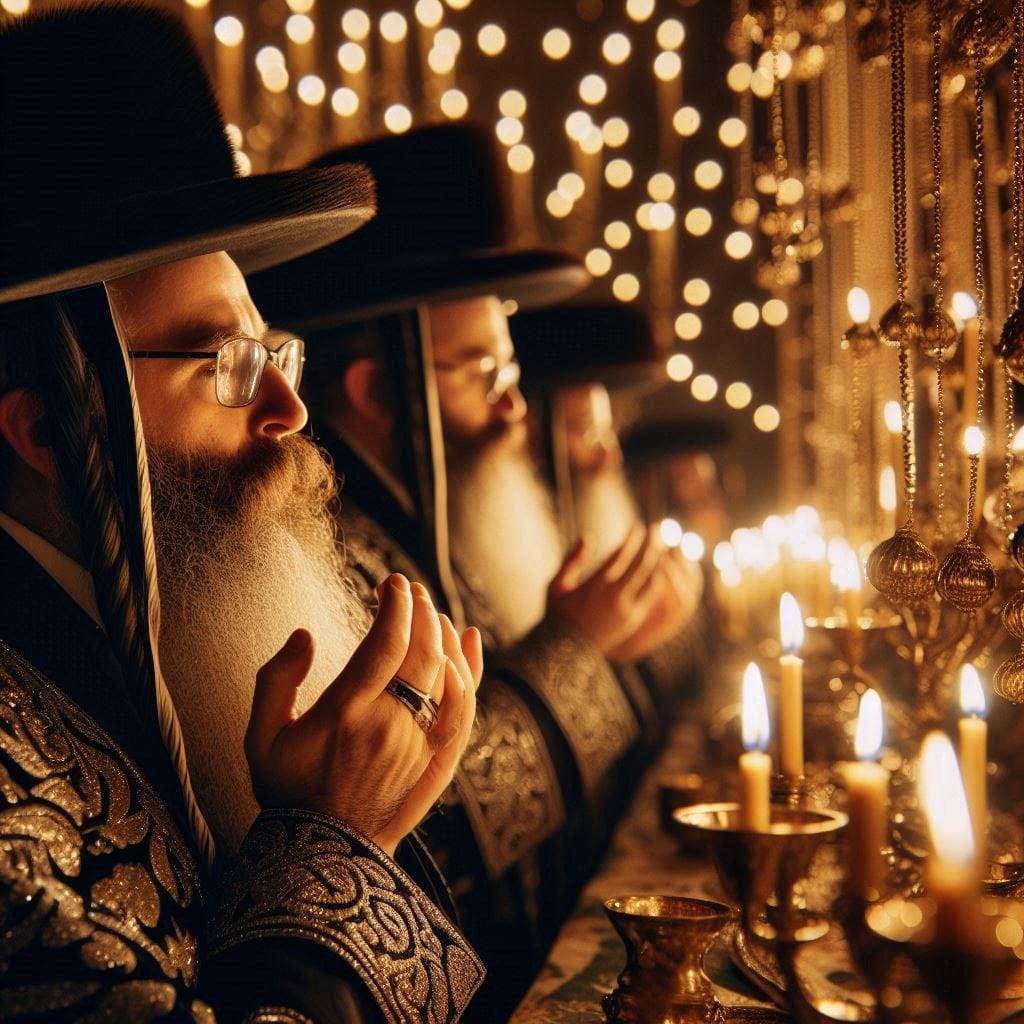
The Zohar becomes the central text of Jewish mystical tradition. Traditionally, it is associated with Rabbi Shimon bar Yoḥai, the great Tanna. Historically and academically, the Zohar first becomes publicly known in 13th-century Spain through Moshe de León, and many academic sources describe him as its likely author or redactor. The Zohar appeared in Spain in the 13th century through Moshe de León, who attributed it to Rabbi Shimon bar Yoḥai; likewise Moshe de León is a Jewish Kabbalist and “presumably” the author of the Zohar.
For our series, we do not need to solve every historical debate. We need to understand the effect.
The Zohar changed Jewish consciousness.
It gave mystical language to Torah, mitzvot, creation, prayer, exile, redemption, the Shekhinah, Israel, the sefirot, and the hidden structure of reality. It did not merely ask, “What is the law?” It asked, “What is happening in the upper worlds when Israel keeps the law?”
This is essential: authentic Jewish Kabbalah does not abolish halacha. It deepens halacha.
A false mysticism says: “I am beyond mitzvot.”
Jewish Kabbalah says: “The mitzvot reach higher than you can imagine.”
3. The Bahir as a Pre-Zoharic Voice
We can mention Sefer HaBahir briefly because it stands in the pre-Zoharic mystical stream. The Bahir is earlier than the public emergence of the Zohar and contains symbolic teachings about divine emanation, letters, light, and hidden Torah.
But for this part, the Bahir is not our center.
The center is the boom: Zoharic Kabbalah, prophetic Kabbalah, and then Lurianic Kabbalah.
We are not focusing here on Sefer Yetzirah. That can be placed to the side for a different discussion.
4. Avraham Abulafia and Prophetic Kabbalah
Avraham Abulafia represents what is often called Prophetic Kabbalah or Ecstatic Kabbalah.
This stream is different from the Zoharic style. It is less focused on describing the sefirotic drama of the upper worlds and more focused on purified consciousness, divine names, Hebrew letters, meditation, breath, disciplined contemplation, and the possibility of prophetic-like encounter.
Abulafia’s Kabbalah is intense. It is not casual spirituality. It is not emotionalism. It is not “do whatever you feel.” It requires discipline, preparation, concentration, and a deep connection to the Hebrew language.
Here we must be careful. Prophetic Kabbalah does not mean that every person becomes a biblical prophet. It means a mystical path aimed at devekut, illumination, and a kind of prophetic consciousness through holy language and contemplative practice. Scholarship commonly distinguishes Abulafia’s ecstatic or prophetic Kabbalah from other medieval kabbalistic systems.
For our polemic, this matters because Abulafia shows that Jewish mysticism can be rigorous, intellectual, linguistic, and disciplined.
It is not superstition.
It is not chaos.
It is not anti-Torah.
At its best, prophetic Kabbalah is the inner ascent of a Torah soul seeking HaShem through sacred language.
5. Zoharic Kabbalah: Hermeneutic in the Jewish Sense
Here we need to clarify language.
If by “hermeneutic” one means interpretive, then Jewish Kabbalah certainly has a hermeneutic side. The Zohar reads Torah mystically. It interprets verses, names, stories, commandments, and biblical personalities according to hidden spiritual meanings.
That kind of hermeneutic Kabbalah is Jewish.
It is Torah interpretation within the mystical mesorah of Israel.
But if we mean Hermetic Kabbalah — sometimes spelled “Qabalah” in Western occult circles — that is something else entirely.
Hermetic Kabbalah is not the same as Jewish Kabbalah. It develops in Western esotericism and becomes blended with Christian Cabala, Renaissance occultism, ceremonial magic, Hermetic writings, astrology, alchemy, Gnostic ideas, and later occult movements. Hermetic writings are Greco-Egyptian revelatory works associated with Hermes Trismegistus, and Britannica’s article on occultism connects modern occultism especially with 19th-century European esoteric currents.
So we must draw the boundary clearly:
Jewish Kabbalah belongs to Torah, mitzvot, Hebrew, Israel, halacha, and mesorah.
Hermetic Qabalah belongs to Western occultism and Christian/esoteric reinterpretation.
They are not the same system.
6. Why Hermetic Qabalah Is Not Torah Kabbalah
This must be said firmly.
Hermetic Qabalah is not traditional Jewish Kabbalah.
It borrows Jewish symbols but places them into a different religious machine. It may use Hebrew letters, sefirot, divine names, angels, and diagrams, but the structure underneath is not Torah Judaism. It often places Kabbalah into Christian theology, occult ritual, magical systems, Gnostic cosmology, or universal esoteric speculation.
That makes it religiously foreign to Torah.
This is the same problem we have seen before: taking Jewish forms and removing Jewish covenant.
Hebrew letters without halacha are not Torah.
Sefirot without mitzvot are not Jewish Kabbalah.
Divine names without yirat Shamayim are dangerous.
Mystical diagrams without Israel’s mesorah become spiritual theft.
Traditional Kabbalah does not exist to make a person into a magician. It exists to deepen avodat HaShem.
Therefore, for our series, we distinguish three streams carefully:
Prophetic / Ecstatic Kabbalah — associated especially with Avraham Abulafia.
Zoharic and later Lurianic Kabbalah — the main Jewish mystical stream that becomes central to later Torah life.
Hermetic Qabalah — an outside Christian/Western esoteric adaptation, not Torah Kabbalah.
7. Moshe Cordovero: The Great Systematizer Before the Ari
Before the Ari, we must mention Rabbi Moshe Cordovero, the Ramak.
The Ramak is one of the great systematizers of Kabbalah. He organizes earlier Zoharic teachings and gives them structure. In Tzfat, before the Ari’s system becomes dominant, the Ramak represents a major mature form of Jewish Kabbalah.
When Isaac Luria came to Safed, he studied under Moshe Cordovero, described there as the greatest Kabbalist of the time.
The Ramak is important because he shows that Kabbalah was not just scattered symbols. It had become a serious discipline of Torah thought.
If Abulafia gives ecstatic ascent, and the Zohar gives mystical Torah, the Ramak gives system.
8. The Ari: Lurianic Kabbalah Changes Everything
Then comes Rabbi Yitzḥak Luria, the Ari.
The Ari’s life was short, but his influence was enormous. He arrived in Tzfat in the 16th century, and from that point Jewish mysticism changed dramatically. Luria is the founder of the Lurianic school of Kabbalah and notes his move to Safed around 1570, where he developed his system.
Lurianic Kabbalah gives us concepts that become central in later Jewish mystical and Hasidic thought:
Tzimtzum — divine contraction or concealment.
Shevirat haKelim — the breaking of the vessels.
Nitzotzot — sparks of holiness scattered through creation.
Tikkun — repair, rectification, restoration.
Gilgulim — soul-cycles and reincarnation.
Kavvanot — mystical intentions in prayer and mitzvot.
This is why Lurianic Kabbalah becomes so powerful. It explains exile cosmically. It explains brokenness spiritually. It explains mitzvot as acts of repair. It gives meaning to suffering, dispersion, and redemption.
The Jew is not merely surviving exile.
The Jew is repairing worlds.
9. Ḥayyim Vital: The Transmitter of the Ari
The Ari himself wrote very little in comparison to his influence. His teachings are transmitted primarily through his disciple Rabbi Ḥayyim Vital.
Ḥayyim Vital becomes the major interpreter and transmitter of Lurianic Kabbalah. Rabbi Vital is Luria‘s disciple in Safed around 1570 and says that after Luria’s death, Vital claimed to be the sole interpreter of the Lurianic school.
This matters because Lurianic Kabbalah reaches the Jewish world through transmission — again, mesorah.
Even mystical Torah requires a chain.
It is not enough to say, “I had a vision.”
The teachings must be received, guarded, organized, and transmitted.
Ḥayyim Vital becomes to the Ari’s Kabbalah what a faithful vessel must be: the one who preserves the teaching so Israel can receive it.
10. The Conclusion: Kabbalah Must Stand Under Torah
The boom of Kabbalah is real. It changes Jewish history.
The Zohar reshapes mystical Torah interpretation.
Abulafia gives prophetic/ecstatic Kabbalah.
Moshe de León stands at the historical doorway of the Zohar’s public emergence.
The Ramak systematizes the Zoharic world.
The Ari transforms Kabbalah through tzimtzum, shevirah, nitzotzot, and tikkun.
Ḥayyim Vital transmits the Ari’s teachings.
But the conclusion must be unmovable:
Kabbalah is only Jewish when it remains under Torah and halacha.
The Torah of Moshe is still the foundation.
The Mishnah is still the legal memory.
The Gemara is still the great clarification.
The Rishonim are still the great explainers.
The mitzvot are still binding.
Kabbalah does not replace halacha.
Kabbalah explains why halacha shakes heaven.
That is the difference between Jewish mysticism and foreign mysticism.
Jewish Kabbalah says: keep Shabbat, and know that Shabbat is cosmic.
Foreign mysticism says: use symbols to empower the self.
Jewish Kabbalah says: pray with kavvanah before HaShem.
Foreign mysticism says: manipulate forces.
Jewish Kabbalah says: mitzvot repair creation.
Foreign mysticism says: secrets make you powerful.
So Part Four establishes the boundary before we go forward into the Acharonim:
Prophetic Kabbalah and Lurianic Kabbalah belong inside Jewish Torah when governed by halacha and mesorah.
Hermetic Qabalah is not Torah Kabbalah. It is an outside esoteric adaptation.
The boom of Kabbalah did not abolish Moshe.
At its best, it revealed that the Torah from Moshe is deeper than the world can bear.
Mikra Series — Part Four: Perichat HaKabbalah
The Flowering of Jewish Kabbalah — From the Zohar to the Ari, Under the Authority of Torah
How did Jewish Kabbalah develop into one of the most influential movements in Jewish religious thought, and what distinguishes authentic Jewish mystical tradition from later adaptations outside the covenant of Israel?
In this fourth installment of the Mikra Series, Rabbi Ariel Manning examines the extraordinary flowering of Jewish Kabbalah and its relationship to Torah, Halakhah, mesorah, and the continuing religious life of the Jewish people.
The discussion begins with the Zohar, traditionally associated with Rabbi Shimon bar Yochai and historically emerging into public circulation in thirteenth-century Spain through Moshe de León. Whatever one's position concerning its authorship, the Zohar profoundly influenced Jewish interpretations of Torah, prayer, mitzvot, creation, exile, and redemption.
Avraham Abulafia represents another important development: prophetic or ecstatic Kabbalah. His contemplative methods emphasize Hebrew letters, divine names, disciplined concentration, and the pursuit of devekut, attachment to HaShem.
Rabbi Moshe Cordovero, the Ramak, subsequently organized earlier mystical teachings into a systematic body of Jewish thought.
The great transformation came with Rabbi Yitzchak Luria, the Ari, whose teachings in sixteenth-century Tzfat introduced an influential mystical framework centered upon tzimtzum, shevirat ha-kelim, nitzotzot, and tikkun.
Through Rabbi Chayyim Vital, the teachings of the Ari were transmitted to later generations, profoundly influencing Jewish prayer, Sephardic traditions, Hasidut, and many established minhagim.
Yet the flourishing of Kabbalah raises an essential theological question.
Does mystical interpretation deepen the obligations of Torah, or does it become an alternative authority capable of replacing Halakhah?
For Shaarei Tzafon, the answer is clear: Kabbalah must remain subordinate to Torah and its established halakhic framework.
Mystical teachings may illuminate the spiritual significance of Shabbat, prayer, mitzvot, and Jewish devotion, but they cannot independently abolish commandments or overturn the covenantal obligations of Israel.
This distinction also separates Jewish Kabbalah from Christian Cabala and later Hermetic Qabalah, which adopted elements of Jewish mystical symbolism within different religious and esoteric systems.
Historical influence and shared terminology do not make these systems religiously identical.
For students of Torah in Alpena, Hillman, Rogers City, and throughout Northeastern Michigan, this teaching demonstrates the importance of combining intellectual discipline, traditional Jewish learning, and spiritual devotion.
The study of Kabbalah should never replace Chumash, Mishnah, Gemara, Rambam, or practical Halakhah. Rather, where appropriately studied, it may contribute to a deeper appreciation of Jewish religious life.
The central message: Jewish Kabbalah must illuminate the Torah of Moshe, not replace it. Its proper purpose is to deepen avodat HaShem through Torah, mitzvot, reverence, and faithful transmission.
The flowering of Kabbalah did not end the chain of Torah learning. It became another influential chapter within the continuing history of Jewish interpretation, study, and devotion.
Published by Shaarei Tzafon — The North Gate, an independent, family-led Orthodox Jewish educational and publishing initiative based in Northeastern Michigan, serving Alpena, Hillman, Rogers City, and surrounding communities.
Shaarei Tzafon promotes traditional Jewish life, Torah study, practical Halakhah, and the renewal of independent Jewish learning communities throughout the northern boreal regions, extending from the 45th parallel toward the Arctic tundra.
Article: https://www.shaareitzafon.org/mikra-series-part-four----perichat-hakabbalah-the-boom-of-kabbalah
Shaarei Tzafon — The North Gate
Orthodox Jewish Life and Torah Study in Northeastern Michigan
Shaarei Tzafon — The North Gate, led by Rabbi Ariel Manning, is an independent, family-led Orthodox Jewish educational and publishing initiative based in Northeastern Michigan. We support traditional Jewish life, Torah study, Halakhah, and Jewish education throughout Alpena, Hillman, Rogers City, and surrounding communities. Those interested in traditional Judaism are welcome to contact us for educational resources, Torah learning, and opportunities for discussion by prior arrangement.
Rooted locally, our greater mission extends northward from the 45th parallel — The North Gate — through Michigan, Canada, and Alaska toward the Arctic. We seek to encourage independent Jewish communities, family-centered Torah education, and the renewal of small batei midrash and shtieblach, preserving the rich traditions of Orthodox Judaism for future generations.
Our work begins in Northeastern Michigan, but our vision extends from the 45th parallel toward the Arctic.
Guided by Rambam and Mori Qafiḥ, uplifted by Rebbe Nachman, and grounded by Avraham ben HaRambam’s balance of halakha and inward avodah.
The Orchard’s Path
publishes our books and curricula.
Our mission: a bright, authentic Jewish presence in every northern town.
Created with ©systeme.io


