
The Beis Midresh the Possible Kehillah Trust and Education
B"H
1. The Beis Midresh Is Not a Room; It Is a Covenant
A Beis Midresh is not merely a room with Jewish books. A person can fill a room with sefarim and still not have a Beis Midresh. A Beis Midresh begins when Torah becomes the organizing center of life. It is where the family, the student, the seeker, the convert-in-process, and the sincere Jew learn to stand under the authority of HaShem, Torah, halacha, and mesorah.
This is why the building of a Beis Midresh must be taken seriously. It is not a social club. It is not an interfaith experiment. It is not a place for spiritual dress-up. It is not a place where people come to borrow Jewish symbols while refusing Jewish discipline.
A Beis Midresh is holy because it says: here, Torah is not decoration. Here, Torah is the mirror of HaShem.
For Shaarei Tzafon, especially in a rural area, this matters even more. There is no large Jewish infrastructure carrying the burden. There is no established neighborhood, no constant minyan, no broad institutional wall protecting the family. So the Beis Midresh must itself become a carefully guarded sanctuary of learning.
The Mishnah teaches, “Make for yourself a rav, acquire for yourself a friend, and judge every person favorably” (Pirkei Avot 1:6). This is the order of healthy Torah life: guidance, friendship, and generous judgment. But none of these can exist without trust.
So the Beis Midresh begins with books, but it survives through trust.
2. Do We Let Everyone In? No — Because Trust Is Torah Wisdom
The question must be asked plainly:
Do we let everyone in?
No.
That answer is not cruelty.
It is wisdom.
A Beis Midresh cannot be built without trust. A family cannot open its home, its books, its table, its time, and its children to every person who is curious about Judaism. Curiosity is not the same as commitment. Interest is not the same as humility. Religious excitement is not the same as trustworthiness.
In our experience, many people have come near to Jewish learning because they felt drawn to Torah, Hebrew, the festivals, the Jewishness of Scripture, or the beauty of Jewish life. That is not the problem. A sincere person who wants to learn with respect is not the problem.
The problem begins when a person comes near to Torah but cannot respect Judaism as Judaism.
The problem begins when a person wants Jewish books, Jewish language, Jewish customs, and Jewish symbols, but still believes that Jews are wrong for trusting fully in Torah, halacha, and the mesorah of Israel.
The problem begins when someone enters a Jewish space not to learn, but to argue, persuade, correct, redirect, or subtly pull Jews away from their own covenant.
That is not learning.
That is not friendship.
That is not community.
That is a violation of trust.
The Torah commands us not to wrong one another with words, and Chazal identify אוֹנָאַת דְּבָרִים (ona’at devarim — verbal oppression or verbal harm) as a serious matter. A Beis Midresh cannot be built on words that wound, pressure, or spiritually invade another person’s home. It cannot be built around people who come into a Jewish space only to challenge the right of Jews to remain fully Jewish.
There is another painful lesson here as well.
This has happened before.
There was a Jewish man and his wife who were near enough that we could have focused more seriously on them. He was genuine. His family was genuine. They were the kind of people a rural Beis Midresh should have been watching for: isolated, sincere, Jewish, and in need of connection, learning, prayer, and belonging.
But at the time, much of our energy was being spent elsewhere. We were investing in people and families whom we hoped would come closer to the Divine through Judaism, attach themselves properly to Torah, and learn to respect Jewish life from within its own boundaries. We thought they might grow toward Torah Judaism with humility and seriousness.
In the end, many did not want that. Their intentions were not necessarily malicious, but they were different from what we hoped. They wanted Jewish information, Jewish sources, and Jewish language in order to strengthen their own religious ideas, not to submit themselves to traditional Torah Judaism, halacha, and the way of life of Israel.
And while we were giving time, money, patience, and teaching to people who did not ultimately want our religion and our way of life, a real Jew in the wilderness was neglected.
When he died, and when it became clear that he had been genuine, it broke our hearts. It shook us deeply. Because the truth became unavoidable: our energy should have been directed first toward him and his wife, toward the actual Jewish family who needed connection, rather than toward people who were only borrowing from Judaism to reinforce something else.
That cannot happen again.
A Beis Midresh must know its priority.
The first responsibility is to Jews, Jewish families, sincere converts in process, and those who truly want to enter and live within Torah Judaism with respect and humility. Others may be treated with kindness. Others may be spoken to with dignity. Others may be neighbors and friends. But the inner labor of the Beis Midresh cannot be consumed by people who only want access to Jewish material without accepting Jewish boundaries.
Our time is limited. Our family’s strength is limited. Our resources are limited. We do not have the finances, infrastructure, or communal support to absorb endless religious conflict or endless religious curiosity. We cannot keep pouring ourselves into people who want the appearance, language, or information of Jewish learning without the humility to respect Torah Judaism as a complete and living religion.
This is why the invitation is real, but the door is guarded.
At this stage, the Beis Midresh is not open enrollment. It is not a public institution with staff, funding, security, programming, and broad communal systems. It is a family-rooted Torah space, slowly discerning whether a real קְהִלָּה (kehillah — community) can emerge.
Therefore, if sincere Jews, Jewish families, serious Jewish singles, or families truly moving toward Torah Judaism want to learn, talk, grow, and see whether there is a good fit, a meeting can be arranged. We can sit together, speak honestly, and discern whether there is trust, respect, seriousness, and shared direction.
But the inner circle is not open to everyone.
This is not a rejection of human dignity. It is the protection of a sacred work.
Traditional Christians and people from established religious communities may be treated with friendship and respect when they approach honestly and do not missionize. We can speak with them. We can be neighbors. We can stand together against the over-secularization of the world. But that is different from opening the Beis Midresh to people who want to use Torah study as a way to challenge, replace, or undermine Judaism.
The boundary is simple:
There will be no missionizing.
There will be no religious theater.
There will be no costume Judaism.
There will be no using Jewish books against Judaism.
There will be no entering a Jewish home in order to tell Jews that Torah, halacha, and mesorah are not enough.
Those who come must come with humility.
Those who come must respect the Jewishness of the space.
Those who come must understand that this Beis Midresh exists to strengthen Torah life, not to debate whether Torah Judaism has the right to exist on its own terms.
First trust.
Then learning.
Then relationship.
Then, perhaps, kehillah.
3. The First Shelf: Torah, Siddurim, and Machzorim
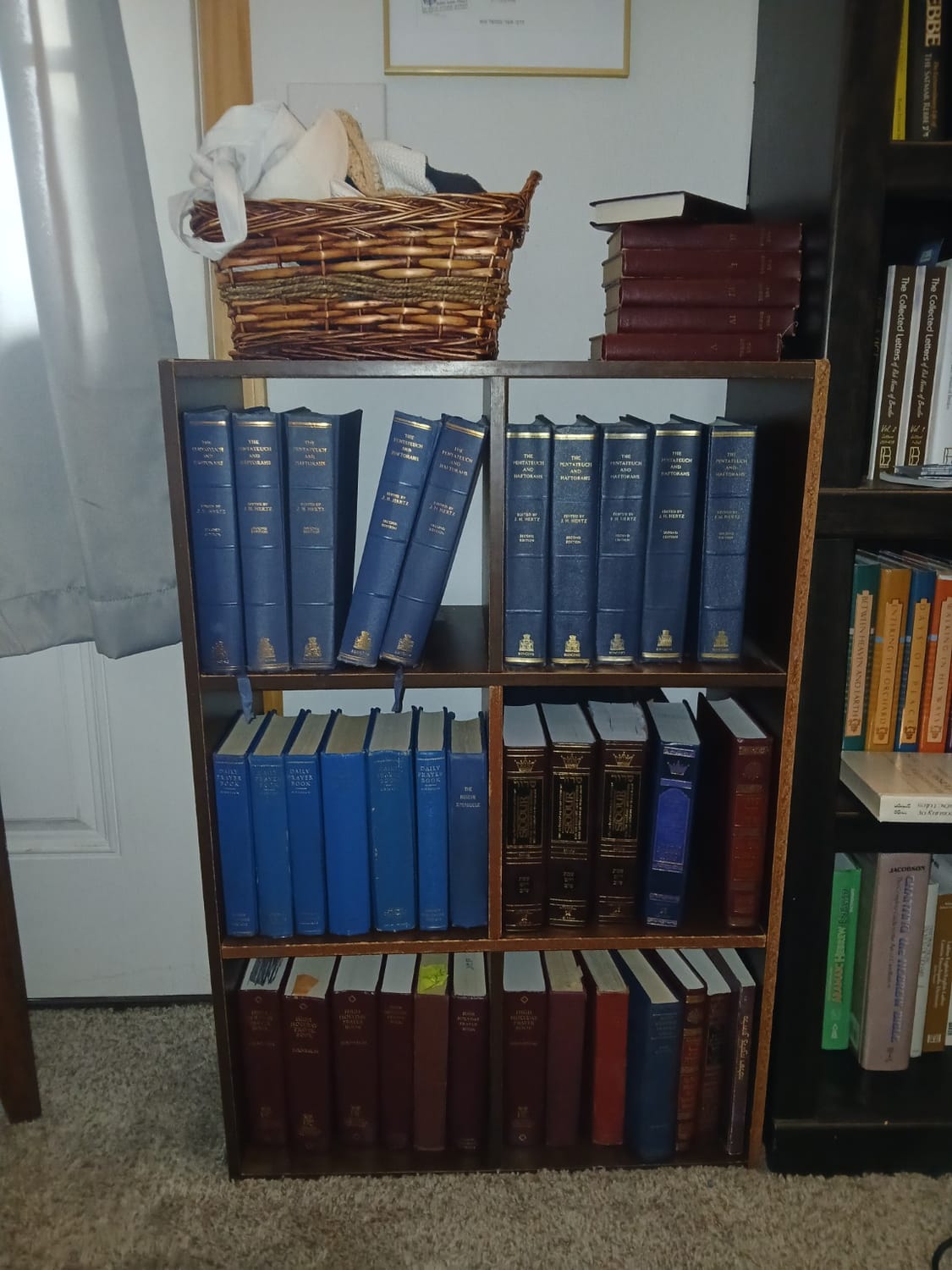
The first shelf of the Beis Midresh must teach the most basic truth: Jewish life begins with Torah, prayer, and sacred time.
That is why the first section contains Chumashim, Siddurim, and Machzorim.
The Chumash teaches the covenant: Bereishit, Shemot, Vayikra, Bamidbar, and Devarim. Creation, Avraham, Yitzchak, Yaakov, Sinai, mitzvot, holiness, exile, redemption, wilderness, and covenantal destiny all begin here.
The Siddur teaches the Jewish soul how to answer HaShem. It gives order to the heart. It teaches Shema, Amidah, blessings, Shabbat prayer, weekday prayer, gratitude, repentance, and praise. A person may have strong feelings, but the Siddur teaches those feelings how to become Jewish prayer.
The Machzor teaches sacred time. It places the Jew inside the year of Israel: Rosh Hashanah, Yom Kippur, Sukkot, Pesach, Shavuot, Tisha B’Av, Chanukah, Purim, and all the rhythms that sanctify memory.
This first shelf says: we are not beginning with controversy. We are not beginning with polemics. We are not beginning with another religion’s claims about us.
We begin with Chumash, Siddur, Machzor.
Torah.
Prayer.
Holy time.
A person who cannot respect these three is not ready for the deeper shelves.
4. The Second Shelf: Halachic Foundations
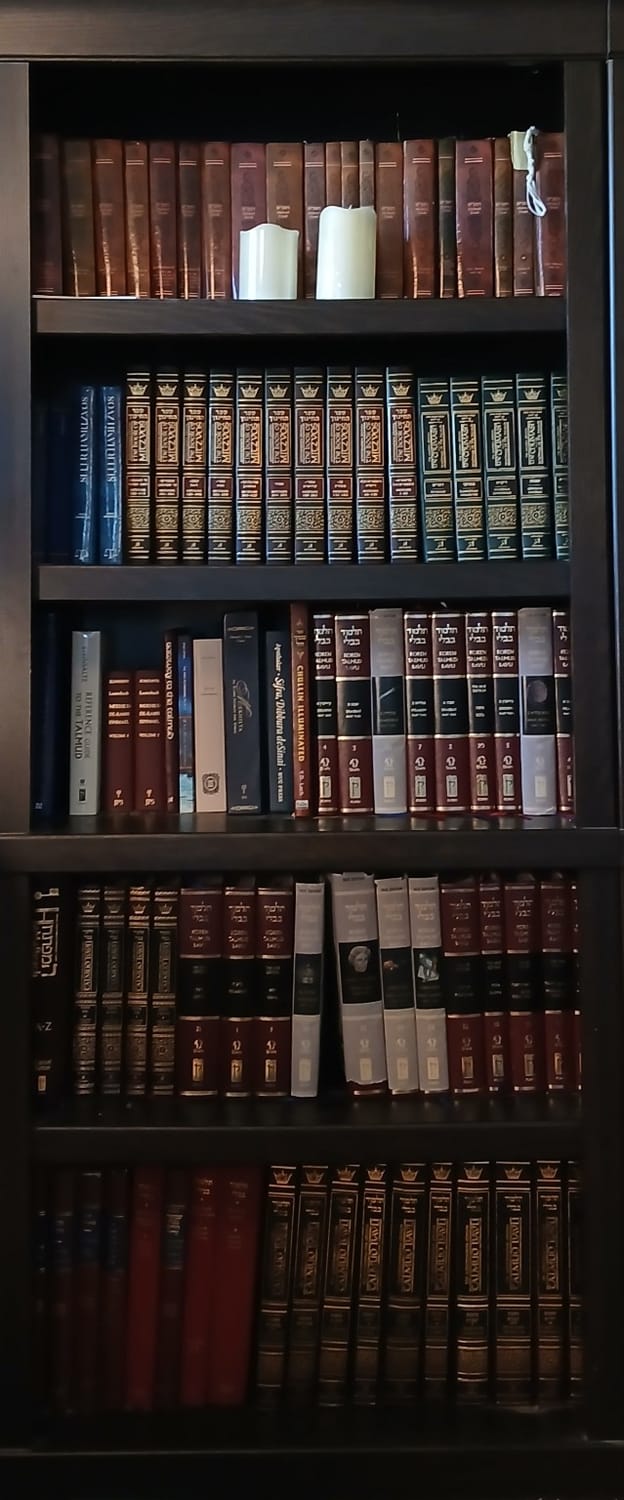
After Torah, prayer, and sacred time comes the legal spine of the Beis Midresh: halachic drashot, Talmud, Sefer HaMitzvot, Sefer HaChinuch, and Mishneh Torah.
This shelf answers one of the most important questions: How does Torah become halacha?
The halachic midrashim — Mekhilta, Sifra, and Sifre — show how the Chachamim read Torah legally. They prove that halacha is not a later invention. The commandments of Torah are received, interpreted, and transmitted through the legal methods of Israel.
The Mishnah and Talmud preserve the vast sea of halachic discussion. They show debate, reasoning, dispute, precedent, principle, and application. But in this Beis Midresh, the Talmud is not used to drown beginners in confusion. It is used to understand halacha and clarify the foundations beneath the codes.
The Sefer HaMitzvot gives the structure of the 613 mitzvot. It reminds the student that Judaism is not merely culture or inspiration. It is a commanded covenant.
The Sefer HaChinuch teaches the mitzvot with educational and moral roots. It is ideal for families because it connects parashah, mitzvah, meaning, and practice.
Then comes the Mishneh Torah of the Rambam — the great organized code. For this Beis Midresh, Mishneh Torah is not peripheral. It is central. It gives order, categories, clarity, and a whole-Torah map.
This shelf teaches: Torah must become mitzvah. Mitzvah must become halacha. Halacha must become life.
5. Practical Halacha and Minhagim: How Jews Actually Live
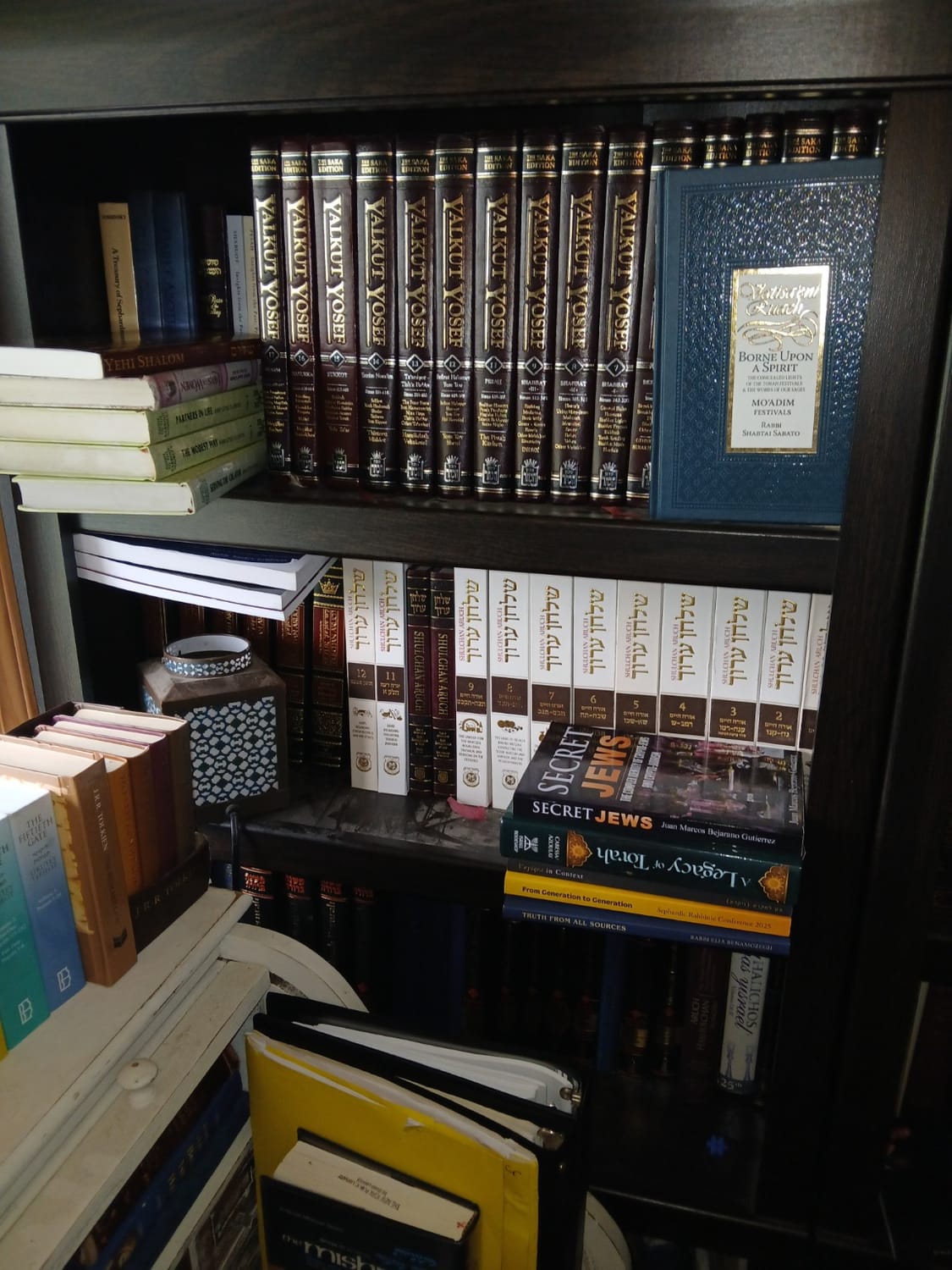
The next section is practical halacha and minhagim. This is where Torah enters the kitchen, the Shabbat table, the marriage, the holiday, the family, the child’s education, the convert’s formation, and the daily conduct of the home.
Here the top shelf represents Sephardic halacha and minhag. It includes Yalkut Yosef, the DAAT Press Moadim series, Yehi Shalom, and several Sephardic women’s halacha and family-practice works whose exact titles should be cataloged later.
This shelf says: Sephardic Torah is living Torah. It is not exotic. It is not secondary. It is a major pillar of Klal Yisrael.
Then the next layer contains Ashkenazi and Chassidic practical halacha, including Shulchan Aruch HaRav, Kitzur Shulchan Aruch, and an Ashkenazi women’s halacha work whose title should also be identified later.
This matters because many people think their local version of Orthodox practice is “the whole Torah.” But Klal Yisrael is broader than one neighborhood, one custom, one yeshivah, or one rabbinic culture.
A serious Beis Midresh must know the range.
What is Sephardic practice?
What is Ashkenazi practice?
What is Chassidic practice?
What is strict?
What is lenient?
What is necessary?
What is custom?
What is halacha?
What is local expectation?
This shelf protects the community from ignorance. It teaches that there are multiple legitimate Torah pathways, but they must be studied carefully and respectfully.
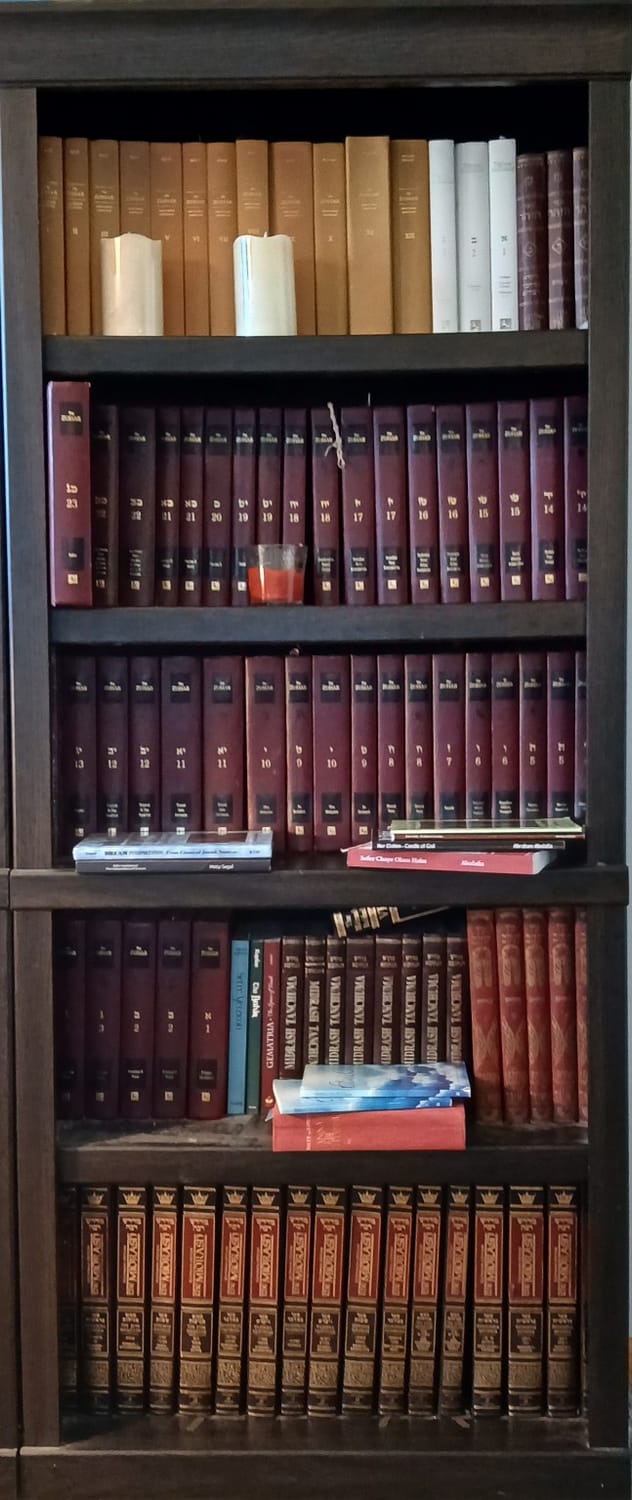
6. Aggadah, Midrash, and Sod: The Inner Imagination of Torah
The next section is Aggadah, Midrash, and Sod.
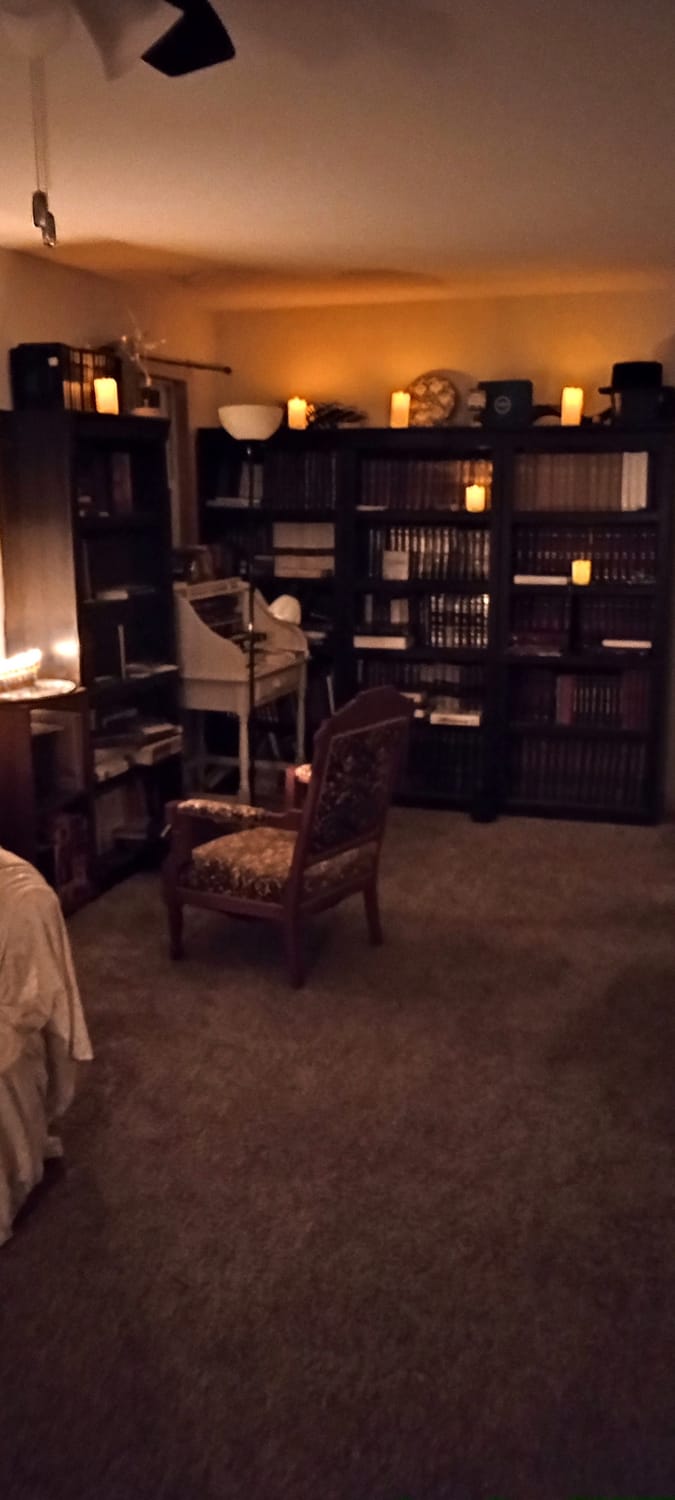
This shelf contains Midrash Rabbah, Midrash Tanchuma, Tanna Devei Eliyahu, Tales of the Talmud, works of Rabbi Avraham Abulafia, and several editions of Sefer HaZohar — including Kabbalah Centre, Daniel Matt, Soncino, and Israel Publishing versions.
This is the depth shelf.
But it is not the first shelf.
A beginner should not be thrown first into mystical symbolism without Torah, Siddur, halacha, and moral discipline. That leads to confusion, inflation, and spiritual theater.
Midrash Rabbah opens the imagination of Chazal. It teaches how Torah speaks beyond the surface.
Midrash Tanchuma gives warmth, parashah teaching, moral instruction, and homiletical depth.
Tanna Devei Eliyahu gives rebuke, humility, yirat Shamayim, righteousness, and moral seriousness.
Tales of the Talmud opens the world of aggadic story for children, families, beginners, and those not ready for Gemara directly.
Avraham Abulafia represents meditative, linguistic, letter-based, prophetic mysticism — powerful, but not casual.
The Zohar opens the symbolic and mystical world of Torah, but it must never be used to overthrow halacha, the Talmud, or Mishneh Torah.
This shelf teaches: Torah has secrets, but secrets require vessels.
The vessel is halacha.
The vessel is humility.
The vessel is trust.
7. Philosophy, Mussar, Chassidut, and Avodat HaShem
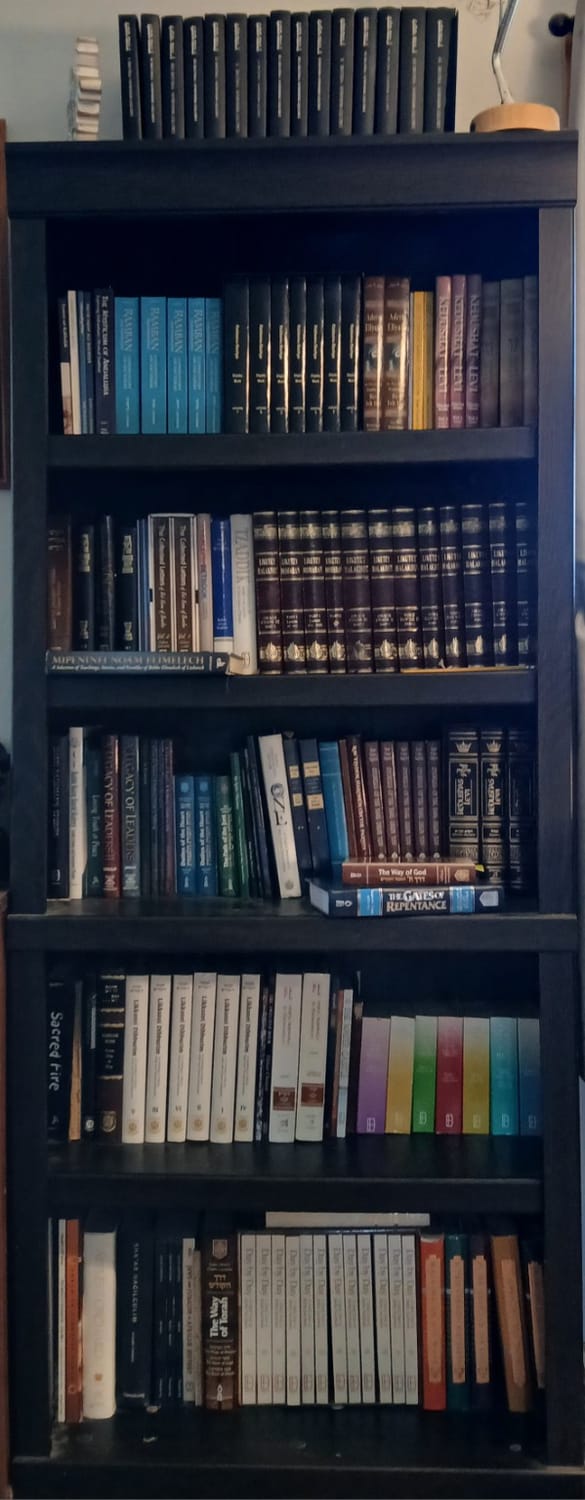
Another shelf contains Jewish philosophy, mussar, Chassidut, and inner avodah. This includes Sephardic philosophy, Ben Ish Chai, Ramban, Breslov, Biala, Kedushat Levi, Chabad, Lithuanian thought, Ramchal / Luzzatto, and Kuzari.
This section asks: what does Torah do to the soul?
Halacha tells a Jew what to do. But machshavah, mussar, and Chassidut help a Jew understand how to become.
The Ben Ish Chai gives Sephardic halachic-mystical warmth, where law and inner meaning speak together.
The Ramban gives covenantal mysticism rooted in Torah, peshat, halacha, and the holiness of Israel.
Breslov gives hope, hitbodedut, teshuvah, joy, simplicity, and the refusal to despair.
Biala and Kedushat Levi give warmth, defense of Israel, emotional avodah, and compassion.
Chabad gives intellectual Chassidut: structure, contemplation, nefesh, divine unity, and the mind guiding the heart.
Lithuanian thought and mussar give discipline, seriousness, refinement, and fear of Heaven.
Ramchal gives ordered spirituality: Mesillat Yesharim, Derech HaShem, clarity, providence, and ascent.
Kuzari gives covenantal Jewish identity and the centrality of Sinai, Israel, and mesorah.
This shelf says: Torah is not only law. It is vision, refinement, joy, discipline, memory, longing, and service of HaShem.
8. The Compass Method: The Shelf as a Map of Torah Consciousness
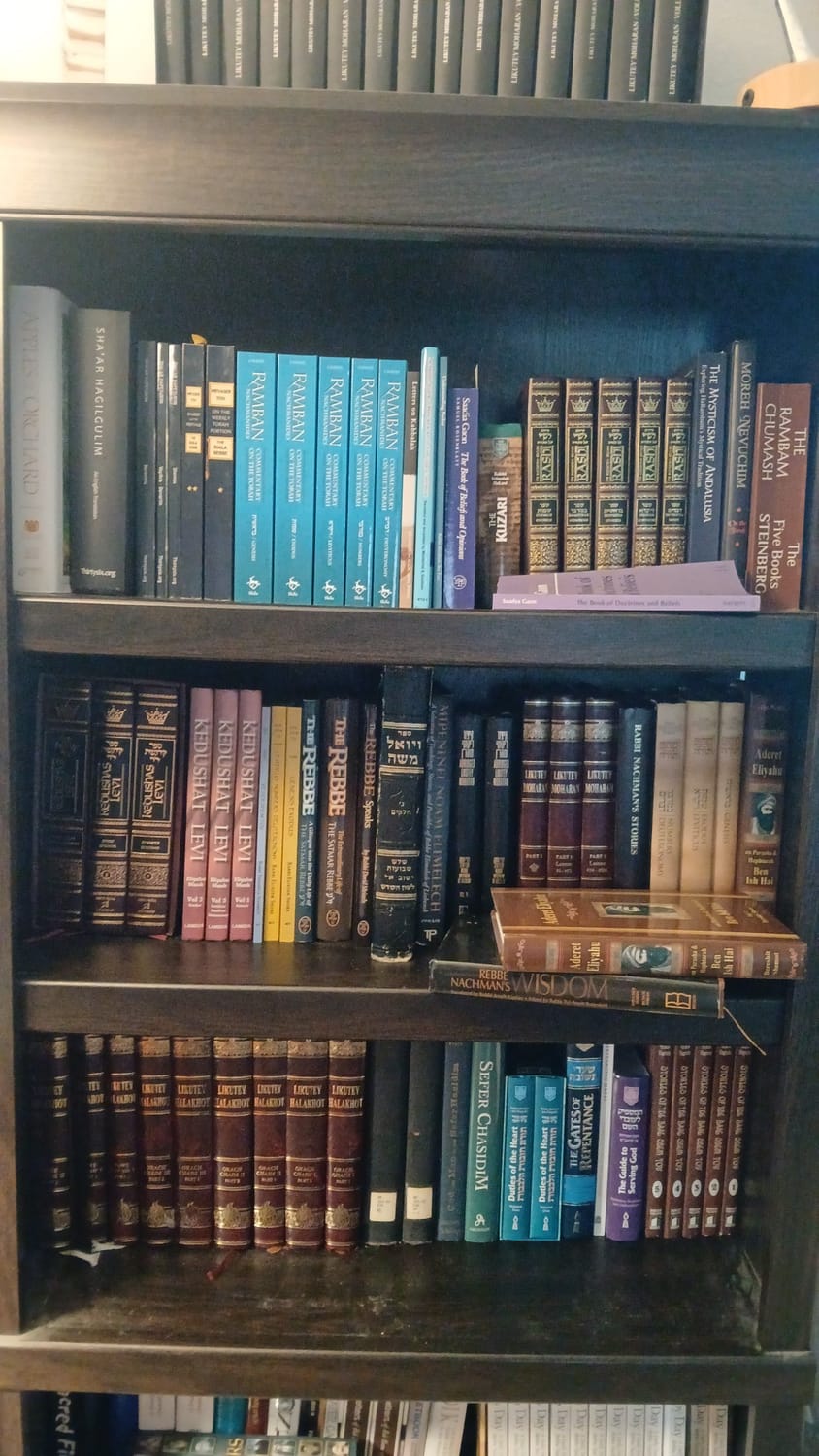
Now we come to the key point: this philosophy shelf is not arranged randomly.
It is arranged according to the Boreal Compass.
That means the shelf is not merely a collection of Jewish thought books. It is a map of Torah consciousness. The books are arranged to show the living movement between halacha, reason, nationhood, mysticism, devotion, joy, solitude, ethics, and teshuvah.
The Compass Method does not say that each figure belongs only in one narrow box. It is not a ranking system. It is not a competition between traditions. It is a teaching tool. It helps the student see where each stream of Jewish thought stands in relation to the others.
The shelf itself becomes a lesson.
North — The Order of Law
Rambam | Sefer HaMitzvot | Sefer HaChinuch
The North represents order, structure, and halachic precision.
Here stands the disciplined architecture of Torah life. The Rambam teaches that reason itself reflects divine order, and that the mitzvot are not arbitrary commands, but the ordered structure through which human beings are refined. In this direction, Judaism is coherent, disciplined, and universal in its logic. It shapes the intellect and governs human action.
This is the cold, clear northern light: precise, legal, ordered, and foundational.
Northeast — The Voice of Reason and Nation
Saadia Gaon | Rashi | Yehuda HaLevi | Ibn Ezra
The Northeast is where reason and covenant meet.
Here, intellect does not float alone. It lives inside the soul of Israel. Philosophy serves faith. Language serves revelation. Commentary serves the covenantal memory of the Jewish people.
Saadia Gaon gives rational defense. Rashi gives faithful explanation. Yehuda HaLevi gives the national soul of Israel through the Kuzari. Ibn Ezra gives sharp grammar, textual clarity, and disciplined interpretation.
This direction teaches that Judaism is not merely abstract thought. It is reason living inside the revealed history and destiny of Israel.
East — The Realism of Halakha
Mori Yiḥya Qafiḥ
The East is the Yemenite light of uncompromising realism.
Here, Torah is truth — not symbol by default, not metaphor by default, and not mysticism by default. Faith is grounded in knowledge, disciplined learning, and intellectual honesty. This is the line inspired by Mori Yiḥya Qafiḥ: loyal to the Rambam, careful with texts, resistant to superstition, and unwilling to confuse imagination with Torah.
God is not invented through fantasy. He is approached through knowledge, study, mitzvot, and disciplined practice.
This direction guards the Beis Midresh from spiritual exaggeration.
Southeast — The Discipline of Mystical Halakha
Ramban | Ben Ish Ḥai | Ari HaKadosh | Satmar
The Southeast is where mysticism bows before law.
Here, the hidden world is real, but it is not lawless. Depth is permitted, but never at the expense of halachic authority. The Ramban brings Torah, peshat, Kabbalah, covenant, and holiness together. The Ben Ish Ḥai shows Sephardic halachic spirituality woven with Sod. The Ari HaKadosh opens the deep structures of Kabbalah. Satmar represents fierce halachic and communal discipline, especially against spiritual movements that detach holiness from obedience.
This direction teaches that the secret is earned, not imagined.
Spiritual power without discipline becomes chaos. Mysticism without halacha becomes danger. But mysticism under halacha becomes depth.
South — Devotion Anchored in Law
Rebbe Nachman of Breslov | Shulchan Aruch
The South is the realm of sanctified emotion.
Here we encounter joy, tears, longing, teshuvah, brokenness, hope, and the cry of the soul. Rebbe Nachman teaches that no Jew is ever beyond return, that a person can speak to HaShem in the field, in the forest, in loneliness, and in pain.
But this devotion is not detached from law. The presence of Shulchan Aruch in this direction reminds the student that the heart may burn, but it does not escape Torah. Emotion must be anchored. Prayer must be embodied. Longing must be disciplined.
Here, law becomes melody.
Structure becomes song.
The soul burns, but the flame remains inside the vessel.
Southwest — Compassion and Joy
Baal Shem Tov | Levi Yitzḥak of Berditchev | Elimelech of Lizhensk | Biala | Kitzur Shulchan Aruch
The Southwest is the direction of warmth, compassion, joy, and accessible holiness.
This is Judaism for the simple Jew, the working Jew, the rural family, the person with calloused hands and a sincere heart. The Baal Shem Tov teaches that HaShem can be served with simplicity and joy. Levi Yitzḥak of Berditchev teaches us to defend Israel and search for merit. Elimelech of Lizhensk gives the path of tzaddikim, humility, and holy service. Biala adds inner Chassidic depth and emotional avodah.
The Kitzur Shulchan Aruch belongs here because this direction is not lawless warmth. It is practical, accessible, everyday halacha. It is the halacha of the home, the table, the worker, and the family.
This direction teaches that kindness is holiness, joy is avodah, and halacha can be lived gently without becoming weak.
West — Meditative Rationalism
Avraham ben HaRambam
The West is where intellect and solitude unite.
Here stands Avraham ben HaRambam, a bridge between rational clarity and inward devotional practice. This direction shows that rationalism does not have to be cold. It can become prayerful. It can become quiet. It can become disciplined solitude before HaShem.
This is hitbodedut before Breslov in a more Maimonidean key: devotion without fantasy, solitude without disorder, inwardness without abandoning reason.
In the West, thought becomes worship.
Reason learns when to kneel.
Northwest — Ethical Mysticism and Teshuvah
Rabbeinu Yonah | Baḥya ibn Paquda | Sefer Chassidim | Rabbi Meir of Rothenburg
The Northwest is where the soul turns inward through ethics, humility, and teshuvah.
Here, the highest mysticism is not visions or secrets. It is conscience. It is repentance. It is the trembling awareness that a person must become clean before HaShem.
Rabbeinu Yonah gives the path of teshuvah. Baḥya ibn Paquda gives the duties of the heart. Sefer Chassidim gives piety, moral seriousness, and spiritual sensitivity. Rabbi Meir of Rothenburg represents Ashkenazic discipline, communal responsibility, and legal-spiritual weight.
This direction teaches that ethics themselves become revelation.
Teshuvah becomes the bridge between heaven and earth.
The Compass therefore forms a circle:
Law becomes reason.
Reason becomes covenant.
Covenant becomes realism.
Realism disciplines mysticism.
Mysticism becomes devotion.
Devotion becomes joy.
Joy becomes solitude.
Solitude becomes teshuvah.
And teshuvah returns the soul to law.
So the shelf itself teaches.
A student looking at it sees that Jewish thought is not chaos. It is not a war between dry rationalism and uncontrolled mysticism. It is a living circle. The directions speak to one another. The mind and heart meet under Torah.
This is the Boreal Compass made visible in book form.
9. Why the Compass Matters for a Rural Beis Midresh
In a large Jewish city, a person may inherit Jewish atmosphere without thinking about it. There may be schools, shuls, kosher stores, rabbis, mikvaot, minyanim, bookstores, neighborhoods, and families all reinforcing Jewish life.
The culture carries the person.
But in a rural place, the person must become intentional.
A rural Jew cannot rely on Jewish atmosphere, because there may be very little Jewish atmosphere around him. There may be no daily minyan. There may be no kosher restaurant. There may be no local yeshivah. There may be no large Orthodox neighborhood. There may be no communal pressure keeping Shabbat, kashrut, prayer, and Torah study alive.
So the Beis Midresh must become the atmosphere.
The shelves must teach.
The order must teach.
The arrangement of the books must show the student where he is standing.
That is why the Compass Method matters. It tells the rural Jew: you are not spiritually homeless. You are not cut off from Klal Yisrael. Even here, in the quiet places, you are standing inside a map of Torah.
The student can look at the shelf and see:
North: Rambam, Sefer HaMitzvot, and Sefer HaChinuch teach order, mitzvot, and legal structure.
Northeast: Saadia Gaon, Rashi, Yehuda HaLevi, and Ibn Ezra teach that reason must live inside covenant, language, revelation, and Israel’s national soul.
East: Mori Yiḥya Qafiḥ teaches realism, intellectual honesty, and resistance to superstition.
Southeast: Ramban, Ben Ish Ḥai, Ari HaKadosh, and Satmar teach that mysticism must bow before halacha.
South: Rebbe Nachman and Shulchan Aruch teach that emotion, longing, and hitbodedut must be anchored in law.
Southwest: The Baal Shem Tov, Kedushat Levi, Elimelech of Lizhensk, Biala, and Kitzur Shulchan Aruch teach accessible holiness, compassion, joy, and practical Jewish life.
West: Avraham ben HaRambam teaches meditative rationalism, solitude, and disciplined inward prayer.
Northwest: Rabbeinu Yonah, Baḥya ibn Paquda, Sefer Chassidim, and Rabbi Meir of Rothenburg teach conscience, teshuvah, ethical refinement, and inner purification.
This creates stability.
It prevents spiritual homelessness.
It also protects the rural Beis Midresh from imbalance.
Without the North, the community can lose order.
Without the Northeast, it can lose the national soul of Israel.
Without the East, it can fall into superstition.
Without the Southeast, it can mishandle mysticism.
Without the South, it can become emotionally dry.
Without the Southwest, it can become elitist and cold.
Without the West, it can lose the sanctity of solitude.
Without the Northwest, it can forget teshuvah and ethical refinement.
The Compass teaches that a Torah community needs all these directions, but each in its place.
This is especially important for Shaarei Tzafon because a rural Beis Midresh cannot afford confusion. It must be simple enough for families, serious enough for scholars, gentle enough for beginners, and grounded enough to resist spiritual games.
The Compass gives the Beis Midresh a language of balance.
It says:
We are not only rationalists.
We are not only mystics.
We are not only Chassidim.
We are not only philosophers.
We are not only legalists.
We are not only poets.
We are Torah Jews standing inside the whole inheritance of Israel, arranged with order and humility.
And therefore a rural Beis Midresh can say:
Even here, above the 45th parallel, in the quiet places, Torah is whole.
The books are not scattered.
The derech is not confused.
The shelf is a map.
The map is a discipline.
And the discipline is meant to form Jews who can live Torah with clarity, trust, joy, humility, and strength.
10. Education as Protection, Not Suspicion
Education matters because education protects the family, the Beis Midresh, and the possible kehillah from confusion, manipulation, and misplaced energy.
This does not mean that every visitor is a threat. It does not mean that sincere Christians, neighbors, or curious people cannot ask questions. It does not mean that the Beis Midresh exists behind a wall of fear.
It means that Jewish learning must happen with order.
A person who does not know Torah structure can be easily confused. Someone can quote a verse and pull him away. Someone can use Hebrew words and impress him. Someone can dress Jewishly and deceive him. Someone can speak about “the roots of faith” while undermining halacha. Someone can use Kabbalah without mitzvot. Someone can use “love” without boundaries. Someone can use “community” to gain access.
But when a person is educated, he can discern.
He knows the difference between Torah and performance.
He knows the difference between halacha and personal opinion.
He knows the difference between minhag and obligation.
He knows the difference between Aggadah and law.
He knows the difference between sincere seeking and religious games.
He knows the difference between respectful questions and missionizing.
This is why the Beis Midresh must not be built only around inspiration. Inspiration without education is easily hijacked.
The Torah commands, “You shall teach them diligently to your children” — וְשִׁנַּנְתָּם לְבָנֶיךָ (veshinantam levanecha) — in Devarim 6:7. The Rambam opens Hilchot Talmud Torah by emphasizing the obligation to teach Torah. Education is not optional. It is how Israel survives.
For Shaarei Tzafon, education is not merely information.
It is protection.
It is formation.
It is the gatekeeper of trust.
This also means that teaching must be appropriate to the person and the situation. Not everyone needs access to every source, every machloket, every minhag, every kabbalistic meaning, or every inner debate of Jewish law. A sincere non-Jew who wants to understand Chanukah can be shown a good book on Chanukah. A Christian neighbor who wants to understand Shavuot can be given a simple explanation of Shavuot. A person asking about the Hebrew Bible can be guided through Torah, Tanakh, or a basic Jewish commentary.
Not every conversation needs to become a full tour through Sephardic, Ashkenazi, Chassidic, Yemenite, rationalist, mystical, and halachic disagreement.
Sometimes the simple path is the correct path.
One book.
One topic.
One honest conversation.
That is enough.
Traditional Christians from established communities — Catholic, Orthodox Christian, Lutheran, Presbyterian, Anglican, Methodist, Mennonite (including Amish), and similar historic traditions — can often be approached as neighbors and conversation partners when they come respectfully. Many are simply trying to understand the Hebrew Bible, Jewish history, or the background of Scripture. If they are not missionizing, not undermining Judaism, and not trying to pull Jews away from Torah, then there is no need for hostility.
But there is a difference between respectful inquiry and using Jewish learning as fuel for another religious agenda.
The Beis Midresh cannot become a place where people come to collect Jewish information in order to strengthen ideas that ultimately reject Torah Judaism. It cannot become a place where Jewish sources are used against Jewish life. It cannot become a place where the family is forced into endless debates about Israel, covenant, law, identity, prophecy, plagues, replacement theology, or who has the right to define Torah.
We do not have the time, strength, finances, or infrastructure for that.
So education protects the door.
It allows kindness without naivety.
It allows conversation without surrender.
It allows invitation without confusion.

11. The Possible Kehillah: Open Door, Guarded Threshold
A possible קְהִלָּה (kehillah — community) is a seed, not a finished tree.
It must be watered slowly.
A kehillah cannot be forced into existence by excitement. It cannot be manufactured through branding. It cannot be created merely by owning books, giving lectures, or gathering people into a room. A real kehillah forms when people become trustworthy together over time.
The Mishnah says, “Do not separate yourself from the community” — אַל תִּפְרֹשׁ מִן הַצִּבּוּר (al tifrosh min hatzibbur) — in Pirkei Avot 2:4.
But where no stable community exists yet, the first task is to become the kind of people from whom a community can be formed.
That requires patience.
It requires boundaries.
It requires repeated faithfulness.
The door is not locked, but the threshold is guarded.
This distinction matters.
We are not saying that people are not invited. We are saying that entry must happen properly. A meeting can be set up. A person or family can meet with me, or with me and my wife, and we can talk honestly. We can see whether there is respect, seriousness, stability, and a shared direction.
At this stage, however, we must distinguish between hospitality, learning, davening, friendship, conversion interest, and kehillah development. These are not all the same thing.
When we say hospitality, we mean basic kindness, dignity, and menschlichkeit. A person may be treated warmly, offered conversation, welcomed at an appropriate table or public setting, and treated as a neighbor. Hospitality does not automatically mean access to the inner life of the Beis Midresh or participation in forming the kehillah.
When we say learning, we mean structured study appropriate to the person and situation. A Jew may learn Torah, halacha, siddur, Jewish practice, and deeper sources according to his or her level. A respectful non-Jew may sometimes learn about the Hebrew Bible, Jewish holidays, Jewish history, or basic Jewish concepts. But learning does not automatically mean communal membership.
When we say davening, we mean Jewish prayer in its proper setting. A Jew who needs a place to pray, join appropriate tefillah, or connect to the Siddur should be treated with dignity. Davening is primarily the prayer-life of Jews and those seriously moving into Jewish life under proper guidance. A respectful non-Jew may observe or ask questions in appropriate settings, but observation is not the same as belonging to the prayer-community.
When we say friendship, we mean ordinary human relationship: kindness, respect, neighborliness, and honest conversation. We can be friends with people of different backgrounds, including traditional Christians and respectful non-Jews. Friendship does not mean that the Beis Midresh becomes an interfaith institution, nor does it mean that every friend becomes part of the developing kehillah.
When we say conversion interest, we mean someone who is seriously exploring becoming Jewish. But interest alone is not the same as being in the community. A person may be curious about conversion, ask questions, or begin learning, but that must be handled carefully and under proper halachic guidance. At this stage, conversion interest does not automatically give a person access to the inner development of the Beis Midresh.
When we say kehillah development, we mean the inner work of forming a real Jewish community: building trust, creating stable Jewish homes, supporting davening, strengthening Torah learning, raising children in Jewish life, developing shared standards, and discerning who can help carry the responsibility of the Beis Midresh. This level requires more than curiosity. It requires Jewish belonging, serious movement toward Jewish life, halachic respect, stability, trust, and repeated faithfulness.
So these categories must not be confused.
A person may be welcomed with hospitality without being part of kehillah development.
A person may attend a lesson without belonging to the inner circle.
A person may ask about conversion without yet being part of the community.
A person may be a friend without being part of the Beis Midresh.
A Jew who needs davening and Torah connection stands in a different category from a non-Jew who is merely curious about Judaism.
And a family seriously building Jewish life stands in a different category from someone borrowing Jewish ideas for another religious purpose.
This distinction protects kindness from becoming confusion.
It protects learning from becoming manipulation.
It protects friendship from becoming entitlement.
And it protects the possible kehillah from forming without trust.
All Jews are welcome.
A fellow Jew is welcome. Any Jew who sincerely needs a place to daven, learn, or connect to Torah should be treated with dignity when Jewish status is established and the setting is appropriate. A Jew does not need to be married in order to matter to the Beis Midresh. A single Jewish man, a single Jewish woman, a widowed Jew, a divorced Jew, an older Jew, or an isolated Jew who sincerely wants to grow in Torah should not be pushed away.
If there is a Shavuot lesson, a Chanukah discussion, a parashah class, or a small group learning session, single Jews are welcome when the setting is respectful and appropriate. An older Jewish woman who needs a place to pray is not turned away. An older Jewish man who needs a place to daven is not turned away. A Jew who is isolated and sincerely seeking Torah connection matters deeply.
That is part of the reason this Beis Midresh exists.
For the development of the kehillah itself, the focus at this stage is on sincere Jews, Jewish families, families seriously pursuing conversion under proper halachic guidance, and interfaith families in which the non-Jewish spouse is seriously moving toward conversion and a stable Jewish home. This means people who are serious about Torah, halacha, davening, learning, and building a durable Jewish life. This includes single Jews. A single Jew who is trying to live a holy Jewish life, deepen observance, daven, learn, and strengthen the future of Jewish life in the area can be part of the development of the kehillah. The boundary is Jewish belonging, seriousness, holiness, and trust.
At the same time, Jewish families, especially families with children, are especially important for the growth of a rural kehillah. A community needs homes, Shabbat tables, children, education, continuity, and future generations. Without children and households, a kehillah can easily become only a study circle. Families help a community grow roots.
The guarded boundary
The guarded boundary is mainly about non-Jewish individuals who are merely interested in Judaism, curious about conversion, or drawn to Jewish practice, but who are not yet living within Jewish life or under a serious halachic process. At this stage, non-Jewish single individuals are not part of the inner development structure of the Beis Midresh or possible kehillah.
This is not a judgment on their worth as human beings. It is a practical boundary. With only one, two, or three Jewish families, without staff, funding, security, broader communal infrastructure, or formal educational systems, we cannot safely absorb every person who is curious about Judaism.
Respectful non-Jews may attend certain teachings, discussions, or structured learning opportunities when appropriate. A sincere person may ask questions. A neighbor may learn about Chanukah, Shavuot, Torah, or Jewish history. But attending a lesson is not the same thing as becoming part of the inner development of the kehillah.
This is not unusual or unfair. Every serious religious tradition understands that admiration is not the same as belonging, and interest is not the same as authority.
Could a Lutheran pastor simply become a Catholic priest without entering Catholic life, submitting to Catholic authority, and going through the proper Catholic process?
The Answer is No.
Could a Baptist minister walk into an Eastern Orthodox parish and begin serving as its priest without reception, formation, ordination, and the blessing of a bishop?
The Answer is No.
Could a Seventh-day Adventist preacher run an Amish church while remaining outside Amish life, Amish discipline, and Amish community structure?
The Answer is No.
Could a charismatic evangelical pastor take charge of a Presbyterian church without being received through Presbyterian order, doctrine, and church governance?
The Answer is No.
Could a non-denominational pastor simply take over an Anglican parish without episcopal authorization, licensing, and accountability?
The Answer is No.
Could a Catholic layperson decide to lead a Lutheran congregation as its pastor without Lutheran recognition, training, call, and ordination?
The Answer is No.
Could a Methodist minister become a Mennonite pastor without being received through Mennonite discernment, credentialing, and accountability to that community?
The Answer is No.
Could an Orthodox Christian priest simply become a Baptist pastor without entering Baptist doctrine, practice, and congregational recognition?
The Answer is No.
Could an Amish bishop lead a Pentecostal congregation while ignoring Pentecostal beliefs, worship, and leadership structure?
The Answer is No.
Could a Presbyterian elder become the pastor of a Catholic parish while remaining Presbyterian?
The Answer is No.
Can a Muslim run a synagogue as a synagogue?
The Answer is No.
Can a Jew run a mosque as a mosque?
The Answer is No.
Can a Zoroastrian operate a church as a church?
The Answer is No.
In every serious tradition, there are boundaries. There is formation. There is authority. There is belonging. There is a difference between visiting, learning, friendship, and actually helping form or lead a religious community.
Catholic sources themselves recognize that former Protestant ministers who seek Catholic priesthood require proper Catholic formation and ordination, not simple transfer of status; Seventh-day Adventist church authority is represented through official credentials and licenses; Presbyterian congregations function under presbytery authority; Mennonite ministers go through a credentialing process; and Anglican/Episcopal clergy require proper canonical authorization to minister within that church.
So the answer is no: this cannot happen in serious Christianity, and it cannot happen in Judaism either.
In the same way, how can someone who is not Jewish, not living under Torah, not dedicated to halacha, and not committed to Judaism on its own terms become part of the inner development of a Jewish kehillah? They may be treated with respect. They may attend certain teachings. They may ask questions. They may be friends and neighbors. But they cannot help form the inner life of the Beis Midresh unless they are truly moving into Jewish life through proper halachic guidance.
Likewise, a non-Jewish family that is extremely serious about conversion, becoming Jewish, and living a real Jewish life under Torah and halacha may be considered carefully and case by case. But this is very different from someone who merely admires Judaism, borrows Jewish practices, or observes selected commandments inside another religious identity.
So the door is open, but not all doors are the same.
There is a door for all sincere Jews who want to grow.
There is a door for Jewish families building Torah homes.
There is a door for single Jews who are serious about holiness, davening, learning, and Jewish life.
There is a door for Jews who need a place to daven.
There is a door for occasional respectful learning with non-Jews.
There is a narrower door for conversion-oriented families whose lives are truly moving toward Torah Judaism.
And there is a guarded threshold around the inner formation of the Beis Midresh and possible kehillah.
This is not about exclusion.
It is about order.
It is about trust.
It is about knowing the difference between hospitality, friendship, learning, prayer, conversion interest, and communal formation.
A family-rooted Beis Midresh has to recognize its limits. Without staff, security, communal infrastructure, clear social systems, and outside support, certain situations can become complicated very quickly.
A person may enter a family space and begin to desire the order, peace, marriage, home, learning, or spiritual structure that he sees there. Sometimes that desire can become unhealthy. A person may try to step between spouses, create emotional dependency, imitate the home, compete with the family, or disrupt the peace of the Beis Midresh.
This is not always malicious.
But it is real.
And we do not currently have the infrastructure to manage those situations safely.
So the questions are simple:
Who shows up consistently?
Who respects the family?
Who respects Torah?
Who does not missionize?
Who does not manipulate?
Who can learn without performing?
Who can disagree without attacking?
Who can keep private things private?
Who can honor the books, the home, the children, the marriage, the table, and the peace of the Beis Midresh?
At this stage, the invitation is real, but guarded.
A meeting can be arranged.
Conversation can happen.
Simple learning can happen.
Respectful questions can be asked.
But no one is entitled to the inner circle merely because they are curious, intense, religious, lonely, or enthusiastic.
A kehillah without trust is not a kehillah.
It is merely a gathering.
And sometimes a gathering can become dangerous.
Therefore, the possible kehillah must grow slowly: with education, guarded hospitality, family stability, halachic clarity, and trust.
Not fear.
Not hostility.
Not suspicion of everyone.
But wisdom.
First trust.
Then learning.
Then relationship.
Then, perhaps, kehillah.
12. The Final Vision: The Bookshelf as the Architecture of a Future Community
When all the sections are seen together, the Beis Midresh
becomes more than a library.
It becomes an architecture of Torah life.
The first shelf says:
Torah, prayer, sacred time.
The second shelf says:
Mitzvot, halachic drashot, Talmud, Chinuch, Mishneh Torah.
The practical halacha shelf says:
Sephardic, Ashkenazi, Chassidic, family practice, women’s halacha, lived Judaism.
The Aggadah and Sod shelf says:
Midrash, story, moral imagination, mystical depth, but with boundaries.
The philosophy shelf arranged by the Compass says:
Rationalism and mysticism, halacha and emunah, Mussar and Chassidut, Rambam and Rebbe Nachman, Ramban and Ramchal, Kuzari and Ben Ish Chai — all placed in ordered relationship.
This is not random.
It is the visible soul of the Beis Midresh.
It says to every serious person who enters:
We are prepared.
We have the books.
We have the structure.
We have the derech.
We have the education.
We have the boundaries.
What we do not have is sacred time to waste on games.
And that is holy.
A real Beis Midresh does not exist to entertain spiritual tourists. It exists to strengthen families, teach Torah, guard halacha, awaken the soul, and perhaps — slowly, carefully, with HaShem’s help — become the root of a real kehillah.
Mishlei teaches:
בְּאָזְנֵי כְסִיל אַל־תְּדַבֵּר, כִּי יָבוּז לְשֵׂכֶל מִלֶּיךָ
Be’oznei kesil al tedabber, ki yavuz le-sekhel millekha
“Do not speak in the ears of a fool, for he will despise the wisdom of your words.”
Mishlei / Proverbs 23:9
And again:
אַל־תּוֹכַח לֵץ פֶּן־יִשְׂנָאֶךָּ; הוֹכַח לְחָכָם וְיֶאֱהָבֶךָּ
“Do not rebuke a scoffer, lest he hate you; rebuke a wise person, and he will love you.”
Mishlei / Proverbs 9:8
The Mishnah also teaches:
אֵין דּוֹרְשִׁין
“One may not expound” certain deeper matters except under proper conditions.
Mishnah Chagigah 2:1
This is not contempt for people. It is reverence for HaShem, Torah, halacha, and Judaism.
We have learned, painfully, that precious Torah — the mirror of HaShem and the words of His covenant — must not be placed before those who will only despise it (which many have), misuse it (which many have), trample it like animals (which many have), or twist it into another agenda (which many have). We have seen that before. We have given sacred time, sacred teaching, and sacred trust to people who did not want Torah Judaism on its own terms.
We will not do that again.
The pearls of Torah, halacha, and Judaism as a whole must be given to those who can receive them with humility, reverence, and responsibility.
First Torah.
Then trust.
Then education.
Then shared practice.
Then possible kehillah.
Then, perhaps, if HaShem blesses the work, a living community will grow around the well.
For those interested in Northeast Michigan please email (email address is below) us or contact us on Facebook....
The Beis Midrash, the Possible Kehillah, Trust and Education
Building Torah Study and Traditional Jewish Community in Northeastern Michigan
Can a small, family-rooted Beis Midrash become the foundation of a genuine Orthodox Jewish community in a region where established Jewish infrastructure is limited?
The answer begins not with a building, a large membership, or an elaborate institution, but with Torah, Halakhah, education, and trust.
In this teaching, Rabbi Ariel Manning examines the foundations necessary for establishing a serious Jewish learning environment in rural Northeastern Michigan. A Beis Midrash is more than a collection of sacred books. It is a place where the study of Torah shapes Jewish identity, religious responsibility, family life, and devotion to HaShem.
The educational foundation begins with Chumash, Siddur, and Machzor, continuing through Mishnah, Gemara, Midrash, the Geonim, Rambam's Mishneh Torah, and practical Halakhah. Sephardic, Ashkenazic, Yemenite, and Chassidic traditions contribute to a broader understanding of legitimate Jewish practice and inherited minhagim.
The Boreal Compass further organizes Jewish philosophy, Mussar, rationalism, mysticism, and devotion into a coherent educational framework. The purpose is not merely to accumulate information, but to cultivate Jews who understand their religious obligations and can transmit Torah faithfully.
Yet Torah education alone cannot establish a lasting kehillah. A community also requires trust, stability, mutual respect, and appropriate boundaries.
Shaarei Tzafon welcomes sincere Jews seeking Torah learning, including individuals and families who may otherwise feel isolated in Northern Michigan. Serious conversion-oriented families may also be considered according to appropriate halakhic guidance.
At the same time, the family-rooted Beis Midrash is not an unrestricted public institution or an interfaith ministry. Meetings must be arranged in advance, and participation in the development of a future kehillah requires a genuine commitment to Jewish life.
These boundaries protect the family, the educational mission, and the possibility of building something lasting.
For Alpena, Hillman, Rogers City, Posen, Lachine, Hubbard Lake, and surrounding communities, this represents an approach to rebuilding traditional Orthodox Jewish life from the ground upward.
A small study circle may eventually become a Beis Midrash. A Beis Midrash may help establish relationships. And those relationships, carefully cultivated over time, may become the foundation of a functioning kehillah.
The central message: First Torah, then trust, then learning together, and eventually, with HaShem's help, a genuine Jewish community.
The goal is not simply to gather people. It is to cultivate a responsible, educated, and enduring Orthodox Jewish life.
Published by Shaarei Tzafon — The North Gate, an independent, family-led Orthodox Jewish educational and publishing initiative based in Northeastern Michigan, serving Alpena, Hillman, Rogers City, and surrounding communities.
Shaarei Tzafon promotes traditional Jewish life, Torah study, practical Halakhah, and the renewal of independent Jewish learning communities throughout the northern boreal regions, extending from the 45th parallel toward the Arctic tundra.
Article: https://www.shaareitzafon.org/the-beis-midresh-the-possible-kehillah-trust-and-education
Shaarei Tzafon — The North Gate
Orthodox Jewish Life and Torah Study in Northeastern Michigan
Shaarei Tzafon — The North Gate, led by Rabbi Ariel Manning, is an independent, family-led Orthodox Jewish educational and publishing initiative based in Northeastern Michigan. We support traditional Jewish life, Torah study, Halakhah, and Jewish education throughout Alpena, Hillman, Rogers City, and surrounding communities. Those interested in traditional Judaism are welcome to contact us for educational resources, Torah learning, and opportunities for discussion by prior arrangement.
Rooted locally, our greater mission extends northward from the 45th parallel — The North Gate — through Michigan, Canada, and Alaska toward the Arctic. We seek to encourage independent Jewish communities, family-centered Torah education, and the renewal of small batei midrash and shtieblach, preserving the rich traditions of Orthodox Judaism for future generations.
Our work begins in Northeastern Michigan, but our vision extends from the 45th parallel toward the Arctic.
Guided by Rambam and Mori Qafiḥ, uplifted by Rebbe Nachman, and grounded by Avraham ben HaRambam’s balance of halakha and inward avodah.
The Orchard’s Path
publishes our books and curricula.
Our mission: a bright, authentic Jewish presence in every northern town.
Created with ©systeme.io


