
The Unknown in the Sky: Torah, UFOs, Reptilians, and the Halachic Question of “What Are They?”
B"H
1. The Article and the Old Fear of the Heavens
I recently came across an article claiming that pastors have been warned that future UFO or UAP files may challenge core Bible beliefs. Whether this article proves anything is not the main point. It does not prove aliens exist. It does not prove that governments are about to reveal non-human craft. It does not prove that pastors were truly briefed. But it does reveal something very old and very human: mankind is still afraid of the unknown.
For time immemorial, human beings have looked upward and seen things they could not explain. Lights in the sky. Blips in the heavens. Fiery movements. Strange signs. Ancient man looked up with awe. Modern man looks up with radar, satellites, classified language, military footage, and government hearings.
But the emotional question is the same:
What is out there?
The Torah begins with the vastness of creation:
בְּרֵאשִׁית בָּרָא אֱלֹקִים אֵת הַשָּׁמַיִם וְאֵת הָאָרֶץ
Bereishit bara Elokim et ha-shamayim ve’et ha-aretz
“In the beginning, God created the heavens and the earth.”
The heavens come first. Man is not placed in a small, empty universe. He is placed beneath mystery.
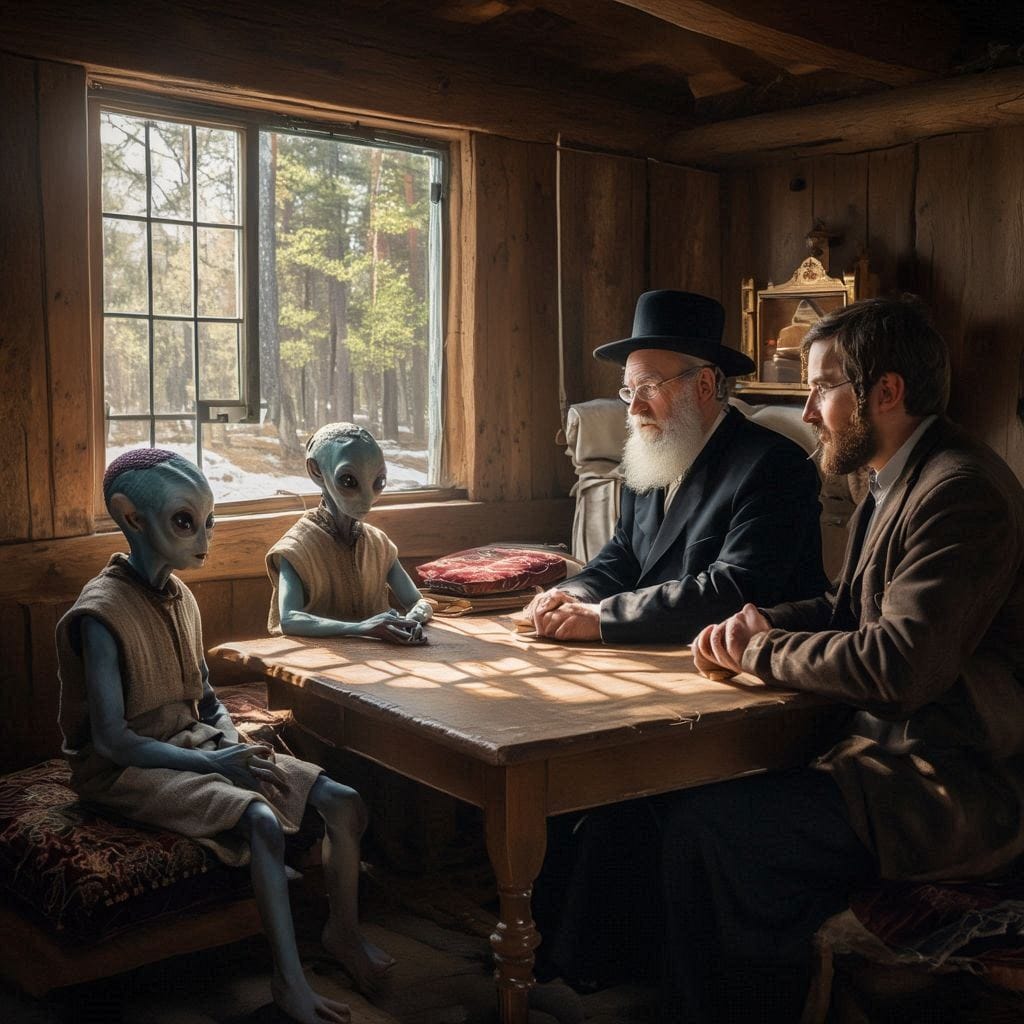
2. Why This Shakes Some Christians More Than Jews
The article says some pastors are worried that UFO disclosure could challenge “core Bible beliefs.” In some Christian circles, this is because their theology often centers on a very specific reading of creation, humanity, original sin, incarnation, and salvation.
If intelligent life exists elsewhere, some Christians may naturally ask serious theological questions: How would such beings fit into the Christian understanding of creation? Would they share in humanity’s fall? Would they need redemption? Would they be connected to Adam? Would they possess souls? Would they be understood as made in the image of God?
These are not foolish questions. They are serious questions that arise from within certain Christian theological systems — though certainly not all Christians would answer them the same way.
And this is where Judaism and Christianity approach the matter differently.
We are not saying the Christian approach is wrong simply because it is Christian. We are saying that Jews have a different covenantal and theological framework. Christianity has its own doctrines, its own sacred story, and its own way of understanding humanity, creation, and redemption. Judaism has another.
At the same time, we should say clearly: we stand with our fellow Christians against the over-secularization of the world. In an age that often mocks faith, dismisses clergy, and treats spiritual questions as childish, I am glad when pastors, priests, ministers, and religious leaders take seriously their duty to prepare their people. Faith is central to the human experience.
Religious communities need shepherds who can help people face mystery without losing their moral and spiritual footing.
Judaism, however, asks a different set of questions.
Judaism is not built around original sin in the Christian sense. Judaism is not built around incarnation. Judaism is not built around one universal redemptive event in the Christian theological structure. Torah Judaism begins with covenant, commandment, obligation, holiness, and halacha.
So Judaism asks:
What did HaShem command? Who is obligated? What is the halachic category? What is permitted? What is forbidden? What is holy? What is dangerous? What is idolatry?
Therefore, if strange beings exist, Judaism does not need to collapse into panic.
Judaism investigates.
It classifies.
It tests.
It asks what this thing is within creation, and how the Torah teaches us to respond.
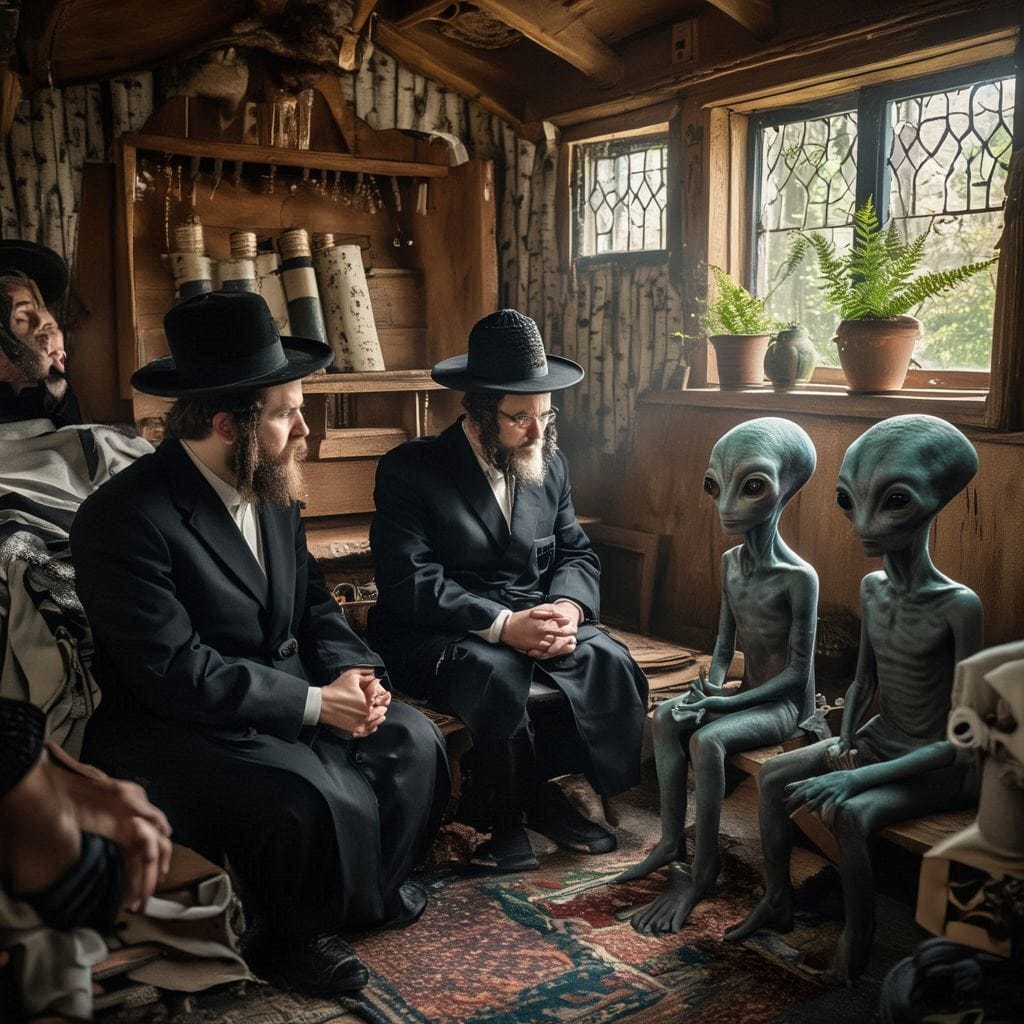
3. The Rumor: Pastors, Disclosure, and Reptilian Creatures
Now we add the deeper rumor circulating in disclosure circles. A preacher is claiming that U.S. pastors have been quietly told to prepare their congregations because government files on non-human craft and reptilian creatures may be coming.
According to this rumor, clergy at high levels of several denominations have allegedly been warned that an announcement is imminent, one that could challenge foundational beliefs about humanity’s origins and its relationship with non-human intelligence.
Again, we must be careful.
A rumor is not evidence.
A claim is not testimony.
An unnamed preacher is not a beit din.
Still, the idea is fascinating, because it forces us to ask what religion does when confronted with something unknown.
Some people believe genuine disclosure is breaking through government resistance and that religious leaders are being brought in to soften the cultural shock. Others argue that staged disclosure itself could be a control mechanism, designed to reframe an ancient relationship in whatever way best serves the next phase of human management.
Whether true or false, the question is spiritually serious:
How should Torah people respond to the unknown?
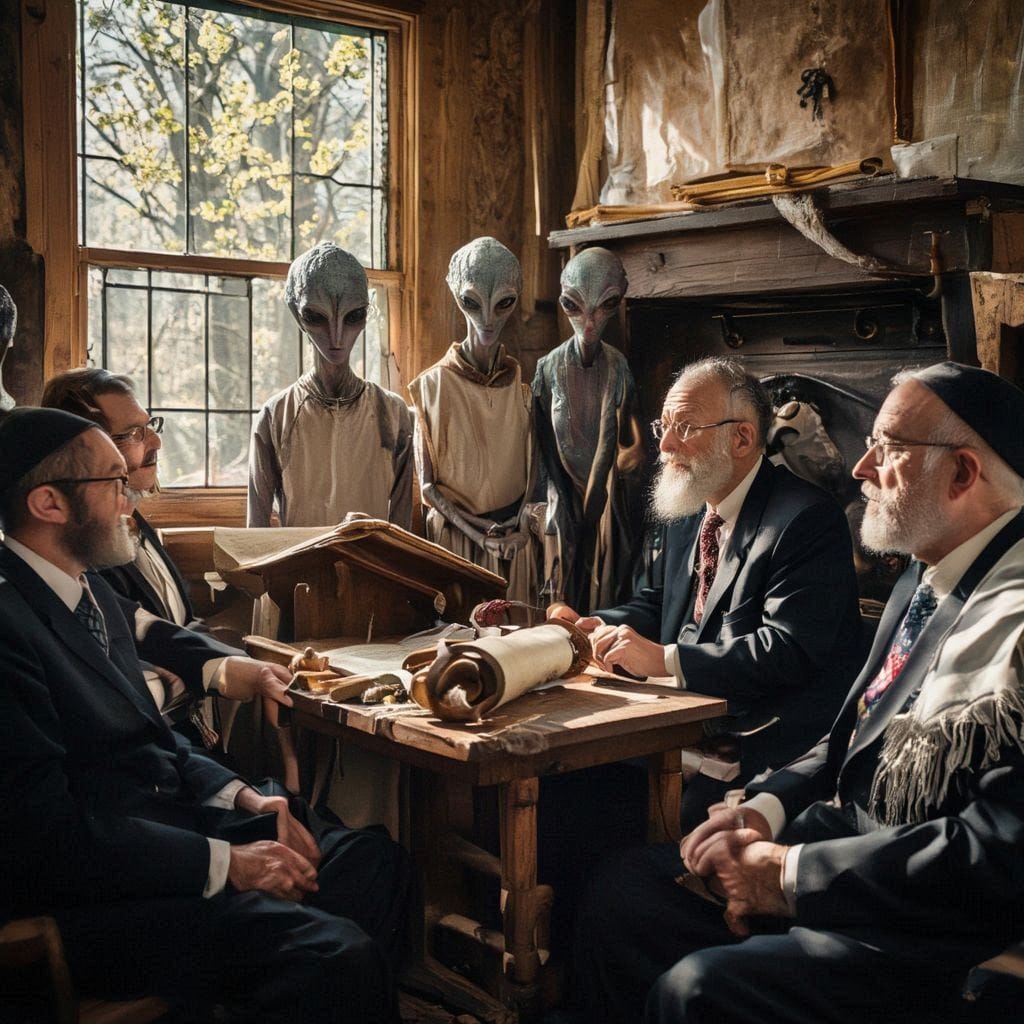
4. The Stronger Claim: Not Visitors, but Jailers
Some conspiracy writers go further. Their argument is blunt: if official disclosure frames these beings through a religious lens, that framing may itself be the trap. According to this view, the force behind human control did not merely visit Earth. It built the cage.
In this theory, certain non-human beings are described as partially reptilian, interdimensional, ancient, and connected with systems of worldly power. Some claim that military and former military personnel have described direct interaction with reptilian entities and beings commonly called the Greys. Not only in the sky, but underground. Deep underground military bases, often called DUMBs in conspiracy circles, are described in this narrative as places where these interactions allegedly occurred for generations.
The conclusion of that theory is severe: the government has not merely hidden truth from the public. It has implemented a plan alongside these entities. Therefore, any official disclosure would not be simple truth-telling. It would be theater.
Torah Judaism does not accept claims merely because they are dramatic. Drama is not evidence. Fear is not proof. Mystery is not prophecy.
But we can still examine the structure of the fear.
The fear is not only, “Are there aliens?”
The deeper fear is:
Are human beings being managed?
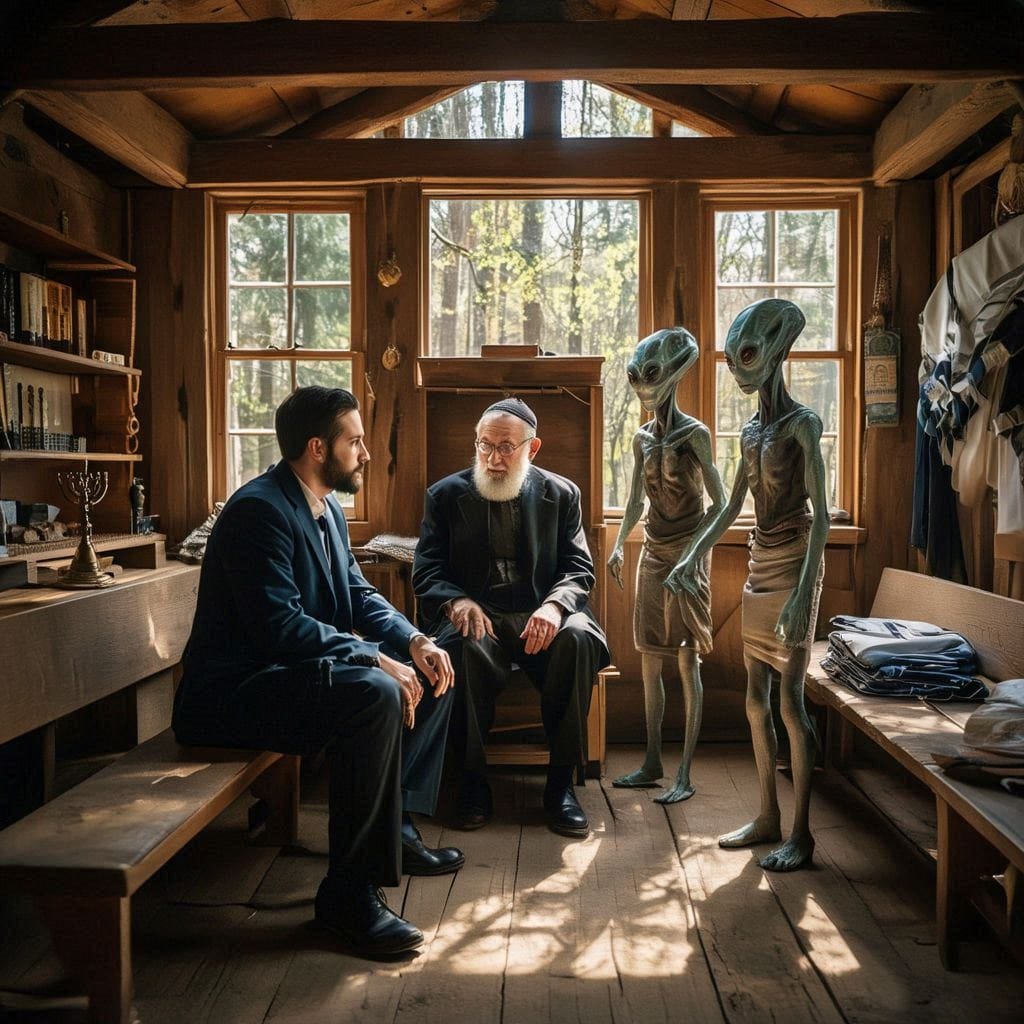
5. Torah Does Not Worship the Unknown
Judaism gives us a strong answer: even if such beings existed, they are still creatures.
They are not gods.
They are not above HaShem.
They are not outside creation.
They are not a new Torah.
They are not a replacement for Sinai.
This is critical. Paganism trembles before the sky. Idolatry worships the strange. Cults build religions around secret beings, hidden masters, cosmic saviors, or terrifying entities. Torah forbids this.
The Jew may look at the heavens and say, “I do not know what that is.”
But he must also say, “I know Who created the heavens.”
מָה רַבּוּ מַעֲשֶׂיךָ ה׳
Mah rabu ma’asekha HaShem
“How many are Your works, HaShem”
The unknown is not God.
The sky is not God.
The stars are not God.
Angels are not God.
Demons are not God.
Reptilian beings, if they existed, would not be God.
HaShem alone is God.
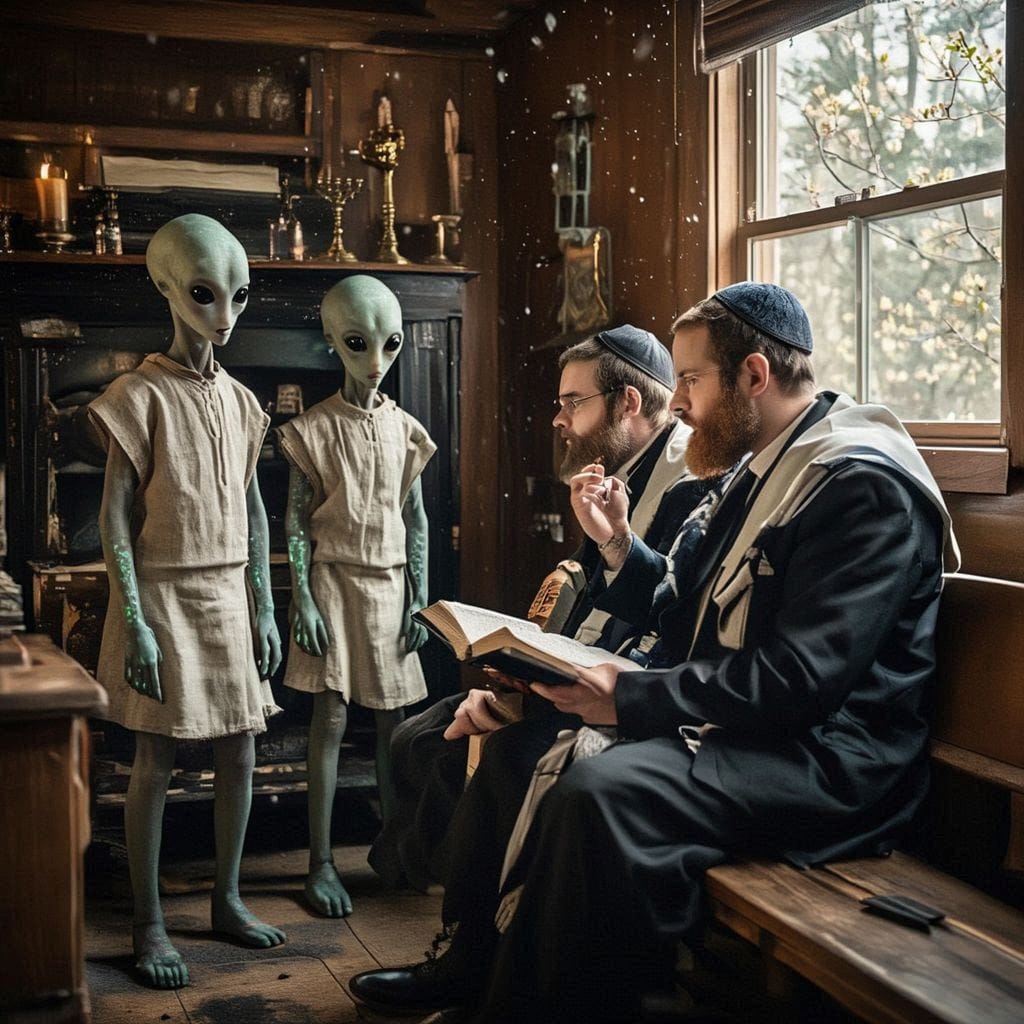
6. Judaism Already Has Categories Beyond Ordinary Man
People sometimes think religion becomes fragile when reality becomes strange. But Judaism has never taught that reality is simple.
Tanakh and rabbinic literature already speak of angels, messengers, heavenly visions, shedim, mazalot, prophetic dreams, fiery chariots, and hidden dimensions of creation. Yechezkel sees a vision that is overwhelming. Yaakov sees a ladder between heaven and earth. Elisha sees fiery horses and chariots. Chazal discuss beings and forces that ordinary people do not normally perceive.
So the Jewish mind is not shocked by the idea that creation may contain realities beyond ordinary human experience.
But Judaism also demands caution. Not every strange experience is prophecy. Not every vision is holy. Not every supernatural claim is true. Not every being, if it exists, should be trusted.
Torah gives us sobriety.
This is why Judaism is not hysteria.
Torah is not panic. Torah is order.
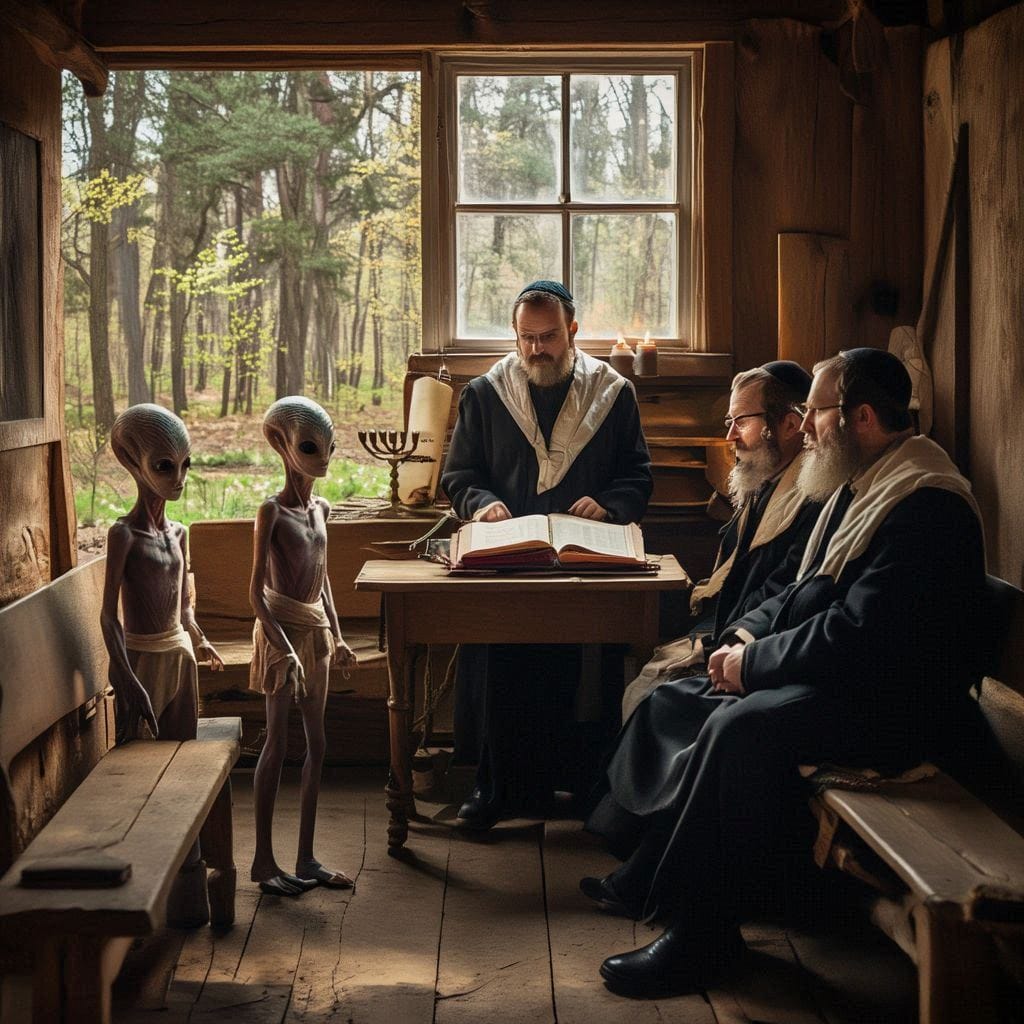
7. The Real Question: What Are They?
Now we reach the real issue.
What are they?
Are they angels?
Are they demons?
Are they animals?
Are they intelligent creatures?
Are they physical beings?
Are they spiritual beings?
Are they interdimensional beings?
Are they military technology?
Are they psychological operations?
Are they illusions?
Are they atmospheric phenomena?
Or are they something for which we currently have no category?
This is where Judaism becomes very powerful, because Judaism does not first ask, “How does this affect my feelings?” Judaism asks, “What is this according to halacha?”
Until we know what something is, we cannot know what law applies to it.
A cow, a dog, a human being, an angel, a demon, a corpse, a machine, and a hallucination are not treated the same way in halacha.
Classification matters.
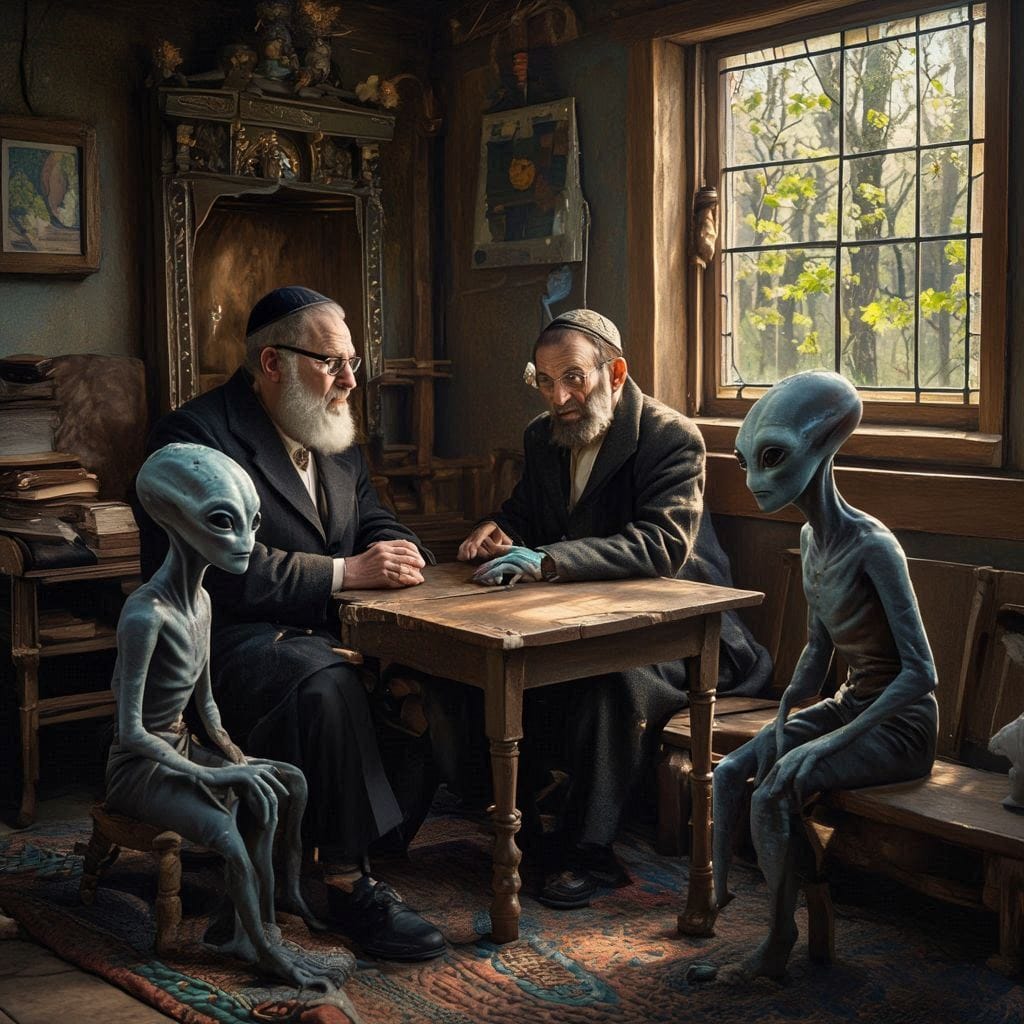
8. If They Are Reptilian, Are They Animals?
Now to the direct question: if they are reptilian, are they animals?
The answer is: not automatically.
In ordinary biology, a reptile is an animal. If a creature is simply a physical reptilian life-form, then yes, it would be a בעל חי — ba’al chai, a living creature, an animal. It would not be Jewish. It would not be obligated in Torah like Israel. It would not be part of the covenant at Sinai.
But if the claim is that these beings are intelligent, morally aware, language-using, technologically advanced, and capable of intention, then halacha would need to ask deeper questions.
Are they merely animals with intelligence?
Are they like humans but not descended from Adam?
Are they a separate created species?
Are they comparable to shedim (Demons), which rabbinic literature sometimes portrays as strange beings with mixed qualities?
Are they physical creatures with spiritual powers?
Are they dangerous beings that must be treated under the laws of harm, threat, and self-protection?
So “reptilian appearance” alone does not settle the question.
A being’s skin does not define its halachic category.
Its nature does.
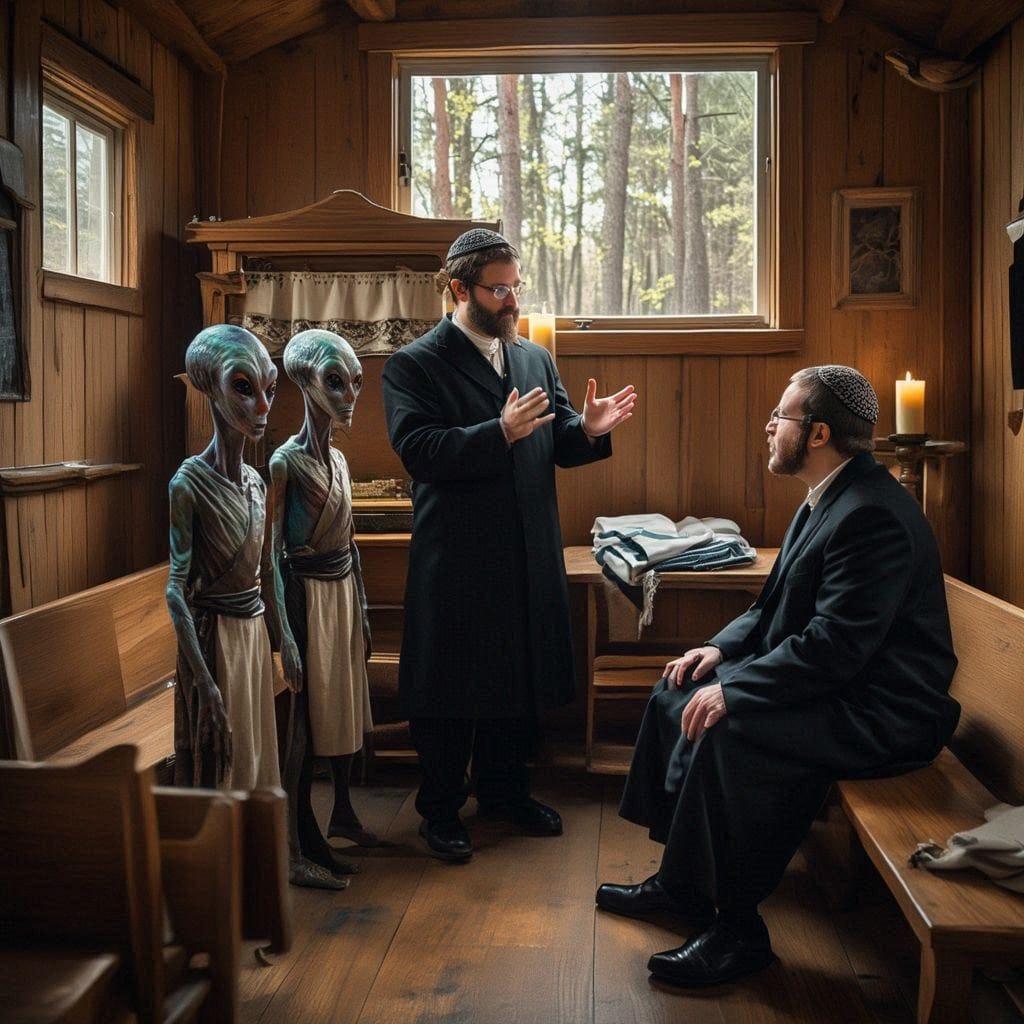
9. The Halachic Mind Versus the Conspiracy Mind
This is where Torah must guide the conversation. The conspiracy mind says, “They are hiding everything, therefore believe the most dramatic explanation.” The secular mind says, “Nothing exists unless officially confirmed.” The cultic mind says, “These beings are our masters, saviors, gods, or secret rulers.”
The halachic mind says: slow down.
What is the evidence?
Who is testifying?
What was actually seen?
Can it be verified?
Is it physical, spiritual, technological, or psychological?
Is it dangerous?
Does it lead people away from HaShem?
Does it produce idolatry, fear, manipulation, or false religion?
Torah does not require naïveté. Governments can lie. Institutions can manipulate. Powerful people can hide information. But Torah also forbids foolishness, hysteria, and idolatrous obsession.
A Jew must not be gullible.
A Jew must not be spiritually drunk on mystery.
A Jew must stand calmly in the world and say: HaShem rules creation, and halacha teaches us how to walk through it.
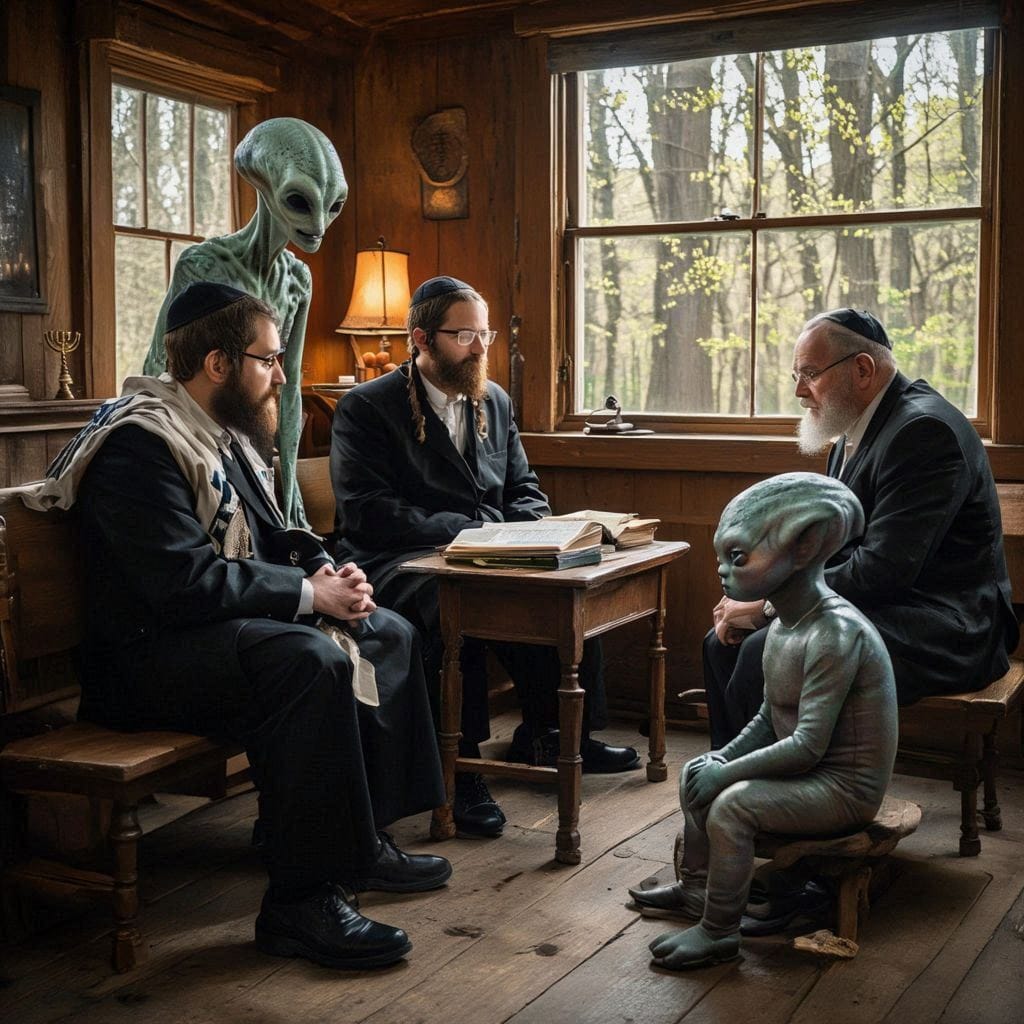
10. The Calm Mind Beneath the Terrifying Stars
So if pastors were truly briefed, what were they told to prepare people for?
We do not know.
Maybe they were told to prepare people for confusing government disclosures.
Maybe they were told to prepare people for claims about non-human intelligence.
Maybe the whole story is exaggerated.
Maybe it is theater.
Maybe it is fear.
Maybe it is a test of how easily people can be moved by mystery.
But for Jews, the center does not move.
Even if there are craft, they are not Torah.
Even if there are beings, they are not HaShem.
Even if they are ancient, they are not eternal.
Even if they are powerful, they are not sovereign.
Even if they are reptilian, angelic, demonic, biological, technological, or something else, they remain inside creation.
The real question is not: “Should we worship them?”
No.
The real question is not: “Should we abandon Torah?”
Never.
The real question is:
What are they?
Are they מלאכים — malakhim, angels?
Are they שדים — shedim, demons or strange spiritual beings?
Are they בעלי חיים — ba’alei chayim, animals?
Are they אדם — adam, human-like moral beings?
Are they machines?
Are they illusions?
Are they lies?
Are they part of מעשה בראשית — ma’aseh Bereishit, the vast work of creation?
Or are they something halacha has not yet needed to classify clearly?
That is the Jewish ending.
We do not panic before the unknown. We do not worship the unknown. We do not let government files become scripture. We do not let conspiracy become prophecy. We do not let strange lights become gods.
The Jew looks up into the terrifying stars and says:
“I do not know what that is.”
Then he says:
“But I know Who made the heavens.”
And then he returns to Torah.
The Unknown in the Sky: Torah, UFOs, Reptilians, and Halakhah
A Torah Study on Creation, Extraordinary Claims, and the Responsibility to Seek Truth
What does the Torah teach us about the possibility of unknown beings, extraterrestrial intelligence, UFOs, and the mysteries of creation?
Throughout human history, people have looked toward the heavens with wonder, fear, and curiosity. Today, reports of unidentified aerial phenomena, alleged extraterrestrial encounters, and extraordinary claims about reptilian beings have renewed questions about humanity's place within creation.
But Torah Judaism does not require its followers to accept every remarkable claim, nor does it demand that they reject every possibility simply because it is unfamiliar.
The Torah begins by declaring that HaShem created the heavens and the earth.
Whatever exists within creation remains subject to the Creator. No unidentified object, supposed extraterrestrial intelligence, spiritual entity, or unexplained phenomenon can replace HaShem, the revelation at Sinai, or the obligations of Torah.
This teaching examines how classical Jewish thought, Tanakh, rabbinic literature, and Halakhah provide a framework for approaching the unknown.
Jewish tradition recognizes categories such as malakhim (angels), shedim, living creatures, and human beings. Yet these categories should not be carelessly applied to modern reports. A mysterious sighting does not establish the existence of a supernatural entity, and allegations about reptilian beings or secret governmental arrangements remain unverified without credible evidence.
The central halakhic question is not simply whether something is extraordinary, but what it actually is and whether an established law applies to it.
This distinction encourages serious Torah study, careful reasoning, and intellectual humility.
A Jew should neither surrender to sensationalism nor abandon curiosity about HaShem's creation. Investigation, testimony, evidence, and responsible interpretation remain essential.
For Jewish families studying Torah in Alpena, Hillman, Rogers City, and throughout Northeastern Michigan, this discussion demonstrates that traditional Torah education can engage contemporary questions without abandoning the foundations of Orthodox Jewish belief.
From the quiet northern forests to the vastness of the night sky, the responsibility remains the same: study Torah, seek truth, avoid idolatry, and acknowledge the limits of human knowledge.
The central message: The unknown does not overthrow the Torah. Our responsibility is to investigate carefully, distinguish evidence from speculation, and remain faithful to HaShem and His commandments.
Published by Shaarei Tzafon — The North Gate, an independent, family-led Orthodox Jewish educational and publishing initiative based in Northeastern Michigan, serving Alpena, Hillman, Rogers City, and surrounding communities. Shaarei Tzafon promotes traditional Jewish life, Torah study, practical Halakhah, and the renewal of independent Jewish learning communities throughout the northern boreal regions, extending from the 45th parallel toward the Arctic tundra.
Shaarei Tzafon — The North Gate
Orthodox Jewish Life and Torah Study in Northeastern Michigan
Shaarei Tzafon — The North Gate, led by Rabbi Ariel Manning, is an independent, family-led Orthodox Jewish educational and publishing initiative based in Northeastern Michigan. We support traditional Jewish life, Torah study, Halakhah, and Jewish education throughout Alpena, Hillman, Rogers City, and surrounding communities. Those interested in traditional Judaism are welcome to contact us for educational resources, Torah learning, and opportunities for discussion by prior arrangement.
Rooted locally, our greater mission extends northward from the 45th parallel — The North Gate — through Michigan, Canada, and Alaska toward the Arctic. We seek to encourage independent Jewish communities, family-centered Torah education, and the renewal of small batei midrash and shtieblach, preserving the rich traditions of Orthodox Judaism for future generations.
Our work begins in Northeastern Michigan, but our vision extends from the 45th parallel toward the Arctic.
Guided by Rambam and Mori Qafiḥ, uplifted by Rebbe Nachman, and grounded by Avraham ben HaRambam’s balance of halakha and inward avodah.
The Orchard’s Path
publishes our books and curricula.
Our mission: a bright, authentic Jewish presence in every northern town.
Created with ©systeme.io


