
Torah Traditionalism Part 1
B"H
Part I of a Shaarei Tzafon Traditionalism Series on Torah, Mesorah, and the Covenant of Israel


Part I. Hearing the Question Anew
Recently I heard a lecture titled “Should Christians Learn Rabbinic Judaism?”, a conversation between Rabbi Dr. Juan Marcos Bejarano Gutierrez and Rabbi Adam Eliyahu Berkowitz. Because Rabbi Juan and I are friends, I listened carefully and with appreciation. His work in Sephardic history, Bnei Anusim, and Jewish-Christian dialogue has helped many people approach Judaism with curiosity, seriousness, and respect. The conversation itself was thoughtful, sincere, and clearly aimed at explaining Jewish tradition to Christians seeking a deeper understanding of the Hebrew Bible.
Yet as I listened, it became clear that the discussion touches a much larger issue, one that deserves clarification through the lens of Shaarei Tzafon and the methodology we are developing. The phrase “Rabbinic Judaism” is widely used in Christian discourse, but it is not ordinarily the phrase Jews themselves use to describe their own way of life. Jews speak more naturally of Torah, halakhah, and mesorah: the covenantal teaching, the legal path, and the received chain of transmission through which the life of Israel is lived before HaShem.
That difference in language is not incidental. It reveals a deeper difference in worldview. The question is not merely what name one places on Judaism. The deeper question is whether Torah is understood as a private text for individual religious recovery, or as the constitution of a people whose life is carried through memory, law, teachers, courts, and inherited practice.
Part II. The Problem with the Phrase “Rabbinic Judaism”
In many Christian discussions, especially those shaped by Protestant restorationist assumptions, religion is divided into two imagined stages:
Biblical religion — the supposed original faith of the Bible
Rabbinic religion — a later system created by rabbis after the biblical period
Within that framework, some Christians assume that the pure faith of ancient Israel consisted only of the written Bible, and that later Jewish interpretation introduced layers that altered or obscured that original faith. From that standpoint, the phrase “Rabbinic Judaism” may function polemically, suggesting a departure from the original message of Scripture.
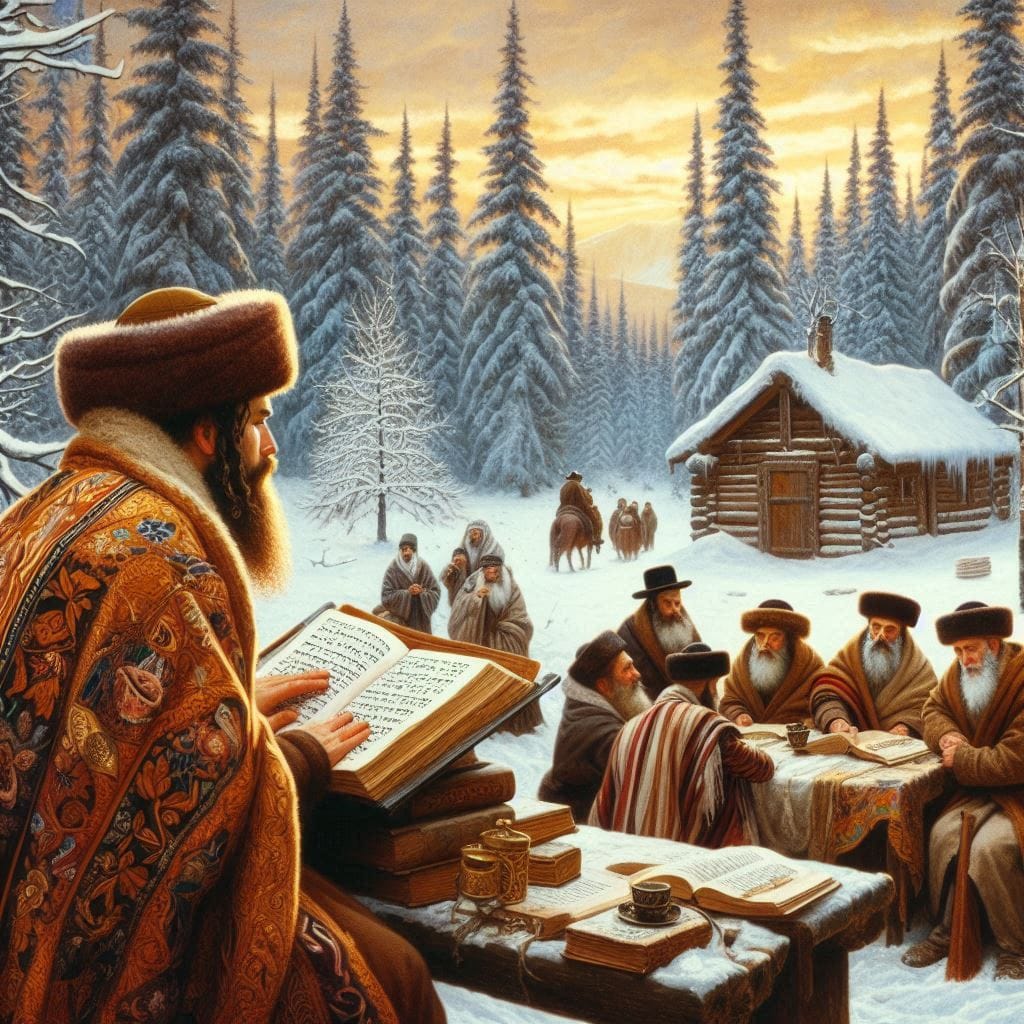
From within Judaism, however, this framing misunderstands how Torah was meant to function from the beginning. The Torah was never presented as a self-interpreting text given to isolated readers, each of whom could reconstruct divine law independently. It was given to a people. It assumes authority, judges, elders, teachers, shared sacred time, and a structure of continuity within Israel itself.
So the issue is not whether rabbis later added something foreign to biblical religion. The issue is whether one has misunderstood the very nature of the Torah in the first place. What outsiders may call “Rabbinic Judaism” is, from within Jewish self-understanding, not a second religion layered on top of the Bible, but the historical continuation of Israel’s covenantal life under Torah.

Part III. Torah Was Never Meant for Private Reconstruction
This point is already embedded in the Torah itself. Consider Deuteronomy 17:8–11. There the Torah commands Israel that when difficult legal questions arise, the people must go to the judges and priests of their own time and follow their ruling, without turning aside “to the right or to the left.” This is not a marginal passage. It is a foundational one. It establishes that Torah is lived through authorized interpretation within the covenantal structure of Israel.
That means the Torah itself rejects radical privatization. It does not tell every Israelite to retreat into isolation and generate an independent legal system from the written text alone. Rather, it directs the people toward a recognized authority structure through which difficult matters are judged.
From a Jewish perspective, then, later rabbinic authority is not the corruption of biblical faith, but the continuation of a biblical pattern already established in the covenant. The names, institutions, and historical forms may develop, but the principle remains: Torah is not detached from the people to whom it was given, nor from the structures that preserve its intelligibility and authority.
This is one of the deepest differences between Judaism and many modern restorationist movements. Restorationism often imagines that purity lies in stripping away history and returning to text alone. Judaism, by contrast, understands that fidelity to Torah includes fidelity to the covenantal life through which Torah is transmitted, interpreted, and practiced.
Part IV. Judaism as Covenant Rather Than Mere Individual Belief
One of the strongest themes raised by the lecture is the difference between individual religion and national covenant. Much of Christian theology gives central place to personal salvation, individual belief, and private acceptance of doctrine. Judaism certainly includes personal faith, personal responsibility, and the inward life of the soul. Yet its center is not the isolated believer. Its center is the covenant between HaShem and Am Yisrael.
That distinction has immense consequences. It affects how commandments are interpreted, how authority functions, how sacred time is observed, and how tradition is transmitted across generations. Judaism cannot function as a purely individual religious project. If each person interpreted Torah independently, Jewish life would dissolve into fragments almost immediately. The festivals would be observed on different days, ritual practice would splinter, and the unity of Israel as a covenantal people would be broken.
For this reason, the Torah is not merely a collection of teachings or inspirational texts. It is the constitution of a people. Its commandments do not float in abstraction. They are embodied in the shared life of Israel. The covenant is not only between HaShem and the private soul, but between HaShem and a people called to live together in law, memory, sacred time, and inherited obligation.

Part V. The Calendar and the Unity of Israel
The lecture referred to a well-known Talmudic episode involving Rabban Gamliel and Rabbi Yehoshua, and that account illustrates the principle of covenantal unity with unusual force. Rabbi Yehoshua disagreed with the calendar determination that established the date of Yom Kippur. Yet Rabban Gamliel, acting as head of the Sanhedrin, instructed him to appear publicly carrying his staff and purse on the day Rabbi Yehoshua himself believed to be Yom Kippur.
Rabbi Yehoshua complied.
Why would so great a scholar submit to a ruling he believed mistaken? Because Judaism recognizes that the unity of Israel under a shared halakhic order is more fundamental than the preservation of isolated individual certainty. If every scholar followed his own calculations and established sacred time independently, the nation would fracture. There would no longer be one people keeping one calendar before HaShem.
This principle reaches beyond the calendar. It reveals something essential about Torah itself. Torah is given to a people who must live it together. Law, festival, prayer, and communal belonging are interwoven. Personal brilliance is not sovereign over covenantal unity. In Judaism, truth is not reduced to private spiritual intuition. It must be embodied within the life of Israel.
Part VI. “Lo Bashamayim Hi” and the Legal Life of Torah
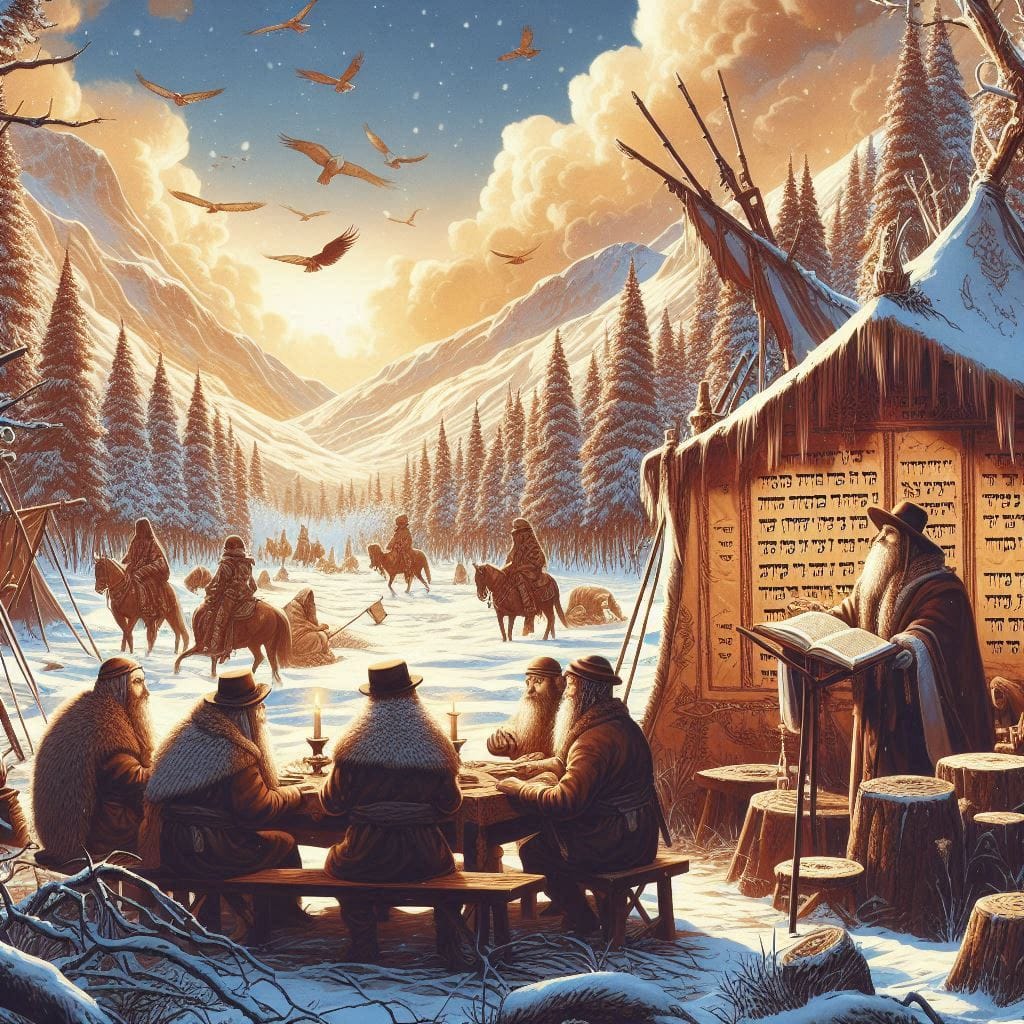
Another concept touched upon in the lecture comes from the Talmudic story of the Oven of Achnai in tractate Bava Metzia. In that narrative, a heavenly voice supports Rabbi Eliezer in a legal dispute, yet the other rabbis nevertheless rule according to the majority. Their reasoning rests on the famous principle: “Lo bashamayim hi” — the Torah is not in heaven.
That phrase is often misunderstood. It does not deny divine origin. On the contrary, it assumes the divine giving of Torah. But once the Torah was given to Israel, its interpretation became the responsibility of the covenantal community functioning within the legal structure that the Torah itself established Dt:17:8-13. In other words, revelation does not abolish legal process; it creates it.
For traditions shaped by direct and private interpretation of Scripture, this can be difficult to accept. But Judaism does not view Torah as a text detached from history, law, and communal authority. It understands Torah as a living legal covenant, unfolding through study, debate, interpretation, and application across generations. The heavenly gift of Torah is precisely what creates the earthly responsibility to guard, interpret, and live it faithfully.
Thus, what is sometimes called “Rabbinic Judaism” is not best understood as a human replacement for divine truth. It is the historical form taken by Israel’s responsibility to live the Torah on earth.
Part VII. The Shaarei Tzafon Method
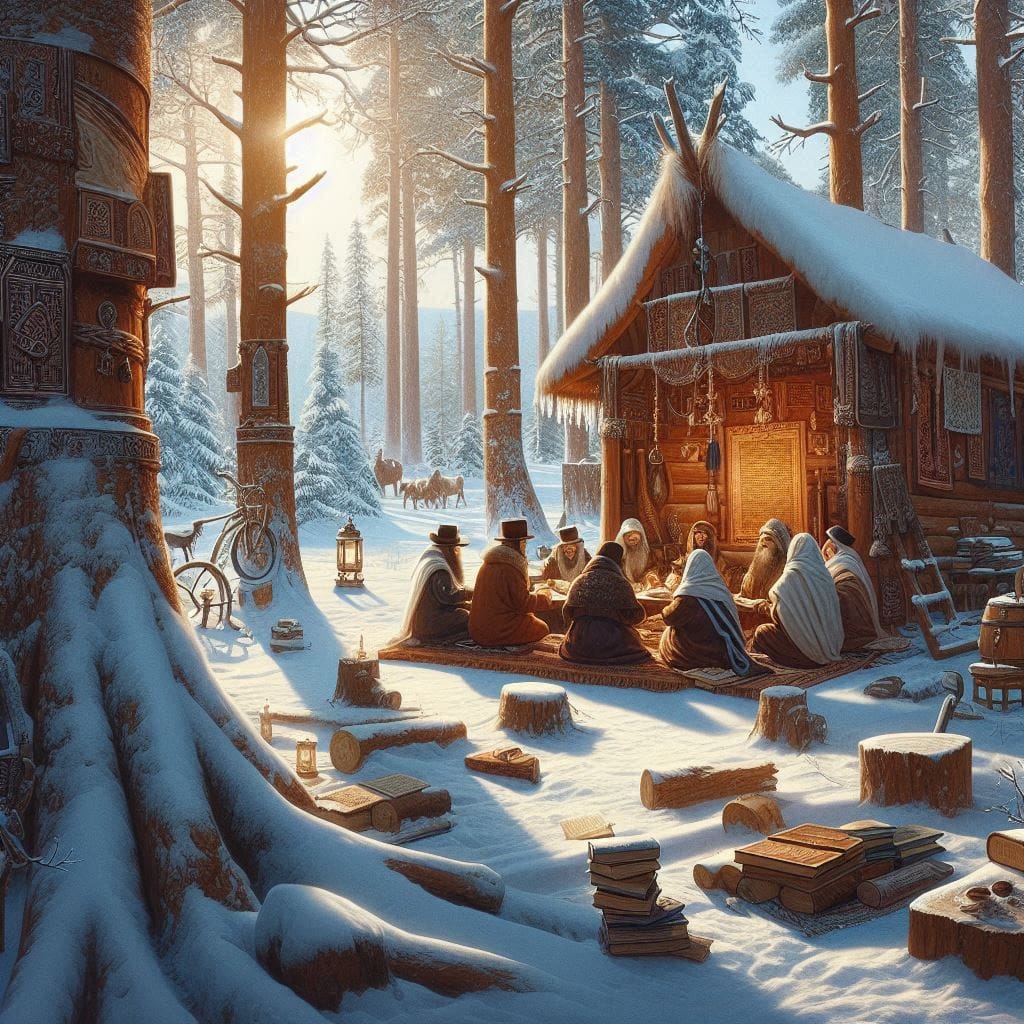
Within Shaarei Tzafon, we approach this tradition through a structured methodology that seeks clarity, order, and fidelity to the foundations of Jewish law. Our learning follows a deliberate sequence:
Torah — the written covenant itself
Sefer HaMitzvot — identifying the commandments
Sefer HaChinuch — explaining their structure and purpose
Mishneh Torah of Rambam — presenting the oral torah/rulings of the court (halacha) in it entirety in systematic form
Shulchan Aruch — the practical codification (what applicable today) of Jewish law
Only afterward do we enter The Talmud (Mishnah and Gemara), and halakhic midrashim for deeper exploration, because these are the wellsprings from which the rulings of halakhah are drawn.
In this way, learning proceeds from clarity to complexity rather than from fragmentation to confusion.
This sequence reflects our commitment to halakhic clarity, particularly in the spirit of the Rambam and Mori Yihya Qafiḥ. We seek to establish the structure of the law before entering the vast sea of Talmud and its debates. In this way, learning moves from clarity to complexity, rather than from fragmentation to confusion.
That matters greatly in an age when many encounter Torah through scattered quotations, social media arguments, and unrooted personal interpretations.
Shaarei Tzafon insists that serious learning must be ordered. The student should first know what the mitzvot are, what the law requires, and how the covenantal structure holds together. Only then is he prepared to enter the great discussions that shaped the tradition.
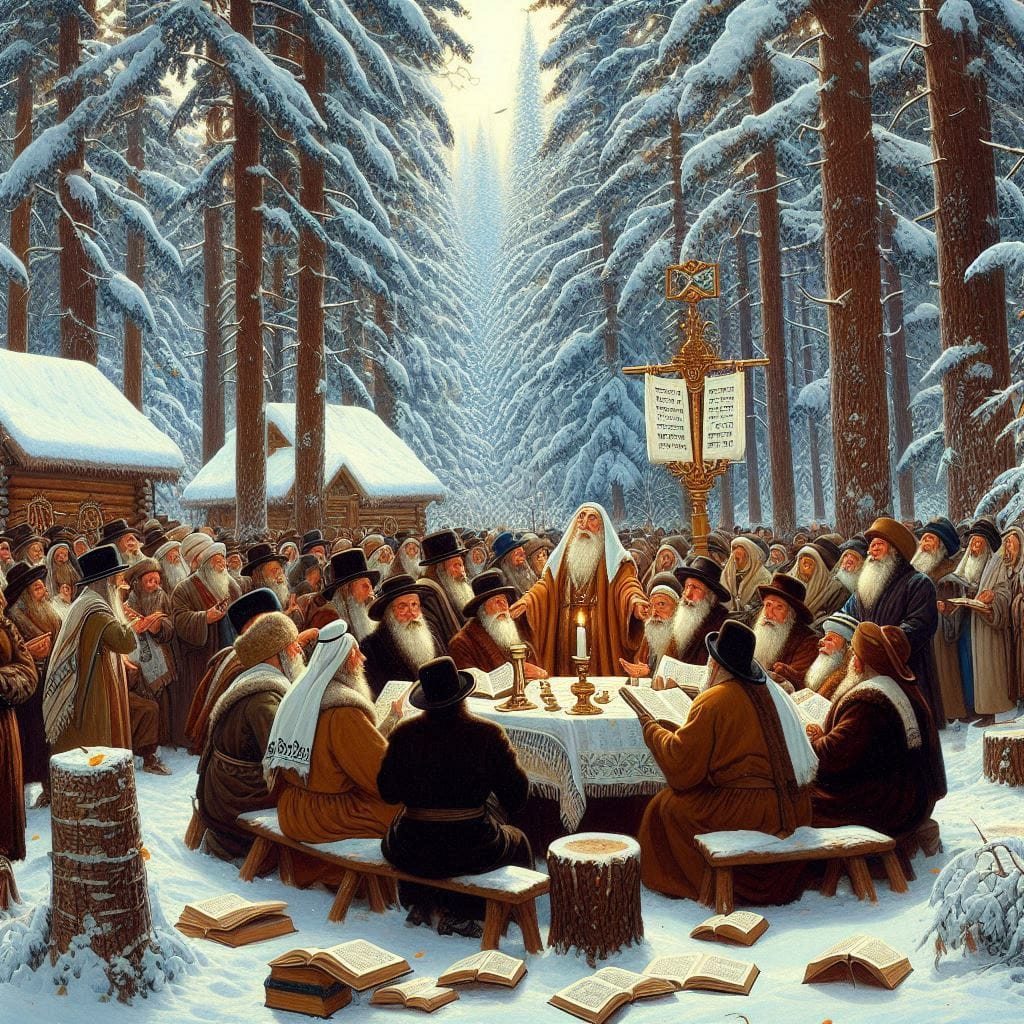
Part VIII. Rationalism and Devotion in the Boreal Balance
Shaarei Tzafon also recognizes that Jewish tradition contains multiple streams of thought. Our framework seeks not to flatten them, but to hold them in ordered balance. From the rationalist side, we draw especially from Rambam, with his legal clarity and philosophical discipline; Rabbi Yihya Qafiḥ, with the Yemenite rationalist tradition; and Avraham ben HaRambam, who stands as a bridge between intellectual clarity and spiritual practice.
From the devotional side, we recognize the significance of figures such as Rebbe Nachman of Breslov, whose teachings emphasize personal prayer, humility, broken-hearted sincerity, and the inward life of faith.
This balance reflects what we call the Boreal Compass: a philosophical map that integrates different streams of Jewish thought without collapsing them into one another. Rational clarity protects devotion from excess and confusion. Devotion protects rationalism from becoming spiritually dry or merely technical. Each needs the other, provided both remain ordered within Torah and covenant.
This is especially important for those approaching Judaism from outside, or from unstable religious environments. Some are drawn to Torah because they hunger for law, order, and intellectual coherence. Others are drawn because they hunger for reverence, prayer, and sacred depth. Shaarei Tzafon insists that both dimensions belong within Jewish life, but neither can rightly exist when severed from mesorah.
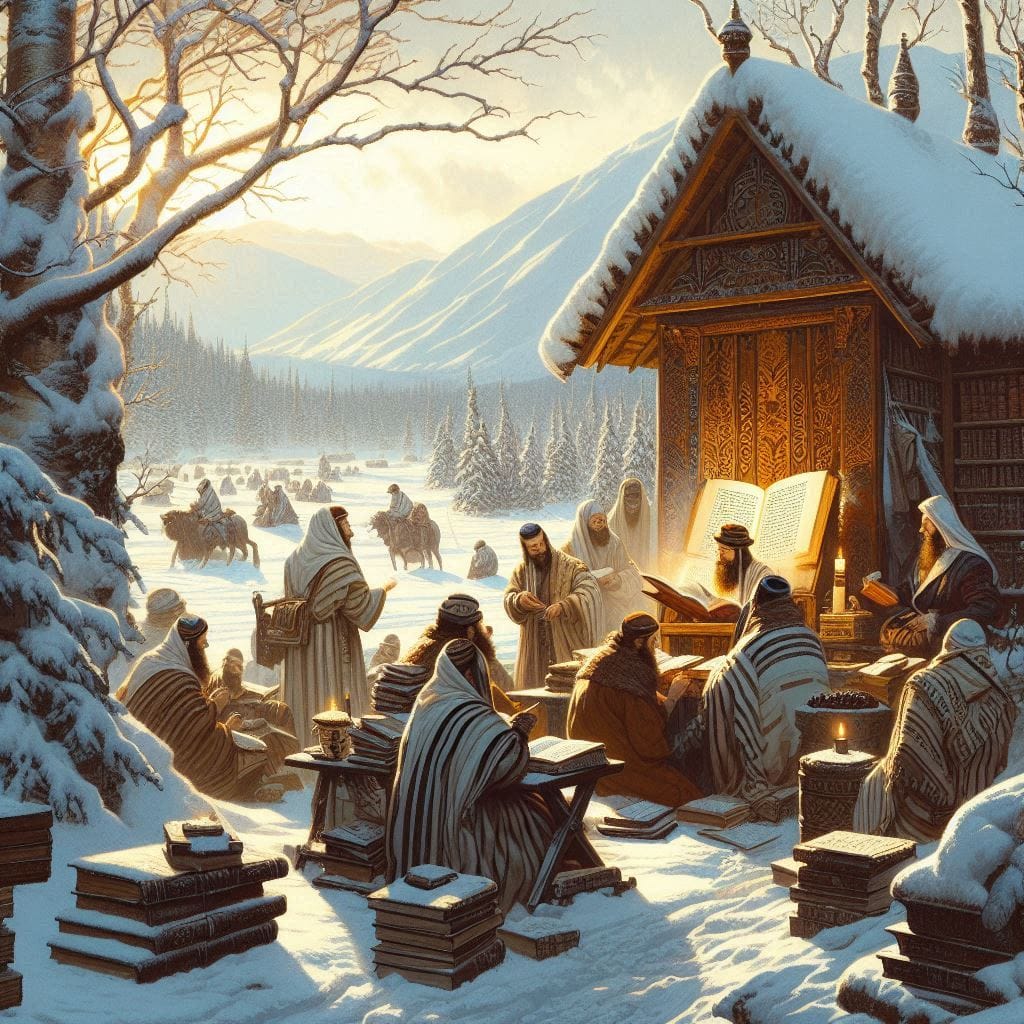
Part IX. The Frontier Context and the Need for Belonging
Another dimension of this discussion concerns the mission of Shaarei Tzafon itself, which seeks to cultivate Jewish life in rural and northern environments where traditional Jewish infrastructure may be thin or absent. In such settings, individuals often encounter Judaism first through books, online discussions, and recorded lectures rather than through long immersion in established Jewish communities.
That situation creates both opportunity and danger. The opportunity is obvious: texts can travel where institutions are weak. But the danger is equally real: people may come to imagine that Judaism is simply a matter of reading the Bible and selecting practices on their own. In frontier environments especially, solitary reconstruction can appear tempting.
But Jewish history teaches the opposite lesson. Judaism does not endure as a purely solitary project. Even in remote settings, Jewish life must remain connected to the broader covenantal structure of Israel. Study must be tethered to the people. Practice must be tethered to halakhah. Sacred time must be tethered to communal memory.
Otherwise, the frontier becomes not a place of faithful adaptation, but a place of fragmentation.
For that reason, the mission of Shaarei Tzafon is not merely educational in the abstract. It is covenantal and communal. Our aim is to preserve both halakhic precision and communal belonging, ensuring that Jewish life remains rooted in the shared inheritance of Israel even under frontier conditions.

Part X. Why This Matters Now — and Where the Series Must Go Next
The question raised by the lecture — whether Christians should learn about what is commonly called “Rabbinic Judaism” — reflects a broader development in our time. Many people from Christian backgrounds are rediscovering the Hebrew Bible and becoming interested in Shabbat, the festivals, the commandments, and the structure of Jewish life.
That curiosity can be sincere and even admirable. It should not be dismissed with contempt. Many traditional Christian communities preserve seriousness, reverence, and real devotion within their own inherited framework. The issue is not honest learning, but confusion about what Judaism actually is.
And here Jewish history gives a clear answer. Torah has always been lived through interpretation, debate, legal process, and communal authority. What outsiders sometimes call “Rabbinic Judaism” is, from within Judaism, simply the continuation of that living tradition. The Torah was not given as a private text for isolated readers. It was given to Am Yisrael, a covenantal people tasked with living its commandments together.
That is where the discussion must begin. Yet once that point is established, another question immediately arises. If Torah is a transmitted and covenantal way of life, what kind of human world is it meant to produce? In an age marked by imitation, instability, reactionary zeal, and pseudo-religious confusion, that question becomes urgent. Torah is not only about authority and continuity. It is also about the shape of life itself.
That question will lead into the next part of this series:
Part II: Torah Is Not Hysteria — The Need for Normalcy in Torah Life

Torah Traditionalism — Part I
Torah, Mesorah, Halakhah, and the Covenant of Israel
Is Judaism simply the religion of the Hebrew Bible, or is it a living covenant transmitted through the Written Torah, Oral Torah, Jewish law, and the continuous religious life of Israel?
This question forms the foundation of Torah Traditionalism.
In this teaching, Rabbi Ariel Manning examines the relationship between the Written Torah, the Oral Torah, and the historical continuity of Jewish religious life. Beginning with a discussion about whether Christians should study what is commonly called Rabbinic Judaism, the article explores why Judaism cannot be properly understood through Scripture alone, separated from the people and traditions entrusted with its preservation.
The Torah was given to Am Yisrael as a covenantal way of life. Its commandments were meant to be interpreted, taught, practiced, and transmitted through generations.
Devarim 17:8–11 establishes the importance of legal authority in resolving difficult questions of Jewish law. The Talmud further demonstrates this principle through the disagreement between Rabban Gamliel and Rabbi Yehoshua concerning the calendar, and through the principle of Lo Bashamayim Hi — the Torah is not in Heaven.
These teachings illustrate that Torah observance is not merely an individual exercise in reading sacred texts. It requires continuity, legal reasoning, communal responsibility, and respect for the established processes of Halakhah.
Yet this does not mean that Torah study should be limited to great institutions or professional scholars.
Shaarei Tzafon encourages an ordered approach to Jewish learning, beginning with the Torah itself, continuing through Sefer HaMitzvot, Sefer HaChinuch, the Rambam's Mishneh Torah, and the Shulchan Aruch, and proceeding into the deeper discussions of Mishnah, Gemara, and Halakhic Midrash.
This method seeks to develop knowledgeable Jews who understand both the structure of Jewish law and the reasoning behind its interpretation.
The Boreal Compass complements this educational approach by bringing together rationalist clarity, Jewish philosophy, personal devotion, and the inherited wisdom of different legitimate Jewish traditions.
For families in Alpena, Hillman, Rogers City, and throughout Northeastern Michigan, this teaching has particular significance.
In remote communities, books, online lectures, and independent Torah study may be the first available means of Jewish education. Yet geographical isolation must not become religious isolation from the greater Jewish people.
Even a small family Beis Midrash can remain connected to the covenantal inheritance of Israel through faithful Torah study, Halakhah, and Mesorah.
The central message: Torah Traditionalism is not the private reconstruction of biblical religion. It is the faithful preservation and transmission of the Written Torah, Oral Torah, Halakhah, and covenantal life of Am Yisrael.
Jewish independence must never mean independence from Torah. Rather, it should mean the ability to preserve and practice authentic Jewish life responsibly, even where established Jewish institutions are distant.
Part II continues this discussion by considering the need for normalcy, balance, and stability in everyday Torah life.
Published by Shaarei Tzafon — The North Gate, an independent, family-led Orthodox Jewish educational and publishing initiative based in Northeastern Michigan, serving Alpena, Hillman, Rogers City, and surrounding communities.
Shaarei Tzafon promotes traditional Jewish life, Torah study, practical Halakhah, and the renewal of independent Jewish learning communities throughout the northern boreal regions, extending from the 45th parallel toward the Arctic tundra.
Article: https://www.shaareitzafon.org/torah-traditionalism-part-1
Shaarei Tzafon — The North Gate
Orthodox Jewish Life and Torah Study in Northeastern Michigan
Shaarei Tzafon — The North Gate, led by Rabbi Ariel Manning, is an independent, family-led Orthodox Jewish educational and publishing initiative based in Northeastern Michigan. We support traditional Jewish life, Torah study, Halakhah, and Jewish education throughout Alpena, Hillman, Rogers City, and surrounding communities. Those interested in traditional Judaism are welcome to contact us for educational resources, Torah learning, and opportunities for discussion by prior arrangement.
Rooted locally, our greater mission extends northward from the 45th parallel — The North Gate — through Michigan, Canada, and Alaska toward the Arctic. We seek to encourage independent Jewish communities, family-centered Torah education, and the renewal of small batei midrash and shtieblach, preserving the rich traditions of Orthodox Judaism for future generations.
Our work begins in Northeastern Michigan, but our vision extends from the 45th parallel toward the Arctic.
Guided by Rambam and Mori Qafiḥ, uplifted by Rebbe Nachman, and grounded by Avraham ben HaRambam’s balance of halakha and inward avodah.
The Orchard’s Path
publishes our books and curricula.
Our mission: a bright, authentic Jewish presence in every northern town.
Created with ©systeme.io


