
Traditionalism The New Counter-Culture: Part 2
B"H
Traditionalism, Evangelicalism, and the Jewish Response
From Azusa Street to Christian Zionism and Tucker Carlson and Mike Huckabee
A Torah Perspective
1. The Modern Religious Landscape
The modern religious world is marked by rapid change. Movements arise quickly, revivals ignite, and entire religious cultures can be reshaped within a single generation. In the twentieth century one of the most dramatic developments within Christianity was the rise of Pentecostalism and the transformation of Evangelical religion.
Today Pentecostal and Evangelical movements together represent hundreds of millions of adherents worldwide. Their influence extends beyond church walls into politics, international relations, media, and social activism. Many Evangelical Christians speak positively about the Hebrew Bible, express admiration for the Jewish people, and offer strong political support for the modern State of Israel.
Because of this, Jews—especially those living in Western societies—often find themselves interacting with Evangelical Christians in many different ways. Sometimes these encounters take the form of friendship or political cooperation. At other times they involve missionary outreach or theological debate. In every case, Jews must understand the religious ideas shaping these movements.
These questions recently entered the public conversation in a widely discussed interview between Tucker Carlson and Mike Huckabee. The discussion revealed deep disagreements within American Christianity about Israel, biblical prophecy, and the relationship between religion and politics.
The exchange was particularly revealing because the two men represent different Christian traditions. Carlson comes from an Episcopal background, part of the older Anglican tradition of Protestant Christianity. Huckabee, by contrast, is an ordained Southern Baptist minister and a representative of Evangelical Christianity, a movement strongly associated with missionary activity and Christian Zionism.
During their discussion Huckabee defended the Evangelical belief that the Jewish return to the land of Israel fulfills biblical prophecy and should be supported by Christians. Carlson, however, questioned whether modern political policy should be shaped by religious interpretations of ancient biblical promises.
The debate illustrated something important: even within Christianity there is no single agreement about how the Hebrew Bible should be understood or how Christians should relate to the Jewish people.
For Jews observing these debates, the moment presents both an opportunity and a challenge. The opportunity lies in recognizing how deeply Christian interpretations of the Hebrew Bible still shape modern politics and culture. The challenge lies in articulating clearly the Jewish understanding of scripture and tradition rooted in Torah and rabbinic teaching.
To understand how these theological ideas developed, it is necessary to look back to one of the most influential religious events of the twentieth century: the revival meetings that began on Azusa Street in Los Angeles in 1906.

2. The Azusa Street Revival and the Birth of Pentecostalism
In 1906 a small revival meeting began in Los Angeles under the leadership of a preacher named William Seymour. The gatherings took place in a modest building on Azusa Street. What occurred there soon attracted attention across the United States.
Participants reported dramatic spiritual experiences. They spoke in ecstatic languages, claimed miraculous healings, and described visions or prophetic revelations. These events were interpreted as a new outpouring of the Holy Spirit similar to the experiences described in the Christian Book of Acts.
Visitors from across the country traveled to observe the revival. Many returned home convinced they had witnessed a divine awakening. They carried the message back to their churches, where similar meetings began to appear.
The Azusa Street revival lasted only a few years, but its influence proved enormous. From this small mission grew the Pentecostal movement, which would eventually spread across the globe.
Today Pentecostal and charismatic Christianity represent one of the fastest-growing religious movements in history.
Hundreds of millions of people now identify with churches that trace their origins—directly or indirectly—to the events that began in Los Angeles in 1906.
Understanding how such a movement emerged requires looking deeper into the broader religious culture from which it arose.

3. Revival Religion in American Christianity
The Azusa Street revival did not appear suddenly out of nowhere. It emerged from a long tradition of revival religion within American Protestantism.
Beginning in the eighteenth century, the American colonies experienced a series of religious awakenings known as the Great Awakenings. Preachers such as Jonathan Edwards and George Whitefield emphasized emotional sermons, personal conversion experiences, and dramatic expressions of faith.
In the nineteenth century revival culture intensified through camp meetings and the Holiness movement. Large outdoor gatherings featured passionate preaching, communal singing, and emotional religious displays. Participants often described overwhelming experiences of divine presence.
By the early twentieth century American Protestant culture already expected religion to involve powerful personal experiences. Pentecostalism did not invent revival religion.
Rather, it intensified an existing pattern by emphasizing supernatural manifestations such as speaking in tongues.
From a historical perspective, Pentecostalism represents the continuation of a revival tradition deeply embedded within American Protestant life.

4. Evangelical Christianity
Alongside Pentecostalism another influential branch of Protestant Christianity developed: Evangelicalism.
Evangelical Christianity is typically defined by several central convictions:
The authority of the Bible as the ultimate guide for faith and practice.
The importance of personal conversion or being “born again.”
Active missionary work and evangelism.
A focus on Jesus as the center of salvation.
During the early twentieth century Evangelicals and Pentecostals often viewed each other cautiously.
Evangelicals sometimes regarded Pentecostal worship as overly emotional, while Pentecostals occasionally considered Evangelicals spiritually dry.
Over time, however, these traditions began to influence one another.

5. The Evangelical–Pentecostal Convergence
During the second half of the twentieth century a significant blending occurred between Evangelical theology and Pentecostal style.
The Charismatic movement of the 1960s introduced Pentecostal practices—such as speaking in tongues and expressive worship—into many Evangelical churches.
At the same time Pentecostal churches adopted stronger structures of preaching, education, and organized missionary work.
This blending produced what is now widely recognized as modern non-denominational Christianity. Many churches combine Evangelical theology with Pentecostal forms of worship.
In practical terms this means sermons grounded in biblical preaching accompanied by emotionally expressive music and spontaneous prayer.
The result is a hybrid religious culture that dominates much of contemporary Protestant Christianity.
6. The Rise of Christian Zionism
Within Evangelical Christianity another development emerged during the nineteenth and twentieth centuries: Christian Zionism.
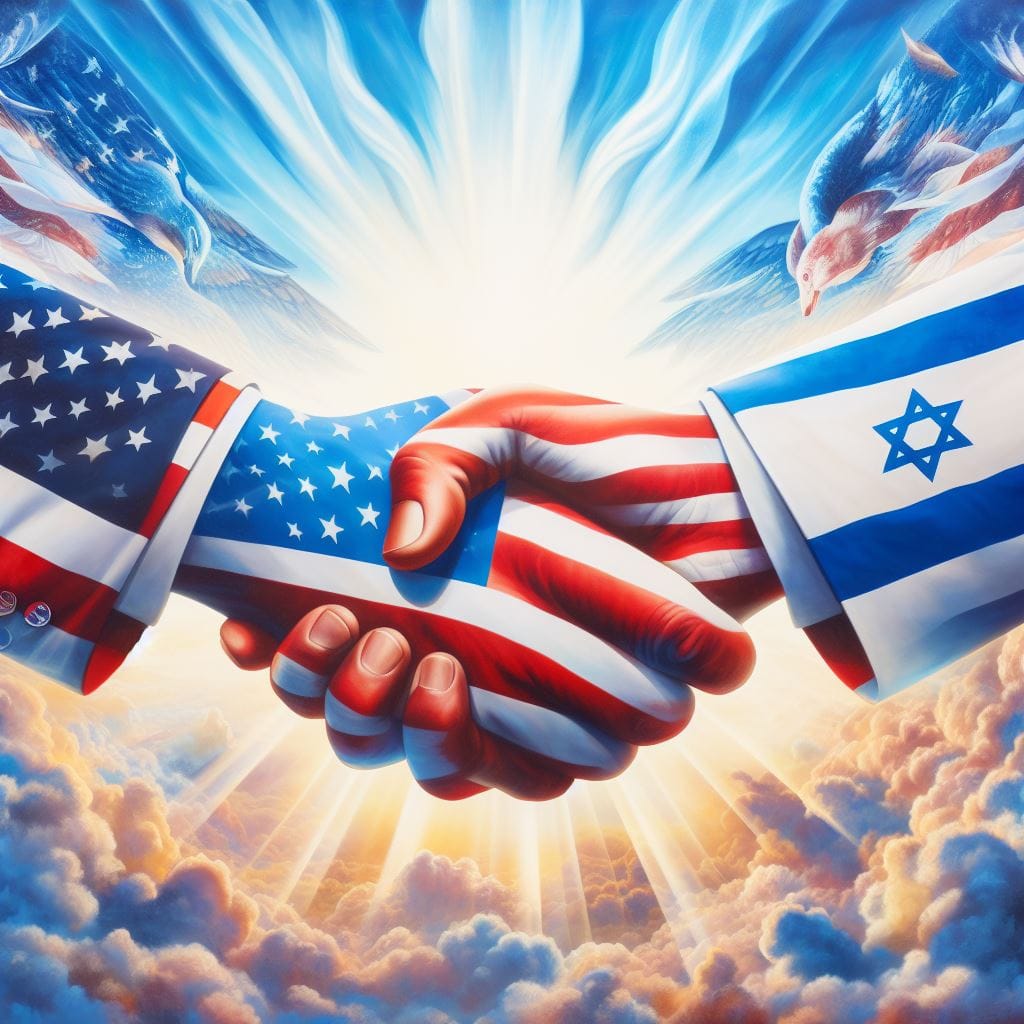
Many Evangelicals believe that the return of the Jewish people to the Land of Israel fulfills biblical prophecy. According to this interpretation, the restoration of Israel plays an important role in the unfolding plan of God.
Because of this belief, Evangelical Christians frequently express strong political and financial support for the modern State of Israel. They donate to Israeli causes, advocate for Israel internationally, and publicly affirm the importance of the Jewish people in biblical history.
In some cases Evangelical leaders have become among the most outspoken supporters of Israel in global politics.
At first glance this support appears entirely positive from a Jewish perspective. However, the relationship is more complicated than it may seem.
British Israelism and the Problem of Supersessionism
Alongside Christian Zionism another theological current emerged within parts of Protestant Christianity during the nineteenth century known as British Israelism. While it has never represented the majority view among Christians, its influence on certain political and religious ideas about Israel has been significant.
British Israelism teaches that the peoples of Britain—and later other English-speaking nations—are the true descendants of the ancient Israelites. According to this theory, the so-called “lost tribes” of Israel migrated into Europe and eventually became the ancestors of the British people.
In this interpretation, the biblical promises made to Israel are believed to apply not primarily to the Jewish people but to these later European populations.
From a Jewish perspective this idea is historically and theologically problematic.
Historically, there is no credible evidence connecting the ancient tribes of Israel with the populations of Britain. Modern historical and genetic research has consistently shown that the Jewish people themselves maintain the strongest continuity with the ancient populations of the Levant.
More importantly, the theology underlying British Israelism reflects a broader pattern that has appeared throughout Christian history: supersessionism, the belief that the Church has replaced Israel as the true people of God.
Supersessionist interpretations reinterpret the biblical covenant by transferring the promises given to Israel onto another group—often the Christian Church itself. In the case of British Israelism, these promises are transferred specifically to the British or Anglo-Saxon peoples.
Christian Zionism emerged in part as a reaction against this supersessionist tradition. Many Evangelical Christians rejected the idea that the Church had replaced Israel and instead argued that the Jewish people remain central to biblical prophecy. In this sense, Christian Zionism represented a partial departure from earlier Christian replacement theology.
However, tensions between these interpretations continue to exist within Christian thought. Some movements simultaneously express support for the modern State of Israel while still maintaining theological frameworks that ultimately reinterpret or replace Israel’s covenantal role.
From the perspective of Torah Judaism, both supersessionism and British Israelism misunderstand the nature of the biblical covenant. The covenant described in the Torah is not transferable to another nation, nor can it be reassigned to later populations through speculative historical theories.
The covenant of Sinai was established specifically with the people of Israel and transmitted through their historical continuity. While many nations may find spiritual inspiration in the Hebrew Bible, the covenantal responsibilities of Torah remain uniquely bound to the Jewish people themselves.

7. The Missionary Problem
Despite expressions of friendship toward the Jewish people, many Evangelical groups maintain a strong commitment to missionary activity directed toward Jews.
Within Evangelical theology it is commonly believed that the Jewish people must eventually accept their understanding of the messiah. For this reason missionary organizations specifically targeting Jews have developed over the past century.
These efforts are often presented as acts of love or concern. Yet from a Jewish perspective they raise serious concerns.
Jewish history has repeatedly shown that missionary activity can weaken Jewish communities and lead to assimilation.
For a people whose survival has depended upon maintaining religious continuity, such efforts are viewed with caution.
Thus Jewish communities often approach Evangelical outreach with a mixture of appreciation and vigilance.
8. The Question of Rabbinic Judaism
Another theological tension arises from Evangelical interpretations of Judaism itself.
Many Evangelical teachers claim that authentic Judaism should rely solely on the Hebrew Bible while rejecting the authority of rabbinic tradition. According to this view, the Talmud and later Jewish teachings represent distortions of the original biblical message.
From our standpoint in Orthodox and Traditional Judaism, this claim misunderstands the nature of Jewish tradition.
Judaism has always consisted of two complementary components:
The Written Torah.
The Oral Torah.
The Oral Torah—preserved through the Mishnah, Talmud, and centuries of rabbinic scholarship—explains how the commandments of the Written Torah are to be practiced.
Without the Oral Torah, many biblical commandments would remain impossible to fulfill. The Oral tradition provides the interpretation and legal framework necessary for living according to the Torah.
Therefore critiques of rabbinic Judaism often arise from a misunderstanding of how Jewish law and tradition function.
9. Covenant, Torah, and the Stability of Jewish Tradition
A deeper difference separates Judaism from revival-based religious movements.
Pentecostal and Evangelical movements frequently emphasize personal spiritual experiences—moments of dramatic conversion or emotional awakening.
Judaism, by contrast, is built upon a collective covenant established at Sinai.
At Sinai the people of Israel entered into a binding relationship with the One God through the giving of the Torah. This covenant established the structure of Jewish life and defined the responsibilities of the Jewish people.
The covenant does not depend upon individual religious experiences. It is sustained through the steady transmission of Torah across generations.
Halacha—the system of commandments derived from the Torah—shapes daily Jewish life. Through practices such as prayer, Sabbath observance, dietary laws, and ethical conduct, the covenant becomes part of ordinary existence.
Jewish thinkers have long emphasized that knowledge of God emerges through study and reflection as well as devotion. Intellectual clarity and spiritual reverence work together in the service of the Creator.
In this way we in Judaism cultivates a stable and enduring religious life rooted in learning, discipline, and community.
10. Traditionalism and the Jewish Response
In recent years many Evangelical Christians have begun describing themselves as “traditionalists.” They often use this term to express opposition to modern cultural trends and a desire to return to what they believe to be the original teachings of Christianity.
In this sense it is fair to acknowledge that they are indeed traditionalists within their own religious framework. Evangelical Christianity preserves its own historical interpretations, teachings, and practices that have been handed down through generations of Protestant thought. Many Evangelicals sincerely believe they are guarding the integrity of scripture and preserving the original message of their faith.
This perspective was illustrated in the recent public discussion between Tucker Carlson and Mike Huckabee.
Their conversation highlighted tensions within American Christianity about Israel, biblical prophecy, and the role of religion in politics.
Huckabee, coming from a Southern Baptist Evangelical background, defended the Christian Zionist view that the Jewish return to the land of Israel fulfills biblical prophecy and therefore deserves strong Christian support.
Carlson, whose background is in the Episcopal tradition, raised questions about whether modern political policy should be shaped by religious interpretations of ancient scripture.
From a Jewish perspective, there are elements of truth in concerns raised by both sides. It is understandable that Christians who read the Hebrew Bible take seriously its references to the land promised to the descendants of Abraham. At the same time, questions about the role of religion in modern geopolitics are also legitimate subjects of debate.
However, Judaism approaches these matters from a different foundation entirely.
Judaism itself is not fundamentally defined by modern political Zionism. Jewish life existed for nearly two thousand years without political sovereignty in the land of Israel, sustained not by political structures but by Torah, halacha, and communal continuity. While the land of Israel holds profound spiritual significance within Judaism, the core of Jewish identity has always been the covenant of Torah rather than any particular political framework.
At the same time, it must be clearly stated that the Jewish people—including Ashkenazi Jews—are historically connected to the ancient populations of the Levant. Modern genetic and historical research consistently demonstrates that Jewish communities across the world retain deep ancestral roots in the Near East. Claims that Ashkenazi Jews descend primarily from the medieval Khazar kingdom are not supported by the overwhelming body of historical or genetic evidence.
The Jewish people remain, historically and culturally, a people whose origins trace back to the land of Israel and the covenantal tradition that emerged there.
At the same time, it is important to recognize that the modern political movement known as Zionism, particularly in its early ideological form under Theodor Herzl, represented a significant departure from the traditional rabbinic approach to exile and redemption.
Classical rabbinic literature contains the well-known teaching of the Three Oaths described in the Talmud (Ketubot 111a), which speaks of limits placed upon the Jewish people and the nations during the period of exile. These teachings were historically understood by many rabbinic authorities as a warning against forcing a political return to the land of Israel before the appropriate time in the unfolding of divine redemption.
For this reason, many traditional rabbinic authorities (which are the same concerns we share) views political Zionism with suspicion or opposition, seeing it as a secular movement that attempted to solve a spiritual exile through political means.
From that perspective, the idea of forcefully reclaiming the land through purely political or nationalist efforts CONFLICTS with the traditional halachic understanding of exile.
Thus one can acknowledge two realities at the same time.
First, the Jewish people are historically rooted in the land of Israel and remain connected to it spiritually, historically, and covenantally.
Second, the modern political ideology that emerged in the late nineteenth century under Herzl represented a new development within Jewish history that did not arise from the traditional rabbinic framework.
Judaism therefore cannot be reduced to modern political Zionism. The foundation of Jewish identity has always been Torah, covenant, and halachic tradition rather than political sovereignty.
Returning to the question of traditionalism, however, it is important to recognize an important distinction.
The traditionalism found within many Evangelical movements is fundamentally reactionary in nature. It arises in response to perceived moral decline, secularism, or theological liberalism.
Historically this pattern can be traced back to the Protestant Reformation itself. Reformers rejected the authority structures and traditions of medieval Christianity and sought to restore what they believed to be the pure message of scripture.
Because of this, Protestant history frequently involves cycles of reform movements attempting to recover earlier forms of faith.
In that sense, Evangelical traditionalism is a restorationist form of tradition—an effort to recover what is believed to have been lost.
Judaism understands tradition very differently.
Our tradition is not a reaction to modern change.
It is the continuous transmission of a covenantal way of life that began at Sinai and has been preserved through generations.
Jewish tradition includes:
The Written Torah
The Oral Torah
The teachings of the sages
Halachic practice developed across centuries
Communal memory and shared ritual life
Tradition in Judaism is therefore not merely an identity label.
It is a living legal and spiritual system that governs daily life.
It is also important to recognize something that is often overlooked in these discussions: the Hebrew Bible used by most Christian traditions today is itself preserved through rabbinic transmission.
The text of the Tanakh that appears in modern Bibles is based primarily on the Masoretic tradition—the textual form carefully preserved and transmitted by Jewish sages and scribes. These scholars safeguarded the consonantal text, standardized the reading traditions, and added the vowel system that allowed the Hebrew language to be read accurately across generations.
In other words, the very Hebrew Bible that many Evangelicals appeal to when critiquing rabbinic Judaism is the text that rabbinic tradition itself preserved and transmitted.
If rabbinic tradition were fundamentally corrupt or unreliable, it would be difficult to explain why the biblical text they rely upon comes through that same rabbinic chain of transmission.
This does not mean that Jews and Christians interpret the Hebrew Bible in the same way.
The difference lies precisely in interpretation. Judaism reads the Tanakh through the interpretive framework of the Oral Torah and the teachings of the sages, while many Christian traditions attempt to read the text apart from that interpretive tradition.
Yet the text itself—the Hebrew Bible as it has come down through history—was safeguarded by the very rabbinic tradition that critics often dismiss. This historical reality highlights how deeply the preservation of the Hebrew scriptures is intertwined with the continuity of Jewish tradition.
This distinction matters.
While revival movements often define faith through emotional experiences or attempts to restore an imagined past, Judaism maintains continuity through the careful preservation of its covenant.
A Jew becomes part of tradition through study, observance, and participation in communal life.
Within this framework, Shaarei Tzafon emphasizes a form of Jewish life rooted in Torah and halacha rather than in modern ideological movements. Jewish identity rests upon the covenant itself, not upon political ideologies or revivalist religious culture.
Throughout history many religious movements have arisen with enthusiasm and dramatic beginnings. Some have spread rapidly across nations.
Yet the covenant of Torah continues along a different path.
Through study, prayer, mitzvot, and community, the Jewish people preserve the relationship with God established at Sinai. Movements may rise and fall, but the covenant endures.
For the Jewish people the task is not to chase every new spiritual movement, but to remain faithful to the path that has sustained them for thousands of years.
That path is Torah.
And the logic remains simple:
If rabbinic Judaism were unreliable, then the Hebrew Bible used by the church would also be unreliable—because it comes through the same rabbinic chain of transmission.

Traditionalism: The New Counter-Culture — Part Two
Traditionalism, Evangelicalism, and the Jewish Response: From Azusa Street to Christian Zionism and the Covenant of Torah
What distinguishes authentic Jewish traditionalism from modern religious revival movements, and why does the preservation of Torah, Halakhah, and the Oral Tradition remain essential to Jewish continuity?
Throughout modern religious history, movements have emerged promising a return to biblical faith, spiritual renewal, and the restoration of ancient religious values. From the Azusa Street Revival of 1906 to the expansion of Pentecostalism, Evangelical Christianity, and contemporary Christian Zionism, these movements have profoundly influenced Western religious culture, politics, and interpretations of the Hebrew Bible.
In this second installment of Traditionalism: The New Counter-Culture, Rabbi Ariel Manning of Shaarei Tzafon examines the historical development of Evangelical and Pentecostal Christianity, the relationship between emotional religious revival and established tradition, and the theological challenges these movements present to Orthodox and traditional Judaism.
The discussion considers Christian Zionism, British Israelism, supersessionism, and missionary activity directed toward Jewish communities. It also examines the public disagreement between Tucker Carlson and Mike Huckabee concerning Israel, biblical prophecy, and the relationship between religious convictions and political policy.
Particular attention is given to the distinction between the Jewish people's historical and covenantal connection to the Land of Israel and the modern political ideology of Zionism. Drawing upon traditional rabbinic discussions, including the Three Oaths in Ketubot 111a, the article presents a critical perspective on political nationalism while affirming the enduring relationship between the Jewish people, their ancestral homeland, and the covenant of Torah.
At the heart of this teaching is the relationship between the Written Torah and the Oral Torah. The Mishnah, Talmud, and classical halakhic tradition are not treated as foreign additions to Judaism, but as essential components of the Jewish legal and interpretive inheritance.
The article also considers the preservation of the Hebrew Bible through the Masoretic tradition and the importance of Jewish scribes, scholars, and communities in transmitting the biblical text across generations.
Unlike religious movements that seek to reconstruct an earlier faith through revival or reinterpretation, Orthodox Jewish traditionalism understands itself as the continuing transmission of a covenantal way of life. Jewish religious identity is sustained through Torah study, mitzvot, prayer, family education, communal responsibility, and fidelity to Halakhah.
The central message is simple: Jewish traditionalism is not merely a reaction against modern culture, nor is it an attempt to recreate an imagined religious past. It is the living continuation of the covenant established at Sinai, preserved through the Written Torah, Oral Torah, and the faithful transmission of Jewish law and practice.
Jewish communities need not measure their religious authenticity by the enthusiasm of contemporary revival movements, political alliances, or outside interpretations of their scriptures. Their responsibility is to understand, preserve, teach, and live the Torah inheritance entrusted to the Jewish people.
Published by Shaarei Tzafon — The North Gate, an independent, family-led Orthodox Jewish educational and publishing initiative based in Northeastern Michigan, serving Alpena, Hillman, Rogers City, and surrounding communities. Shaarei Tzafon promotes traditional Jewish life, Torah study, practical Halakhah, and the renewal of independent Jewish learning communities throughout the northern boreal regions, extending from the 45th parallel toward the Arctic tundra.
https://www.shaareitzafon.org/traditionalism-the-new-counter-culture--part-2
Shaarei Tzafon — The North Gate
Orthodox Jewish Life and Torah Study in Northeastern Michigan
Shaarei Tzafon — The North Gate, led by Rabbi Ariel Manning, is an independent, family-led Orthodox Jewish educational and publishing initiative based in Northeastern Michigan. We support traditional Jewish life, Torah study, Halakhah, and Jewish education throughout Alpena, Hillman, Rogers City, and surrounding communities. Those interested in traditional Judaism are welcome to contact us for educational resources, Torah learning, and opportunities for discussion by prior arrangement.
Rooted locally, our greater mission extends northward from the 45th parallel — The North Gate — through Michigan, Canada, and Alaska toward the Arctic. We seek to encourage independent Jewish communities, family-centered Torah education, and the renewal of small batei midrash and shtieblach, preserving the rich traditions of Orthodox Judaism for future generations.
Our work begins in Northeastern Michigan, but our vision extends from the 45th parallel toward the Arctic.
Guided by Rambam and Mori Qafiḥ, uplifted by Rebbe Nachman, and grounded by Avraham ben HaRambam’s balance of halakha and inward avodah.
The Orchard’s Path
publishes our books and curricula.
Our mission: a bright, authentic Jewish presence in every northern town.
Created with ©systeme.io


