
Traditionalism The New Counter-Culture Part 3
B"H
Conspiracy, Redemption, and the Jewish Response
From Tucker Carlson to Chabad, the Temple, and the Sanhedrin
A Torah Perspective
1. The Continuing Debate
In the previous parts of this series we examined the modern religious landscape, the rise of Pentecostal and Evangelical movements, and the influence of Christian Zionism on contemporary discussions about Israel and the Jewish people.
These discussions entered the broader public arena through debates between commentators such as Tucker Carlson and figures like Mike Huckabee. Their exchange illustrated something important: within Christianity itself there are significant disagreements about how the Hebrew Bible should be interpreted and how those interpretations should influence modern political decisions.
For Jews observing these debates, the moment presents both an opportunity and a challenge.
The opportunity lies in recognizing that the Hebrew Bible continues to influence religious and political thinking across the world. Many Christians read the scriptures with sincere interest in the Jewish people and the land of Israel.
The challenge arises when Jewish beliefs and traditions are misunderstood, misrepresented, or interpreted through frameworks that do not originate within Judaism itself.
In the aftermath of these debates, a number of claims began circulating about Judaism, Chabad, the Sanhedrin, and the rebuilding of the Temple. Some of these claims come from theological misunderstandings. Others echo conspiracy narratives that have circulated for centuries.
For this reason it is necessary to respond carefully and clearly. A proper response requires explaining how Judaism actually understands these ideas within the framework of Torah and rabbinic tradition.
2. The Persistence of Conspiracy Narratives
Accusations that Jews secretly control world events are not new. They appear repeatedly throughout Western history in different forms.
In medieval Europe Jews were accused of poisoning wells during times of plague. They were sometimes blamed for economic hardship or political instability despite having little power within the societies in which they lived.
These accusations often emerged from misunderstanding.
Jewish communities maintained distinct religious practices and internal communal structures, which outsiders sometimes interpreted as secrecy or hidden coordination.
In reality these structures existed simply to preserve religious life within minority communities.
During the nineteenth century older suspicions about Jews were transformed into modern conspiracy literature.
The most infamous example is the document known as The Protocols of the Elders of Zion.
This document claimed to reveal a secret meeting of Jewish leaders planning world domination. It described elaborate schemes to manipulate governments, control financial systems, and dominate global politics.
Historians have demonstrated conclusively that the Protocols were a fabrication created in Tsarist Russia as part of an antisemitic propaganda campaign. Much of the text was plagiarized from earlier political satire and rewritten to portray Jews as conspirators.
Despite being exposed as fraudulent many times, the Protocols circulated widely and influenced antisemitic movements across Europe and the Middle East. In the twentieth century the document was used by Nazi propagandists to justify persecution of the Jewish people.
The persistence of such conspiracy theories reflects a broader psychological pattern. Complex social problems—economic crises, political instability, cultural change—often generate anxiety and uncertainty.
Conspiracy narratives offer a simple explanation: they claim that hidden groups secretly control events behind the scenes.
For centuries Jews have been convenient targets for such accusations.
Their historical experience as minority communities combined with their emphasis on education and scholarship sometimes created the illusion of hidden influence.
Yet Jewish history itself contradicts these claims. For most of the past two thousand years Jewish communities lived under the authority of other nations and possessed little political power.
What preserved Jewish civilization was not political control but religious continuity.

3.Why Judaism Does Not Seek World Domination
When examined through the structure of Jewish law, conspiracy claims about Jewish world domination collapse immediately.
The Torah does not describe a universal political system intended to rule the entire world. Instead, it establishes a covenant between Hashem and the people of Israel.
The commandments of the Torah were given to the Jewish people at Sinai and define the obligations of Israel within that covenant.
Non-Jews are not commanded to observe the full system of Torah law. Rabbinic literature instead describes a set of universal moral principles often referred to as the Seven Noahide Laws.
These include prohibitions against murder, theft, idolatry, blasphemy, sexual immorality, and cruelty to animals, along with the requirement to establish systems of justice.
Within classical Jewish sources these principles describe the basic moral foundation expected of human society. They represent universal ethical standards rather than a separate religious covenant parallel to Judaism.
At the same time, the legal framework surrounding these laws historically functioned in connection with the authority of the Sanhedrin, the supreme rabbinic court described in the Talmud.
The Sanhedrin operated within the Land of Israel and governed matters of Jewish law. Its authority did not extend to ruling over the nations of the world or establishing a global government.
Because of this, the Noahide laws were historically understood primarily as moral principles recognized within Jewish teaching, rather than as the basis for constructing independent religious movements among non-Jews.
Jewish legal authority has always been covenantal rather than imperial.
Its purpose is to guide the religious life of the Jewish people, not to govern humanity politically.
This point becomes even clearer when examining rabbinic teachings about exile.
The Talmud (Ketubot 111a) contains the well-known teaching of the Three Oaths, which many rabbinic authorities interpreted as warning that the Jewish people should not attempt to forcefully dominate the nations or prematurely establish sovereignty before the time of redemption.
These are the Three Oaths:
1.Israel must not ascend to the Land of Israel “as a wall” (בחומה)
This is understood by many commentators to mean that the Jewish people should not forcefully return to the land of Israel in a mass political or military uprising during exile.
2.Israel must not rebel against the nations of the world The Jewish people are instructed not to violently overthrow the governing powers among whom they live during exile.
3.The nations of the world must not oppress Israel excessively The nations are warned not to persecute or subjugate the Jewish people beyond proper limits.
Whether interpreted literally or symbolically, this teaching reflects a central principle within traditional Jewish thought:
Redemption unfolds through divine providence rather than through human attempts to engineer global power.
For nearly two thousand years Jewish communities lived as minorities across many societies. They possessed no armies, no empires, and no capacity for global domination.
What preserved Jewish civilization was not political power but the transmission of Torah.
4. The Temple and the Sanhedrin in Jewish Tradition
Another concept frequently misunderstood in public discussions is the Jewish belief in the eventual rebuilding of the Temple and the restoration of the Sanhedrin.
Within Judaism these ideas belong to the broader framework of messianic redemption.
The Temple in Jerusalem served as the central place of divine worship described in the Torah. It represented the spiritual center of the covenant between the people of Israel and Hashem.
The Sanhedrin, composed of seventy-one sages, functioned as the highest rabbinic court responsible for interpreting Torah law and guiding the legal life of the Jewish people within the Land of Israel.
These institutions were religious and legal rather than imperial.
Their purpose was to regulate worship, law, and communal life within the Jewish covenant.
In prophetic literature the restoration of these institutions forms part of the vision of the messianic age. The prophets describe a future time in which Jerusalem becomes a center of divine worship and moral teaching.
Yet even in this vision the nations of the world remain distinct.
The prophets describe a world in which many nations continue to exist while recognizing the sovereignty of the Creator. Israel’s role in that vision is not conquest but covenantal service.
Misunderstandings occur when these religious concepts are interpreted through modern political assumptions.
When ideas such as the Temple or the Sanhedrin are removed from their theological context, they can easily be misrepresented as plans for political domination.
5. The Rayatz, Rabbi Menachem Mendel Schneerson, and the Development of Chabad
When discussing Chabad in modern debates it is important to recognize that the movement developed through several historical stages.
Understanding these stages helps explain why different emphases emerged at different times and why certain practices associated with modern Chabad outreach differ from earlier approaches.
The Rayatz: Leadership in the Era of Exile
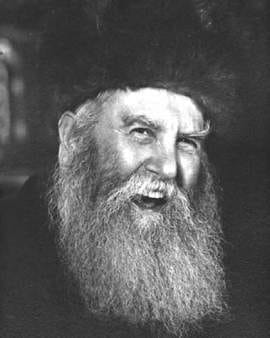
Rabbi Yosef Yitzchak Schneersohn (1880–1950), known as the Rayatz, served as the sixth Lubavitcher Rebbe during one of the most difficult periods in Jewish history.
His leadership spanned the persecution of Jewish communities under Soviet rule and the devastation of European Jewry during the Second World War.
During this time the primary task of Jewish leadership was survival: preserving Torah learning, maintaining religious life, and protecting Jewish communities scattered across exile.
The Rayatz emphasized strengthening Jewish observance, Torah education, and spiritual resilience.
His writings reflect a deep awareness of the condition of exile and the limitations placed upon Jewish political power during that period.
Like many rabbinic authorities of his generation, he approached questions of redemption and political sovereignty with caution.
The condition of exile was not something that could be solved through human political activism. Redemption belonged to the unfolding of divine providence rather than to ideological movements.
Rabbi Menachem Mendel Schneerson and Global Outreach
After the passing of the Rayatz in 1950, leadership of the Chabad movement passed to his son-in-law, Rabbi Menachem Mendel Schneerson.
Under his leadership Chabad expanded dramatically.
The movement established outreach centers across the world, sending emissaries to Jewish communities in North America, Europe, South America, Africa, and Asia.
These centers strengthened Jewish identity and provided religious infrastructure in communities where Jewish life had been weakened by assimilation or migration.
This outreach effort transformed Chabad into one of the most visible Jewish movements of the late twentieth century.
The Introduction of Noahide Outreach
In the later decades of the twentieth century another aspect of Chabad outreach emerged: the promotion of the Seven Noahide Laws to non-Jewish audiences.
Within classical rabbinic literature the Noahide laws represent universal moral principles for humanity.
However, an important halachic nuance is often overlooked.
The formal legal framework surrounding the Noahide laws historically functioned in connection with the authority of the Sanhedrin only in the Land of Israel (which we are still technically in exile).
Without a functioning Sanhedrin and without full Jewish sovereignty in the Land of Israel(which we do not), the legal application of these laws are theoretical.
For this reason many earlier rabbinic authorities did not attempt to construct organized religious identities around Noahide status.
The traditional structure of Torah recognized two primary categories:
The covenant of Israel (which all people can choose).
The nations of the world.
The 1990 U.S. Congressional Resolution
A striking example of the modern development of Noahide outreach occurred in 1990 when the United States Congress passed Public Law 101-267, designating April 6 of that year as “Education Day, U.S.A.” in honor of Rabbi Menachem Mendel Schneerson.
The resolution praised the Lubavitch movement for promoting ethical values and explicitly referenced the Seven Noahide Laws as foundational principles for civilization.
From a civic perspective this resolution reflected admiration for moral education and ethical teachings.
However, from a halachic perspective this development raises important questions.
When civil governments begin referencing Jewish legal concepts such as the Noahide laws, it can create the impression that these laws function as a universal religious system currently being implemented in the world.
Within classical Jewish law, the Noahide framework historically operated within the context of a functioning Sanhedrin and the covenantal structure of Torah law.
Without those institutions, attempts to formalize Noahide identity creates theological confusion.
The Problem of Modern Noahide Identity
One of the challenges that arises from modern Noahide outreach is the creation of a new quasi-religious identity that exists somewhere between Judaism and the surrounding nations.
Instead of simply recognizing universal moral principles, some individuals begin constructing elaborate religious frameworks around Noahide identity itself.
From a traditional Jewish perspective this development raises serious questions.
Historically Judaism recognized two primary paths within the structure of Torah:
The covenant of Israel and the nations of the world.
When non-Jews developed a deep desire to live within the covenant of Torah, classical rabbinic tradition directed them toward conversion rather than toward the creation of intermediate religious categories.
This point is illustrated in historical correspondence connected to the Rayatz.
In one case a couple (A Jewish man and his non-Jewish fiance) sought conversion but were not properly guided through the process. The Rayatz Rabbi Yosef Schneerson of Chabad no less reportedly regarded the failure to convert them as a serious error and instructed that those involved should study the laws of conversion in the Tur and the Shulchan Aruch.
The Guidance of the Rayatz Lubavitcher Rebbe
The previous Lubavitcher Rebbe, Rabbi Yosef Yitzchak Schneersohn, one of the leaders of the ultra-Orthodox world, gave similar guidance on this matter. In 5708 (1948), while in New York, his disciple, Rabbi Menachem Mendel Feldman, wrote to him about the spiritually low state of the community he served, due to the harmful influence of Reform rabbis. He also related that he had turned away a non-Jewish woman who wished to convert in order to marry the son of a community member, and they went instead to convert under the Reform.
In his response, dated 4 Menachem Av 5708 (Igrot, vol. 9, p. 713), the Rayatz wrote regarding conversion: “Concerning his community member… who came to him upset and worried, revealing his great anguish that his son had joined with a non-Jewish woman and wanted to marry her, and that he, the father, could influence them so that she would convert — and my dear friend (the Rebbe writes to his disciple) avoided involvement and pushed him off with various excuses, and they went to the Reform — “this was not good, and it is a great error on his part that must, if possible, even retroactively, be corrected. And in the future, he must involve himself in such matters, and study the laws at their source, the laws of converts in the Tur and Beit Yosef, and afterwards in the Shulchan Aruch with its commentaries, and he should be proficient to carry this out practically, and he should choose two Jews who keep Shabbat and mitzvot, from whom he will form a beit din, and study the book Tiv Gittin, so that he may arrange divorces properly.”
The matter of converting the non-Jewish woman was important to the Rayatz, and fourteen days later he sent another letter (ibid., p. 714): “I am interested to know whether you have taken any steps to repair the omission of not converting the non-Jewish woman, and if not — perhaps you can find some pretext and method to correct the matter according to the Torah.” The same is evident from additional letters. As I showed in my book “Masoret HaGiyur” 26:31 (p. 757), it is evident that these converts did not intend to observe a fully religious lifestyle but, at most, to be traditional.
Nevertheless, the Rayatz’s consistent stance was that if they wish to convert, they should be converted in order to prevent assimilation.
So we see at onetime within the last 100 or so years even Chabad performed conversion, and not offer a Noahide scam….
The implication was clear: when individuals sincerely seek to join the Jewish people, the proper response is not to leave them in religious uncertainty but to guide them through the halachic process.
6. The Perspective of Shaarei Tzafon
Shaarei Tzafon therefore approaches this issue with caution.
We acknowledge that the Noahide laws express universal ethical principles.
At the same time, we believe that constructing organized religious movements around Noahide identity—especially in the absence of a Sanhedrin without a temple and still in exile—creates confusion about the structure of Jewish law and creates a hostile antisemitic environment
The traditional framework of Torah recognizes two clear paths:
The covenant of Israel (which all people can convert to)
and
the nations of the world.
Those who feel genuinely drawn toward Torah historically pursued the path of conversion through halacha.
The restoration of the Sanhedrin and the full legal structure
described in rabbinic literature belongs to the future redemption brought about by Hashem.
Until that time, the task of the Jewish people remains what it has always been:
To strengthen Torah, halachot, and Jewish life across generations.
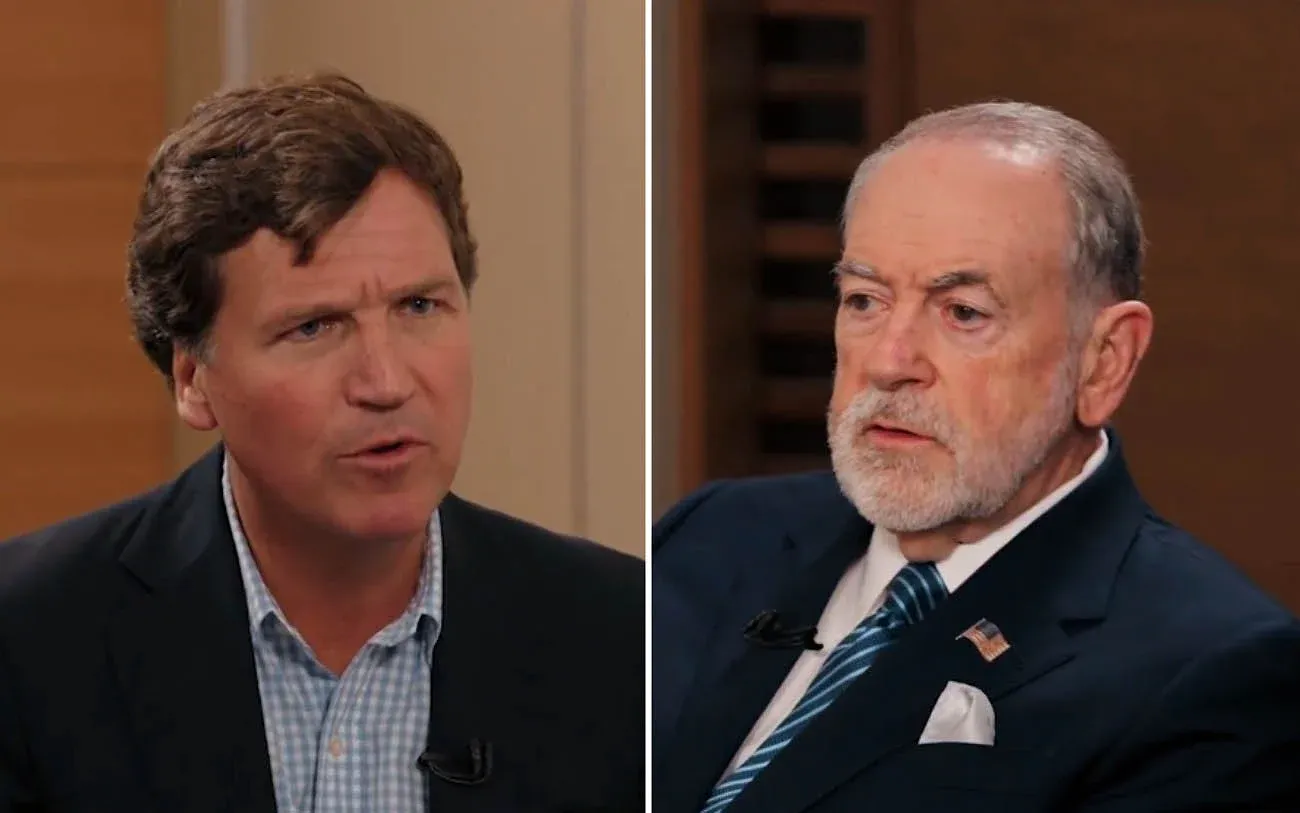
7. Is Tucker Carlson Right or Wrong? Is Mike Huckabee Right or Wrong? Or Is the Truth Somewhere in Between?
The public discussion between Tucker Carlson and Mike Huckabee illustrates an important tension within modern Christian thought about Israel and the Jewish people.
Mike Huckabee represents a tradition commonly known as Evangelical Christian Zionism. Within this framework the return of the Jewish people to the land of Israel is interpreted as a fulfillment of biblical prophecy. Many Evangelical Christians therefore believe that supporting the State of Israel is not only politically beneficial but also spiritually significant.
Tucker Carlson approaches the issue from a different perspective. His concerns focus primarily on the relationship between religion and geopolitics. Carlson has questioned whether modern foreign policy decisions should be shaped by particular theological interpretations of biblical prophecy.
From a Jewish perspective, both men raise legitimate concerns. Each identifies part of the problem, yet neither position fully reflects the traditional Jewish understanding of history, covenant, and redemption.
Carlson is correct to question whether modern political policy should be driven primarily by religious interpretations of prophecy. Judaism itself historically did not base political movements upon Christian prophetic frameworks. For nearly two thousand years Jewish life continued without political sovereignty, sustained instead by Torah study, halachic observance, and communal continuity.
However, Carlson and others sometimes move from skepticism about Christian Zionism into claims that misunderstand Jewish history itself. Assertions that Ashkenazi Jews descend primarily from the medieval Khazar kingdom, for example, are not supported by the overwhelming body of historical or genetic evidence. Jewish communities across the diaspora retain clear ancestral connections to the ancient populations of the Levant.
In addition, Carlson recently made claims connecting the Chabad movement to efforts to rebuild the Temple and even implying that Chabad was connected to the war with Iran. The evidence cited for this claim involved images of soldiers wearing patches connected to Temple symbolism.
However, reporting indicated that the patches in question were associated with the Temple Institute rather than Chabad.
Representatives from Chabad publicly rejected the claim and described the accusation as a dangerous distortion.
In this case the problem appears to be twofold. Carlson relied on imagery that was misidentified, and he drew a much broader conclusion from it than the available evidence justified.
The narrow factual claim—that Chabad was somehow directing political or military events in order to rebuild the Temple—has not been supported by credible evidence.
At the same time, it is important to acknowledge a nuance. Chabad, like mainstream Judaism in general, affirms the traditional Jewish belief that the Temple will one day be rebuilt as part of the messianic redemption. Belief in the coming of Mashiach and the restoration of the Temple is a core element of Jewish faith.
But affirming a future messianic hope is very different from claiming that a particular Jewish movement is attempting to engineer wars or manipulate global politics in order to bring it about.
In this sense Carlson’s concerns about mixing religion and geopolitics raise an important question, but the conclusions drawn from the specific evidence were both misinformed and incorrect.
Huckabee, on the other hand, correctly recognizes the historical connection between the Jewish people and the land of Israel. The Jewish people originated in the land of Israel, and their religious tradition, language, and cultural memory remain deeply tied to it.
However, Huckabee’s interpretation is shaped by a specifically Christian theological framework. Christian Zionism often views the return of Jews to Israel through the lens of Christian prophecy and eschatology—categories that do not originate within Jewish law or rabbinic tradition.
From the standpoint of Torah Judaism, the return of the Jewish people to their land cannot be understood solely through Christian prophetic expectations. Jewish teachings about redemption arise from the Torah, the prophets, and rabbinic tradition, and they emphasize that the ultimate redemption unfolds through divine providence rather than through political movements alone.
Judaism therefore stands in a position distinct from both sides of this debate.
Carlson is right to question the dangers of allowing modern political policy to be driven by theological speculation.
Huckabee is right to recognize the deep historical and spiritual connection between the Jewish people and the land of Israel.
Yet both perspectives interpret Jewish history through frameworks that originate within Christian theology rather than within Judaism itself.
For the Jewish people, the foundation of identity has never been political ideology or prophetic speculation. It has been the covenant established at Sinai.
For most of Jewish history that covenant was sustained not through sovereignty, but through Torah study, halachic observance, and communal life in exile.
In this sense, the Carlson–Huckabee debate ultimately reveals more about internal Christian disagreements than it does about the foundations of Jewish tradition.
The covenant of Torah existed long before modern political Zionism, and it continues independently of contemporary geopolitical debates.
Movements rise and fall.
Political arguments come and go.
Public debates capture attention for a moment and then fade.
But the covenant endures.
And that covenant is Torah.
Traditionalism: The New Counter-Culture — Part Three
Conspiracy, Redemption, and the Jewish Response: From Tucker Carlson to Chabad, the Temple, and the Sanhedrin
How should traditional Judaism respond when Jewish beliefs about redemption, the Temple, the Sanhedrin, and the covenant of Torah become entangled with modern political arguments, Christian theological interpretations, and antisemitic conspiracy theories?
Throughout Jewish history, the Jewish people have faced accusations of secret political influence, religious manipulation, and ambitions for world domination. From medieval accusations against Jewish communities to the fabricated Protocols of the Elders of Zion, these narratives have repeatedly distorted Jewish religious life and contributed to persecution.
In this third installment of Traditionalism: The New Counter-Culture, Rabbi Ariel Manning of Shaarei Tzafon examines the historical origins of these accusations and contrasts them with the actual structure of Torah, Halakhah, and traditional Jewish communal life.
The teaching explores the covenant established at Sinai, the religious authority of the Sanhedrin, the historical significance of the Temple in Jerusalem, and the Jewish understanding of redemption. Particular attention is given to the Three Oaths in Talmud Ketubot 111a and the distinction between messianic expectation and attempts to achieve religious objectives through modern political movements.
The article also considers the historical development of Chabad-Lubavitch, distinguishing the leadership of Rabbi Yosef Yitzchak Schneersohn, the Rayatz, from the worldwide outreach initiatives developed under Rabbi Menachem Mendel Schneerson.
A central discussion concerns the Seven Noahide Laws, contemporary Noahide religious movements, and the traditional halakhic process of conversion. Drawing upon historical correspondence from the Rayatz, the article presents Shaarei Tzafon's critical perspective on constructing separate religious identities around Noahide observance, while emphasizing the importance of welcoming sincere candidates for conversion through the established procedures of Jewish law.
The contemporary debate between Tucker Carlson and Mike Huckabee provides another opportunity to examine how Christian Zionism, political commentary, and modern religious expectations can influence public perceptions of Judaism. The discussion distinguishes legitimate disagreement over political and theological questions from unsupported accusations against Jewish communities and religious organizations.
Throughout the teaching, the essential distinction remains between what Judaism actually teaches and what outsiders, political movements, or conspiracy narratives claim Judaism represents.
The central message is simple: The Jewish people do not require political conspiracy, secret influence, or control over other nations to preserve their covenant. Jewish continuity rests upon Torah, Halakhah, education, family, communal responsibility, and the faithful transmission of Jewish life from one generation to the next.
Traditional Jewish life does not depend upon the approval of political commentators, Christian theological movements, or modern ideological campaigns. Its foundation is the covenant of Torah, and its future depends upon the willingness of Jewish families and communities to understand, preserve, and live that inheritance.
Published by Shaarei Tzafon — The North Gate, an independent, family-led Orthodox Jewish educational and publishing initiative based in Northeastern Michigan, serving Alpena, Hillman, Rogers City, and surrounding communities. Shaarei Tzafon promotes traditional Jewish life, Torah study, practical Halakhah, and the renewal of independent Jewish learning communities throughout the northern boreal regions, extending from the 45th parallel toward the Arctic tundra.
https://www.shaareitzafon.org/traditionalism-the-new-counter-culture-part-3
Shaarei Tzafon — The North Gate
Orthodox Jewish Life and Torah Study in Northeastern Michigan
Shaarei Tzafon — The North Gate, led by Rabbi Ariel Manning, is an independent, family-led Orthodox Jewish educational and publishing initiative based in Northeastern Michigan. We support traditional Jewish life, Torah study, Halakhah, and Jewish education throughout Alpena, Hillman, Rogers City, and surrounding communities. Those interested in traditional Judaism are welcome to contact us for educational resources, Torah learning, and opportunities for discussion by prior arrangement.
Rooted locally, our greater mission extends northward from the 45th parallel — The North Gate — through Michigan, Canada, and Alaska toward the Arctic. We seek to encourage independent Jewish communities, family-centered Torah education, and the renewal of small batei midrash and shtieblach, preserving the rich traditions of Orthodox Judaism for future generations.
Our work begins in Northeastern Michigan, but our vision extends from the 45th parallel toward the Arctic.
Guided by Rambam and Mori Qafiḥ, uplifted by Rebbe Nachman, and grounded by Avraham ben HaRambam’s balance of halakha and inward avodah.
The Orchard’s Path
publishes our books and curricula.
Our mission: a bright, authentic Jewish presence in every northern town.
Created with ©systeme.io


