
You Can Become the Rabbi
B"H
Mastering Judaism Through the Mishneh Torah as the Key to the Whole Torah System
1. The Great Lie: “Judaism Is Too Big for You”
Many sincere Jews are told, directly or indirectly, that Judaism is too vast for them to truly master.
They are told:
“You cannot understand halacha.”
“You cannot know the whole system.”
“You cannot become a posek.”
“You cannot learn enough to guide a home, a family, or a community.”
“You must always remain dependent.”
But this is not the way of Torah.
The Torah was not given only to scholars. It was given to כל ישראל (kol Yisrael) — all Israel. Of course, not everyone becomes a rav. Not everyone becomes a dayan. Not everyone becomes a formal posek for the public. But every Jew is commanded to know Torah, to live Torah, to teach Torah to his children, and to walk in the ways of HaShem.
And for the serious person — the disciplined person, the humble person, the person who is willing to learn every day — there is a path.
That path is not chaos.
That path is not random YouTube clips.
That path is not emotional religion.
That path is not collecting stringencies until Torah becomes impossible.
That path is order.
And the great key of order is the Mishneh Torah of the Rambam.
The title of this lecture is:
You Can Become the Rabbi.
Not because every person should declare himself a posek after reading a few books.
Not because we reject living rabbanim.
Not because humility is unnecessary.
But because the Jewish people desperately need Jews who can learn, think, organize, teach, answer, and guide.
The Jewish home needs a rabbi.
The rural community needs a rabbi.
The isolated family needs a rabbi.
The sincere convert needs a rabbi.
The confused Jew returning to Torah needs a rabbi.
And sometimes, in the wilderness, the first rabbi must be built from within.

2. What Does It Mean to “Become the Rabbi”?
When we say, “You can become the rabbi,” we must define the phrase carefully.
A rabbi is not merely someone with a title.
A rabbi is not merely someone with a beard, a black hat, a frock, a certificate, or a public platform.
A rabbi is a person who can take Torah from heaven and bring it into life.
A rabbi must know how to answer:
What is forbidden?
What is permitted?
What is required?
What is only a custom?
What is strict law?
What is chumrah?
What is leniency?
What applies in the home?
What applies in the synagogue?
What applies in an emergency?
What applies only in the Land of Israel?
What applies today?
What applied when the Temple stood?
What is biblical?
What is rabbinic?
What is minhag?
What is mussar?
What is Kabbalah?
What is merely cultural pressure?
This is the work of a rav and posek.
But there are levels.
A person can become the “rabbi” of his own home by knowing how to guide his family in Torah.
A person can become a teacher in a small group by mastering the foundations and teaching responsibly.
A person can become a community guide by learning halacha in an organized way and remaining accountable.
A person can become a formal rabbi or posek through deeper learning, testing, semikhah, and communal recognition.
The lecture does not mean: “Read Rambam for a year and declare yourself the gadol hador.”
It means something much more serious:
With discipline, humility, and proper structure, a person can master the architecture of Judaism in one to three years well enough to stop being lost.
And the center of that structure is the Mishneh Torah.
3. The Problem With Unstructured Judaism
Many people try to learn Judaism by beginning everywhere at once.
They open the Chumash.
Then they read some Talmud.
Then they watch a lecture.
Then they hear a Hasidic story.
Then they see a quote from the Zohar.
Then they read a responsum.
Then someone tells them, “The Mishnah Berurah says…”
Then someone else says, “But the Ben Ish Chai says…”
Then someone else says, “But the Arizal says…”
Then someone says, “But the Vilna Gaon disagreed…”
Then someone else says, “But Chabad does…”
Then someone else says, “But Sephardim do…”
Then someone else says, “But Yemenites never accepted…”
And the person drowns.
Not because Torah is impossible.
But because he has no map.
He is walking through an ancient city without streets, without signs, without a compass, without a guide.
This is why the Rambam is so necessary.
The Rambam does not replace Torah.
The Rambam gives Torah architecture.
He takes the enormous ocean of Torah — Written Torah, Mishnah, Talmud Bavli, Talmud Yerushalmi, Tosefta, Sifra, Sifre, Mekhilta, Geonic tradition, legal reasoning — and he arranges it into a complete halachic structure.
The Mishneh Torah is not a random code.
It is a palace.
It is a map.
It is a legal universe.
It begins with knowledge of HaShem and ends with Mashiach.
It covers prayer, Shabbat, festivals, marriage, divorce, damages, courts, kings, Temple service, sacrifices, purity, agriculture, ethics, idolatry, repentance, Torah study, and the laws of the nations.
This is why the Rambam becomes the key.
Not the only source.
Not the final word for every community.
But the key.
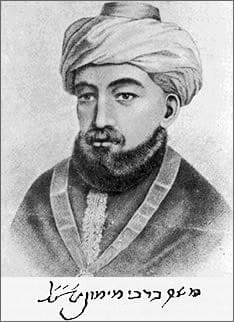
4. The Rambam as the Bridge Between the Bible and Halacha
Many people make a terrible mistake.
They think there is “the Bible” on one side and “rabbinic Judaism” on the other side.
That is false.
Judaism is not Bible versus rabbis.
Judaism is Torah as received, interpreted, guarded, and lived by Israel.
The Written Torah gives the commandments.
But the Written Torah often does not tell you all the practical details.
The Torah says to keep Shabbat.
But what is melachah?
The Torah says to slaughter properly.
But how?
The Torah says to bind tefillin.
But what are tefillin?
The Torah says to dwell in a sukkah.
But what makes a sukkah valid?
The Torah says to judge.
But by what procedure?
The Torah says to love HaShem.
But how is that lived?
The Torah says to fear HaShem.
But what does that require?
The Torah gives the divine command. The Oral Torah gives the legal body, the received interpretation, and the living application.
The Mishneh Torah becomes the bridge.
It allows a student to see how the mitzvah in the Torah becomes lived halacha.
This is where the connection to Sefer HaMitzvot and Sefer HaChinuch becomes powerful.
The learning chain becomes:
Torah → Sefer HaMitzvot → Sefer HaChinuch → Mishneh Torah → Shulchan Aruch → Acharonim
This means:
The Torah gives the command.
Sefer HaMitzvot identifies and organizes the mitzvah.
Sefer HaChinuch explains the mitzvah, its roots, and moral-spiritual meaning.
Mishneh Torah codifies the mitzvah into complete halachic form.
Shulchan Aruch shows the later accepted practical structure of Jewish communities.
The Acharonim show how the law was applied, debated, narrowed, expanded, or clarified in real life.
This is not random learning.
This is Torah with a spine.
5. Mishneh Torah Yomi: One to Three Years to See the Whole System
The genius of Mishneh Torah Yomi is that it forces the learner to encounter the whole Torah.
Not only the parts people like.
Not only Shabbat.
Not only kashrut.
Not only holidays.
Not only inspirational topics.
The whole Torah.
The Rambam divided the Mishneh Torah into fourteen books:
Sefer HaMadda — knowledge, foundations of Torah, character, Torah study, idolatry, repentance.
Sefer Ahavah — love of HaShem through daily mitzvot: Shema, prayer, tefillin, mezuzah, blessings, circumcision.
Sefer Zemanim — Shabbat and festivals.
Sefer Nashim — marriage, divorce, yibbum, na’arah betulah, sotah.
Sefer Kedushah — forbidden relations, forbidden foods, slaughter.
Sefer Hafla’ah — vows, oaths, nezirut, valuations.
Sefer Zera’im — agriculture, charity, terumot, tithes, shemitah.
Sefer Avodah — Temple service.
Sefer Korbanot — sacrifices.
Sefer Taharah — purity and impurity.
Sefer Nezikin — damages and property injury.
Sefer Kinyan — acquisition and commerce.
Sefer Mishpatim — civil law, loans, claims, inheritance.
Sefer Shoftim — courts, testimony, kings, war, and Mashiach.
A person who studies the Rambam daily stops thinking of Judaism as fragments.
He begins to see the kingdom.
He sees that Judaism is not just “religious feeling.”
It is civilization.
It is law.
It is theology.
It is family.
It is courts.
It is ethics.
It is economics.
It is agriculture.
It is ritual.
It is holiness of time.
It is holiness of body.
It is holiness of land.
It is holiness of speech.
It is holiness of thought.
The Mishneh Torah trains the mind to see Judaism as one complete structure.
That is the beginning of becoming a rabbi.
6. The Rambam Connects the Generations
The Rambam is uniquely powerful because he gathers the whole earlier tradition into one legal body.
Through the Rambam, the student is connected backward to:
Torah Shebikhtav — the Written Torah.
Moshe Rabbeinu — the original receiver of Torah.
Yehoshua and the Elders — the transmission of Torah into national life.
Anshei Knesset HaGedolah — the Men of the Great Assembly.
The Zugot — the early pairs of Torah leadership.
The Tannaim — the sages of the Mishnah.
The Amoraim — the sages of the Gemara.
The Savoraim and Geonim — those who clarified and transmitted the Talmudic tradition.
The Rishonim — the early medieval authorities.
And through the Rambam, the student is connected forward to:
Tur
Beit Yosef
Shulchan Aruch
Rema
Magen Avraham
Taz
Shach
Pri Megadim
Chayei Adam
Kitzur Shulchan Aruch
Ben Ish Chai
Aruch HaShulchan
Mishnah Berurah
Yalkut Yosef
Modern responsa literature
The Rambam stands in the middle like a great mountain pass.
Behind him is Sinai, Mishnah, Gemara, and Geonic tradition.
In front of him are the codes, responsa, Acharonim, and living minhagim.
This is why the Rambam is the key.
He does not erase the Talmud.
He opens it.
He does not erase the Shulchan Aruch.
He explains its roots.
He does not erase later poskim.
He gives you the foundation needed to understand where they are standing.
Without the Rambam, many people read later halacha as isolated rulings.
With the Rambam, you can see the whole body.
7. How to Learn: The One-to-Three-Year Path
A serious student can build a powerful foundation in one to three years.
Not by rushing.
Not by pretending.
Not by skipping humility.
But by learning in a disciplined way.
Year One: Build the Map
In the first year, the goal is exposure to the whole Mishneh Torah.
Study daily.
Even if you do not understand everything.
Even if some sections feel distant.
Even if purity laws, Temple service, sacrifices, courts, and damages feel foreign.
Keep going.
The goal of year one is not mastery of every detail.
The goal is to see the whole palace.
Alongside Mishneh Torah Yomi, connect each major section to:
The biblical mitzvah.
The relevant mitzvah number in Sefer HaMitzvot.
The parallel discussion in Sefer HaChinuch.
The matching area in Shulchan Aruch, when applicable.
This creates mental hooks.
You begin to know where everything lives.
Year Two: Build the Connections
In the second year, the student returns to Mishneh Torah with more seriousness.
Now, when learning a halacha, ask:
Where is this in the Torah?
Is this mitzvah biblical or rabbinic?
Where does Sefer HaMitzvot classify it?
How does Sefer HaChinuch explain its root?
Does Shulchan Aruch rule the same way?
Does Rema differ?
What do Ben Ish Chai, Aruch HaShulchan, Mishnah Berurah, or Yalkut Yosef do with it?
Where is the lenient opinion?
Where is the strict opinion?
What is accepted practice?
What is minhag?
What is emergency halacha?
What is ideal halacha?
Now the learner is no longer merely reading.
He is comparing.
He is connecting.
He is beginning to think like a posek.
Year Three: Build Practical Hora’ah
In the third year, the student begins focused practical study.
Choose areas necessary for life:
Shabbat
Kashrut
Prayer
Blessings
Family purity, where relevant and with proper guidance
Mourning
Holidays
Tzedakah
Interpersonal law
Conversion and community boundaries, if one is involved in outreach
Now the student begins writing short teshuvot.
Not public rulings at first.
Practice teshuvot.
Question.
Sources.
Categories.
Opinions.
Analysis.
Conclusion.
Practical application.
Caveats.
This is how the mind becomes rabbinic.
A rabbi is not someone who merely quotes.
A rabbi organizes reality through Torah.
8. The Rambam Does Not Make You Narrow — He Makes You Capable
Some people think that if you start with the Rambam, you become narrow.
That is not true.
If the Rambam is used properly, he makes you broader.
Why?
Because once you understand the Rambam, you can understand disagreement.
You can understand why the Shulchan Aruch rules differently.
You can understand why the Rema adds Ashkenazic practice.
You can understand why the Ben Ish Chai combines halacha, Sephardic practice, and Kabbalistic sensitivity.
You can understand why the Aruch HaShulchan often explains the living communal practice.
You can understand why the Mishnah Berurah clarifies Ashkenazic practical observance.
You can understand why Yalkut Yosef preserves and organizes Sephardic halacha through the rulings of Rav Ovadia Yosef.
Without the Rambam, the student often becomes tribal.
He says:
“My group does this.”
“My rabbi says this.”
“My community holds this.”
“My minhag is this.”
But he may not know why.
With the Rambam, he begins to understand the machinery.
He sees:
This is de’oraita.
This is derabbanan.
This is minhag.
This is gezeirah.
This is takkanah.
This is chumrah.
This is based on Kabbalah.
This is based on Talmudic interpretation.
This is based on communal fear.
This is based on a minority opinion.
This is accepted practice.
This is only for certain communities.
This is emergency leniency.
This is ideal performance.
That is the beginning of real halachic maturity.
9. The Difference Between a Rabbi and a Stringency Collector
A rabbi is not a stringency machine.
A rabbi is not someone who always says no.
A rabbi is not someone who crushes simple Jews under endless burdens.
A rabbi is also not someone who permits everything.
A true posek must know both sides.
He must know the severity of Torah.
He must know the mercy of Torah.
He must know when to strengthen a wall.
He must know when to open a gate.
He must know when a chumrah will preserve holiness.
He must know when a chumrah will destroy observance.
This is especially important for rural Jews, isolated Jews, converts, returning Jews, and small communities.
If Torah is presented only in its most difficult form, many people will never enter.
If Torah is presented without discipline, it becomes meaningless.
The posek must hold both.
This is why the Rambam is so important.
The Rambam is clear.
He is structured.
He is not hysterical.
He does not drown the learner in endless commentary before giving the law.
He teaches that Torah is livable.
Demanding, yes.
Holy, yes.
Precise, yes.
But livable.
The goal is not to make Judaism impossible.
The goal is to make Jews holy.
10. The Final Vision: Every Home a Small Beit Midrash
The dream is not that every person becomes arrogant.
The dream is not that every person becomes his own sect.
The dream is not that every person ignores rabbinic authority.
The dream is that every Jewish home becomes a small beit midrash.
A home where the father and mother know the halachic structure.
A home where children see Torah as clear and beautiful.
A home where Shabbat is not confusion.
A home where kashrut is not panic.
A home where holidays are not performance anxiety.
A home where Torah is not outsourced completely.
A home where the Rambam sits on the table.
A home where Sefer HaMitzvot gives the command.
A home where Sefer HaChinuch gives the reason and moral root.
A home where Mishneh Torah gives the legal body.
A home where Shulchan Aruch gives the communal practice.
A home where Acharonim give practical refinement.
A home where the siddur is alive.
A home where the Torah is not foreign.
This is what it means to say:
You can become the rabbi.
Not the arrogant rabbi.
Not the fake rabbi.
Not the self-appointed cult leader.
Not the man who knows three sources and thinks he can overturn Israel.
But the responsible Jew.
The learned Jew.
The disciplined Jew.
The humble Jew.
The Jew who knows where to look.
The Jew who knows when to answer.
The Jew who knows when to say, “I do not know.”
The Jew who knows when to ask a greater rav.
The Jew who can guide his home, strengthen his community, and bring Torah to places where no rabbi may be available.
The Rambam gives us the key.
The Torah gives us the command.
The mitzvot give us the path.
The halacha gives us the structure.
The Jewish people give us the responsibility.
And HaShem gives us the strength.
So learn.
Open the Mishneh Torah.
Connect it to the Torah.
Connect it to Sefer HaMitzvot.
Connect it to Sefer HaChinuch.
Connect it to Shulchan Aruch.
Connect it to the Acharonim.
Connect it to life.
And with humility, discipline, and fear of Heaven, you can rise from confusion to clarity.
You can become the teacher your home needs.
You can become the guide your community needs.
You can become the Jew who knows how to answer.
In that sense, yes:
You can become the rabbi.
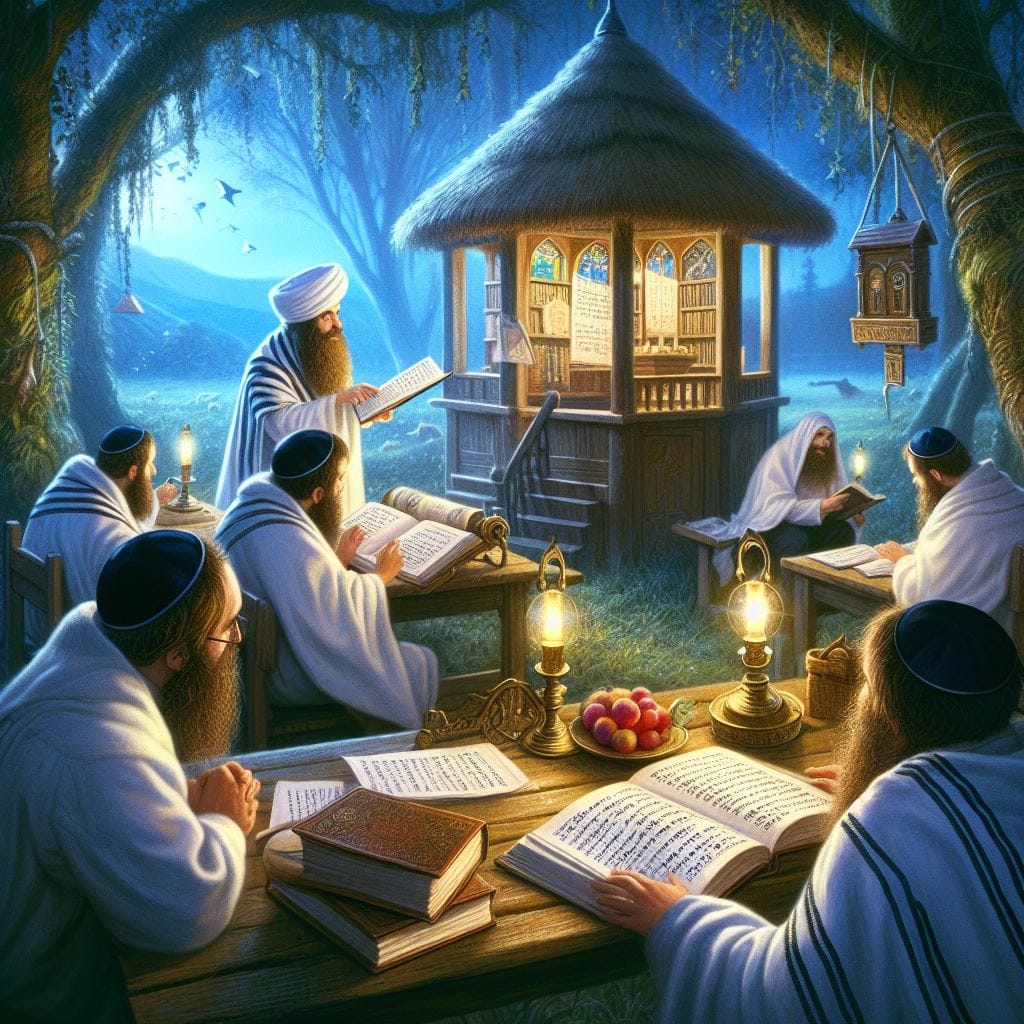
You Can Become the Rabbi
Mastering Judaism Through the Mishneh Torah — A Path Toward Independent Jewish Learning
Can an ordinary Jew develop the knowledge necessary to understand Torah, practice Halakhah, teach others, and help sustain traditional Jewish life without constant dependence upon distant institutions?
The answer begins with education, discipline, humility, and a willingness to study the complete structure of Judaism.
In You Can Become the Rabbi, Rabbi Ariel Manning explores how the Mishneh Torah of the Rambam provides an organized foundation for understanding Jewish law and the responsibilities of Jewish life. Rather than approaching Judaism as an overwhelming collection of disconnected rulings, customs, and opinions, the student learns to recognize an interconnected legal and religious tradition.
The method begins with the Written Torah and continues through Sefer HaMitzvot, Sefer HaChinuch, Mishneh Torah, Shulchan Aruch, and the later authorities. Each work contributes something essential: the commandment, its classification, its explanation, its legal structure, and its practical application.
Through consistent daily study, the learner gradually develops the ability to distinguish biblical commandments from rabbinic enactments, established customs from voluntary stringencies, and ordinary questions from those requiring the judgment of an experienced rabbi.
The purpose is not to manufacture self-appointed rabbis. It is to cultivate knowledgeable, responsible Jews who can strengthen their families and communities while respecting genuine rabbinic scholarship and authority.
This vision is particularly important in rural communities such as Alpena, Hillman, Rogers City, and the surrounding areas of Northeastern Michigan, where established Jewish institutions and regular access to Torah instruction may be limited.
A Jewish home can become a small beit midrash. A family can develop a serious program of Torah learning. A handful of dedicated students can begin building the foundations of a future Jewish community.
And where there is no established congregation, the commitment to study, teach, and preserve Torah can still flourish.
The central message: Jewish independence begins with Torah knowledge. Learn deeply, remain humble, respect Halakhah, and become capable of carrying Jewish tradition into the next generation.
Published by Shaarei Tzafon — The North Gate, an independent, family-led Orthodox Jewish educational and publishing initiative based in Northeastern Michigan, serving Alpena, Hillman, Rogers City, and surrounding communities. Shaarei Tzafon promotes traditional Jewish life, Torah study, practical Halakhah, and the renewal of independent Jewish learning communities throughout the northern boreal regions, extending from the 45th parallel toward the Arctic tundra.
Article: https://www.shaareitzafon.org/you-can-become-the-rabbi
Shaarei Tzafon — The North Gate
Orthodox Jewish Life and Torah Study in Northeastern Michigan
Shaarei Tzafon — The North Gate, led by Rabbi Ariel Manning, is an independent, family-led Orthodox Jewish educational and publishing initiative based in Northeastern Michigan. We support traditional Jewish life, Torah study, Halakhah, and Jewish education throughout Alpena, Hillman, Rogers City, and surrounding communities. Those interested in traditional Judaism are welcome to contact us for educational resources, Torah learning, and opportunities for discussion by prior arrangement.
Rooted locally, our greater mission extends northward from the 45th parallel — The North Gate — through Michigan, Canada, and Alaska toward the Arctic. We seek to encourage independent Jewish communities, family-centered Torah education, and the renewal of small batei midrash and shtieblach, preserving the rich traditions of Orthodox Judaism for future generations.
Our work begins in Northeastern Michigan, but our vision extends from the 45th parallel toward the Arctic.
Guided by Rambam and Mori Qafiḥ, uplifted by Rebbe Nachman, and grounded by Avraham ben HaRambam’s balance of halakha and inward avodah.
The Orchard’s Path
publishes our books and curricula.
Our mission: a bright, authentic Jewish presence in every northern town.
Created with ©systeme.io


