
Torah Traditionalism Part 2
B"H
A Ten-Part Lecture on Religious Sanity, Jewish Continuity, and the Corrective Power of Traditionalism
Introduction
If Torah is not a private religious construction but a covenantal life transmitted through the people of Israel, then it follows that Torah should produce not chaos, but order; not theatrical instability, but disciplined holiness; not pseudo-Jewish performance, but a livable sacred world. In an age when many seekers encounter Judaism through fragments, reactions, and imitations, this point must be stated clearly: Torah is not hysteria. It is the sanctification of life through halakhah, rhythm, family, prayer, study, and inherited communal form.

Part I. The Contemporary Crisis of Religious Extremes
One of the defining characteristics of the modern religious landscape is the tendency toward extremes. On the one hand, one encounters secularization, deracination, and the evacuation of inherited forms of sacred life. On the other hand, one increasingly encounters reactive religiosity: emotionally heightened, conspiratorial, aesthetically performative, and often detached from disciplined tradition. These two phenomena, though outwardly opposed, are in fact structurally related. Both represent forms of instability. One hollows out religion; the other inflames it without ordering it.
This instability has produced a particularly difficult environment for those who are sincerely searching for truth. Many contemporary seekers recognize, often quite accurately, that something profound has been lost in modern life. They perceive moral confusion, familial breakdown, spiritual superficiality, institutional mistrust, and a general collapse of civilizational confidence. In response, they begin searching for older, deeper, and more disciplined ways of life. For some, this search leads toward Torah.
That movement toward Torah is often motivated by a genuine intuition: namely, that Torah preserves a sacred structure of life that modernity has not been able entirely to erase. Yet sincerity of longing does not by itself guarantee soundness of method. In the absence of living guidance, transmitted practice, and disciplined study, the search for Torah can devolve into imitation, fragmentation, and theatrical religiosity.
This lecture therefore begins with a central claim: the answer to spiritual and social disorder is not religious hysteria. The answer is not exaggeration, panic, costume, or ideological fervor. The answer is ordered holiness, lived through transmitted discipline. Torah is not hysteria; it is the sanctification of life through covenantal form.

Part II. Torah and the Distinction Between Substance and Performance
A major confusion in contemporary religious culture is the conflation of intensity with authenticity. Many assume that the more visually severe, socially abrasive, or rhetorically extreme a movement appears, the closer it must be to primordial religious truth. Such an assumption is deeply misleading.
Torah is not reducible to visual markers, linguistic borrowings, or emotional intensity. A person may adopt ritualized clothing, Hebrew terminology, and anti-modern rhetoric while remaining fundamentally unformed in the substance of Torah life.
Conversely, another person may appear externally ordinary while living within the actual disciplines of mitzvot, prayer, sacred time, domestic sanctity, and covenantal obligation. The latter, though less dramatic, stands far closer to authentic Torah existence.
The distinction here is fundamental. Performance privileges appearance. Torah privileges obligation. Performance is directed toward self-display, whether consciously or unconsciously. Torah directs the self toward submission: to law, to rhythm, to inherited structure, and to HaShem The God of Israel. Performance collects symbols. Torah orders life.
This distinction is especially important in an era in which many attempt to reconstruct Judaism through fragments. Tzitzit are adopted without halakhic framework. Hebrew phrases are employed without linguistic competence or textual discipline. Biblical vocabulary is invoked without covenantal context. Identity claims are asserted without peoplehood, conversion, or submission to the normative, covenantal, and historically transmitted life of Torah, this is found only within actual Judaism.”
Such patterns may reflect longing, but longing must not be confused with inheritance. Admiration is not the same as belonging, and imitation is not the same as transmission. A living tradition cannot be rebuilt through aesthetic appropriation alone.
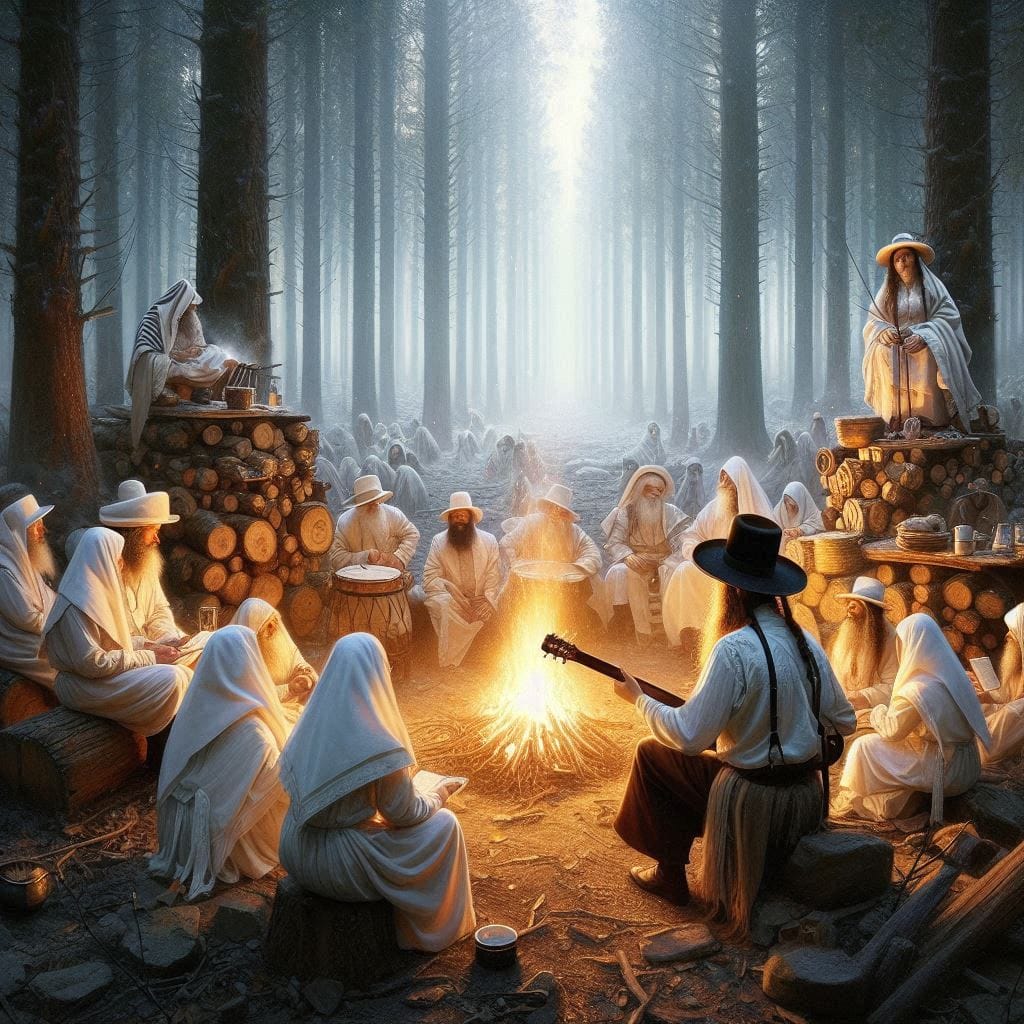
Part III. The Psychological Appeal of Religious Hysteria
The attraction of religious extremism should not be underestimated. Hysteria has a psychological logic. It offers clarity in confusion, urgency in banality, and significance in alienation. It enables the adherent to imagine himself uniquely awakened, uniquely chosen, uniquely aware of hidden realities from which the masses remain excluded.
This structure is not unique to one movement. It appears repeatedly in periods of social dislocation. The individual who feels disoriented by modernity may become especially vulnerable to explanatory systems that totalize reality. Everything becomes connected. Every institution becomes suspect. Every disagreement becomes evidence of corruption. Every medical question becomes a civilizational threat. Every social problem becomes a coordinated conspiracy.
It is essential to acknowledge that such patterns often begin from partially legitimate observations. There are real institutional failures. There are genuine abuses of power. There are historical conspiracies. There are harmful medical products, flawed public policies, and medical interventions that deserve serious scrutiny. But partial truth can easily become total distortion when it is no longer governed by proportion.
The ability to distinguish between “some” and “all” is one of the marks of an ordered intellect. A mature religious mind can say that some institutions are corrupt without concluding that all institutions are irredeemably evil. It can question certain medicines without collapsing into blanket anti-medical paranoia. It can acknowledge deception without construing all reality as deception.
Once measure is lost, wisdom becomes impossible. Hysteria is not a surplus of discernment; it is the collapse of discernment into total suspicion. Such a disposition cannot sustain a sane Torah life, because Torah requires judgment, categorization, responsibility, and restraint.
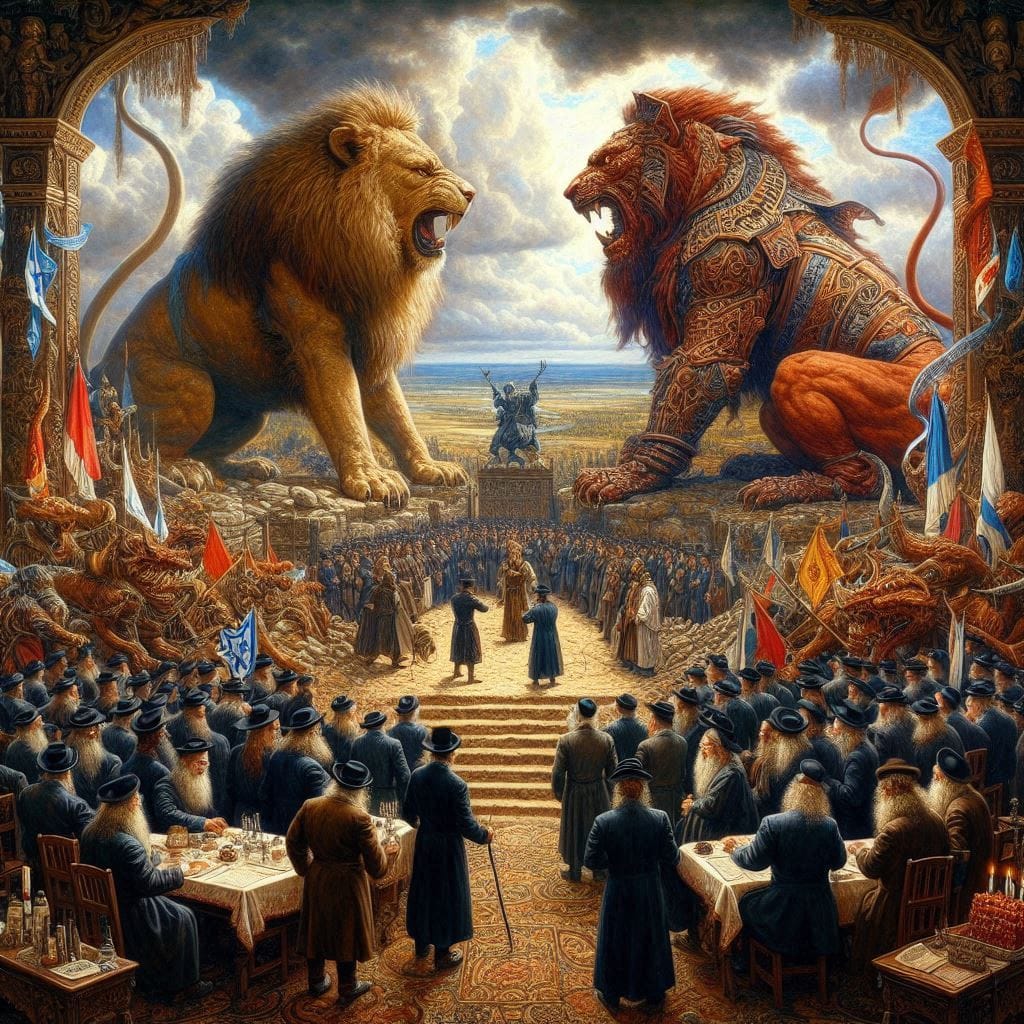
Part IV. Torah as the Architecture of a Livable World
The genius of Torah lies not merely in its theological claims, but in its capacity to structure life. Torah is not simply a system of abstract beliefs. It is an architecture of living. It governs time, speech, food, labor, marriage, prayer, mourning, celebration, property, injury, modesty, justice, and rest. It takes human existence in its ordinariness and places it within sacred order.
This point deserves special emphasis. Torah does not abolish ordinary life; it sanctifies it. It does not ask human beings to live in perpetual religious emergency. Rather, it teaches how to inhabit the world before God with dignity and discipline. The rhythms of waking and sleeping, washing and blessing, working and refraining, preparing and celebrating, all become ordered through mitzvot.
A healthy Torah environment is therefore recognizably human. It includes meals, schedules, domestic responsibilities, intergenerational continuity, and the patient formation of character. It includes sacred interruption through Shabbat and festivals, but precisely as interruptions that restore form rather than destroy it. Its holiness is not primarily theatrical. It is rhythmic.
This is why normalcy should not be dismissed as spiritually thin. In Torah terms, normalcy may in fact be one of the primary vessels of holiness. A life that is disciplined, measured, and inhabitable is not opposed to sanctity. It is often the necessary condition for sanctity to endure.

Part V. The Category of Torah Normalcy
The phrase “Torah normalcy which is Jewish normalcy” deserves serious reflection. By it one means not secular assimilation or the dilution of Torah distinctiveness, but the recovery of Torah as a lived civilizational form rather than as a fringe performance. Jewish normalcy refers to the ability to experience Judaism not merely as an ideology or a set of markers, but as an ordinary mode of life.
This includes seeing how actual Jewish homes function, how sacred time orders the week and year, how prayer belongs within disciplined rhythm rather than emotional spectacle, how modesty inhabits clothing and speech without becoming theatrical, and how law gives shape to ordinary conduct. It includes the atmosphere of continuity: the table, the books, the calendar, the kitchen, the modes of address, the habits of study, the transmission of memory.
Many contemporary seekers have never encountered this. What they know of “religion” may be shaped by charismatic emotionalism, unstable anti-institutional rhetoric, improvised home rituals, or internet-mediated identity communities. When such individuals turn toward Torah, they may therefore assume that Jewish life is likewise constituted by symbolic intensity and oppositional self-presentation.
But actual Torah life, while certainly containing elements of zeal and sacred seriousness, is much calmer and much deeper than this. It is structured. It is inherited. It is socially embodied. It does not require constant reinvention because it is already a civilization. Those approaching Torah need access not merely to information, but to this atmosphere of ordered normalcy.
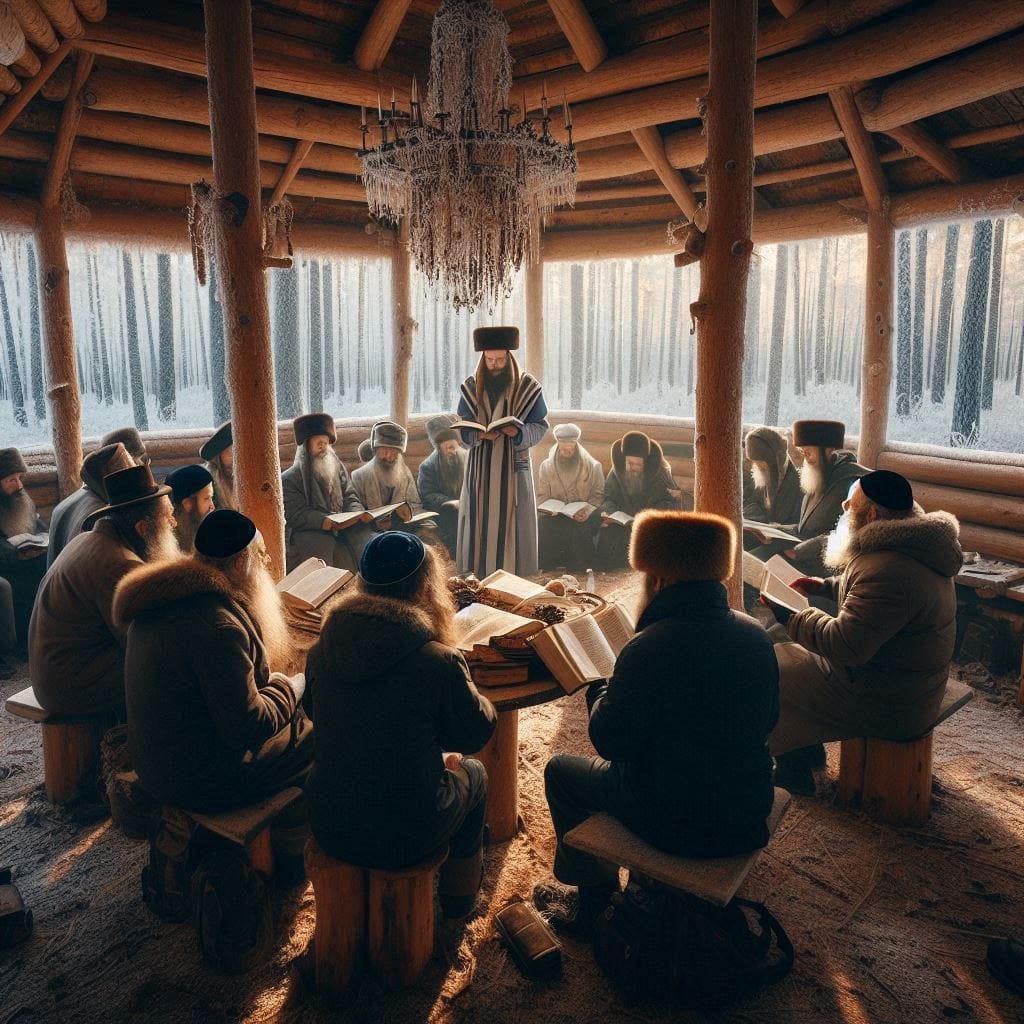
Part VI. The Necessity of Learning Torah From Real Practitioners of Torah
If Torah is a transmitted way of life, then it follows that those who seek Torah must learn it from within living Torah practice. This point should not be softened unnecessarily, so lets speak plainly the people within living Torah practice; are Jews that practice Traditional and Orthodox Judaism.. One does not learn Torah adequately from aesthetic imitators, from religious hobbyists, from self-appointed online authorities, or from those who have adopted fragments of Jewish symbolism while remaining outside normative Torah life.
Nor is the matter solved merely by turning to any voice with Jewish ancestry or Jewish vocabulary. The issue is lived practice. The proper study of Torah requires contact with those who actually pray as Jews, observe sacred time as Jews, submit to Torah and Halakhic discipline as Jews, and inhabit the structures of Jewish continuity. Without this, what is learned may be interesting, moving, or rhetorically compelling, but it will not constitute adequate entry into Torah life.
This observation must also be distinguished from naïveté. Not every Jew is a reliable teacher. Some are secular, some are poorly informed, some are ideological distorters, and some are estranged from the very tradition they nominally represent.
Yet the principle remains intact: Judaism must be learned from within real Jewish life, not from synthetic approximations of it.
A person cannot learn medicine from an actor in a hospital drama, nor carpentry from someone who wears a tool belt without ever building a house. By the same logic, one cannot learn real Torah from those who dress like Jews while lacking the actual disciplines of Jewish living. Seekers need teachers who embody what they teach.

Part VII. The Problems with Imitation and Religious Hybridization
A particularly significant modern phenomenon is the emergence of pseudo-Jewish religious forms that are neither normatively Christian nor authentically Jewish. The concern here is not with established Christian denominations, many of which preserve their own historical traditions, internal coherence, recognizable forms of reverence, and sincere modes of approaching G-d according to their inherited faith.
Judaism and Christianity are not the same, and their distinctions must be preserved honestly; yet it remains important to acknowledge that traditional Christian communities often embody a genuine religious seriousness, moral structure, and devotional beauty within their own framework.
The issue, rather, is an intercrossed religiosity produced through reaction, admiration, and symbolic borrowing, in which individuals step outside the integrity of their inherited Christian tradition, adopt selected Jewish externalities, and construct a new identity without entering actual Jewish theological, halakhic, or communal life. What emerges is not a recovery of Torah life, but a religious counterfeit: externally suggestive, internally unstable, frequently entangled with antisemitic assumptions, and severed from the living chain of transmission.
Such movements may adopt Hebrew names, ritual objects, fringes, anti-modern rhetoric, and somr “biblical” clothing. They often claim to have rediscovered an original Hebraic faith. Yet where these external forms are not subordinated to actual Torah and Halakhic life, Jewish peoplehood, conversion, and mesorah, the result is not Torah nor Judaism, nor what the ancient Hebrews practiced. It is a simulation of a false “Biblical” construct through selective appropriation.
The dangers here are both intellectual and spiritual. Intellectually, such “hybridization” confuses categories. It obscures the distinction between admiration and participation, between textual borrowing and covenantal belonging. Spiritually, it can trap sincere seekers in a state of false arrival. Having adopted a Biblical-looking forms, they may cease to seek actual Torah teachers, actual Jewish communities, and actual Jewish discipline. The costume becomes a substitute for the covenant.
It is therefore necessary to state with clarity that dressing this way does not make one a Jew nor a “Hebrew”, and employing Hebrew words does not create Torah continuity. This is not cruelty. It is categorical honesty. The proper response to sincere seekers is not mockery, but guidance: away from imitation and toward authentic encounter with living Torah life.
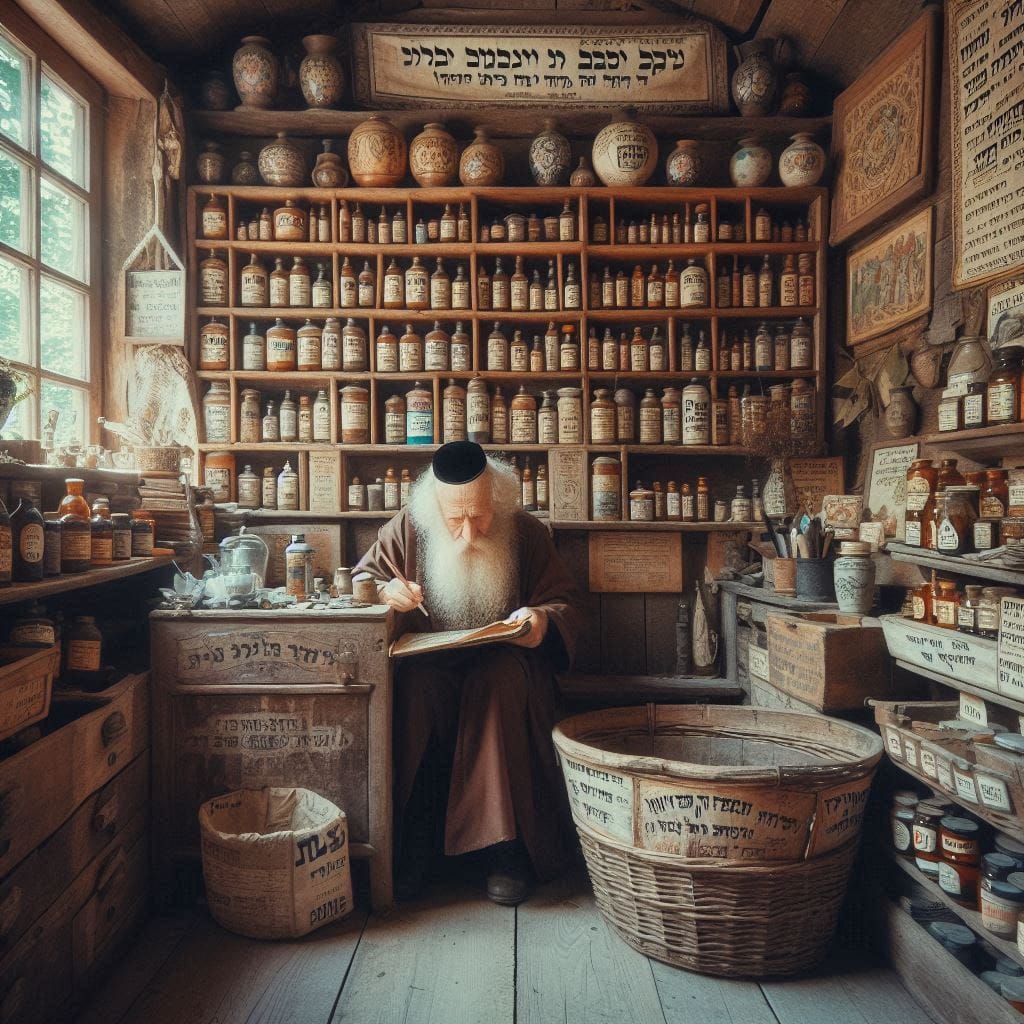
Part VIII. A Measured Torah Approach to Medicine, Society, and Institutional Critique
In discussions of normalcy, one must avoid the opposite error of naïve trust. A sane Torah life is not one that accepts every institutional claim uncritically. Jewish tradition has long included suspicion of abuse, concern for bodily welfare, and serious reflection on the moral limits of social power. There is ample room within Torah for critique, caution, and even sharp opposition when warranted.
Yet critique within Torah is governed by measure. It is disciplined by distinctions. It does not collapse into totalizing suspicion. A mature Torah posture allows one to say: some medical interventions are beneficial, others are harmful; some institutional actors are competent, others are corrupt; some warnings are prudent, others exaggerated. Such a posture is not weak. It is judicious.
The inability to sustain such distinctions is a sign of immaturity. When every medical question becomes an absolute referendum on civilization, when every social development is interpreted as apocalyptic conspiracy, and when every form of caution hardens into paranoia, one no longer inhabits the world responsibly. One has abandoned the very balance Torah seeks to produce.
This matters especially for family and communal life.
Panic is not a sustainable social principle. It exhausts marriages, disturbs children, corrodes trust, and turns the domestic sphere into a theater of perpetual alarm. A home ordered by Torah should certainly be alert to danger, but it should not be ruled by fear. It should be capable of prudence without obsession, seriousness without collapse, and vigilance without mania.
Part IX. Traditionalism as a Corrective to Religious Polarization
The broader theoretical point emerging from these observations is that traditionalism often functions as a corrective to religious extremes. By traditionalism one does not mean romantic nostalgia or the uncritical sanctification of every inherited social form. Rather, one means submission to a received order that restrains the ego’s impulse either to dissolve tradition or to reinvent it through reactionary fervor.
When a religious tradition weakens, it frequently fractures in two directions. One direction leads toward accommodation, dilution, and the gradual evacuation of distinctive norms. The other leads toward hyper-reaction: shrillness, performativity, improvisation, and absolutized rhetoric. Though opposite in tone, both are forms of alienation from the stability of transmitted life.
Traditionalism resists both distortions. It insists that one is not authorized either to empty the inheritance or to refashion it according to one’s own emotional intensities. Instead, it demands reception, discipline, patience, and continuity. It reminds the person that he is not the founder of truth, but its inheritor.
This sociological and civilizational principle can be observed across multiple religious communities, even where theological truth claims differ sharply. Wherever strong traditional forms endure, they often provide resistance both to modern dissolution and to fringe reaction. Tradition gives rhythm, memory, tested practices, and communal humility. It creates a path broad enough for ordinary people to walk without falling into either abstraction or hysteria.
For Torah life specifically, this means that the recovery of traditional structure is not a retreat into dead formalism, but a necessary defense against the volatilization of religion into spectacle or ideology.
Part X. The Path Forward: Holy Normalcy and the Renewal of Torah Life
The practical conclusion is straightforward, even if its implementation is demanding. Those seeking Torah must be directed away from hysteria and toward holy normalcy. They must be taught that religious seriousness is not synonymous with instability, that authenticity is not measured by strangeness, and that Torah is not recovered through fragments, costumes, or online theatricality.
What they need is Torah normalcy which is Jewish normalcy: real homes, real study, real prayer, real law, real teachers, real rhythms of sacred time, and real contact with Jews who truly live the religion. They need to see that Torah life is not merely oppositional. It is constructive. It builds homes, tables, communities, habits, and persons. It forms inheritance.
This is ultimately the decisive issue. Hysteria cannot be handed down. Panic cannot sustain a civilization. Costumed imitation cannot create continuity. But sanctified ordinary life can. A way of speaking can be transmitted. A pattern of prayer can be transmitted. A domestic atmosphere can be transmitted. A mode of study can be transmitted. A disciplined relation to sacred time can be transmitted. That is how a people endures.
Thus the broader claim may be stated with precision:
Traditionalism in religion often serves as one of the most effective correctives to modern extremes; because traditions that have develop over centuries and millenniums restrains both collapse and frenzy. It tempers improvisational ego, limits ideological volatility, and makes possible a form of holiness that is inhabitable rather than performative.
For Torah life, this means recovering Traditional or Orthodox Judaism which is serious without being deranged, cautious without becoming paranoid, reverent without becoming theatrical, and traditional without becoming lifeless. It means reestablishing the truth that holiness is meant to dwell within ordered human life: in work, prayer, family, law, study, rest, and covenantal continuity.
Torah is not hysteria. It is the ordering of life before G-d.
And in an age defined by spectacle, panic, and fragmentation, the recovery of that order may be one of the most urgent religious tasks before us.
Torah Traditionalism — Part II
Torah Normalcy, Religious Sanity, and the Preservation of Authentic Jewish Life
Is genuine Torah observance measured by outward religious intensity, unusual clothing, dramatic declarations, and constant opposition to society? Or is authentic Judaism found in the ordinary, disciplined practice of Torah and Halakhah?
In this second installment of Torah Traditionalism, Rabbi Ariel Manning explores the importance of religious sanity, Jewish continuity, and what may be called Torah normalcy.
Traditional Orthodox Judaism is not a religious performance. It is a covenantal way of life grounded in the Written Torah, Oral Torah, Halakhah, and the inherited traditions of the Jewish people.
The Torah structures the ordinary responsibilities of human existence: marriage, family, prayer, food, work, Shabbat, festivals, education, and the development of moral character.
A Jewish household does not need to exist in a perpetual state of religious emergency to demonstrate faithfulness to HaShem. Rather, the rhythm of Jewish life provides the framework through which holiness enters the everyday world.
This teaching also examines the difference between genuine Jewish religious practice and the imitation of Jewish customs by those who have not entered the Jewish covenant.
Wearing tzitzit, adopting Hebrew terminology, or reproducing Jewish religious appearances does not automatically establish Jewish identity or confer halakhic authority. Authentic Torah education requires serious study, legitimate transmission, and contact with those who actually practice traditional Judaism.
Yet the rejection of religious imitation should not become hostility toward sincere seekers. Respect, honest explanation, and responsible guidance remain essential.
The article further considers the dangers of religious sensationalism, conspiracy-driven thinking, and exaggerated distrust. Legitimate criticism of institutions, public policies, or religious authorities must remain grounded in evidence, careful distinctions, and proportionate judgment.
Torah study should cultivate discernment rather than panic, responsibility rather than performance, and devotion rather than instability.
For Jewish families and students in Alpena, Hillman, Rogers City, and throughout Northeastern Michigan, these principles are especially important.
Even where established Orthodox institutions are distant, traditional Jewish life can develop through family education, practical Halakhah, daily Torah study, and meaningful relationships with knowledgeable Jewish teachers.
The objective of Shaarei Tzafon is not to manufacture a theatrical religious movement, but to encourage ordinary Jews to preserve extraordinary traditions through sincere and consistent practice.
The central message: Torah is not hysteria. Torah is the sanctification of ordinary life through Halakhah, discipline, family, study, and covenantal continuity.
True traditionalism is not the invention of a new religion. It is the preservation of an inherited way of life that remains capable of sustaining Jewish families and communities from generation to generation.
Published by Shaarei Tzafon — The North Gate, an independent, family-led Orthodox Jewish educational and publishing initiative based in Northeastern Michigan, serving Alpena, Hillman, Rogers City, and surrounding communities.
Shaarei Tzafon promotes traditional Jewish life, Torah study, practical Halakhah, and the renewal of independent Jewish learning communities throughout the northern boreal regions, extending from the 45th parallel toward the Arctic tundra.
Articles:
Shaarei Tzafon — The North Gate
Orthodox Jewish Life and Torah Study in Northeastern Michigan
Shaarei Tzafon — The North Gate, led by Rabbi Ariel Manning, is an independent, family-led Orthodox Jewish educational and publishing initiative based in Northeastern Michigan. We support traditional Jewish life, Torah study, Halakhah, and Jewish education throughout Alpena, Hillman, Rogers City, and surrounding communities. Those interested in traditional Judaism are welcome to contact us for educational resources, Torah learning, and opportunities for discussion by prior arrangement.
Rooted locally, our greater mission extends northward from the 45th parallel — The North Gate — through Michigan, Canada, and Alaska toward the Arctic. We seek to encourage independent Jewish communities, family-centered Torah education, and the renewal of small batei midrash and shtieblach, preserving the rich traditions of Orthodox Judaism for future generations.
Our work begins in Northeastern Michigan, but our vision extends from the 45th parallel toward the Arctic.
Guided by Rambam and Mori Qafiḥ, uplifted by Rebbe Nachman, and grounded by Avraham ben HaRambam’s balance of halakha and inward avodah.
The Orchard’s Path
publishes our books and curricula.
Our mission: a bright, authentic Jewish presence in every northern town.
Created with ©systeme.io


